Verdict first. The smartest way to learn how to start a vending machine business with AI is to start small, with one or two well placed machines, a tight product mix, and a simple restocking routine, and to use AI mainly for location research, pricing checks, signage, and route planning, not for replacing the hands on work of visiting sites and keeping machines clean and full. Vending looks passive from the outside. In practice it is a local operations business where location quality, product choice, machine reliability, and service speed decide profit, and AI helps most when it sharpens those decisions instead of hiding them behind a dashboard.
This guide walks through the full start up path. You will learn how to test demand in your area, how to choose between new and used machines, how to approach property owners, how to price for profit after costs, how to set up payments and restocking, how to use AI for each of those steps without trusting it for facts it cannot verify, and how to grow from one machine to a small route without taking on debt or machines you cannot service. It also covers the mistakes that drain new operators, from overpaying for a poor location to stocking products nobody in that building wants.
What the Business Really Involves
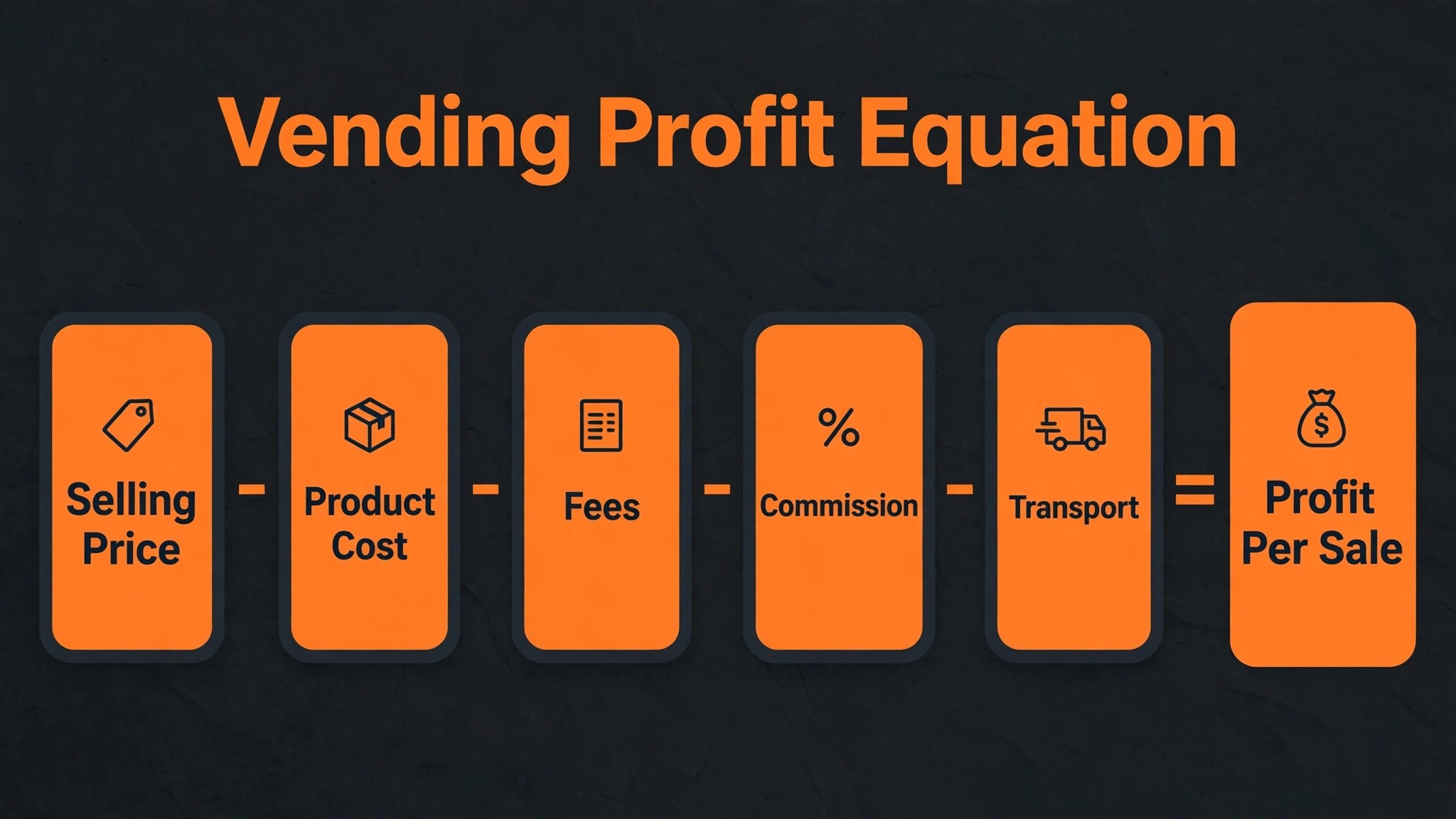
A vending machine business earns money by placing a machine in a location where people already spend time, stocking it with products they want at that moment, and keeping it working, clean, and full. Revenue comes from many small sales. Profit comes from the gap between selling price and product cost, after paying for the machine, location commission if any, electricity, payment fees, transport, and your time. That simple equation explains why location matters more than any other single factor. A great machine in a quiet hallway will sell little. An average machine in a busy gym, office, warehouse break room, or apartment laundry room can sell steadily all week.
Your weekly work includes checking sales, restocking, cleaning, fixing minor jams, collecting cash if you accept it, and talking to location contacts about product requests or problems. AI can help you plan routes, draft messages to property managers, design product labels or machine wraps, and analyze sales patterns, but it cannot visit a site, notice a broken coil, or hear that a building changed its hours. Treat AI as an office assistant for a field business, not as the business itself.
Before you buy anything, decide your model. Will you operate machines you own, place machines on commission, or focus on a niche such as healthy snacks, drinks, coffee, or specialty products for a specific audience. Each model changes product sourcing, machine type, and location pitch. A healthy snack niche may suit offices and gyms, while a classic snack and drink mix may suit warehouses and laundries. Pick one starting niche, prove it in one or two locations, and expand only after you know your real sales, costs, and time per machine.
Step 1 for how to start a vending machine business with AI. Research Your Local Market, Then Verify on Foot
Start with research that narrows your search, then verify everything in person. Ask AI to list location types in your city that typically support vending, such as offices, warehouses, gyms, schools where allowed, hospitals, apartment buildings, laundries, auto shops, and transit waiting areas, and to list the questions to ask for each type, such as foot traffic, hours, existing machines, and decision maker. Use that list to build a target list of real buildings near you, with names, addresses, and contact routes you confirm yourself.
Next, study product demand by location type. Workers on night shifts want different products from gym members after a workout, and apartment residents want different products from office staff at midday. Ask AI to suggest product mixes for each location type, then test those suggestions by visiting similar locations, observing what sells, talking to staff, and checking local store prices. A product mix that looks good in a generic AI list may fail in your building because of dietary needs, price sensitivity, or an existing nearby shop.
Also research rules early. Some locations require permission from property management, some buildings have exclusive agreements, some products face restrictions in schools or health facilities, and some cities require business registration, sales tax handling, or health related permits for food handling. Use AI to list likely requirements for your area, then confirm them with official local sources and with the property owner before you sign anything. A location agreement signed without checking exclusivity or access hours can turn a promising site into a locked machine you cannot service conveniently.
Step 2. Choose Machines and Products Without Overpaying
Machine choice is a major cost decision, and new operators often overspend here. New machines offer warranties, modern card payment systems, and energy efficiency, but they cost far more upfront. Used machines cost less, but they may need repairs, lack modern payment options, or use more energy. Refurbished machines from a reputable seller can sit in the middle, with some warranty and modern payment support at a lower price than new. Compare total cost, not just purchase price. Add delivery, installation, payment system fees, repair history, and expected energy use.
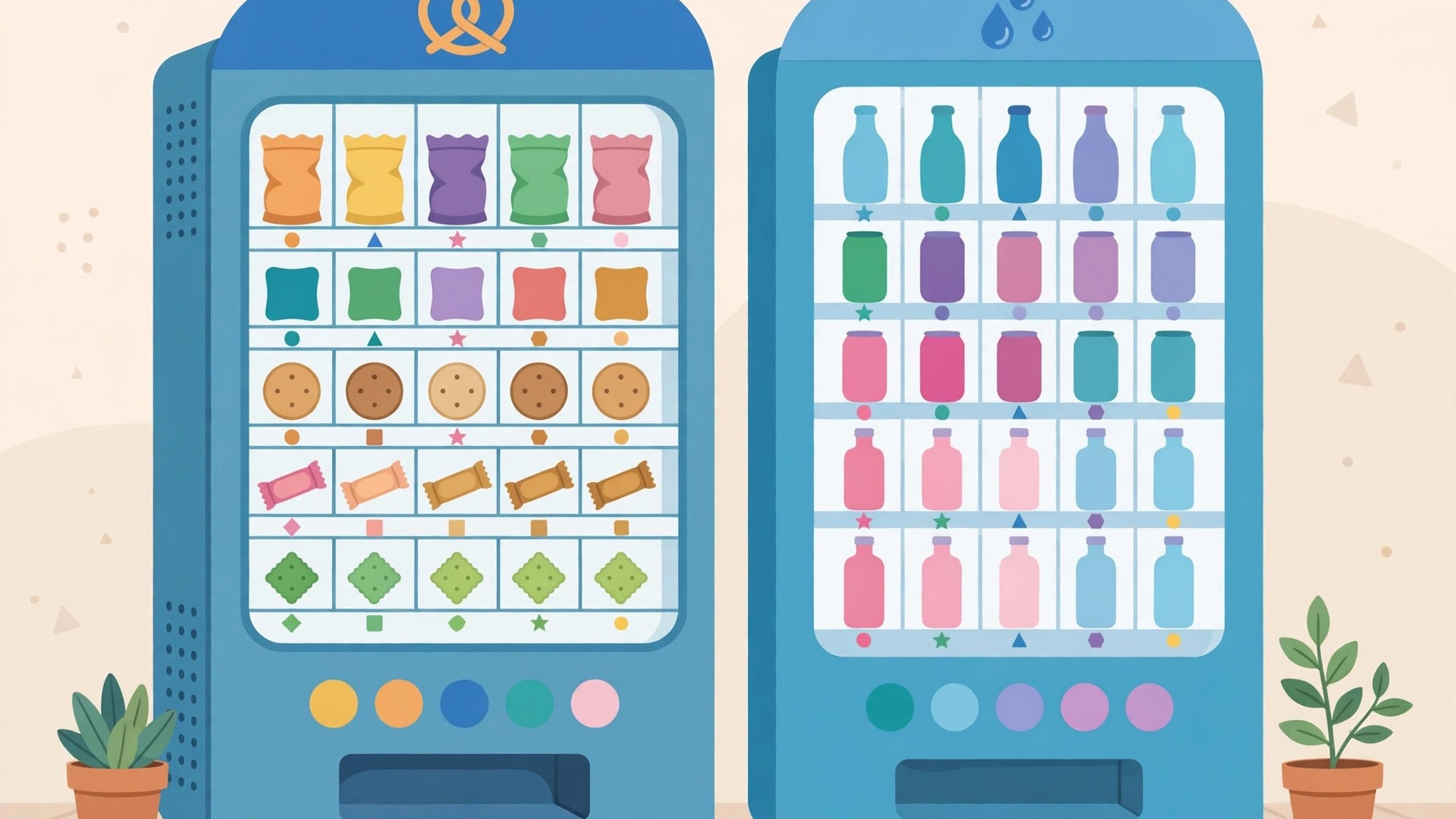
Machine type should follow location and product. A combo machine that sells both snacks and drinks suits a small location with space for only one machine. Separate snack and drink machines suit larger locations with higher traffic. A coffee machine suits offices with a different demand pattern and different maintenance needs. A specialty machine, such as one for healthy items or bulk products, suits a niche location but may limit product flexibility later. Ask AI to compare machine types against your target locations, then inspect any used machine in person or through a trusted seller, checking coils, cooling, payment reader, locks, and overall condition.
Product sourcing follows the same discipline. Start with a small range of proven sellers for your location type, plus one or two test items you can rotate. Buy from wholesale suppliers, warehouse clubs, or distributors you can reach reliably, and record the true cost per unit including transport and waste from expired items. AI can help you build a cost sheet and suggest price points based on your costs and local prices, but you set the final price after checking what customers in that building will actually pay. A price that is too high slows sales and increases expiry waste. A price that is too low leaves no margin after fees and time.
For naming and branding your small route, a clear name helps when you approach property owners. If you are still choosing a name, our guide to the best AI business name generators offers a structured way to test options that sound professional on a proposal and on a machine.
Step 3. Win Locations With a Clear, Honest Pitch
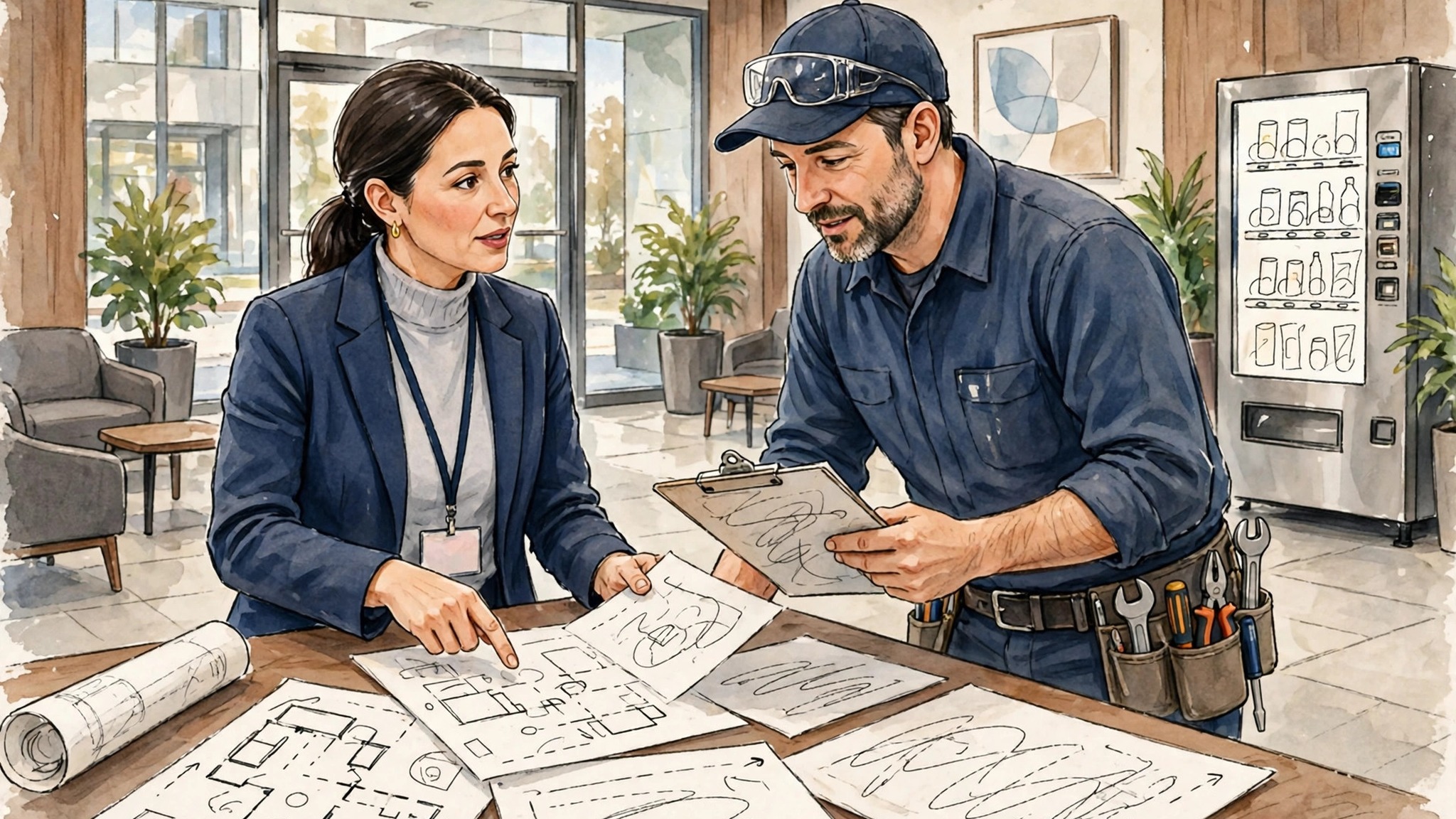
Location owners care about three things, namely benefit to their people, hassle for their staff, and risk to their property. Your pitch should answer all three in the first minute. Explain what you will place, what products you will stock, how often you will service it, how you handle problems, and what they receive, whether that is a commission, a service for their staff, or simply a convenient amenity with no cost to them. Put the agreement in writing, covering placement, access hours, electricity, commission if any, service response time, product standards, and how either side can end the arrangement.
AI can help you draft that pitch and agreement outline, and it can help you tailor the message for different location types. A gym pitch should stress healthy options and cleanliness. An office pitch should stress variety, reliable restocking, and a contact route for issues. A warehouse pitch should stress night shift availability and durable products. Use AI to draft three versions, then personalize each one with the building name, the contact name, and one detail you observed on your visit, such as a break room with no nearby shop. Generic mass messages to property managers get ignored. A short, specific visit followed by a clear written proposal gets replies.
Expect rejection, and treat it as useful data. Ask politely why a location said no. Common reasons are an existing contract, no space, no interest, or timing. Record those reasons. A no because of an existing contract may become a yes in six months. A no because of space may become a yes in a different building in the same complex. Follow up at a reasonable interval, not weekly, and keep the relationship friendly. Vending routes grow through relationships as much as through machines.
Step 4. Set Prices, Payments, and a Restocking Routine
Pricing needs a simple formula you can repeat for every product. Start with product cost per unit, add payment processing cost where relevant, add a share of transport, location commission, and machine costs, and then set a selling price that leaves a margin you are happy with after waste. Test prices in small steps. A small price increase on a best seller may add meaningful profit without hurting volume, while a large increase may push buyers to a nearby shop. Track sales by product, not just total sales, so you know which items earn their space and which items sit and expire.
Payments shape both sales and operations. Card and mobile payments now drive a large share of vending sales in many locations, and machines without modern payment options lose sales from customers who carry no cash. At the same time, card systems add fees and sometimes monthly costs, so include those fees in your price math. Cash still matters in some locations, but it adds collection, counting, and security work. Decide your payment setup per location based on its audience, and check the payment provider terms on its official site before you commit.
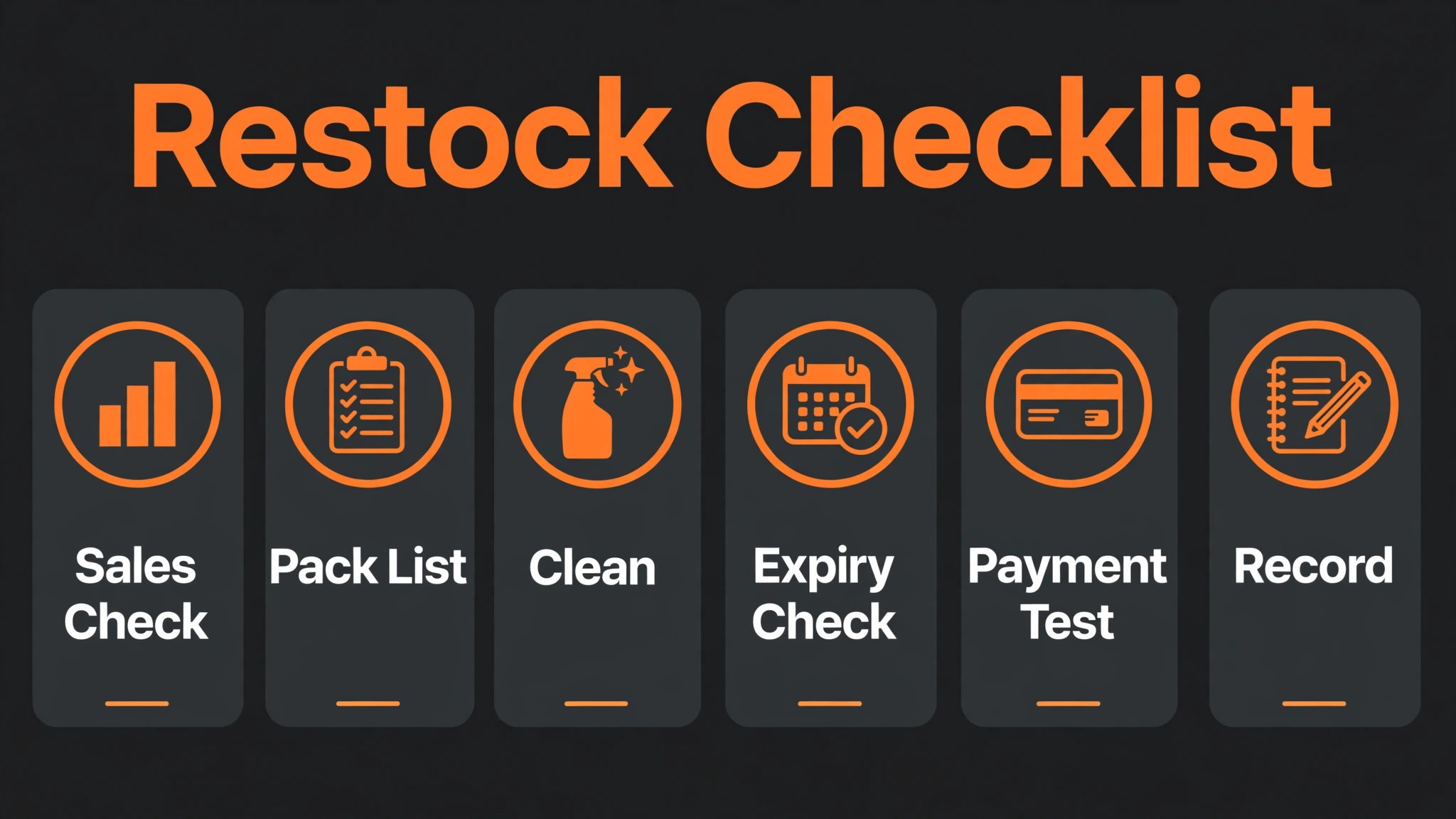
Restocking is where profit is protected or lost. Set a fixed route day for each machine, check sales data before you leave, pack only what you need plus a small buffer, clean the machine, check expiry dates, test the payment reader, and record what you stocked and what you removed. AI can help you turn sales data into a restock list and a route order that saves driving time, and it can draft a simple checklist for each visit. Keep that checklist on your phone, because a missed expiry check or a forgotten product creates complaints that reach the location owner fast.
Step 5. Use AI for Signs, Messages, and Sales Analysis
Once machines are running, AI earns its place in small daily tasks. Use it to design simple signs that show product highlights, payment options, and a contact route for issues, keeping text large and readable from a short distance. Use it to draft messages to location contacts when you change products, fix a problem, or ask for feedback, keeping each message short and specific. Use it to summarize weekly sales by machine and by product, and to flag patterns, such as a product that sells fast in one location and slowly in another, or a machine whose sales drop after a certain weekday.
Sales analysis should lead to action, not just reports. If a product sells out fast, increase its facings or restock frequency. If a product expires repeatedly, remove it or reduce its quantity. If a machine sells well on weekdays but little at weekends, adjust your route day or your product mix for that pattern. If total sales fall, check the machine first, then the location, then the product mix, in that order, because a broken coil or a changed building schedule explains more sales drops than a pricing theory does.
Social content can help a niche route, especially for healthy, specialty, or local product machines, but it should stay simple and honest. A short post showing a new product, a clean machine, or a local supplier story works better than a polished ad that promises more than the machine delivers. If you use social tools for this, you can review our guide to the best AI tools for Instagram for help with captions and visuals, while keeping the actual machine content grounded in what customers will find on site.
Tools Compared for Vending Operators
Different tools serve different jobs in this business, and the cheapest setup often wins early, because every dollar saved on software is a dollar that does not need to be earned back through small sales. General chat tools handle research, pitch drafts, signage text, and sales summaries. Spreadsheet apps handle cost sheets, price math, route checklists, and sales tracking, and they remain the most important tool for profit decisions. Payment and machine telemetry systems, where your machine supports them, provide real sales data that beats any estimate. Design tools help with signs and machine branding, but only after product and location decisions are sound.
Test any paid tool against a free workflow first. Can a spreadsheet plus a chat tool do the same job for your first two machines? If yes, delay the paid tool until you have enough machines that manual tracking actually costs you time or errors. When you do pay, check what the tool covers, including sales tracking, inventory alerts, route planning, and payment reporting, and whether it works with your specific machine models. A tool that does not connect to your machines creates double entry work, not saved time.
Useful official starting points include ChatGPT for drafting and analysis, Claude for editing proposals and checklists, Google Sheets for cost and sales tracking, and the U.S. Small Business Administration for general guidance on permits, registration, and planning. Check current pricing and terms on each official site, and confirm local rules with local authorities, because national guidance does not replace local requirements.
| Tool type | Best for | Watch out for | Good starting test |
|---|---|---|---|
| General chat AI | Location research, pitches, signage, sales summaries | Generic product advice for your specific building | Draft a pitch for one real location |
| Spreadsheet app | Cost per unit, pricing, route and sales tracking | Outdated sales data, manual errors | Track one machine for four weeks |
| Machine telemetry or payment system | Real sales data, low stock alerts | Monthly fees, model compatibility | Compare fee cost against time saved |
| Design app | Signs, machine branding, product labels | Overdesigned signs that are hard to read | Print and test readability at distance |
| Notes and maps app | Location list, visit notes, route order | Notes that never become follow ups | Record next action for every visit |
How to Choose Your Starting Setup
Choose your starting setup by working backwards from your time, budget, and driving area. If you have limited weekend time, choose locations close together and machines that are easy to service. If you have a small budget, choose one used or refurbished machine in a strong location rather than three cheap machines in weak locations. If you have no repair experience, favor a machine type with local service support and a warranty, and learn basic fixes, such as clearing jams and replacing coils, before you expand.
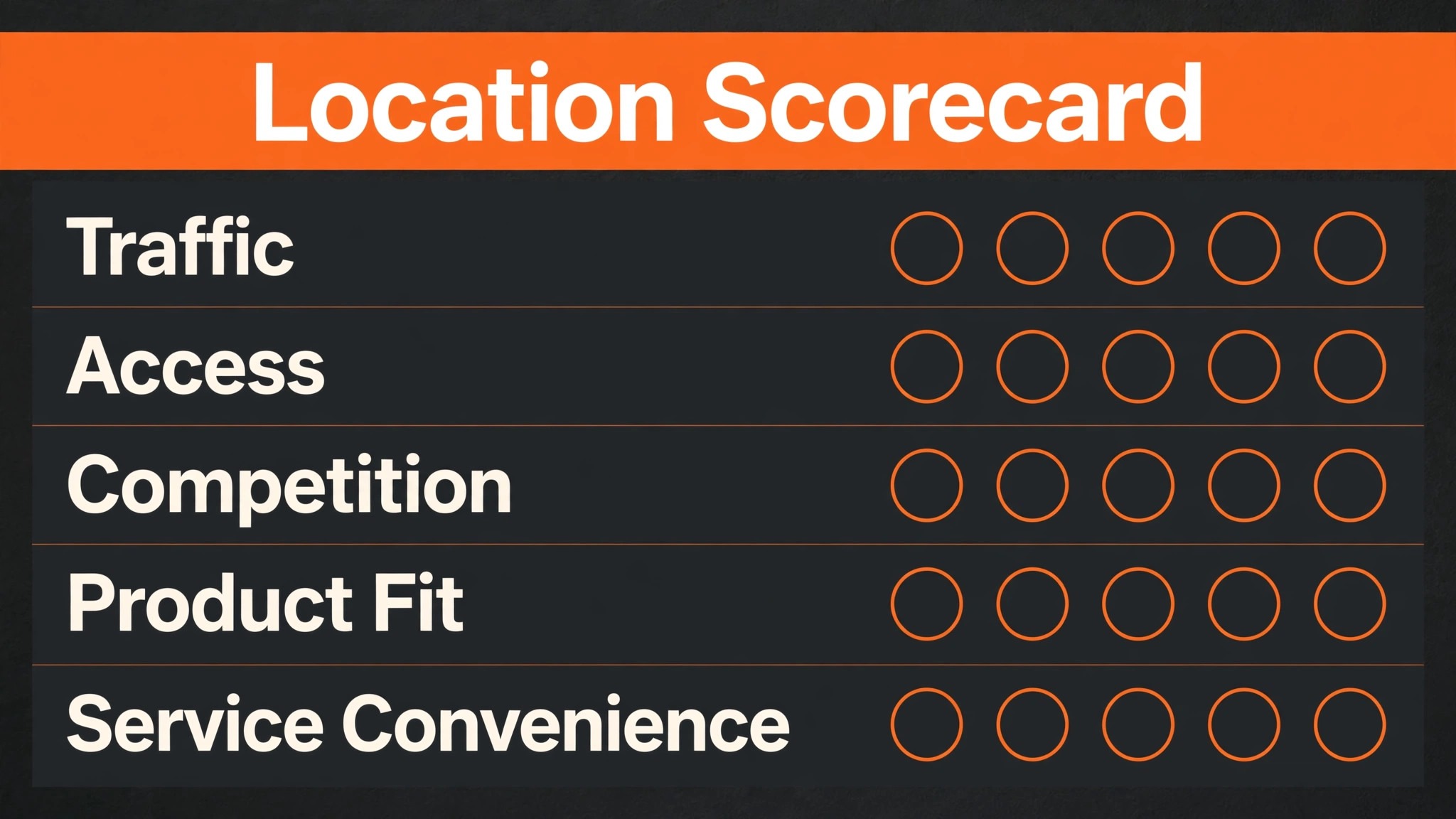
Location choice should follow a simple score you can apply consistently. Score foot traffic, hours of access, existing competition, decision maker accessibility, product fit, and service convenience. A location that scores well on traffic but poorly on access may still work if you can service it on a fixed day, while a location that scores poorly on traffic rarely improves with better products. Use AI to help you build that scoring sheet, then score real locations after visits, not from online guesses. Your first two locations will teach you more about scoring than any template.
Growth should follow profit per machine, not machine count. Add a new machine only when your existing machines are consistently stocked, clean, and profitable after all costs including your time, and when you have a location that scores well on your sheet. A third machine that loses money or eats your weekends slows the whole route. A second machine in a strong location that you can service on the same route day strengthens it. That discipline is what turns a hobby with machines into a business with a route.
Seasonal Patterns, Cash Flow, and Keeping Clean Records
Vending sales rarely stay flat across the year, and planning for those swings prevents the two most common cash surprises for new operators, a slow month that still carries fixed costs and a busy period that empties machines faster than the route can restock them. Offices slow during holidays and summer leave periods. Schools follow term calendars where they are allowed. Gyms rise after new year resolutions and dip in holiday weeks.
Apartment buildings stay steadier, but they still shift with move in seasons and weather. Warehouses with shift work stay steadier than most, yet overtime schedules and shutdowns still change demand. Track sales by week for each machine for at least a full quarter, then note the pattern next to the calendar, so next year you can plan stock and route days from evidence rather than from memory.
Use AI to turn that weekly sales record into a simple seasonal view. Look at average sales by machine, best and weakest weeks, and products that rise or fall with the season. Cold drinks rise in warm months and fall in cold months in many buildings, while hot drinks and comfort snacks move the other way. A seasonal view helps you avoid two waste traps, overstocking a summer drink in winter and understocking a winter staple when demand rises. Keep test items small during seasonal transitions, because a product that sold well in one season may need a different price or facing in the next.
Cash flow needs the same attention as sales. Money from card payments arrives on a schedule set by the payment provider, while cash, where you accept it, arrives when you collect it. Product suppliers may require payment on delivery, while location commission may be due monthly. That timing gap matters in the first months, when stock purchases come before sales income catches up. Keep a simple cash sheet that shows money in, money out, and money owed for each machine each month, and keep a reserve for repairs. A single compressor repair or payment reader replacement can erase several weeks of profit if you have no reserve, and a reserve turns that repair into an inconvenience rather than a crisis.
Record keeping also protects you with location owners and tax reporting. Keep copies of location agreements, supplier invoices, payment provider statements, commission payments, and service notes. Note the date, machine, products stocked, products removed, and any problem found on each visit, even when the visit was routine. Those notes help you spot a machine that needs attention, prove service reliability to a location owner, and answer questions accurately at tax time. AI can help you format those records and summarize them monthly, but the source notes must come from your visits, because a summary built from guesses will mislead you exactly when accuracy matters most.
Good records also make growth easier. When you add a machine, you already know your true cost per visit, your true waste rate, and your true time per machine, so the new location decision uses real numbers from your own route.
Mistakes to Avoid With Vending Machines
The first mistake is buying machines before securing locations. Machines stored in a garage earn nothing and lose value, while a signed location with no machine creates pressure to buy the wrong machine quickly. Secure the location first, confirm space, power, and access, then buy the machine that fits that site.
The second mistake is paying a high commission or upfront fee for a weak location. A location that demands a large payment but offers low traffic rarely becomes profitable, because the fee is fixed and sales are not. Negotiate commission based on actual sales, with a review after an initial period, and walk away from sites where the math does not work after honest sales estimates.
The third mistake is stocking for yourself instead of for the building. Your favorite snack may not be the building favorite. Track sales by product, ask location contacts what people request, rotate test items in small quantities, and remove slow items quickly. Expiry waste is a direct loss, and a machine full of slow items looks neglected even when it is clean.
The fourth mistake is slow service. A machine that is empty, dirty, or broken for days damages trust with the location owner and trains customers to stop checking it. Set a response time you can keep, publish a contact route on the machine, and fix problems fast, even if that means a special trip. Reliability is your brand in this business.
The fifth mistake is ignoring true costs. Transport, payment fees, waste, machine repairs, and your time all belong in profit math. A route that looks profitable on product margin alone may lose money after driving and service time. Track all costs for at least three months before you judge a machine, and compare machines on profit after all costs, not on gross sales.
The sixth mistake is expanding too fast with debt. New machines, new locations, and new product lines all add complexity at once. Grow one step at a time, keep a cash reserve for repairs, and avoid borrowing for machines until your existing route proves it can service debt from real sales.
Frequently Asked Questions
How much money do I need to start a vending machine business
Startup cost varies widely by machine type, condition, location, and initial stock, so build a budget from real quotes in your area rather than a generic figure. Include machine cost, delivery, payment setup, initial stock, transport, and a repair reserve, and check current prices on seller and payment provider sites before you commit.
Do I need a location before I buy a machine
Yes, in most cases. Securing a location first lets you choose the right machine size, product mix, and payment setup for that site, and it avoids storing an expensive machine with no income. Confirm space, power, access, and agreement terms in writing before you buy.
How do I find locations for vending machines
Visit buildings in your area, observe foot traffic and existing machines, and speak with the property manager or owner with a short, specific proposal. Start close to home, keep a list with follow up dates, and treat rejections as data about timing, contracts, or fit.
What products sell best in vending machines
Best sellers depend on location. Offices, warehouses, gyms, and apartment buildings have different needs, so test a small range of proven items for each location type, track sales by product, and rotate test items in small quantities rather than filling a machine with untested stock.
How often should I restock a vending machine
Restock frequency follows sales volume and product expiry. Busy machines may need weekly visits, quieter machines may need visits every two weeks, but every machine needs regular cleaning, expiry checks, and payment tests regardless of sales. Set a fixed route day and adjust from sales data.
Can AI run a vending machine business for me
AI can help with research, pitches, signage, pricing math, and sales summaries, but it cannot visit sites, clean machines, fix jams, or build trust with location owners. The field work remains the core of the business, and AI works best as support for that work.
Start Small, Service Well, Grow on Proof
A vending machine business rewards operators who start small, choose locations carefully, stock for the building rather than for themselves, and service machines reliably. AI can shorten research, improve pitches, clarify pricing, and turn sales data into better restock decisions, but profit still comes from a machine that is full, clean, working, and placed where people want what it sells.
Begin with one strong location, one suitable machine, and a product mix you can track honestly for three months. Learn your true costs, your true time per visit, and your true best sellers. Then add a second location only if the first route proves it can support it. That patient, proof based growth may feel slower than buying several machines at once, but it is the path that builds a route you can actually keep, service, and grow without constant fixes. Start with a visit, not a purchase, and let the location decide the machine.