
A single popular opening can attract hundreds of applications, and screening software often reviews those applications before any person does. That volume changes what a good job search looks like. Sending the same resume to every posting and hoping for a reply is no longer a strategy, it is a lottery ticket. Learning how to use AI for job search means using AI to do the high volume work well, finding the right roles, matching your experience to each posting, preparing strong answers, and following up, while you keep control of the judgment calls that decide whether an application is worth sending at all.
This guide covers a complete, honest workflow. You will learn how to define a target role, how to use AI to research companies and roles, how to tailor a resume and cover letter without inventing experience, how to prepare for interviews with realistic practice, how to use AI for outreach and salary research, and how to avoid the traps that make AI assisted applications easy to reject. It also explains where AI should stop, because a job search still runs on human proof. That proof is real work, real references, and real conversations.
Start With a Target, Not With a Tool
The most common job search mistake is starting with a tool instead of a target. Before you open any AI app, write down the role you want, the industries where that role exists, the locations or remote conditions you accept, the salary range you need, and the tradeoffs you will accept, such as a smaller company for faster growth or a longer commute for better pay. Without that target, AI will find you many jobs and none of them will feel right, because the search had no filter except availability.
Next, list your proof. Write down your last three roles, your main achievements in each, the skills you used daily, and the results you can quantify from your own records. If you led a project, note the size, the timeline, and the outcome. If you improved a process, note what changed and how you know. AI can turn those notes into strong bullet points, but it cannot invent the underlying proof, and any bullet you cannot explain in an interview will hurt you later.
Also decide how much time you will spend each week and how you will track it. A simple tracker with company, role, date applied, contact, follow up date, and outcome prevents duplicate applications and missed follow ups. AI can help you build that tracker and draft follow up notes, but the discipline of updating it after each application is yours.
Research First, How to Use AI for Job Search Without Wasted Applications
Research is the highest value use of AI in a job search, because it saves hours and improves every later step. For each target company, ask AI to summarize what the company sells, who its customers are, recent public news, and what the role likely involves day to day, then verify the important facts on the company website, its careers page, and its public announcements. Use AI to list questions the role raises, such as which team it sits in, what success looks like in the first 90 days, and what tools the team uses, then turn those questions into interview preparation and outreach notes.
For each posting, paste the job description and ask AI to extract the must have skills, the nice to have skills, the main responsibilities, and any phrases that signal culture or pace, such as fast moving, cross functional, or customer facing. Then compare that list with your own proof list. If you match most must haves and can show evidence for them, apply. If you match few, either skip the role or apply only if you have a clear plan to close the gap, such as a short project or certification you can complete and show.
Research also helps you avoid wasted applications. A posting that has been open for many months, a company with frequent layoff news, or a role description that lists ten unrelated jobs in one posting are all signals worth noticing. AI can surface those signals, but you should confirm them from primary sources before you decide, because AI summaries can miss context or mix up companies with similar names.

Finding Roles AI Can Surface That Job Boards Miss
Job boards show only part of the market. Many roles are filled through referrals, internal moves, and direct outreach before they are widely advertised, and some small companies post only on their own sites. AI can help you search more widely if you use it to build search strings, company lists, and alert routines rather than relying on one board feed.
Start by asking AI to list 30 to 50 companies that hire your target role in your chosen industries and locations, including smaller firms you may not know. Check each company careers page yourself, because AI company lists can include firms that no longer hire that role or that operate in a different region. Save the real list in your tracker, then set alerts on the boards and company pages that matter most.
Next, use AI to draft varied search phrases for your role, including alternative titles. The same work is often titled differently across industries. A customer success manager in software may be called a client manager elsewhere, and a content designer may be listed as a UX writer. Searching only your current title narrows your options for no good reason. Keep a list of title variants and rotate through them weekly.
Finally, use AI to scan your network for warm paths. Paste a sanitized list of target companies, without private details, and ask AI to suggest outreach angles for people in similar roles, such as shared industry interests, public work they have shared, or questions about team culture. Outreach still needs a personal touch, but AI can help you avoid the generic hello I am looking for a job message that gets ignored.
Tailoring Your Resume With AI Without Inventing Experience
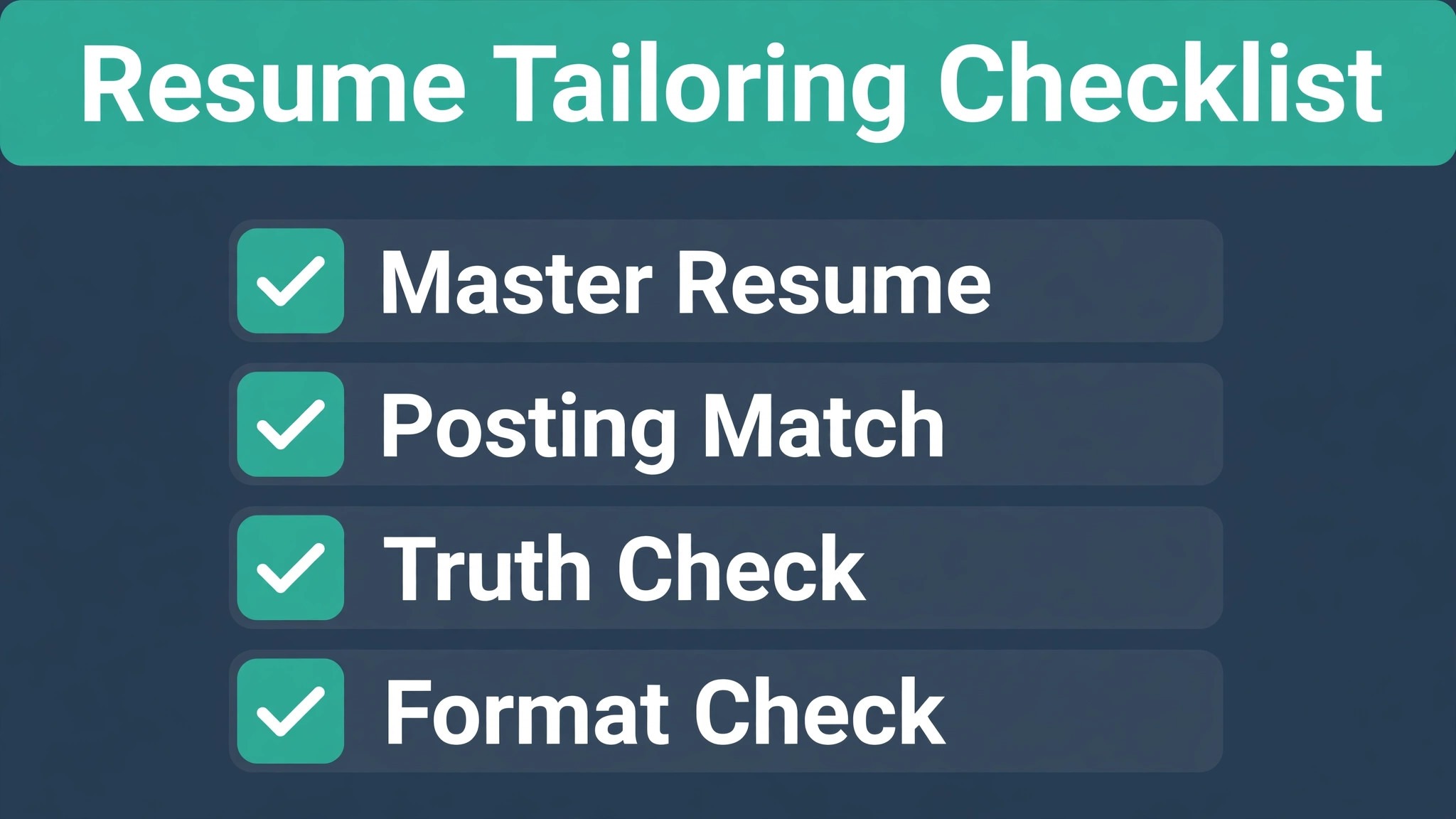
Resume tailoring is where AI helps most and harms most, depending on how you use it. The right method is to start with a single master resume that lists your full experience truthfully, then create a tailored version for each strong application by reordering bullets, choosing the most relevant achievements, and matching language to the posting, without adding skills or results you do not have.
Give AI your master resume and the posting, and ask it to suggest which bullets to feature first, which skills to highlight, and which phrases from the posting match your real experience. Then ask it to flag any suggested bullet that goes beyond your master resume, so you can delete inventions before they reach an employer. That flagging step is essential, because AI will otherwise smooth over gaps with plausible but false claims, such as a tool you have never used or a result you never achieved.
Pay attention to format as well. Many employers use applicant tracking systems that parse resumes, so a clean single column layout, standard headings, and plain text for key skills work better than complex tables, graphics, or unusual fonts. Ask AI to review your tailored resume for readability and for missing keywords that genuinely match your experience, then check the final file yourself in a plain text view. If the plain text view scrambles your experience, the system may scramble it too.
For resume focused help, you can also review our comparison of chatgpt alternatives to find a general writing assistant whose style and editing strength suit your resume work.
Cover Letters That Add Proof, Not Repetition
A cover letter should not repeat your resume. It should answer three questions in a short page, namely why this role, why this company, and what proof shows you can do the work. AI can draft that structure quickly, but the proof must come from you. Name a project, a result, or a skill that maps directly to a responsibility in the posting, and explain it in two or three sentences. Then name one specific reason the company interests you, drawn from your research, such as a product direction, a team focus, or a customer group you have served before.
Keep the tone professional and direct. Avoid long paragraphs about passion in general, and avoid claims about company culture you cannot support. If you have no direct connection to the company, say what you have studied about its work and what question you would like to explore in conversation. Honesty reads as confidence, while generic praise reads as a template.
Use AI to tighten the letter after you draft it. Ask for a shorter version, a version that removes vague language, and a check for claims that lack support in your resume. Then read the final letter aloud. If it sounds like it could be sent to any company for any role, rewrite the company paragraph until it could only be sent to this company.
Interview Preparation With AI Practice That Feels Real
Interview preparation is one of the strongest uses of AI, because practice with feedback beats reading tips alone. Start by pasting the posting and your resume, then ask AI to generate likely questions for that specific role, including behavioral questions, technical or task questions, and questions about gaps or changes in your history. Practice answering aloud, not just in writing, because spoken answers reveal hesitation, rambling, and missing structure that written answers hide.
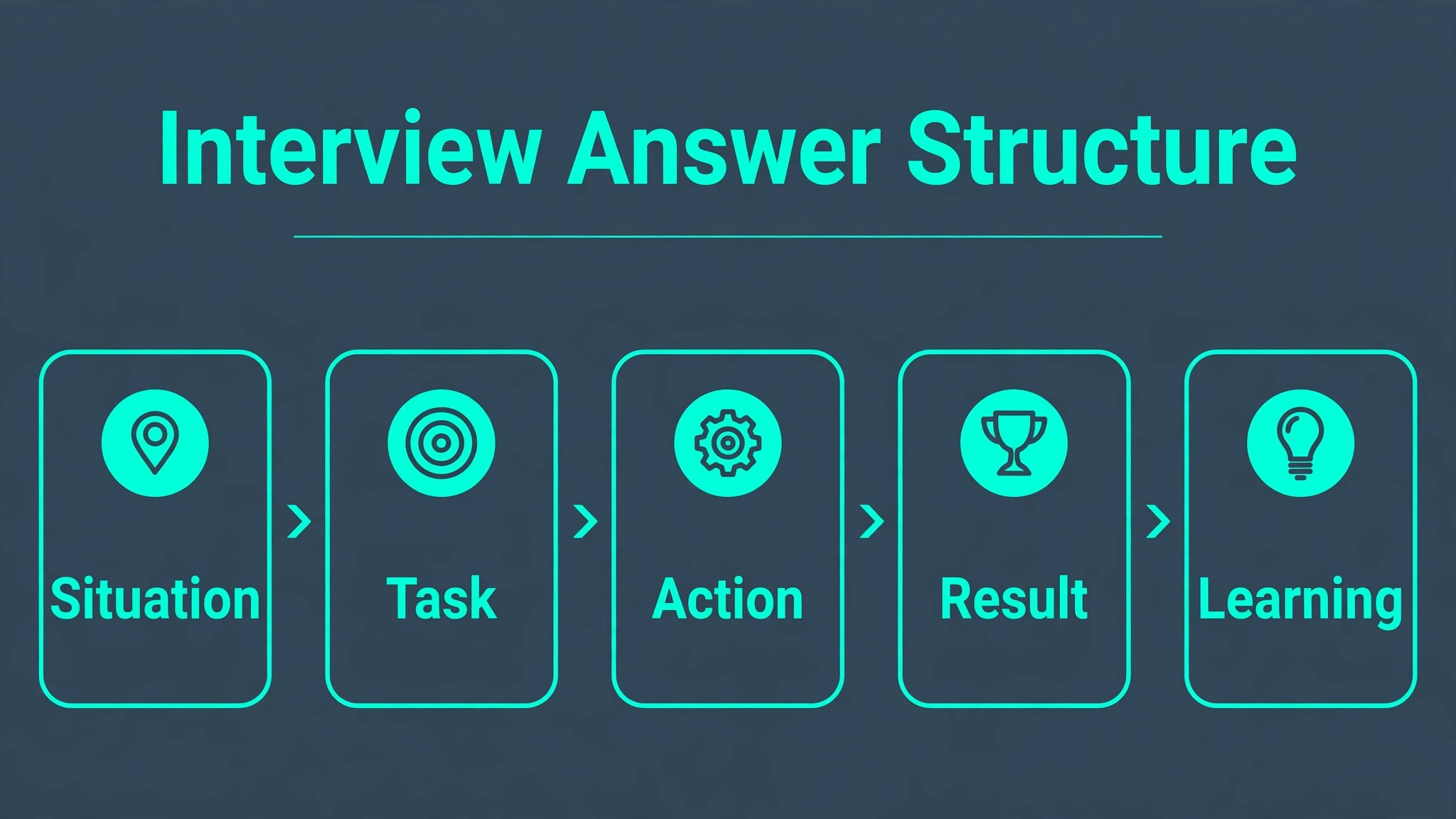
Use a simple answer structure for behavioral questions. The structure is situation, task, action, result, and what you learned. AI can review your practice answers for structure, length, and missing results, and it can suggest a tighter version. Keep your own words and your own examples. An answer that sounds polished but describes work you did not do will fail under follow up questions, and interviewers ask follow ups precisely to test depth.
Also prepare questions to ask the employer. Good questions show you understand the role and care about success in it. What does success look like in the first 90 days? What is the team working on now? How is performance reviewed? What support exists for learning? What challenges has the team faced recently? AI can help you tailor those questions to the posting and company research, but choose only a few that matter to you, because asking a long list of generic questions signals preparation without curiosity.
For salary and benefits questions, research ranges from multiple public sources and from your own market knowledge, then use AI to role play negotiation conversations, including how to respond to a range question, how to ask for time to consider an offer, and how to compare total compensation rather than base pay alone. Check current benefits and pay norms on official employer pages and reputable salary sources, and treat any single AI generated figure as a starting point to verify, not as a final answer.
Outreach, Referrals, and Follow Up
Outreach works best when it is specific, short, and easy to answer. A good outreach message names the role or team, names one specific reason you are writing to that person, asks one clear question, and respects their time. AI can draft that message and suggest variations for different contacts, but you must personalize the reason and the question for each person. A message that could be sent to anyone will be treated as spam by almost everyone.
Referrals deserve the same care. If you know someone at a target company, ask for advice before you ask for a referral. Ask what the team values, what the role really involves, and whether your background fits. That conversation gives you information and gives your contact a reason to help, because they can speak about fit rather than just forwarding a resume. AI can help you draft a polite request and a short summary of your fit, but the relationship does the work.
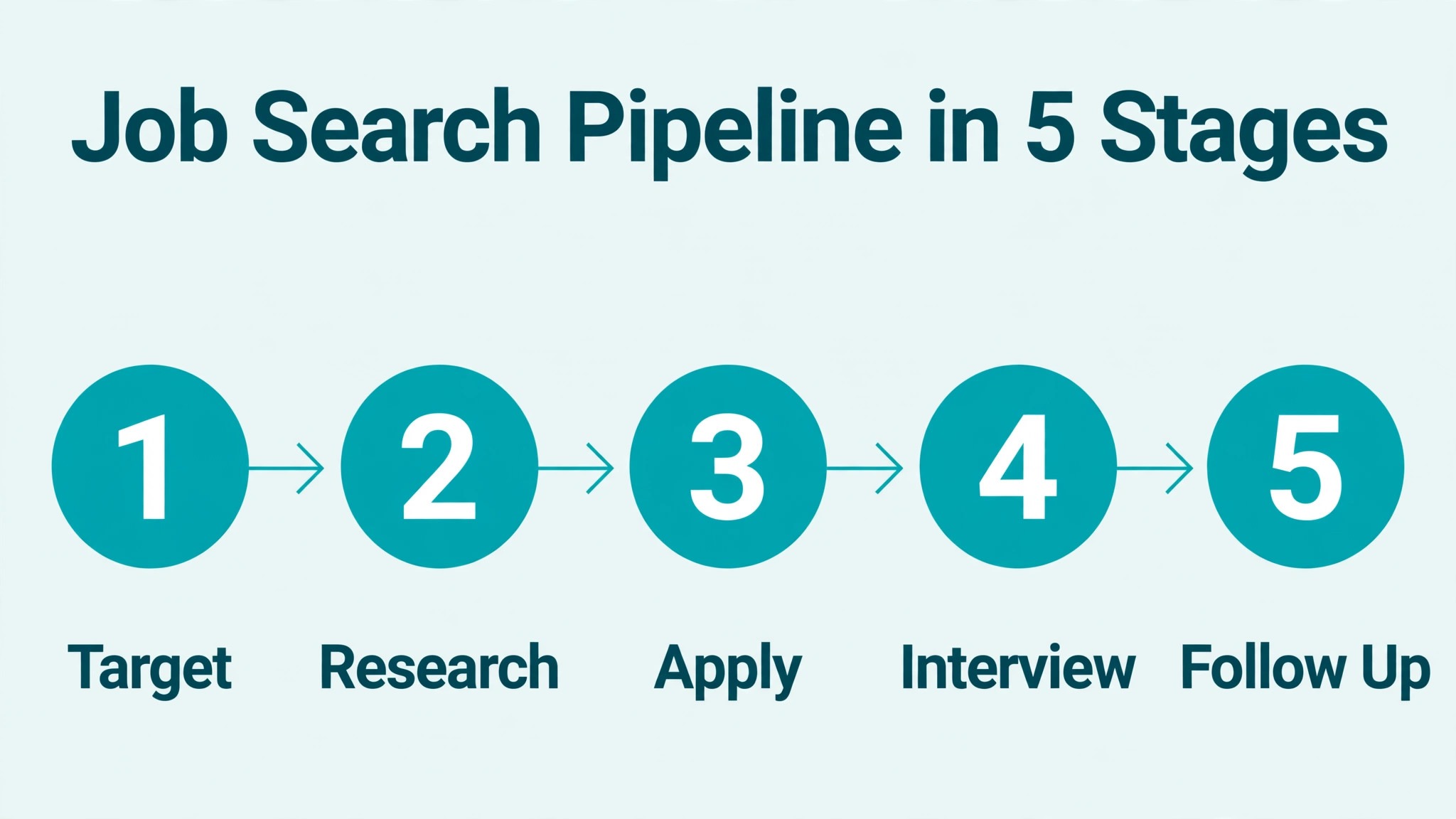
Follow up after applications and interviews with a short thank you that references something specific from the conversation. AI can draft the note, but the specific detail must come from your notes. Send follow ups promptly, track them, and move on if there is no reply after a reasonable interval. A job search is a pipeline, and spending weeks waiting on one application while ignoring new roles is a common and costly error.

Tools Compared for Each Stage of the Search
No single tool covers every stage well, so compare by stage, not by brand alone. General chat tools are strong for research summaries, resume tailoring, cover letter drafts, and interview practice. Job boards and company career pages remain essential for actual openings, because AI cannot apply for you reliably and should not submit applications without your review. Resume builders help with clean formatting and parsing checks. Interview practice tools and mock interview apps can add structured feedback, but they work best when combined with human practice, such as a friend or mentor asking follow up questions.
Test tools on the same task before you commit to a paid plan. Give each tool the same posting and the same master resume, and compare which draft needs the least correction, which suggestions stay truthful, and which output reads most naturally in your voice. A tool that produces long, impressive sounding drafts that require heavy correction is slower than a simpler tool that produces a tight draft you can trust.
Useful official starting points include ChatGPT for drafting and interview practice, Claude for editing long resumes and cover letters, LinkedIn for role discovery and company research, and Indeed for broad posting searches. Check current features and pricing on each official site before you pay, because job search features change often and a premium feature may duplicate something you already have.
| Stage | Best tool type | What to test | Risk to control |
|---|---|---|---|
| Role discovery | Job boards plus company pages | Coverage of your target titles | Missing small company postings |
| Company research | General chat plus official company pages | Accuracy of recent facts | Outdated or mixed up company details |
| Resume tailoring | Chat tool plus resume builder | Truthfulness of every bullet | Invented skills or results |
| Cover letters | Chat tool for tightening | Specificity to this company | Generic praise that fits any employer |
| Interview practice | Chat role play plus human practice | Depth under follow up questions | Polished answers with no real examples |
| Salary research | Public salary sources plus chat role play | Range from multiple sources | Treating one figure as final |
How to Choose Your Job Search Setup
Choose based on your stage and your weakest step. If you struggle to find roles, invest time in company lists, title variants, and alerts before you buy a resume tool. If you get few replies, invest in tailoring and in applying to fewer, better matched roles, rather than sending more generic applications. If you reach interviews but do not convert, invest in practice and in post interview review, asking what answers felt weak and rehearsing those topics specifically.
Set a weekly rhythm that balances volume and quality. A practical rhythm for many job seekers is a set number of high quality applications to well matched roles, a set number of research and outreach actions, and a set number of practice sessions, tracked in one place. AI can help you plan that week and draft the materials, but the rhythm only works if you protect time for follow up and for learning from rejections, such as noting which stage you reached and what feedback, if any, you received.
Be careful with automation promises. Tools that promise to apply to hundreds of jobs for you can create duplicate applications, mismatched resumes, and answers to screening questions you never reviewed. Those errors can harm your reputation with an employer more than a slower, careful application helps it. Use AI to prepare, not to submit blindly. Review every application before it goes out, and keep a copy of what you sent.
Salary Research, Offer Comparison, and the Decision After the Offer
Salary research deserves its own workflow, because it shapes every negotiation that follows and because a single figure from one source is rarely enough. Start by gathering ranges from several public salary sources, from postings that list ranges, and from your own knowledge of similar roles in your market. Note the range for your level, your location or remote status, and your industry, because the same title can pay very differently across those factors.
Then use AI to organize those ranges into a simple comparison table, with source, role level, location, and range, so you can see where sources agree and where they differ. Agreement across sources gives you a credible anchor. Wide disagreement tells you to ask better questions in the interview about level, scope, and total compensation.
Total compensation matters more than base pay alone. Bonuses, equity or profit sharing, health benefits, retirement contributions, paid time off, remote flexibility, learning budgets, and work hours all change the value of an offer. Ask AI to build a comparison sheet where each offer gets a row for base pay, variable pay, benefits value you can estimate, time off, schedule, growth opportunity, and risks, such as a long commute, on call duties, or a short contract. Fill that sheet with facts from offer letters and recruiter conversations, not with AI estimates, because an estimate that looks precise can hide a benefit that is actually weak or a bonus that is rarely paid in full.
Negotiation practice is where AI role play pays off again. Practice three conversations in particular. First, responding when you are asked for a salary expectation early, before you know the full scope. A calm response that gives a researched range and asks about the full package keeps the conversation open without locking you into a low number. Second, responding to an offer that is below your range, with gratitude, a clear counter based on your research, and a reason tied to scope and market, not to personal need.
Third, asking for time to consider an offer, so you can compare it properly rather than deciding under pressure. In each practice round, ask AI to play a recruiter who pushes back politely, then review your answers for clarity, confidence, and any statement you cannot support.
Also prepare for non salary terms that are often negotiable, even when base pay is fixed. Start date, remote days, title, review timing, learning support, and equipment can all improve an offer without changing its headline salary. Decide before negotiation which of those terms matter most to you, so you do not trade away something valuable for a small pay increase you did not need. When you receive a final offer, read the full letter, check the role title, location, reporting line, start date, pay schedule, and any conditions, and ask questions about anything unclear before you accept. A careful final check prevents misunderstandings that are hard to fix after you resign from a current role.
Finally, think about the decision after the offer in career terms, not just pay terms. Will this role build skills you want next, give you work you can show, connect you with people you can learn from, and leave you stronger for the role after this one. A slightly lower paying role that builds a clear next step can be worth more over two years than a higher paying role that stalls your growth.
Use AI to map both paths. Look at what skills each offer builds, what roles each path opens next, and what risks each path carries. Then make the decision yourself, with that map in front of you, rather than letting a single salary figure decide for you.
Building Proof While You Search Through Projects, Writing, and References
While you apply, build proof that makes the next application stronger. A short project that mirrors the target role, a writing sample that shows how you think, or a small case study based on past work, with permission and without confidential details, can do more than another generic application. Choose one project that matches your target role closely, complete it to a standard you would show an employer, and link it from your resume or portfolio where appropriate. AI can help you plan the project, outline the case study, and edit the write up, but the work itself must be yours and explainable in detail.
References also deserve preparation before you need them. Ask people who have seen your work directly whether they are willing to serve as references, tell them what roles you are pursuing, and share a short summary of the work they saw. That preparation helps a reference give specific, credible answers instead of general praise. AI can help you draft a polite reference request and a thank you note, but the request should go to people who know your work, not to the most senior person you can find. A specific reference from a direct manager or project lead usually carries more weight than a vague reference from a distant executive.
Mistakes to Avoid in an AI Assisted Job Search
The first mistake is inventing experience. Adding a skill, tool, or achievement you do not have may pass an initial screen, but it will fail in an interview or in the first weeks of work, and the cost is higher than a rejection. Keep a master resume that is fully truthful, and treat any AI suggestion that adds new experience as a draft error to delete.
The second mistake is applying everywhere. High volume with low match rates wastes time, creates tracking chaos, and teaches you nothing about what employers want. A smaller set of well matched applications, each tailored and followed up, usually produces better results and better learning.
The third mistake is copying AI answers into interviews. Interviewers notice answers that sound memorized and generic, and follow up questions expose them quickly. Use AI to practice structure and to find gaps, then answer in your own words with your own examples.
The fourth mistake is trusting salary or company facts from a single AI answer. Verify pay ranges from multiple sources, verify company facts on official pages, and verify role details in the interview itself. A decision based on one unverified figure can lead you to reject a good offer or accept a poor one.
The fifth mistake is neglecting the human parts of the search. Referrals, informational conversations, portfolio work, and thank you notes still matter, and AI cannot replace the trust they build. Use AI to prepare for those conversations, not to replace them with mass messages.
The sixth mistake is stopping learning after a rejection. After each rejection, note the stage you reached, any feedback you received, and one change you will test next. That habit turns a long search into an improving search, rather than a repeating search.
Frequently Asked Questions
Can AI write my resume for me
AI can draft and tailor a resume from your master resume and a posting, but you must supply truthful experience and review every bullet. A resume that invents skills or results will fail under interview follow ups, so treat AI as an editor, not as an author of your history.
Will employers reject resumes that used AI
Employers reject weak, generic, or inaccurate resumes, not resumes that were edited with a tool. A tailored, truthful, well formatted resume that matches the posting and reads in your voice passes the same checks as any strong resume.
How many jobs should I apply to each week
Quality matters more than a fixed number. Focus on well matched roles you can tailor properly, research thoroughly, and follow up on, rather than a high volume of generic applications. Track your reply rate by stage and adjust volume based on results.
Should I use AI to answer screening questions
Use AI to draft and check your answers, but review every answer for truthfulness and fit before you submit it. Screening answers become part of your record with that employer, and an inaccurate answer can end a process later.
How do I prepare for AI led interviews
Practice with AI role play for likely questions, then practice aloud with a person who can ask follow ups. Prepare your own examples, your own questions, and a clear summary of your fit for the specific role, so you sound prepared rather than rehearsed.
Is it safe to paste my resume into an AI tool
Read the tool privacy terms before you paste personal details, remove sensitive information such as addresses and identification numbers, and prefer tools you trust for handling career documents. Keep a sanitized version for drafting when possible.
Use AI for Speed, Keep Judgment for Yourself
A strong AI assisted job search is not about sending more applications faster. It is about spending your limited time where it changes outcomes, on the right roles, with the right proof, in a voice that sounds like you, and with preparation that survives follow up questions. AI gives you research speed, drafting speed, and practice volume that were hard to get before. You give the search its direction, its truthfulness, and its human connections.
Start this week with a clear target, a truthful master resume, and a small set of well matched roles. Research each company, tailor each application, practice each likely interview question aloud, and follow up with specific notes. Review your pipeline weekly, learn from each stage, and adjust. That combination, AI speed plus human judgment, is what turns a long search into a focused one, and a focused search into an offer you actually want.