The problem with starting a clothing brand today is not ideas. It is the gap between a good idea and a product people will actually buy, at a price that covers design, production, shipping, and returns, without sitting in boxes in a spare room. Many new brands launch with strong visuals and weak foundations. No clear customer, no tested fit, no reliable supplier, and no plan for what happens after the first drop sells out or does not sell. Learning how to start a clothing brand with AI helps close that gap, but only if AI is used to test decisions, organize production, and improve marketing, not to replace taste, fit testing, and customer conversations.
This guide gives you a practical start up path. You will learn how to choose a niche you can serve well, how to develop a small first collection, how to work with designers and suppliers, how to use AI for design exploration, product descriptions, pricing checks, and marketing, and how to launch and grow without overordering. It also covers the mistakes that sink new brands, from too many styles at launch to fabric choices that look good in a photo and fail after washing.
Define the Customer Before You Design Anything
A clothing brand succeeds when a specific group of people recognizes themselves in it. That group might be defined by activity, such as runners who train in cold weather, by work, such as chefs who need durable aprons, by style, such as minimal workwear for small offices, or by values, such as buyers who want natural fabrics and transparent sourcing. The narrower the first group, the clearer your design, pricing, and marketing decisions become. A brand for everyone competes with every large retailer. A brand for one group well can win that group and expand later.
Write a one page customer profile before you design. Include age range only if it truly matters, daily activities, problems with current clothing, price range they already pay, where they shop, and what they notice first, such as fit, fabric, durability, style, or story. Then talk to people who match that profile. Ask what they buy now, what frustrates them, what they would pay more for, and what would make them try a new brand. AI can help you draft interview questions and summarize answers, but the answers must come from real people, because AI cannot tell you whether your target customer actually dislikes the fit of current options or simply buys the cheapest option available.
From that profile, write a brand promise in one sentence. It should say who the brand serves, what it offers, and why it is different in a way the customer can check. For example, a promise about durable work aprons with reinforced pockets can be checked by wearing and washing. A promise about effortless style cannot be checked by anyone, so it will not guide design decisions. Use that sentence as a filter for every later choice. If a design, fabric, or marketing idea does not serve the promise, cut it or save it for later.
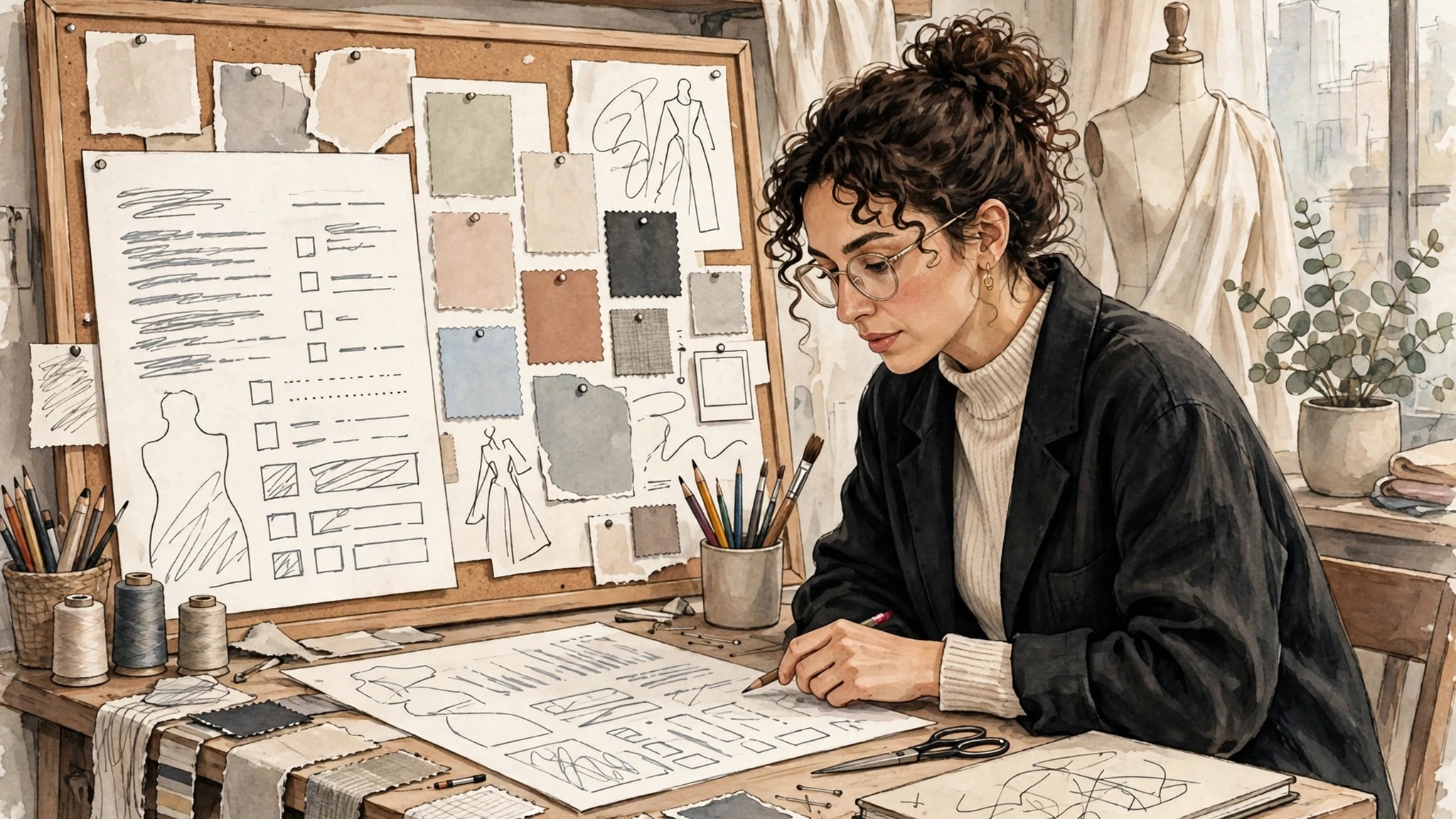
Step 1 for how to start a clothing brand with AI. Choose a Niche and a Small First Collection
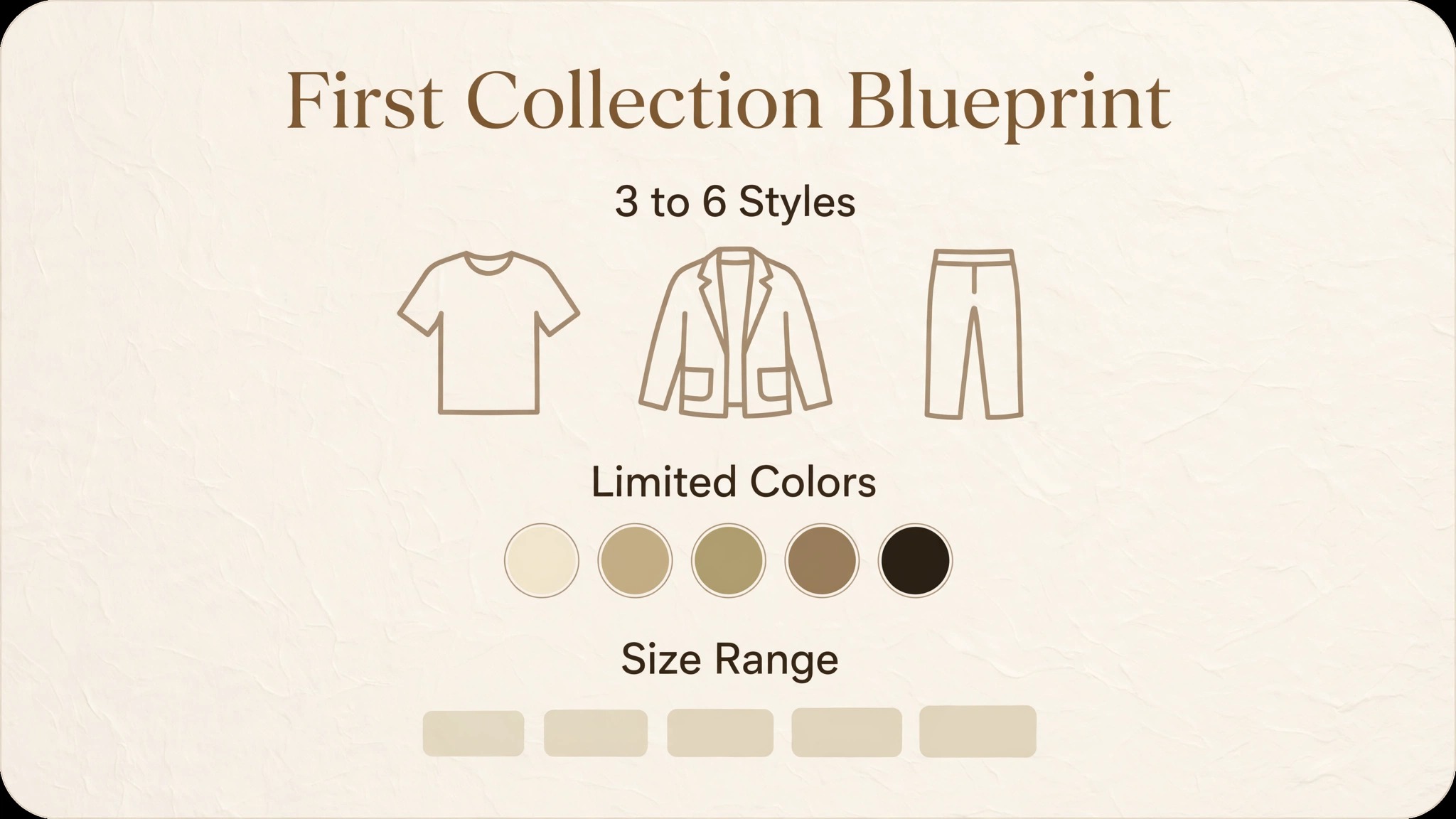
A strong first collection is small, focused, and testable. Three to six styles, in a limited color range, with clear sizes, is often stronger than twenty styles that split your budget, complicate production, and confuse buyers. Each style should earn its place by serving a distinct need for your customer. A core tee, a layering piece, and a bottom, for example, can form a complete outfit story, while three similar tees in slightly different cuts compete with each other and dilute your launch.
Use AI to explore niche options and to stress test them. Ask it to list sub niches within your broader interest, the main competitors in each, the price ranges those competitors use, and the gaps buyers mention in reviews. Then verify those gaps by reading reviews yourself, visiting stores, and talking to customers. A gap that appears only in AI summaries may be a gap in data, not a gap in the market. A gap that appears in real reviews, such as poor sizing, weak fabric, or limited colors, is a design brief you can act on.
Design direction also needs constraints. Choose a color palette, a fabric direction, and a fit direction before you generate dozens of concepts. AI image and design tools can help you explore silhouettes, patterns, and color combinations quickly, and they can help you create mood boards and mockups for discussion. Treat those outputs as exploration, not as final designs. Final designs need technical details, measurements, fabric weights, stitching, trims, labels, and care instructions, and those details come from you, your designer, and your supplier, not from a generated image.
For design assistance options, you can review our guide to the best AI tools for graphic designers to compare tools, while keeping final design decisions tied to your customer profile and fit testing.
Step 2. Develop Designs, Fabrics, and Fit That Survive Real Wear
Design development moves from concept to a tech pack, which is the document a manufacturer uses to make your product. A tech pack includes flat sketches, measurements for each size, fabric and trim details, construction notes, color codes, and labeling and packaging requirements. AI can help you draft tech pack outlines, measurement tables, and checklists, and it can help you write clear construction notes from your rough descriptions. It cannot replace a designer or pattern maker for accurate grading across sizes, and it cannot judge how a fabric drapes, stretches, or washes.
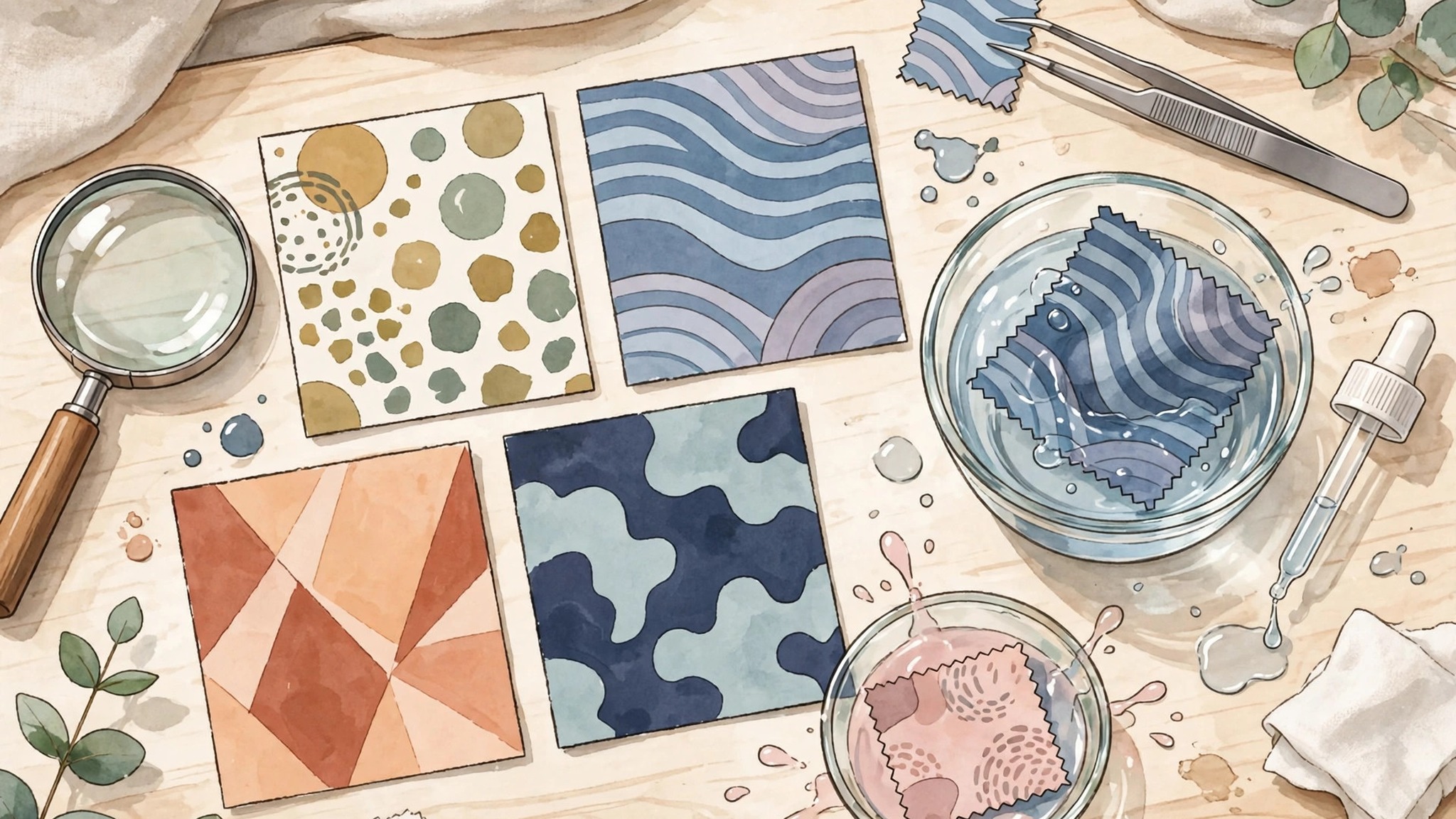
Fabric choice deserves hands on testing. Order swatches, feel them, wash them, stretch them, and compare them under different light. A fabric that looks rich in a photo may feel thin, pill quickly, or shrink unevenly. Record fabric supplier, composition, weight, price, minimum order, and test results for each option, so you can compare fairly and reorder reliably. If sustainability matters to your brand promise, verify claims with supplier documentation rather than repeating a marketing label, because buyers and regulators increasingly check those claims.
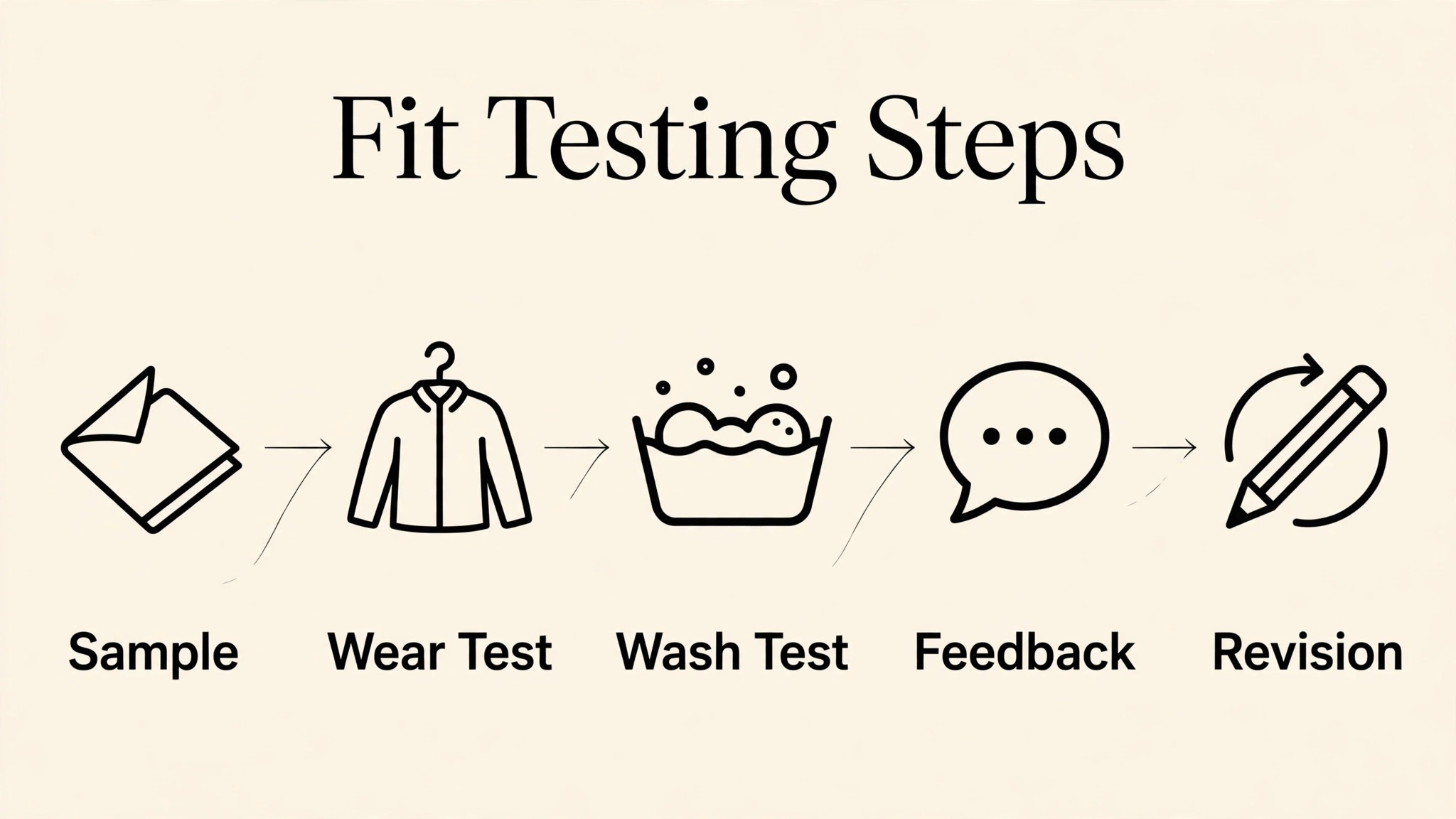
Fit testing is the step new brands most often skip, and it is the step that most affects returns. Test samples on real people across your size range, not just on one fit model. Ask testers to move, sit, work, and wash the garment, then record fit issues by size and body type. Adjust measurements before bulk production, even if that delays launch, because a fit problem discovered after production becomes a return problem, a review problem, and a cost problem all at once. AI can help you organize fit feedback into a clear revision list, but the feedback itself must come from bodies wearing the clothes.
Step 3. Find Suppliers and Understand Production Realities
Supplier choice shapes quality, cost, timeline, and flexibility. Options include local small batch manufacturers, overseas factories, print on demand services, and hybrid models where you stock core styles and use print on demand for test designs. Local manufacturers often offer smaller minimums, faster communication, and easier sample checks, at a higher unit cost. Overseas factories often offer lower unit costs at higher minimums, longer lead times, and more complex shipping and quality control. Print on demand offers no inventory risk and wide design testing, but less control over fabric, fit, and margins.
Use AI to draft supplier outreach messages, comparison sheets, and question lists covering minimum order quantity, sample cost and timeline, fabric sourcing, production timeline, quality control process, defect policy, shipping terms, and payment terms. Then verify suppliers through samples, references, and small trial orders before you commit to a full collection. A supplier who answers clearly, meets sample timelines, and fixes sample issues promptly is worth more than a supplier with the lowest quote and slow, vague replies.
For print on demand specifically, the model fits test designs and graphic led brands well, and our guide to the best AI tools for print on demand sellers can help you compare tools for that route. Even with print on demand, order your own samples, check print quality after washing, and photograph the real product, because customers compare your listing photos with the item they receive, and a generated mockup that hides print texture or fit will create returns.
Production planning needs a timeline with buffers. Samples, revisions, bulk production, shipping, customs where relevant, quality checks, and photography all take time, and delays in one stage push every later stage. Build your launch date backwards from a realistic production timeline, add buffer weeks, and communicate delays honestly if they happen. A launch delayed by two weeks with clear communication keeps trust. A launch rushed with poor quality loses it.
Step 4. Price for Profit After All Costs
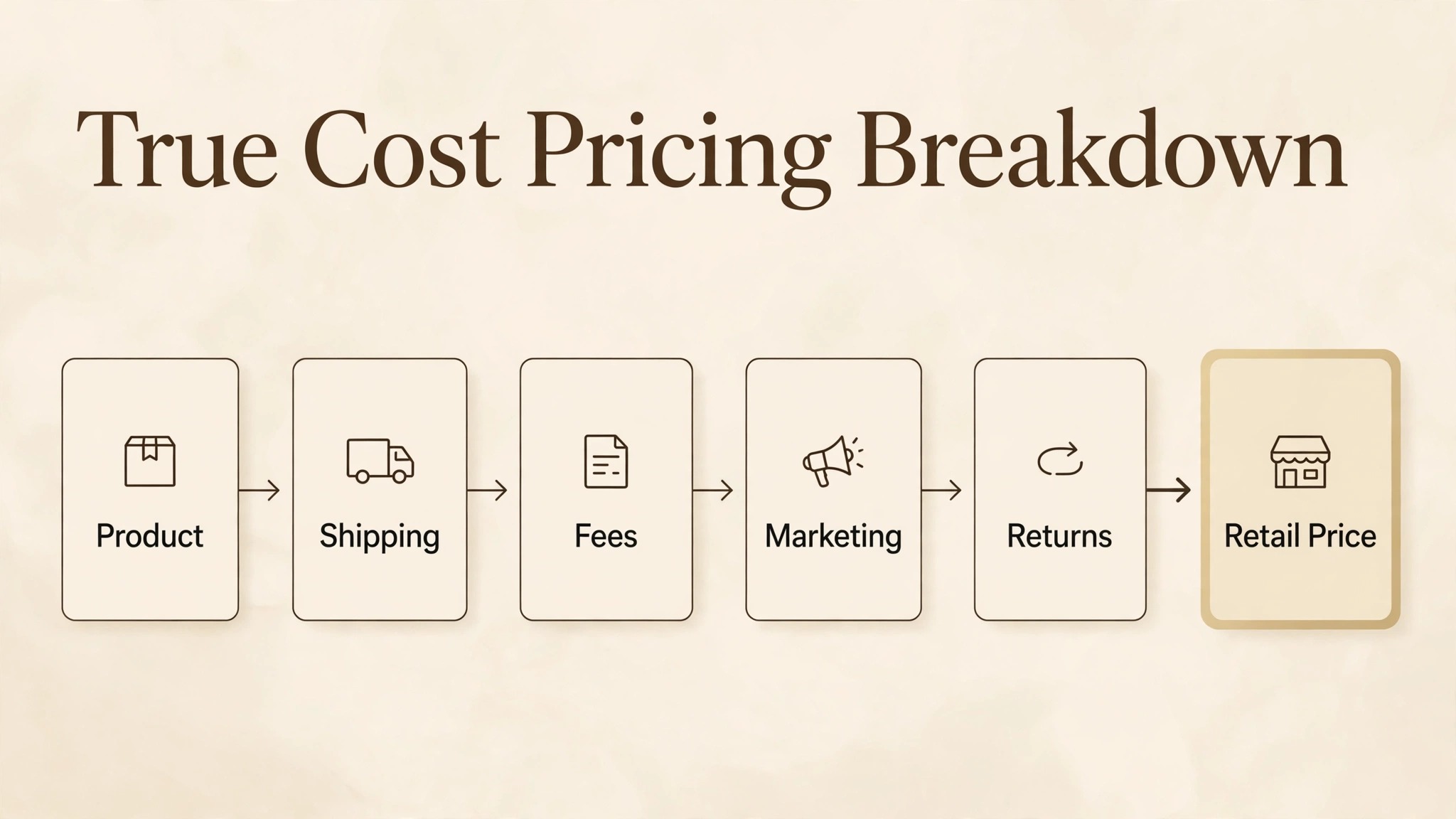
Pricing a clothing brand requires full cost honesty. Start with product cost per unit, including fabric, trims, labor, and packaging. Add shipping to you, import costs where relevant, warehousing, payment fees, platform fees, marketing cost per order, returns cost, and a share of fixed costs such as design, photography, and website. Then set a retail price that leaves a margin you can live with after discounts. Many new brands price from competitor listings alone, without adding their own full costs, and discover too late that a sale price that looks competitive loses money after fees and returns.
Use AI to build a pricing sheet and to test scenarios. What happens if you offer a launch discount, free shipping over a threshold, or a bundle price? Test each scenario against your true costs, not just against revenue. A bundle that increases order value but includes a low margin item may look successful while earning less than a single full price sale. A free shipping threshold that sits just above your average order value can lift orders, but only if shipping cost is already included in your margin math.
Also decide your discount discipline early. Frequent deep discounts train buyers to wait, erode margin, and make your full price look inflated. A launch offer, a seasonal sale, and a loyalty reward can work, but they should be planned, limited, and measured. AI can help you draft discount rules and measure their effect, but you set the rule that protects your brand. For example, allow no discount below a floor price that still covers all costs plus a minimum margin.
Step 5. Build a Store, Photography, and Launch Plan That Converts
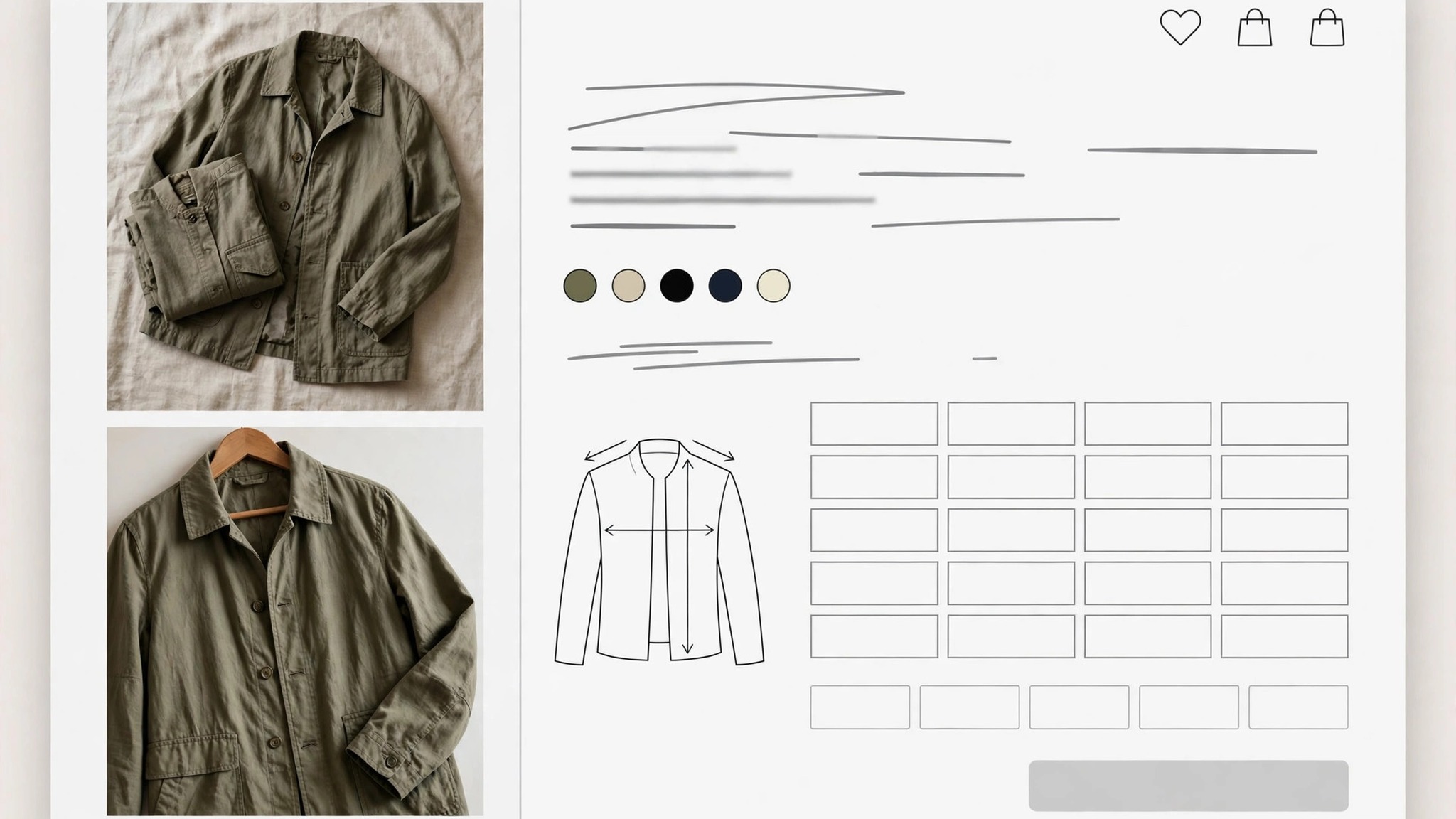
Your store should make buying easy and trust easy. Clear product names, honest size guides with measurements, fabric and care details, shipping and return policies in plain language, and real photos from multiple angles, including close ups of fabric and details, all reduce hesitation and returns. AI can help you write product descriptions that highlight fit, fabric, and use cases, and it can help you draft size guide explanations, but the measurements and photos must match the real product. A size guide that does not match the garment creates returns no description can fix.
Photography deserves a real budget, even for a small launch. Flat lays, ghost mannequin shots, and on model photos each show different information, and a mix of all three usually converts better than a single style. Use AI tools to clean backgrounds, adjust consistency, and create social crops, but keep the product color and fit truthful. If AI editing changes a color or smooths a fabric texture, buyers will notice the difference on delivery and trust will drop.
Launch planning should focus on a small audience you can reach well, rather than a large audience you can only shout at. Build an email list before launch with a clear reason to join, such as early access, a fit guide, or a behind the scenes look at production. Partner with creators or communities who already serve your customer, and give them real products to wear and review, not just discount codes. Plan launch content around the story of the collection, the customer problem, the fabric and fit choices, and the people who tested it. That story gives buyers a reason to choose a new brand over a known retailer.
If you sell through a major platform as well as your own store, compare platform fees, audience, and control before you commit. Our guide to shopify alternatives can help you compare store platforms, while your own site remains the place where brand story, size guidance, and customer relationships live most fully.
Tools Compared for Clothing Brands
Clothing brands use AI across design, writing, photography, and marketing, so compare tools by the job they actually improve. General chat tools help with niche research, product descriptions, supplier messages, and marketing drafts. Design tools help with mood boards, mockups, and pattern exploration, but they do not replace tech packs or fit testing. Ecommerce and photography tools help with store setup, image consistency, and listing quality. Social and email tools help with launch and repeat sales, but they only work when the product and fit are already right.
Test tools on your real collection, not on sample prompts. Ask a design tool to explore variations of your actual palette and silhouette, ask a writing tool to describe your actual fabric and fit, and ask a marketing tool to draft posts for your actual launch story. The tool that stays accurate on your real product is the tool worth paying for. A tool that produces beautiful generic fashion copy for any brand will produce beautiful generic copy for yours too, and buyers can tell.
Useful official starting points include ChatGPT for research and writing, Claude for editing product and supplier documents, Canva for social and lookbook visuals, and Shopify for store setup. Check current pricing and terms on each official site, because ecommerce and design pricing changes often and a feature you need may sit on a higher plan.
| Tool type | Best for | Watch out for | Good starting test |
|---|---|---|---|
| General chat AI | Research, descriptions, supplier messages, marketing drafts | Generic fashion language, invented fabric claims | Describe your real fabric and fit accurately |
| Design and image AI | Mood boards, mockups, color exploration | Final designs without tech pack detail | Explore variations of your palette |
| Ecommerce platform | Store, checkout, discounts, analytics | Fees, app costs, platform rules | Build one real product page end to end |
| Photo editing AI | Background cleanup, consistent crops | Color or texture changes that mislead buyers | Compare edited photo with real garment |
| Email and social tools | Launch list, repeat sales, community | Audience growth without product readiness | Draft a launch sequence for a real date |
How to Choose Your Launch Model
Choose a launch model based on budget, control, and risk tolerance, in that order. A small batch stocked model gives you control over fabric, fit, packaging, and delivery speed, but it requires upfront stock cost and storage. A print on demand model gives you low risk and wide testing, but less control and lower margins. A pre order model can fund production and test demand, but it requires clear timelines, honest communication, and a plan for delays. A hybrid model, stocked core styles plus print on demand test designs, often balances control and risk for a first brand.
If you have limited funds, start with the model that lets you test fit and demand with the least stock risk, then move core winners into stocked production once sales prove them. If you have strong supplier access and a clear customer, a small stocked launch may be stronger, because you control quality and delivery from day one. Either way, set a clear test goal, a number of orders, a return rate ceiling, and a repeat purchase or review signal that tells you to reorder, revise, or stop a style. Without that goal, a launch can drift into endless test designs with no winner.
Sustainability Claims, Sizing, and a Story Buyers Can Check
Sustainability can be a real advantage for a clothing brand, but only when claims are specific and verifiable. A vague claim about eco friendly fashion tells buyers nothing and invites skepticism, especially from buyers who have seen similar claims from large brands. A specific claim, such as fabric composition, supplier certification, production location, packaging material, or a take back program, can be checked and can guide buying decisions.
Gather documentation from suppliers before you publish any claim, keep that documentation in your records, and write product pages in plain terms that say what is sustainable, what is not yet sustainable, and what you plan to improve next. Honesty about limits builds more trust than a perfect sounding claim that falls apart under a simple question.
Sizing inclusivity deserves the same practical approach. A size range that looks inclusive on a website but fits poorly at the ends of the range will generate returns and disappointment. If you offer an extended range, test it properly across that range, with real testers, real movement, and real wash cycles, and publish measurements for each size rather than relying on generic size labels alone. Size labels vary across brands and regions, so measurements are the information buyers actually use to choose.
AI can help you format size charts, draft measurement explanations, and organize feedback by size, but it cannot tell you whether a garment fits a body it has never measured. Invest fit time where your range is widest, because that is where trust is won or lost most quickly.
Brand story also needs checking. Buyers connect with stories about a founder, a craft, a place, or a community, but they connect most when the story explains a product decision. A story about why you chose a heavier fabric for workwear, why you added a reinforced pocket, or why you tested a garment for a full work week gives buyers a reason to care that also explains quality.
A story that only talks about inspiration, without linking to fit, fabric, or function, feels decorative. Use AI to help you draft story versions and to tighten them, then test each version by asking whether a buyer could use it to predict what the product will feel like to wear. If the answer is no, rewrite the story around a decision the buyer can feel.
After Launch, Reorders, Reviews, and Community That Compounds
Launch day is the start of learning, not the end of work. In the first weeks after launch, track orders by style, size, and color, return reasons by product, review themes, and questions from buyers. That data tells you which styles deserve reorders, which sizes need more stock, which colors should be dropped, and which product descriptions need clearer fit or fabric information. Use AI to summarize review and support themes weekly, but read a sample of raw reviews yourself, because summaries can smooth over a specific complaint, such as a pocket placement issue or a zipper problem, that deserves a design fix rather than a wording fix.
Reorder decisions should follow a simple rule. Reorder winners, revise fixable problems, and stop clear losers. A winner is a style with steady sales, low returns, and positive reviews that mention fit or quality specifically. A fixable problem is a style with good demand but a specific complaint you can address in the next batch, such as a measurement change or a fabric switch. A clear loser is a style with low sales, high returns, or complaints about core fit that would require a redesign. AI can help you build a reorder sheet that compares sales, margin, return rate, and review score side by side, so the decision uses all four signals rather than sales alone.
Community building after launch should focus on buyers who already love the product. Ask for reviews with a simple prompt about fit and wear, share customer photos with permission, answer questions publicly where helpful, and invite repeat buyers to test new styles before public launch. That small group gives you fit feedback, honest reviews, and early sales for the next drop, without paid advertising. Keep community promises small and keep them. If you promise early access, deliver it. If you promise a restock date, meet it or update buyers early. A new brand earns repeat buyers through reliability as much as through design, and reliability after launch is what turns a first drop into a second, third, and fourth collection.
Mistakes to Avoid When Starting a Clothing Brand
The first mistake is launching too many styles. A wide launch splits budget, complicates sizing and photography, and makes it hard to learn what works. Start small, learn fast, and expand winners.
The second mistake is skipping fit and wash testing. A garment that looks good new and fails after three washes will generate returns and negative reviews that outweigh launch excitement. Test, revise, then produce.
The third mistake is ordering based on hope rather than pre launch evidence. Waitlist signups, pre orders, creator interest, and early sample feedback are evidence. Personal enthusiasm alone is not. Order a quantity you can sell through a realistic channel in a realistic time, even if unit cost is slightly higher at that quantity.
The fourth mistake is vague brand positioning. If your brand could be any fashion brand with a different logo, buyers have no reason to choose it. A specific customer, a specific problem, and a checkable difference give buyers that reason.
The fifth mistake is underpricing to win sales. Low prices that ignore full costs, fees, and returns create a business that cannot afford marketing, quality improvements, or restocks. Price for a sustainable margin, then earn sales through fit, quality, and story.
The sixth mistake is neglecting post purchase experience. Packaging, delivery updates, easy returns, and a follow up message shape reviews and repeat purchases. A brand is not just the garment, it is everything from checkout to the second order.
Frequently Asked Questions
How much does it cost to start a clothing brand
Cost varies by model, supplier, and collection size, so build a budget from real supplier quotes, sample costs, photography, platform fees, and initial marketing. A small print on demand test costs far less than a stocked collection, but both need a budget for samples, photos, and launch outreach.
Should I use print on demand or stocked inventory
Print on demand suits testing designs with low inventory risk and lower control. Stocked inventory suits core styles where you want control over fabric, fit, and delivery, once demand is proven. Many new brands start with testing, then stock winners.
How many styles should I launch with
A small focused launch of three to six styles, with clear sizes and a limited color range, usually works better than a wide launch. Each style should serve a distinct customer need, so you can learn which styles deserve reorders and expansion.
How do I find a reliable clothing supplier
Research suppliers, request samples, check references, and run a small trial order before a full collection. Clear communication, on time samples, and prompt fixes to sample issues matter more than the lowest initial quote.
Can AI design my clothing line for me
AI can explore concepts, palettes, and mockups, and it can help with tech pack drafts and product writing, but final designs need technical specifications, fabric testing, and fit testing on real people. Use AI for exploration and organization, keep design judgment and quality control with you and your designer.
How do I market a new clothing brand with no audience
Start with a specific customer community, an email list built before launch, creators who already serve that customer, and a clear collection story based on fit, fabric, and testing. Small, targeted outreach to the right audience usually beats broad advertising for a new brand.
A Small Collection Done Well Beats a Large Collection Done Fast
A clothing brand is built one good garment at a time, tested on real people, priced to sustain the business, and sold to a specific customer who can see themselves in it. AI can speed up research, design exploration, writing, and marketing, and it can help you organize production and launch work that used to take weeks of manual effort. It cannot replace taste, fit judgment, supplier relationships, or honest customer conversations, and brands that pretend it can usually discover that truth through returns and quiet launches.
Start with a customer profile, a one sentence promise, and a small collection you can test properly. Order samples, wash them, fit them, revise them, and only then commit to stock. Price for full costs, photograph the real product, and launch to a small audience you can serve well. If those first styles earn reorders, reviews, and repeat buyers, you have a brand. Expand from that proof, style by style, rather than from hope. That slower, evidence based path is what turns a launch into a brand that lasts past its first drop.