
About 7 in 10 campers now book online before they arrive, and a park that still takes bookings by phone loses those guests to the park down the road, which is why the best booking software for campsites decides how full your season runs. A camper who cannot see a site map and book a pitch in two minutes will book somewhere else.
This guide compares ten booking tools that campsites actually use in 2026, judged on online booking, site maps, payments, channel connections, and price. Prices are taken from vendor pages checked in late 2026, so look at the current plan on the vendor site before you pay, because prices change.
The ten tools split into three groups. Per-reservation platforms like Campspot charge only when a guest books, which suits seasonal parks. Subscription platforms like RoverPass charge a monthly fee with published prices. Desktop tools like Campground Master cost once and run on your own computer. Your pick should follow whether your season is short or year-round.
Why Campsite Bookings Fall Apart Without Software
A campsite owner takes a booking by phone, writes it on a paper grid, and takes another booking for the same pitch from a website listing an hour later. The double booking is discovered on Friday evening when two families arrive for one pitch, and the owner spends the weekend fixing a mistake that software would have prevented.
That gap is exactly what the best booking software for campsites is built to close. One live availability grid feeds the website, the booking engine, and the listing sites, so a pitch cannot be sold twice. The owner sees the whole park at a glance, and the guest sees only the pitches that are actually free.
The second problem is the off-season bill. A subscription that costs the same in January as in July hurts a park that earns nothing for four months, while a per-reservation fee costs nothing when nobody books. The right pricing model follows the shape of your season, not the size of your park.
The 10 Tools at a Glance
| Tool | Main job | Best for | Starting paid price |
|---|---|---|---|
| Campspot | Per-reservation booking platform | Revenue management | about $2 per online reservation |
| Newbook | Cloud property management | Multi-park operators | about $3.50 per booking |
| RMS Cloud | Property management system | Cabins and glamping | pricing on the vendor site |
| ResNexus | All-in-one reservation system | Small hotels and parks | pricing on the vendor site |
| Campground Master | Desktop campground software | Buy once | $795 one-time license |
| Firefly Reservations | Per-reservation booking | No monthly base | per-reservation fees, no monthly base |
| RoverPass | Reservation system plus marketplace | Published pricing | from about $99 a month |
| BookYourSite | Simple online booking | Simple setup | pricing on the vendor site |
| Aspira | Enterprise reservation system | Large parks | pricing on the vendor site |
| Checkfront | Booking platform | Tours and activities | pricing on the vendor site |
No single row in this table settles the choice, because the best booking software for campsites for a 30-pitch family park looks different from the right pick for a 300-pitch resort. A small park needs low cost and a simple map, while a big park needs revenue tools and channel connections. Price narrows the list, and the detail section tells you which tool fits your working day.
Best Pick by Job
| Job type | First pick | Second tool | Why this pair works |
|---|---|---|---|
| Small family park, 30 pitches | Campground Master | Firefly Reservations | Buy once plus per-reservation fees with no monthly bill |
| Seasonal park, closed in winter | Campspot | Newbook | Pay per booking plus per-booking cloud platform |
| RV park with monthly residents | RoverPass | ResNexus | Monthly billing plus all-in-one management |
| Multi-park operator | Newbook | Campspot | Enterprise platform plus revenue management |
| Budget first park | Campground Master | BookYourSite | One-time license plus simple online booking |
| Glamping and cabins | ResNexus | RMS Cloud | Channel connections plus hotel style management |
A small family park should start with the best booking software for campsites that costs the least over a whole year, and Campground Master wins that job with a one-time license and no monthly fee. Firefly Reservations sits behind it as a per-reservation backup with no monthly base.
A seasonal park needs a model that costs nothing in winter, so Campspot takes the lead with per-reservation pricing, while Newbook stays on as the cloud platform for parks that want more structure. An RV park with monthly residents should run RoverPass instead, because monthly billing is built in.
How to Judge the Best Booking Software For Campsites
Start with the site map, not with the feature list. Open the booking engine on a phone, pick a pitch on the map, and book it for a weekend. A tool that makes that flow take two minutes is worth more than one with fifty features you never open, because the map is the job your guests repeat every booking.
Next, test the double booking, because the best booking software for campsites is judged by what it prevents, not what it shows. Book the same pitch twice from two places at once, and see whether the system stops the second booking. A tool that allows a double booking will cost you a weekend of angry guests, and no feature list can excuse it.
Then model the real seasonal cost, including the fees guests pay. A per-reservation fee of 2 dollars costs nothing in winter and scales with success, while a 99 dollar monthly fee costs 1,188 dollars a year whether the park is full or empty. Work out the total across your whole season, not just your busiest month.

The 10 Tools in Detail
The tools below each get a full review, with the best feature, the honest price, and the drawback a park owner should know. Start with the pick for your park size, then read the runner-up, because the second system sometimes fits a seasonal park better.
1. Campspot
Campspot is the revenue platform in this guide, and its strength is yield management. Dynamic pricing and revenue per available site tracking help a park earn more from the pitches it already has. Pricing is about 2 dollars per online reservation, with no monthly fee, no setup fee, and no import fee. The fee can be passed to the guest, which means the park can pay almost nothing.
It fits parks that want to grow revenue, not just take bookings. The trade-off is the sales process, since Campspot needs a demo and a quote for larger parks. Best for Revenue management. Paid plans start at about $2 per online reservation.
A team moving from Newbook should run both tools for two weeks, so no bookings is lost in the switch. Keep Newbook running until the first full month closes cleanly in the new tool, then cancel the old plan only after every bookings record is confirmed in place, and keep a backup export on file for a month after the switch.
2. Newbook
Newbook is the cloud property system for campgrounds and RV parks, and its strength is structure. Online booking, channel manager, payments, and automation live in one enterprise-grade platform. Pricing for Essentials is about 3.50 dollars per booking, with higher tiers quoted per park. The platform suits multi-park operators that need central reservations and reporting.
It fits larger parks and groups that need a full system. The trade-off is weight, since Newbook is heavier than a simple booking engine. Best for Multi-park operators. The entry paid price is about $3.50 per booking.
Before you leave RMS Cloud, download your bookings and confirm the history comes with them. A trial that covers one full billing cycle shows the true cost of leaving RMS Cloud, because the first month always looks cheaper than the second month does, so keep a backup export on file for a month after the switch.
3. RMS Cloud
RMS Cloud is the property system that handles campgrounds, cabins, and glamping in one place, and its strength is flexibility. The same grid manages pitches, cabins, and rooms with different rates and rules. Pricing is on the vendor site, quoted per property, and the platform includes booking, payments, and channel connections. The system suits parks that mix pitches with cabins.
It fits parks with mixed accommodation types. The trade-off is setup, since RMS Cloud needs configuration before it feels simple. Best for Cabins and glamping. Pricing is on the vendor site.
If you switch from ResNexus, export your bookings first and check every record survives the move. Run ResNexus and the new tool side by side for two full weeks, so the team can compare real bookings in daily work before the old subscription ends for good, and keep a backup export on file for a month after the switch.
4. ResNexus
ResNexus is the all-in-one system for campgrounds, glamping, and small hotels, and its strength is breadth. Reservations, channel connections, point of sale, and guest marketing live in one account. Pricing is on the vendor site, based on services, units, and season, with no setup fees and a price-match promise. Directory sites cite prices from about 20 dollars a month, but that is not the vendor number.
It fits parks that want one vendor for everything. The trade-off is the quote process, since ResNexus does not publish a price list. Best for Small hotels and parks. Pricing is on the vendor site.
A team moving from Campground Master should run both tools for two weeks, so no bookings is lost in the switch. Keep Campground Master running until the first full month closes cleanly in the new tool, then cancel the old plan only after every bookings record is confirmed in place, and keep a backup export on file for a month after the switch.
5. Campground Master
Campground Master is the buy-it-once tool in this guide, and its strength is the price model. A one-time license of 795 dollars buys the software with no monthly fee, which suits parks that hate subscriptions. The license covers any number of campsites on one computer, with a year of support and updates included. The software runs on your own computer, so it works without internet.
It fits small parks that want no monthly bill. The trade-off is the desktop, since there is no cloud booking engine built in. Best for Buy once. The entry paid price is $795 one-time license.
Before you leave Firefly Reservations, download your bookings and confirm the history comes with them. A trial that covers one full billing cycle shows the true cost of leaving Firefly Reservations, because the first month always looks cheaper than the second month does, so keep a backup export on file for a month after the switch.
6. Firefly Reservations
Firefly Reservations is the friendly per-reservation tool here, and its strength is the model. The park pays a fee per booking with no monthly base, which suits small and seasonal parks. Pricing is per reservation with no monthly fee, and the platform includes online booking, a site map, and payments. The system is easy to learn, which suits family parks.
It fits independent family parks that want low cost. The trade-off is revenue tools, which are lighter than Campspot. Best for No monthly base. Starting paid price per-reservation fees, no monthly base.
If you switch from RoverPass, export your bookings first and check every record survives the move. Run RoverPass and the new tool side by side for two full weeks, so the team can compare real bookings in daily work before the old subscription ends for good, and keep a backup export on file for a month after the switch.
7. RoverPass
RoverPass is the only cloud platform here with published entry pricing, and its strength is transparency. A 99 dollar monthly minimum covers per-reservation fees, and the marketplace brings extra bookings. Pricing starts from about 99 dollars a month, with 3.50 dollars per reservation counting toward the minimum and dropping to 1.50 dollars at scale. Monthly resident billing is built in.
It fits RV parks that want published prices and a marketplace. The trade-off is the monthly minimum, which costs money in the off-season. Best for Published pricing. Paid plans start at from about $99 a month.
A team moving from BookYourSite should run both tools for two weeks, so no bookings is lost in the switch. Keep BookYourSite running until the first full month closes cleanly in the new tool, then cancel the old plan only after every bookings record is confirmed in place, and keep a backup export on file for a month after the switch.
8. BookYourSite
BookYourSite is the simple booking tool in this guide, and its strength is the fast setup. A park gets an online booking engine and a site map without a long implementation. Pricing is on the vendor site, quoted per park, and the platform covers reservations, payments, and guest emails. The system suits parks that want to go live quickly.
It fits small parks that want simple online booking. The trade-off is depth, since the reporting and channel tools are lighter. Best for Simple setup. Pricing is on the vendor site.
Before you leave Aspira, download your bookings and confirm the history comes with them. A trial that covers one full billing cycle shows the true cost of leaving Aspira, because the first month always looks cheaper than the second month does, so keep a backup export on file for a month after the switch.
9. Aspira
Aspira is the enterprise reservation system here, and its strength is scale. It serves large parks, public lands, and multi-park groups with central reservations and reporting. Pricing is on the vendor site, quoted per organization, and the platform includes booking, payments, and channel management. The system is built for volume.
It fits large parks and public operators. The trade-off is cost and complexity, which rule it out for small family parks. Best for Large parks. Pricing is on the vendor site.
If you switch from Checkfront, export your bookings first and check every record survives the move. Run Checkfront and the new tool side by side for two full weeks, so the team can compare real bookings in daily work before the old subscription ends for good, and keep a backup export on file for a month after the switch.
10. Checkfront
Checkfront is the booking platform for parks that also sell tours and activities, and its strength is the activity booking. Pitches, tours, and rentals share one calendar and one checkout. Pricing is on the vendor site, quoted per business, and the platform includes online booking, payments, and reporting. The activity tools suit parks with more than just pitches.
It fits parks that sell experiences alongside pitches. The trade-off is the campground focus, which is thinner than the dedicated park tools. Best for Tours and activities. Pricing is on the vendor site.
A team moving from Campspot should run both tools for two weeks, so no bookings is lost in the switch. Keep Campspot running until the first full month closes cleanly in the new tool, then cancel the old plan only after every bookings record is confirmed in place, and keep a backup export on file for a month after the switch.
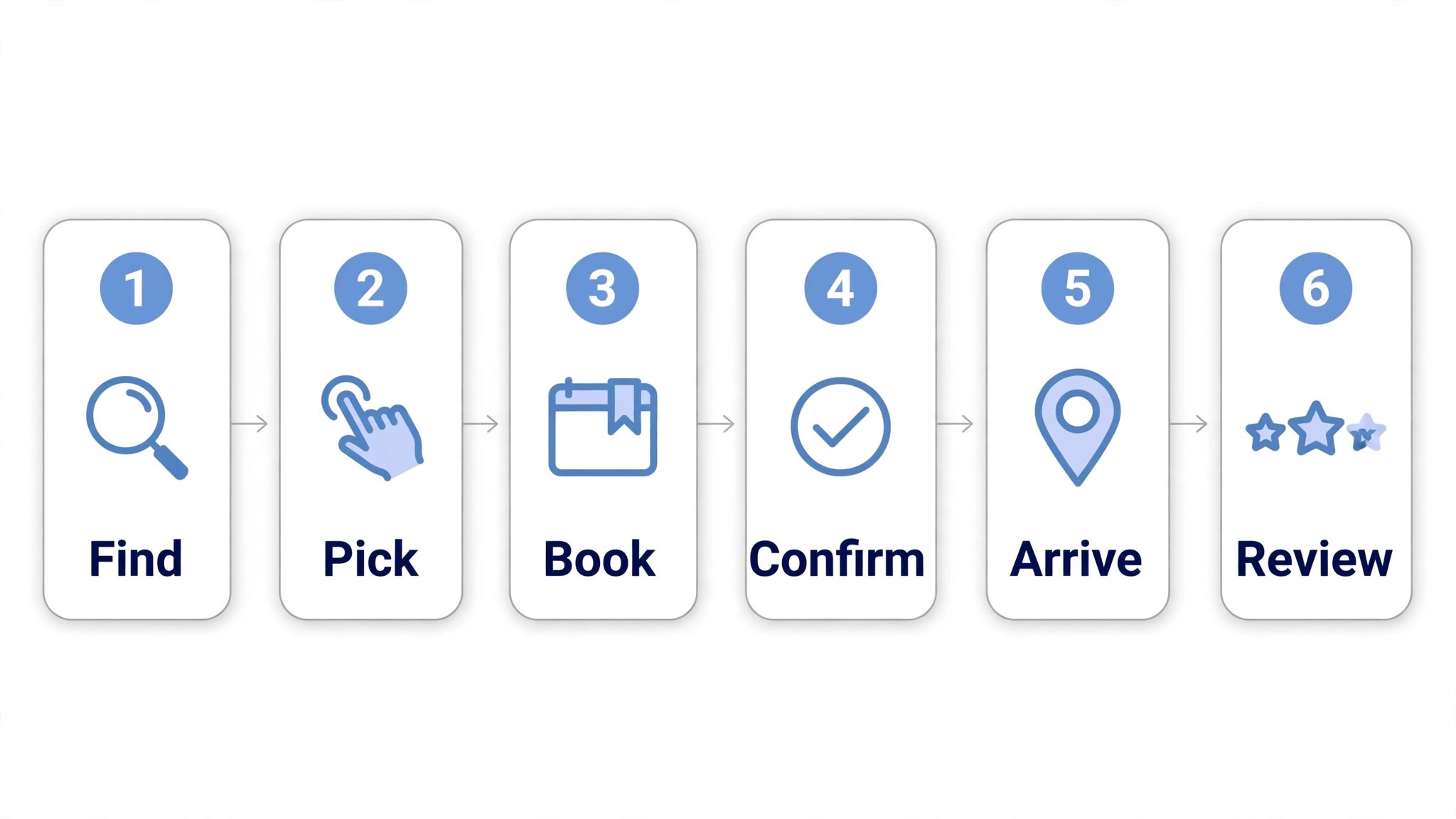
From Inquiry to Check-In in Six Moves
| Step | Job | Best tool | What good looks like |
|---|---|---|---|
| 1 | Guest finds the park | Campspot | Listing and website show live availability |
| 2 | Guest picks a pitch | Newbook | Interactive map with pitch photos and prices |
| 3 | Guest books and pays | RoverPass | Deposit taken online with clear terms |
| 4 | Park confirms | ResNexus | Confirmation email and gate code sent |
| 5 | Guest arrives | Campground Master | Check-in list shows who is due today |
| 6 | Guest reviews | Firefly Reservations | Review ask sent after check-out |
The workflow above is the real test of the best booking software for campsites, because a tool that handles all six moves in one place keeps the park full without the owner living on the phone. A park that runs this workflow every day fills more pitches with the same marketing, simply because fewer guests give up halfway through a booking.
Test the workflow on ten real bookings before you roll it out for the season. Take the bookings, confirm them, check guests in, and send the review ask, then ask your staff which step felt slow. The step your staff calls slow is the step the new system has to fix.
What Booking Software Costs Across a Season
| Business type | Volume | Tool stack | Monthly cost |
|---|---|---|---|
| 30-pitch park, 500 bookings | Short season | Campground Master plus Firefly | About 1,000 dollars a year |
| 60-pitch park, 1,500 bookings | Six month season | Campspot plus Newbook | About 3,500 dollars a year |
| 120-pitch park, 4,000 bookings | Eight month season | RoverPass plus ResNexus | About 6,000 dollars a year |
| 300-pitch resort, 12,000 bookings | Year round | Newbook plus Campspot | Pricing on the vendor site |
| Glamping site, 800 bookings | Six month season | ResNexus plus RMS Cloud | Pricing on the vendor site |
A 30-pitch park can run on the best booking software for campsites for about 1,000 dollars a year, using Campground Master once and Firefly per reservation, and that is the right way to start. A 60-pitch park with 1,500 bookings pays about 3,500 dollars a year for Campspot and Newbook, which buys live availability and revenue tools.
A 120-pitch park pays about 6,000 dollars a year for RoverPass and ResNexus, and a 300-pitch resort pays a quoted price. The bill grows with bookings, so model it across your whole season, and remember that one double booking avoided pays for a month of software.
Booking Mistakes That Leave Campsites Empty
The first mistake is a booking engine that hides the site map. A camper who cannot see where the pitch sits, how big it is, and what it costs will book the park that shows them. A map with photos and prices is the cheapest fix in this guide, and it works every day of the season.
The second mistake is taking bookings by phone with no system behind it, because the best booking software for campsites only helps if every booking lands in one grid. A phone booking written on paper gets lost, double booked, or forgotten, and the guest arrives to a pitch that does not exist. Every booking belongs in the system, however it arrives.
The third mistake is a monthly fee for a seasonal park. A park that earns nothing for four months should not pay a subscription for those months, and a per-reservation model fixes that in one move. Match the pricing model to your season, or the software will cost you money when you earn none.
Dynamic pricing is the revenue tool most small parks never use, and it is worth real money. A pitch that costs 40 dollars on a quiet Tuesday can cost 65 dollars on a holiday weekend, and the park fills just as well. A tool with dynamic pricing and revenue reports pays for itself in one busy weekend.
Channel connections matter more every year, because campers book on listing sites as well as on your own website. A tool that syncs availability to the big listing sites stops double bookings and fills empty pitches. A park without channel sync either turns listings off or risks the double booking.
Guest messaging is the quiet job that saves the owner hours. A confirmation email with the gate code, the check-in time, and the pitch number answers the three questions every guest asks, and it stops the phone from ringing all evening. Automate the message and the phone stays quiet.
Reviews are the marketing a campsite cannot buy. A guest who had a great weekend writes a review if you ask, and the next guest reads it before booking. A tool that sends the review ask after check-out builds the reputation that fills next season.
How Parks Price the Holiday Weekend
A pitch that costs 40 dollars on a quiet Tuesday and 40 dollars on a holiday weekend is priced wrong in both directions. The Tuesday pitch is too expensive for a quiet night, and the holiday pitch is too cheap for the busiest night of the year. A park that prices by demand earns more from the same pitches, and the guests accept it because every hotel they know does the same.
Dynamic pricing starts with three rates, not thirty. A quiet night rate, a standard weekend rate, and a holiday rate cover most of the season, and the park can add more later. A tool with dynamic pricing applies the rates automatically, so the owner sets the rules once and the system prices every night.
Minimum stays are the second lever, and they matter more than most owners think. A two-night minimum on holiday weekends stops the single-night booking that blocks a three-night guest, and the park earns more from the same pitch. A tool that enforces minimum stays by date keeps the calendar full of profitable bookings instead of gaps.
Last-minute gaps are the final opportunity. A pitch that sits empty on Thursday for the coming weekend should drop in price on Wednesday, because a discounted booking beats an empty pitch. A tool with last-minute pricing rules fills those gaps automatically, and the park earns money it would otherwise lose.
Revenue reports close the loop. A monthly report that shows revenue per available pitch tells the owner whether the pricing is working, and the number should rise year over year. A park that watches that number prices with confidence, while a park that never looks at it guesses about its own best nights.
Your First-Month Booking Setup Plan
Use this plan when you set up booking software for a campsite, and keep a copy in the office.
- Map every pitch with a photo, size, hookups, and price
- Connect the booking engine to your website and listing sites
- Set seasonal rates and a minimum stay for weekends
- Add a deposit rule and a clear cancellation policy
- Write the confirmation email with gate code and check-in time
- Train the team on check-in, changes, and cancellations
- Set up a weekly report for occupancy and revenue per pitch
- Review the first month and fix the slowest booking step
Related Guides
Keep exploring with these guides on Stratilyze:
- Best Booking Software for Business Coaches (14 Tools)
- Best Booking Software for Auto Detailing Shops (14 Tools)
- Best Booking Software for Tour Operators (5 Tools)
Frequently Asked Questions
Which booking software is best for a small family campsite?
Campground Master is the strongest pick for a small family park, because a one-time license of 795 dollars buys the system with no monthly fee. Firefly Reservations is the best per-reservation backup, with no monthly base. A small park should avoid enterprise platforms until it grows, because the monthly fee outweighs the extra features.
Does Campspot really cost only 2 dollars per booking?
Campspot charges about 2 dollars per online reservation with no monthly fee, no setup fee, and no import fee, according to its own pricing pages. The fee can be passed to the guest as a booking fee, which means the park can pay almost nothing. Confirm the current fee on the vendor site before you budget, because the model has changed before.
How much does campsite booking software cost each year?
A 30-pitch park can run for about 1,000 dollars a year with Campground Master and Firefly. A 60-pitch park should budget about 3,500 dollars a year for Campspot and Newbook, and a 120-pitch park should budget about 6,000 dollars. The per-reservation models cost nothing in the off-season, so model the total across your whole season.
Can booking software stop double bookings?
Yes, a good system keeps one live availability grid that feeds the website, the booking engine, and the listing sites, so a pitch cannot be sold twice. A park that takes bookings by phone must enter them into the same grid, or the system cannot protect it. The grid is the whole point of the software.
Should a seasonal park pay a monthly subscription?
A seasonal park should usually avoid a monthly subscription, because it pays the same in January as in July while earning nothing. A per-reservation model like Campspot or Firefly costs nothing when nobody books, which matches a seasonal business. A year-round park can use either model, so judge on features instead.
What is the fastest way to fill empty pitches?
Connect your availability to the big listing sites and keep the site map with photos and prices on your own website. A camper who can see the pitch and book it in two minutes books it, while a camper who must call waits. The map and the listing sync fill more pitches than any discount.
Our Verdict for Campsite Owners
Campspot is our pick for most campsites, because the best booking software for campsites is the one that fills pitches without costing anything in winter, and Campspot charges only when a guest books. A small park that hates subscriptions should buy Campground Master once, and an RV park with monthly residents should buy RoverPass.
Whichever tool you choose, put every pitch on a map with a photo and a price, keep one live availability grid, and match the pricing model to your season. Booking software earns its fee in pitches that never double book, guests who check themselves in, and an owner who spends the season outside instead of on the phone. Choose the tool your guests can book in two minutes, and the rest will take care of itself.