

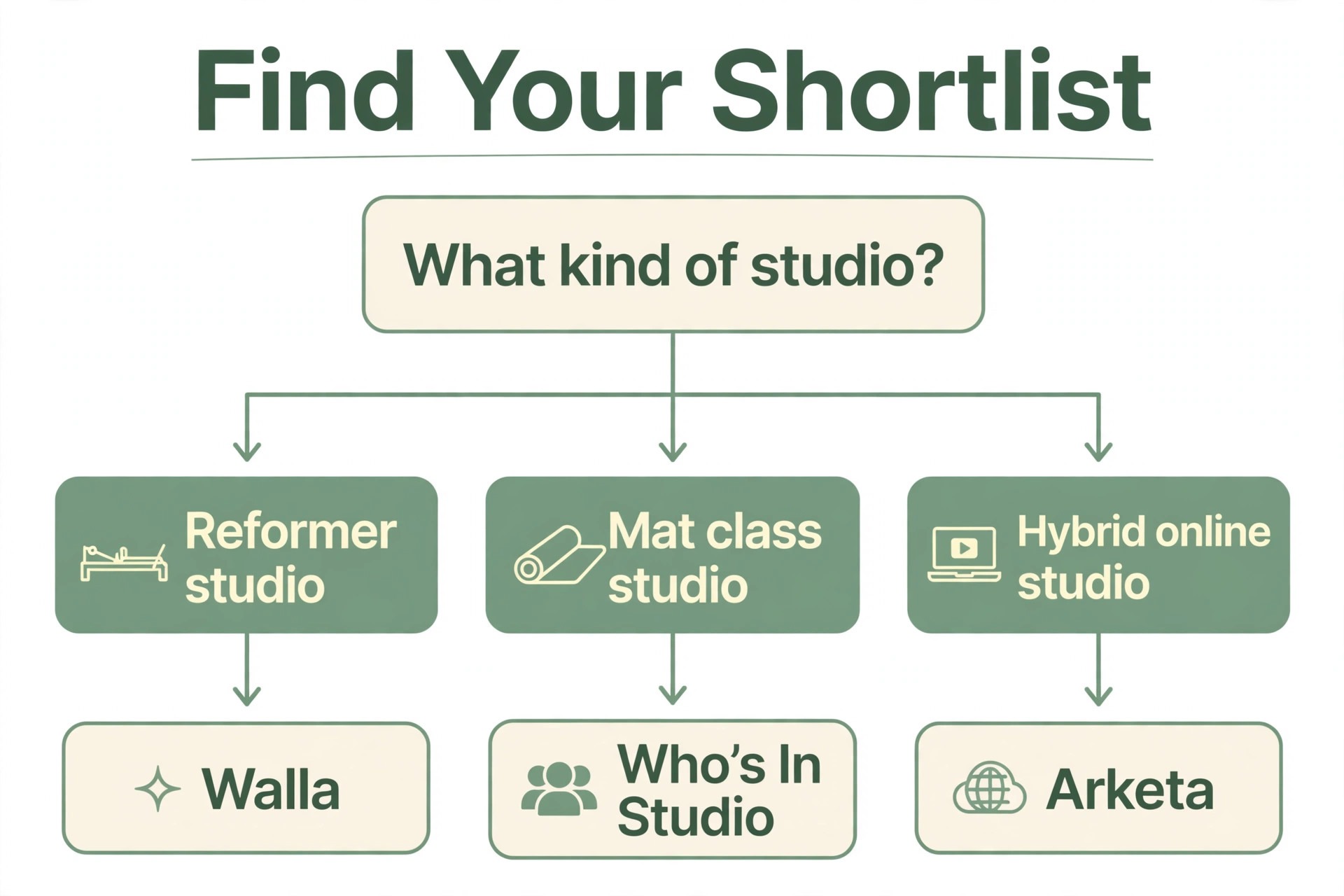
The verdict is short. For a reformer studio that books by equipment spot, Walla and Mariana Tek lead, because both treat reformers, towers, and chairs as bookable resources rather than as room capacity. For a small mat class studio that needs low cost and fast setup, Who’s In Studio and StudioBookings lead on price and simplicity. For a hybrid studio that mixes in person classes with livestreams and an on demand library, Arketa and Momence lead, because both handle video alongside booking. That split is the whole decision, and the best booking software for pilates studios is the one that matches how your classes actually fill.
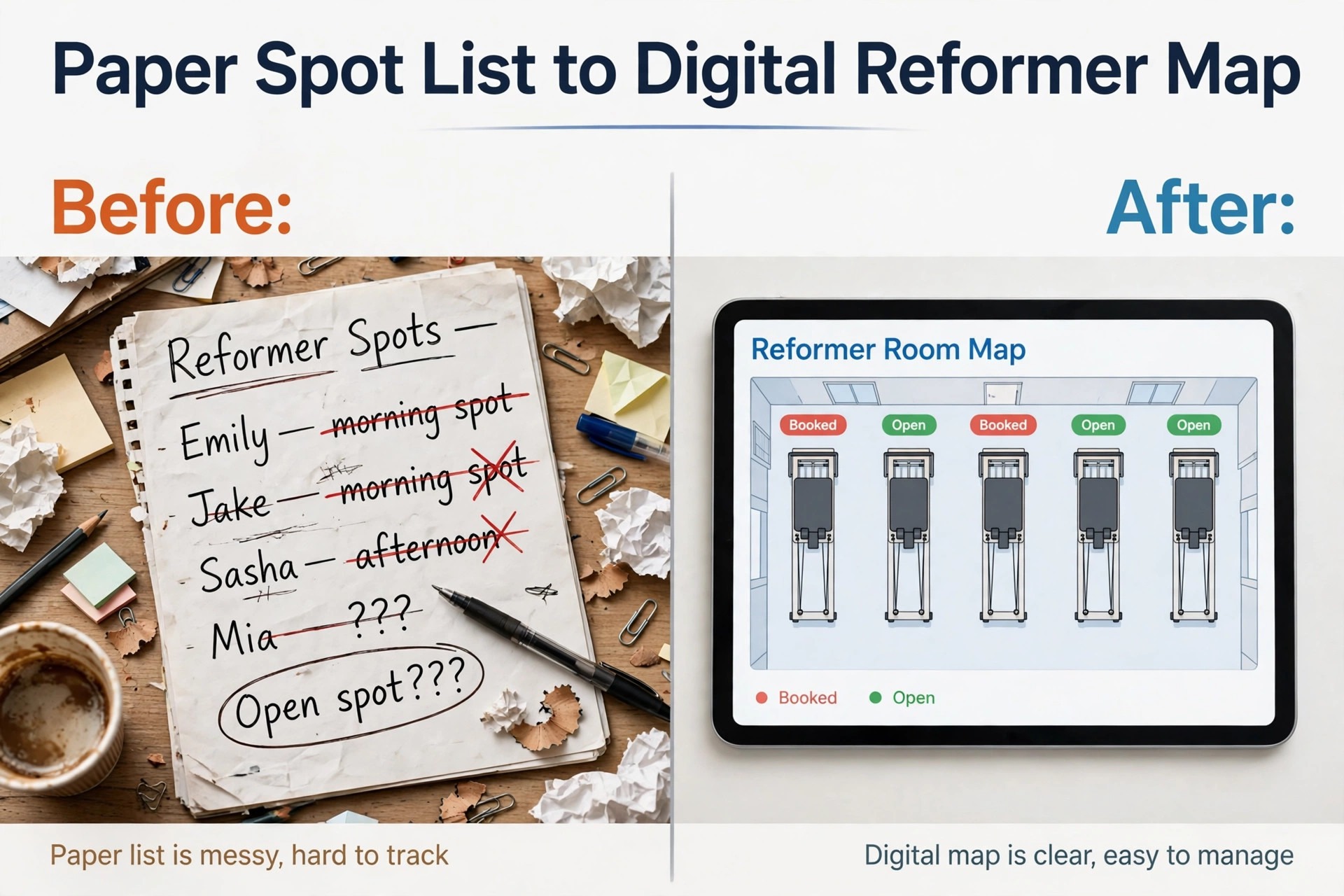
That verdict matters because Pilates booking has a trap other fitness booking does not. A reformer class with twelve machines is full when twelve spots are taken, even if the room could hold twenty people. A mat class fills by room capacity. A private session needs one instructor and one client, with a price that differs from a duet. Software that only counts heads will double book equipment, sell spots that do not exist, and create front desk arguments that a good system prevents entirely.
This guide compares fifteen tools on equipment spot booking, private and duet sessions, class packs, memberships, waitlists, payments, and multi location control. Prices come from vendor pages and recent published comparisons, and they change often, so check the vendor pricing page before you sign. Test each shortlisted tool with a reformer class, a duet booking, a waitlist fill, and a class pack purchase, because those four cases expose the gaps that matter.
The Verdict on the Best Booking Software for Pilates Studios
A Pilates studio should judge software on three questions before price. Can a client pick a specific reformer or spot, and does the system stop a second client from picking the same one. Can the studio sell private sessions, duets, group classes, and class packs without separate workarounds. Can the front desk see instructor pay, attendance, and utilization in one place at the end of the week.
Price still matters, and the range here is wide. Entry prices run from about 19 dollars a month for a small studio tool to 599 dollars a month per location for a premium platform, with several quote only tools in between. A studio that pays a premium price should be able to name the premium feature it uses every week, such as equipment aware scheduling, retention insights, or a branded app. If no weekly feature justifies the gap, the cheaper tool wins.
The 15 Tools at a Glance
Use this table to shortlist three tools, then read only those full sections in detail. Price notes are starting points from published sources, and the vendor pricing page is the final word.
| Tool | Main job | Starting point | Watch out for |
|---|---|---|---|
| Mariana Tek | Premium brand led reformer studios | From 399 dollars a month | Quote based higher tiers |
| Walla | Spot booking plus retention insights | From 299 dollars a month per location | Add ons raise the total fast |
| Momence | Mixed classes, appointments, and video | Check the vendor pricing page | Pricing is not published |
| Mindbody | Large platform with marketplace | From 79 dollars a month per location | Higher tiers are quote only |
| WellnessLiving | Broad wellness booking and loyalty | From 69 dollars a month | Entry tier covers one staff member |
| Vagaro | Low cost booking with marketplace | From about 30 dollars a month | Equipment booking is simpler |
| TeamUp | Flexible memberships by customer count | From 119 dollars a month | Price rises with active customers |
| Arketa | Booking plus on demand library | From 49 dollars a month for one instructor | Studio plans are quote only |
| Punchpass | Simple passes and memberships | From 59 dollars a month | No texting or branded app |
| StudioBookings | Low cost booking for small studios | From 25 dollars a month | Plainer design |
| Who’s In Studio | Low cost independent studios | From 19 dollars a month | Small vendor |
| FitBudd | Instructor led studios with video | From 79 dollars a month | Smaller ecosystem |
| OfferingTree | Booking plus website builder | From 26 dollars a month for solo teachers | Studio price rises to 100 dollars |
| ClubReady | Larger fitness businesses | Check the vendor pricing page | Pricing is not published |
| Glofox | Boutique studios at scale | From 99 dollars a month | Higher tiers are quote only |
Shortlisting the best booking software for pilates studios from a table alone is risky, because two tools can look equal on price and differ sharply on equipment booking. Use the table to cut the list to three, then test equipment spots, duets, and waitlists in a trial before you decide.

Best Pick by Job
Use the best booking software for pilates studios table below to match your studio type first, then test only the tools in your row.
| Studio type | First pick | Second tool | Why this pair works |
|---|---|---|---|
| Reformer studios | Walla | Mariana Tek | Spot booking plus premium brand control |
| Mat class studios | Who’s In Studio | StudioBookings | Low cost plus simple class packs |
| Hybrid online studios | Arketa | Momence | Video library plus mixed booking |
Reformer studios need equipment truth above all else. Walla offers Book a Spot with waitlists, private and duet booking, and retention insights, while Mariana Tek offers equipment aware scheduling for reformers, towers, and chairs with a brand first member experience. A reformer studio that books by spot will feel the difference in the first full week.
Mat class studios need a different strength. Room capacity, class packs, memberships, and waitlists matter more than equipment spots, and price matters more because margins on mat classes are thinner. Who’s In Studio covers separate rooms with their own capacity, class packs, QR check in, and wallet membership passes at a low entry price, while StudioBookings covers the same core jobs with every feature included on every plan.
Hybrid online studios need video and booking in one system. Arketa combines class, private, and event scheduling with livestream management, unlimited video storage, courses, and memberships. Momence combines classes, appointments, workshops, events, and on demand content with payments and marketing. The right choice depends on whether a course library or a mixed appointment diary matters more.
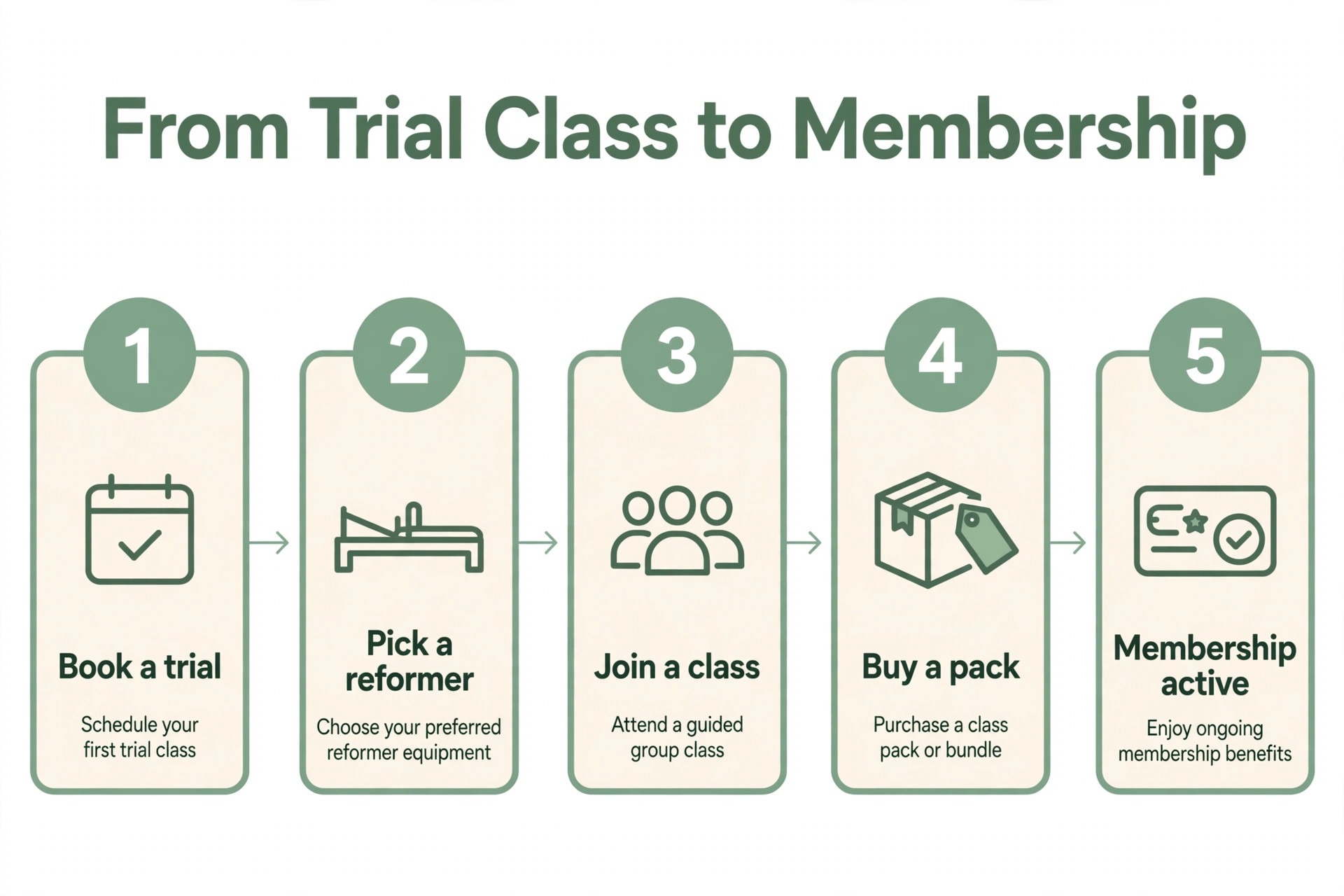
The 15 Tools in Detail
Each section below judges the tool on Pilates specific jobs, so you can see where the best booking software for pilates studios earns its price and where it does not.
1. Mariana Tek
Mariana Tek is built for premium boutique Pilates studios, from a first studio to a multi location brand. Members join the studio, not a booking system, because the brand stays in front and the platform stays invisible. Equipment aware scheduling covers reformers, towers, and chairs, with private sessions, marketing, and reporting built to scale.

Pricing starts at 399 dollars a month in published comparisons, with core and growth packages for multi location work. That price puts Mariana Tek in the premium tier, and it fits studios that will use brand control, equipment scheduling, and integrated marketing every week. A small single room studio will likely pay for depth it never uses.

The trade off is cost and quote based higher tiers. A studio should ask for a written quote that includes every location, add on, and processing fee before signing. For a premium reformer brand with growth plans, Mariana Tek is the strongest shortlist pick. For a small studio, compare Walla or Who’s In Studio first.

2. Walla
Walla is studio software made for yoga, Pilates, barre, and Lagree studios, with native on demand video, retention insights, advanced reporting, and equipment spot booking. Core costs 299 dollars a month per location and Pro costs 599 dollars a month per location in published comparisons, with unlimited users. Core includes video on demand courses and Book a Spot with waitlists.
Add ons change the total. A branded studio app costs 149 dollars a month plus a 500 dollar build fee on Core, and is included on Pro. Two way texting costs 100 dollars a month on Core. A studio that adds both to Core reaches close to Pro pricing, so compare Core with add ons against Pro directly rather than against the Core headline alone.
Walla suits studios focused on class utilization and retention, because retention insights show which clients are slipping away before they cancel. Priced per location, it fits single location premium studios and multi location brands that can justify the per site cost with utilization gains.
3. Momence
Momence suits businesses that mix classes, appointments, workshops, events, and on demand content in one flexible platform. Pilates studios can run group classes, private and recurring appointments, workshops, and video content together, with payments, memberships, and marketing in the same system. Integrated customer management and automated follow up help a studio keep leads warm between trial and enrollment.
Pricing is not published, which is the main drawback. Published comparisons report a free basic option with transaction shares, and reviewer reports of monthly quotes that vary widely by studio size. A studio should request a written quote, ask for the full transaction fee picture, and compare the total against a published price tool such as Walla or WellnessLiving.
Momence fits a studio that values flexibility over a single booking model, and that will use appointments, events, and video together.
4. Mindbody
Mindbody is the most widely used studio platform in this category, with group classes, private sessions, class packs, waitlists, automated billing, staff scheduling, and a consumer marketplace. That marketplace exposes a Pilates studio to people searching for classes nearby, which is a real discovery channel that smaller tools cannot match. Reporting depth is also strong, with more than one hundred reports in published descriptions.
Pricing starts at 79 dollars a month per location for the starter tier, with higher tiers quote only. Published guides also report an essentials tier at about 129 dollars a month and premium tiers from 349 dollars to 500 dollars a month or more, so check the vendor pricing page for the current tier names and limits. Starter leaves out several marketing and branded app features, so price the tier you actually need.
Mindbody suits established and multi location studios that want discovery and reporting depth. A small independent studio may find the price and contract terms heavier than Who’s In Studio or StudioBookings, and should only choose Mindbody when marketplace discovery is a real growth channel.
5. WellnessLiving
WellnessLiving bundles scheduling, automated marketing, loyalty programs, reputation management, and a branded client app into one subscription. Clients can reserve classes, appointments, or events from any device, and the scheduler covers online booking, waitlists, and recurring classes. Room and equipment booking is included, which helps Pilates studios that need more than headcount booking.
Pricing starts at 69 dollars a month for starter, which covers one staff member, with business at 199 dollars a month and business pro at 349 dollars a month in published comparisons. Annual billing reduces each tier by roughly ten percent. A studio with several instructors will need a higher tier sooner than the headline suggests, so model the price with the full instructor list.
WellnessLiving suits small multi service wellness businesses that want a low entry price and a simple setup, plus loyalty and review tools. A reformer heavy studio should test equipment spot booking carefully, because breadth here is stronger than equipment depth compared with Walla or Mariana Tek.
6. Vagaro
Vagaro is trusted by more than ninety thousand fitness businesses in published descriptions, and it offers class scheduling, private sessions, membership and class pack management, automated reminders, on demand video, and a marketplace for client discovery. That combination makes it a strong value pick for small to mid size Pilates studios that want an all in one tool at a transparent price.
Pricing starts at about 30 dollars a month for a solo instructor, with additional staff at about 10 dollars each in published guides. Other published comparisons report lower per calendar prices in some regions, so check the vendor pricing page for your region and staff count. Card processing fees apply on top of the subscription, at about 2.75 percent in published guides.
Equipment booking is simpler than Momence or Walla, so a reformer studio that books by specific machine should test spot booking in a trial. A mat class studio or a private session studio that values marketplace discovery and low cost will likely prefer Vagaro over a premium tool.
7. TeamUp
TeamUp offers capacity based booking, payments, and flexible plans based on customer numbers, with no long term contract in published descriptions. That model suits studios whose active customer count changes by season, because the price follows the roster rather than a fixed tier. Memberships, class packs, appointments, and waitlists with messaging cover the core Pilates jobs.
Pricing starts at 119 dollars a month for up to one hundred active customers in published comparisons, rising to 189 dollars a month for one hundred one to two hundred customers, and higher for larger rosters. A branded app costs extra, at about 99 dollars a month in published guides. Model the price at peak season roster size, not at a quiet month count.
TeamUp suits studios that want flexible memberships and month to month pricing, and that run a mix of classes and appointments. A reformer studio that needs specific equipment spots should test that job carefully, because TeamUp strength is flexible plans rather than equipment depth.
8. Arketa
Arketa is booking software for wellness studios, with Pilates and Lagree among the businesses it is built for. The individual plan costs 49 dollars a month billed yearly, for one instructor login, plus a 3 percent transaction fee on top of card processing. It includes class, private, and event scheduling, livestream class management, unlimited video storage, courses and programs, and memberships and recurring packages.
Studio plans are quote only, which is the main drawback for a growing studio. A solo instructor or a small hybrid studio can start on the individual plan and judge the video library and booking flow at a known price. A multi instructor studio should request a studio quote early, and ask whether the transaction fee changes on studio plans.
Arketa suits an instructor or creator selling online classes and programs alongside in person sessions, because the on demand library and course tools are core, not add ons. A pure reformer studio that does not sell video may find Walla more focused for the same budget.
9. Punchpass
Punchpass is class and pass management software for studios, with class, appointment, and event scheduling, passes and memberships, waitlists, late cancel charges, automations, and a video content library sized by plan. Booking tools include paylinks and private sessions, which help a studio that sells both group classes and one to one work.
Pricing runs from 59 dollars a month for grow, to 99 dollars for flow, and 149 dollars for pro, billed monthly, with a fourteen day trial in published guides. Memberships start on the 99 dollar plan, so a studio that sells memberships should price from flow, not from grow. Card processing uses standard card rates, with no extra platform markup reported.
Punchpass suits a studio that wants simple pass and membership management at a month to month price, without texting, a branded app, or a website builder. A studio that needs those extras should compare WellnessLiving or OfferingTree, and accept the higher price for the added breadth.
10. StudioBookings
StudioBookings covers bookings, memberships, payments, and reporting for yoga, Pilates, barre, and fitness studios, with every feature included on every plan. Pricing is by instructor count, starting at 25 dollars a month for a solo owner in published comparisons, with a fourteen day free trial and no payment required. Stripe and Google Calendar integrations cover the essentials.
That all features model removes tier anxiety. A small studio does not lose reporting, waitlists, or membership tools by choosing the entry plan, because those tools are already included. The design is plainer than premium tools, and equipment spot booking is simpler than Walla or Mariana Tek, so test reformer spots in a trial if that job matters.
StudioBookings suits cost conscious studios that want a straightforward setup and a low entry price. It is a strong pick for a mat class studio or a new reformer studio watching costs, and a weaker pick for a premium brand that needs deep equipment and retention tools.
11. Who’s In Studio
Who’s In Studio is built for independent studios, with separate reformer and mat rooms that each have their own capacity, class packs, QR check in, and wallet membership passes. Starter costs 19 dollars a month, or 15.83 dollars a month billed annually, for up to ninety nine active members, and growth costs 49 dollars a month for unlimited members. Every feature is included on both plans, with the member limit as the only difference.
A small studio can run a full booking, pack, and membership system at a price that leaves room for marketing and instructor pay.
Who’s In Studio suits independent studios that want reformer and mat rooms handled separately without a premium price. The vendor is smaller than Mindbody or WellnessLiving, so a studio should test support response during a trial. For a small studio, the price and room capacity model make it a first shortlist pick.
12. FitBudd
FitBudd is built for Pilates instructors and small studios, with an on demand library, habit coaching, and a branded app alongside class booking. That combination suits an instructor who sells both live classes and a video library, and who wants clients to keep a habit between sessions. Class packs, memberships, and private sessions cover the live booking side.
Pricing starts at 79 dollars a month in published comparisons, with a built in on demand library rather than a paid video add on. That price sits above budget tools and below premium per location platforms, which fits a small studio that will actually use video and coaching tools every week. A studio that does not sell video should compare StudioBookings or Who’s In Studio first.
FitBudd suits instructor led studios where the instructor brand drives enrollment, and where video extends the studio beyond class times. A larger multi location studio that needs equipment depth and group reporting may find Walla or Mariana Tek stronger.
13. OfferingTree
OfferingTree is the only tool in several published comparisons that includes a self serve website builder on every plan, which matters for a studio that does not yet have a good website. Solo pricing starts at 26 dollars a month on an annual plan, and studio pricing starts at 100 dollars a month in published guides. Booking, class packs, memberships, and payments sit alongside the website builder.
Mindbody also includes a website, but its team builds it rather than handing the studio a page editor, which is a different kind of control.
OfferingTree suits a new or small studio that needs a website and booking together, and that wants to control its own pages. A reformer heavy studio should still test equipment spot booking, because website strength is not the same as equipment depth.
14. ClubReady
ClubReady is built for larger fitness businesses, with booking, memberships, billing, and reporting at a scale that suits multi location operators. It appears in several Pilates comparisons as a larger studio option, alongside Mindbody and Mariana Tek, for studios that have outgrown small studio tools and need deeper business controls.
Pricing is not published, so check the vendor pricing page or request a quote for your location count and member volume. A studio should ask for the full fee picture, including processing, texting, and any branded app cost, before comparing ClubReady against a published price tool. Quote only pricing makes direct comparison harder, but it also allows a larger studio to negotiate terms.
ClubReady suits larger studios and groups that need scale, reporting, and business controls more than a low entry price. A small independent studio will usually find better value in Who’s In Studio, StudioBookings, or Vagaro, and should only shortlist ClubReady when growth plans justify it.
15. Glofox
Glofox is a boutique fitness platform with booking, memberships, payments, and a branded app, positioned for studios that want to scale from one location to several. Published comparisons put the starting price at 99 dollars a month, with full tiers quote only. That entry price sits between budget tools and premium per location platforms.
Glofox strength is boutique scale, with class booking, membership management, and reporting that suit a growing brand. Ask for a written quote for the tier that includes the branded app and reporting you need.
Glofox suits a boutique studio with growth plans that wants a branded experience without jumping straight to premium pricing. A small studio that only needs booking and packs should compare cheaper tools first, and a premium reformer brand should compare Mariana Tek.
How to Test a Pilates Tool in One Trial Week
Run four bookings in your trial of the best booking software for pilates studios, and score each one honestly. Book a reformer class by specific spot, and confirm the system blocks a second booking on the same spot. Book a duet with two clients and one instructor, and confirm the price and the instructor diary both update. Fill a waitlist spot after a cancellation, and confirm the waitlisted client gets a clear message. Sell a class pack, use one visit, and confirm the remaining balance is correct in the client portal.
Finally, test the client experience on a phone. A Pilates client books, cancels, and buys packs from a phone far more often than from a desktop, so a booking flow that feels slow on mobile will cost real bookings. If the trial feels awkward on a phone, treat that as a serious warning, not a minor flaw.
Setup Checklist for a Pilates Studio Switch
Follow this sequence when you move to the best booking software for pilates studios you chose, and do not skip the spot and pack tests.
- List every reformer, tower, chair, and mat space as a separate bookable resource, with its own capacity and rules.
- Build class types for reformer, mat, private, and duet sessions, each with its own price, duration, and cancellation rule.
- Import clients, class packs, and memberships, and check that remaining pack visits match your old records exactly.
- Connect payments, run a test purchase and a test refund, and confirm the client portal shows both correctly.
- Invite a small group of regular clients to book spots, join a waitlist, and buy a pack before a full launch.
- Train instructors on spot booking, duet pricing, and waitlist fills, because those three jobs cause most front desk questions.
- Keep the old system read only for one full billing cycle, so no pack balance or payment record is lost in the move.
A careful switch protects client trust, especially for reformer clients who care deeply about their spot. A lost spot, a double booked reformer, or a wrong pack balance will damage trust faster than any new feature can rebuild it. Test spots and packs twice, and launch only when both are clean.
Frequently Asked Questions
These answers cover the questions studio owners ask most when they compare the best booking software for pilates studios.
How much should a small Pilates studio pay for booking software?
Most small studios pay between 19 dollars and 119 dollars a month for a solid tool, with premium reformer platforms from 299 dollars a month per location once spot booking, retention tools, or a branded app are included. Price the tier you need at your real instructor and member counts, and add card processing and any platform fee. A tool at 19 dollars a month that handles your rooms and packs well beats a premium tool whose extra features stay unused.
Can clients pick a specific reformer when they book?
Yes, on tools with equipment spot booking, such as Walla and Mariana Tek, where each reformer, tower, or chair is a bookable spot. On general booking tools, a client books a class place, not a machine, and the front desk must assign spots separately. If spot choice matters to your clients, put equipment spot booking on the shortlist criteria before price.
Does Pilates software handle private sessions and duets?
Most tools in this guide handle private sessions and duets, but pricing and diary handling differ. Check that a duet charges two clients correctly, blocks one instructor diary once, and shows both clients on the session record. Test that flow in a trial, because a tool that handles group classes well can still mishandle duet pricing.
Should a hybrid studio buy booking software and video software separately?
A hybrid studio can buy separately, but a combined tool such as Arketa or Momence often works better, because clients use one login for classes, livestreams, and video. Separate tools can still work when the video library is large and needs specialist features, but the studio must then manage two logins, two payments, and two support teams. Start combined, and split only when a clear video need justifies it.
What happens to class packs when a studio switches software?
Class packs should transfer with their remaining visit counts intact, but the transfer only works if the old records are clean. Export pack balances, check them against payment records, and test a sample of clients in the new system before a full launch. Keep the old system read only until the first pack renewal cycle is clean, so any error can be corrected from the original record.
Is a branded app worth the extra cost for a Pilates studio?
A branded app is worth the cost when clients book often, buy packs from a phone, and value a studio branded experience. It is less valuable for a small studio whose clients book from a website link and rarely open an app. Compare the app cost against the booking volume it serves, and test the client app in a trial before paying for it.
The Final Word for Pilates Studios
The practical winner among the best booking software for pilates studios depends on your class model, not on a single ranking. A reformer studio should shortlist Walla and Mariana Tek, and choose on price, brand control, and retention tools. A mat class studio should shortlist Who’s In Studio and StudioBookings, and choose on price and room capacity handling. A hybrid studio should shortlist Arketa and Momence, and choose on video depth and appointment flexibility.
Whatever you choose, run the trial week in this guide, price the second year with all add ons included, and pick the tool your instructors can run on a busy Saturday morning. A Pilates studio lives on trust, spot accuracy, and smooth booking, and the right software protects all three without adding work to the front desk.
Read the related guide on Small Gym Class Booking System Setup for a practical setup workflow that pairs well with a new Pilates booking system.