

One day spa books a couple’s massage, a facial, and a sauna session in a single visit with rooms, therapists, and quiet gaps all aligned, while another spa with the same services double books a treatment room, leaves a therapist idle for an hour, and calls a client to move a long awaited appointment. The difference is not the therapists. It is the booking system, and it is why the best booking software for day spas must handle rooms, sequences, and packages, not just calendar slots. A spa sells time, space, and calm together, and software that only sells time will break the other two.
This guide compares fifteen tools for day spas, from enterprise platforms built for chains to free starting points for solo therapists. Prices vary widely and some vendors quote only, so check the vendor pricing page before budgeting, and treat third party figures as reported starting points. The right choice follows your spa type, because a treatment spa, a wellness spa, and a resort spa stress different parts of the same system.
A treatment spa lives on sequential bookings, where one client moves from consultation to treatment to checkout without a gap that wastes a room. A wellness spa lives on memberships, class schedules, and repeat visits across many services. A resort spa lives on multi-location coordination, guest bookings from a hotel system, and high volume weekends. Keep your type in mind through every section below, since a tool that excels for one type can frustrate another.
Why Spa Booking Is Harder Than Salon Booking
Salon booking assigns a stylist and a chair. Spa booking assigns a therapist, a room, equipment, and sometimes a second therapist, in a sequence that must finish before the next client arrives. A ninety minute massage followed by a thirty minute facial needs the same room, a changeover gap, and a therapist handover that a generic calendar cannot see. The best booking software for day spas models rooms and resources as bookable items, so a room cannot be promised to two treatments at once.
Packages and memberships add a second layer. Spa clients buy series of treatments, gift cards for friends, and monthly memberships that include one treatment plus discounts on more. The system must track remaining sessions, expiry dates, and membership billing without staff doing mental arithmetic at checkout. A package sold but poorly tracked becomes a dispute at the front desk, and a membership billed but poorly explained becomes a cancellation.
Intake and privacy add a third layer. Spas collect health notes, preferences, allergies, and treatment history that must stay private and travel with the client record. A system with intake forms, secure notes, and consent tracking protects both client and business, while a generic booking tool that stores notes in a free text field creates risk. Compare intake, notes, and privacy controls in the trial, not just the calendar, since those features decide whether therapists trust the system with real client information.
The 15 Tools at a Glance
| Tool | Main job | Best for | Watch out for |
|---|---|---|---|
| Zenoti | Enterprise spa platform | Chains and resort spas | Quote only pricing |
| Mangomint | Modern spa booking | Boutique and mid-size spas | Per user cost as teams grow |
| Booker | All in one spa platform | Established multi-staff spas | Longer contracts reported |
| Mindbody | Membership and marketplace | Wellness spas and fitness crossover | Price rises with features |
| Vagaro | All in one value platform | Small spas on a budget | Per calendar pricing |
| Fresha | Booking plus marketplace | Spas needing discovery | 20 percent new client commission |
| Booksy | Booking plus marketplace | Small spas wanting discovery | Boost commission on new clients |
| GlossGenius | Polished booking and payments | Solo therapists and small spas | Advanced features on higher tiers |
| Boulevard | Premium client experience | Premium multi-room spas | Higher per location price |
| Phorest | Marketing led salon and spa | Growth focused spas | Quote only pricing |
| WellnessLiving | Wellness booking and classes | Wellness spas with classes | Feature breadth takes learning |
| Timely | Simple booking with texts | Small spas wanting simplicity | Narrower enterprise features |
| Goldie | App based spa scheduling | Solo providers and small teams | Free plan appointment limit |
| Square Appointments | Free booking for Square users | Solo therapists starting out | Thinner spa specific workflow |
| Setmore | Free booking for small teams | Small spas on a tight budget | Free plan user limit |
The best booking software for day spas spans a wide price range, and the table below shows why headline prices mislead. Mangomint reports 120 dollars per month per location plus 10 dollars per user in recent third party comparisons, while Booker reports Starter at 139 dollars, Accelerate at 289 dollars, Ultimate at 469 dollars, and Ultimate Plus at 599 dollars per month. Mindbody Starter is reported between 79 and 99 dollars per month per location across 2026 comparisons, so check the vendor pricing page for the current figure.
Boulevard reports Essentials at 140 dollars, Premier at 234 dollars, and Prestige at 328 dollars per location per month in third party guides. Vagaro reports 30 dollars per month for one calendar, Fresha 19 dollars and 95 cents for a solo location, Booksy 29 dollars and 99 cents, and GlossGenius 24 dollars billed annually. Zenoti and Phorest price by quote only. Timely reports 26 dollars per month for one staff member, Goldie offers a free Starter plan up to 20 appointments a month, and Setmore offers a free plan up to four users.

Best Pick by Job
| Job type | First pick | Second tool | Why this pair works |
|---|---|---|---|
| Treatment spas | Mangomint | Boulevard | Clean booking plus premium room control |
| Wellness spas | Mindbody | WellnessLiving | Membership depth plus class scheduling |
| Resort spas | Zenoti | Booker | Multi-location scale plus all in one control |
A treatment spa using the best booking software for day spas should prioritise room and sequence control, since a mistimed room change wastes therapist hours and breaks the calm clients paid for. Mangomint gives a modern booking experience with clear room handling for boutique and mid-size treatment spas, while Boulevard adds premium scheduling, memberships, and client experience design for larger multi-room treatment spas. Either tool keeps rooms, therapists, and packages aligned without a separate spreadsheet.
A wellness spa lives on memberships, classes, and repeat visits, so Mindbody membership depth plus its consumer app listing fits, with WellnessLiving as the class scheduling alternative. A resort spa needs multi-location management, guest coordination, and high volume handling, so Zenoti enterprise scale leads, with Booker as the all in one alternative for established multi-staff resort operations. Choose by the job that earns your revenue, not by the longest feature list.
Choosing the Best Booking Software for Day Spas
Start with rooms, not calendars. List every treatment room, sauna, plunge, and shared space, plus the changeover time each treatment needs, and ask each vendor to book a complex day in the demo. A couple’s booking, a sequential treatment visit, and a group booking should all land without a room conflict or a therapist gap. If the demo avoids group and sequential bookings, the system likely handles them poorly, and your busiest weekend will expose that gap.
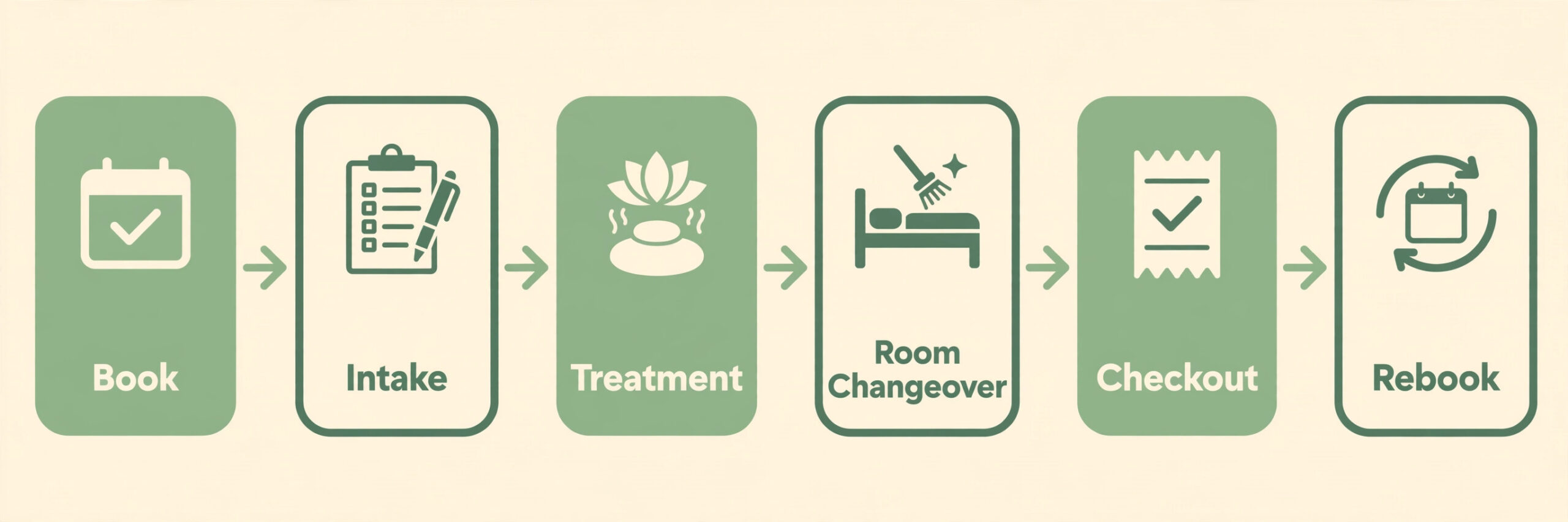
Next, test packages, memberships, and gift cards end to end. Sell a series of six facials, redeem two, check the remaining balance, and refund one session, while a membership renews and a gift card pays for a third treatment. Watch what the client sees and what the therapist sees at each step. The best booking software for day spas makes balances obvious at checkout, so staff never guess, and clients never dispute a session count at the front desk.

Then test intake and notes with a real therapist. Complete an intake form, record preferences and health notes, and book the next visit from that record, checking who can see what. A system that hides notes from the next therapist creates repeat questions that annoy clients, while a system that shows notes too broadly creates privacy risk. Confirm roles, permissions, and consent handling before launch, especially for medical leaning treatments.
Finally, model total cost at your real room, staff, and location counts. Enterprise tools quote by footprint, mid-market tools charge per location plus per user, and value tools charge per calendar or per member. A three room spa with eight therapists pays very different totals on Mangomint, Booker, and Vagaro, even before processing and text costs. Get the full quote in writing, including implementation, training, and message allowances, before comparing.
The 15 Tools in Detail
1. Zenoti
Zenoti is the enterprise spa platform in this guide, built for growing multi-site day spas, resort spas, and medical spas. It combines booking, room and resource scheduling, point of sale, memberships, payments, marketing, and multi-location management on one platform, with an AI front desk option for calls and messages. That breadth is why chains choose it despite the price and setup effort.
Pricing is quote only, with user reported figures clustering around 225 to 400 dollars per month per location in third party guides, so check the vendor pricing page and request a written quote for your footprint. Zenoti fits chains, franchises, and resort spas that need central control across sites. It fits poorly for a solo therapist or a single boutique spa, where setup time and cost outweigh enterprise features that a smaller tool covers well.

2. Mangomint
Mangomint is the modern boutique spa platform, praised for a polished interface that makes booking feel like part of the spa brand. It covers scheduling, payments, online booking, client management, forms, staff management, reporting, and integrations, with a single plan shape that keeps pricing easy to understand. Recent third party comparisons report 120 dollars per month per location plus 10 dollars per user, with in-person processing at 2 dollars and 45 cents per hundred plus 15 cents.
Mangomint fits established spas with two to twenty or more providers that treat client experience as the brand, especially treatment spas and boutique day spas. The trade off is limited group booking depth reported in some comparisons, so test couples and group visits carefully in the trial. For a spa that wants a beautiful client journey and predictable pricing without enterprise complexity, Mangomint is the strongest mid-market pick here.
3. Booker
Booker, sold through Mindbody, is the all in one platform for established multi-staff spas and medical spas. It covers scheduling, point of sale, customer records, marketing, and reporting in a single login, with one-on-one setup and training in the first year reported in third party guides. That guided setup appeals to spas moving from paper or a generic calendar to a full platform for the first time.
Pricing is reported at 139 dollars per month for Starter, 289 dollars for Accelerate, 469 dollars for Ultimate, and 599 dollars for Ultimate Plus, with a twelve month minimum contract reported in some comparisons, so check the vendor pricing page for current terms. Booker fits multi-staff spas that want depth and support and can commit to a contract. Smaller spas may find the price and commitment heavy compared with Vagaro or GlossGenius.
4. Mindbody
Mindbody is the membership and marketplace platform for wellness spas, fitness crossover businesses, and multi-location spas. Its strength is membership contracts, retention automation, and a consumer app listing that brings discovery, with unlimited staff users on every plan reported in third party guides. A wellness spa that sells memberships as its core product will use those tools daily.
Starter pricing is reported between 79 and 99 dollars per month per location across 2026 comparisons, with higher tiers quote based, so check the vendor pricing page for the current Starter figure and processing rates. Mindbody fits wellness spas and multi-location operations where membership revenue justifies the platform and its learning curve. A small treatment spa that rarely sells memberships may pay for depth it never uses.
5. Vagaro
Vagaro is the value all in one platform for solo providers and small spas, covering booking, point of sale, customer records, marketing, and a marketplace directory in one price. Its per calendar pricing keeps costs predictable for a small team, and its breadth covers most day spa needs without an enterprise contract. That combination makes it the default recommendation for a budget led small spa.
Pricing is reported at 30 dollars per month for one bookable calendar, with a promotional 23 dollars and 99 cents for a limited period, plus 10 dollars per extra calendar capped near 84 dollars for seven or more, so check the vendor pricing page for current terms. Vagaro fits small treatment and wellness spas with a handful of therapists. Larger multi-room spas may eventually need deeper room and package tools from Mangomint, Boulevard, or Zenoti.
6. Fresha
Fresha brings booking plus a large marketplace to spas that need new clients. Clients discover the spa, book online, and pay through the platform, while the spa manages calendars, staff, and marketing in one system. That discovery channel matters for a new day spa in a competitive area, where a beautiful space alone does not fill treatment rooms in the first year.
Pricing is reported at 19 dollars and 95 cents per month for a solo location and 14 dollars and 95 cents per team member, with a one-time 20 percent commission and a 6 dollar minimum on new marketplace clients, so check the vendor pricing page for current terms. Fresha fits spas that need discovery more than cost predictability. It fits poorly for a spa whose rooms already fill from referrals, repeats, and hotel guests, since those owners gain little from marketplace commission costs.
7. Booksy
Booksy pairs booking software with a consumer marketplace, giving small spas both management tools and a new client channel. It covers unlimited bookings, marketing messages, reminders, gift cards, and memberships in its standard plan, with clients discovering the spa through the Booksy app. That breadth at a flat subscription appeals to small spas that want discovery without a complex platform.
Pricing is reported at 29 dollars and 99 cents per month plus tax, plus 20 dollars per extra staff member, with an optional Boost program taking 30 percent of a new client’s first visit up to 100 dollars, so check the vendor pricing page for current terms. Booksy fits small spas and solo therapists who want marketplace reach on demand. Test local marketplace volume in your area during the trial, since discovery value depends entirely on nearby client demand.
8. GlossGenius
GlossGenius offers polished booking and payments for spas of any size seeking growth, with a fast thirty second booking flow praised in its own guides and a flat processing rate that keeps billing simple. Its booking pages look premium, which suits a spa whose online presence must feel as calm and refined as the treatment rooms. That presentation advantage is real for a business selling relaxation.
Pricing is reported at 24 dollars per month billed annually for Standard, or 28 dollars monthly, with higher team tiers for larger staff counts, and in-person processing at 2 dollars and 40 cents per hundred plus 15 cents, so check the vendor pricing page for current tiers. GlossGenius fits solo therapists and small spas that want beauty and predictability first. Larger multi-room spas should confirm room scheduling depth and package features on their tier before committing.
9. Boulevard
Boulevard is the premium client experience platform for appointment based self-care businesses, with intelligent scheduling, customer records, marketing, custom reporting, integrated payments, and AI reception options. Its design forward booking experience suits premium spas where every client touchpoint, including the digital one, must feel considered. That focus is why premium multi-room spas choose it despite a higher price.
Pricing is reported at 140 dollars per month for Essentials, 234 dollars for Premier, and 328 dollars for Prestige per location, with text and email blast allowances rising by tier, so check the vendor pricing page for current terms. Boulevard fits premium treatment spas and multi-location spas that want scheduling precision and a refined client journey. Budget led solo spas will find equal booking value at a lower price elsewhere.
10. Phorest
Phorest is salon and spa management software for growth focused premium businesses, combining booking, integrated payments, multi-channel marketing, staff performance tracking, and loyalty in one platform. It serves salons, spas, and aesthetic clinics across several countries, with a reputation for marketing and retention tools that lift average client spend. That marketing depth is its defining strength.
Pricing is quote only in third party comparisons, with plans aimed at businesses with three or more staff, so check the vendor pricing page and request a written proposal. Note that Phorest charges clients a fee per online booking in some markets, reported at 1 dollar in the United States, which spas cannot turn off in some configurations. Phorest fits growing spas that want a full-service partner with marketing support. Solo spas and tiny teams fall below its usual target size.
11. WellnessLiving
WellnessLiving is a wellness booking platform with strong class and event scheduling, which suits wellness spas that mix treatments with classes, workshops, and group sessions. It covers booking, payments, customer management, marketing, and reporting, with scheduling depth that reviewers rate highly for classes and events. A wellness spa that sells both treatments and classes needs that dual strength in one calendar.
Entry pricing is reported between 49 and 69 dollars per month across third party sources, so check the vendor pricing page for the current plan and feature split. WellnessLiving fits wellness spas with a real class programme alongside treatments. A pure treatment spa with no classes may prefer a tool whose development focuses on rooms and sequences rather than class rosters, since every platform spends its attention somewhere.
12. Timely
Timely is simple booking software that puts the salon or spa owner in control of the whole client experience, with online booking, calendars, reminders, and payments in a straightforward package. Its appeal is clarity, with a monthly SMS allowance per stylist or therapist and rebooking reminders on higher plans reported in third party comparisons. Small spas that want booking without enterprise menus find that clarity refreshing.
Pricing is reported at 26 dollars per month for one bookable staff member, with higher plans for larger teams, so check the vendor pricing page for current tiers and message allowances. Timely fits small spas that value simplicity and included texts over multi-location depth. Resort spas and chains will outgrow it, since enterprise reporting, multi-site control, and advanced package tools sit elsewhere in this guide.
13. Goldie
Goldie is an app based spa scheduling tool for beauty and wellness professionals who work alone or run small teams. It runs on a phone, a tablet, or the web, and covers booking, calendars, client records, deposits, and payments through card readers, tap to pay, card on file, and payment links. That mobile first shape suits a therapist who books between treatments rather than at a front desk computer.
The free Starter plan covers one user and up to 20 appointments a month in third party guides, with additional team members available on higher plans, so check the vendor pricing page for current limits. Goldie fits solo therapists and tiny teams starting out or testing online booking before committing to a paid platform. A busy multi-room spa will exceed the free plan quickly and should compare paid Goldie tiers against Vagaro or GlossGenius.
14. Square Appointments
Square Appointments is the booking layer for spas already running Square hardware and payments, and its free tier gives a solo therapist a credible start at zero subscription cost. Booking pages, calendars, reminders, and card payments come from the same Square account that runs the counter, which removes a second vendor and a second payout schedule. That simplicity matters in the first year of a small spa.
Paid tiers are reported from 49 dollars per month in third party guides, so check the vendor pricing page for current plan limits and processing rates. Square has no marketplace, so discovery depends on your own marketing, referrals, and local presence. Square fits solo therapists and small spas already on Square who want booking without a new subscription. Multi-room spas needing deep room, package, and membership workflow should look at Mangomint or Boulevard instead.
15. Setmore
Setmore is free leaning online booking software used by spas, salons, and many other appointment businesses. Its free plan covers up to four users in third party guides, which makes it a genuine starting point for a small spa team that needs online booking, calendars, and reminders without a monthly fee. Paid plans add team size, integrations, and advanced features for growing spas.
Setmore fits small spas on a tight budget and solo therapists testing online booking with a small team. Its spa specific depth is thinner than Mangomint, Boulevard, or Zenoti, particularly for room sequences, packages, and memberships, so a growing treatment spa should treat it as a starting point rather than a final platform. Check the vendor pricing page for current free plan limits before building a full booking flow on it.
Mistakes Spas Make When Choosing Software
The first mistake is buying for the calendar and forgetting the rooms. A demo that books single services cleanly can still fail on couples bookings, sequential treatments, and group visits, which are the bookings that fill a spa weekend. Test those complex bookings first, with real room names and changeover times, and reject any system that handles them with notes and workarounds.
The second mistake is ignoring the package and membership ledger. A spa that sells series and memberships without a clear balance view will face disputes at checkout, and each dispute damages the calm the spa sells. Confirm that balances, expiries, and renewals are visible to staff and clients before launch, and audit a sample of packages monthly until the ledger is trusted.
The third mistake is skipping intake and privacy review. Health notes and preferences need roles, permissions, and secure storage, not a shared notes field everyone can read. Review who sees what, how consent is recorded, and how records are handled when a therapist leaves. A system that treats intake as an afterthought creates risk that no booking feature can offset.

Spa Setup Checklist
Use this checklist when you move a day spa to new booking software, and keep a copy at the front desk.
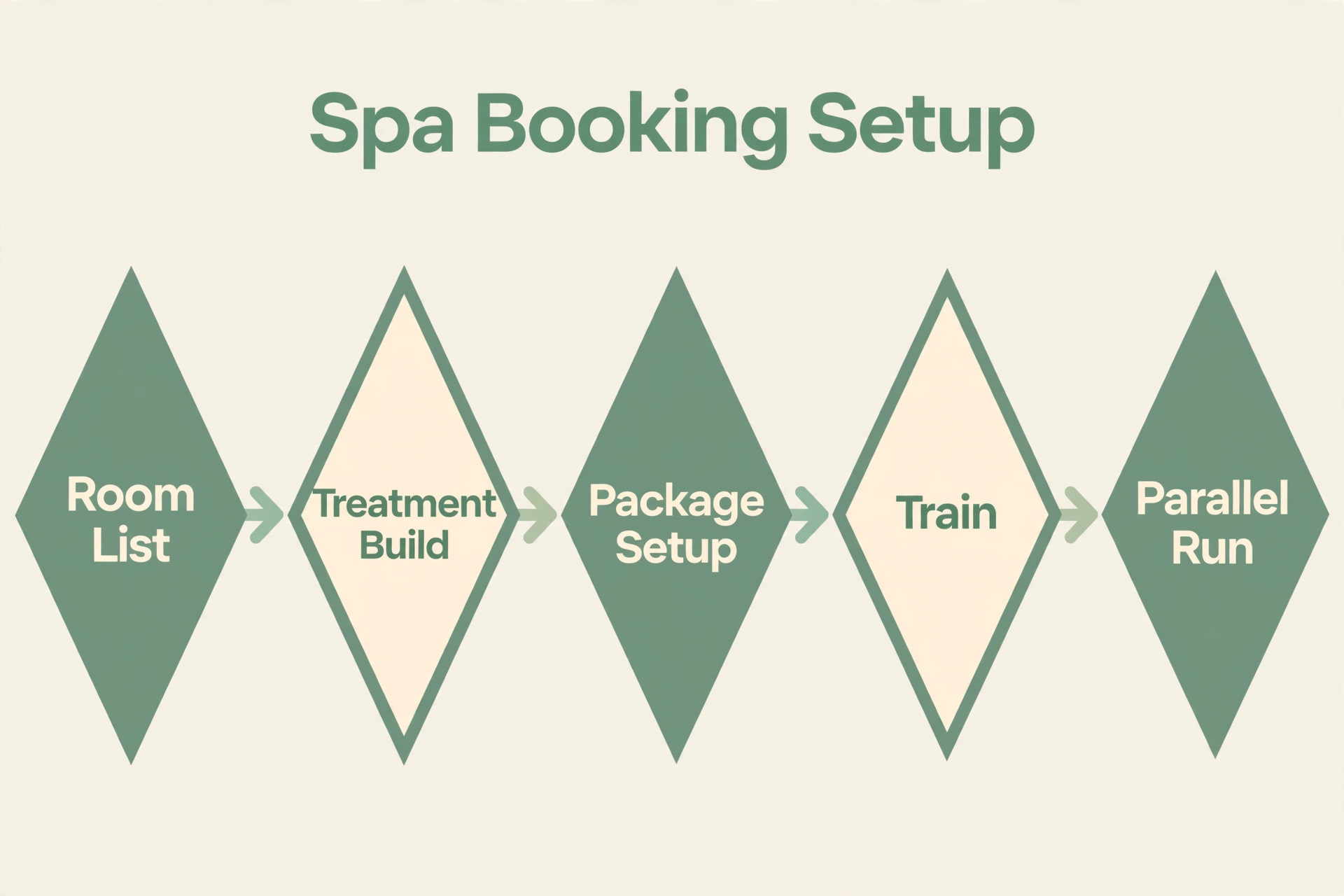
1. List every room, shared space, and changeover time before building any calendar. 2. Build every treatment with correct duration, buffer, room need, and therapist skill. 3. Set packages, memberships, gift cards, and expiry rules before taking bookings. 4. Build intake forms with privacy roles for health notes and preferences. 5. Connect payments, test a deposit, a package purchase, and a refund end to end. 6. Turn on reminders and confirm text allowances for your monthly volume. 7. Train every therapist on their calendar, client notes, and rebooking prompts. 8. Run old and new systems in parallel for two weeks until all old bookings pass.
Related Guides
Keep exploring with these guides on Stratilyze:
- Best Booking Software for Med Spas
- Best Booking Software for Business Coaches (14 Tools)
- Best Booking Software for Auto Detailing Shops (14 Tools)
Frequently Asked Questions
How is spa booking software different from salon booking software?
Spa software must book rooms and resources alongside therapists, handle sequential treatments and group visits, and track packages, memberships, and intake notes in depth. Salon software focuses on stylist calendars, chair timing, and rebooking intervals. A salon tool can book a spa appointment, but it will struggle with room conflicts, changeover gaps, and package balances that a spa handles daily.
What should a small day spa start with?
A small day spa should start with Vagaro, GlossGenius, or Mangomint depending on budget and room complexity. Vagaro gives breadth at a low price, GlossGenius gives a polished page and flat billing, and Mangomint gives a modern experience with stronger room handling. Solo therapists can start free with Square Appointments, Goldie, or Setmore and upgrade when volume or room complexity demands it.
Do resort spas need different software from treatment spas?
Yes, in most cases. Resort spas need multi-location management, guest coordination, and high volume weekend handling, which Zenoti and Booker cover best in this guide. A single site treatment spa gains little from enterprise multi-location tools and may prefer Mangomint or Boulevard for room control and client experience. Match the platform to the footprint, not to the brand name.
How do spa memberships and packages work in these tools?
Memberships bill on a recurring schedule and usually include a treatment plus discounts, while packages sell a fixed series of treatments with a balance that decreases per visit. Strong tools show balances, expiries, and renewal dates at checkout for staff and clients alike. Test a package sale, two redemptions, and a refund in the trial, since balance disputes are the most common front desk argument in a spa.
What does spa software cost in total per month?
Total cost includes subscription, processing, texts, and add-ons, and it varies from zero on a free tier to several hundred dollars per location on enterprise platforms. A small spa typically lands in the 24 to 150 dollar subscription range before processing, while a multi-location spa pays per location plus per user and implementation. The best booking software for day spas is the one whose total cost fits your room count, staff count, and membership volume without surprise lines.
How long does switching spa software take?
Plan three to six weeks, including room setup, package building, intake review, data cleaning, and a two week parallel run. Room and package configuration takes longer than calendar setup, and staff training on real bookings takes longer than a demo suggests. Rushing a switch before a busy weekend risks double booked rooms and package errors that clients remember longer than any launch delay.
A Final Word Before You Book Your System
The right spa platform follows your rooms, your packages, and your footprint, in that order. A treatment spa should choose on room and sequence control first. A wellness spa should choose on membership and class depth first. A resort spa should choose on multi-location scale first. Price matters, but a cheap system that double books a treatment room on a Saturday costs more in refunds and lost clients than a pricier system that never does.
Test complex bookings, test package balances, and test intake privacy before you sign, and price the full stack including processing, texts, and implementation. A booking system earns its fee in rooms that turn over cleanly, packages that reconcile without argument, and clients who rebook before they leave. Choose the system that protects the calm your spa sells, and let that calm do the marketing for you.