
Revinate is the best crm software for hotels pick for independent hotels and small groups that want direct bookings, because its guest data platform ties email marketing, surveys and reputation to the property management system. Cendyn is the pick for large groups that need guest and B2B data in one profile. The ten tools below compare guest depth, property fit and price, so a hotel can pick the system its guests will actually feel.
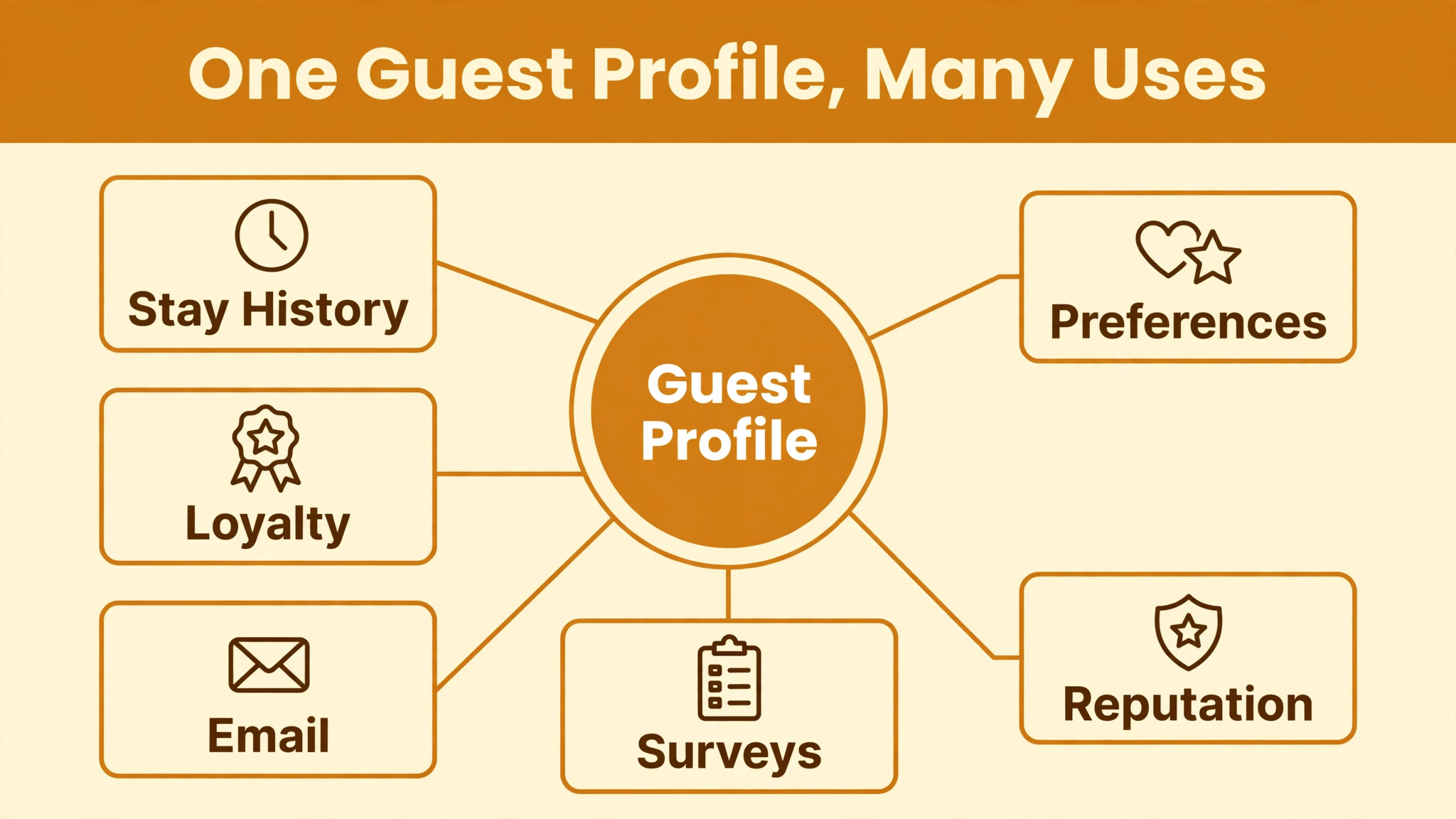
A hotel CRM is not a sales pipeline with a new label. It holds the guest record, the stay history, the preferences, the loyalty balance and the booking channel, and it turns that record into the right email at the right time. A hotel that knows a guest prefers a quiet room on a high floor can sell that room before the guest asks, and that is the whole job.
The buying problem is price opacity. Nearly every hotel specific vendor quotes per property, so there is no price list to compare. The general CRMs publish per user prices, but they need hotel specific work to read stay data. This guide says plainly where the price is quote only, what the integration looks like, and which vendor fits which size of property.
The 10 Tools at a Glance
| Tool | Main job | Best for | Starting price |
|---|---|---|---|
| Revinate | Guest data and email | Independent hotels, direct bookings | Quote-based |
| Cendyn | Hotel CRM and loyalty | Large groups, portfolios | Quote-based |
| Salesforce Hospitality | Enterprise guest platform | Multi brand groups | 25 dollars a user a month |
| HubSpot | Sales and marketing CRM | Boutique hotels | 20 dollars a seat a month |
| Zoho CRM | Affordable general CRM | Small hotels, guest houses | 14 dollars a user a month |
| dailypoint | Guest data cleansing | Central guest profiles | 350 euros a property a month |
| Amadeus Delphi | Sales and catering | Meetings and events hotels | Quote-based |
| Thynk.Cloud | Salesforce native hotel ops | Group and B2B led hotels | Quote-based |
| Cloudbeds | PMS with guest marketing | Cloud PMS hotels | Quote-based |
| SendSquared | Unified hotel CRM | Hotels and vacation rentals | Quote-based |
Most hospitality vendors quote per property, so the word Quote in the table is normal rather than a warning. The figures that do appear come from the general CRMs, and they show how cheap the horizontal tools look before the hotel specific integration is added. A small hotel should weigh the integration cost, not just the seat price.
Best Pick by Job
| Job type | First pick | Second tool | Why this pair works |
|---|---|---|---|
| Independent hotel, direct bookings | Revinate | HubSpot | Revinate owns guest email, HubSpot owns pipelines |
| Large group, many properties | Cendyn | Salesforce Hospitality | Cendyn merges guest data, Salesforce scales further |
| Meetings and events sales | Amadeus Delphi | Thynk.Cloud | Delphi owns catering, Thynk.Cloud owns B2B ops |
| Small hotel, tight budget | Zoho CRM | HubSpot | Zoho costs least, HubSpot is easiest |
| Cloud PMS hotel | Cloudbeds | dailypoint | Cloudbeds reads stay data, dailypoint cleans it |
Revinate wins the independent hotel pick because it is built around the guest rather than the deal. The guest data platform merges stay data from the property management system, then runs email marketing, surveys and reputation from that single profile, plus a reservation sales module for the phones. A hotel that wants more direct bookings and fewer OTA commissions should start here.
Cendyn wins for groups because it merges PMS, booking engine and loyalty data into one guest profile across properties. A guest who stays in one city and books in another is still one person in Cendyn, and the marketing team can treat the portfolio as one audience. That cross property view is the reason a group should look here first, and it is the hardest feature to copy with a general CRM, which is why this guide ranks the best crm software for hotels by guest depth rather than by seat price.
Which Hotel CRM Pays for Itself Fastest?
Revinate pays for itself fastest for an independent hotel, because direct bookings are the return and email is the channel that drives them. A campaign to past guests costs little to send, and a single weekend of direct bookings at full rate can cover a month of the platform. The reservation sales module adds phone bookings to the same return, so the hotel is not paying an OTA commission on guests it already knows.
HubSpot is the faster payback for a boutique hotel with weddings and corporate accounts. The Sales Hub Starter plan lists at 20 dollars per seat per month, with a free plan for up to two users, and the pipelines, forms and email tools are ready on day one. A hotel that sells events and corporate rates will see the return in booked function space rather than in room nights.
dailypoint is the third option for a hotel whose guest data is a mess. The CDM package is listed at 350 euros per property per month in the apaleo store, and it cleanses and merges guest profiles before any marketing runs. A hotel that sends three emails to the same guest under three names is wasting money on every campaign, and clean data pays back before the first send.
A fourth path suits a hotel that already runs a cloud PMS. Cloudbeds carries a guest marketing module inside the PMS, so the stay data is already there and no integration project is needed. The module is lighter than a dedicated guest platform, but for a small hotel the saving on integration time can matter more than the missing features.
How to Choose the Best CRM Software For Hotels
Start with the property management system. A hotel CRM that cannot read stay data from the PMS is a contacts list, not a guest system, so the first question is always which PMS the hotel runs and which CRM connects to it natively. Revinate, Cendyn and dailypoint all lead with PMS depth, while HubSpot and Zoho need a connector or custom work.
Next, match the vendor to the property count. A single independent hotel needs Revinate, HubSpot or Zoho, because the implementation is short and the cost fits one property. A group of ten or more needs Cendyn, Salesforce Hospitality or Thynk.Cloud, because the value is the cross property guest record. A vendor built for the wrong size will cost more and deliver less.
Then check the marketing job. A hotel that wants email, surveys and reputation in one tool should take Revinate, while a hotel that sells meetings and events should take Amadeus Delphi, because sales and catering is a different job from guest email. Finally, ask for the implementation time in writing, because cloud native platforms go live in 30 to 90 days while enterprise platforms with deep custom work take 3 to 12 months.
One more check matters before the demo. Ask which channels the CRM covers, because a guest who books by phone, email and WhatsApp should be one record in every channel. A CRM that only handles email will leave the phone and messaging history in separate systems, and the front desk will keep asking guests for details the hotel already holds.
The 10 Tools in Detail
The ten tools below cover hotel specialists, enterprise platforms and affordable general CRMs. Each one is judged on guest depth, PMS fit, implementation time and the price model, so this roundup of the best crm software for hotels stays honest about the quote only market and the real cost of going live.
1. Revinate
Revinate is a hospitality guest data platform with email marketing, surveys, reputation management and a reservation sales module. The platform merges PMS stay data into one guest profile, then segments past guests for campaigns that drive direct bookings. Pricing is quote based, with no public price list, and the vendor offers demos and quotes per property.
The strength is the email depth, because Revinate has spent years on hotel email with PMS connected segmentation, and the reputation tools close the loop from stay to review. The drawback is the quote only price, which makes budgeting harder without a sales call, and the platform is less strong on B2B group sales than Cendyn or Delphi. It suits independent hotels and small groups that want direct bookings.
2. Cendyn
Cendyn is hotel CRM software that merges PMS, booking engine and loyalty data into one guest profile across a portfolio. The platform covers guest marketing, loyalty and B2B data together, so a group can market to leisure guests and corporate accounts from the same record. Pricing is quote based, sized per property and per module.
The strength is the group view, because a guest is one person across every property in the portfolio. The drawback is the enterprise weight, because implementation runs longer than Revinate and the module list needs careful scoping. It suits large groups, luxury properties and portfolios with complex loyalty stacks.
3. Salesforce Hospitality
Salesforce Hospitality is the hospitality solution on the Salesforce platform, with loyalty management, connected PMS data and a large partner ecosystem. The Starter Suite lists at 25 dollars per user per month, and the full hospitality build is priced per project with implementation on top. The platform scales across multi brand portfolios and connects to almost any system.
The drawback is the build effort, because Salesforce needs solution design and administration, and a hotel without a Salesforce team will need a partner. The hospitality depth comes from configuration rather than from a ready made hotel product. It suits groups building their own guest platform with development resources behind them.
4. HubSpot
HubSpot is the easiest general CRM for a boutique hotel, with pipelines, forms, email and a free plan for up to two users. The Sales Hub Starter plan lists at 20 dollars per seat per month, and the marketing tools cover the wedding, corporate and events pipelines a boutique hotel actually runs. The interface needs no training, and the hotel can start the same day.
The limit is the hotel depth, because HubSpot does not read stay data natively and needs a connector to the PMS. A hotel that wants guest segmentation by stay history will find the data thinner than Revinate or Cendyn. It suits boutique hotels with weddings and corporate accounts that need a sales CRM more than a guest database.
5. Zoho CRM
Zoho CRM is the affordable general CRM for small hotels and guest houses, with contact management, automation and reporting at a low seat price. The Standard plan lists at 14 dollars per user per month, and the free plan covers a tiny team. The platform is easy to customise for guest records, booking follow up and simple marketing.
The drawback is the same as HubSpot, because Zoho has no native PMS connector and no hotel specific guest logic. A small hotel that tracks guests in a spreadsheet today will find Zoho a big step up, while a hotel that wants automated guest journeys will outgrow it. It suits small and mid size hotels that need a cheap, flexible CRM.
6. dailypoint
dailypoint is a hospitality customer data platform and CRM that focuses on central guest profiles and data cleansing. The CDM package is listed at 350 euros per property per month in the apaleo store, and the platform merges duplicate profiles, enriches guest data and feeds clean records to marketing tools. The data quality is the product.
The limit is the scope, because dailypoint cleans and centralises data rather than running full campaigns itself, so most hotels pair it with a marketing tool. The per property price also adds up across a portfolio. It suits hotels and groups whose guest data is duplicated across systems and needs one clean record.
7. Amadeus Delphi
Amadeus Delphi is sales and catering software built on Salesforce, sized by meeting space and event volume. The platform covers function space, group bookings, banquet event orders and sales pipelines for hotels that sell meetings and events. Pricing is quote based, and the tool fits properties already in the Amadeus ecosystem.
The strength is the catering depth, because Delphi handles the details of event sales that a guest CRM never touches. The drawback is the narrow job, because Delphi is not a guest marketing tool and needs a guest CRM beside it. It suits hotels where meetings and events are a major revenue line.
8. Thynk.Cloud
Thynk.Cloud is a Salesforce native platform for hotel B2B and multi property operations, covering group sales, corporate accounts and event pipelines. Pricing is quote based, and the platform runs on Salesforce, so a hotel already on Salesforce gains a hotel specific layer without a second system. The B2B focus suits groups that sell to companies and travel managers.
The limit is the Salesforce dependency, because a hotel not on Salesforce must adopt the platform first. The guest marketing depth is also thinner than Revinate or Cendyn. It suits group and B2B led hotels that already run Salesforce.
9. Cloudbeds
Cloudbeds is a cloud property management system with a guest marketing module, so the CRM reads stay data straight from the PMS with no integration project. Pricing is quote based, and the platform covers reservations, channel management and payments alongside guest marketing. The single system appeal is strong for an independent hotel that wants one vendor.
The drawback is the CRM depth, because the guest marketing module is lighter than a dedicated platform like Revinate. A hotel that wants advanced segmentation and reputation tools will find the edges sooner. It suits independent hotels already on a cloud PMS that want guest CRM without a second vendor.
10. SendSquared
SendSquared is a hospitality specific CRM and marketing platform for hotels, resorts and vacation rental managers, with unified multi channel CRM and native AI voice. Pricing is quote based, and the platform covers guest messaging across email, SMS and voice from one record. The single platform pitch suits hotels that want one system for both hotels and vacation rentals.
The drawback is the younger brand, because the reference list is thinner than Revinate or Cendyn, and the AI voice features are new. A hotel should ask for references in its own segment before signing. It suits hotels that want unified messaging with AI voice built in rather than added on.
Revinate vs Cendyn, Email Depth Against Group Scale
The guest job is the first difference. Revinate is built for guest email marketing, surveys and reputation, with PMS connected segmentation that drives direct bookings for one property or a small group. Cendyn is built for portfolio marketing and loyalty, merging guest and B2B data across many properties into one profile. A single hotel will use Revinate daily, while a group marketing team will use Cendyn daily.
The second difference is the sales job. Revinate adds a reservation sales module for the phones, so the front desk can sell rooms to callers from the same guest record. Cendyn adds B2B pipelines for corporate accounts and travel managers, so the group sales team works from the same data as the leisure marketing team. The hotel should pick the sales job it actually runs.
The deciding factor is the property count. An independent hotel or a group of fewer than five properties should take Revinate, because the email depth repays the quote faster. A group of ten or more should take Cendyn, because the cross property guest record is the value no single property tool can copy. That split is the cleanest way to read the best crm software for hotels when the choice narrows to these two.
A third difference is the loyalty job. Cendyn treats loyalty as a core module with points, tiers and redemption across the portfolio, while Revinate treats loyalty as part of the guest record with less depth on tier management. A group whose loyalty programme drives a large share of bookings should weigh that difference heavily, because a weak loyalty tool costs repeat stays every month.
What Does a Hotel CRM Cost per Property?
The honest answer is that most hotel CRMs do not publish a price, so the cost is a negotiated quote per property. Revinate, Cendyn, Amadeus Delphi, Thynk.Cloud, Cloudbeds and SendSquared are all quote based, and the price depends on the room count, the property count and the modules chosen. A small hotel should expect roughly 1,000 to 5,000 dollars a month for a mid tier hotel CRM, while a mid to large hotel or group should expect 5,000 to 25,000 dollars a month depending on the platform and the feature mix, according to third party pricing guides.
The general CRMs publish per user prices that look cheap by comparison. HubSpot Sales Hub Starter lists at 20 dollars per seat per month, Salesforce Starter Suite at 25 dollars per user per month, and Zoho CRM Standard at 14 dollars per user per month. A ten person team on HubSpot costs 200 dollars a month, while a hotel CRM quote for the same property can cost ten times that, because the hotel price includes the PMS integration, the guest data work and the support.
The support line is worth pricing separately. A hotel CRM quote usually includes onboarding, training and a named contact, while a general CRM at 14 to 25 dollars per user per month includes help centre access and slower support unless a higher tier is bought. A hotel that needs help at check in time on a Saturday should ask what support the price actually buys.
The honest way to budget is to ask three vendors for a quote on the same scope, with the same room count and the same modules. The quotes will still differ, because the pricing models differ, but the comparison will show the real range for the property size. Never budget from a third party price list, because the per property contract is where the cost is set, and the integration fee is often larger than the first year of seats, which is the trap most buyers of the best crm software for hotels fall into.
Can a Small Hotel Use a General CRM Instead?
Yes, with limits. HubSpot and Zoho CRM cover pipelines, forms and email well, and a boutique hotel with weddings and corporate accounts can run its sales on either one for 14 to 20 dollars per user per month. The free HubSpot plan for up to two users is enough to test the idea before paying anything at all.
The limit is the stay data. A general CRM does not know who stayed, when they stayed, or what they spent, unless a connector feeds that data in from the PMS. A hotel that wants to email past guests by stay history, room type or spend will find the general CRM thinner than Revinate or Cendyn, and the connector project can cost more than a year of the hotel CRM itself.
The middle path suits many small hotels. Run HubSpot or Zoho for sales and events, and add the PMS guest marketing module for stay based email, which is what Cloudbeds offers in one system. That pair costs less than a full hotel CRM and covers both jobs, though neither tool is as deep as a specialist in its own lane.
The risk in the middle path is data drift, because two systems can disagree about a guest when the sync fails. A hotel that takes this path should check the sync weekly for the first month, and fix the mapping the moment a duplicate appears, because a small sync error becomes a large guest record problem within weeks.
A 60-Day Guest Data Cleanup Before You Switch CRM
Days one to twenty are the audit. Export the guest records from the PMS, the email tool and the booking engine, and count the duplicates. A hotel that finds the same guest under three names has three records for one person, and every campaign to that guest wastes money and looks careless.
Days twenty one to forty are the merge. Pick the surviving record for each guest, keep the stay history and the preferences, and delete the duplicates. Tools like dailypoint exist for exactly this job, and the CDM package at 350 euros per property per month is cheaper than a year of sending duplicate emails to the same guests.
Days forty one to sixty are the test. Send one campaign from the cleaned data, watch the open and booking rates, and compare them with the last campaign from the dirty data. A cleaned list usually lifts opens and bookings at once, because the right guest gets the right offer once instead of three wrong offers. That lift is the proof the new CRM will work, and it is the step that makes the switch worth the effort for any buyer of the best crm software for hotels.

Frequently Asked Questions
How much does a hotel CRM cost?
Most hotel CRMs are quote based, so there is no published price. Third party pricing guides put a small to mid hotel at 1,000 to 5,000 dollars a month and a mid to large hotel or group at 5,000 to 25,000 dollars a month. The general CRMs publish prices, with HubSpot Sales Hub Starter at 20 dollars per seat per month and Zoho CRM Standard at 14 dollars per user per month, and that gap is the first thing to grasp when comparing the best crm software for hotels.
Does Revinate publish its pricing?
No. Revinate offers demos and quotes per property, with no public price list. The platform covers guest data, email marketing, surveys, reputation and a reservation sales module, and the price depends on the room count and the modules chosen, so a hotel must ask for a quote on its own scope.
Can HubSpot work as a hotel CRM?
Yes, for sales rather than guest data. HubSpot covers pipelines, forms and email well, with a free plan for up to two users and Sales Hub Starter at 20 dollars per seat per month. It does not read stay data natively, so a hotel that wants guest segmentation by stay history needs a PMS connector or a hotel specific tool beside it.
How long does a hotel CRM take to implement?
Cloud native platforms like Revinate and SendSquared typically go live in 30 to 90 days. Enterprise platforms with deep custom work, like Cendyn and Salesforce Hospitality, take 3 to 12 months. The PMS integration is usually the longest step, so a hotel should confirm the integration timeline in writing before signing.
Is dailypoint a full CRM?
No. dailypoint is a customer data platform that centralises and cleanses guest profiles, with the CDM package listed at 350 euros per property per month. Most hotels pair it with a marketing tool, because dailypoint makes the guest record clean rather than running the campaigns itself.
Which CRM is best for a boutique hotel?
HubSpot is the best pick for a boutique hotel that sells weddings and corporate accounts, because the pipelines and forms are ready on day one at 20 dollars per seat per month. Revinate is the better pick when direct room bookings matter more than events, because its guest email depth drives repeat stays.
The Guest Record Is the Real Product
A single hotel should take Revinate, because the guest email depth drives direct bookings from guests the hotel already knows. A group should take Cendyn, because the cross property guest record is the asset no single property tool can copy. A boutique hotel on a budget should take HubSpot, because 20 dollars per seat per month buys a sales CRM that works on day one.
Clean the guest data before switching, ask three vendors for a quote on the same scope, and pilot on one property before rolling out to the portfolio. The best crm software for hotels is the one that turns a stay into a repeat booking, and the guest record is what makes that happen.
Start with the property that has the messiest data, because the cleanup there proves the value fastest. When the pilot property shows more direct bookings and fewer duplicate emails, the rest of the portfolio will follow without a hard sell from the vendor.