

You have traffic, or you are building it, and still the blog pays almost nothing. That is the problem most bloggers face in 2026, and learning how to monetize a blog with AI will not fix it unless the monetization matches the audience, the topic, and the intent behind each visit. A reader who arrives to solve an urgent problem is ready for a product recommendation.
A reader who arrives to learn a skill over weeks needs a different offer. A reader who arrives for entertainment will tolerate ads but will rarely buy a course on the first visit. AI can help you match the offer to the visit, produce more of the content that converts, and test faster, but it cannot turn low intent traffic into high paying customers by itself.
This guide takes a practical route. It shows how to audit what you already have, choose revenue streams in the right order, use AI to speed up content, email, and offer creation without flooding the site with thin pages, and measure what actually earns. It also covers the trust and policy risks that get blogs penalised or rejected by ad networks and affiliate programs. Tool prices change often, so check the official pricing page and checkout before you pay for any tool mentioned here.
Audit First to Learn What Your Blog Can Actually Sell
Before you add another ad unit or affiliate link, audit traffic intent, content that already converts, and audience trust. Open your analytics and sort your top 30 pages by sessions, then by revenue or affiliate clicks if you track them. You will usually find a pattern. A small set of comparison, review, and how to pages drives most clicks, while news, opinion, and broad guides drive views but few sales. That pattern tells you where to focus AI help first. Do not spend AI time scaling the pages that never convert. Spend it improving and expanding the pages that already show buying intent.
Check search intent for each top page. A query such as “best tool for X” signals comparison intent. A query such as “how to do X” signals learning intent, which may convert later through email rather than immediately. A query such as “X price” or “X discount” signals purchase intent, but also higher competition and stricter accuracy demands. AI can classify a list of queries by intent in minutes, but you should spot check the classification against the actual page, because a tool can misread a query that looks commercial but is really informational.
Next, audit your email list, social following, and returning visitor rate. A blog with 5,000 monthly visitors and 800 engaged email subscribers can often earn more from a small digital product than a blog with 50,000 casual visitors and no list. Email lets you make an offer repeatedly, segment by interest, and sell without depending on a search ranking that can shift overnight. If you have no list, building one is the highest value monetization move, even before you optimise ads.
Finally, audit trust signals. Do your posts show authorship, dates, sources, and honest limitations? Do you disclose affiliate links clearly? Do you update old posts when prices or features change? AI can help you find outdated claims, but readers and ad reviewers judge the site as a whole. A site that looks mass produced, with identical structures, stock conclusions, and no author voice, will struggle with both ad approval and affiliate conversions, no matter how many AI tools you use.

Choose Revenue Streams in the Right Order
Most successful blogs earn from a mix, but the order matters. Start with the stream that fits your current traffic, then add the next one only when the first is stable.
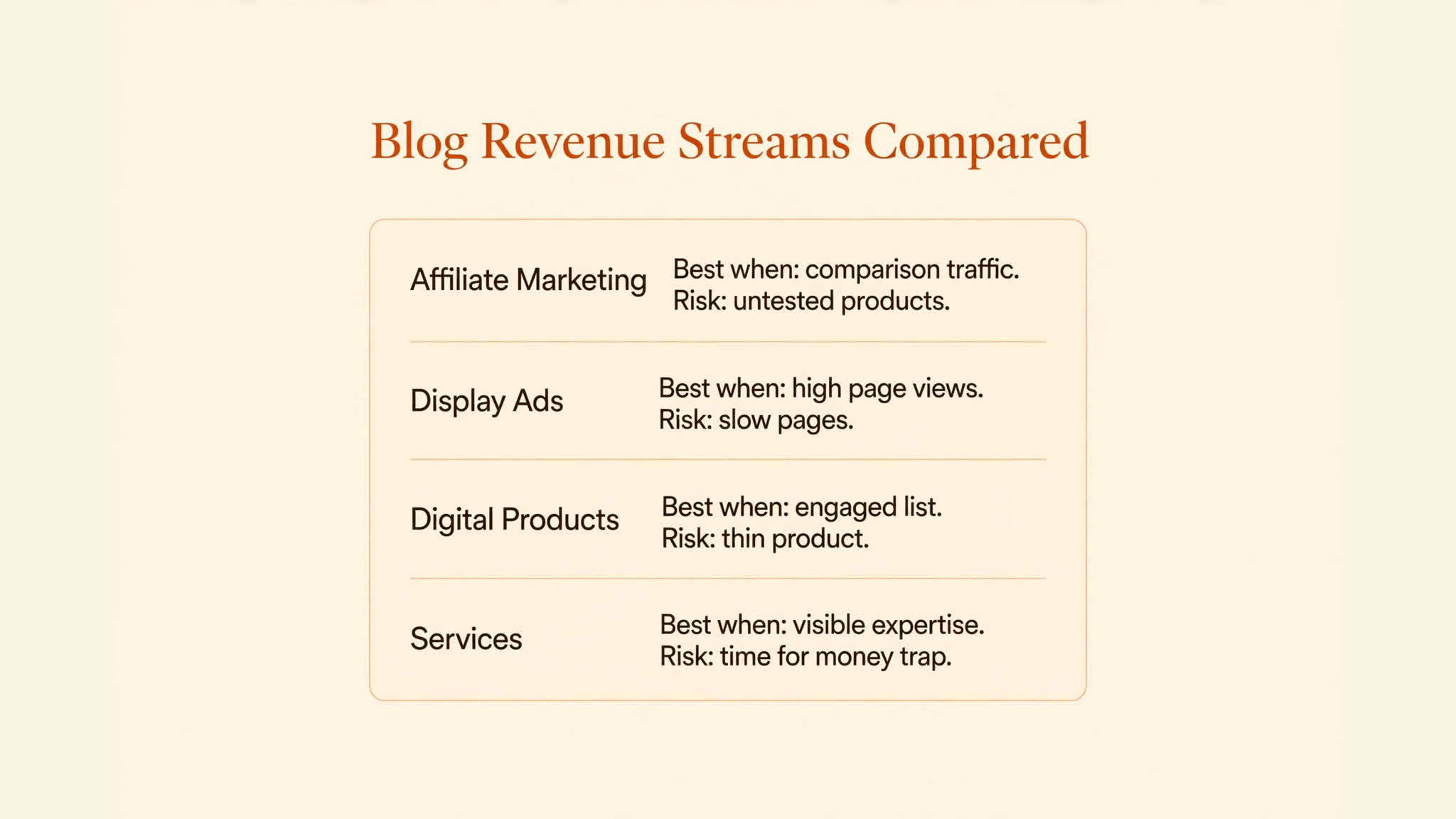
Affiliate marketing is usually the best first stream for a niche blog, because it needs no product of your own and it rewards helpful comparison content. You recommend tools you have tested or researched thoroughly, the reader buys through your link, and you earn a commission. The risk is recommending products you do not understand, or stuffing links into every paragraph. Both hurt trust and conversions. A good rule is one clear recommendation per section, with a reason, a limitation, and an alternative for a different budget or need.

Display ads, through networks such as Google AdSense or Mediavine, suit blogs with high traffic and broad topics. Ad income scales with page views, but it also depends on niche value, visitor country, and ad placement. A finance or software blog may earn far more per thousand views than a general entertainment blog. Ads also slow pages and annoy readers if overdone, so test placement carefully and keep the reading experience clean. Check the current eligibility rules for any ad network before you apply, because requirements for traffic, content quality, and policy compliance change.
Digital products are the next step when you have an audience that trusts you and a problem you can solve in a focused format. Templates, checklists, short courses, and paid guides work well when they save the reader hours or give a clear system. AI can help you outline, draft, and format a product, but the product must contain your own experience, examples, and judgement. A product that is just repackaged AI text will get refunds and damage your reputation.
Services and sponsorships come later, when your traffic or authority makes you visible to vendors and clients. Freelance services, consulting calls, and sponsored posts can pay well, but they also take time and can create conflicts if a sponsor expects a positive review. Keep sponsored content labelled, keep editorial control in writing, and never promise a ranking or a positive verdict in exchange for payment. That boundary protects both your readers and your long term income.
Memberships and paid newsletters suit blogs with a loyal, returning audience and ongoing value, such as weekly analysis, templates, or a community. They are harder to start than ads or affiliates, because they require consistent delivery, but they give the most stable income once they work. Do not launch a membership until you can name the weekly value a member receives and you have tested that value with free content first.
| Revenue stream | Best when | Main risk |
|---|---|---|
| Affiliate marketing | Comparison and review traffic, trusted recommendations | Promoting untested products, link stuffing |
| Display ads | High page views, broad but safe topics | Slow pages, low value niche, policy rejection |
| Digital products | Engaged list, clear reader problem | Thin product, refunds, support burden |
| Services and consulting | Visible expertise, inbound enquiries | Time for money trap, sponsor conflicts |
| Sponsorships | Niche authority, vendor interest | Loss of editorial independence |
| Memberships | Loyal returning audience, ongoing value | Churn if delivery slips |
Use AI to Create Content That Earns, Not Just Content That Ranks
AI is most useful for a blog when it speeds up research, outlining, drafting, and updating, while a human editor keeps accuracy, voice, and judgement. The workflow that works is this. A human chooses the topic and the angle, AI helps gather facts and structure, a human writes or heavily edits the draft, AI helps check clarity and consistency, and a human verifies prices, features, and claims before publishing.
Start with topic selection. Use AI to analyse your existing content for gaps, such as which comparison queries do competitors cover that you do not, which how to questions appear in your search console or comments, which affiliate products lack a dedicated review. Then filter those ideas by intent and by whether you can add real value. A topic with high search volume but no buying intent may grow traffic without growing income. A smaller topic with clear purchase intent and a product you can honestly recommend may earn more.
For drafting, give AI a detailed brief, not a vague prompt. Include the audience, the problem, the products to compare, the price points to verify, the structure, and the examples you want included. Then edit the output for accuracy and voice. Remove generic sentences, add specific numbers, add your own test results or screenshots where possible, and rewrite the opening and closing in your own style. Readers can tell when a post was published without a human edit, and so can search quality reviewers.
Updating old posts is often more profitable than writing new ones. Use AI to scan a post for outdated prices, discontinued features, and broken logic, then update the facts and add a new section based on reader questions. A refreshed comparison post that already ranks can lift affiliate clicks within weeks, while a brand new post may take months to rank. Schedule a quarterly update for your top 20 earning pages, and keep a change log so you know what was updated and when.
Be careful with volume. Publishing 50 AI assisted posts in a month may look productive, but if the posts are thin, repetitive, or inaccurate, they can dilute your site quality and hurt rankings for your best pages. A steadier pace of two to four well edited posts per week, each with a clear intent and a clear monetization path, beats a flood of shallow posts. Quality signals, such as time on page, return visits, and affiliate clicks, matter more than raw post count.
Readers who want to compare the tools behind this workflow can use this site’s guides to notion alternatives for planning and canva alternatives for product and post visuals, both useful when you build a content system that must stay consistent.
Build an Email System That Turns Readers Into Buyers
Email is where blog monetization becomes predictable. A reader who joins your list has given permission for repeated contact, which means you can recommend a product, launch a digital product, or share a service offer without depending on search or social algorithms.
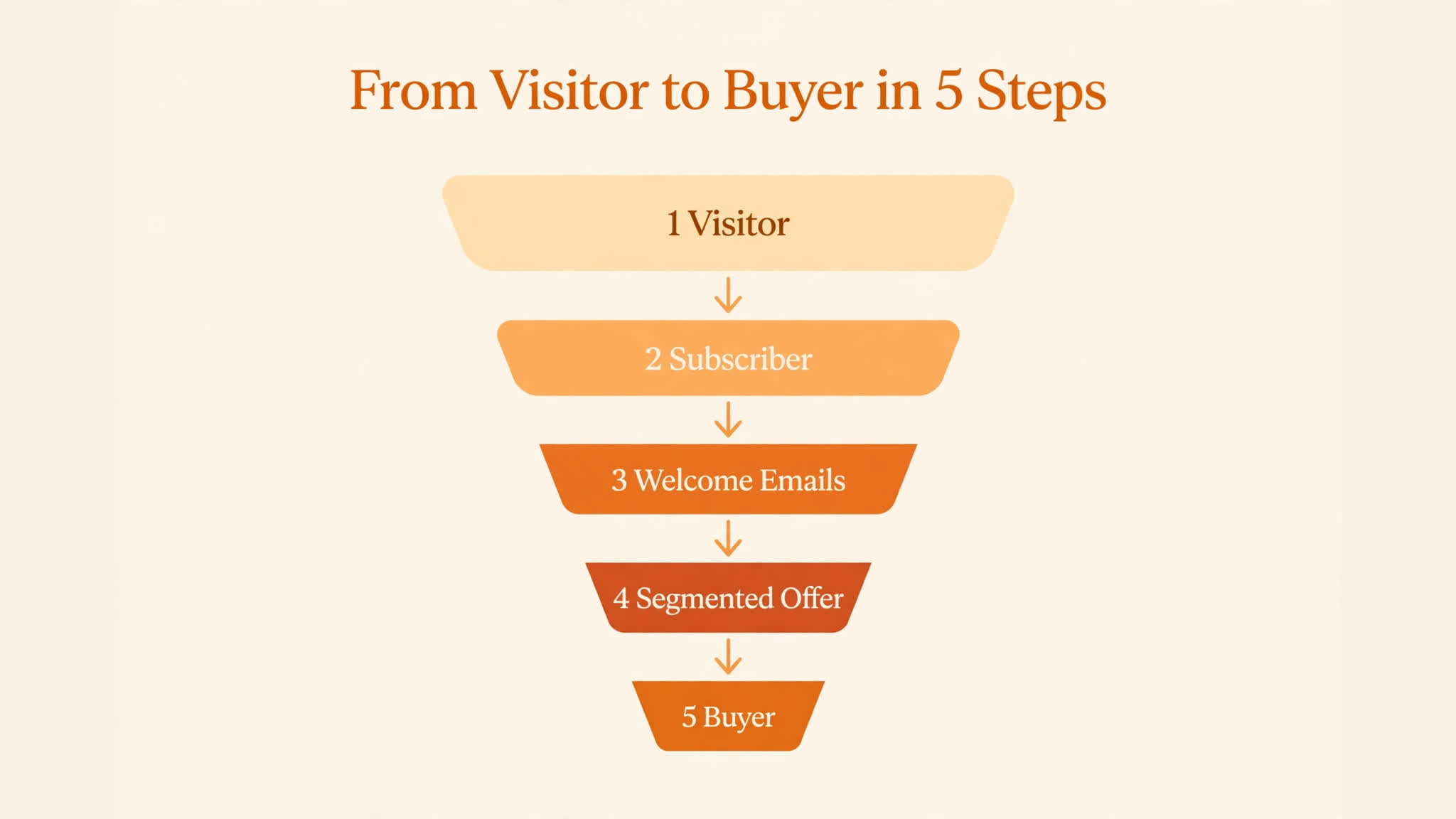
Start with a lead magnet that solves one small problem fast. A checklist, a template, a short calculator, or a five email mini course works better than a vague “newsletter” promise. AI can help you draft the lead magnet and the welcome sequence, but the magnet must deliver real value in under 15 minutes, or subscribers will ignore your next emails. Place the offer on your highest intent pages, not just on your homepage, and tailor the magnet to the page topic where possible.

Your welcome sequence should do three jobs in five to seven emails. Deliver the magnet, show your expertise with a useful story or case study, and make a soft offer. Do not pitch a product in the first email. Let subscribers learn, reply, and trust you first. Ask a question in each early email and reply to answers personally. Those replies tell you what subscribers actually want to buy, which is far more valuable than any AI prediction.
Segment from the start, even simply. Tag subscribers by the page or magnet they came from, by whether they clicked a product link, and by whether they bought. Then send different offers to different segments. A subscriber who downloaded a freelance template should get freelance tool offers, not a generic blast about every product you promote. AI email tools can help you draft segment specific messages, but you must check that the recommendation fits the segment, or you will burn trust with irrelevant pitches.
Measure email health, not just list size. Open rates, click rates, reply rates, and unsubscribe rates tell you whether your emails help or annoy. A list that grows by 100 subscribers a month but loses 90 to unsubscribes is not growing. Clean inactive subscribers periodically, test subject lines and send times, and keep emails short and useful. One strong email per week beats five weak emails that train subscribers to ignore you.
Price, Package, and Launch a Digital Product With AI Help
A digital product works when it solves a narrow problem completely. “Learn blogging” is too broad. “A 30 day system to publish your first 10 affiliate posts, with templates for outlines, comparisons, and email follow ups” is a product a reader can picture using. Start with the narrow version, prove it with a small launch to your list, then expand only if buyers ask for more.
Use AI at four stages of product creation. First, research. Summarise reader questions, comments, and competitor product outlines to find gaps. Second, outlining. Turn a broad idea into modules, lessons, and exercises with clear outcomes per lesson. Third, drafting. Create first drafts of lessons, worksheets, and checklists that you then edit with your own examples and screenshots. Fourth, launch. Draft sales page copy, email sequences, and social posts, then edit them to sound like you and to state the product’s limits honestly.
Pricing a first product is a judgement call. A low price, such as the cost of a lunch, can bring many buyers and testimonials, but it also attracts buyers who never use the product. A higher price filters for serious buyers but needs stronger proof, such as a detailed outline, sample lessons, and a clear refund policy. Many bloggers start with a mid range price, offer a launch discount to their list, and raise the price after the first 20 to 50 buyers give feedback. State what is included, how long access lasts, what support you provide, and your refund terms on the sales page, in plain language.
Launch to your list first, not to the public. Send a short series covering a problem email, a solution preview with a sample, a launch email with the offer and deadline, and a final reminder. Collect feedback from early buyers, fix the weak lessons, and ask for testimonials only after buyers have had time to use the product. A product launch that listens to buyers in week one will sell better in month three than a product that is launched and forgotten.
Support is part of the product. Answer buyer questions promptly in the first month, update the product when tools or platforms change, and tell buyers when you update it. A product that is updated yearly earns repeat buyers and referrals. A product that is never updated becomes a refund risk as soon as a tool interface changes.

How to Monetize a Blog with AI Without Losing Reader Trust
Trust is the asset that makes every revenue stream work, and AI can damage it fast if used carelessly. The rules are simple, but they need discipline.
Disclose affiliate links clearly, near the link and on a dedicated disclosure page. Readers do not mind affiliate links when the recommendation is honest. They do mind discovering a hidden commercial motive after they buy. The same applies to sponsored posts. Label them as sponsored, keep your own verdict, and do not let a sponsor edit your conclusion.
Do not publish AI generated reviews of products you have not tested or researched deeply. A review that lists features from a vendor page, without limitations, pricing nuance, or comparison to alternatives, reads as advertising and converts poorly. If you have not used a product, say how you researched it, what sources you checked, and what you could not verify. That honesty often converts better than false certainty, because readers trust a reviewer who admits limits.
Keep ads and content separate in the reader’s mind. Do not write posts designed only to place ads, do not place ads so close to a recommendation that readers cannot tell what is paid, and do not use deceptive buttons or layouts. Ad networks have policies on placement, misleading content, and invalid clicks, and violating them can lead to account suspension that is hard to reverse. Read the policy for your network and follow it, even if a placement tweak would earn slightly more this month.
Update claims when they change. If a tool raises its price, removes a feature, or changes its free plan, update your post and note the update date. AI can help you spot outdated posts, but the update must be verified against the vendor site. An outdated price is not a small error in a monetization post. It is the exact detail a buyer relies on, and getting it wrong costs a sale and a reader.
Finally, protect reader data. If you collect emails, use a reputable provider, explain what subscribers will receive, and make unsubscribing easy. Do not sell email lists, do not add readers to a list without consent, and do not use AI tools that store subscriber data in ways you cannot explain. Privacy trust is hard to rebuild once lost.
Mistakes That Keep Blogs Earning Almost Nothing
The first mistake is monetizing before you have intent. Adding affiliate links to a personal diary blog, or ads to a blog with 200 visitors a month, will not create income. It will only clutter the site. Focus first on 20 to 30 posts that answer buying or learning questions for a defined audience, then monetize those posts.
The second mistake is promoting too many products. A post with 30 affiliate links and no clear recommendation confuses readers. A post with one primary recommendation, one budget alternative, and one premium alternative, each with a reason, converts better and is easier to update. Apply the same discipline to your whole site. Promote fewer products well, rather than many products badly.
The third mistake is ignoring email. Bloggers who depend only on search traffic lose income every time rankings shift. An email list is an asset you control, and it lets you launch products, promote seasonal offers, and recover from traffic drops. Start the list on day one, even if it grows slowly.
The fourth mistake is copying competitor monetization without copying their audience. A competitor may earn from a course because they have a large, engaged list. Copying the course without the list will not copy the income. Copy the system behind the income, the content, the list building, the trust, and the offer sequence, in that order.
The fifth mistake is chasing ad revenue at the cost of speed and readability. Heavy ad layouts, auto playing video, and intrusive popups may lift short term ad income but drive readers away, reduce return visits, and hurt search performance. Test ad placements with real readers, keep pages fast, and remove any unit that hurts user experience more than it earns.
The sixth mistake is never measuring. If you do not track which pages, links, and emails earn, you will keep writing the wrong posts. Set up basic tracking for affiliate clicks, product sales, and email conversions, review it monthly, and shift your content plan toward what earns, without abandoning the helpful content that builds trust in the first place. A monthly review of one hour can change a blog’s income more than a month of extra writing.
For bloggers exploring adjacent income topics, related guides on this site include how to create a digital product with AI and how to create a membership site with AI for a membership route.
Frequently Asked Questions
How long does it take to monetize a blog with AI?
Most blogs need three to six months of consistent, helpful content before affiliate or ad income becomes regular, and longer before product income becomes significant. AI speeds up drafting and updating, but it does not speed up search trust, list building, or reader relationships. Plan for a slow first quarter and measure progress by email subscribers and converting pages, not just total traffic.
How much traffic do I need to earn from ads?
It depends on niche, visitor location, and ad network. A high value niche may earn meaningful income at 10,000 monthly sessions, while a low value niche may need 50,000 or more for the same income. Check the eligibility rules and typical rates for your network, and treat ad income as one stream among several, not the only stream.
Can I use AI to write affiliate posts and still get approved by programs?
Yes, if the posts are accurate, original in structure and judgement, disclose affiliate links, and add real value beyond vendor descriptions. Affiliate programs and ad networks reject sites that look mass produced, thin, or misleading. Human editing, testing notes, comparisons, and updates are what make AI assisted posts acceptable.
Should I start with ads, affiliates, or a product?
Start with affiliates if you have comparison or review traffic, because affiliates reward helpful recommendations without needing high volume. Add ads when traffic grows and page experience stays clean. Launch a product only after you have an engaged list and repeated reader questions about the same problem. That order matches income to audience maturity.
How do I avoid Google penalties when using AI for blog content?
Write for a real reader question, add original examples, comparisons, and judgement, verify facts and prices, vary structure, and update posts regularly. Avoid publishing large volumes of near identical posts, avoid copying vendor text, and avoid posts that exist only to place links or ads. Helpful, edited, accurate content is the safest path, whether or not AI helped draft it.
What is the best single monetization move for a small blog?
Build an email list with a useful lead magnet on your best pages, then send one helpful email per week with a soft, relevant offer. That single system turns one time visitors into repeat readers and buyers, and it supports every other revenue stream you add later.
A Practical 90 Day Monetization Plan
Day one to day 30 is audit and foundation. Audit your top pages by intent and earnings, set up affiliate tracking, create or improve your lead magnet, and place email signup forms on your five best pages. Update your top 10 earning or near earning posts with verified prices, clearer recommendations, and honest limitations. Remove or fix any post that is thin, outdated, or misleading.
Day 31 to day 60 is content and email. Publish two to four posts per week aimed at buying or learning intent, each with a clear recommendation or a clear path to your list. Send a weekly email that helps subscribers solve a problem and includes one relevant offer, not five. Test one new revenue idea, such as a small template product or a sponsored post inquiry, but do not launch it until the foundation is working.
Day 61 to day 90 is measurement and expansion. Review which pages earned, which emails converted, and which products readers asked about. Double down on the top three earning topics, update the weakest posts or remove them, and plan your next product or sponsorship pitch based on evidence, not hope. Set a realistic income target for the next quarter based on the last 30 days, not on a competitor’s headline figure.
That 90 day plan will not make a blog rich overnight, but it will turn a blog that pays almost nothing into a blog with a system, content that attracts the right readers, an email list that keeps them, offers that fit their intent, and data that tells you what to do next. AI makes each step faster, from drafting to updating to email personalisation, but the system itself is human. Choose the right audience, solve a real problem, recommend honestly, and measure what earns. Do that consistently, and monetization stops being a mystery and becomes a process you can improve every month.

Track What Earns Each Month and Adjust
A monetization system needs a monthly review, or it drifts. Set aside one hour at the end of each month to look at four numbers covering sessions by top page, affiliate clicks and sales by product, email subscribers gained and lost, and product or service income by source. Write those numbers in a simple spreadsheet so you can compare months without relying on memory. Patterns will appear quickly. One product may earn steadily from a single comparison post, while another product gets many clicks but few sales, which suggests a mismatch between the recommendation and the reader’s budget or need.
Use that review to make three decisions each month. First, which top earning post deserves an update or an expansion, such as a new alternative, a clearer comparison table, or a fresh example. Second, which weak post should be improved, merged, or removed, because it takes crawl and reader attention without earning or helping. Third, which email or offer should be tested next, such as a new lead magnet on a high traffic page or a different product recommendation in your welcome sequence. Test one change at a time where possible, so you know what caused a lift.
Also review costs in the same session. Tool subscriptions, email provider fees, hosting, and freelance help all eat into blog income, and a tool you stopped using in March should not still be charging you in October. Cancel or downgrade tools that do not contribute to a converting page, a product, or your email system. A lean cost base makes every revenue stream more valuable, and it keeps you honest about which AI tools actually earn their keep. Over a year, those monthly reviews compound into a clear picture of what your audience buys, what they ignore, and where your next product or partnership should focus.