

About half of projects experience scope creep, according to a Project Management Institute figure widely cited in contract guides, and that single number explains why so many small businesses end up doing unpaid work. The extra revision, the added page, the changed deliverable, and the moved deadline rarely arrive as a formal request. They arrive as a friendly message, and without a written scope they are hard to refuse. This guide shows how to write a client contract small business owners can use on real projects, with clauses that prevent those quiet extras from eating the profit.
A contract is not a sign of mistrust. It is the document that lets both sides agree, before money changes hands, on what will be delivered, when it will be delivered, what it will cost, and what happens when plans change. Clients respect that clarity, especially when the language is plain. A short contract written in everyday words protects a small business better than a long document full of legal phrases nobody reads.
Small businesses often skip contracts for small jobs, and small jobs are exactly where disputes start. A logo, a landing page, a month of bookkeeping, or a single consulting session can all grow in scope, and without a written agreement the business has no agreed reference point when the growth appears. The contract in this guide is built to be used on every job, including small ones, without adding hours of paperwork.
Why a Short Contract Beats a Long Argument
A good contract answers the questions that cause arguments, and it answers them before the argument exists. What is included, what is excluded, how many revisions are included, when payment is due, who owns the work, and how either side can end the agreement. When those answers are written down, a disagreement becomes a short conversation about the document, rather than a long negotiation about memory.
Length is not strength. A contract that runs to many pages often goes unread, which means the client signs something they do not understand, and the business relies on clauses the client never absorbed. A clear contract of a few pages, written in plain language, is more likely to be read, understood, and honoured. Plain language also helps the business, because a clause that is easy to explain is easy to enforce in a conversation.
A contract also professionalises the sale. Sending a clear agreement with a deposit request signals that the business runs properly, manages scope, and values its own time. Clients who intend to pay promptly and respect boundaries rarely object to a clear contract. Clients who object strongly to basic terms, such as a deposit or a revision limit, are giving useful information before the work starts, when it is still cheap to walk away.
Keep the contract consistent with invoices and proposals. The price, the scope, and the payment schedule in the contract should match the proposal the client approved and the invoices that follow. Mismatches between documents create confusion, and confusion is where payment delays begin. One set of terms, repeated across proposal, contract, and invoice, is a quiet form of protection.
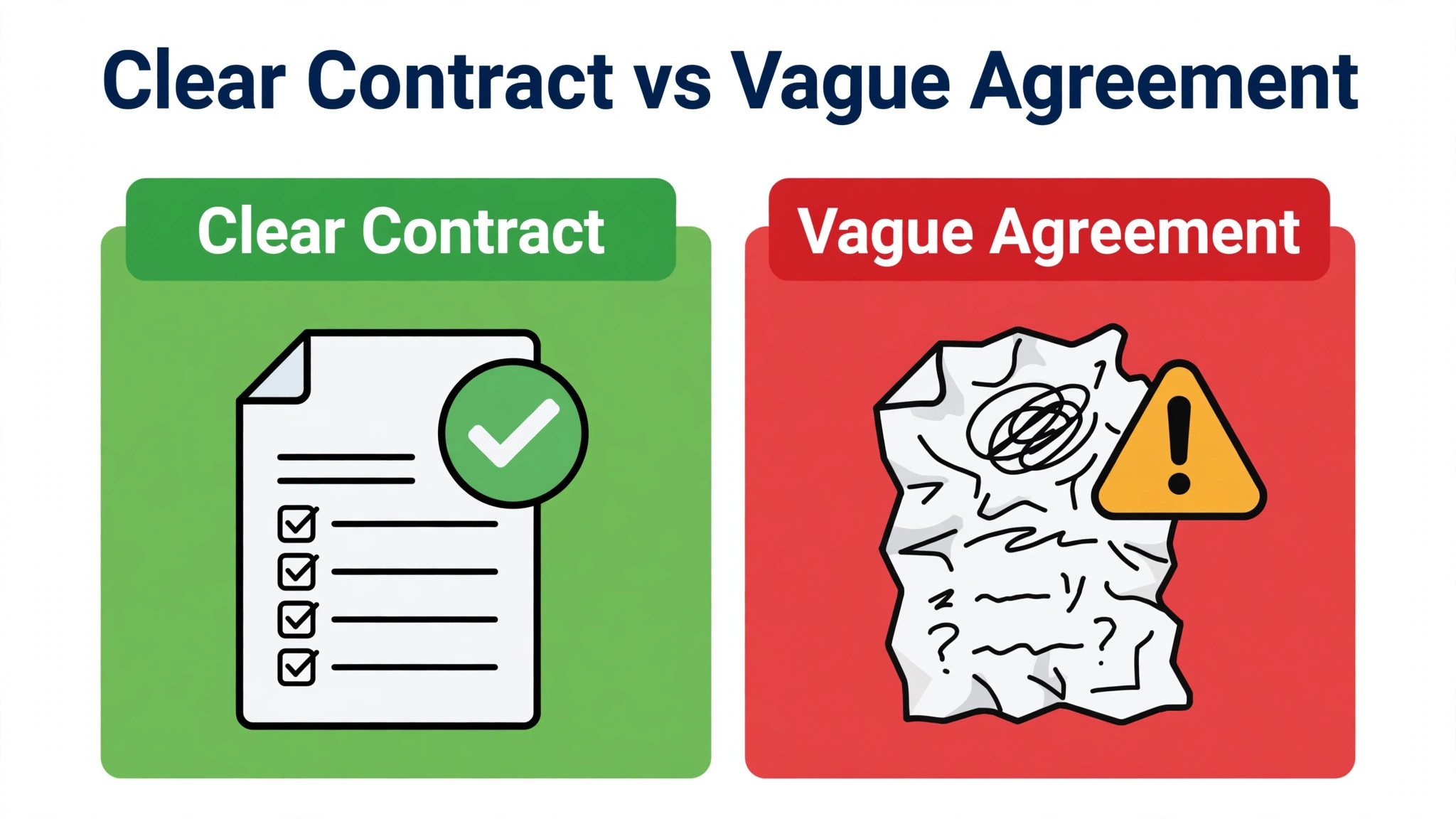
How to Write a Client Contract Small Business Owners Can Actually Use
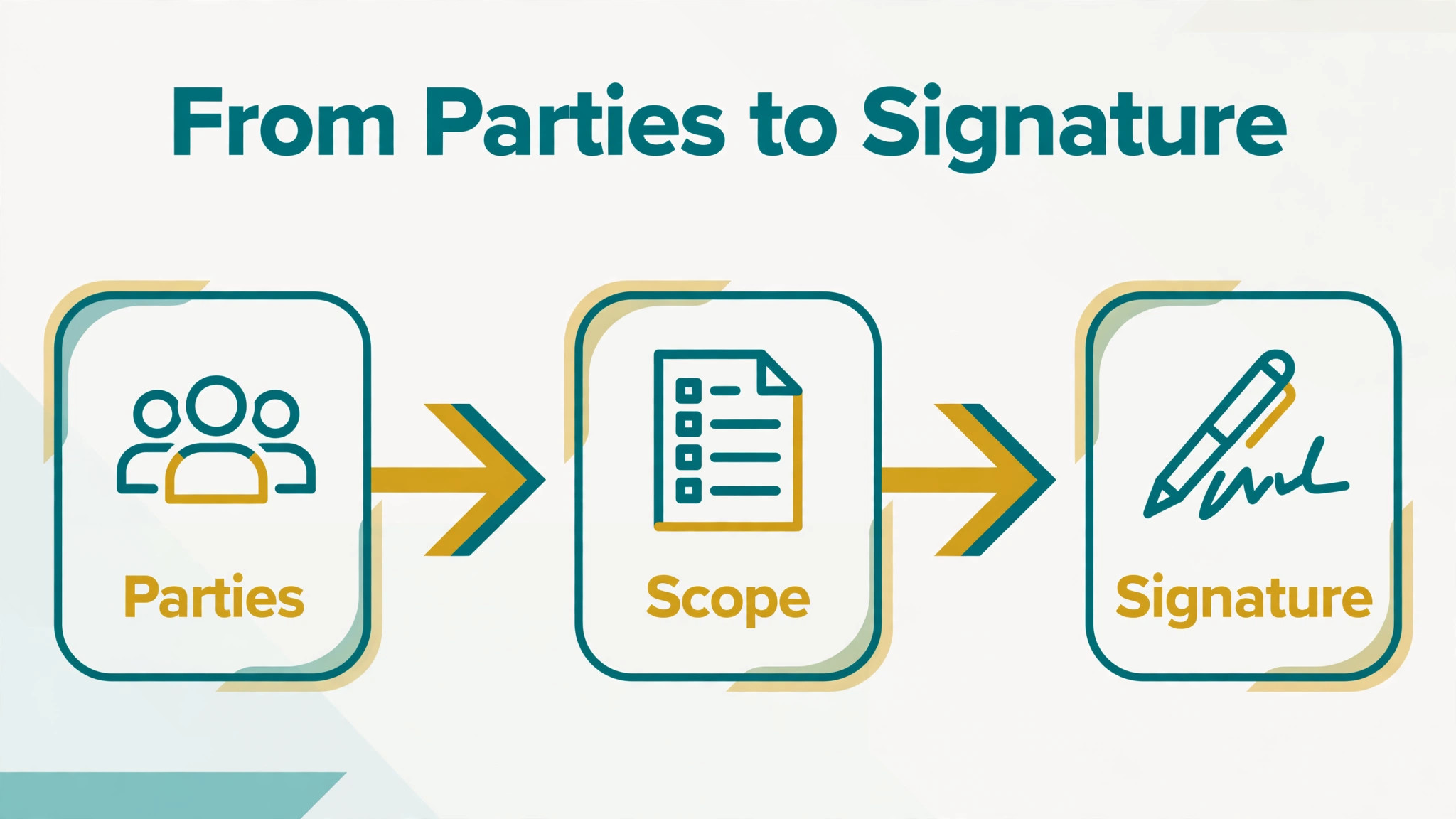
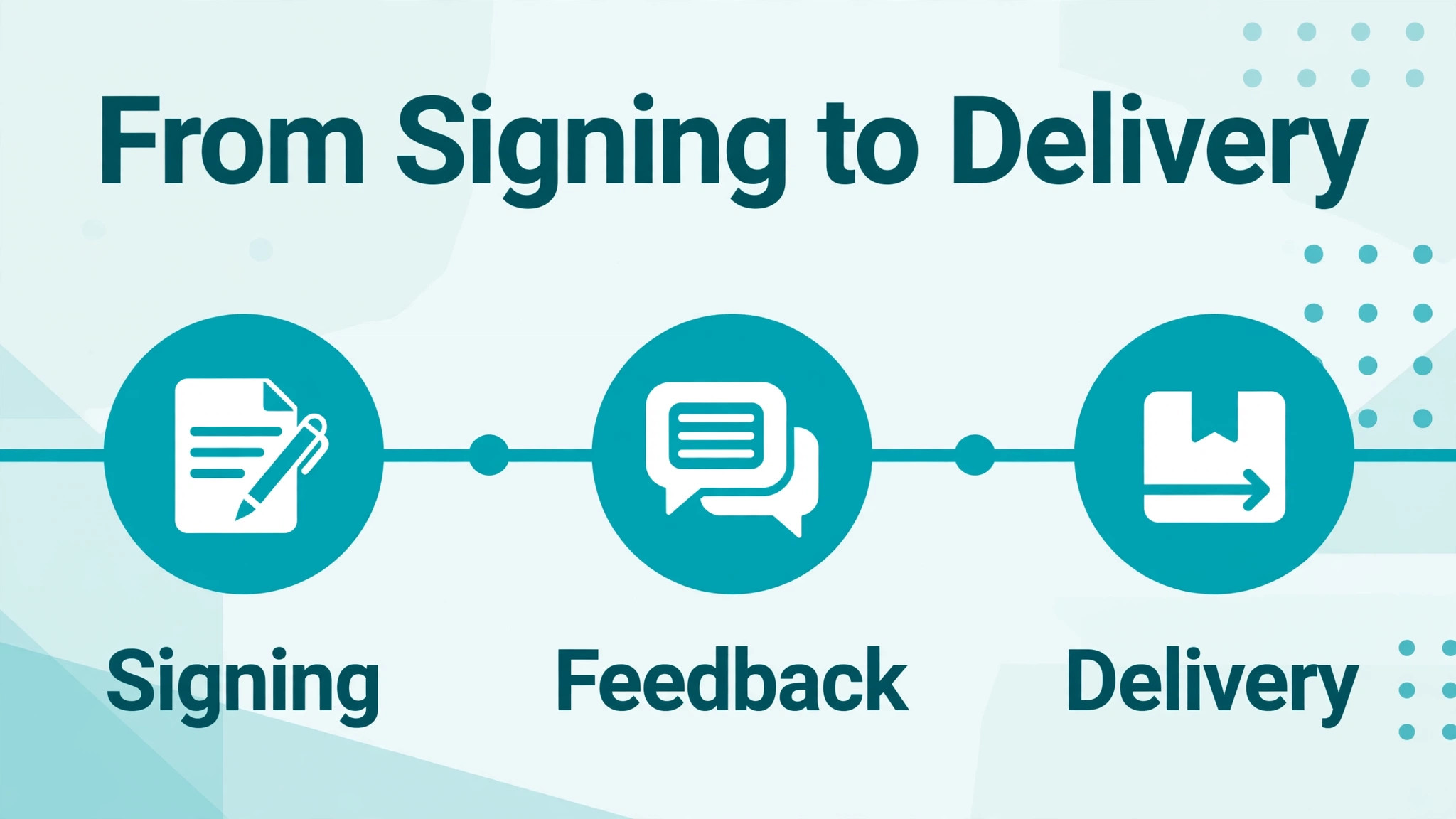
The method below works for services, creative work, consulting, and most small business engagements. Start with the parties and the scope, because those sections define the job. Add payment terms next, because cash flow depends on them. Add revision limits, ownership, and termination after that, because those sections handle change. Finish with signatures and a simple signing process, because an unsigned contract protects nobody.
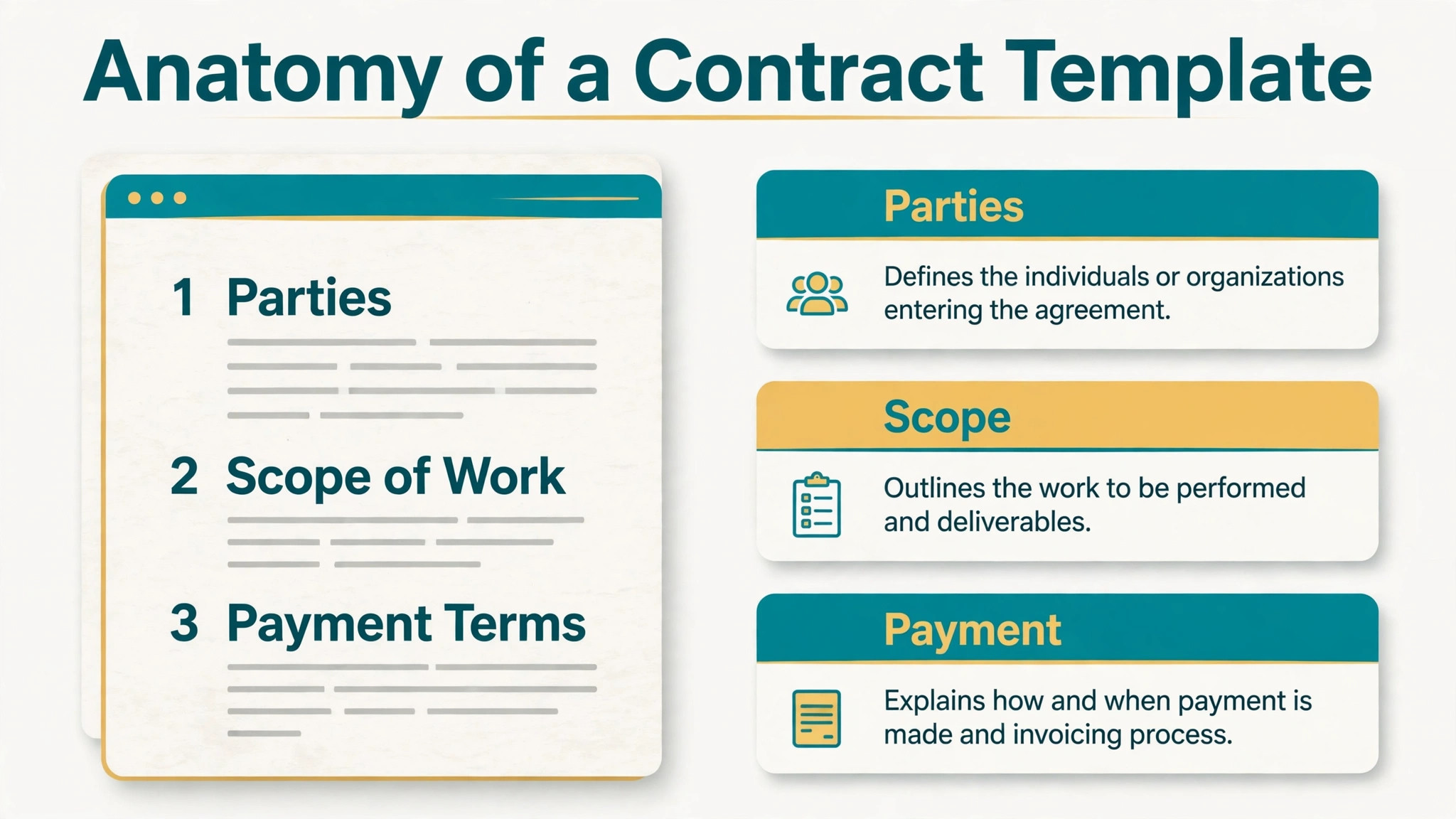
- Name the parties with full legal names, business names, addresses, and contact details, plus the effective date.
- Describe the scope in deliverables, quantities, formats, and milestones, and state clearly what is excluded.
- Set the price, the payment schedule, the deposit, the due date for each invoice, and the late payment term.
- Limit revisions to a stated number of rounds, and price additional revisions in advance.
- Cover ownership transfer on full payment, confidentiality, liability limits, and governing law in plain words.
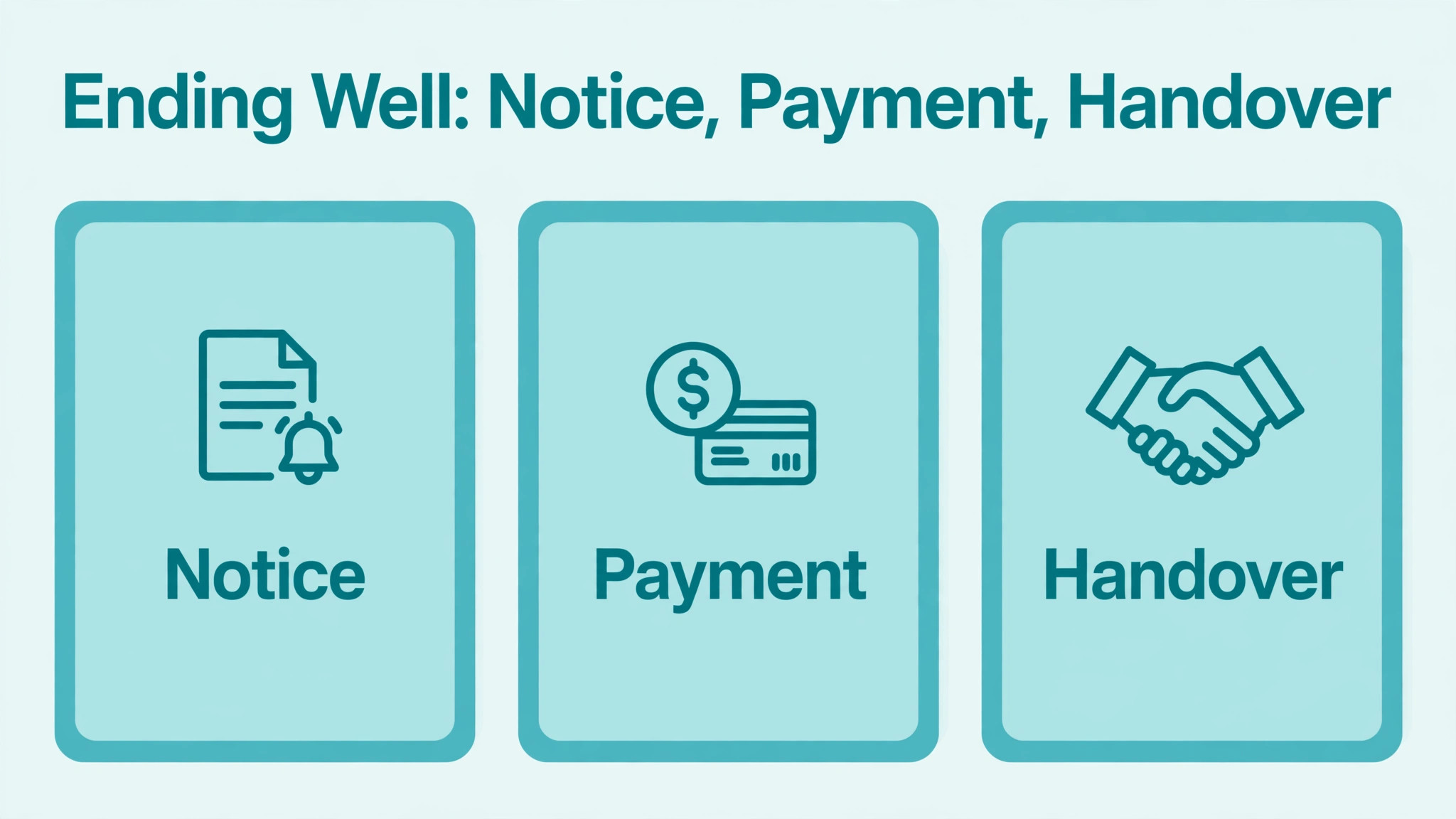
- Write a termination clause that covers notice, payment for work done, and handover of materials.
- Add a signature block for both sides, send the contract for electronic signature, and store the signed copy.
Read the whole draft once as the client would read it. If a section feels vague, a client will read it as vague too, and vagueness always benefits the side that wants more work for the same price. Tighten the vague line before sending, even when tightening it feels awkward. Awkward now is cheaper than unpaid later.
Start With Parties, Dates and Definitions
The opening section names who is agreeing and when the agreement starts. Use full legal names, not first names or brand nicknames alone. If the client is a company, use the registered company name. If your business trades under a different name, include both the legal name and the trading name, so there is no doubt about who is bound. Add addresses and contact details for notices, because a termination or dispute notice needs a reliable address to go to.
Set the effective date as the date both sides sign, or a specific start date if the work begins later. Avoid backdating, and avoid leaving the date blank. A contract without a clear start date creates arguments about when deadlines and payment terms began to run. If the work has phases, name the phase dates in the scope section rather than crowding the opening section with detail.
Define key terms only where a term could be read two ways. Deliverable, revision round, and final payment are worth a one line definition each if your work uses them in a specific way. Do not define every ordinary word, because a definitions section that runs too long signals that the contract is harder than it is. Define the terms that affect money or scope, and leave the rest in plain language.
This opening section is short, but it carries weight when you learn how to write a client contract small business clients will actually sign. A clear parties section removes identity doubt, a clear date removes timing doubt, and both doubts are expensive when a dispute arrives months later.
Write Scope So Scope Creep Has Nowhere to Hide
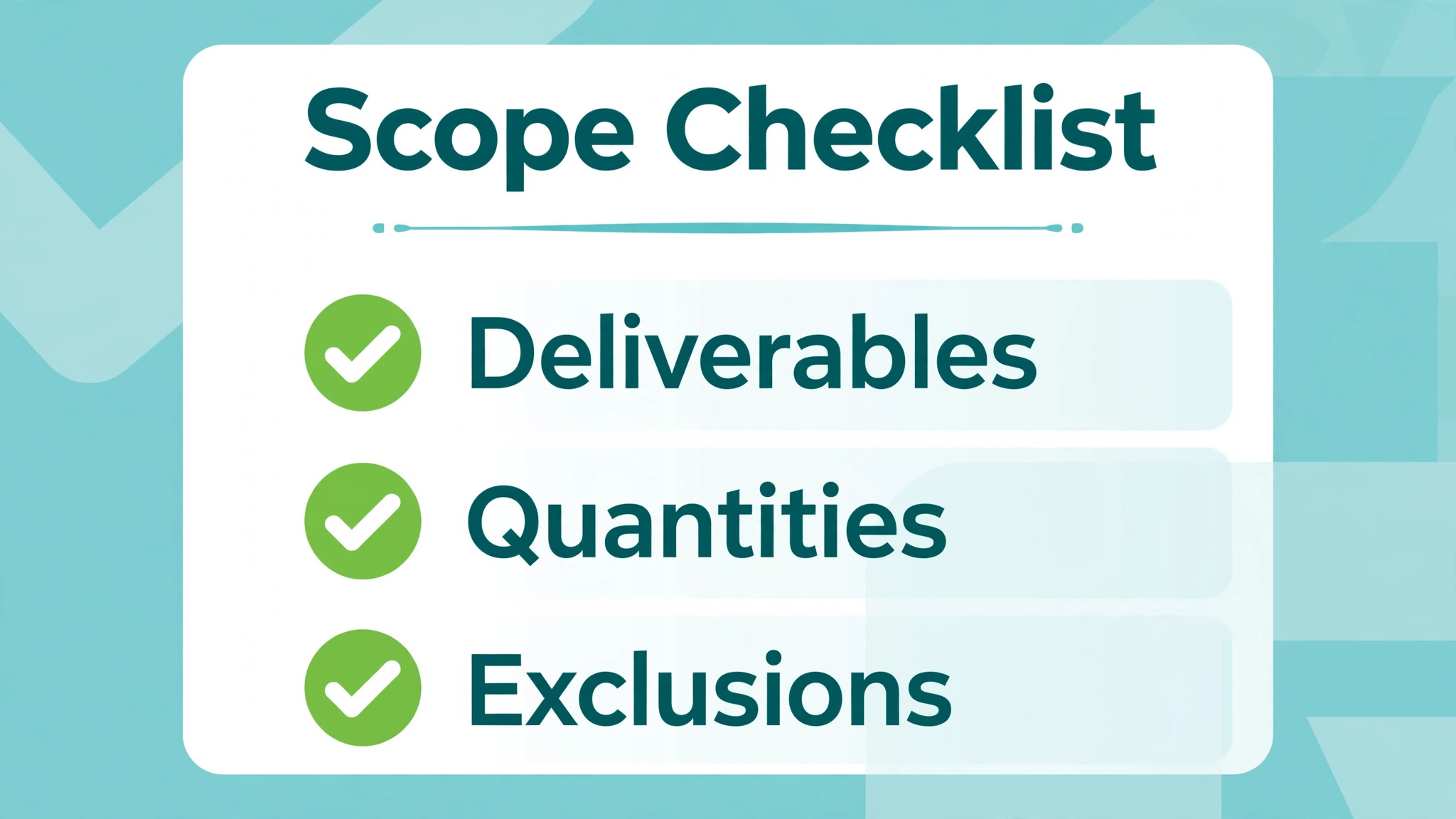
Scope is the section that prevents most disputes, so write it as a list of deliverables, not as a description of effort. Instead of promising website design, promise a five page website with named pages, one round of design mockups, and one round of revisions, in specified formats. Instead of promising marketing support, promise a stated number of posts, a stated number of campaigns, and a stated reporting format. Quantities turn a vague promise into a checkable list.
List exclusions with the same care as inclusions. If hosting, stock photography, advertising spend, printing, or third party tools are not included, say so in plain words, with who pays for them when they are needed. Exclusions feel uncomfortable to write, because they sound negative, but they prevent the most common scope argument, which is the assumption that everything adjacent to the job was included in the price.
Tie scope to milestones where the job has phases. Name each milestone, its deliverable, its approval step, and its payment trigger. A client who approves a milestone in writing has less room to reopen it later, and a business that ties payment to milestones has a natural checkpoint for scope conversations. When a client asks for work beyond a milestone, the contract gives you a clean reply, which is that the extra work sits outside the agreed scope and will be quoted separately.
Add a change process in one short paragraph. Any change to scope must be agreed in writing, with a price and a revised deadline, before the extra work starts. That single rule stops the friendly message that adds a page, a feature, or a round of work without a price attached. It also protects the client, because no surprise charge can appear for work they did not approve in writing.
That discipline is the practical core of how to write a client contract small business scope that holds up.
Set Payment Terms That Get You Paid on Time
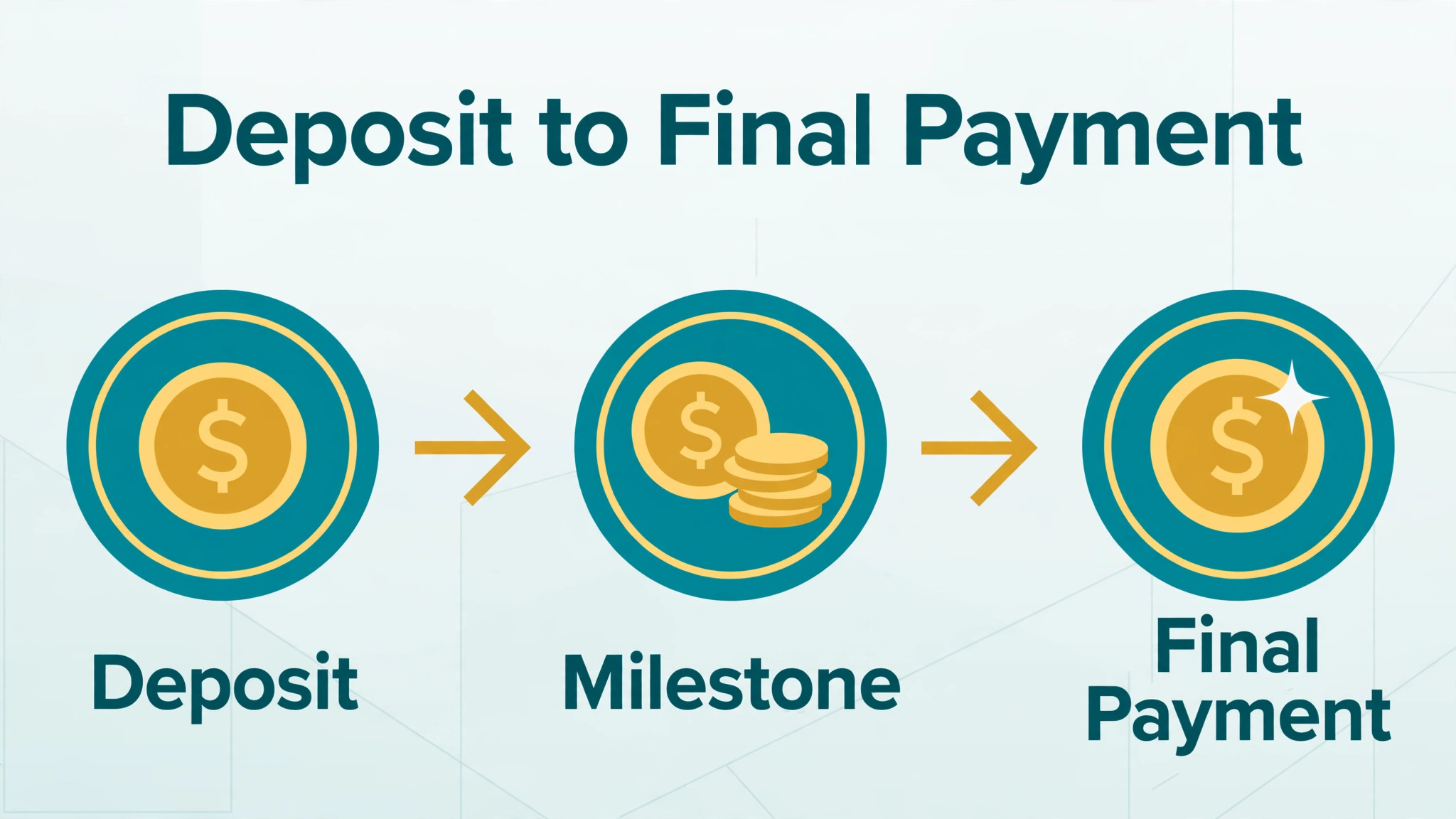
Payment terms need four facts, and vague terms produce vague payments. State the total price, the payment schedule, the method, and the due date for each invoice. A common small business schedule is a deposit before work starts, a midpoint payment at an agreed milestone, and a final payment on delivery. For new clients, a deposit in the range of 25 to 50 percent before work starts is standard practice in many service guides, and it filters out the clients most likely to vanish on the final invoice.
Name the number of days for payment, such as payment due within 14 days of invoice, rather than a phrase like payment on receipt or payment soon. A number of days is enforceable in a conversation, while a vague phrase is not. Add a late payment term, such as a monthly late fee in the range of 1 to 1.5 percent, or a flat fee per overdue invoice, and check that any fee you state is permitted where you operate. You may rarely enforce the fee, but its presence changes payment behaviour.
State what happens when payment is late. A common approach is to pause work after a stated grace period until payment arrives, with deadlines moving by the length of the delay. Pausing work is a strong protection, but it must be written down before it is used, or it can look like abandonment. Also state that ownership transfers only on full payment, which gives the payment terms real weight, because the client needs the finished work and the business holds the rights until paid.
Match payment terms to the job size. Small fixed jobs may suit full payment on delivery with a deposit, while larger jobs need milestone payments to keep cash flow steady. Avoid very long payment terms, such as 60 or 90 days, unless the client is large enough to justify the wait and the price reflects it. For most small businesses, shorter terms with a deposit are the safer default.
Clear payment language is a core reason to learn how to write a client contract small business cash flow can rely on, because the contract is where late payment stops being a personal favour and starts being a missed deadline with a stated consequence.
Put Revision Limits in Writing
Revision limits are where creative and consulting work most often loses money. Without a limit, one more tweak can become ten, and each tweak feels small until the hours add up. State the number of revision rounds included, such as two rounds, and define a round as one consolidated set of comments from the client, not a stream of single comments over weeks. Consolidated feedback protects the schedule and the budget at the same time.
Price additional revisions in advance. State an hourly rate or a fixed fee per extra round, so the conversation about extra work starts from a price rather than from an awkward negotiation. Clients accept extra revision charges far more easily when the price was in the contract from the start. Without a stated price, the business must either absorb the cost or invent a charge mid project, and both options damage the relationship.
Set a feedback deadline as well. Client feedback within a stated number of business days, such as five, keeps the project moving, and a clause that moves the delivery date when feedback is late protects the business from a delay it did not cause. This two way deadline is fair, because it asks both sides to meet dates, and it prevents the project from drifting while the business waits for comments.
Record approvals in writing. When a client approves a draft, a milestone, or a final deliverable, keep that approval in email or in the project tool. Written approval closes a revision round cleanly, and it gives the business a record if the same point is reopened later. A revision clause without written approvals is harder to rely on, because nobody can prove when a round ended.
Cover Ownership, Confidentiality and Liability in Plain Words
Ownership should transfer when the invoice is paid in full, not before. State that plainly, and state what the client may use before full payment, which is usually nothing beyond review for approval. This clause is the enforcement backbone of the payment terms, because the deliverable the client wants depends on the payment the business is owed. For work that uses the business’s own tools, templates, or prior materials, state that those underlying materials remain with the business, while the finished deliverable transfers on payment.
That transfer rule is a quiet safeguard in how to write a client contract small business owners can enforce.
Confidentiality needs a short, practical clause. Each side agrees not to share the other’s non public business information, with standard exceptions for information already public or required by law. Keep the clause mutual and simple, and set a reasonable time limit if one is needed. Overly broad confidentiality clauses can block a business from showing its own portfolio work, so add a portfolio right where relevant, stating that the business may show the finished work in its portfolio after delivery, unless the client asks otherwise in writing.
Liability limits cap the business’s exposure, often at the fees paid for the project. State the cap plainly, and note that neither side is liable for indirect losses where that is the agreed position. Liability clauses vary by jurisdiction and by type of work, so for high value projects, or when a client sends their own contract, have a lawyer review this section before signing. A template can cover the standard case, but it cannot replace legal advice on an unusual risk.
Governing law and dispute handling belong in one short paragraph. Name the jurisdiction whose law applies, and state a simple dispute path, such as discussion first, then mediation, then the courts of that jurisdiction. A clear dispute path reduces the chance that a small disagreement becomes a costly legal process, because both sides know the next step before tempers rise.
Write a Termination Clause Both Sides Can Live With
Termination clauses are often skipped because they feel pessimistic, yet they are the clause that matters most when a project goes wrong. State how either side can end the agreement, how much notice is required, and what is paid when the project ends early. A common approach is written notice of a stated number of days, payment for work completed up to the termination date, and a kill fee in the range of 25 to 50 percent of the remaining fee where the client cancels mid project. Check that any kill fee you state is reasonable for your work and jurisdiction.
Cover handover on termination. The business should deliver work completed and paid for, with source materials where the contract promises them, and the client should pay for that work promptly. State what is not delivered on early termination, such as unfinished drafts or unpaid deliverables, so there is no argument about partial work. A clean handover clause lets both sides part professionally, even when the project itself has failed.
Include a termination for cause route as well. If either side materially breaches the agreement and does not fix the breach within a stated cure period, the other side may terminate. Material breach includes non payment after notice, failure to provide agreed materials, or failure to deliver without explanation. A cure period is fair, because it gives the breaching side a chance to fix the problem before the agreement ends.
Also state what survives termination. Payment obligations, ownership rules for paid work, confidentiality, and liability limits usually survive, and naming them avoids an argument that termination erased every obligation. A termination clause that covers notice, payment, handover, and survival is complete, and it can be written in a few short paragraphs without legal jargon.
A fair termination clause is another place where learning how to write a client contract small business owners can trust pays off, because clients sign more willingly when they see that ending the agreement is orderly rather than punitive.
Add the Signature Block and Make Signing Easy
A contract without signatures is a draft, not an agreement, so make signing the easiest step in the process. Use an electronic signature tool, many of which offer free signing for basic documents, and send the contract with a short message that states the price, the start date, and the deposit. Clients sign faster when the message tells them exactly what they are agreeing to, rather than asking them to hunt through the document for the key terms.
The signature block itself needs the full legal names, the signature lines, the printed names, the titles where relevant, and the dates. For a company client, the person signing should have authority to bind the company, and the block should show their role. For a sole trader or freelancer client, a name and signature are enough, with contact details for notices. Keep the block at the end of the document, after the terms, so the act of signing clearly covers everything above it.
Store the signed copy immediately, as a PDF, in a folder per client, together with the proposal, change requests, approval emails, and invoices. A signed contract that cannot be found when needed is almost as weak as no contract at all. Keep a backup copy in a second location, and keep the same terms in the project file, so anyone in the business can find them without asking the owner.
Send the contract before work starts, every time, including for returning clients and small jobs. A returning client may feel that a contract is unnecessary, but scope, price, and payment terms change between jobs, and the new job needs its own agreement. Frame it as standard process rather than personal doubt, and most clients will accept it without question.
A Fill In Template You Can Adapt
The template below pulls the clauses in this guide into one short document. Replace the bracketed items, delete sections that do not apply, and have a lawyer review the result before using it on high value work. This template is a starting point for education, not legal advice, and laws vary by location and by type of work.
This agreement is made on [date] between [your full legal name and business name] with address [your address], and [client full legal name and company name] with address [client address]. Together they are called the parties, and each is called a party.
The business will provide the following services and deliverables. [List each deliverable with quantity, format, and milestone date.] Anything not listed in this section is outside the scope of this agreement and will be quoted separately in writing.
The total price for the work is [total price and currency]. Payment follows this schedule. [Deposit amount and due date, milestone amounts and dates, final amount and due date.] Payment is due within [number] days of each invoice, by [payment method].
The price includes [number] rounds of revisions, with each round defined as one consolidated set of client comments. Additional revisions are charged at [rate or fixed fee] per round. Client feedback is due within [number] business days of each draft, and delivery dates move by the length of any client delay.
Ownership of the finished deliverables transfers to the client on full payment. Until full payment, the business retains ownership, and the client may use drafts only for review and approval. The business may show finished work in its portfolio unless the client asks otherwise in writing before delivery.
Either party may end this agreement with [number] days of written notice. On termination, the client pays for work completed up to the termination date, plus [kill fee percentage or amount] where the client cancels mid project. Work completed and paid for will be handed over, and payment, ownership for paid work, confidentiality, and liability limits survive termination.
Each party signs below to agree to these terms. Signatures may be electronic, and electronic signatures are treated as valid for this agreement where the law permits them.
Signature block. Business name, printed name, signature, date. Client name, printed name, signature, date.
Adapt this template once for your most common job type, save it as your standard contract, and reuse it with small edits per client. A template that is actually used protects a business far better than a perfect contract that sits unused because it takes too long to draft.
Reuse keeps every new job covered by how to write a client contract small business terms consistently.
Mistakes That Weaken an Otherwise Good Contract
The most common mistake is sending the contract after work has started. Once work is underway, the business loses negotiating power, and the client has less reason to agree to a deposit or a revision limit. Send the contract with the proposal or immediately after acceptance, and do not start billable work until it is signed and the deposit is paid, except for a small paid discovery step that has its own agreement.
Copying a contract from another industry without adapting it is another trap. A design contract, a consulting contract, and a maintenance contract need different scope, revision, and ownership language, and a copied clause that does not fit the job can create confusion rather than protection. Adapt the template to the job, delete irrelevant sections, and read the result as the client would read it.
Vague scope language weakens every other clause. Words like support, optimisation, and management, without quantities or deliverables, invite scope creep back in through the side door. Replace vague words with numbers, formats, and dates wherever money or time depends on them. If a deliverable cannot be counted or described, it probably needs a conversation before it needs a clause.
Finally, do not let the contract go stale. Review the template once a year, and update rates, payment terms, revision limits, and any clause that caused friction in past projects. A contract that reflects last year’s prices or last year’s process will mislead the next client and weaken the next negotiation. A yearly review takes an hour and keeps the document honest.
Frequently Asked Questions
Do I need a contract for a small job?
Yes, small jobs benefit most from a short written agreement, because scope creep and late payment hurt most on small margins. A one or two page contract covering scope, price, payment schedule, revision limits, and termination is enough for most small jobs. Sending it as standard process, before work starts, keeps the job professional without adding hours of paperwork.
What deposit should a small business ask for?
Many service guides suggest a deposit in the range of 25 to 50 percent before work starts for new clients, with the balance tied to milestones or delivery. The right figure depends on the job size, the cost of materials, and the client history. A deposit filters out clients who are unlikely to pay the final invoice, and it gives the business cash flow while the work is underway.
How many revision rounds should a contract include?
Two rounds is a common starting point for creative and consulting work, with each round defined as one consolidated set of comments. The right number depends on the work type, but the key point is to state a number and a price for extra rounds. Without a stated limit, revisions can continue until the profit is gone, and the business has no agreed basis to charge for the extra work.
When does the client own the finished work?
In most small business contracts, ownership transfers on full payment, and the client may use drafts only for review and approval before that point. State this plainly in the contract, and state what happens to underlying tools, templates, and prior materials, which usually remain with the business. Confirm the position with a lawyer for high value work or unusual intellectual property.
Can I use an electronic signature for a client contract?
Electronic signatures are generally enforceable for most business agreements in many jurisdictions, under laws such as the ESIGN Act in the United States, but rules vary by location and by document type. Use a reputable electronic signature tool, keep the signed PDF with the proposal and invoices, and check local rules for regulated or high value agreements before relying on electronic signing alone.
Should a lawyer review my contract template?
A lawyer review is wise for high value projects, unusual risks, regulated work, or when a client sends their own contract with terms you do not fully understand. For standard small jobs, a well adapted template in plain language covers most needs, but it is a starting point rather than legal advice. Review the template once a year, and seek advice when a clause could affect significant money or liability.
Send the Contract Before the Work Starts
A contract is a working tool, not a formality to file away. Write the scope as a checkable list, set payment terms with real dates, limit revisions with a stated price for extras, and give both sides a fair way to end the agreement. Those four habits prevent most small business disputes before they start, and they cost far less time than resolving a dispute after it has grown.
Start with your most common job type. Adapt the template in this guide, send it with your next proposal, and keep the signed copy with the project records. Each signed contract makes the next one easier, because the terms become standard process rather than a negotiation. That is the lasting value of learning how to write a client contract small business work can rely on, and it is a habit worth building before the next project begins.
More Reading on Stratilyze
- Best proposal software for freelancers explains proposal tools that help a small business present work clearly and win clients faster.
- Best client management software for accountants looks at how a small firm tracks clients, documents, and follow up work in one place.
- Best CRM for event planners small business shows how a small team keeps contacts, bookings, and client details together.
- Cost of Amazon seller fees small business explains the fee layers that shape pricing and margin for a small seller.