
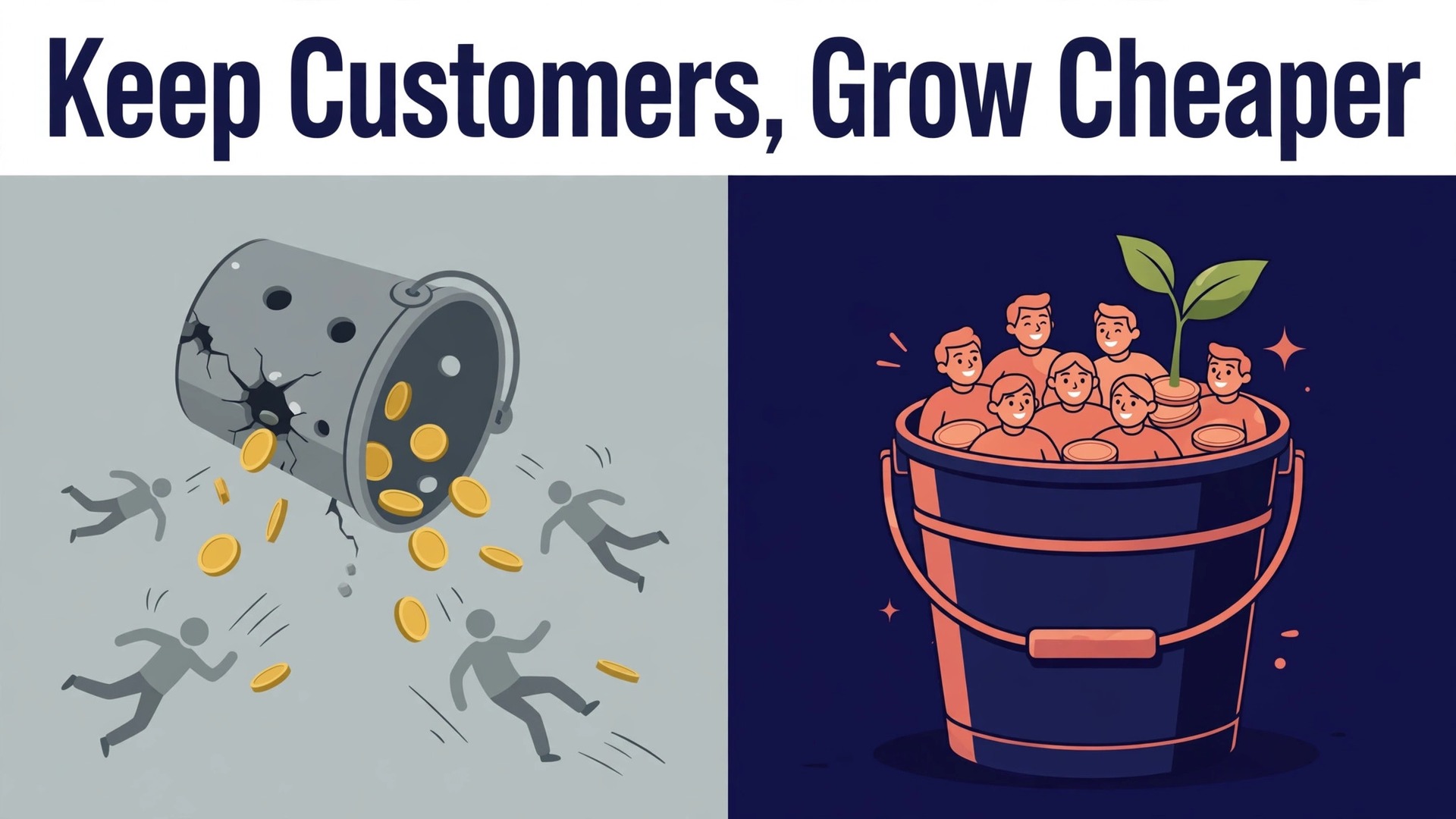
A new customer costs far more to win than an existing customer costs to keep, yet most small businesses spend nearly all of their marketing budget chasing first purchases and almost nothing on second purchases. That imbalance is the comparison at the heart of a retention marketing strategy small business owners can actually afford, because the customers you already have are the cheapest source of your next sale. Acquisition fills the top of the business. Retention fills the bank account, since repeat buyers already trust you, already know how to buy from you, and need far less convincing than a stranger.
The comparison is not an argument against acquisition. A business with no new customers will shrink, no matter how loyal its existing base is. The argument is about balance. When acquisition runs without retention, every month starts near zero, and growth depends on winning a fresh batch of strangers. When retention runs alongside acquisition, each month starts with a base of buyers who are likely to return, and new customers add to that base instead of replacing customers who quietly left.
Retention marketing is the planned work of keeping customers active after the first purchase. It covers onboarding, follow-up, useful communication, loyalty rewards, timely offers, and fast help when something goes wrong. It is not a single tactic, such as a discount code sent once a year. It is a system of small, repeatable actions that keep the relationship warm between purchases, so the next purchase feels natural rather than forced.
What Retention Marketing Actually Covers
Retention starts the moment a first purchase is complete, not weeks later when a customer has already drifted. The first days decide whether a buyer becomes a repeat buyer or a one-time buyer, because that is when expectations are set, doubts surface, and the customer judges whether the purchase was worth it. A business that goes silent after taking payment leaves that judgement to chance.
Good retention work has four parts. The first part is onboarding, which helps the customer get value from what they bought, whether that is a product, a service, or a membership. The second part is communication, which keeps the business present without becoming noise, through useful messages timed to the customer journey. The third part is reward, which recognises repeat buying in a way that feels fair rather than gimmicky. The fourth part is recovery, which catches problems early and wins back customers who have gone quiet.
Each part needs an owner, even in a one-person business. When no one owns follow-up, follow-up depends on memory, and memory fails on busy weeks. When one person owns it, with a simple weekly check, retention becomes a habit rather than a campaign that runs only when sales dip.

Start With a Baseline Before You Add Tactics
A retention plan built without numbers will chase the wrong problem. A business losing customers to slow delivery needs operations help, not a loyalty card. A business losing customers to silence after purchase needs follow-up, not a price cut. Measure first, then choose tactics that match what the numbers show.
Four measures give a small business enough of a baseline without complex analytics. Repeat purchase rate shows the share of customers who buy more than once in a period. Purchase gap shows the typical time between orders, and a lengthening gap is an early warning. Customer lifetime value shows the total revenue a typical customer brings over the relationship, which tells you how much retention work is worth. Churn, for subscription or repeat-service businesses, shows the share of customers who stop in a period.
| Measure | What it tells you | How a small business tracks it |
|---|---|---|
| Repeat purchase rate | Whether first buyers come back | Orders per customer in your sales system |
| Purchase gap | How long customers wait between orders | Average days between first and second order |
| Customer lifetime value | What a retained customer is worth | Average order value times average orders per customer |
| Churn rate | How fast subscribers or regulars leave | Lost regulars divided by regulars at period start |
| Complaint recovery rate | Whether problems get fixed in time | Resolved complaints divided by complaints received |
Record these numbers for the last three months before you change anything, and use your own baseline as the comparison, not an industry average. That baseline is the foundation of a retention marketing strategy small business owners can defend with numbers instead of hunches. Averages hide differences in product type, price, and purchase cycle, and a small business that chases someone else’s benchmark will misread its own progress. Your baseline is the only honest starting point, and every later improvement should be judged against it.
Segment Before You Message, or Every Message Misses
One message to every customer is the fastest way to make retention feel like spam. A new buyer needs onboarding help. A regular buyer needs recognition and early access. A quiet buyer needs a reason to return, not another general newsletter. Segmentation is simply grouping customers by behaviour, so each group gets a message that fits where they are.
Start with four simple groups that any small business can build from order history. New customers are those who bought once in the last 30 days. Regular customers buy at the expected interval or more often. At-risk customers have passed their usual purchase gap without ordering. Lapsed customers have been silent for twice their usual gap or longer. Those four groups cover most retention work, and adding more groups too early only complicates the system.
| Group | Who belongs here | The right first move |
|---|---|---|
| New customers | Bought once in the last 30 days | Onboarding help and a second-purchase reason |
| Regular customers | Buy at or above the usual interval | Recognition, early access, and useful content |
| At-risk customers | Past their usual gap without ordering | A helpful check-in, not a hard discount |
| Lapsed customers | Silent for twice the usual gap | A win-back offer with a clear deadline |
Segmentation also protects your budget. Discounts sent to regular customers who would have bought anyway waste margin, while the same discount sent to at-risk customers can save a relationship. A retention marketing strategy small business owners run well therefore treats discounts as a targeted tool, not a broadcast habit, and reserves the strongest offers for the customers most likely to leave.

The Retention Plays That Do the Heavy Lifting
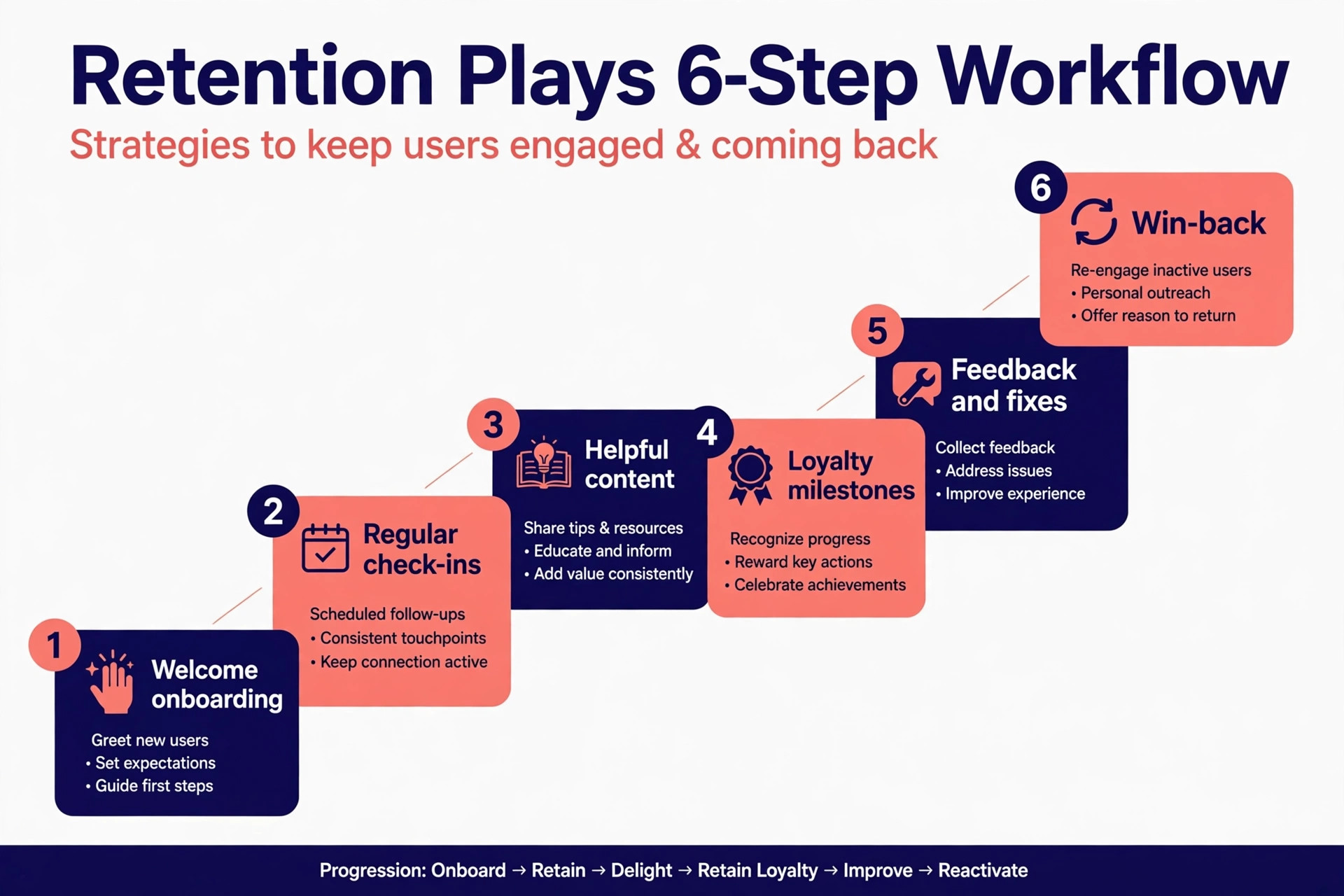
A play is a repeatable sequence, not a one-off idea. The six plays below cover the full customer journey, and a small business should run them in order, starting with onboarding and only adding later plays once earlier ones run reliably.
The onboarding play runs in the first 30 days after a first purchase. Send a thank-you message, a short guide to getting value from the purchase, and one invitation to ask questions. For services, add a check-in call or message after the first session. The goal is a customer who feels looked after, not a customer who feels sold to again on day two.
The useful-content play keeps the business present between purchases. Send tips, how-to notes, or seasonal advice that help the customer use what they bought, rather than a stream of product announcements. A garden supplier that sends planting reminders will be remembered at planting time. A supplier that sends only sale notices will be unsubscribed before then.
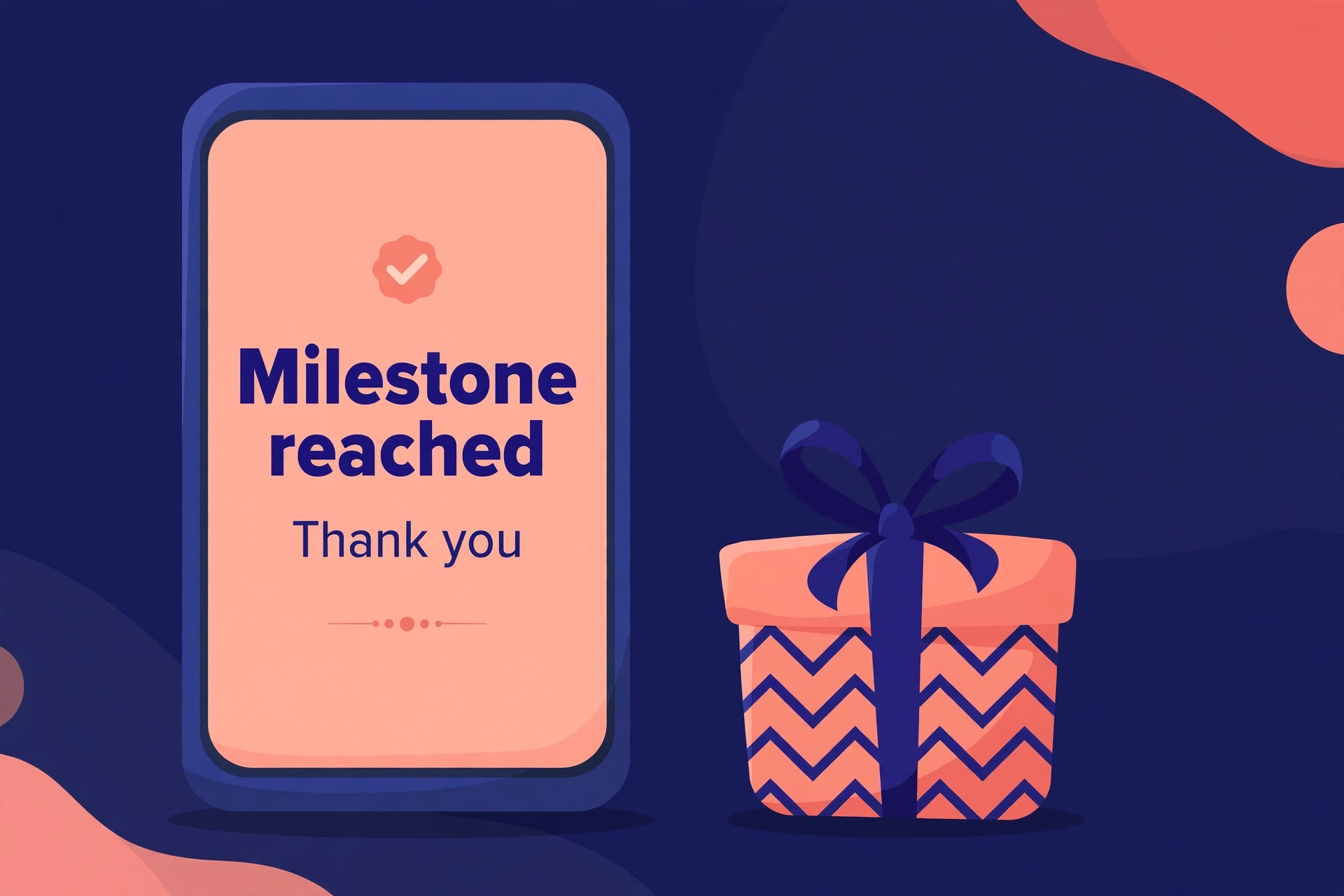
The milestone play marks moments that matter to the customer, such as an anniversary of first purchase, a tenth order, or a year of membership. A short personal message beats a generic voucher here, because the customer can tell when a milestone was noticed by a person rather than generated by a system. Add a small reward if it fits, but let the recognition lead.
The loyalty play rewards repeat buying in a simple, transparent way. A stamp card, a points balance, or a tier with clear benefits all work, provided the customer can understand the reward without a manual. Complex loyalty schemes fail in small businesses, because customers cannot track them and staff cannot explain them. Simple beats clever, every time.
The recovery play handles problems before they become exits. When a complaint arrives, respond fast, fix the issue, and follow up after the fix to check the customer is satisfied. A customer whose problem was handled well often becomes more loyal than a customer who never had a problem, because the recovery proves the business cares when it matters.
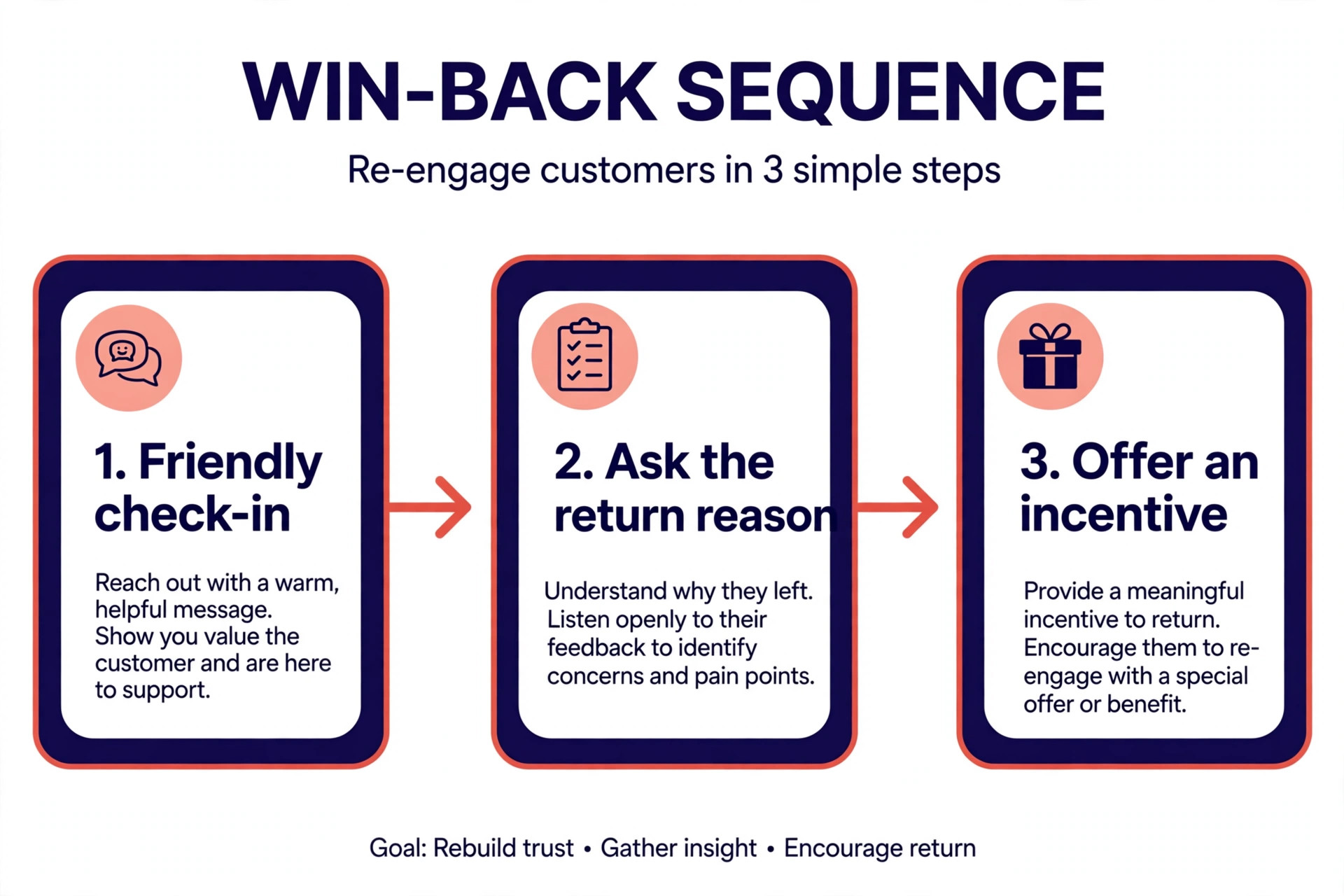
The win-back play targets quiet customers with a sequence, not a single desperate discount. Start with a helpful check-in, follow with a reason to return such as a new product or a seasonal offer, and only then offer a time-limited incentive. Customers who return for help or for something new stay longer than customers who return only for a price cut.
Building a Retention Marketing Strategy Small Business Owners Can Run on a Small Team
A small team cannot run ten plays at once, and should not try. The realistic build order is onboarding first, then useful content, then recovery, then win-back, then loyalty, then milestones. Each play gets one month to bed in, with a named owner and a simple weekly check, before the next play starts. That pace produces a working system in six months without overwhelming the team.
Weekly rhythm matters more than grand launches. Set aside one hour a week to review the at-risk list, send the check-ins, and note what worked. That hour is the retention system in its smallest form, and a business that protects it will outperform a business that launches a big loyalty programme and then forgets it. Consistency is the strategy, and the plays are just the content of that consistency.
Tools should follow the plays, not lead them. A basic customer list, an email tool, and a sales record are enough to start, and you should only add a loyalty or automation tool when a manual version of the play already works. Tools bought before the play exists tend to sit unused, while tools bought to scale a working play pay for themselves quickly. Check the vendor pricing page before committing to any retention tool, and confirm whether messaging volume or contact count changes the price.

The Churn-Risk Checklist
Use this checklist weekly to catch customers before they leave, rather than noticing their absence months later. It turns churn from a surprise into a manageable list.
– List customers who have passed their usual purchase gap without ordering, and sort them by lifetime value so the most valuable get attention first. – Check whether any at-risk customer had a recent complaint, a failed delivery, or an unanswered message, and fix that issue before sending any offer. – Send a helpful check-in to each at-risk customer, referencing their last purchase and offering help, not a discount, as the first step.
– Note which check-ins get replies, and follow up personally with those who reply, since a reply is a sign the relationship can still be saved. – Send a return reason to customers who did not reply, such as a new product, a seasonal service, or a useful guide tied to their last purchase.
– Offer a time-limited incentive only to customers who have not responded to help or to a return reason, and set a clear end date for that incentive. – Record the outcome for every at-risk customer, whether they returned, replied, or stayed silent, so the next cycle learns from this one. – Review the at-risk list monthly for patterns, such as a product, a branch, or a service step that keeps producing quiet customers.
A checklist used weekly will feel slow at first, and then it will feel like the most valuable hour of the week, because it is the hour that protects revenue you have already earned. The businesses that keep customers are rarely the ones with the cleverest offers. They are the ones that notice silence early and respond like people, not like systems.
When Discounts Help and When They Hurt
Discounts are the most misused retention tool, because they feel like action while quietly training customers to wait for the next discount. A discount helps when it saves a customer who would otherwise leave, when it introduces a customer to a second product they are likely to repurchase, or when it rewards a milestone that the customer earned. In those cases, the discount buys a relationship or a habit, not just a single order.
A discount hurts when it goes to customers who would have bought at full price, when it runs so often that full price stops feeling real, or when it attracts bargain hunters who leave as soon as the discount ends. If your regular customers start asking when the next sale is, your discount habit has replaced your retention strategy, and margins will show it before customer counts do.
The safer order is help first, value second, and discount last. Help means answering a question, fixing a problem, or making the next purchase easier. Value means useful content, early access, or a small extra that costs you little and means a lot to the customer. Discount is the last resort for customers who have not responded to help or value, and it should carry a deadline so it does not become the expected price.
Retention by Business Type
Product businesses with repeat purchases, such as food, beauty, or supplies, should weight retention toward purchase-gap timing and replenishment reminders. The key question is whether the customer has run out, and the key message is a timely reminder with an easy reorder route. Subscription add-ons work well here, provided cancelling stays easy, because a subscription that traps customers creates resentment that destroys retention.
Service businesses with appointments, such as salons, clinics, or repair firms, should weight retention toward rebooking at the point of service and reminders before the next due date. The cheapest retention moment is the minute a happy customer is standing in front of you, and a rebooking offer made then beats any email sent later. Missed rebooking is the most common retention leak in service businesses, and it is fixable with one question at checkout.
Membership businesses, such as gyms, clubs, or classes, should weight retention toward attendance and community, because members who attend stay and members who drift leave. Track attendance, welcome back members who miss two sessions, and build small community moments that make membership feel social rather than transactional. A member who knows other members is far harder to lose than a member who only knows the front desk.
High-value, low-frequency businesses, such as builders, designers, or advisers, should weight retention toward check-ins and referrals, because the next purchase may be a year away. A quarterly check-in, a useful annual review, and a referral request at the right moment keep the relationship alive between projects. For these businesses, retention is less about repeat orders and more about staying the obvious choice when the need returns.
Mistakes That Quietly Kill Retention
The first mistake is treating retention as a campaign that runs when sales dip. Customers notice the pattern, which is silence when things are good and discounts when things are bad, and they learn to wait for the discount. Retention must run in good months too, or it is not retention at all. It is discounting with a nicer name.
The second mistake is messaging everyone the same way. New buyers get loyalty offers they have not earned, regular buyers get onboarding guides they do not need, and lapsed buyers get newsletters that ignore their silence. Each irrelevant message reduces the chance the next message gets opened, and that damage compounds quietly over months.
The third mistake is measuring opens instead of repeat purchases. An email with a high open rate that produces no second orders has entertained, not retained. Judge retention work by repeat purchase rate, purchase gap, and lifetime value, and treat opens and clicks as early signals only. A play that looks good in the email tool but does nothing for repeat buying should be changed or dropped.
The fourth mistake is ignoring complaints in the retention plan. A complaint is the loudest churn signal a customer sends, and a business that answers complaints slowly while sending loyalty emails is working against itself. Recovery belongs inside retention, with the same owner and the same weekly review as the other plays.
The fifth mistake is adding complexity before the basics work. A retention marketing strategy small business owners can maintain is a simple one run weekly, not an impressive one run once. A tiered loyalty programme, a referral engine, and an automated journey mean nothing if onboarding is silent and at-risk customers are never contacted. Build the simple plays first, prove they run weekly, and only then add layers that the team can actually maintain.
Measuring the Playbook Without Drowning in Data
Review retention monthly, using the same four baseline measures you recorded at the start, plus one play-level measure per active play. Onboarding gets time to second purchase. Content gets replies and click-through to useful guides. Win-back gets return rate from the at-risk list. Loyalty gets repeat rate among members versus non-members. One measure per play is enough to judge it, and more measures only delay decisions.
Compare cohorts, not just totals. A cohort is a group of customers who first bought in the same month, and tracking a cohort shows whether newer customers retain better than older ones did. If a new cohort retains better after you launched onboarding, the play is working. If cohorts look identical, the play needs changing, no matter how busy it feels. Cohort comparison is the honest test that total revenue hides, because totals mix old loyal customers with new leaky ones.
Set a quarterly review where you keep, change, or drop each play based on its measure. A play that has not moved its measure in a quarter gets changed, not continued out of habit. A play that works gets more time, not a bigger budget, until the team can run it without strain. Retention improves by pruning as much as by adding, and a small team that runs four plays well will beat a large team that runs ten plays badly.

A Message Calendar That Keeps You Present Without Becoming Noise
Frequency is where retention plans usually fail, because businesses either go silent for months or send so much that customers unsubscribe. A calendar solves both problems by giving every message a reason and a gap. The rule is simple. Every message must help, recognise, or invite, and no customer should receive more than one marketing message a week unless they asked for more.
A practical calendar for a repeat-purchase business looks like this across a month. Week one brings an onboarding or value message tied to the last purchase. Week two brings useful content, such as a tip or a seasonal guide, with no offer attached. Week three brings a community or milestone note, such as a customer story or a thank-you to regulars. Week four brings an offer only if it fits, such as early access for regulars or a return reason for quiet customers. That rhythm keeps the business present without training customers to expect a discount every week.
For service businesses, the calendar follows appointments instead of calendar weeks. A reminder before the appointment, a thank-you after it, a rebooking prompt at the right interval, and a check-in if the next booking does not arrive will cover most retention needs. The interval matters more than the channel, because a reminder sent too early feels pushy and one sent too late arrives after the customer has already chosen a competitor.
A retention marketing strategy small business owners sustain over years is built on this kind of calendar, not on bursts of activity. Bursts feel productive for a week and then collapse, while a calendar keeps working in busy months, in holiday weeks, and when the owner is on leave. Write the calendar for a quarter at a time, reuse the best messages, and retire messages that consistently get no replies.
Test the calendar with small changes, one at a time. Change the subject approach for one month, then change the send day, then change the offer timing, and note which change moves repeat purchases. Changing everything at once teaches you nothing, because you cannot tell which change helped. A calendar that improves slowly, with one test per month, will outperform a calendar that is rewritten from scratch every quarter in search of a breakthrough that never arrives.
Seasonal moments deserve a place in the calendar, but they should not dominate it. A holiday message, a back-to-school note, or a year-end thank-you works when it fits the customer and the product. It fails when every business sends the same holiday discount on the same day, and yours disappears into the pile. Use seasonal moments sparingly, personalise them with a customer detail, and let the regular calendar do the steady work the rest of the year.
Frequently Asked Questions
How is retention marketing different from loyalty marketing?
Retention marketing covers the whole post-purchase relationship, including onboarding, communication, service recovery, and win-back, while loyalty marketing is one part of it, focused on rewards for repeat buying. A business can have a loyalty card and still lose customers to silence after purchase or to slow complaint handling. Retention is the system, and loyalty rewards are one play inside it.
How much should a small business spend on retention?
Spend follows the baseline, not a fixed percentage. Start with staff time, which is one protected hour a week for the at-risk list and follow-ups, plus a modest messaging cost, and only add paid tools or rewards when a manual play already works. Judge the spend by repeat purchase rate and lifetime value, and increase it only when those measures rise with it.
How soon after a first purchase should retention start?
Retention starts immediately, with a thank-you message and help getting value from the purchase within the first days, followed by a check-in inside the first 30 days. Customers form their judgement of a business quickly, and a business that waits a month to make contact has already lost the easiest window to earn a second purchase.
Do discounts damage retention in the long run?
Discounts damage retention when they go to customers who would have bought anyway, or when they run so often that full price stops feeling real. Discounts help when they save an at-risk customer, introduce a second product, or reward a genuine milestone, and when they carry a clear deadline. Help and value should come before a discount, not after it.
What is the first retention play a small business should build?
Onboarding is the first play, because it shapes whether a first buyer becomes a second buyer, and it costs little more than a thank-you message, a short guide, and a check-in. Once onboarding runs reliably every week, add useful content, then recovery, then win-back, in that order. Each play should bed in for a month before the next one starts.
How do you win back a customer who has gone quiet?
Use a sequence, not a single message. Start with a helpful check-in that references the last purchase, follow with a reason to return such as a new product or seasonal service, and only then offer a time-limited incentive. Record the outcome for every customer, and review monthly for patterns that show why customers go quiet in the first place.
The Playbook to Start This Month
Start with your baseline, segment into four groups, and launch onboarding this week, with a thank-you message, a short value guide, and a check-in inside 30 days. Protect one hour a week for the at-risk list, and use the churn-risk checklist every week without fail. Add one play a month in the order given here, measure each play by one clear number, and prune anything that has not moved its number in a quarter.
That steady rhythm is what turns a retention marketing strategy small business owners talk about into one that actually keeps customers, because retention is not won by a single campaign. It is won by noticing customers before they leave, helping them before they ask, and recognising them when they return. For related strategy reading, see the community marketing strategy guide, the content marketing strategy guide, and the guide on how to track marketing ROI.