
A seller has a product ready to list and no name that survives a domain search, and that stuck moment is the problem the top 10 ai name generators for ecommerce sellers are built to solve. A store name has to work in four places at once, on a domain, in a search result, on a package and in a customer’s memory, and a name that fails any one of those four will cost sales for years. The generator is not there to pick the name for the seller. It is there to produce enough usable options that a good name can be found in an afternoon rather than a month.
The workflow runs in five steps. The seller describes the product and the customer, the tool returns a batch of names, the seller checks domain availability for the shortlist, the seller checks social handles and trademark risk, and the winner is registered before enthusiasm fades. When any step is skipped, the seller ends up with a name that cannot be owned, and the cost of renaming a live store is far higher than the cost of checking first.
Namelix leads this guide because it learns from the names a seller likes and returns short brandable options with domain and logo previews in the same view. Shopify follows for sellers who plan to open a store on its platform, and the other eight cover validation, marketplaces, local naming and free brainstorming. Each of the ten tools was live in November 2026, the prices are vendor list prices unless the text says a figure is reported, and the vendor page is the final authority before you spend anything.
Why a Store Name Is a Business Decision
A name sets the price a seller can charge, because a brandable name supports a premium while a generic keyword name pushes the store into competing on price alone. A customer remembers a short coined name and forgets a long descriptive one, and a name that sounds like ten other stores will lose the repeat visit to whichever store ranks first. The top 10 ai name generators for ecommerce sellers in this guide were judged on whether they produce names a customer can remember and spell after hearing them once, because that test decides whether the name works as a brand.
Length decides most of the result. A name under ten letters fits a domain, a handle and a label without shortening, while a name over fifteen letters gets cut somewhere and the cut version becomes the real brand. The tools below were judged on whether they favour short options and let the seller filter by length, because a generator that returns long keyword strings is returning search terms rather than brand names.
Domain and Trademark Checks Come First
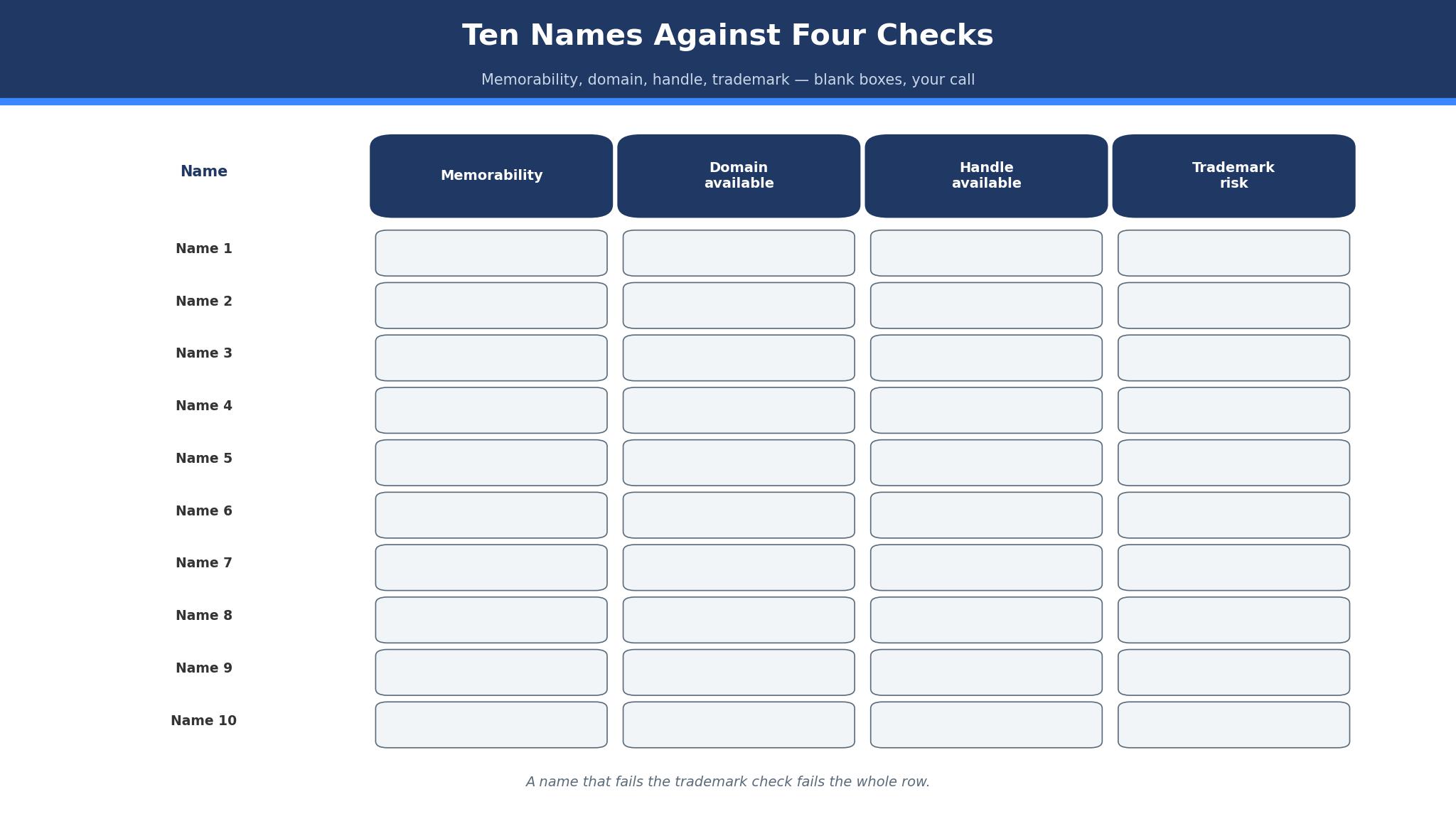
A name without a matching domain is a name the seller does not own, and the check should happen before the seller falls in love with the option. The best generators show domain availability beside each suggestion, so the shortlist only holds names that can be registered. A seller should also check the obvious social handles, because a store whose name is taken on the main platforms will confuse customers who search for it after seeing an advert.
Trademark risk is the check most sellers skip, and it is the one that costs the most. A name that resembles an existing brand in the same category can draw a legal letter after the store is live, and renaming a store with reviews and returning customers is expensive. No generator in this guide replaces a trademark search or a lawyer, and a seller who plans to build a real brand should run the shortlist past both before spending on packaging and adverts.
The 10 Tools at a Glance
| Tool | Main job | Best for | Starting price |
|---|---|---|---|
| Namelix | Short brandable names | Most sellers | Free |
| Shopify Business Name Generator | Free store name ideas | Shopify sellers | Free |
| Atom | Naming plus validation and contests | Sellers who want human input | Free generator, paid names |
| NameSnack | Free brainstorming with domain checks | Local and small sellers | Free |
| Namesmith | Keyword name ideas | Quick brainstorming | Free |
| Wordoid | Coined names in many languages | Distinctive invented names | Free |
| GoDaddy Business Name Generator | Names with domain purchase | Sellers buying a domain today | Free generator, domains paid |
| Looka | Names with instant logo | Sellers who need a logo fast | Free generator, logos paid |
| BrandBucket | Curated premium names | Sellers buying a premium name | Paid names from 1,000 dollars |
| DomainWheel | Names with domain ideas | Domain-first naming | Free |
Best Pick by Job
| Job type | First pick | Second tool | Why this pair works |
|---|---|---|---|
| Brandable name fast | Namelix | Shopify Business Name Generator | Namelix learns from likes and Shopify adds a free second pass |
| Opening a Shopify store | Shopify Business Name Generator | Namelix | Shopify feeds straight into store setup and Namelix adds shorter options |
| Human judgment wanted | Atom | NameSnack | Atom adds contests and NameSnack adds a free first pass |
| Premium name purchase | BrandBucket | Atom | BrandBucket sells fixed-price names and Atom adds contest options |
| Logo needed too | Looka | Namelix | Looka turns a name into a logo and Namelix adds brandable ideas |
The right generator depends on how soon the name is needed. A seller who needs a name today wants a free generator, while a seller building a brand for years wants validation and a clean domain. A product that covers the other side decently still disappoints when it weakens the shortlist the seller must choose from. Choose the first tool for the stage the business is at, then run the second as another pass before committing.
Cost is rarely the barrier here, because most generators are free and the money goes to the domain, the logo and the trademark check. A seller should budget for the domain first, since a premium domain can cost far more than any tool, and a name whose matching domain is taken is a name that should be dropped. The top 10 ai name generators for ecommerce sellers are judged on the quality of the shortlist, not on price, because the generator is free and the name is not.
How to Judge the top 10 ai name generators for ecommerce sellers
Start with the same product idea in every tool, because that is the only honest comparison. Enter one description of a real product, take the first twenty names from each generator, and count how many are short enough to say aloud, distinct enough to remember, and available as a domain. A generator that returns five usable names from twenty beats one that returns twenty names nobody would register. Check whether the tool learns from the names a seller likes, since that feedback loop is what separates a smart generator from a word list.
Next, test the domain check on the shortlist. Pick five names from each tool and check whether the matching domain is actually available at a normal price, rather than listed as premium or taken. The top 10 ai name generators for ecommerce sellers should show availability beside each suggestion, because a seller who has to check domains one by one in a separate tab will lose the afternoon. Look for social handle checks too, since a name that is free as a domain but taken everywhere else will cause confusion later.
Then check the handoff to the next step. A good generator leads somewhere, to a domain registrar, a logo preview or a store setup, and a dead end wastes the momentum of a good shortlist. Look at what the tool charges after the free names, because a free generator that pushes a 200 dollar logo package is not free in practice. The winner is the tool whose shortlist survives the domain check and whose next step is honest about cost.
The 10 Tools in Detail
Name quality and domain checking set the order below, so the tool that returns the most usable shortlist leads the list.
1. Namelix
Namelix is the strongest first stop for a seller because it produces short brandable names and learns from the ones a seller likes. The tool uses a custom language model rather than gluing dictionary words together, so the output sounds like product brands instead of keyword soup, and filters for style, length and domain preference push the results away from clumsy options. The generator is free, with logos and domains sold separately, and each name comes with a logo preview and a domain check in the same view.
The drawback is the clearance gap. Namelix does not replace a trademark search, and it can drift toward names that look sleek but resemble an existing brand, so a seller must check the shortlist before registering anything. The logo upsell appears early in the flow, and a seller who clicks through without thinking can spend money before the name is even chosen.
Namelix suits a seller who wants a brand name rather than a descriptive one. It fits a founder launching a first product, a seller rebranding a generic store, and anyone who needs fifty ideas in an afternoon. The adaptive learning is the feature that matters, because a generator that improves with each like returns a better shortlist than one that starts fresh every time.
Enter one real product description and save the five names that survive a domain check. If two of the five feel like brands a customer would remember, Namelix has done its job.
2. Shopify Business Name Generator
Shopify Business Name Generator is the easiest tool in this guide to explain to a new seller, because it asks for a word or two and returns a hundred name ideas with an instant domain check and no sign-up. The tool is free, and it nudges the seller toward the checks that matter before the store opens, which makes it a practical first pass for anyone who plans to sell on Shopify. The names feed straight into store setup, so a seller can move from idea to storefront without changing tools.
The drawback is the depth. Shopify is a quick validation pass rather than a creative studio, and its names lean toward descriptive combinations rather than coined brand names. A seller who wants a distinctive invented name will find the output thinner than Namelix, and the tool offers no logo preview or trademark guidance beyond the domain check.
Shopify Business Name Generator suits a seller opening a Shopify store. It fits a first-time founder who wants a name today, a seller testing several product ideas at once, and anyone who values a free tool with no account. The instant domain check is the feature that matters, because a name that cannot be registered should never reach the shortlist.
Run three product ideas through the generator and keep only the names with a clean domain. If one idea produces a name worth registering, the tool has earned its place in the workflow.
3. Atom
Atom, formerly Squadhelp, is the pick for a seller who wants human judgment beside the AI output. The free generator gives quick options, and the real value sits in the upgrade path into crowdsourced naming contests and a marketplace of ready-to-use names with matching domains. Premium names in the marketplace run from 1,000 dollars upward, with contests priced separately.
The drawback is the cost and the complexity. The free generator is only the entry point, and the paid path can become expensive and slow, with contests taking days and premium names costing thousands. A seller with a small budget will find the marketplace out of reach, and the range of services can confuse a founder who only wanted a quick name.
Atom suits a seller who treats naming as a serious investment. It fits a founder launching a brand meant to last years, a team that wants outside input before committing, and anyone willing to pay for a name that arrives with a domain and a logo. The contest route is the feature that matters, because a name chosen from hundreds of human ideas carries a different weight than one picked from a list.
Run the free generator first and save the best ten names. If none of them feels right, start a contest with a clear brief and judge the entries against the domain check.
4. NameSnack
NameSnack is one of the easiest places to start when a seller wants a free, low-friction generator that does not make the user think hard about the interface. The tool covers business, website and product names, and the domain checks help a seller sort usable options from dead ends quickly. Logo packages start around 20 dollars for a basic version, which keeps the next step cheap for a small seller.
The drawback is the output quality and the feedback. NameSnack is useful when a seller does not yet know what style of name is wanted, but it is not the tool for a final decision, because the names lean toward familiar combinations and the tool offers little control over tone or length. Public feedback on the tool is limited, so a buyer has fewer independent reports to lean on than with Namelix or Shopify.
NameSnack suits a local seller and a small business naming its first store. It fits a seller who wants a quick first pass, a local shop that needs a clear approachable name, and anyone who wants domain checks without an account. The simple workflow is the feature that matters, because a naming session that starts in seconds is one a busy seller will actually finish.
Generate names for one product and note the three that survive a domain check. If one of the three reads well on a storefront, NameSnack has done enough for a first pass.
5. Namesmith
Namesmith is a free keyword-based generator that lets a seller enter keywords or generate names at random, and it is best used as a fast brainstorming pass. The tool is simple, with no account and no upsell pressure, and it returns combinations quickly enough that a seller can test several keyword sets in one sitting. The namesmith.io address now redirects to Business Name Generator.net, a free tool that continues the same service under a new address.
The drawback is the depth and the redirect. Namesmith offers no domain check, no logo preview and no learning from liked names, so every suggestion needs manual checking elsewhere. The redirect to a new domain also means a seller should confirm the tool is still the same service before relying on it, and the output quality depends heavily on the starting keywords.
Namesmith suits a seller who wants raw ideas fast. It fits a founder brainstorming with a partner, a seller testing keyword combinations for a niche, and anyone who wants a free pass before using a smarter tool. The random generation is the feature that matters, because a random combination sometimes breaks a naming block that careful thinking cannot.
Feed it three keyword sets for the same product and keep the combinations that sound like brands. If one combination survives a domain check in a second tool, Namesmith has earned its slot in the workflow.
6. Wordoid
Wordoid is the pick for a seller who wants a coined name that nobody else owns. The tool invents pronounceable words in several languages, checks domain availability as it goes, and returns names that sound like brands rather than descriptions. A seller who wants a name that can be trademarked will find more candidates here than in a keyword generator, because an invented word has no prior meaning to fight.
The drawback is the usability and the taste. Wordoid’s interface is older and less polished than Namelix, and some invented names read well on screen but sound awkward aloud, so a seller must say each candidate out loud before shortlisting it. The tool offers no logo or store handoff, so the next step happens elsewhere.
Wordoid suits a seller building a brand from scratch. It fits a founder who wants a name that can be owned outright, a seller in a crowded category where descriptive names are all taken, and anyone who values distinctiveness over clarity. The invented-word engine is the feature that matters, because a name nobody has used before is a name nobody can claim first.
Generate a batch of invented names for one product and read the best five aloud. If one sounds like a brand a customer could say to a friend, Wordoid has delivered.
7. GoDaddy Business Name Generator
GoDaddy Business Name Generator is the practical pick for a seller who wants to buy the domain in the same session. The generator is free, and it checks domain availability as it generates, so a seller can move from idea to registered domain without changing sites. The tool also shows related domain extensions and prices, which helps a seller who wants the dot-com and is willing to consider alternatives when it is taken.
The drawback is the sales pressure and the name quality. GoDaddy is a registrar first, so the flow pushes toward a purchase, and the names lean toward keyword combinations rather than brandable inventions. A seller who is not ready to buy can feel rushed, and the logo and hosting upsells appear early.
GoDaddy Business Name Generator suits a seller ready to register today. It fits a founder with a product and a launch date, a seller who wants the domain secured before telling anyone the name, and anyone who values a single checkout over a separate search. The instant purchase path is the feature that matters, because a good name unregistered is a name someone else can take tomorrow.
Shortlist three names with available domains and register the winner before the end of the day. If the checkout takes minutes and the domain is secured, the tool has done its job.
8. Looka
Looka is the pick for a seller who needs a logo as well as a name. The name generator is free, and the platform turns a chosen name into a full logo set with colours, fonts and mockups in minutes, which suits a seller opening a storefront who wants the brand to look finished from day one.
The drawback is the name quality and the cost creep. Looka’s generator is competent but not as strong as Namelix on brandable invention, and the logo upsell can push a seller to spend before the name has been checked for trademark risk. A seller who only needs a name will find the logo flow a distraction.
Looka suits a seller who wants the brand to look complete at launch. It fits a founder opening a store with packaging to print, a seller who needs social avatars and a storefront banner, and anyone who values a visual preview over a plain list. The instant logo preview is the feature that matters, because a name that looks good on a package is easier to commit to than one that only reads well in a list.
Generate a name, preview the logo set, and check the domain before paying for anything. If the logo looks right and the domain is free, Looka has finished the brand in one sitting.
9. BrandBucket
BrandBucket is the marketplace for sellers who want to buy a premium name outright. The catalogue holds curated brandable names with matching dot-com domains, each with a logo, and the fixed prices start around 1,000 dollars and run far higher for the strongest names. A seller who buys here gets a name that is ready to use, with the domain included, which removes the risk of finding the perfect name and discovering the domain belongs to someone else.
The drawback is the price and the choice. A thousand dollars is a serious spend for a new seller, and the catalogue is finite, so a seller with a specific product in mind may not find a name that fits. The platform suits a funded launch rather than a first test, and a seller who buys a premium name still needs a trademark check before spending on packaging.
BrandBucket suits a funded founder building a brand for the long term. It fits a seller who has raised money or saved for a launch, a team that wants a name with a domain and a logo in one purchase, and anyone who believes the name is worth a four-figure investment. The ready-to-use package is the feature that matters, because a name with its domain and logo already attached removes three steps from the launch.
Browse the catalogue for the product category and shortlist three names with domains included. If one of them fits the product and the price is acceptable, BrandBucket has shortened the launch by weeks.
10. DomainWheel
DomainWheel is the domain-first generator, built for a seller who starts from the domain rather than from the name. The tool takes a keyword and returns name ideas with domain availability shown beside each one, including creative extensions and variations when the dot-com is taken. The generator is free, and the workflow suits a seller who has already decided that owning the matching domain matters more than inventing a clever name.
The drawback is the creativity ceiling. DomainWheel returns solid usable names but few inspired ones, and the output leans toward combinations of the starting keyword rather than invented brands. A seller who wants a distinctive name will need a second tool, and the platform offers no logo or store handoff.
DomainWheel suits a seller who will not compromise on the domain. It fits a founder who has lost a good name to a taken domain before, a seller launching in a crowded category, and anyone who wants the domain check to lead the naming rather than follow it. The domain-first results are the feature that matters, because a name that comes with its domain is a name that can be launched tomorrow.
Enter the main keyword for one product and keep the names whose dot-com is free at a normal price. If two survive, DomainWheel has done the job it was built for.
Naming Traps That Cost Sellers Later
The most expensive trap is falling in love with a name before checking the domain. A seller who prints packaging, orders signage and runs adverts for a name whose domain belongs to someone else has built a brand on rented ground, and the rename will cost more than the launch did. Check the domain first, then the handles, then the trademark, and only then spend a dollar on the brand. The top 10 ai name generators for ecommerce sellers in this guide show domain availability for a reason, because the check belongs at the start of the workflow rather than at the end.
A second trap is picking a name that only works in one language or one market. A seller who plans to sell abroad should say the name aloud in the main target languages and check that it carries no unfortunate meaning, because a name that reads well in English can fail badly elsewhere. A short coined name usually travels better than a long descriptive one, and the extra hour of checking saves a rebrand that no seller wants to pay for.

Frequently Asked Questions
Are AI name generators free to use?
Most of them are free, including Namelix, Shopify Business Name Generator, NameSnack, Namesmith, Wordoid and DomainWheel, with the money going to the domain, the logo or a premium name instead. Atom and Looka charge for services and logos after the free generation, and BrandBucket sells premium names from 1,000 dollars. A seller should never need to pay for the ideas themselves.
Can a name from a generator be trademarked?
A generated name can be trademarked only if it is distinctive and not already in use in the same category, and no generator can confirm that for a seller. A short coined name has the best chance, while a generic descriptive name is hard to protect. Run the shortlist through a trademark search and a lawyer before spending on packaging, because the generator checks domains rather than legal rights.
Which name generator is best for a Shopify store?
Shopify Business Name Generator is the best starting point for a Shopify seller among the top 10 ai name generators for ecommerce sellers, because it is free, needs no sign-up, and feeds straight into store setup with a domain check. Namelix is the better second pass when the Shopify names feel too descriptive, since it returns shorter brandable options. Use both before registering anything.
How do I check if a store name is already taken?
Check the domain first, then the social handles, then a trademark database, in that order. A generator that shows domain availability beside each name saves the first step, and a domain registrar can confirm the exact price. A name that is free as a domain but taken on the main social platforms will still cause confusion, so check both before committing.
Is it better to invent a name or use keywords?
An invented name is better when the seller plans to build a brand, because it can be owned, trademarked and remembered, while a keyword name is better when the seller wants search traffic from day one. Most successful stores sit in the middle, with a short brandable name that hints at the product. Wordoid is the best tool for invented names, and Namelix is the best tool for the middle ground.
What makes a store name bad?
A bad store name is long, hard to spell, hard to say aloud, or already owned by someone else in the same category. A name that needs explaining, a name that only works as a joke, and a name that resembles a famous brand are all traps. Say the name aloud, type it from memory, and check the domain before deciding it is good.
The Verdict on AI Name Generators for Ecommerce Sellers
Namelix takes the top spot because it returns the shortlist a seller actually needs. The names are short, the learning loop improves them, and the domain and logo previews sit beside each suggestion, so a seller can move from idea to registered name in one afternoon. The clearance gap is real, but it is a gap every generator shares, and the trademark check belongs with a lawyer rather than with a tool.
Shopify Business Name Generator is the pick for a seller opening a store on that platform, Atom is the pick for human judgment, and BrandBucket is the pick for a premium purchase. The top 10 ai name generators for ecommerce sellers are the ones that return names a customer can remember and a seller can own.
Choose by name quality first, by domain availability second and by handoff third. Generate names for one real product, check the domain and the handles, and register the winner before the week ends. A seller that picks this way will spend less time searching for a name and more time selling under it.