

The problem is familiar to almost every working freelance writer. Three clients are waiting on drafts, two invoices are overdue, one editor changed a deadline without telling you, and the pitch you meant to send on Monday is still an unsent note. Nothing here is a writing problem. It is a management problem, and it is the problem that quietly caps a writer’s income, because a writer who cannot track work cannot take on more work without dropping something, which is why writers use AI for freelance writing client management.
The fix is a small, consistent system that treats every assignment like a job with a start, a deadline, a fee, and a payment date, and that system is far easier to run when you use AI for freelance writing client management instead of juggling spreadsheets, inboxes, and memory.
Why Writers Should Use AI for Freelance Writing Client Management
Freelance writing looks like a solo craft from the outside and runs like a small agency on the inside. A writer with eight active clients is managing eight onboarding processes, eight style guides, eight invoicing schedules, and eight different definitions of urgent. Without a system, the writer spends the first hour of every day reconstructing status from memory and email search, and that hour comes straight out of billable writing time. With a system, the writer opens one dashboard, sees what is due today, what is waiting on an editor, and what is unpaid past terms, and starts writing within minutes.
The financial case is just as direct. Late invoices are the most common income leak in freelance writing, and they usually happen because the writer forgot to send the invoice, not because the client refused to pay. An automated invoice on delivery, with a reminder at seven and fourteen days, recovers money that manual invoicing leaves on the table for weeks. Missed follow ups are the second leak. A pitch that gets no reply in two weeks is not dead, but a writer without a follow up queue treats it as dead and moves on, losing assignments that a single polite nudge would have revived.
Client management software exists to close exactly those two gaps, and the AI layer adds drafting help for pitches, briefs, follow ups, and status updates, which are the messages writers postpone because writing them feels like work after writing all day.
There is also a reputation effect that compounds over years. Editors remember writers who deliver on time, confirm receipt, flag problems early, and invoice cleanly. They also remember writers who need chasing, miss deadlines silently, and send invoices with wrong amounts. A management system does not make a writer talented, but it makes a talented writer look professional in every interaction, and professional writers get repeat assignments. Repeat assignments are where freelance income stabilizes, because they remove the constant pitching treadmill that burns writers out.
The Client Workflow From Pitch to Paid Invoice
A workable freelance workflow has six stages, and every assignment should live in exactly one stage at any time. Stage one is prospecting, where the writer tracks publications and companies worth pitching, with notes on what each one publishes and who edits it. Stage two is pitching, where a pitch goes out with a date, and a follow up date is set at the same moment, never later. Stage three is assignment, where the accepted pitch becomes a job with a brief, a word count, a fee, a deadline, and a revision policy. Stage four is production, where the writer drafts, revises, and submits.
Stage five is revision, where editor feedback returns and the writer turns it around within the agreed window. Stage six is invoicing and payment, where the invoice goes out on submission or on acceptance, depending on the client’s terms, and reminders run automatically until payment lands.
| Workflow stage | Entry trigger | Exit trigger | Tool action |
|---|---|---|---|
| Prospecting | Publication identified | Pitch idea ready | Contact and notes saved |
| Pitching | Pitch sent | Reply received | Follow up date set |
| Assignment | Brief confirmed | Draft submitted | Contract and fee recorded |
| Production | Drafting starts | Draft delivered | Deadline reminders on |
| Revision | Editor feedback arrives | Revised draft accepted | Revision round counted |
| Invoicing | Work accepted | Payment received | Invoice and reminders sent |
The handoff between stages is where most writers lose track, so each handoff needs a rule. A pitch that gets no reply in fourteen days gets one follow up, then moves to a monthly check in list, not to oblivion. An assignment that waits more than three days on an editor gets a polite status message, because silence from an editor usually means overload, not rejection, and a short message moves the piece back to the top of their list. A revision request that arrives without a deadline gets a reply asking for one within the same day, because an open ended revision quietly eats the week.
These small rules sound bureaucratic, and they are the difference between a writer who feels in control and one who feels chased by their own inbox. Writers who use AI for freelance writing client management to automate the reminders behind these rules keep every handoff moving without carrying the dates in their head.
Onboarding a new client deserves a template of its own. Before the first draft, the writer confirms the fee and payment terms in writing, the word count and format, the revision policy, the kill fee if the piece is cancelled, and the rights being sold. Writers who skip this conversation discover the answers later, when a client expects unlimited revisions or claims broader rights than the fee covered. A short onboarding message that confirms these five points takes ten minutes and prevents disputes worth far more. Keep the template in the client management tool, so every new client gets the same professional start without the writer rewriting the same message from memory.
The Assignment and Invoice Checklist
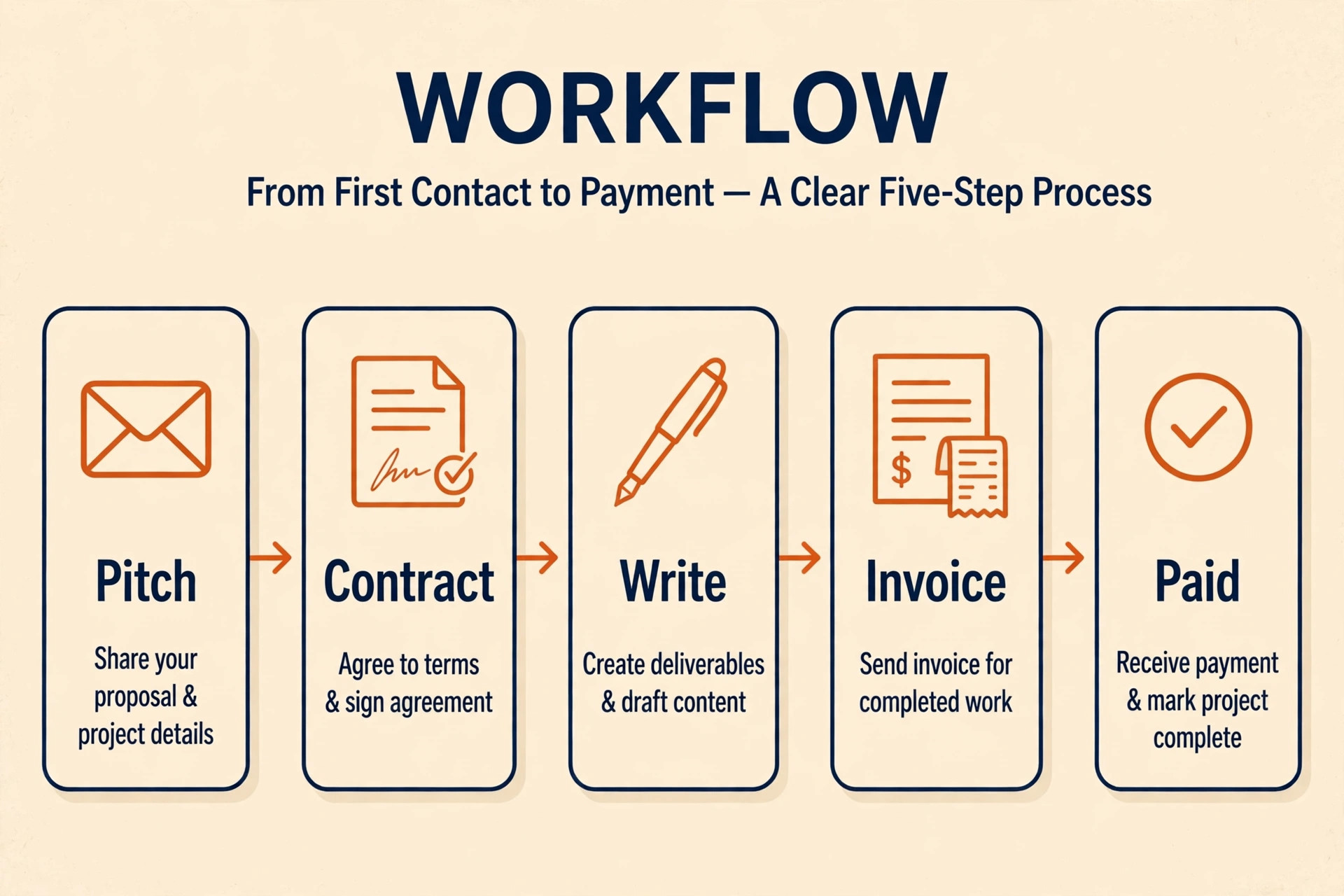
This checklist is the overview proof of this guide. Run it for every assignment, without exception, and the two most common freelance failures, missed deadlines and unpaid invoices, become rare instead of routine.
| Checklist item | When to do it | Done looks like |
|---|---|---|
| Brief confirmed in writing | Before drafting starts | Fee, length, deadline, angle saved |
| Rights and kill fee agreed | Before drafting starts | Terms in the assignment record |
| Research notes filed | During drafting | Sources and quotes retrievable |
| First draft delivered | On or before deadline | Delivery message sent and logged |
| Revision round counted | On editor feedback | Round one of two recorded |
| Final draft accepted | On editor approval | Acceptance message saved |
| Invoice sent | On acceptance or per terms | Invoice number and date logged |
| Payment terms noted | On invoice | Net 30 or agreed terms recorded |
| Seven day reminder | Seven days unpaid | Reminder sent automatically |
| Fourteen day follow up | Fourteen days unpaid | Personal message sent |
| Payment reconciled | On receipt | Job marked paid, income logged |
| Client note updated | After payment | Next pitch idea or thank you noted |
Two habits make the checklist stick. First, the writer reviews the whole board for fifteen minutes every Monday morning, before any drafting begins, and moves every stalled item one step forward. That review is non negotiable, and it should be the first work of the week, not something squeezed in after writing. Second, the writer never trusts memory for a deadline. Every deadline lives in the tool with a reminder two days before and on the day itself, because a writer juggling six deadlines cannot hold them all in mind, and the one deadline forgotten is always the one with the strictest editor.
A writer who uses AI for freelance writing client management to run that Monday review from one dashboard, rather than from five inboxes, finishes the review faster and starts the writing week with a clear head.
Tax and record keeping ride on the same system. When every job carries a fee, an invoice number, and a payment date, the year end income summary writes itself, and the writer can answer an accountant’s questions in minutes instead of reconstructing a year from email. Writers should export client and income data monthly, keep contracts and briefs filed by client, and separate business expenses from personal spending in the same tool or a linked accounting view. The discipline feels dull in January and priceless in April.
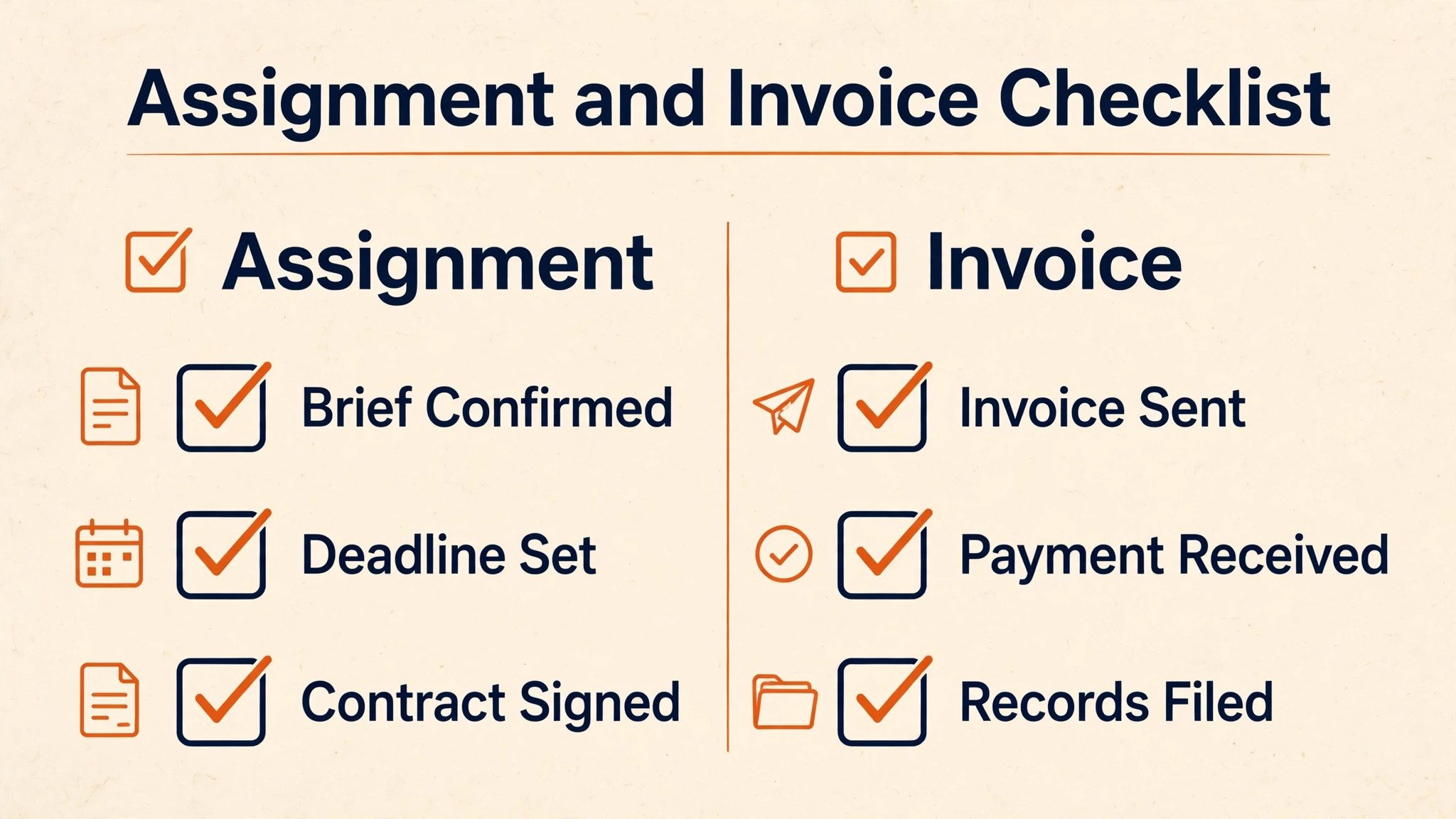
Five Tools That Carry Freelance Client Work Well
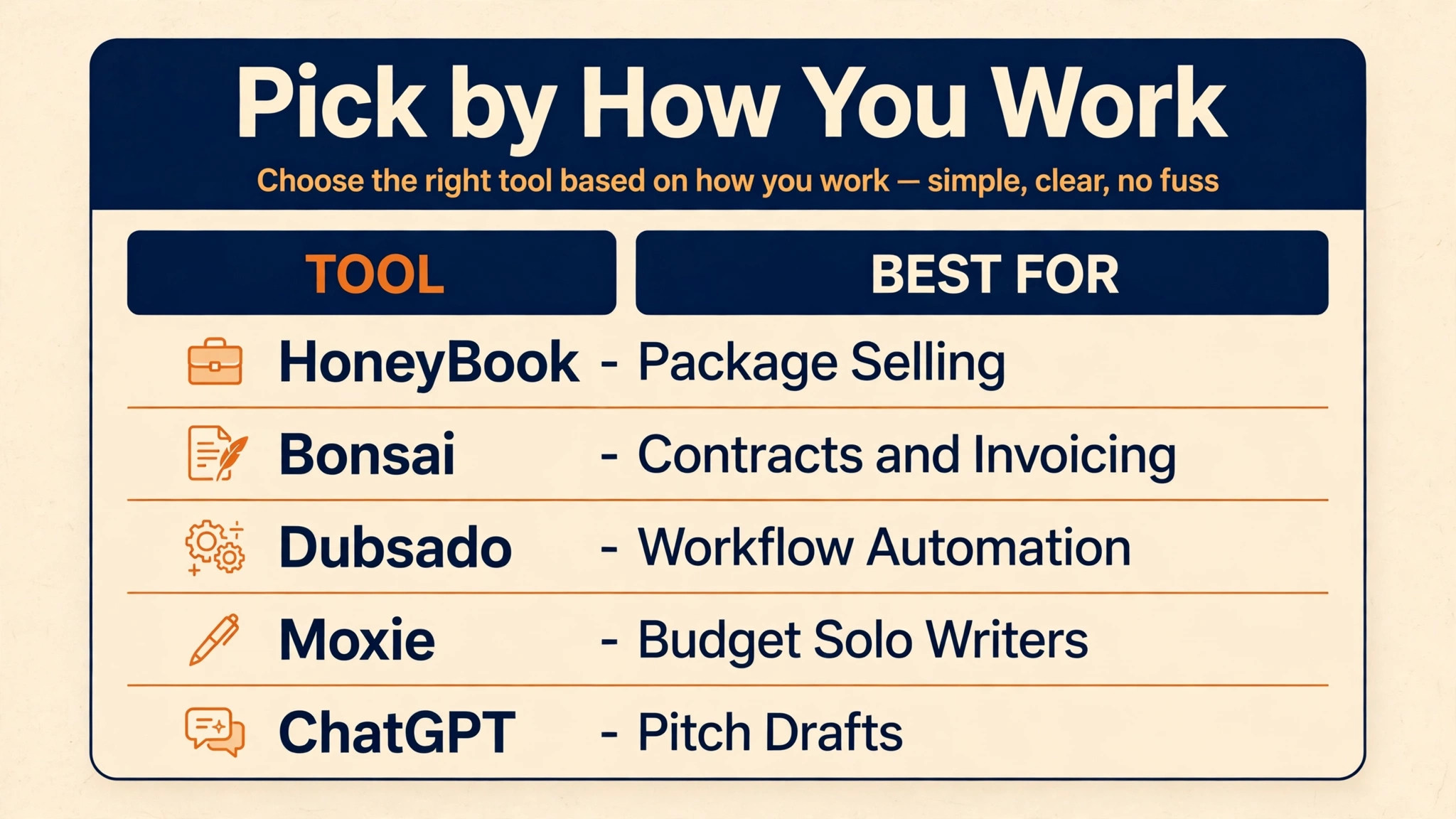
HoneyBook for Package Selling and Client Experience
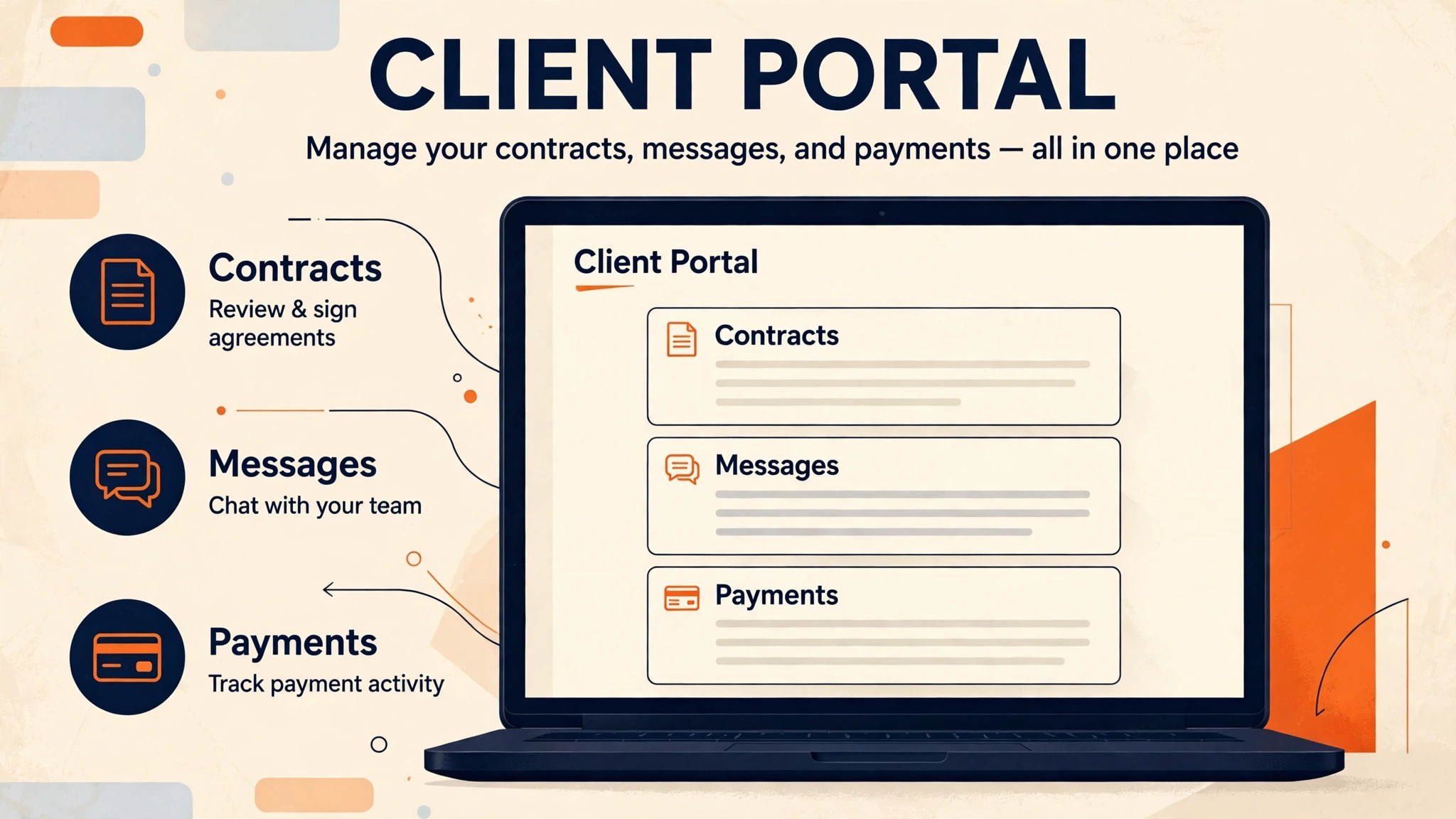
HoneyBook suits writers who sell packages, like a monthly content retainer or a set of four articles, and who want the client experience to feel polished from inquiry to payment. Its proposals, contracts, invoices, and payment processing sit in one flow, and its client portal gives editors and marketing managers a single place to approve work and pay. Reported pricing runs around 29 dollars a month on Starter, 49 dollars on Essentials, and 109 dollars on Premium, billed annually. The trade off is scope. HoneyBook is built for creative service businesses broadly, not for writers specifically, so writers who need deep editorial tracking, like pitch stages and revision rounds, may need to adapt its project structure to fit.
Writers who sell packages and value a smooth client facing experience will find it a strong fit.
Bonsai for Contracts Plus Invoicing in One Place
Bonsai suits solo writers who want proposals, contracts, and invoices tied together without learning a large platform. Its Essentials plan, reported around 19 dollars a month billed annually, includes invoicing and contracts, while the lower Basic plan does not include invoicing, so writers must check the tier before signing. Bonsai’s templates cover the freelance essentials, including service agreements and scope documents, and its time tracking helps writers who bill hourly for consulting alongside writing. Its limits show up for writers who want strong automation or a deep pipeline view, which sit on higher tiers or outside the tool. For a writer who mainly needs clean contracts and reliable invoicing, Bonsai is a sensible, low friction choice.
Dubsado for Deep Workflow Automation
Dubsado suits writers who love automation and who run repeatable processes, like a monthly retainer with the same onboarding, delivery, and invoicing steps every cycle. Its workflows can send forms, contracts, invoices, and reminders in sequence without the writer remembering each step, and its scheduler and client portal cover the full journey. Reported pricing starts around 28 dollars a month on Starter and about 44 dollars on Premier, billed annually. The trade off is setup time. Dubsado rewards a weekend of careful configuration and punishes a rushed setup with confusing automations, so writers should build one workflow completely, test it with a friendly client, and only then clone it for everyone else.
Moxie for Budget Conscious Solo Writers
Moxie suits writers who want the core client management set at a low price, with invoicing, contracts, and a client portal included from the entry tier. Reported pricing starts around 10 dollars a month billed annually, which makes it the cheapest serious option in this group, and its AI features sit on all plans according to recent comparisons. The trade off is maturity and depth compared with larger platforms. Writers with complex multi step workflows or large teams may outgrow Moxie, but a solo writer moving from spreadsheets to a real system will find it a big step up for very little money.
Price should not be the only reason to choose it, but it removes the last excuse for staying on spreadsheets.
ChatGPT for Pitch Drafts and Follow Up Messages
ChatGPT helps writers draft pitch angles, tighten a follow up message, turn a messy brief into a clear outline, and draft status updates that sound professional instead of apologetic. It works best when the writer feeds it the publication, the angle, and the writer’s past work, because generic pitch drafts read generic and editors reject generic. The writer must check every claim and every quoted figure in a draft, since drafting tools can invent plausible details. Client confidential material should stay out of general drafting tools where the writer’s own policy requires it, and final pitches should always pass through the writer’s own voice before sending.
Used that way, writers who use AI for freelance writing client management spend their energy on ideas and reporting, not on the administrative writing that surrounds the real work.
Setting Rates and Retainers That Survive Contact With Reality
Rate setting fails when writers price from fear instead of from costs. A sustainable rate starts with a monthly income target, adds business costs and tax, and divides by realistic billable days, not by fantasy days where every hour is paid. Most writers can bill four to five focused hours a day, not eight, because pitching, administration, and revision fill the rest. A writer who needs four thousand dollars a month, with five hundred in costs and tax set aside, and who can bill fifteen days a month, needs a day rate near three hundred dollars, which translates to a per article fee that must cover research, drafting, and revision, not just typing time.
Writers who price per word without counting research and revision time systematically undercharge, and the undercharge shows up as burnout, not as a smaller bank balance at first.
Retainers change the math in a useful way. A retainer that guarantees a set number of articles or hours per month, paid in advance, smooths income and reduces pitching time, but it must name the deliverables, the revision policy, and what happens to unused work at month end. Unused hours that roll over indefinitely become a debt the writer owes, and unused articles that vanish make the client feel shortchanged. The cleanest retainer states a monthly deliverable, a fixed fee, a revision limit, and a simple rule for extra work priced separately. Writers should review retainers quarterly, because a retainer that made sense at one volume becomes a bad deal when the client’s demands grow and the fee does not.
Raise rates with evidence, not apology. A writer who has delivered six months of clean, on time work for a client has a stronger case than a writer who announces a rate rise with no record. The management system provides the evidence, in the form of delivery history, revision counts, and turnaround times, and the rate conversation becomes a short message with a date and a reason, not a negotiation the writer dreads for weeks. New clients get the new rate immediately. Existing clients get notice of thirty to sixty days. That two track approach grows income without shocking the clients who already trust the writer.

Boundaries That Protect the Writing Itself
The best client management system still fails if the writer accepts every request instantly. Boundaries belong in the workflow, not in the writer’s willpower. A writer should set working hours and response windows, publish them in the onboarding message, and let the tool hold messages outside those hours. A writer should set a revision policy, usually two rounds included, with extra rounds priced, and enforce it kindly the first time it is tested, because the first exception becomes the permanent policy. A writer should set a rush fee, typically fifty percent above the standard fee for work needed within forty eight hours, because rush work displaces planned work and should be priced accordingly.
Capacity deserves a number, not a feeling. A writer who knows they can handle four active assignments plus two pitches at once can say no to the fifth assignment with confidence, and can offer a later start date instead of a resentful yes. The management tool makes capacity visible, because the board shows active jobs at a glance, while memory hides overload until a deadline breaks. Writers who track capacity also pitch better, because they pitch when they have room and stop pitching when they do not, which keeps the pipeline full without the feast and famine cycle that defines so much freelance life.
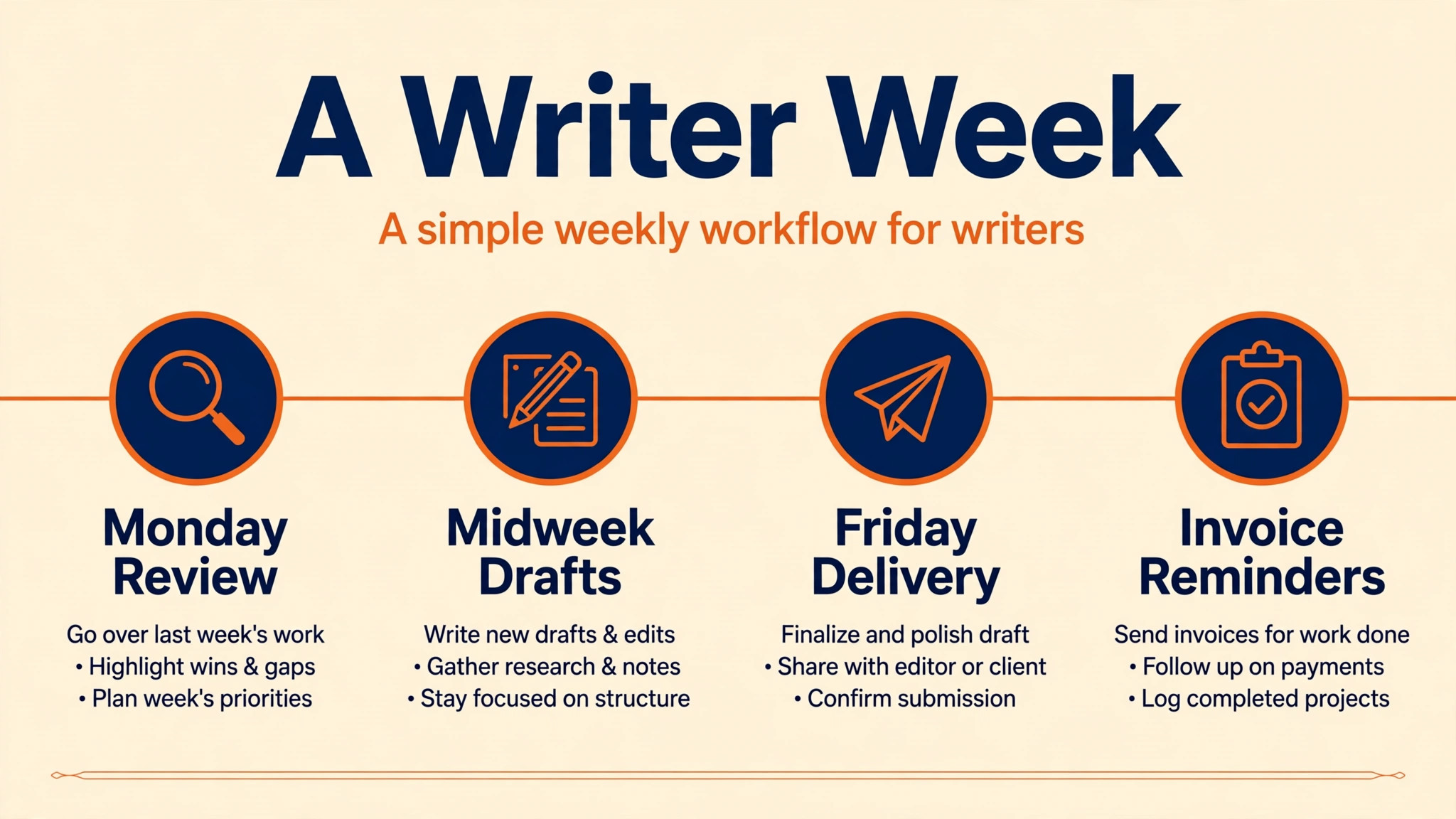
The Pitching System That Keeps the Pipeline Full
A pipeline stays full when pitching becomes a weekly habit rather than a panic response to an empty month. The system is simple. Every Friday, the writer spends one hour on pipeline work, regardless of how busy the current week feels. That hour covers three tasks. First, research two new outlets or companies, noting the editor, the kind of piece they publish, and one angle that fits. Second, send one new pitch, written from the research, not from a recycled template. Third, follow up on one older pitch that has passed fourteen days without a reply.
One hour a week, every week, produces roughly four new pitches a month, which is enough to replace normal client churn for most solo writers without consuming writing days.
Pitch quality matters more than pitch volume, and the management tool improves quality by keeping the writer’s own history visible. Before pitching an outlet, the writer checks whether they pitched it before, what angle they used, and what reply came back, so the new pitch does not repeat a rejected angle or ignore an editor’s earlier guidance. Writers who use AI for freelance writing client management well keep a short note on every pitch outcome, including the reason for rejection when one was given, because that note turns a rejection into research for the next pitch. Over a year, those notes become a map of which outlets buy which angles, and the writer stops pitching blind.
The pipeline also needs a rule for saying yes. A new assignment should only be accepted when the writer can name its deadline, fee, and place in the current workload, and when the client has confirmed terms in writing. Assignments accepted on a phone call without written terms, or accepted when the board already shows four active jobs, become the missed deadlines of next month. Writers who use AI for freelance writing client management as a capacity check, glancing at the board before saying yes, protect their reputation with existing clients while still growing. Growth that breaks delivery is not growth. It is a loan taken against the writer’s name, and it always comes due.
Mistakes That Quietly Shrink a Writing Business
The most expensive mistake is working without a written agreement, even with friendly clients. Friendship survives a contract. It rarely survives a payment dispute that a contract would have prevented. A second mistake is invoicing late. An invoice sent two weeks after delivery looks like an afterthought, and clients pay afterthoughts last. Invoice on acceptance, or on delivery where terms allow, and let reminders run without embarrassment. A third mistake is saying yes to every low fee assignment for exposure. Exposure does not pay rent, and low fee clients consume the same management time as good clients, leaving less room for the work that actually builds income.
A fourth mistake is letting one client dominate income. A writer who earns seventy percent of income from one client is an employee without benefits, and a single lost contract becomes a crisis. The management system should show income by client, and the writer should act when one client passes half of total income, by pitching to diversify before the concentration becomes dangerous. Writers who use AI for freelance writing client management with a monthly income review catch these patterns early, while they are still choices, not emergencies. A fifth mistake is neglecting the pipeline during busy months.
The writer who stops pitching when fully booked faces an empty month when current assignments end, so the system should keep two pitches moving even in the busiest weeks.

More Reading on Stratilyze
Readers who run a client based business may also enjoy AI tools for consulting business proposal writing and AI tools for fitness coaching client progress tracking, since both cover the same discipline of turning regular client touchpoints into retention and repeat work. AI tools for daycare parent communication is useful too, because its daily report template shows how short, specific updates build trust in any service relationship.
Frequently Asked Questions
How many clients can one freelance writer manage well?
Most solo writers manage six to ten active clients well with a system, and far fewer without one. The limit is not writing speed. It is the management overhead of briefs, revisions, invoices, and messages, which grows with every client added. A writer who tracks capacity in the tool can see the real limit, usually four active assignments plus a couple of pitches, and can say no or offer later dates before overload damages delivery. Writers who exceed that limit without help should raise rates or bring in support, not simply work longer hours.
Should writers invoice on delivery or on acceptance?
Invoice on the date the client’s terms specify, and negotiate that date at onboarding rather than discovering it later. Many publications pay on acceptance, which is good for the writer, while many companies pay on publication or on a monthly cycle, which delays income. The writer’s job is to record the term in the tool, send the invoice the day the trigger happens, and let reminders run automatically. An invoice sent late because the writer forgot is a self inflicted delay, and it is the easiest income leak to fix.
What belongs in a freelance writing contract?
The essentials are fee and payment terms, word count and format, revision policy and rounds included, kill fee if the piece is cancelled, rights being sold and for how long, and the deadline plus what happens if it moves. A contract does not need to be long to be useful. One clear page that names these points prevents most disputes, and writers can use templates from their client management tool rather than hiring a lawyer for every small assignment. Larger retainers and book projects deserve professional legal review, but routine articles do not need to wait for it.
How do you follow up on a pitch without annoying an editor?
Follow up once after fourteen days with a short message that adds value, like a new angle or a timely peg, rather than asking whether the editor read the pitch. If there is no reply, move the pitch to a monthly list and try a different angle later, rather than sending repeated nudges. Editors receive hundreds of pitches, and a single polite follow up marks the writer as professional, while repeated follow ups mark the writer as difficult. The management tool should hold the follow up date, so the writer never has to remember it or guess when to send it.
Can a writer manage clients with a spreadsheet alone?
Yes, for two or three clients, and the system in this guide can be built in a spreadsheet at that size. The spreadsheet breaks down around six active clients, when invoices, revision rounds, and follow up dates start slipping, and the writer spends more time maintaining the sheet than writing. That is the moment to move to a dedicated tool, and the move should happen during a quiet week, with existing client data imported carefully, not during a deadline crunch. Writers who use AI for freelance writing client management at that stage usually recover the subscription cost from a single invoice that would otherwise have gone out late.
How do you fire a client professionally?
End the relationship in writing, with thanks, a clear end date, and delivery of any outstanding work or files. State the reason briefly and without blame, for example that capacity or focus has changed, and offer a handover note if it helps the client. Do not list grievances, even when they are justified, because the writing world is small and editors talk. Keep the client record in the tool, marked closed, so the history stays available if the client returns later under better terms.
A Quieter Inbox and a Steadier Income
Freelance writing rewards writers who treat the business like a business, not just the prose like a craft. Set up the six stage workflow, run the assignment and invoice checklist on every job, review the board every Monday, and let drafting software carry the administrative writing while you keep the reporting and the voice. When you use AI for freelance writing client management as a weekly discipline rather than a one time setup, the change shows up where it matters, in fewer missed deadlines, fewer overdue invoices, and a pipeline that stays full without panic. That is the real payoff of a management system, and it is available to any writer willing to spend fifteen minutes a week running it.