
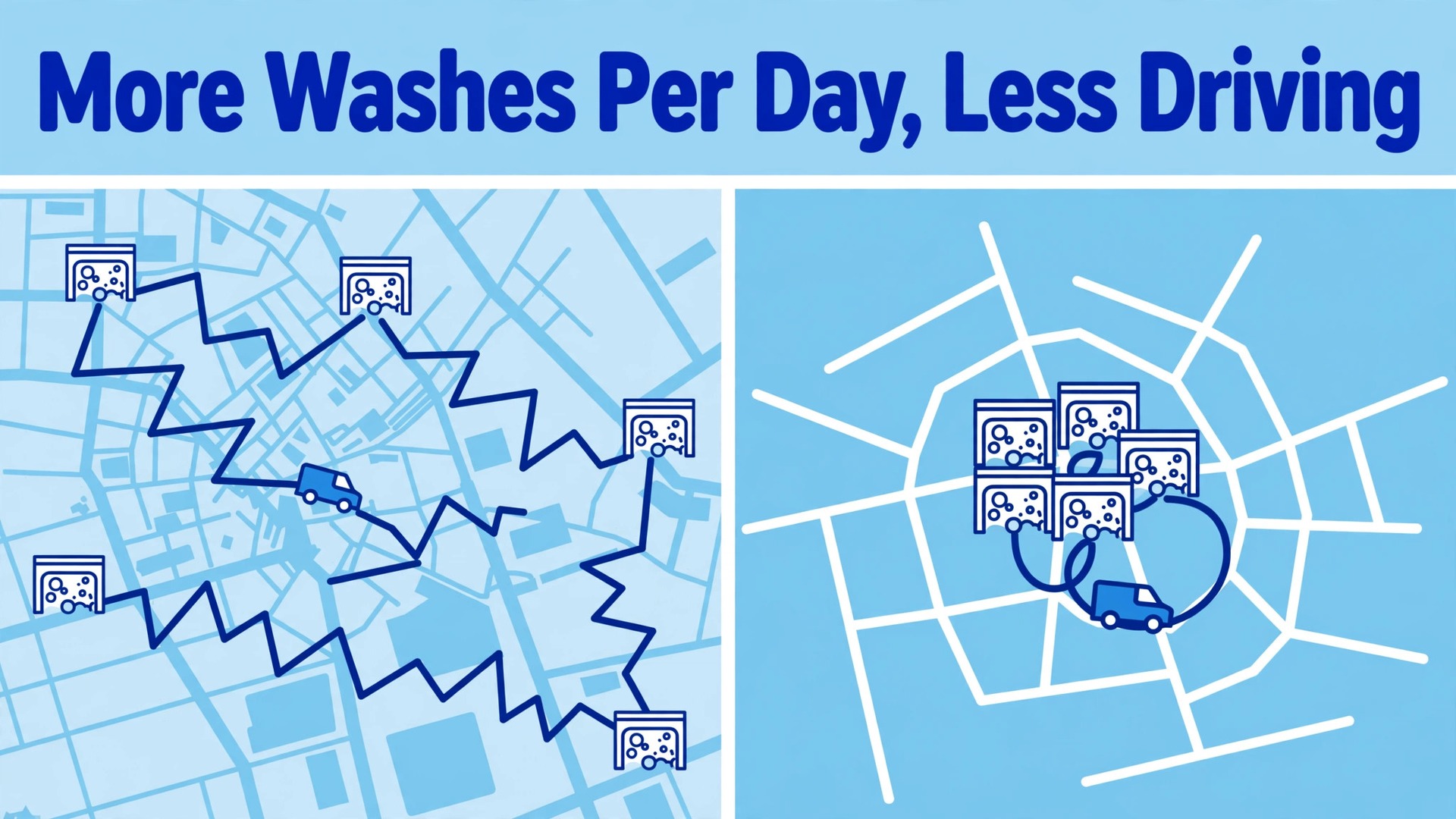
The verdict is simple. Area locked booking beats a wide open calendar for almost every mobile wash operator, because a day spent in one neighbourhood earns more than a day spent crossing town. When you use AI for mobile car wash route scheduling, the system steers each new booking toward days already anchored near that customer, so drive time shrinks, fuel costs fall, and the van fits an extra job or two before dark.
That verdict rests on arithmetic any operator can check. One published route example for mobile detailers compared six stops taken in booking order against the same six stops ordered by drive time, and found about 50 minutes saved per day, or roughly 200 hours a year per technician. At city driving speeds that saving also means roughly 15 to 20 fewer miles a day, which adds up to real fuel and wear savings over a year. The software does not create demand. It stops the calendar from wasting the demand you already have.
This guide gives you the full workflow, from the first booking to the upsell message after the wash, with the checks that keep a tight route from turning into a missed appointment. Prices mentioned are starting ranges from vendor pages at writing time, so confirm on the vendor page before you buy, because detailing software pricing changes often and add on features shift the real monthly cost.
The Verdict in One Page
Start with the day, not with the software. A profitable mobile wash day has five traits. Stops sit close together, ideally within a few miles. Arrival windows are honest and narrow enough that customers actually wait in. Water and power are confirmed before the van leaves, not discovered missing in a driveway. Each van carries the right products for the jobs on its list. And the last job ends with a next booking already offered, so tomorrow fills itself.
An open calendar breaks all five traits at once. A customer in the east books Monday, a customer in the west books the same Monday, and the van spends the middle of the day on a motorway instead of washing cars. Staff then rush the afternoon jobs, quality slips, and the operator blames the team for a problem the calendar created. Area locked scheduling fixes the cause, by showing each customer only the days that keep their neighbourhood tight, and routing far away requests to a day that suits their area.
AI adds three things on top of that lock. It ranks open slots by route fit when a booking arrives, so staff approve a good slot instead of hunting for one. It sends proximity messages to nearby customers when a booking lands in their area, which fills gaps with neighbours rather than strangers across town. And it learns which neighbourhoods, vehicle types, and packages cluster well, so marketing spend goes where the next booking shortens the route instead of stretching it.
The one case where an open calendar still wins is a brand new operator with almost no bookings. With two jobs a week, any booking is a good booking, and turning away a far away customer costs more than the drive. Once the van books four or more jobs most days, the lock should switch on, because at that volume every loose booking displaces a tighter one. That threshold is the moment most operators should change how they schedule, and it is the moment to use AI for mobile car wash route scheduling properly.
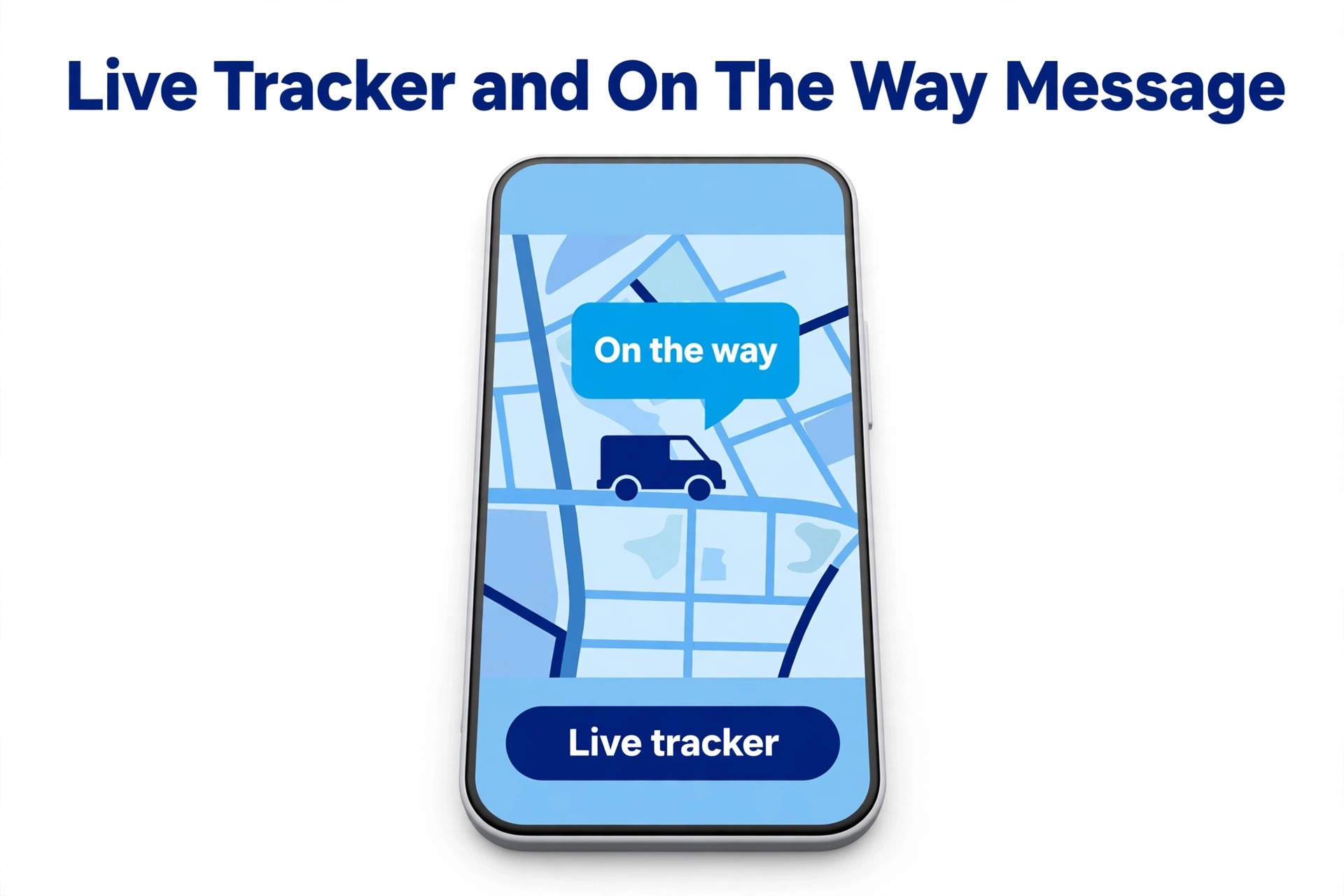
How to Use AI for Mobile Car Wash Route Scheduling in Seven Steps
This is the daily workflow to run, in order, with no step skipped on busy days.
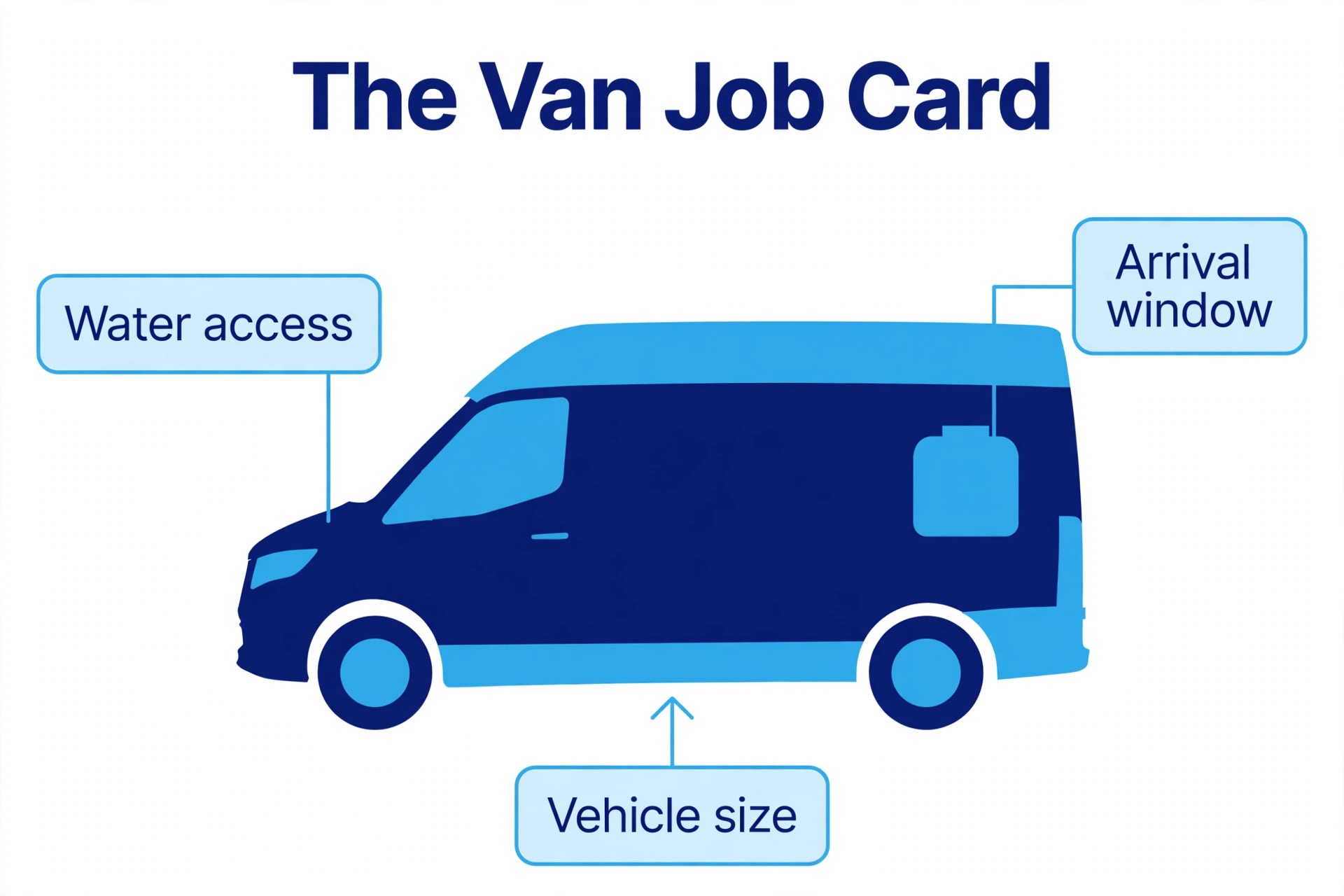
Step 1. Capture the booking with vehicle, address, package, and access notes. A sedan and a large SUV need different time, water, and product, and a gated community needs an entry code before the van arrives. The booking form should ask for vehicle size, service tier, water access, power access, and parking surface, because every missing answer becomes a phone call later.
Step 2. Score the booking against the days already on the calendar. The system checks distance from existing stops, fit with the van assigned to that area, and time needed for the vehicle and package. A booking that lands within the area lock scores high, while a booking across town scores low and gets offered a different day. Staff approve the score, they do not recalculate it by hand.
Step 3. Confirm water supply and power before the route locks. Mobile washing lives or dies on water, and a customer with no outdoor tap, a low pressure supply, or a strict building rule can stall a whole morning. The confirmation message should ask directly about tap access, hose length needed, and any site rules, and the answer should sit on the job record where the technician can see it.
Step 4. Build the route by drive time, not by booking order. Order stops from the starting point, usually home or the depot, using real drive times and fixed appointments as anchors. Flexible stops fill the gaps around fixed ones, and the route gets rechecked whenever a new booking lands. A route that looks neat on a map but ignores traffic at school run time is not a route, it is a guess.
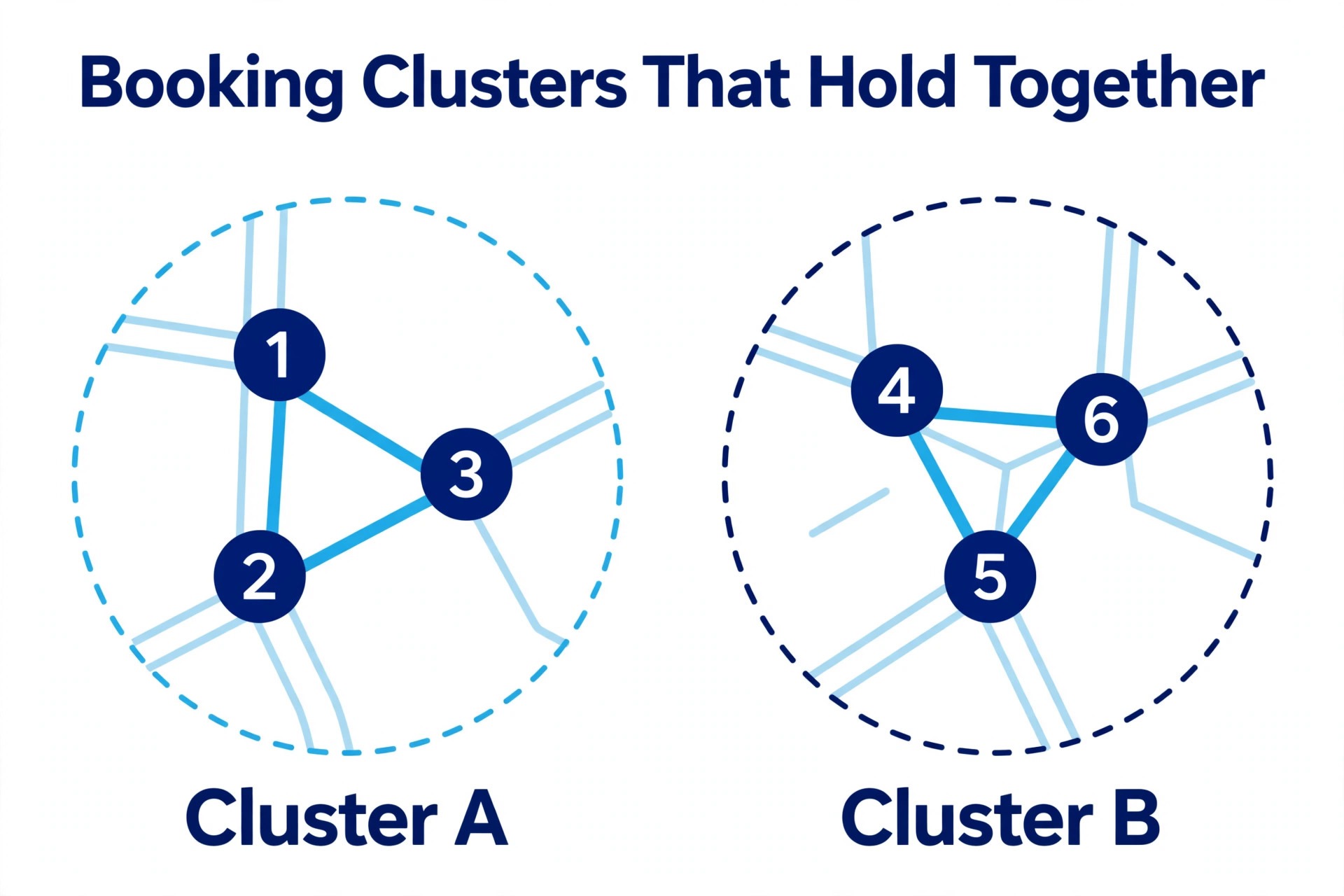
Step 5. Send arrival windows the customer can trust. A two hour window with a live tracker link beats a vague morning promise, because customers plan their day around it. Send a day before reminder, an on the way message with an updated arrival time, and a short delay notice the moment a job runs long. Customers forgive delays they hear about early and resent delays they discover by waiting.
Step 6. Work the job, photograph it, and record what changed. Before and after photos protect the operator against damage claims, show the customer the value, and give the business marketing material with permission. Note product used, water used, time taken, and any upsell the customer declined, because that record makes the next visit faster and the next quote more accurate.
Step 7. Close with a next booking offer and an upsell prompt while the car still looks good. Offer the next wash at a sensible interval, suggest the add on the customer skipped, and ask for a review only after the customer confirms they are happy. That closing minute is worth more than any advert, because a happy customer looking at a clean car is the easiest person in the world to rebook.
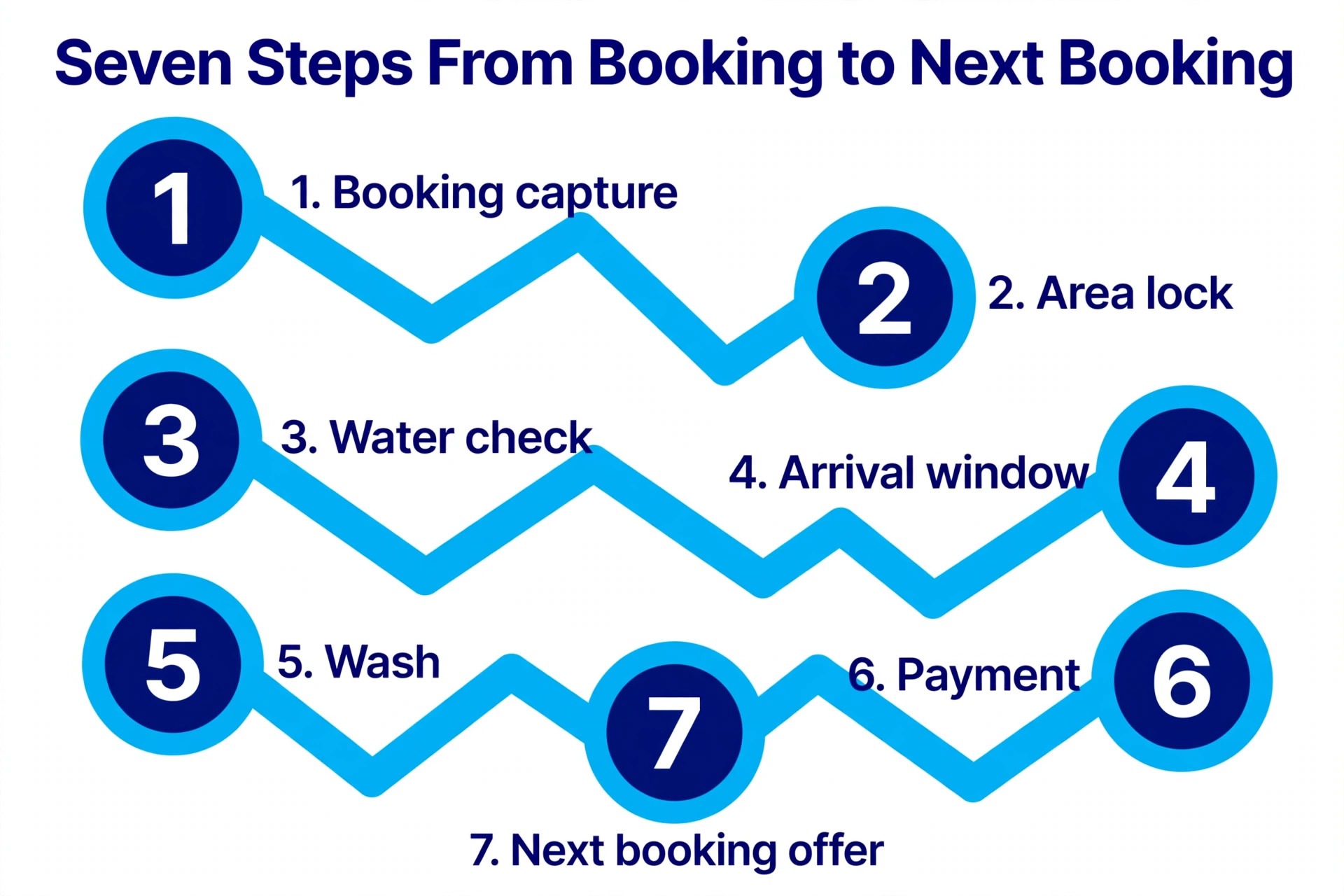
Booking Clusters That Actually Hold Together
A cluster is a group of jobs in one neighbourhood on one day, and the test of a good cluster is simple. The van should never drive past a future stop to reach the next one, and no leg between stops should regularly exceed 20 minutes in city traffic. If legs keep running longer, the cluster is too wide, the area lock radius is too large, or too many far away bookings slipped through on manual overrides.
Set the radius deliberately. A dense city operation can often work within a 5 mile radius per day, while a suburban or rural operation may need 10 to 15 miles to fill a van. The right radius is the smallest one that still fills the day most weeks, and it should shrink as density grows. Review it monthly, because a radius set when the business had 50 customers will be far too wide once it has 500.
Proximity messages are the fastest way to grow density. When a customer books, the system can draft a short message to existing customers within a few miles, saying the van will be in their area on that day and offering the open slots. One pilot detailing business reported that 63 percent of its bookings came from returning customers, which shows how much of the calendar can come from neighbours rather than cold leads. Approve those messages by hand at first, so the tone stays yours.
Guard against cluster decay when you use AI for mobile car wash route scheduling, because the system only stays tight if someone reviews its output. Staff overrides, VIP exceptions, and one off fleet jobs will stretch clusters if nobody watches, so review the weekly route map every Friday and count legs over 20 minutes. Each long leg is a decision to revisit, either by moving the job, splitting the day between two vans, or charging a travel fee that reflects the real cost. Clusters do not stay tight by accident. They stay tight because someone checks them.
The Water Supply Check Nobody Should Skip
Water is the constraint most new operators underestimate, and it is the one that causes the most embarrassing failures. A van that arrives without enough onboard water, or at a property with no usable tap, cannot wash a car, and the customer still loses their morning waiting. The water check should happen at booking, again at confirmation, and once more on the morning of the job, because site conditions change.
Ask four questions at booking. Is there an outdoor tap the technician can use. How far is the tap from where the car will park. Are there building or estate rules about washing cars on site. And is there a drain or surface where runoff is acceptable. The answers decide whether the job needs the van tank topped up, a longer hose, a waterless product option, or a reschedule to a site where washing is allowed. Record the answers on the job, not in a separate message thread.
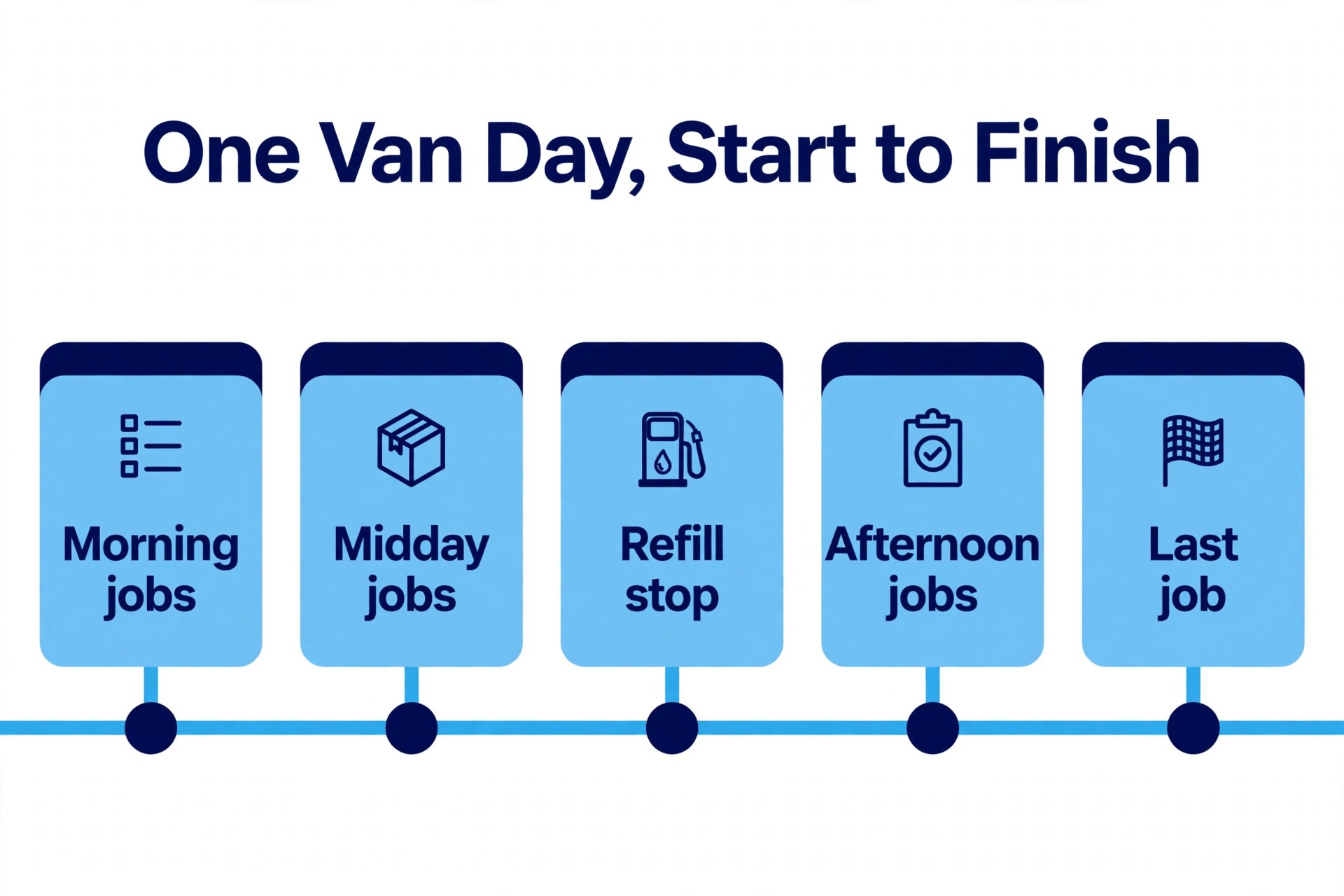
Plan tank capacity against the day, not against one job, and record the plan on the route when you use AI for mobile car wash route scheduling. A full exterior wash on a large vehicle uses far more water than a maintenance wash on a small car, and a day of six jobs needs a refill plan built into the route. Put the refill stop on the route map, near a customer who allows tap use or a depot, instead of hoping a technician finds water mid route. That single habit prevents the mid afternoon call that the tank is empty with two jobs still to go.
Weather and season change the check too. In freezing weather, hoses and tanks need protection, and some sites will not allow washing at all. In drought restrictions, certain areas may ban outdoor washing, which means the booking system must block or reroute those jobs before customers book them. A water check that ignores local rules will eventually book a job the law or the estate will not allow.
Route Density, Arrival Windows and Honest Promises
Density is the number of paying jobs per mile driven and per hour on the road, and it is the metric that best predicts profit for a mobile wash business. Two vans can each wash eight cars in a day, yet one earns far more, because its stops sit close together and its technicians spend time washing instead of driving. Track jobs per van day, drive minutes per job, and revenue per mile, and compare vans and neighbourhoods on those numbers rather than on job count alone.
Arrival windows are where density meets customer trust. A window that is too wide wastes the customer’s day, while a window that is too narrow breaks the moment one job runs long. A two hour window with live tracking is the sweet spot for most residential work, while fleet and dealership work can use tighter windows because the site contact stays on site. Publish the window policy at booking, so customers know what to expect before they commit.
When a job runs long, the system should replan, not just apologise. The remaining stops get new arrival times, the affected customers get updated messages, and the technician gets a revised order that may swap two flexible stops. That replanning should take seconds, because a dispatcher doing it by hand while technicians wait on the phone loses the very time the route was meant to save. If replanning happens more than twice a week, the job time estimates are wrong and need fixing at the source.
Do not promise what the route cannot deliver, even when you use AI for mobile car wash route scheduling to fill gaps quickly. A same day booking across town, a 30 minute arrival window for a residential wash, and a guaranteed finish time for a heavily soiled vehicle are all promises that break under normal conditions. When you use AI for mobile car wash route scheduling, the system should warn staff before they make those promises, by showing the drive time, the job duration, and the knock on effect on later stops. Honest windows lose a few bookings and keep far more customers.
Upsell Prompts That Feel Like Help, Not Pressure
Upsells work in mobile washing when they solve a problem the customer can already see. A customer with stained seats, dull paint, or a pet hair covered boot will welcome a suggestion for interior detailing, paint protection, or pet hair removal, especially when the car is clean and the problem stands out. The same suggestion sent as a cold text weeks later feels like spam. Timing is the difference between help and pressure.
Build upsell prompts around what the technician actually saw. If the job record notes kerb scuffed wheels, the follow up can offer wheel refurbishment advice or a wheel clean add on next visit. If the record notes a child seat and snack crumbs, the next booking can suggest an interior deep clean before a holiday. Generic upsells to every customer convert poorly and train customers to ignore messages, while specific prompts based on the car in front of the technician convert well and feel personal.
Price upsells as clear add ons, not as vague upgrades, so a customer who hears about them through AI for mobile car wash route scheduling still sees honest numbers. A customer should see the base wash price, the add on price, and the total before they agree, and the add on should carry its own time estimate so the route stays honest. A 20 minute interior add on accepted at the door without adjusting later arrival times will break the afternoon, so the system must extend the job duration and replan the route the moment the upsell is accepted.
Memberships are the strongest upsell of all, because they turn one off customers into a dense recurring route. A monthly wash plan for a neighbourhood, with a fixed day each month, gives the operator a predictable cluster and the customer a clean car without rebooking. Offer membership at the third visit, not the first, because by then the customer trusts the quality and the technician, and the offer feels like a reward rather than a sales pitch.
Tools, Prices and What to Check Before You Commit
QuoteIQ is the most detailing specific option found in research, with per vehicle tiered pricing, route optimisation, wash supply tracking, per job costing, and AI tools, starting at about 29.99 dollars a month in vendor listings, so confirm on the vendor page for the tier that includes the features you need. Roundwise takes a different approach, with area locked booking that anchors each day to one neighbourhood and only shows customers days that keep the route tight, which suits solo operators and small teams that suffer most from scattered bookings.
Vev offers mobile wash delivery software with automatic route planning and map app directions, and a free to start tier in its listings, which suits operators testing route software for the first time.
Detail Near is a newer AI booking tool built for mobile detailers, with AI drafted texts, slot ranking by route fit, proximity broadcasts to nearby customers, and retention messages for customers about to lapse. Wax Stak focuses on the route itself, with stop ordering by drive time, multi van assignment, and reporting on route efficiency, fuel cost, and mileage.
Both are worth watching, but newer tools deserve a harder trial, because support, uptime, and long term pricing matter more than a clever demo.
General field service tools such as Jobber, Housecall Pro, and ServiceTitan also handle scheduling and invoicing for mobile services, and they suit operators who already use them for other trades or who run larger teams. Their strength is breadth, meaning invoicing, payments, and customer records in one place, while their weakness is that generic scheduling may not understand vehicle size, water needs, or area locking without setup. Judge them on a real wash day, not on a feature list.
| Tool | Standout strength | Starting price signal |
|---|---|---|
| QuoteIQ | Detailing specific pricing and routes | About 29.99 dollars a month |
| Roundwise | Area locked booking days | Early access pricing, confirm on vendor page |
| Vev | Automatic route planning, map directions | Free to start tier in listings |
| Detail Near | AI booking and proximity messages | Pilot stage, confirm pricing before committing |
| Wax Stak | Drive time ordering and route reporting | Confirm tier pricing on vendor page |
A Worked Week for One Van
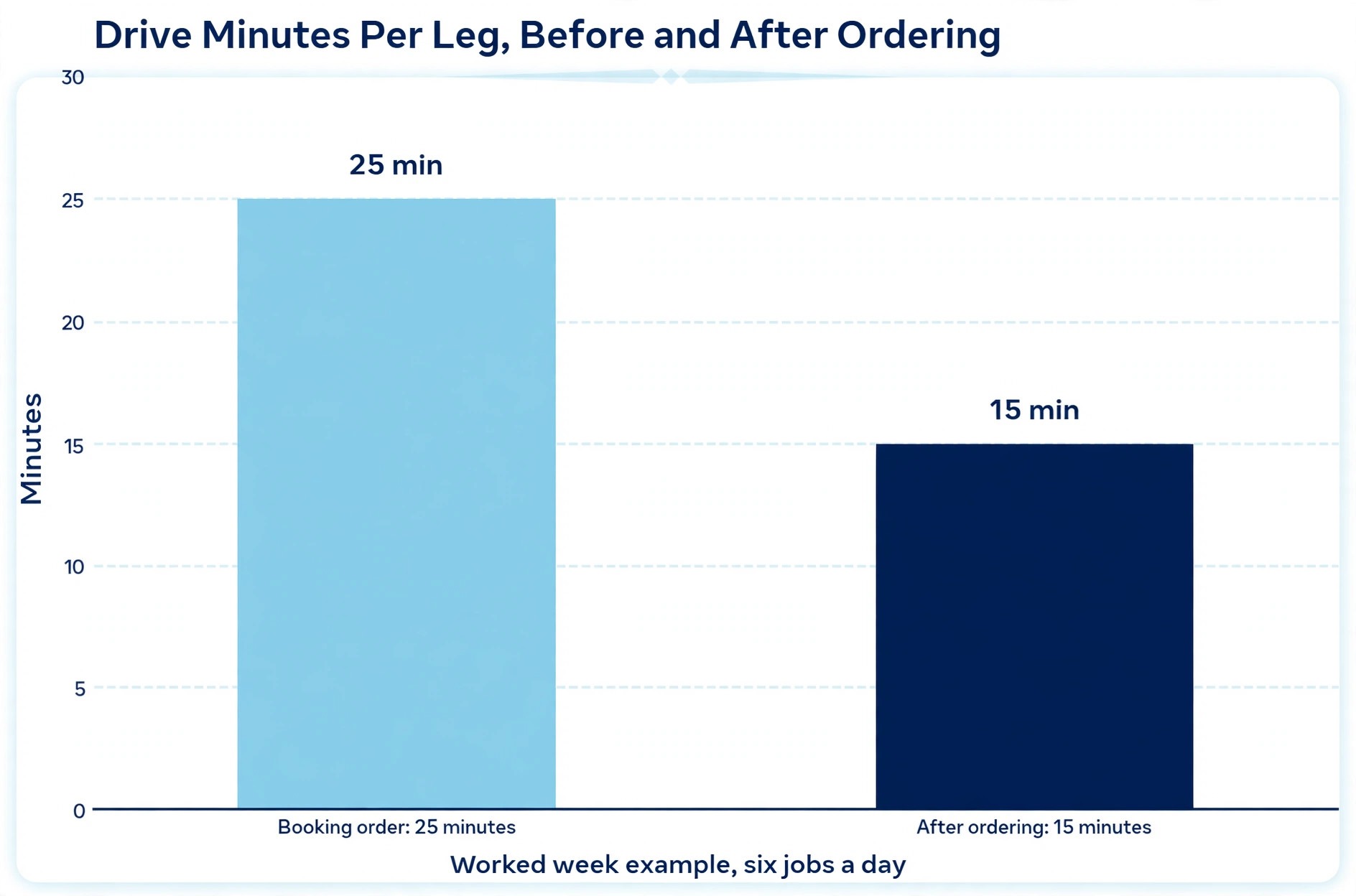
Take a solo operator with one van, working five days a week in a suburban area. Before area locking, the van averaged six jobs a day with legs averaging 25 minutes, meaning about 2 hours and 5 minutes driving for six stops. After ordering the same stops by drive time and clustering by neighbourhood, legs averaged about 15 minutes, meaning about 1 hour and 15 minutes driving. The saving of 50 minutes a day is enough for an extra maintenance wash most days, or an earlier finish with the same revenue and less fuel.
Put numbers on that week. Five days at 50 minutes saved is just over four hours a week, or about 200 hours a year. Fuel savings from 15 to 20 fewer miles a day, at typical city consumption and fuel prices, run to roughly 4 dollars a day, or about 1,000 dollars a year per van in one published example. Those figures are examples, not guarantees, and your saving depends on traffic, spread, and job mix, but the direction is consistent. Tighter routes save time first, and money follows time.
The worked week also shows why upsells matter. One extra maintenance wash a day, at a modest price, adds five paying jobs a week without adding a van, a technician, or a marketing budget. That only works if arrival windows stay honest, because an extra job squeezed into an already late route will produce a rushed wash and a lost customer. Add the job only when the route math shows room for it, and let the system prove the room exists before promising it.
Track the week honestly if you use AI for mobile car wash route scheduling, because the gap between plan and reality is where estimates get fixed. Record planned drive time against actual drive time, planned job duration against actual duration, and promised arrival windows against actual arrivals. The gap between plan and reality is where estimates need fixing, whether that means longer allowances for large vehicles, earlier starts for fleet days, or a smaller radius for a sprawling suburb. A route system that never gets corrected will slowly drift back to guessing.
Mistakes That Stretch the Route Again
The first mistake is letting manual overrides become the norm. Every override that books a far away customer onto a locked day should be logged with a reason, and overrides should need manager approval once the van books four or more jobs a day. Without that friction, staff will override to please one caller and quietly break the route for five other customers. Kindness to one customer should not cost five others their arrival window.
The second mistake is ignoring job duration differences. A sedan maintenance wash and a large SUV full detail are not the same job, yet many calendars give them the same slot length. When durations are wrong, routes look tight on screen and fall apart on the road, because technicians run late from the second job onward. Fix durations by vehicle size and package from actual job records, and review them monthly, because a duration that is 15 minutes short will break every route it touches.
The third mistake is treating the tracker link as a substitute for communication. A live map helps, but customers still need a message when the van is on its way and a new time when a delay hits. A customer watching a van icon sit still for 40 minutes without explanation will assume the operator forgot them. The message costs seconds and protects the review, the rebooking, and the referral that a silent tracker cannot.
The fourth mistake is chasing new areas before saturating the current one. Every new suburb added to the service area stretches routes until density builds there, and density takes months of repeat bookings. Grow by deepening existing neighbourhoods first, through proximity messages, memberships, and referrals, and only add a new area when the current clusters fill reliably. A wide map looks ambitious and earns less than a dense one.
Closing Checklist for Next Week
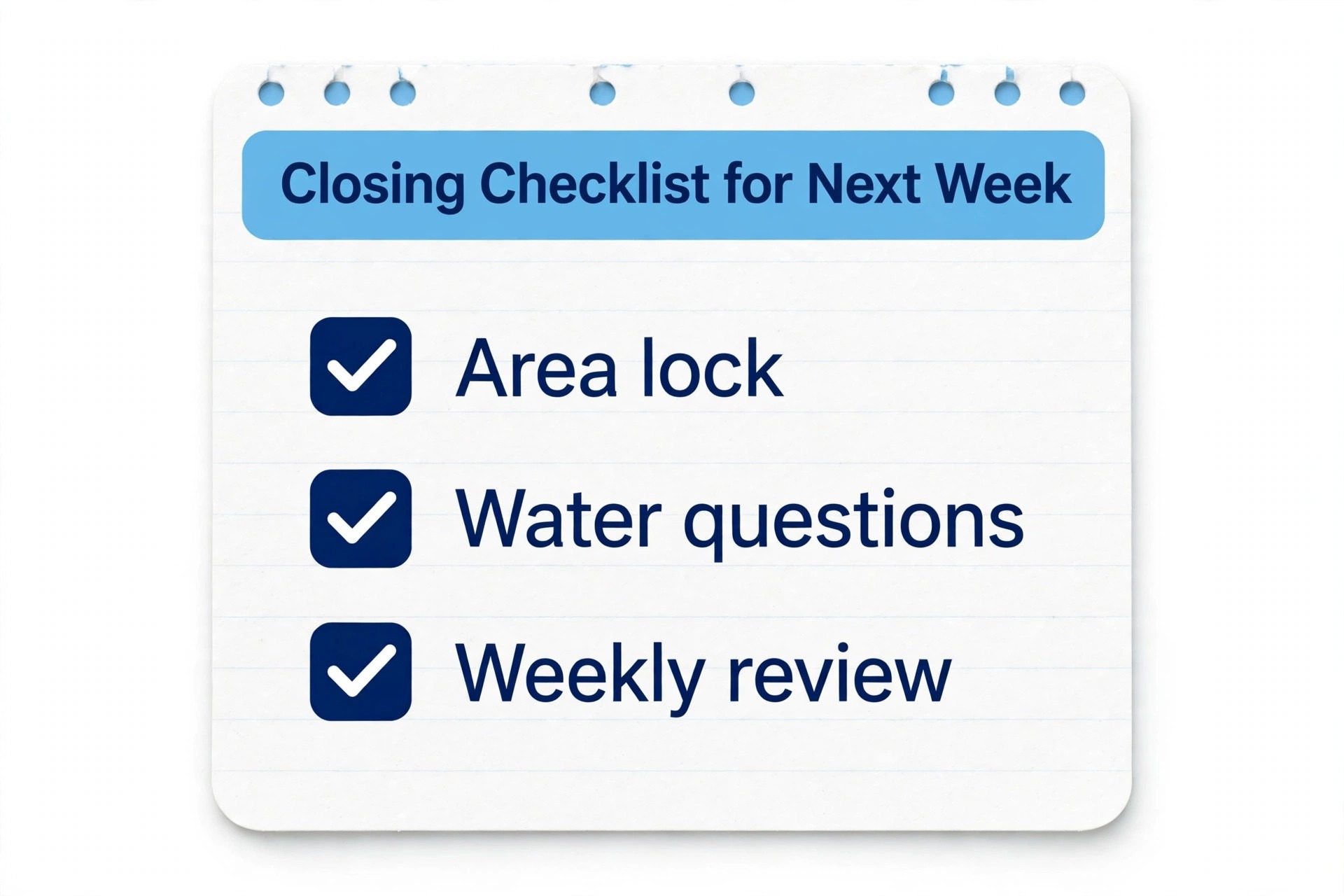
Run this checklist before next Monday, in order. First, set the area lock radius for each van day and publish which days serve which neighbourhoods. Second, add water, power, and access questions to the booking form, and make them required for new customers. Third, set arrival windows to two hours for residential work, with day before and on the way messages switched on. Fourth, build the proximity message template and approve the first batch by hand, so the tone stays personal.
Fifth, correct job durations by vehicle size and package from the last month of actual jobs, and add 10 minutes of buffer after full details. Sixth, set the upsell rules, meaning which prompts fire after which job notes, and which add ons need route replanning when accepted. Seventh, pick one density metric, such as drive minutes per job, and review it every Friday with the route map. That weekly review is the habit that keeps the system honest.
Operators who use AI for mobile car wash route scheduling as a weekly discipline, not as a one off setup, see the benefit compound. Routes get tighter as density grows, density grows as routes get tighter, and customers stay because arrival windows hold. Start with the lock, prove it for two weeks, and then add automation one piece at a time, checking each piece against drive time and customer feedback before adding the next.
Frequently Asked Questions About Mobile Car Wash Routing
How does area locked booking work for a mobile car wash?
Each day gets anchored to one neighbourhood when the first booking lands, and later customers only see days that keep their area tight. Customers across town are shown a different day that suits their area, so the van never zigzags across the city. The operator sets the radius, and the system applies it automatically at booking, which keeps routes dense without manual sorting.
What should the booking form ask about water supply?
It should ask whether there is an outdoor tap, how far the tap sits from the parking spot, whether the site allows car washing, and where runoff can go. Those answers decide whether the van needs a full tank, a longer hose, a waterless option, or a different site. Without them, the technician discovers the problem in the driveway, when the whole day is already at risk.
How wide should an arrival window be for residential washes?
Two hours with a live tracker link works well for most residential jobs, because it gives the route room for traffic and longer jobs while still letting the customer plan their day. Fleet and dealership jobs can use tighter windows, since a site contact stays available. Always send an updated time the moment a delay appears, rather than letting the customer discover it by waiting.
Can AI really add an extra job to a van day?
It can, when the saving comes from drive time rather than rushing washes. Ordering six stops by drive time instead of booking order saved about 50 minutes a day in one published example, which is enough for a maintenance wash on many days. The extra job only helps if job durations are honest and arrival windows are replanned when the job is added, otherwise quality and trust suffer.
Should a new operator use area locking from day one?
Not necessarily. With very few bookings, any job is worth taking, and locking may turn away early customers the business needs. Once the van regularly books four or more jobs a day, the lock pays, because loose bookings start displacing tighter ones. Start open, watch the booking volume, and switch the lock on when the calendar first feels scattered.
What is the best upsell for a mobile wash business?
A monthly membership for a fixed neighbourhood day is usually the strongest upsell, because it creates a predictable recurring cluster and removes rebooking friction for the customer. Offer it at the third visit, once trust is established, and price it clearly against the single wash price. Add on services tied to what the technician saw, such as interior cleaning for a family car, work best as the second layer.
More Reading on Stratilyze
– Use AI for Car Wash Booking Management – Use AI for Cleaning Business Route Scheduling – Best Route Scheduling Software for Pool Service Companies – Use AI for Auto Repair Shop Scheduling – Mobile Detailing Pricing Packages That Customers Understand, plain text title, link not verified at writing time – How to Build a Repeat Customer Base for a Service Van, plain text title, link not verified at writing time