
The problem that sinks painting contractors is rarely a lack of work. It is an estimate that looked right on the day it was written and turned wrong on the day the job was painted, which is why painters use AI for painting contractor estimate quotes. A living room quoted at two days takes four because the walls needed two coats over a dark color, the trim needed sanding nobody priced, and the ceilings were higher than anyone measured. The painter cannot go back to the homeowner mid job and ask for double the money, so the extra days come out of profit, and a season of estimates like that turns a busy painter into a broke one.
The fix is an estimating discipline that measures every surface, prices prep honestly, and states scope in writing, and that discipline is far easier to hold when you use AI for painting contractor estimate quotes instead of pricing from a walkthrough memory and a per room guess.
Why Painters Should Use AI for Painting Contractor Estimate Quotes
Painting estimates fail in predictable places, and each failure has a measurement behind it. Wall area gets guessed from floor area, which understates paintable surface whenever ceilings are high, walls are many, or rooms are cut up by doors and windows. Prep gets treated as free, even though washing, sanding, caulking, and patching often take as long as the painting itself on older homes. Coat count gets assumed at one, even though a color change from dark to light, or a new drywall surface, almost always needs two coats plus primer. Trim, doors, and ceilings get folded into a room price that nobody defined, so the homeowner expects them included and the painter expected them extra.
Each of these failures is small alone, and together they erase the margin on the job.
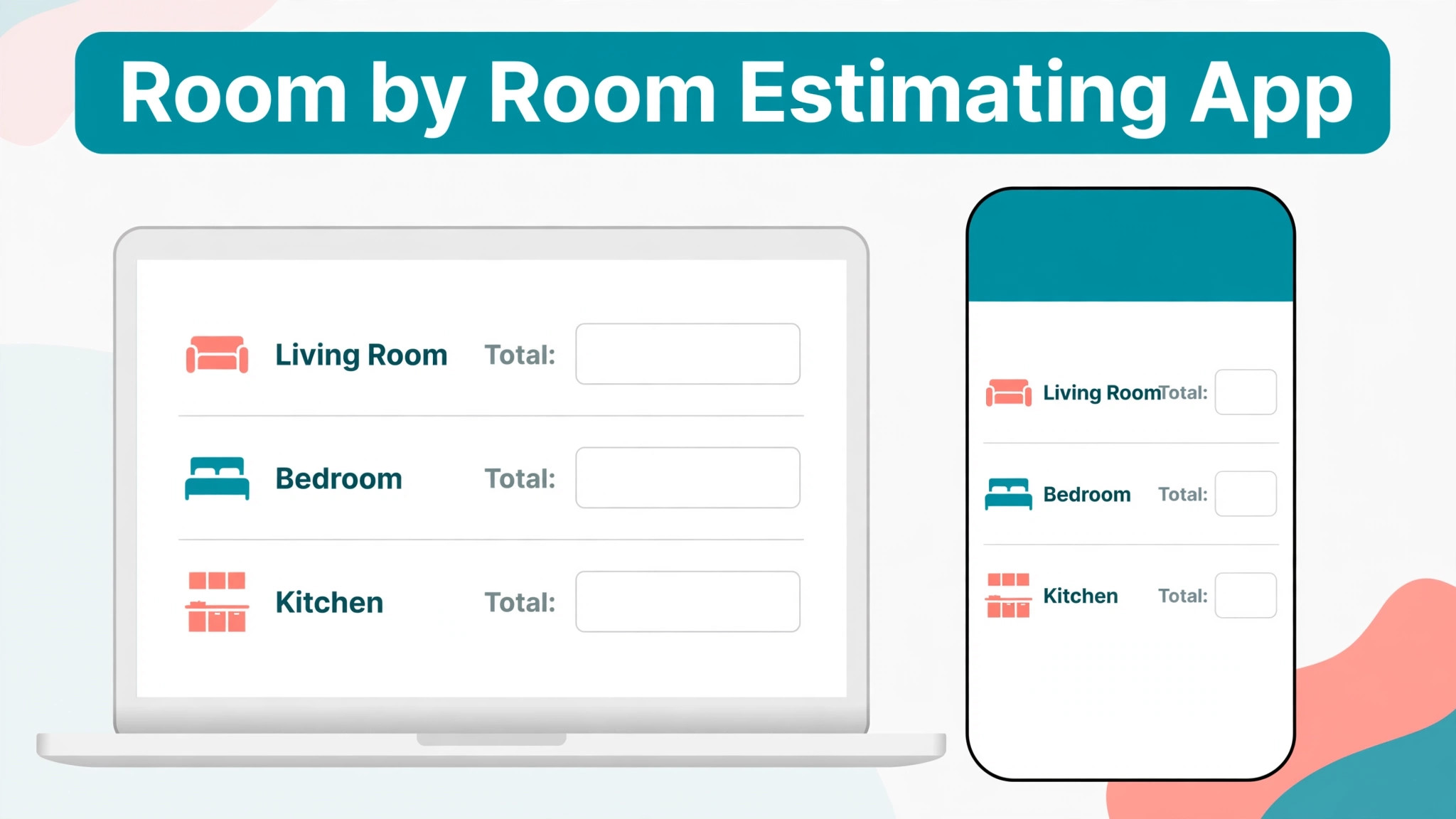
Estimating software attacks these failures by forcing structure. A room by room calculator asks for wall area, ceiling area, trim length, door count, and prep level for each space, and it applies the painter’s own production rates and paint coverage to those numbers. The result is a quote the painter can defend line by line, because every figure traces back to a measurement taken on the walkthrough. AI drafting then turns those numbers into a clean, branded proposal with good, better, and best paint options, photos from the walkthrough, and a scope that names exactly what is included. The painter still walks the home, still judges prep, and still chooses the rates.
The software only removes the arithmetic slips and the delay, and same day quotes close more jobs, because homeowners decide while the painter’s visit is still fresh in their mind.
The financial case follows the same logic as the estimating logic. A painting contractor who quotes ten jobs a month and wins four at an average ticket of three thousand dollars earns twelve thousand dollars of booked work. Raising the close rate to five by sending faster, clearer quotes adds three thousand dollars a month without a single new lead, and raising accuracy so that quoted jobs finish on budget protects the margin on all of them. Estimating software costs roughly 30 to 150 dollars a month depending on the tool, which is less than the profit on a single room done right. Viewed that way, the software is not an expense to minimize.
It is the cheapest profit protection a painting contractor owns, provided the measurements behind it are honest.
The Walkthrough That Makes the Estimate Accurate
A good walkthrough takes thirty to sixty minutes for a typical home, and it follows the same order every time, so nothing gets skipped under pressure. The painter starts outside, noting the home’s condition, access, parking, and any exterior work the homeowner mentioned, even for an interior job, because exterior condition hints at overall maintenance and prep needs. Inside, the painter walks room by room with the homeowner, confirming the scope for each space in plain words. Which walls get painted, whether ceilings are included, whether trim and doors are included, and what happens to furniture, wall hangings, and valuables.
Every answer gets written down on the spot, not reconstructed later from memory, because memory edits scope in the painter’s favor and the homeowner remembers the opposite.
Measurements come next, room by room, with a laser measure or a tape, and with photos of every wall that shows damage, staining, or previous poor work. Wall area is length times height for each wall, minus large openings only where the painter’s own policy deducts them, and the policy should be consistent across jobs so quotes stay comparable. Ceilings are measured separately, since ceiling paint, labor, and prep differ from walls. Trim is measured by linear feet, doors are counted individually, and windows are counted with their trim condition noted.
Prep level is judged per room, not per home, because a kitchen with grease near the stove needs more washing than a bedroom with clean walls, and a bathroom with peeling paint needs more scraping than a hallway in good shape.
Color and paint history questions close the walkthrough. What color is on the walls now, what color will replace it, has the home been painted before, and is there any smoking, water damage, or wallpaper to remove. A dark to light change needs primer and often an extra coat. Wallpaper removal is a separate job with its own price, and it should never be absorbed into a painting quote as a favor. Water stains need sealing before painting, or the stain bleeds through the new coat and the painter returns for free. The walkthrough ends with a summary spoken back to the homeowner, covering rooms, colors, prep, and the date the quote will arrive.
That summary prevents the most common post quote dispute, which is the homeowner remembering a different scope than the painter priced. Painters who use AI for painting contractor estimate quotes to build the proposal from walkthrough notes, rather than from memory the next day, keep that summary accurate and the scope dispute free.

The Room and Surface Pricing Template
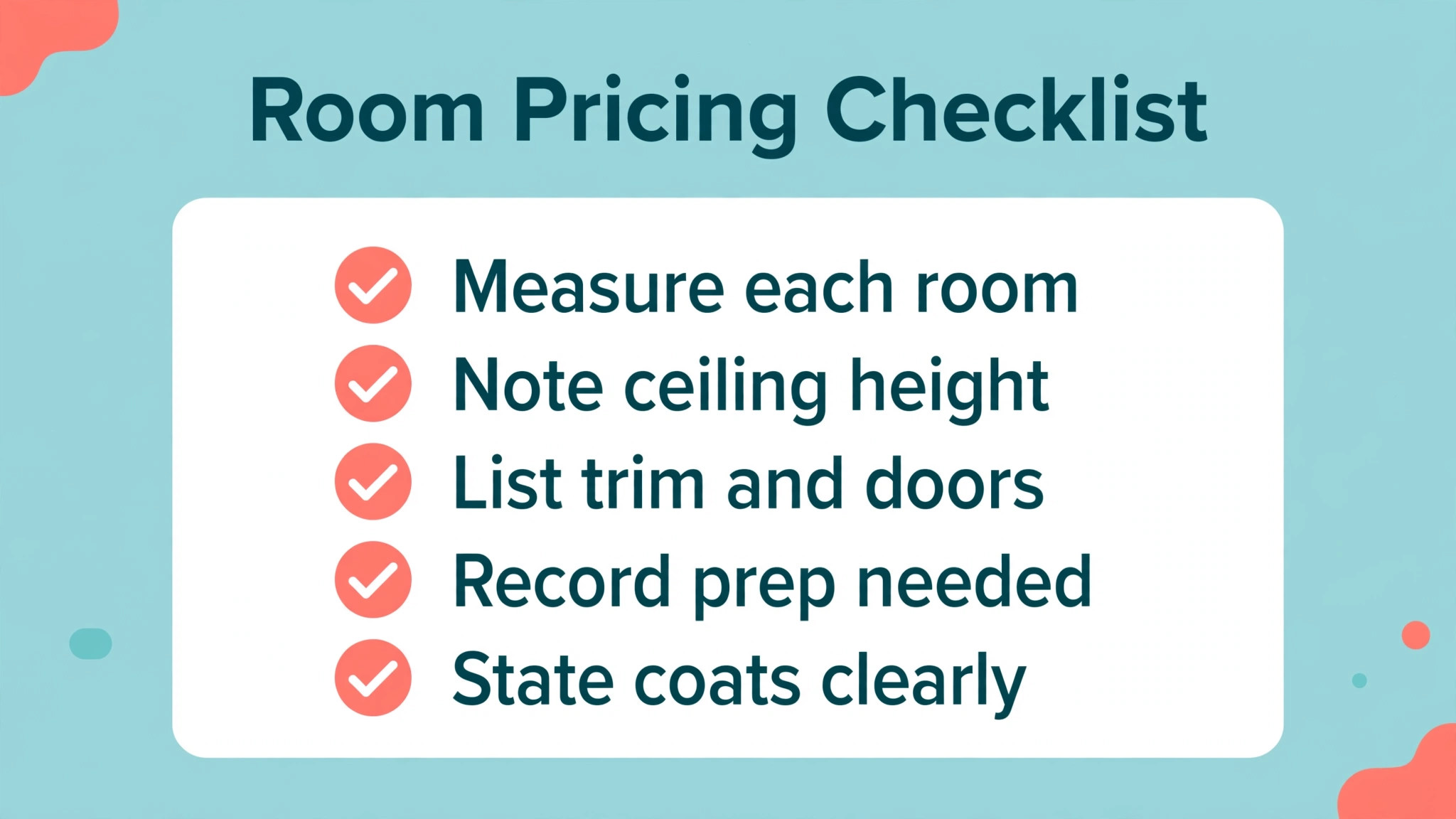
This template is the overview proof of this guide. Fill it for every room, and the quote that follows will be built from surfaces, not from guesses, which is the difference between a profitable job and a hopeful one.
| Template field | What to record | Why it changes price |
|---|---|---|
| Room name | One row per room | Keeps scope visible |
| Wall area | Square feet per room | Base for wall paint and labor |
| Ceiling area | Square feet, included or not | Separate paint and labor |
| Trim length | Linear feet of base and casing | Trim labor is slow and detailed |
| Doors | Count and condition | Each door needs prep and coats |
| Windows | Count and trim condition | Trim and cutting in time |
| Prep level | Light, medium, heavy | Prep often equals paint time |
| Current color | Dark, medium, light | Dark to light needs primer |
| New color | Named by homeowner | Color change drives coat count |
| Coats planned | Primer plus coats per surface | Drives paint gallons and labor |
| Paint grade | Good, better, best option | Material cost per gallon |
| Gallons needed | Area divided by coverage | Material total accuracy |
| Special surfaces | Cabinets, paneling, wallpaper | Separate pricing, never free |
| Furniture and protection | Move, cover, or homeowner moves | Labor and liability clarity |
| Access notes | High ceilings, stairwells | Equipment and time factors |
Paint math follows the template directly. A gallon of paint covers roughly 350 to 400 square feet per coat on smooth walls, and less on textured or porous surfaces, so wall area divided by coverage, multiplied by coats, gives gallons before waste. Add ten percent for waste, cutting in, and touch ups, and round up to whole gallons, because a crew that runs out of paint mid wall waits for a store run and loses the day’s rhythm. Labor follows production rates the painter measures from their own jobs, like square feet per painter per day for walls at a given prep level, rather than rates copied from a book.
A painter who tracks actual production for a month knows their true rate, and quotes built on true rates finish on budget, while quotes built on hopeful rates finish late and unpaid for the extra days.
The Estimate Workflow From Walkthrough to Signed Proposal
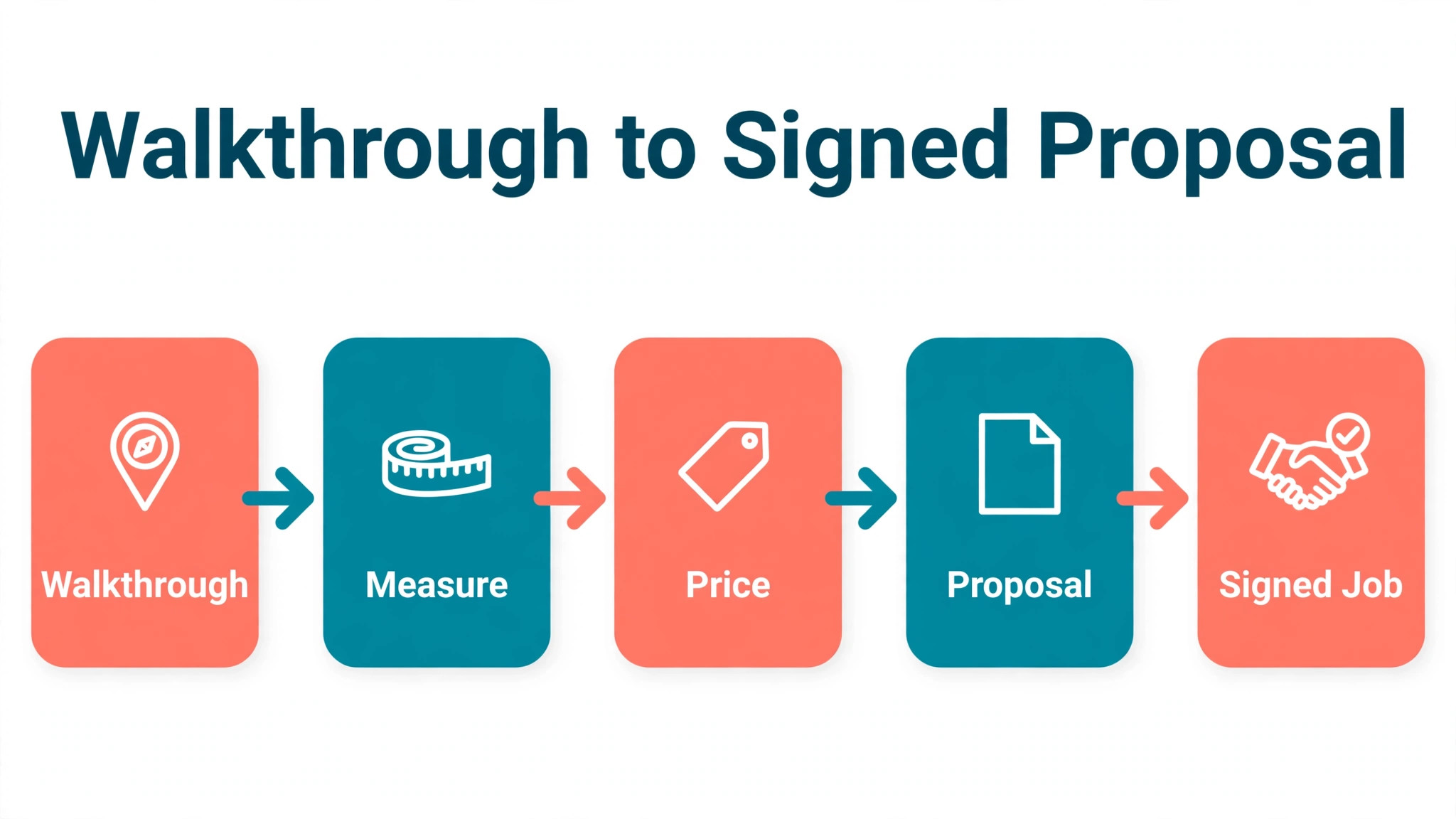
A reliable estimating workflow moves a lead from walkthrough to signed proposal in one day where possible, because painting homeowners compare contractors fast and choose the one who responds professionally first. Step one is the inquiry call, where the painter asks for the address, the rooms involved, the rough timeline, and permission to photograph during the walkthrough. Step two is the walkthrough itself, run in the order described above, with measurements and photos recorded in the estimating app on site. Step three is building the estimate in the tool, from the room template and current paint and labor rates, with good, better, and best paint grades as options.
Step four is the painter’s review, checking every room, every prep level, and every coat count against the walkthrough notes, because a single wrong room can swing the total by hundreds of dollars.
Step five is sending the proposal with photos, scope, options, validity window, deposit requirement, and start window, accompanied by a short message naming the next step. Step six is follow up, with a message at three days if there is no reply, and a second message at seven days offering to adjust an option, like painting trim in a later phase. Painters who use AI for painting contractor estimate quotes inside this workflow typically send the proposal the same day as the walkthrough, and same day proposals close at a higher rate, because the homeowner decides while the painter’s professionalism is still vivid.
Step seven is the signed job, where the deposit is collected, paint is ordered against the template’s gallon counts, and the crew receives the room scope, the prep notes, and the photos from the same record.
| Workflow step | When it happens | Output | Time target |
|---|---|---|---|
| Inquiry call | Day zero | Visit date set | Same day |
| Walkthrough | Within 2 days | Room measurements | 30 to 60 minutes |
| Estimate built | Visit day | Itemized options | Same day |
| Painter review | Visit day | Checked scope and figures | 15 minutes |
| Proposal sent | Visit day | Valid dated proposal | Same day |
| Follow up | Day 3 and day 7 | Reply or adjustment | Two messages |
| Signed job | On acceptance | Deposit and paint order | Same day |
Pricing Surfaces Honestly, Including Prep and Paint Grades
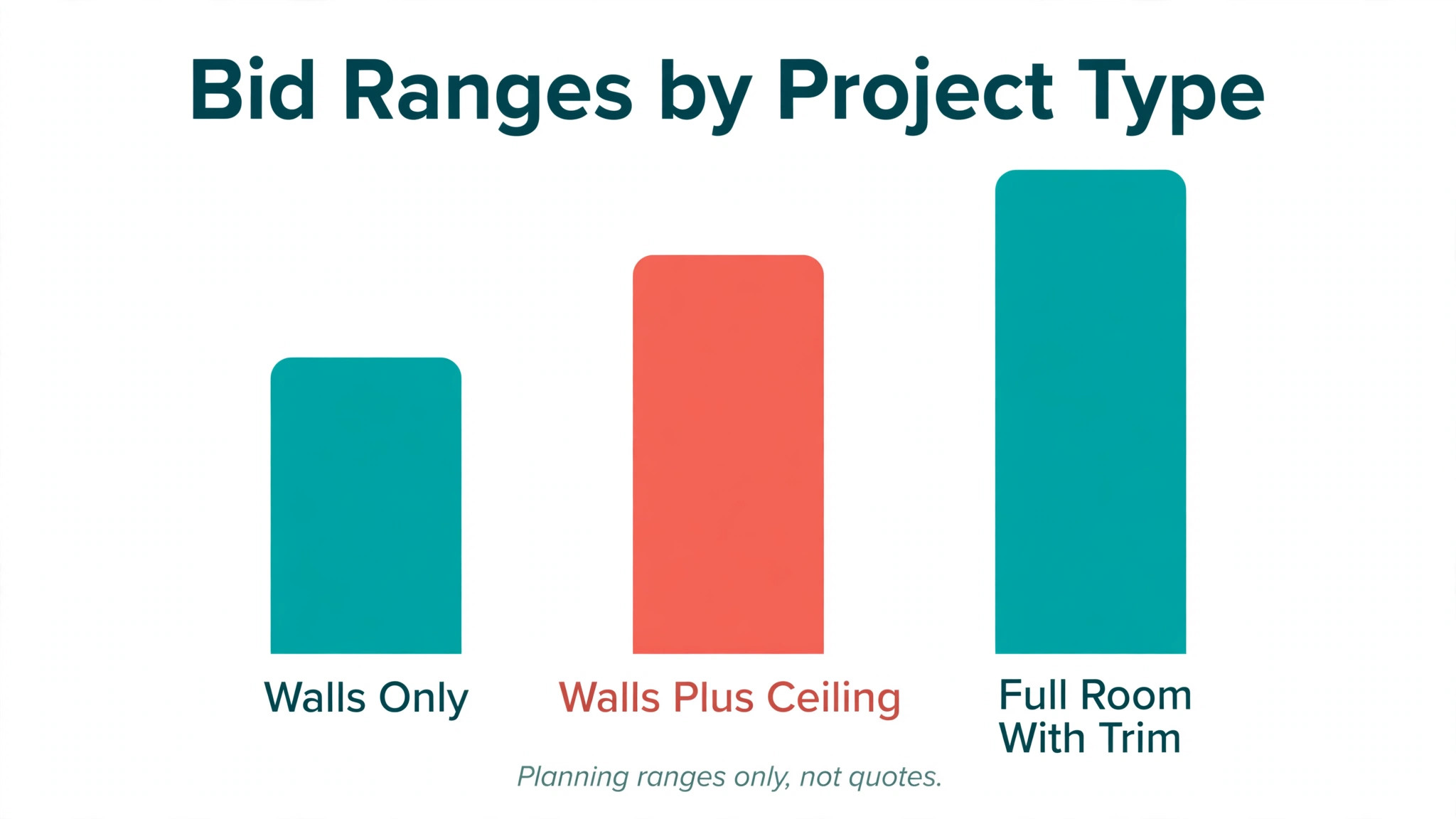
Interior painting bid ranges reported in contractor rate guides give a useful sanity check, with walls only work often landing near 1.30 to 2.60 dollars per square foot, walls plus ceilings near 1.55 to 3.10 dollars, and full rooms with trim near 1.95 to 4.00 dollars, at mid grade materials and a standard margin, before regional adjustment. These are planning ranges, not quotes, and the painter’s own rates must come from their own costs, crew speed, and local paint prices. A painter who copies a national range without adjusting for their market will underprice in expensive cities and overprice in cheaper ones, and both errors lose work. Use published ranges to check your own math, never to replace it.

Prep pricing deserves explicit lines, because prep is where jobs go wrong and where trust is built. Light prep, meaning cleaning and minor caulking, belongs in the base price. Medium prep, meaning sanding, patching, and spot priming, gets a per room line. Heavy prep, meaning scraping peeling paint, extensive patching, or stain sealing, gets its own priced scope, with the painter explaining why it costs more in plain words. Homeowners accept prep charges when they see the damage in a walkthrough photo and hear the reason. They reject prep charges that appear as a lump sum with no explanation, and they blame the painter when unpriced prep is skipped and the finish fails.
Paint grade options work like material options in any trade. The good grade meets the basic need at the lowest price, the better grade offers better coverage and durability for most homes, and the best grade suits high traffic areas, kitchens, and bathrooms, where washability matters. Present all three with the same scope, so the homeowner compares paint, not hidden scope differences, and mark the recommended grade based on the room’s use. Painters who use AI for painting contractor estimate quotes to generate all three grades from one room template give homeowners a real choice in minutes, instead of a single price that invites a competitor’s call.
Cabinets deserve separate treatment entirely, since cabinet painting involves degreasing, sanding, priming, and spraying, with a price that reflects days of shop or site work, not a per room guess. Painters who price cabinets as an add on line, with the process explained, win cabinet jobs profitably. Painters who fold cabinets into a room price lose money on every set.
Five Tools That Carry Painting Estimates Well
PaintScout for Painter Specific Estimating
PaintScout suits painting contractors who want estimating built around how painters actually price work, with rates per square foot by surface type, including walls, ceilings, trim, and cabinets, and with production rate calculations from measurements. Reported pricing starts around 119 to 149 dollars a month depending on the source, and its proposal presentations show good, better, and best options clearly for homeowners. Its limits matter for contractors who want scheduling, CRM, and job costing in the same tool, since PaintScout is an estimating tool first and leaves operations to other software. For contractors whose main pain is estimate accuracy and proposal clarity, it is the most painter specific choice in this group.
DripJobs for Automated Follow Up and CRM
DripJobs suits painting contractors who want estimating plus automated follow up, pipeline management, and crew coordination in one platform. Its booking form creates contacts and pipeline stages automatically, and its multi step drip campaigns follow up on unsent or unsigned proposals without the painter remembering each one. Pricing is subscription based and varies by plan, so contractors should confirm current rates. Its strength is the loop after the estimate, since many painting jobs are lost to slow follow up rather than to price, and a system that follows up automatically recovers jobs the painter would otherwise forget. Contractors who already estimate well but lose deals to silence will gain most from DripJobs.
Jobber for Quotes Tied to Scheduling
Jobber suits small to mid sized painting crews that want quotes, scheduling, invoicing, and customer communication in one system. Its quote builder ties the accepted estimate straight into the schedule and the invoice, which removes the retyping that causes scope errors between estimate and job. Reported entry pricing runs around 29 to 49 dollars a month for one user depending on billing term, with advanced features on higher tiers. The trade off is estimating depth compared with PaintScout, since Jobber’s quote builder is general purpose rather than painter specific. Crews that value one system for the whole business over the deepest estimating engine will find Jobber a strong fit.
CompanyCam for Photo Proof From Walkthrough to Finish
CompanyCam suits any painting contractor who wants walkthrough photos, prep photos, and finished photos organized by project and shared with the crew and the customer. The estimator photographs damage, colors, and access issues at the walkthrough, the crew photographs prep and progress during the job, and the finished gallery becomes the record that settles disputes about what was included. Pricing is subscription based with a trial available, and its integration with estimating tools attaches photos to the right job automatically. For painting work, where prep disputes and scope disagreements cause most conflicts, a photo record is cheap protection that pays for itself the first time a homeowner questions whether a wall was included.
Hover for Exterior Measurement From Phone Photos
Hover suits contractors who price exterior painting and want accurate measurements without climbing ladders with a tape. The homeowner or estimator photographs the home from a phone, and Hover returns a 3D model with siding area, trim length, and surface measurements, priced per scan at roughly 59 dollars and up. That accuracy changes exterior quotes, because siding area estimated by eye is often wrong by enough to swing paint gallons and labor days. Hover does not replace the walkthrough, since condition, prep, and access still need human judgment, but it removes the measurement guess from the largest exterior variable, which is how much surface actually needs paint.
Closing Estimates Without Cutting the Price
Discounting is the fastest way to look cheaper and the slowest way to stay profitable, because a discounted painting job still costs full paint and full labor. Painters close more estimates by improving the proposal itself, not the price. Same day delivery beats a lower price delivered a week later, because homeowners decide while enthusiasm is high. Itemized rooms beat a lump sum, because the homeowner can phase a room to a later date without asking for a discount. A validity window with a reason, like paint prices or schedule availability, creates honest urgency without pressure.
A short walkthrough summary, spoken back at the visit and repeated in the proposal, proves the painter listened, which is the quality homeowners actually buy when they choose between similar prices.
Follow up closes the rest. An estimate with no reply after three days gets a message asking one specific question, like whether the trim color choice is settled, because a specific question gets a reply while a general check in gets ignored. An estimate with no reply after seven days gets an offer to adjust one option, like a different paint grade on bedrooms only, which reopens the conversation without reopening the price. Painters should track close rate by job type and by lead source, because a low close rate on exteriors usually means measurement or prep framing needs work, while a low close rate on one lead source usually means the leads were weak.
Both problems have different fixes, and the painter who measures them fixes the right one.

Exterior Painting Estimates and the Extra Variables
Exterior estimates carry variables interior work never faces, and each one belongs in the quote before the crew arrives. Siding material changes everything, since wood siding needs scraping and priming where damaged, vinyl siding needs washing and careful paint selection, and stucco needs crack repair and elastomeric considerations the painter must judge on site. Stories change labor and equipment, because second story work needs ladders or lifts, and lift rental belongs in the quote as a line, not absorbed as a surprise cost. Weather windows change scheduling, since exterior paint needs dry surfaces and suitable temperatures, and the proposal should state that start dates shift with weather rather than promising a fixed day rain cannot keep.
Surface condition drives exterior prep more than any other factor. Peeling paint must be scraped to a sound edge, bare wood must be primed, and mildew must be treated before painting, or the new coat fails within a season and the painter returns for free. Painters should photograph every elevation during the walkthrough, note prep per side, since the south and west sides usually weather worst, and price prep by elevation rather than as a single home wide guess. Gutters, downspouts, shutters, and trim should be listed as included or excluded per item, because homeowners assume trim is included and painters who assume the opposite argue about it after work starts.
Painters who use AI for painting contractor estimate quotes for exteriors should pair the drafting tool with measured siding area, whether from phone based 3D measurement or careful manual measurement, because exterior surface area guessed by eye is the largest single source of exterior estimating error. A measured exterior quote, with prep by elevation and weather terms stated plainly, wins homeowner trust and finishes on budget far more often than a lump sum built from a drive by look.
Mistakes That Erase Painting Profit
The most expensive mistake is quoting from floor area instead of wall area, which understates surface on every job with high ceilings or many rooms. A second mistake is treating prep as free, which turns every older home into a loss, because prep time is real time whether it appears on the quote or not. A third mistake is assuming one coat, which fails on every dark to light change and every new drywall surface, and which forces the painter to absorb the second coat or argue with the homeowner mid job.
A fourth mistake is leaving trim, doors, and ceilings undefined, so the homeowner expects them included and the painter expected them extra, and the argument happens after work starts. A fifth mistake is quoting without a validity window, which leaves the painter exposed when paint prices move between quote and acceptance. Painters who run the template in this guide, and who use AI for painting contractor estimate quotes with a room by room measurement every time, avoid all five mistakes as a matter of routine rather than memory.
More Reading on Stratilyze
Readers who run a trade or service business may also enjoy AI tools for fencing contractor quote estimates and AI tools for lawn care service route scheduling, since both cover the same discipline of turning field measurements into accurate prices and efficient schedules. AI tools for real estate open house follow up is useful too, because its scoring checklist shows how to prioritize the leads that a good estimating system produces.
Frequently Asked Questions
How do you estimate paint gallons for a room accurately?
Measure wall area and ceiling area separately, divide each by the paint coverage for the surface, roughly 350 to 400 square feet per gallon per coat on smooth walls and less on textured surfaces, multiply by the number of coats including primer where needed, add ten percent for waste and touch ups, and round up to whole gallons. Track actual gallons used per job and compare with the estimate monthly, because the gap between estimated and actual gallons reveals whether coverage assumptions, coat counts, or waste allowances need adjusting. A painter who measures gallons honestly never runs out mid wall, which is a small disaster that costs a whole crew afternoon.
Should trim and doors be priced separately from walls?
Yes, in most cases, because trim and door work is slower, more detailed, and uses different paint than walls, and folding it into a wall price hides the cost and invites disputes. Price trim by linear feet and doors by count, with prep level noted for each, so the homeowner sees what the trim price buys. Some painters include basic trim in a full room price, which is fine provided the proposal states it plainly. What causes disputes is not the pricing method. It is the undefined scope, where the homeowner assumed trim was included and the painter assumed it was extra.
How do you price a dark to light color change?
Price it as primer plus two coats, with the primer line stated explicitly, because dark colors bleed through a single light coat and the job will look patchy without proper priming. Explain the reason to the homeowner in plain words during the walkthrough, with a photo of a test patch if helpful, so the higher price reads as expertise rather than upselling. Some painters quote a color change premium as a separate line, which works well, provided the premium is tied to the extra coat and primer rather than presented as an unexplained surcharge.
What deposit should a painting contractor require?
A deposit of thirty to fifty percent is standard for residential painting work, with the balance due on completion or in milestones for larger jobs. The deposit covers paint ordering and schedule commitment, and it filters out homeowners who are not serious, while the milestone structure protects the homeowner from paying everything before work is done. State the deposit and the payment schedule in the proposal, not in a later message, because a deposit discovered late feels like a surprise, while a deposit shown beside the total feels like normal business.
How long should a painting estimate stay valid?
Fourteen to thirty days covers most residential work, with fourteen days for volatile paint markets and thirty days when prices are stable and the schedule allows. State the validity date on the proposal itself, and refresh the price without argument when it expires, rather than honoring a stale price out of embarrassment. A validity window is not pressure. It is honesty about costs the painter does not control, and homeowners respect a contractor who explains it plainly.
Can AI estimating replace the walkthrough for painting quotes?
No, and painters who try it learn why on the first home with hidden water damage. AI measurement and drafting handle the arithmetic, the gallon math, and the proposal document, but they cannot judge prep, feel surface texture, confirm colors with a homeowner, or spot the wallpaper under a coat of paint. The walkthrough is where the estimate becomes accurate and where trust is built, and no software replaces that visit. Painters who use AI for painting contractor estimate quotes as a measurement and drafting assistant, with a walkthrough every time, get the speed of automation without the losses of guessing.
The Estimate That Holds Up Is the Estimate That Was Measured
Painting profit lives in the measurements nobody sees, in wall area counted honestly, prep priced plainly, and coat counts stated before work starts. Measure every room, price every surface, show the homeowner the math in a clean proposal, and put a validity date on every quote. Let estimating software carry the arithmetic and the document, while you carry the walkthrough and the judgment. When you use AI for painting contractor estimate quotes as that kind of assistant, on every job for one season, the close rate, the margin, and the number of mid job arguments will all move in the right direction.