
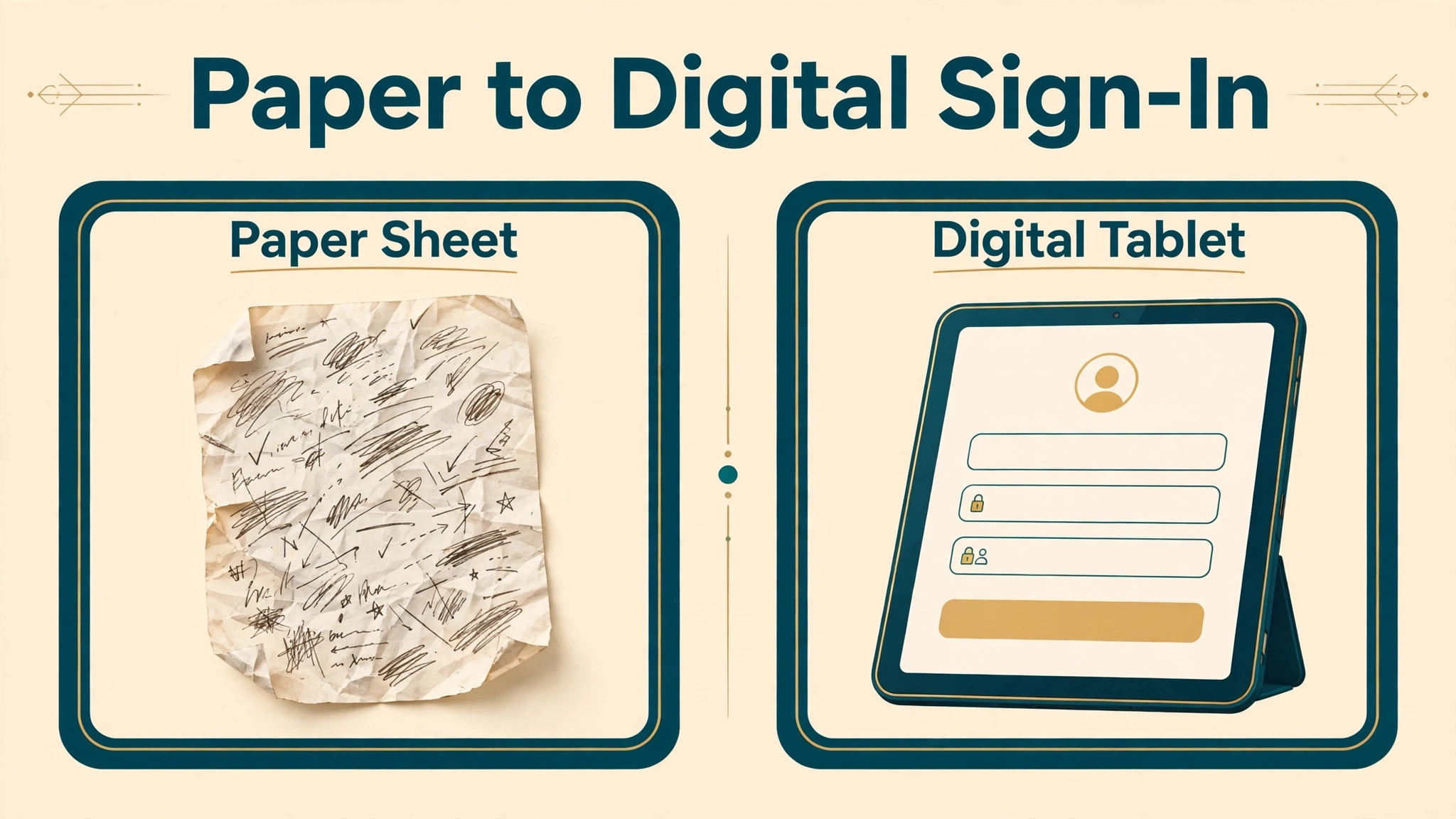
A paper sign in sheet collects names that nobody can read on Monday. A digital sign in form collects clean contact details that sit untouched in a spreadsheet until the moment has passed. An AI assisted follow up system collects the same details and acts on them within minutes, while the visitor still remembers the kitchen, the light, and the question they wanted to ask, which is why agents use AI for real estate open house follow up. That difference in timing is the whole business of open houses, because the agent who follows up first, with something specific about the home, gets the appointment, and the agent who follows up on Tuesday gets a reply and nothing else.
The system in this guide shows how to use AI for real estate open house follow up so that every visitor hears from you fast, gets scored honestly, and receives follow up matched to how ready they actually are.
Why Agents Should Use AI for Real Estate Open House Follow Up
Open houses produce the most expensive leads an agent will ever get for free. The agent paid with a weekend afternoon, with staging and marketing effort, and with the opportunity cost of every other activity that Saturday could have held. Visitors who walk through the door have already done what online leads have not, which is show up in person, spend time in a home, and reveal their taste by which rooms they linger in. Treating those visitors like cold internet leads, with a generic message days later, wastes the best signal in the business.
Speed is the first reason automation matters. Visitor interest peaks in the first hour after they leave, while the home is still vivid, and it fades fast once the weekend ends and work resumes. A thank you text sent within five minutes, naming one feature the visitor commented on, keeps the conversation warm while the agent is still at the open house. A first message sent on Monday arrives when the visitor has already toured two more homes and forgotten the first. Agents do not need to write that first message personally in real time.
They need a system that sends a good first message instantly and flags the visitor for a personal call within hours, and that division is exactly what AI assisted follow up does well.
The second reason is consistency across volume. A busy open house draws twenty to forty visitors, and no agent can write forty personal follow ups before Sunday night while also handling the rest of the weekend’s work. Without a system, the agent follows up with the five visitors they remember best and loses the other thirty five, including the quiet buyer who asked one sharp question about the roof and left early. With a system, every visitor gets the same fast first touch, the same useful property details, and a score that tells the agent who deserves a call first. The agent’s personal time then goes to the highest value conversations, not to the administrative task of remembering who came.
Capturing Visitors Properly at the Door
Follow up quality starts with capture quality, and capture quality starts with the offer at the door. Visitors give real contact details when they get something in return, like full property details, comparable sales, or a neighborhood guide sent to their phone. A sign in form that asks for a name and phone number with no reason to comply gets fake numbers and blank fields, because visitors have learned that sign in sheets exist for the agent, not for them. Frame the sign in as a service.
A short line at the door, like asking whether they would like the property details and comparable sales sent to their phone, turns compliance into a benefit, and the details that arrive by text prove the exchange worked.
The form itself should ask for little and validate much. Name, mobile number, and email cover the follow up channels. Two qualifying questions add the scoring data the system needs later, like whether the visitor currently rents or owns, and their ideal move timeframe. A third question about financing readiness, like whether they have spoken with a lender, helps the agent prioritize without turning the door into an interrogation. Every extra field lowers completion, so the form should take under thirty seconds.
Digital forms validate phone formats and email shapes in real time, which is why digital capture reports contact accuracy near ninety five percent while paper sheets hover near sixty percent, with the rest lost to handwriting and invented numbers.
The agent’s door behavior matters as much as the form. A short personal note taken during the visit, like which room the visitor loved or which concern they raised, becomes the personalization that makes the automated follow up feel human. Agents should log that note before the next visitor arrives, using a voice note or a quick tag in the sign in app, because a note written on Monday from memory will be generic. The note does not need to be long. “Loved the kitchen, worried about the stairs for a parent” is enough to write a follow up that no competitor can match, because no competitor was in that conversation.
Agents who use AI for real estate open house follow up well build the whole sequence around that door note, since it is the one detail no other agent can copy.
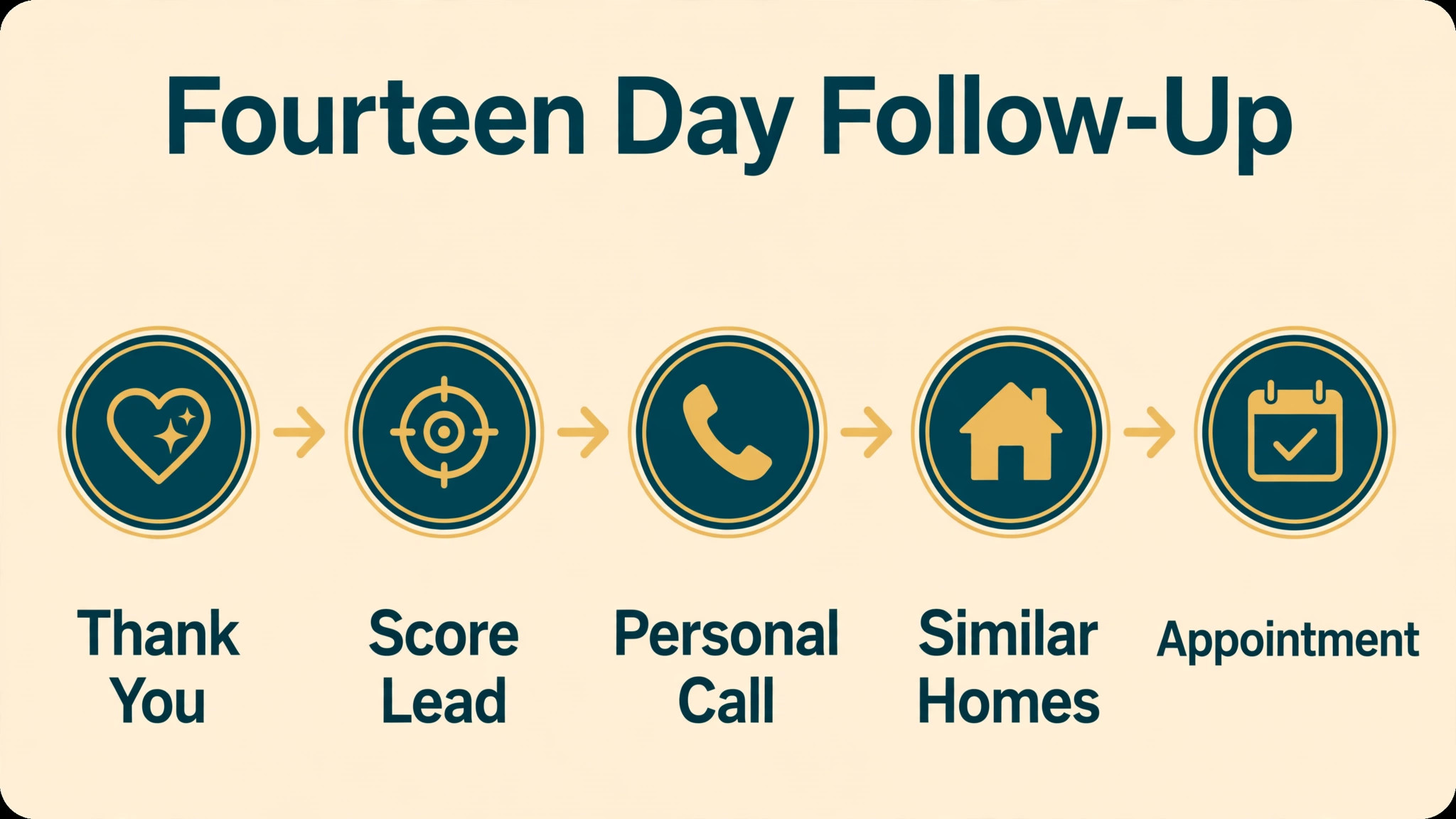
The Fourteen Day Follow Up Workflow
The workflow below runs automatically once a visitor signs in, with personal touches inserted at the moments that matter most. Automation carries the timing and the consistency. The agent carries the calls, the judgment, and the appointments. Neither side works without the other.
Day zero begins within five minutes of sign in, with a thank you text that names the property and offers the promised details. That message should come from the agent’s number or the team’s messaging line, not from an anonymous short code, because a reply to a real number starts a conversation while a reply to a short code starts a dead end. Within two hours, the agent or a team member makes a personal call to every visitor scored hot, which the scoring checklist in the next section defines.
The call has one goal, which is to learn what the visitor thought of the home and whether a showing of a similar property would help, not to pitch a listing presentation on the first call.
Day one brings an email with the property details, comparable sales, and two similar listings that match what the visitor said they wanted. Day three brings a short video message from the agent, recorded once per open house and personalized with the visitor’s name in the text that accompanies it. Video converts better than text alone, because the visitor sees a person rather than a system, and the effort of recording signals that the agent cares about this visitor specifically. Day seven brings a market update for the neighborhood, like new listings or a price change, which gives the visitor a reason to reply beyond politeness.
Day fourteen brings a direct question about timing, phrased as an offer of help, like asking whether the visitor would like a short list of homes that match their criteria for the coming week.
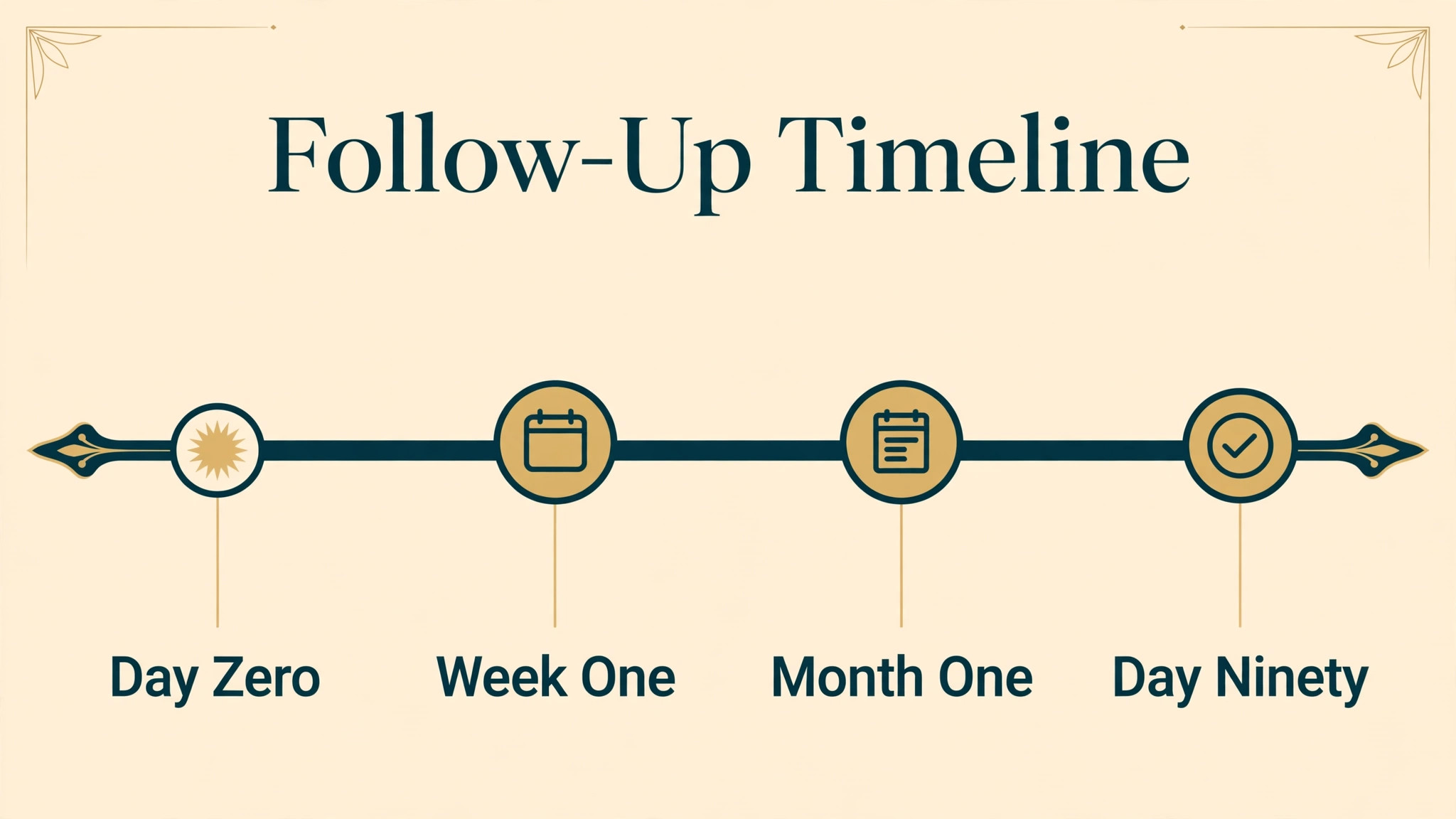
| Workflow day | Channel | Content | Agent action |
|---|---|---|---|
| Day zero, minutes | Text | Thank you plus property details | None, automated |
| Day zero, hours | Phone | Personal call to hot visitors | Call and log outcome |
| Day one | Details, comparables, similar homes | None, automated | |
| Day three | Video message | Personal note from the agent | Record once, send to all |
| Day seven | Neighborhood market update | None, automated | |
| Day fourteen | Text | Timing question and offer of list | Reply personally to answers |
| Day thirty | Monthly nurture content | None, automated | |
| Day ninety | Phone | Check in call to warm visitors | Call and re score |
After day fourteen, visitors split by score. Hot visitors stay on a weekly personal cadence until they buy, pause, or ask to stop. Warm visitors move to a monthly nurture sequence with market updates and new listings matched to their criteria. Cold visitors, meaning neighbors, curious browsers, and people with no timeframe, move to a quarterly touch, because they may buy in a year and they will remember the agent who stayed politely in touch without pestering them. The mistake is treating all three groups the same, which either annoys cold visitors with weekly calls or starves hot visitors with monthly emails. Scoring exists to prevent exactly that error.
The Lead Scoring Checklist
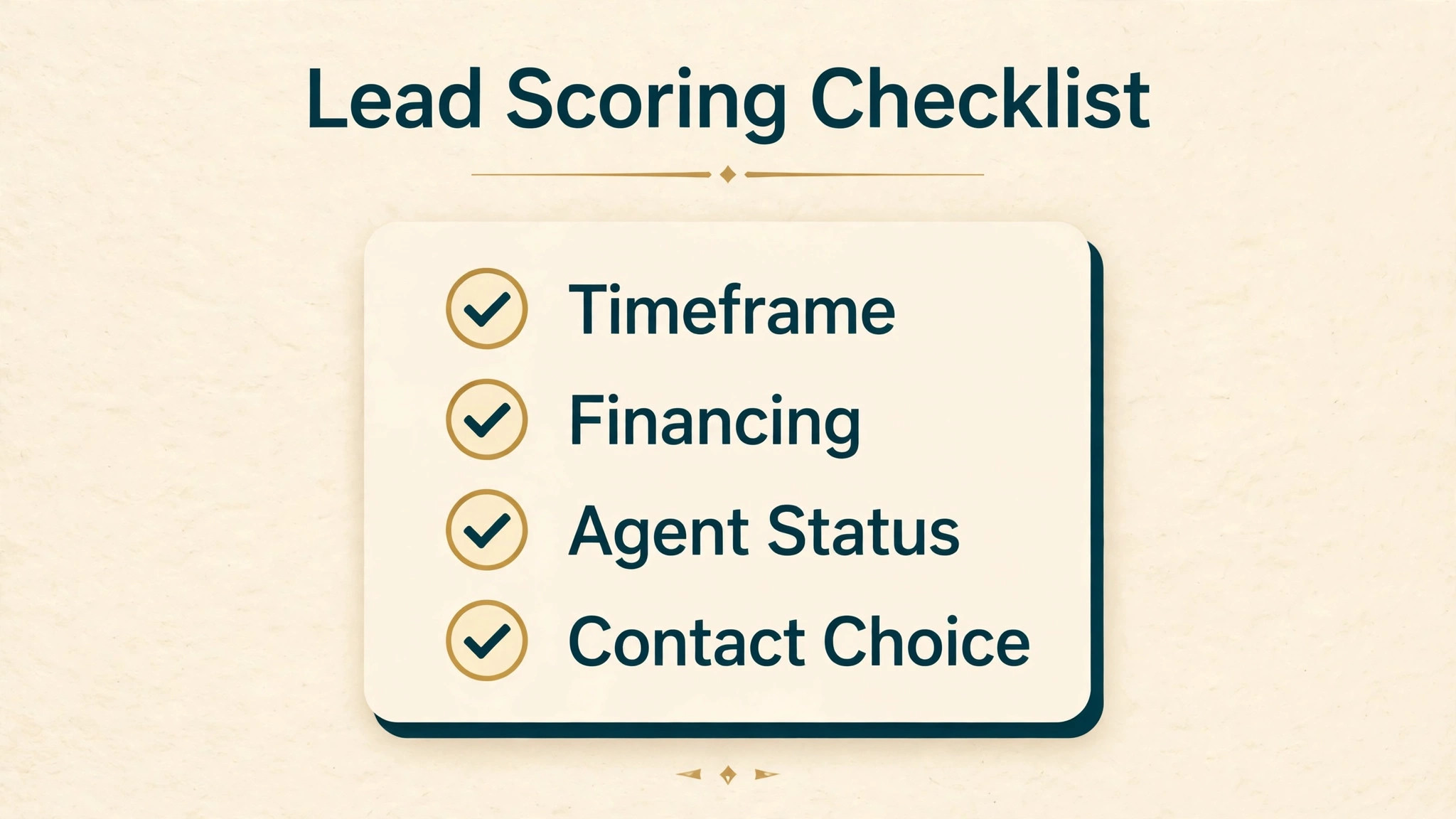
This checklist is the overview proof of this guide. Score every visitor within hours of the open house, using the answers they gave and the behavior they showed, and let the score decide the cadence, not the agent’s memory of who seemed friendly.
| Scoring signal | Hot points | Warm points | Cold points |
|---|---|---|---|
| Move timeframe | Under 3 months | 3 to 12 months | Over 12 months or none |
| Financing readiness | Pre approved | Spoken with lender | No lender contact |
| Current situation | Must move, lease ending | Considering a move | Just looking |
| Property fit | Wants this home or similar | Likes area, flexible | Wrong area or price |
| Engagement | Asked detailed questions | Toured fully, quiet | Brief walk through |
| Follow up response | Replied to first text | Opened email, no reply | No response to any touch |
| Showing request | Requested a showing | Open to a list | Declined further contact |
| Decision role | Buying decision maker | Deciding with partner | Browsing for someone else |
Score bands turn the table into action. Visitors with mostly hot signals get a call within two hours and a weekly cadence. Visitors with mostly warm signals get the fourteen day sequence and then monthly nurture. Visitors with mostly cold signals get the fourteen day sequence and then quarterly touches, unless a later behavior, like opening three emails or requesting a list, raises their score. Scores must update with behavior, because a cold visitor who suddenly requests a showing is hot, and a hot visitor who stops replying for sixty days needs a different conversation than a fresh hot lead.
Agents who use AI for real estate open house follow up with behavior based rescoring spend their calling time on visitors who are ready now, not on visitors who were ready three months ago.
One caution protects the whole system. Scoring is a prioritization tool, not a judgment about people. A neighbor who scores cold today may list their own home next year, and a browser who scores cold today may inherit money and buy in six months. Every visitor stays in the system with a respectful cadence, and no visitor is ever deleted for scoring low. The system sorts attention. It never sorts worth, and agents who keep that distinction maintain a reputation that brings referrals from the very visitors they once scored cold.
Five Tools That Carry Open House Follow Up Well
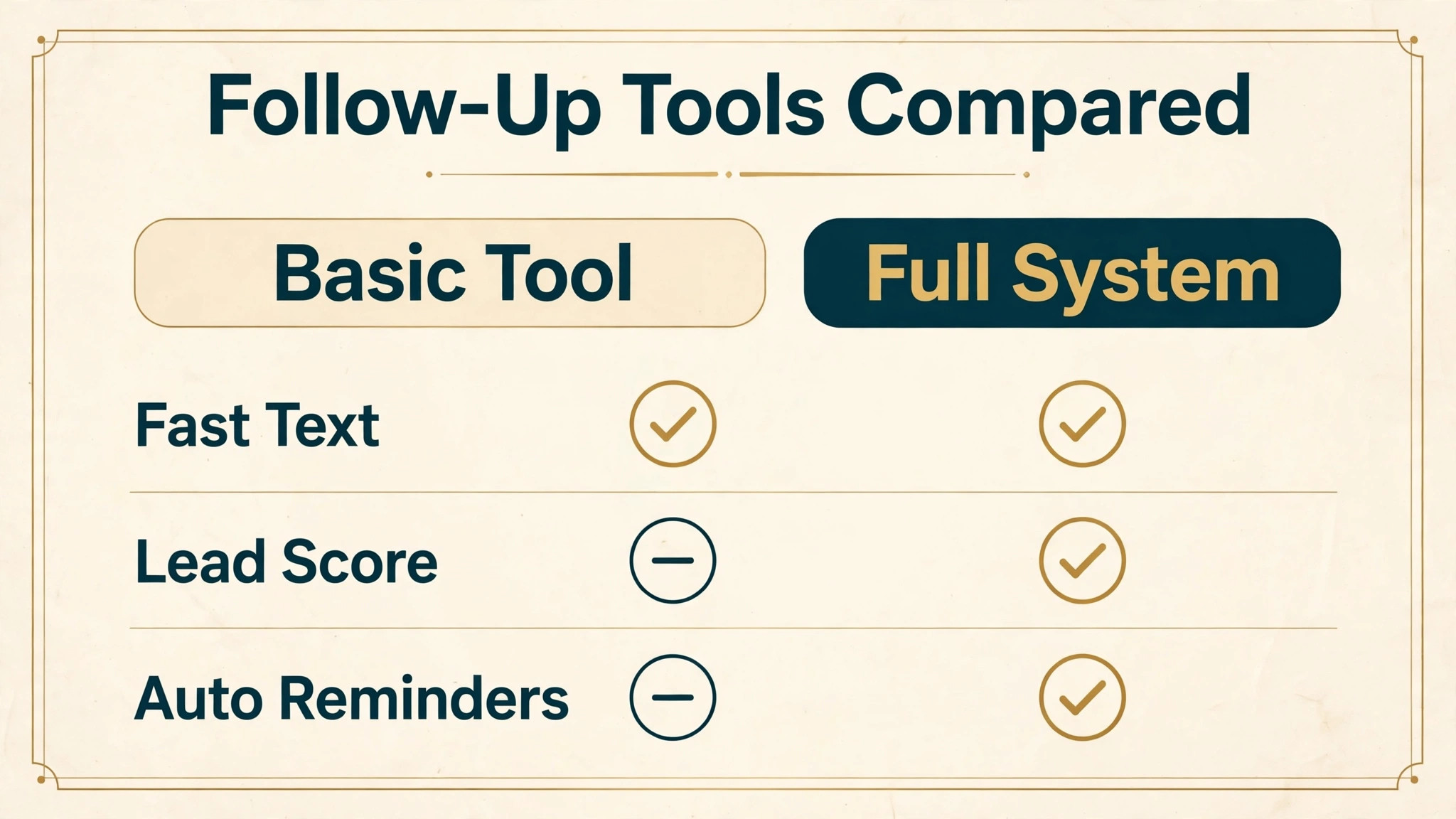
Follow Up Boss for Lead Conversion Focus
Follow Up Boss suits solo agents and small teams who want a sharp CRM built around follow up, routing, and pipeline tracking, with connections to more than two hundred lead providers. Its smart lists make the hot first calling order easy, its built in texting and dialer keep conversations in one record, and its open API supports custom builds. Reported pricing starts around 69 dollars per user per month on the Grow plan, with higher tiers for teams. Its limits matter for agents who also need a website or IDX search, which it does not provide natively, so agents who need those pieces pair it with a separate website tool.
For agents whose main problem is follow up discipline, it is the most focused choice in this group.
kvCORE for All in One Brokerage Platform
kvCORE, now branded BoldTrail, suits brokerages and growing teams that want a website, IDX search, CRM, and AI powered nurture in one platform. Its AI lead scoring and automated drip campaigns carry the fourteen day workflow without much manual setup, and its built in landing pages serve as digital sign in points. Reported pricing starts around 499 dollars a month, with setup fees reported for solo agents, which makes it expensive for a single agent but cost competitive at brokerage scale where the per agent cost drops sharply. Solo agents who already have a website and only need follow up will find it more platform than they need, while teams that want one system for everything will value the consolidation.
Curb Hero for Digital Sign In Capture
Curb Hero suits agents who want the door capture to feel fast and modern, with a tablet sign in that feeds visitors straight into the CRM. Its value is accuracy and speed at the moment of contact, since visitors type their own details and the record arrives clean, tagged by property and event. Pricing is subscription based and varies by plan, so agents should confirm current rates before committing. Curb Hero does not replace a CRM, and its best use is as the front door to Follow Up Boss or a similar system, where the clean capture becomes the clean follow up. Agents still running paper sheets should fix capture first, because no follow up system rescues illegible names.
Spacio for Open House Sign In and Analytics
Spacio suits agents and teams who run many open houses and want sign in, visitor analytics, and follow up triggers in one open house focused tool. Its event based records make it easy to compare which open houses produced the best visitors, and its integrations push sign ins into the CRM automatically. Pricing varies by team size and features, so agents should request a current quote. Like Curb Hero, Spacio is a capture and event tool rather than a full CRM, and its value shows up when the agent reviews event performance monthly and adjusts which homes, times, and marketing efforts produce visitors who actually convert.
ChatGPT for Personalized Follow Up Drafts
ChatGPT helps agents turn a short door note into a warm, specific follow up message in seconds, draft the neighborhood market update from bullet facts, and vary the fourteen day messages so no two visitors receive identical text. It works best when the agent feeds it the property, the visitor’s noted interest, and the desired next step, because generic prompts produce generic messages that visitors ignore. The agent must check every property fact, price, and date in a draft before sending, since drafting tools can invent plausible specifics.
Used inside that discipline, agents who use AI for real estate open house follow up in the drafting step send faster first messages that still sound like they came from the agent who met the visitor at the door.
Team Routing and Accountability
Teams lose open house leads in the handoff, not in the capture. A visitor who signs in at an agent’s open house but belongs to another team member’s pipeline, or a weekend lead that nobody owns on Monday, becomes a lost lead even when the system worked perfectly. The fix is a routing rule written before the open house, not negotiated after it. Common rules include round robin assignment for new visitors, ownership by the listing agent for visitors interested in that home, and pond rules where uncontacted visitors return to a shared pool after a set number of hours.
Whatever rule the team chooses, it must be visible in the CRM, so any member can see who owns each visitor and when the next action falls due.
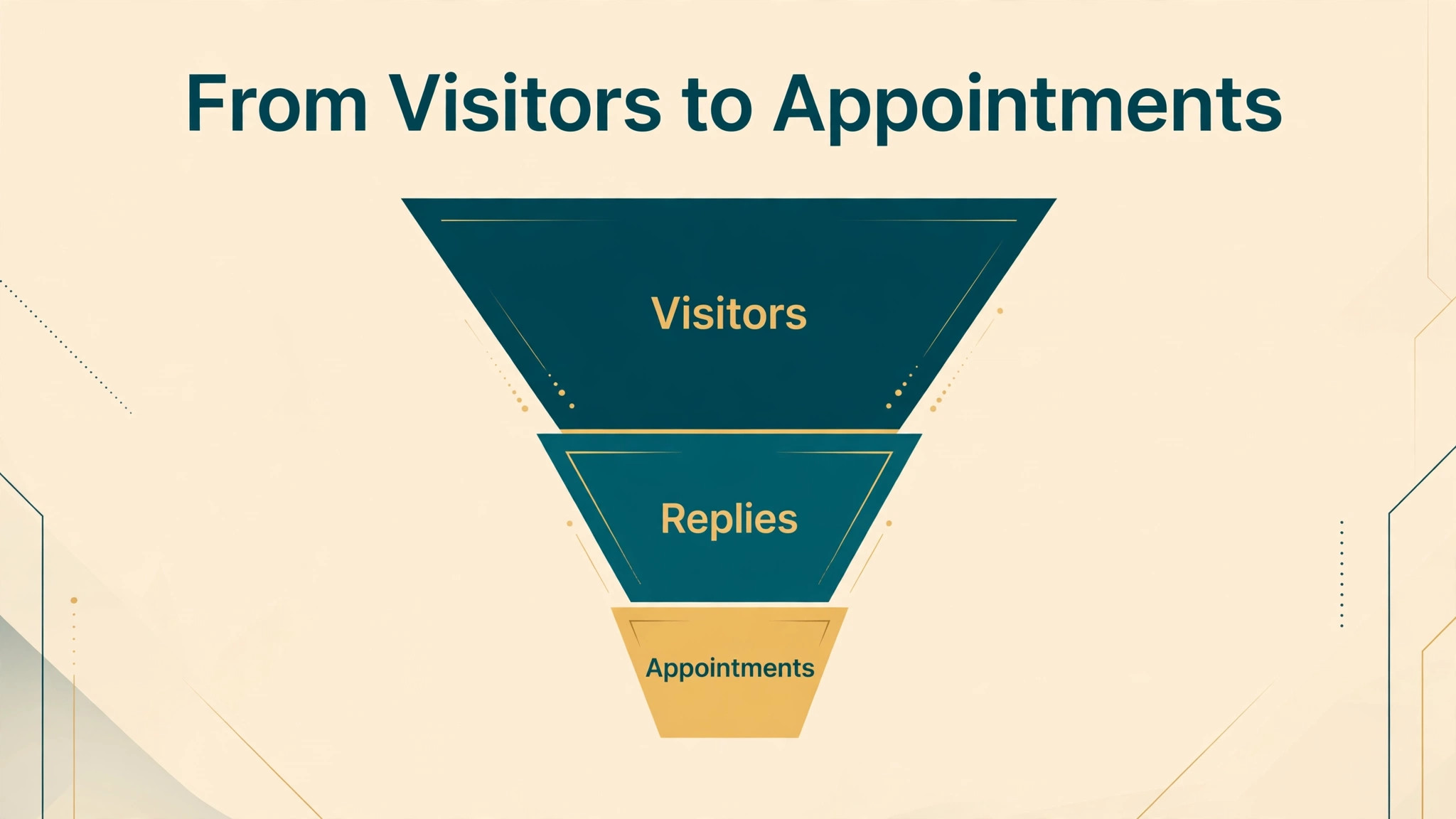
Accountability needs a weekly review, not just a dashboard. Once a week, the team lead reviews visitors from the past weekend, checking three numbers. How many visitors were contacted within two hours, how many hot visitors received a call, and how many appointments were booked. Those three numbers tell the team whether the system ran, and they expose the specific failure when it did not, whether capture, calling, or appointment setting broke down. Teams that review those numbers improve steadily, because the review turns a vague feeling that follow up slipped into a named step to fix. Teams that never review discover the failure months later, when the pipeline is empty and nobody knows why.
Writing Follow Up Messages That Get Replies
The message itself decides whether the workflow works, because a perfectly timed generic message still gets ignored. A reply worthy message has three parts, and none of them is a pitch. It names something specific from the visit, it offers something useful, and it asks one easy question. A message that says the kitchen renovation the visitor admired matches a new listing coming next week, attaches that listing, and asks whether a Saturday showing would help, gives the visitor three reasons to reply. A message that says thanks for coming and asks whether the visitor wants to buy a home gives none, because it asks for a decision the visitor is not ready to make.
Length matters as much as content. A first text should fit on a phone screen without scrolling, which means under forty words, while a first email can run longer because it carries details, comparables, and similar listings. The text earns the reply. The email earns the reading. Agents should write the text first, test it by reading it aloud, and cut any word that does not earn its place. Voice and video messages follow the same rule at a larger scale. A sixty second video that names the visitor, names the property, and offers one next step outperforms a three minute tour of the agent’s credentials, because the visitor cares about the home, not the agent’s biography.
Timing within the day matters too. Messages sent during the evening, when visitors are home and able to reply, outperform messages sent during work hours, when they pile up unread. Agents who use AI for real estate open house follow up should schedule the automated sequence for early evening delivery, while keeping the personal call for late afternoon or early evening, when the visitor is reachable and relaxed. A message sent at the wrong hour is not neutral. It trains the visitor to ignore the next one, and ignored messages are the slow death of a follow up system.
Agents who use AI for real estate open house follow up with message quality and timing treated as seriously as speed keep reply rates high across the whole fourteen day sequence.
Mistakes That Lose Open House Visitors
The most common mistake is the generic first message. A text that says thanks for coming, without naming the property or anything the visitor cared about, reads as automated and gets ignored. Personalization does not require a long message. One named feature or one answered question transforms the message from system output into a human touch. A second mistake is calling every visitor with the same pitch on day one. Cold visitors who receive a hard pitch feel hunted and opt out, while hot visitors who receive only an email feel ignored. The scoring checklist exists to prevent both errors, and agents should trust it even when it contradicts their gut feeling about a visitor.
A third mistake is stopping after two attempts. Follow up research consistently shows that most conversions need six to eight touches, yet most agents stop after one or two, usually because the silence feels like rejection. Silence usually means busy, not uninterested, and the fourteen day sequence exists to carry the agent through that silence without awkwardness. A fourth mistake is keeping visitors in one long undifferentiated list, so the agent’s Monday call list mixes hot buyers with neighbors and browsers, and the hot buyers wait while the agent works through names that will never convert. Score first, call in score order, and let the system hold everyone else.
Agents who use AI for real estate open house follow up with that discipline convert more visitors from the same open houses, without working more weekends.
More Reading on Stratilyze
Readers who run a client based business may also enjoy AI tools for freelance writing client management and AI tools for consulting business proposal writing, since both cover the same discipline of turning first contacts into retained clients and signed work. AI tools for fitness coaching client progress tracking is useful too, because its weekly check in rhythm shows how regular, scored touchpoints keep people engaged long after the first meeting.
Frequently Asked Questions
How fast should the first follow up message go out?
Within five minutes of sign in, by text, with the property details the visitor was promised. Speed matters because visitor interest peaks right after the visit and fades fast once the weekend ends. The first message can be automated, provided it names the property and offers something useful, while the personal call to hot visitors should happen within two hours. Agents who wait until Monday lose the window in which the visitor still remembers the home clearly and is ready to talk about next steps.
What should an agent do with visitors who give fake contact details?
Expect some, and do not chase them. Digital sign in with a clear value offer, like details sent to their phone, reduces fake details sharply compared with paper sheets, because visitors who want the details give real numbers. Visitors who still give fake details have opted out of follow up, and the agent should let them go without resentment. The system should flag undeliverable contacts automatically, so the agent’s call list stays clean and calling time goes to visitors who actually want to hear from the agent.
How many touches does it take to convert an open house visitor?
Most conversions need six to eight touches across channels, mixing text, email, video, and phone, spread over weeks rather than days. That number surprises agents who stop after two attempts, but it matches how buying decisions actually work, since visitors tour multiple homes, arrange financing, and consult partners before committing. The fourteen day workflow in this guide delivers the first six touches, and the monthly nurture sequence carries the rest, so the agent never has to remember to stay in touch. Persistence with value converts. Persistence with pressure does not.
Should every visitor get a phone call?
No, and calling everyone is one reason agents burn out on follow up. Hot visitors get a call within hours, because they are ready and waiting for a conversation. Warm visitors get the automated sequence plus a call when their behavior shows rising interest, like replying to a text or requesting a list. Cold visitors get the sequence and quarterly touches, with a call only if their behavior changes. Scoring protects the agent’s time and the visitor’s experience at once, because each group receives the attention level that matches its readiness.
Can AI follow up replace the agent’s personal calls?
No, and agents who try it learn why quickly. Automated messages carry timing, consistency, and useful details, but they cannot read hesitation in a voice, answer a sharp question about a roof, or judge whether a visitor is ready for a showing. The right division is clear. Software sends the first message, delivers the details, and keeps the cadence. The agent makes the calls, answers the hard questions, and books the appointments. Agents who use AI for real estate open house follow up as an assistant, not a replacement, get the speed of automation without losing the human judgment that closes deals.
How do you measure whether open house follow up works?
Track four numbers per open house, every time. Visitors captured, visitors contacted within two hours, appointments booked, and appointments that become clients. Those four numbers reveal where the system breaks, whether capture, speed, appointment setting, or closing needs work. Compare open houses over a quarter, not one weekend, because single events vary with weather and pricing. A system that steadily improves contact speed and appointment rate is working, even if one weekend looks quiet, and a system with high capture but low appointments needs better calls, not better capture.
The Appointment Is the Only Metric That Matters
Open houses do not pay the agent. Appointments do, and appointments come from follow up that is fast, specific, and matched to readiness. Set up digital capture with a real reason to sign in, run the fourteen day workflow without exception, score every visitor before Monday, and call in score order. When you use AI for real estate open house follow up as a disciplined weekly system rather than a weekend experiment, the appointment rate will tell you the truth about the system, which is the only review that counts.