

Most coaches lose money on their course platform in one of two ways. They either pay for an all in one suite they never fully use, or they pick a cheap starter plan and hand back a large share of every sale in transaction fees. That tension sits at the centre of this guide to the best online course platform for coaches, because a coach sells a result and a relationship, not just video lessons. The platform has to carry the teaching, the selling, the community and the client follow up without turning the coach into a full time technician.
A coaching business usually runs on one of three models, and each model needs a different platform shape. A cohort coach runs live groups with fixed start dates and homework between sessions. An evergreen coach sells a recorded program that students start any day. A membership coach charges monthly for ongoing lessons, calls and community access. A platform built for evergreen video will frustrate a cohort coach, and a community app will frustrate a coach who needs graded assignments and certificates.
Prices in this guide come from vendor pages and reputable comparison listings checked at writing time. Platforms change prices and fee rules often, so treat every figure as a starting point and confirm the current price on the vendor page before buying. Where a figure is reported rather than published, the text says so plainly.
Fifteen Tools on One Page
| Tool | Starting price | Best for |
|---|---|---|
| Teachable | $29 a month billed yearly | A first course at low volume |
| Thinkific | $40 a month billed yearly reported | Structured courses and assessments |
| Kajabi | $143 a month billed yearly | All in one marketing plus courses |
| Podia | $42 a month billed yearly | Simple selling plus email |
| LearnWorlds | $24 a month billed yearly | Interactive video lessons |
| Mighty Networks | $79 a month | Community plus courses |
| Circle | $89 a month billed yearly | Polished branded community |
| Skool | $99 a month | Gamified group programs |
| Uscreen | $49 a month | Video memberships and apps |
| LearnDash | $259 a year | WordPress course control |
| MemberPress | $199.50 a year first year reported | WordPress memberships plus coaching |
| Kartra | $52 a month billed yearly | Funnels plus courses |
| Systeme.io | Free plan | Budget funnels plus courses |
| CoachAccountable | $20 a month | Client management between sessions |
| Xperiencify | $99 a month reported | Gamified student motivation |
Read the table as a shortlist, not a ranking. The cheapest monthly price can become the most expensive choice once transaction fees are added, and the most expensive platform can be cheap per student once email, funnels and community are counted. This best online course platform for coaches comparison works through that trade off tool by tool, so the choice follows the business model rather than the headline price.
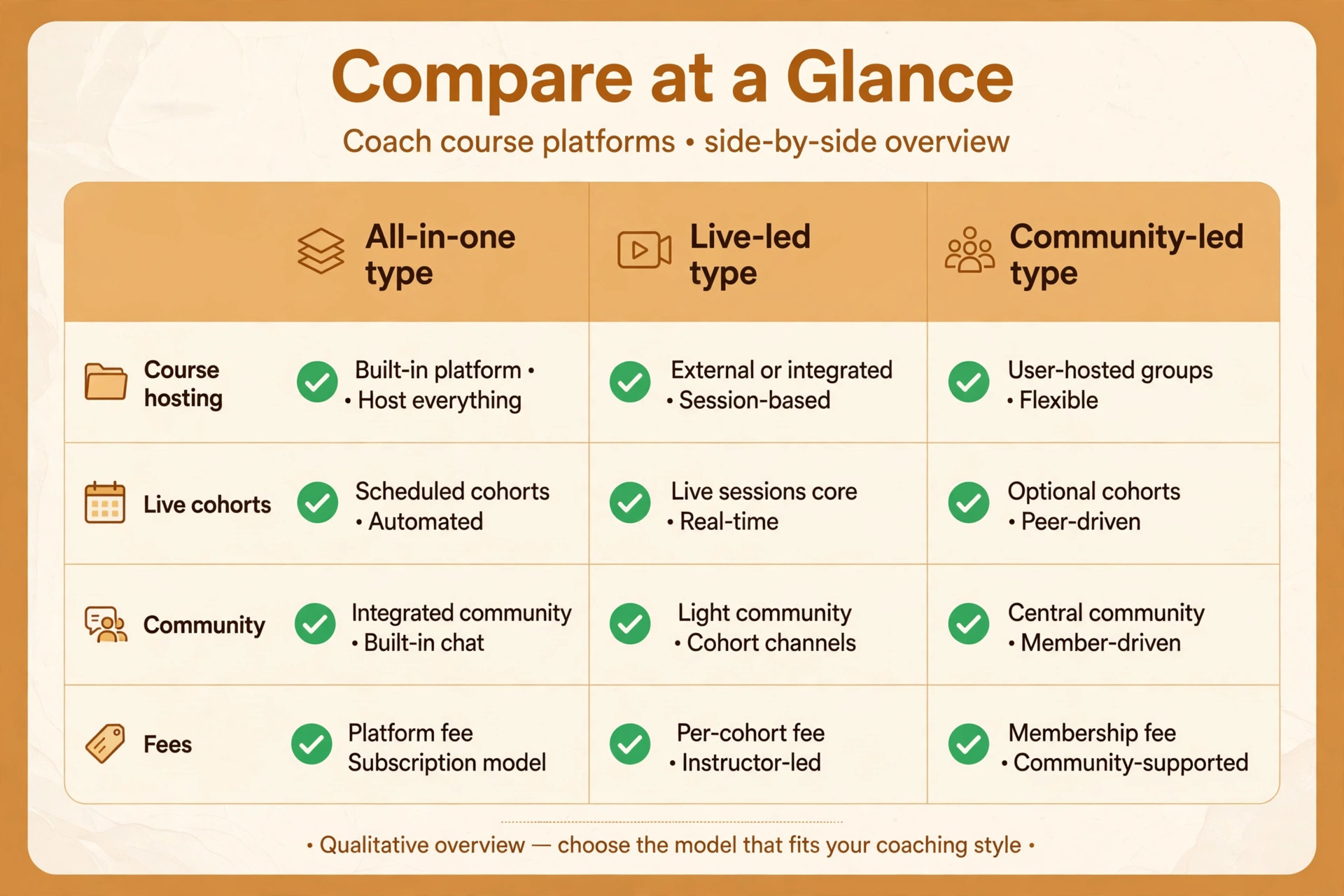
Why the Best Online Course Platform for Coaches Is Decided by Fees, Not Features
Transaction fees decide the real cost of a course platform more than the subscription does. Teachable Starter at $29 a month billed yearly takes 7.5 percent of every sale, so $10,000 of annual sales costs $750 in platform fees on top of card processing. Podia Mover at $42 a month billed yearly takes 5 percent, which is $500 on the same sales. LearnWorlds Starter takes $5 per paid enrolment, which punishes a low priced course far more than a premium one. A coach who sells a $49 mini course feels that $5 far more than a coach who sells a $997 program.
The crossover point is the number every coach should calculate before choosing. Take the price gap between two plans and divide it by the difference in fee rates, and the result is the monthly revenue where the dearer plan becomes cheaper. Teachable Starter stops paying for itself at roughly $533 a month in sales against Builder, because the $40 monthly saving is eaten by the 7.5 percent fee. Podia crosses at about $840 a month. A coach already past those numbers should skip the starter plan entirely, while a coach still validating an idea should take the cheap plan and upgrade on evidence, not hope.
Card processing sits on top of every platform fee in this guide. Stripe standard pricing is 2.9 percent plus 30 cents per sale in the United States, and no zero platform fee claim removes that cost. Some platforms waive their own cut only when the coach uses the platform payment rail, and routing to an outside gateway can bring a fee back. Check which rail the zero fee promise depends on, and check whether tax handling, Apple Pay and instalment plans are included on that rail before committing.
How to Choose Without Buying the Wrong Shape
Start with the delivery model, not the feature list. Write down whether students start together or alone, whether live sessions are central or optional, whether homework is graded, and whether clients need private messaging between sessions. A cohort program needs start dates, drip schedules and live session links in the course area. An evergreen program needs strong checkout, upsells and automated email. A membership needs recurring billing that survives failed cards and a community that stays active between lessons.
Then count the real stack cost, not just the platform subscription. A course only platform at $40 a month plus an email tool at $30 a month plus a community tool at $50 a month costs more than an all in one platform at $143 a month, and it adds three logins for students to manage. The reverse is also true. A coach who already runs email and community elsewhere should not pay twice for those features inside an all in one suite. List every tool the platform replaces, price each one, and compare totals, not headlines.
Finally, test the student experience end to end before launch. Buy the course as a test student on a phone, watch a lesson, submit homework, miss a payment and try to rejoin, and note every point of friction. A clunky checkout loses sales that no marketing can recover, while a smooth first lesson builds the trust that carries a student through week four. The platform that feels simplest to the student usually wins, even when its back office looks plainer than a rival.
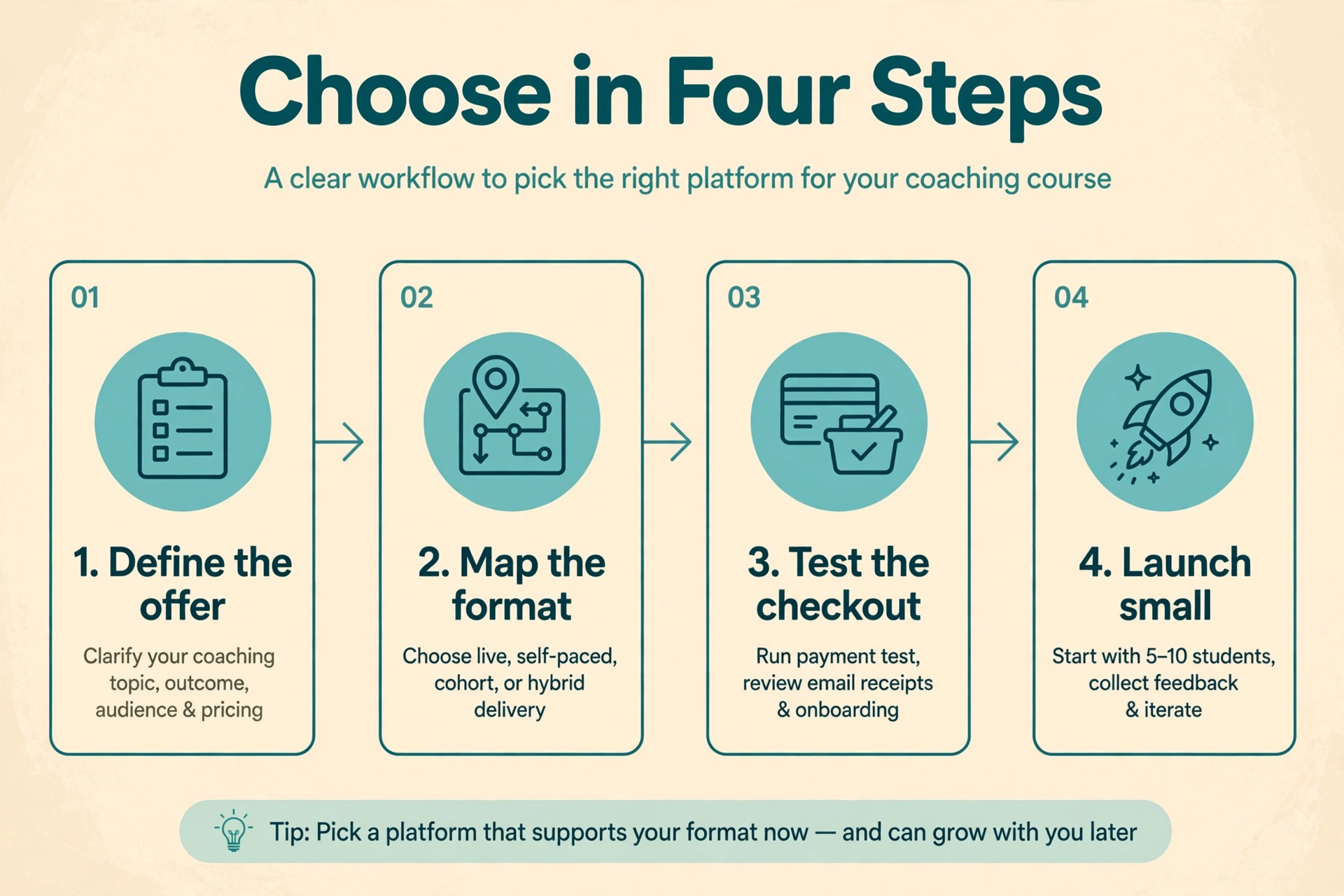
The Shortlist Checklist for Coaches
Use this checklist on every shortlisted platform before paying for a year up front.
– Confirm the transaction fee on the exact plan, and whether it depends on using the platform payment rail – Confirm the student limit, product limit and email subscriber limit on that plan – Check that cohort start dates, drip schedules or evergreen access match the delivery model – Check that live sessions, homework, quizzes and certificates are included, not promised on a higher tier – Check that failed payments, card updates and cancellations work without coach intervention – Check that the coach can export the student list and lesson content if the platform is left later – Run a test purchase on a phone and a test lesson before inviting real students
A platform that fails two or more checklist items is the wrong shape, however attractive its price looks. Coaches change platforms rarely, because migration disrupts paying students, so a careful week of testing beats a fast year of regret.
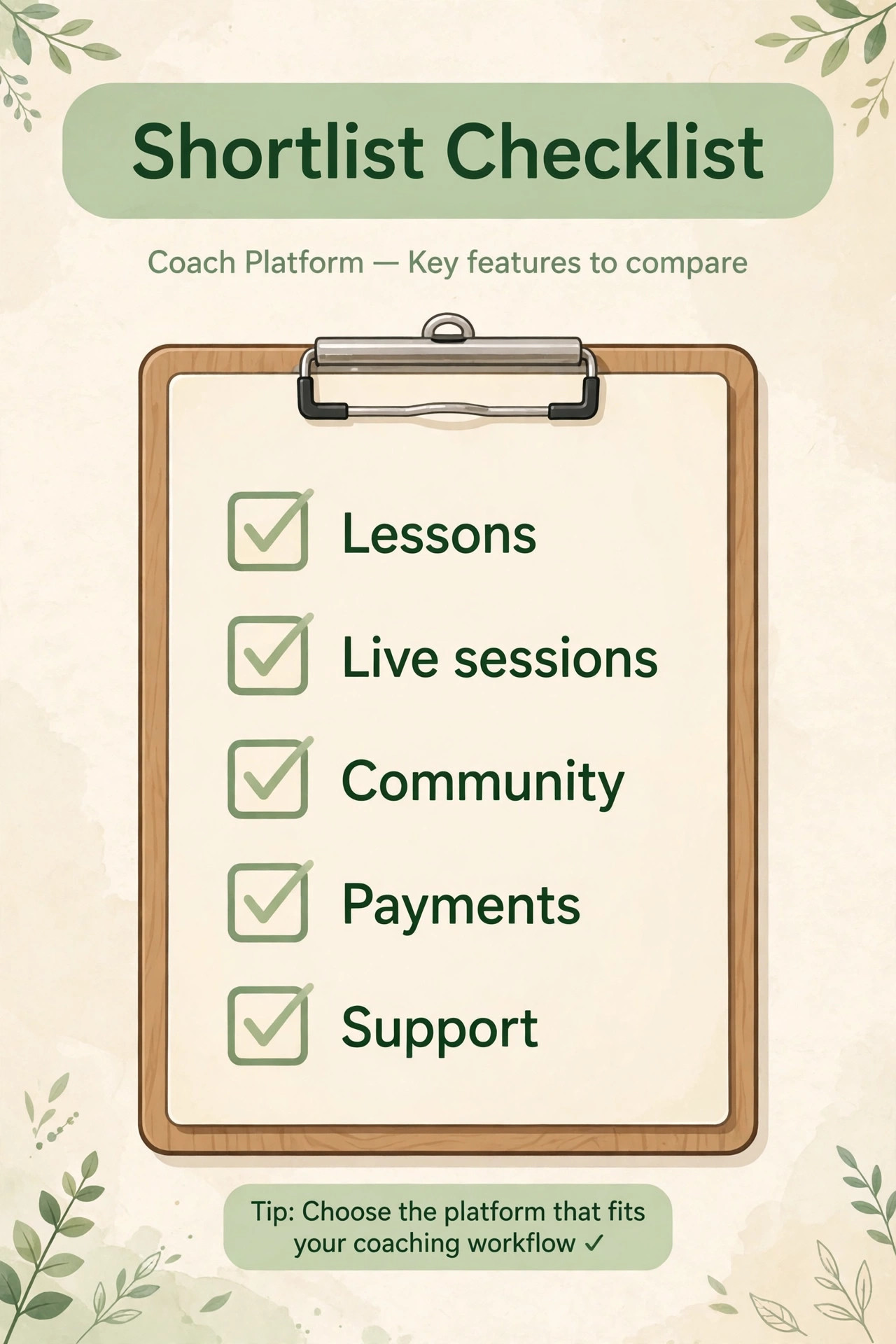
The Best Pick by Job for Coaches
| Coaching job | Best pick | Why it fits |
|---|---|---|
| Cohort course with live groups | Mighty Networks | Groups, events and courses share one member space |
| Evergreen recorded course | Thinkific | Structured lessons and assessments without community bloat |
| Monthly membership | Circle | Polished community with courses and events inside |
| Budget first course | Systeme.io | Free start with funnels and courses included |
| Client work between sessions | CoachAccountable | Scheduling, notes and worksheets around the course |
The table follows the job, not the brand. A coach running a six week live cohort needs group energy and session links more than a beautiful lesson player. A coach selling a recorded program needs checkout and completion tracking more than a feed. This best online course platform for coaches guide returns to that job test in every tool section below, because the wrong shape costs more in lost students than any monthly saving.
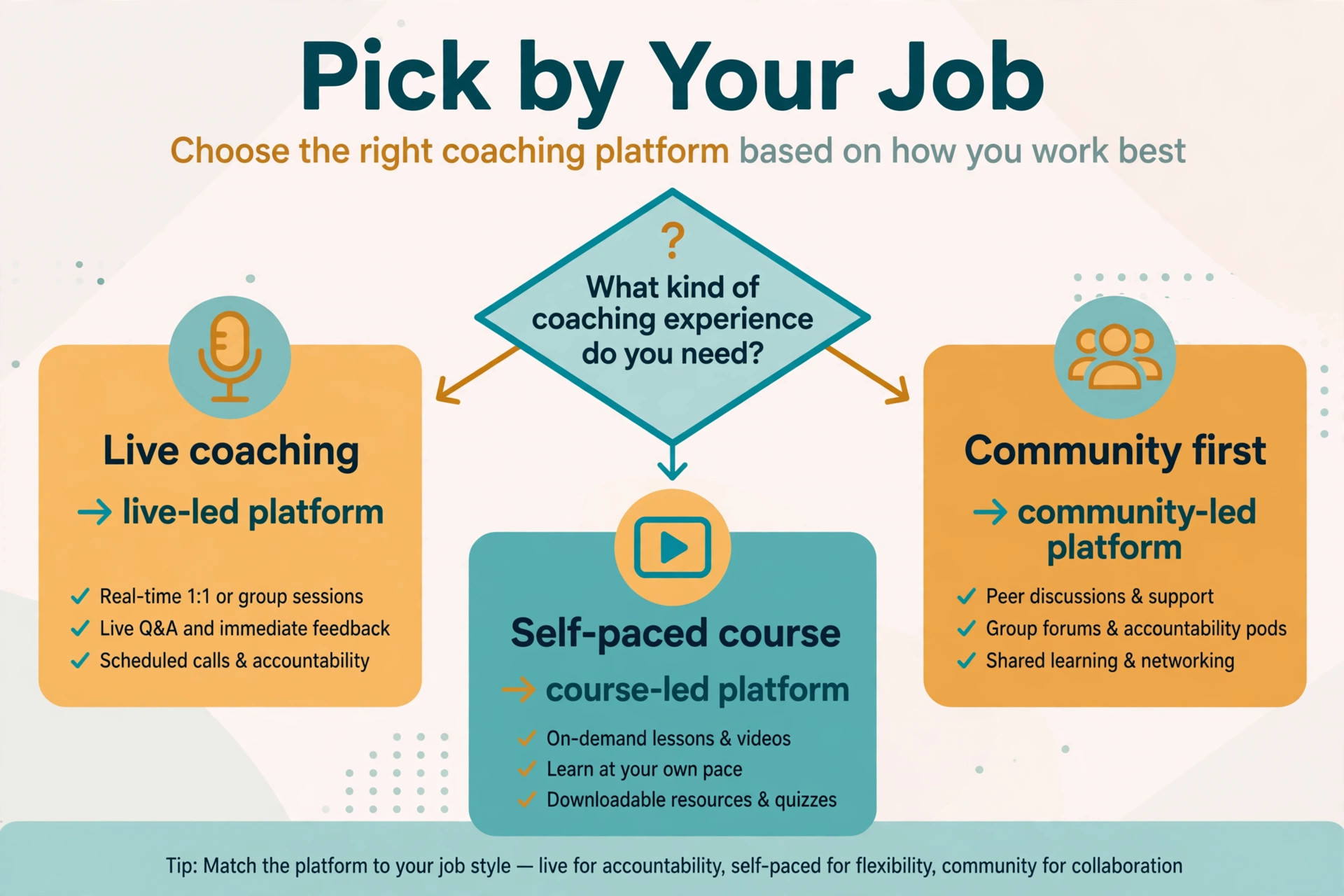
Fifteen Tools in Detail
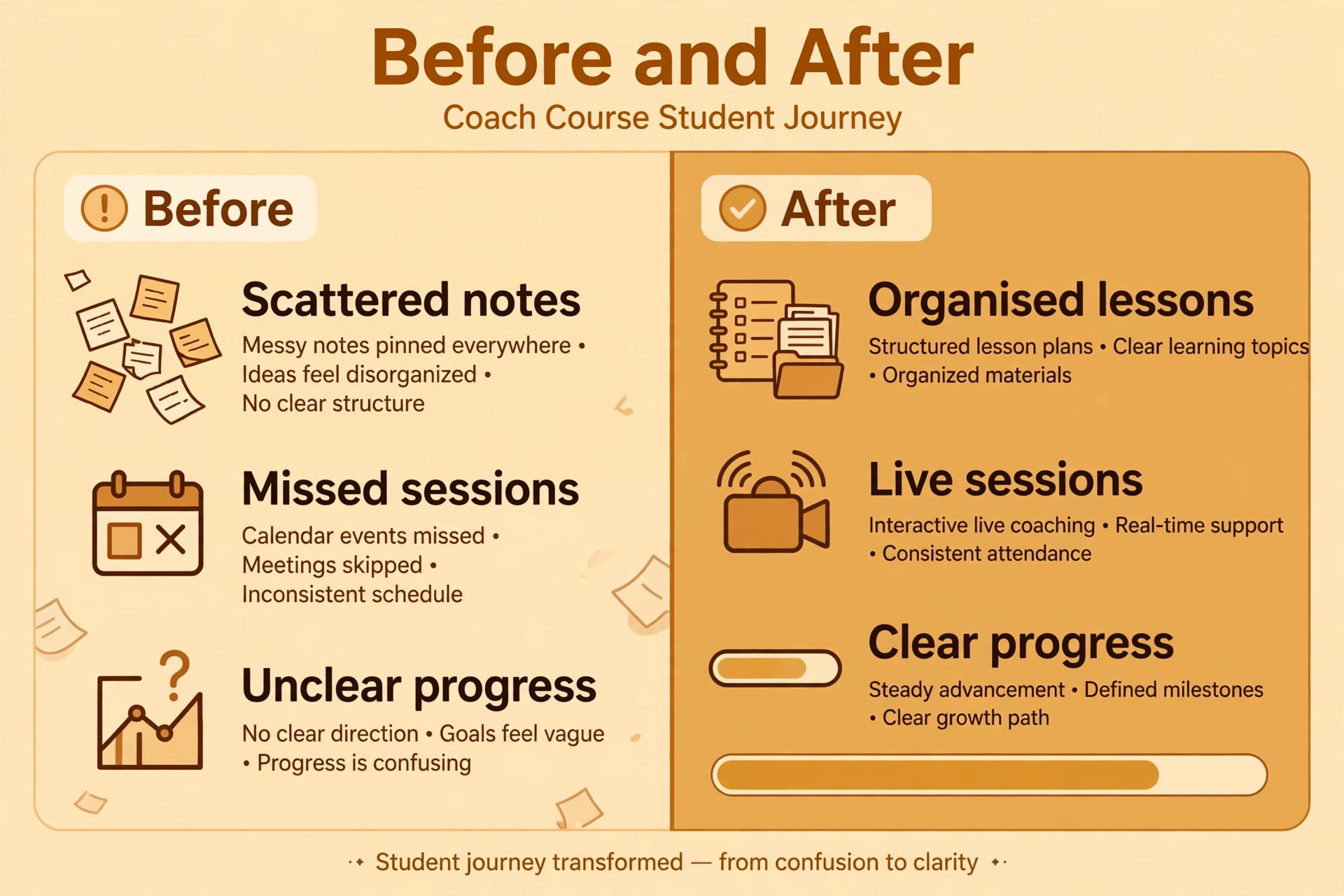
Teachable
Teachable is the pick for a coach validating a first course at low volume. Starter costs $29 a month billed yearly and takes 7.5 percent of every sale, while Builder costs $69 a month billed yearly with no platform fee. Starter caps the coach at five products, so it suits one flagship course plus a small offer, not a full catalogue.
The strength is speed, with a simple builder that gets a course live in days. The limit is the fee crossover and the thin marketing toolset, since email beyond basics needs an outside tool. Choose Teachable to test demand cheaply. Skip it once monthly sales pass roughly $533, where Builder or a rival becomes cheaper.
Thinkific
Thinkific is the pick for coaches who teach structured material with assessments. Basic is reported at $40 a month billed yearly on some listings and $54 a month on monthly billing, so check the vendor page for the current figure. Its course builder handles lessons, quizzes, assignments and certificates with more depth than most rivals at the price.
The strength is learning design, with unlimited courses on paid plans and live lessons on higher tiers. The limit is marketing, since email is basic and funnels need outside tools. Choose Thinkific for a curriculum heavy program. Skip it if the business depends on funnels and email inside one login.
Kajabi
Kajabi is the pick for a coach who wants marketing, courses, community and email in one login. Basic costs $143 a month billed yearly and takes no platform fee on Kajabi Payments, while monthly billing is $179. It covers funnels, email, podcasts, coaching sessions and community alongside courses, which replaces several subscriptions at once.
The strength is the single stack, with one contact record driving pages, email and course access. The limit is price and course depth, since the lesson player is simpler than Thinkific or LearnWorlds. Choose Kajabi when marketing drives revenue. Skip it for a single low priced course that cannot carry a $143 monthly bill.
Podia
Podia is the pick for a coach who wants simple selling with email included. Mover costs $42 a month billed yearly with a 5 percent transaction fee, while Shaker costs $84 a month billed yearly with no platform fee. It sells courses, memberships, downloads and coaching sessions from one storefront, with full email marketing on Shaker.
The strength is simplicity and the email tool, which removes one subscription from the stack. The limit is the subscriber cap, since Mover allows only 100 email subscribers and Shaker allows 500. Choose Podia for a small list and a simple offer. Skip it once the email list grows past the plan cap.
LearnWorlds
LearnWorlds is the pick for coaches who teach through interactive video. Starter costs $24 a month billed yearly with a $5 fee per paid enrolment, while Pro Trainer costs $79 a month billed yearly with no platform fee on most listings. It offers interactive video, SCORM support and a branded site builder aimed at serious course businesses.
The strength is the learning experience, with video interactions and assessments that suit skills training. The limit is the Starter fee, which makes low priced courses expensive per sale. Choose LearnWorlds for video led teaching at volume. Skip it for a cheap first course, where the per enrolment fee eats the margin.
Mighty Networks
Mighty Networks is the pick for cohort coaches who need community and courses together. Launch costs $79 a month with a 2 percent transaction fee, Scale costs $179 a month with a 1 percent fee, and Growth costs $354 a month with a 0.5 percent fee. Every plan includes the Mighty Networks mobile app, while a fully branded app needs Mighty Pro at a custom price.
The strength is member energy, with feeds, events, live streaming and courses in one space. The limit is course depth, since assessments and certificates are thinner than on Thinkific. Choose Mighty Networks for a live group program. Skip it for a pure evergreen course that needs no community at all.
Circle
Circle is the pick for a coach who wants a polished branded community with courses inside. Professional costs $89 a month billed yearly with a 2 percent transaction fee, Business costs $199 a month with a 1 percent fee, and a branded app needs Circle Plus at a custom price. Members post, chat, take courses and attend events without leaving one space.
The strength is design and organisation, with spaces that keep cohorts, resources and events tidy. The limit is the fee ladder and the lack of deep assessment tools. Choose Circle for a premium membership feel. Skip it if the program is assessment heavy or the budget cannot carry the monthly fee plus the transaction cut.
Skool
Skool is the pick for a coach who wants a simple gamified group program. Hobby costs $9 a month with a 10 percent transaction fee, while Pro costs $99 a month with a 2.9 percent plus 30 cent fee on smaller sales. It combines a community feed, a classroom and a calendar with levels and leaderboards that reward participation.
The strength is simplicity and momentum, since members see progress and activity in one feed. The limit is depth, with no serious email tool and basic course features. Choose Skool for a lively group that learns by doing together. Skip it for a curriculum heavy course that needs quizzes, certificates and drip control.
Uscreen
Uscreen is the pick for a coach whose program is mainly video and needs apps. Starter costs $49 a month on monthly billing, while Growth is reported at $149 a month billed yearly. It bundles video hosting, memberships, community and TV apps, which suits fitness, dance and skills coaches with large video libraries.
The strength is video delivery across web, mobile and TV, with monetisation built around subscriptions. The limit is price once apps are added, since a fully branded app sits on a higher tier. Choose Uscreen for a video membership business. Skip it for a text and worksheet heavy coaching program that needs little video.
LearnDash
LearnDash is the pick for a coach who already runs WordPress and wants full control. Essentials costs $259 a year and includes courses, quizzes, certificates and memberships, with no transaction fee beyond card processing. Pro costs $399 a year and Elite costs $599 a year, adding reporting, groups and front end course creation.
The strength is ownership, since the coach controls the site, the data and the checkout. The limit is maintenance, since hosting, updates, video storage and security become the coach job. Choose LearnDash for a WordPress site with a long term course catalogue. Skip it if the coach wants a hosted platform with support handling the technical work.
MemberPress
MemberPress is the pick for a coach who sells memberships and coaching from WordPress. Launch is reported from $199.50 a year in year one with a 4.9 percent fee, while Growth is reported from $349.50 a year with no fee and adds courses, CoachKit coaching tools and community. Scale adds real time messaging at a higher annual price.
The strength is the coaching bundle, with courses, community and client coaching tools in one WordPress plugin. The limit is the WordPress workload and the fee on the entry plan. Choose MemberPress for a membership plus coaching offer on WordPress. Skip it for a standalone course with no membership or coaching element.
Kartra
Kartra is the pick for a coach whose revenue comes from funnels and email automation. Essentials costs $52 a month billed yearly with a 5 percent transaction fee, Starter costs $99 a month billed yearly with no fee, and Growth costs $189 a month billed yearly. It combines pages, checkout, email, SMS, calendars and affiliate management in one database.
The strength is the marketing engine, with order bumps, upsells, subscriptions and behaviour based tagging. The limit is course depth, since quizzes arrive only on Growth and certificates are absent. Choose Kartra when funnels sell the coaching. Skip it when the course itself is the product and needs strong assessment tools.
Systeme.io
Systeme.io is the pick for a coach on a tight budget who still needs funnels. The free plan covers courses with limits, Startup costs $17 a month, Webinar costs $47 a month, and Unlimited costs $97 a month. Published guides report no platform transaction fee on any plan, so the coach pays only card processing, but check the vendor page for current limits.
The strength is price and breadth, with funnels, email, courses and memberships in one low cost login. The limit is client management, since it is not a coaching CRM and lacks session notes and accountability tracking. Choose Systeme.io to launch cheaply. Skip it for a large one to one practice that needs client records.
CoachAccountable
CoachAccountable is the pick for a coach whose real product is accountability between sessions. Pricing runs by active clients, from $20 a month for two clients through $40 for five, $70 for ten and $120 for twenty, with every plan carrying the full system. It covers scheduling, invoicing through the coach payment account, agreements, worksheets, session notes and a branded client portal.
The strength is the client record, which keeps every session, task and payment in one place. The limit is that it is not a website or a full course platform, so most coaches pair it with a site or a course tool. Choose CoachAccountable for one to one and small group coaching. Skip it as a standalone course platform for a large evergreen catalogue.
Xperiencify
Xperiencify is the pick for a coach who wants gamification at the centre of the student experience. Growth is reported at $99 a month for ten published courses and 1,000 active monthly students, Pro at $199 a month and Platinum at $299 a month, with no platform transaction fee reported. Students earn experience points, badges and celebrations as they complete lessons.
The strength is motivation, since game mechanics push students through long programs that often stall. The limit is marketing, with no broadcast email or sequence builder, so an outside email tool is needed. Choose Xperiencify for a program where completion is the bottleneck. Skip it for a formal training offer where game mechanics would feel off brand.
Mistakes That Cost Coaches Students and Sales
The first mistake is choosing on monthly price alone and ignoring the transaction fee. A coach who sells $2,000 a month on a 7.5 percent fee plan pays $150 a month in fees, which turns a $29 subscription into a $179 real cost. Run the crossover maths at current sales and at the sales target for six months ahead, and pick the plan that wins at the target, not at today volume.
The second mistake is building the course before testing the offer. A coach who records forty lessons before selling anything risks months of work on a program nobody wants. Sell a small cohort or a founding round first, teach it live, record the sessions, and turn the proven material into the evergreen course. The platform choice matters less when the offer is proven.
The third mistake is splitting the student experience across too many tools. A student who buys on one site, watches on a second, joins community on a third and books calls on a fourth will drop out at the seams. Every extra login is a chance to lose a student. Keep buying, learning, community and booking as close together as the budget allows.
The fourth mistake is ignoring failed payments in a membership. A card that expires quietly cancels a member who wanted to stay, and a coach who notices a month later has lost both revenue and trust. Pick a platform that retries failed cards, alerts the member and lets the member update payment details without contacting the coach.
A Sensible Rollout Plan for a Coaching Course
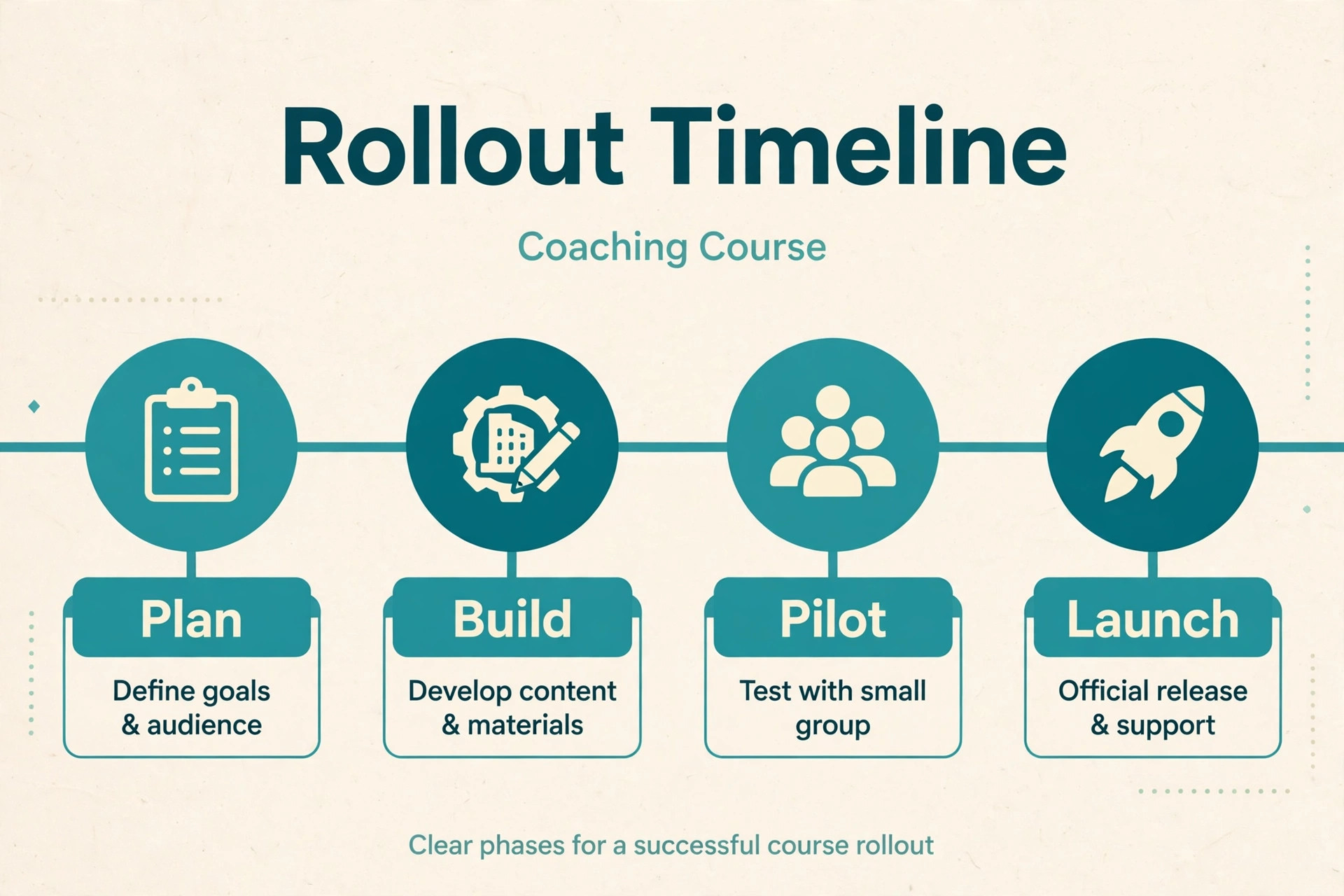
Start with a founding cohort on the chosen platform, not a full catalogue. Sell twenty to thirty places, teach the program live over four to six weeks, and collect completion data, questions and testimonials. That first cohort is the safest test in a best online course platform for coaches rollout, because it proves the offer, the pricing and the platform before the coach invests in recorded lessons.
Next, turn the live material into the evergreen version. Edit session recordings into lessons, add worksheets and quizzes, set the drip schedule, and write the email sequence that supports a student who starts alone. Keep the live cohort running alongside the evergreen version, since the two models serve different buyers and different price points.
Then build the membership layer only if retention supports it. A monthly community needs fresh content, regular live sessions and active moderation, and a quiet membership damages the brand more than no membership at all. Add the membership once the evergreen course produces steady buyers who ask for ongoing access.
Our Closing Take on the Coaching Shortlist
For most coaches, the smart path is Thinkific or Podia for a structured evergreen course, Mighty Networks or Circle for a cohort or membership, and Kajabi once marketing volume justifies one stack. Systeme.io is the honest budget start, and CoachAccountable is the right companion for any coach whose income depends on one to one work. That verdict is the centre of this best online course platform for coaches guide, and it follows the job test rather than the loudest marketing.
Whatever the choice, judge it after one cohort or ninety days on three numbers. The share of students who finish the course, the share of buyers who come from email rather than ads, and the net revenue per student after platform fees and processing. Those numbers show whether the best online course platform for coaches you chose is actually working. If those three numbers improve, the platform is working. If they do not, the problem is the offer or the teaching, and no new platform will fix a course students do not finish.
More Reading on Stratilyze
For a related coaching comparison, read coaching platform software for life coaches and AI tools for course creators. For a migration guide, see migrate Teachable to Thinkific for course creators.
Frequently Asked Questions
What is the cheapest course platform for a coach starting out
Systeme.io is the cheapest starting point in this guide, because its free plan covers courses with limits and Startup costs $17 a month with no reported platform transaction fee. Teachable Starter at $29 a month billed yearly is also cheap upfront, but its 7.5 percent fee makes it dearer once sales grow, so compare total cost at expected sales rather than the subscription alone.
Should a coach use Kajabi or Thinkific
Choose Kajabi if marketing, email, funnels and community must live in one login and the budget supports $143 a month billed yearly. Choose Thinkific if the course itself is the priority and the coach needs stronger lessons, quizzes and assessments. A coach who already runs email elsewhere usually gets better value from Thinkific plus the existing email tool.
Do course platforms charge a fee on every sale
Many do on entry plans, and the fee is separate from card processing. Teachable Starter takes 7.5 percent, Podia Mover takes 5 percent, and LearnWorlds Starter takes $5 per paid enrolment, while higher plans on the same platforms usually remove the fee. Always check the fee on the exact plan and whether it depends on using the platform payment rail.
Can a coach run cohorts and evergreen courses on one platform
Yes, but the platform must support both start date cohorts and self paced access without workarounds. Mighty Networks and Circle handle cohorts well through groups and events, while Thinkific and LearnWorlds handle evergreen structure well through drip schedules. A coach running both models should test cohort enrolment and evergreen enrolment side by side before committing.
Is WordPress better than a hosted course platform for coaches
WordPress with LearnDash or MemberPress gives full control over the site, data and checkout, and no platform transaction fee beyond card processing. A hosted platform removes maintenance, updates and security work but adds a monthly fee and platform rules. Coaches who enjoy technical control suit WordPress, while coaches who want support to handle the platform suit a hosted tool.
How many courses should a coach launch with
One strong flagship course beats five thin courses. A single program with clear outcomes, real student results and a proven price gives the coach testimonials, completion data and a list to sell the next offer to. Add a second course only when the first one sells steadily and students ask for the next step.