

A prospect says the price is too high, and the room goes quiet. Your first instinct may be to explain, to justify, or to cut the price just enough to keep the deal alive. That instinct is understandable, and it is also the fastest way to train buyers to push harder next time. Learning how to handle a price objection small business owners face every week starts with a different move. Pause, listen fully, and find out what the buyer actually means before you answer the number.
Most price objections are not a verdict on your price. They are a signal that something is still unclear, unproven, or unaffordable in the buyer’s current frame. The buyer may not see the return, may be comparing you with a cheaper option that does less, may need approval from someone else, or may simply be testing whether a discount is available. Each of those situations calls for a different response. A discount answers only one of them, and it answers that one badly, because it confirms the suspicion that the first price was padded.
This guide gives you a repeatable workflow for the moment an objection lands, and it shows how to handle a price objection small business owners can use without losing margin or goodwill. You will learn how to diagnose the real concern in under a minute, how to reframe value in the buyer’s own numbers, how to offer options without giving margin away, and how to walk away cleanly when the fit is wrong. The scripts are written for a small service business, where the owner is often the person selling, delivering, and protecting the margin at the same time.
What a Price Objection Usually Means
A price objection is rarely one thing. It is a short sentence that hides a longer concern, and your job is to uncover that concern before you negotiate. If you answer the sentence instead of the concern, you will argue about a number while the buyer worries about risk, timing, or trust. The table below separates the five most common meanings, the clue that gives each one away, and the first response that fits.
| What the buyer says | What it often means | Your first move |
|---|---|---|
| That is more than we expected | The value was never made concrete | Ask what result they expected for that spend |
| We can get it cheaper elsewhere | They are comparing different scopes | Compare deliverables line by line, not totals |
| We do not have the budget right now | Timing or approval is the real blocker | Ask what would need to change, and by when |
| Can you do any better on price | They are testing for a discount | Hold the price and change the scope or terms |
| We need to think about it | Risk or a missing decision maker is in play | Name the decision and agree a next step |
Notice what none of these responses do. None of them defend the price in the abstract, and none of them offer a discount as an opening move. Each one turns the conversation back to the buyer’s outcome, comparison, or decision process. That is the discipline that keeps a small business profitable. A small firm feels every point of margin in the next payroll run, in the next slow month, and in the quality of work it can afford to deliver.
Diagnosis also protects the relationship, and it sits at the centre of how to handle a price objection small business owners face with confidence. A buyer who feels heard will often tell you the real constraint if you give them a safe way to say it. A buyer who feels handled will go quiet, shop your number around, and return only if no one else is cheaper. The difference is usually a single question asked with genuine curiosity rather than a rehearsed rebuttal.
How to Handle a Price Objection Small Business Owners Can Repeat
Use the same seven steps every time. The steps are short on purpose. A long defence sounds like panic.
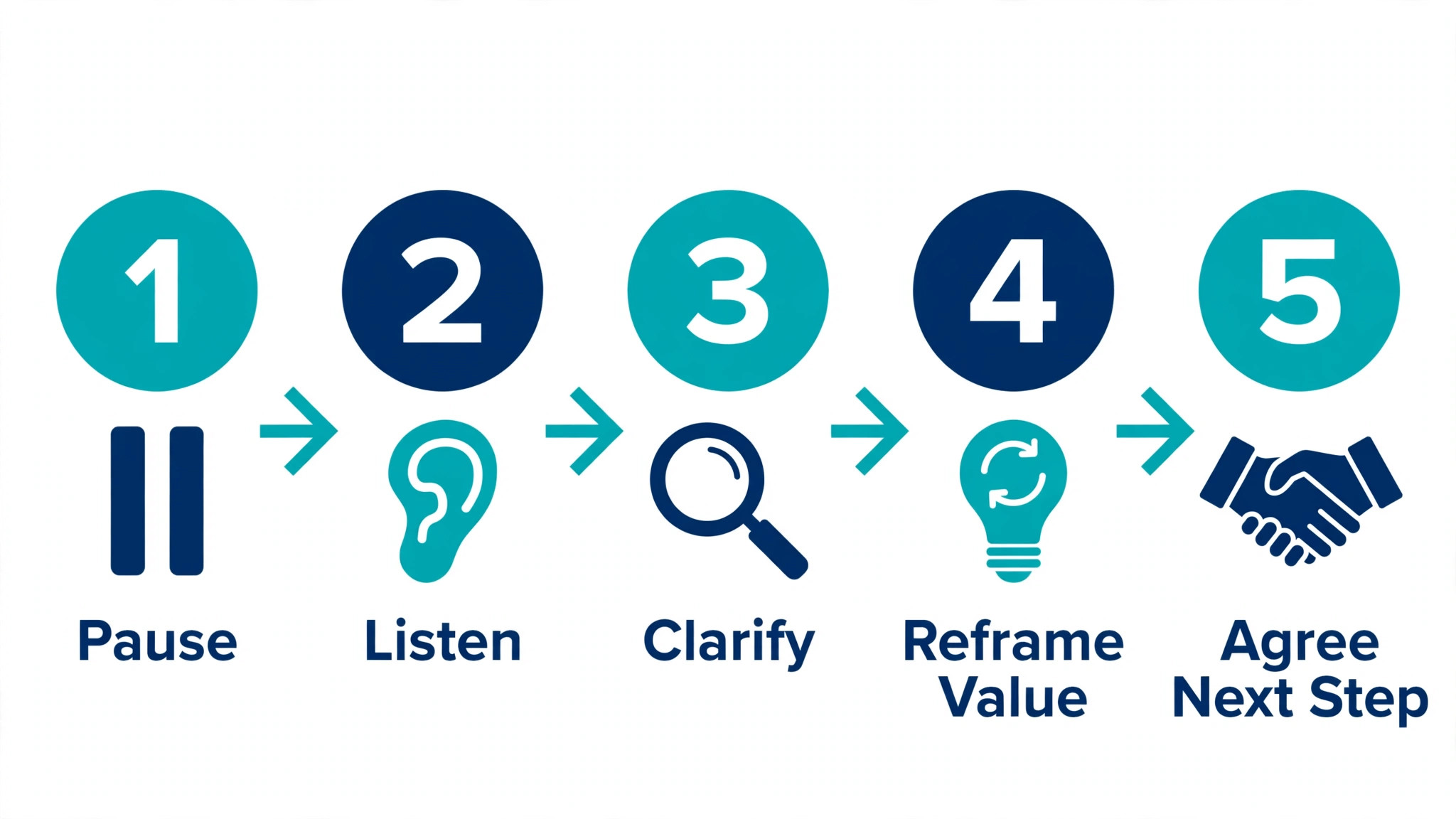
Step one is to pause. Let the buyer finish, and then wait a beat before you speak. Silence feels awkward for about three seconds and then it does useful work. It signals that you are thinking rather than reacting, and it often prompts the buyer to add the detail that reveals the real objection. Do not fill the silence with a justification.
Step two is to acknowledge the concern without agreeing that the price is wrong. A simple line works here. Say that it makes sense to test the number carefully, and that you would rather they ask now than discover a mismatch later. That framing keeps you on the same side of the table as the buyer, rather than turning the conversation into a contest.
Step three is to isolate the concern with one question. Ask whether the issue is the total amount, the timing of payment, or the return they expect from the work. If the buyer says the total is the problem, ask what they were comparing it with. If they say timing, you have a payment structure conversation, not a price conversation. If they say return, you have a value conversation. Each path leads somewhere different, which is why this question matters more than any script that follows.
Step four is to return to the outcome the buyer named earlier in the conversation. Use their words and their numbers, not your feature list. If they said lost bookings were costing them weekend revenue, talk about bookings. If they said staff time was being eaten by manual follow up, talk about hours recovered. The price should sound like a fraction of a problem they already own, not like a fee for a service they have not yet pictured using.
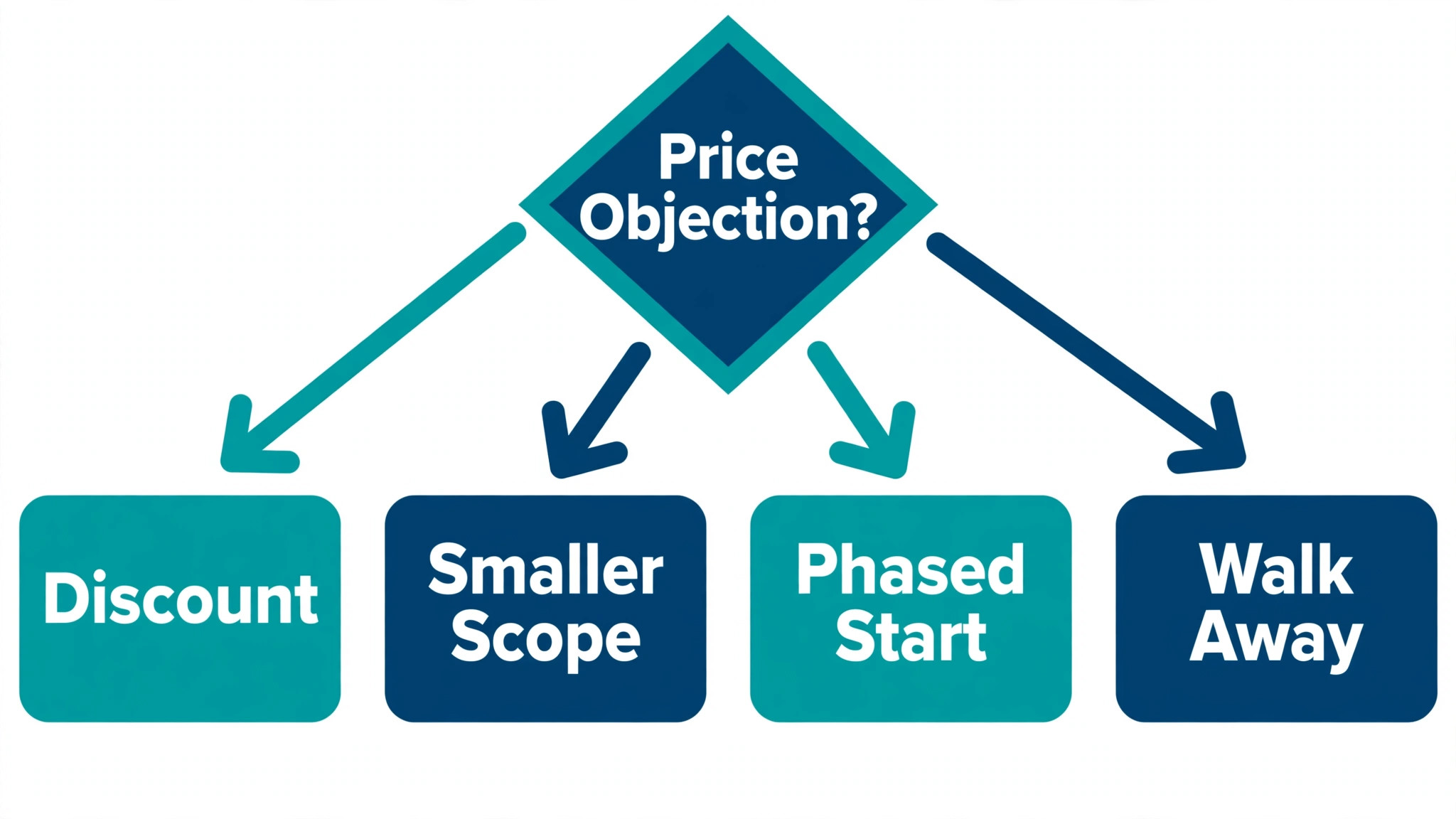
Step five is to offer a structured choice rather than a single take it or leave it number. Present two or three scopes at different prices, with the differences stated plainly. A smaller scope, a phased start, or a longer term in exchange for a lower monthly figure are all honest trades. A straight discount with nothing traded is not a trade at all. It is a signal that the original price was negotiable, and the buyer will remember that in every future renewal.
Step six is to anchor the decision to a concrete next step and a date. Ask what would need to be true for them to move forward, and agree what happens next if that condition is met. A vague promise to think about it is not a next step. A short follow up call, a written summary for a partner, or a trial scope with a start date all count.
Step seven is to write down what you learned, even if the deal closes. Note the objection, the real concern behind it, the option the buyer chose, and the words that worked. Over a quarter, that log becomes your most useful sales document. Patterns will show up quickly. If most objections are about timing, your payment terms need work. If most are about comparison, your proposal needs a clearer scope table. If most are about return, your discovery questions need to surface the cost of the problem earlier.
Scripts for the Five Objections You Will Hear Most
Scripts are useful only when they match the diagnosis, so treat each one below as a starting line, not a speech, and as part of how to handle a price objection small business owners meet in real calls. Say it, then listen. The buyer’s reply tells you whether you diagnosed correctly.
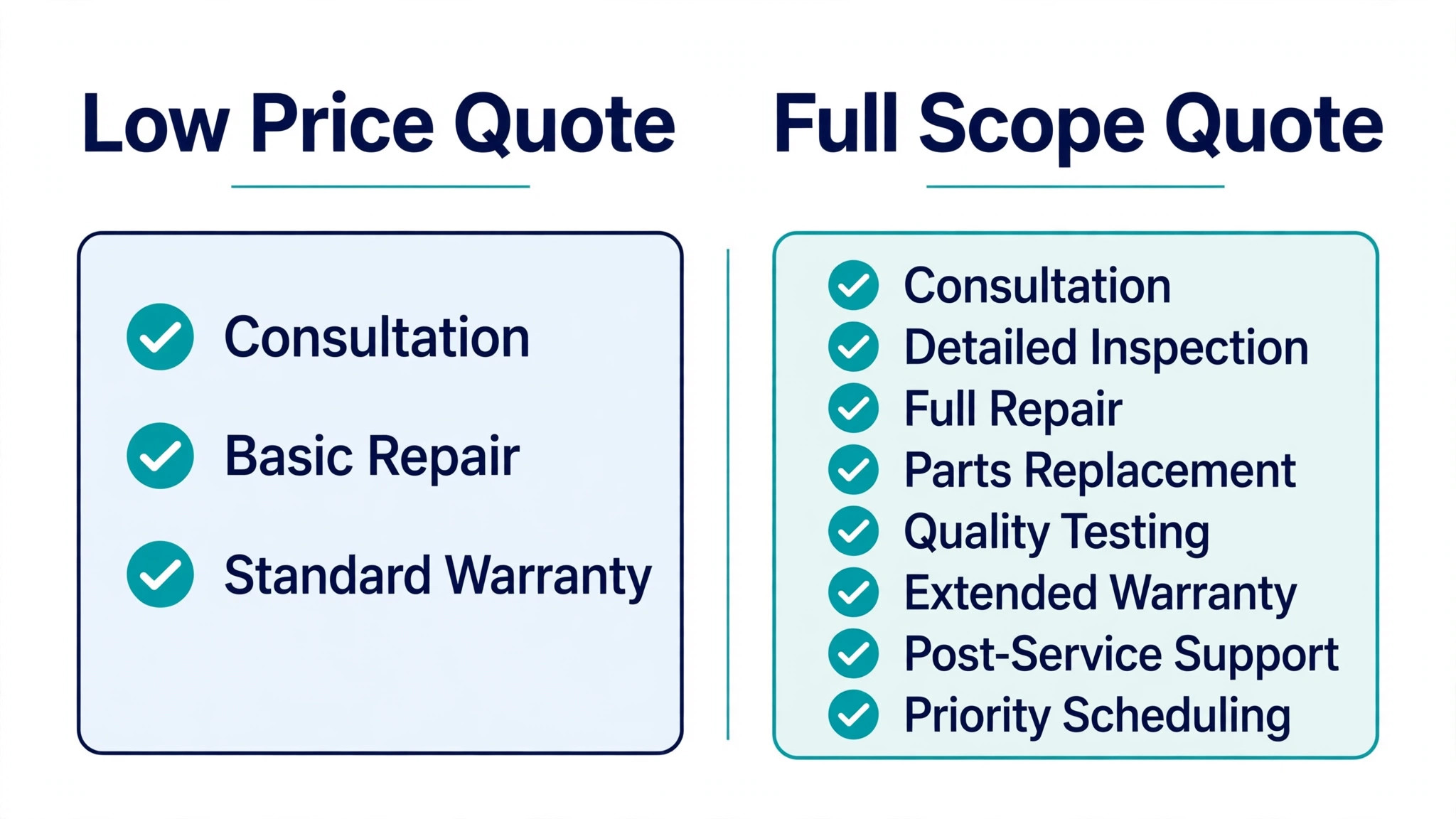
For the buyer who says the price is too high, try this. Ask what they are comparing it with, and then compare scope before you compare price. A useful line is to say you are happy to look at the comparison together, because a lower price often means fewer deliverables, slower turnaround, or support that stops at delivery. If the cheaper option genuinely covers the same scope, say so honestly.
For the buyer who says they can get it cheaper elsewhere, try this. Acknowledge that cheaper options exist for almost every service, then ask which part of the cheaper offer matters most to them. Is it the price itself, or a specific feature they believe is included? Once you know that, you can show whether your scope includes work the cheaper option leaves out, such as revisions, reporting, setup, or ongoing support. Buyers often discover that the cheaper quote grows once those items are added back in.
For the buyer who says there is no budget right now, try this. Ask whether the constraint is this quarter, this project, or the total amount. A quarterly constraint can be solved with a phased start or a deposit that holds a start date. A project constraint can be solved by narrowing the first phase to the highest value work. A total amount constraint may mean the fit is wrong, and that is useful information too. Do not turn a timing problem into a discount, because the buyer will still face the same timing problem next quarter, only with a lower price locked in.
For the buyer who asks you to do better on price, try this. Say you can look at a different scope or different terms, and ask which they would prefer to change. That single sentence moves the conversation from haggling to problem solving. If they want the same scope for less money, you can say plainly that you cannot deliver the same result for less without cutting something they said mattered. Small businesses that say this calmly are respected for it. Small businesses that fold are remembered as negotiable.
For the buyer who says they need to think about it, try this. Ask what specifically they need to think through, and offer to help with that part. If they need to check with a partner, offer a one page summary written for that partner. If they need to compare options, offer a short comparison you can both look at together. If they cannot name what they need to think about, the real concern is usually risk, and your next move is proof. A short case example, a clear guarantee on scope, or a smaller first step all reduce risk better than a lower price does.
Value Reframes That Do Not Require a Discount
A value reframe changes the unit the buyer uses to judge the price, and it is a central move in how to handle a price objection small business owners want to answer without discounting. Instead of one large total, the buyer sees a monthly figure, a per customer figure, a per hour saved figure, or a cost of inaction figure. None of these tricks the buyer. Each one simply presents the same honest number in the frame that matches how the buyer already thinks about the problem.
Start with the cost of doing nothing, because it is the comparison most buyers skip. Ask what the problem costs them now, in hours, in lost bookings, in rework, or in missed enquiries. If a manual process eats six hours a week, that is roughly twenty four hours a month. At any reasonable internal rate, that figure dwarfs a monthly service fee, and the buyer can see it without you having to argue. Let the buyer supply the numbers where possible. A figure the buyer states themselves carries far more weight than a figure you assert.
Next, break the price into the unit that matches the outcome. A monthly fee divided by the number of clients served, jobs completed, or bookings recovered often sounds proportionate in a way the total does not. Be careful here. This reframe only works when the unit is real and the outcome is one the buyer already wants. Dividing a fee by an invented number is the kind of sales move that destroys trust, so use only numbers the buyer has confirmed.
Then, separate the price of the work from the price of the risk. A cheaper provider who misses a deadline, delivers work that needs redoing, or disappears after delivery is not cheaper once rework and delay are counted. Name those risks plainly, without attacking a competitor by name.
Finally, show the work, not just the outcome. A short breakdown of what happens in week one, week two, and week three makes an abstract fee feel concrete. Buyers pay more readily for a process they can picture than for a promise they cannot. This is especially true for services where the buyer cannot easily judge quality in advance, such as design, marketing, bookkeeping, or consulting. Process transparency is a form of proof, and it costs you nothing to provide.
On proof in general, testimonials that name a specific result beat praise for attitude. A short before and after figure or a similar job from last month helps the buyer feel safer than an old review about a different service.

Discount Guardrails That Protect Your Margin
Discounts are not forbidden, and knowing when to use them is part of how to handle a price objection small business owners face fairly. They are a tool, and like any tool they need rules, or they will be used on you rather than by you. Set your guardrails before the next sales call, when you are calm, not during a call when a buyer is waiting for an answer. Write them down, share them with anyone who sells for you, and review them quarterly against your actual margins.
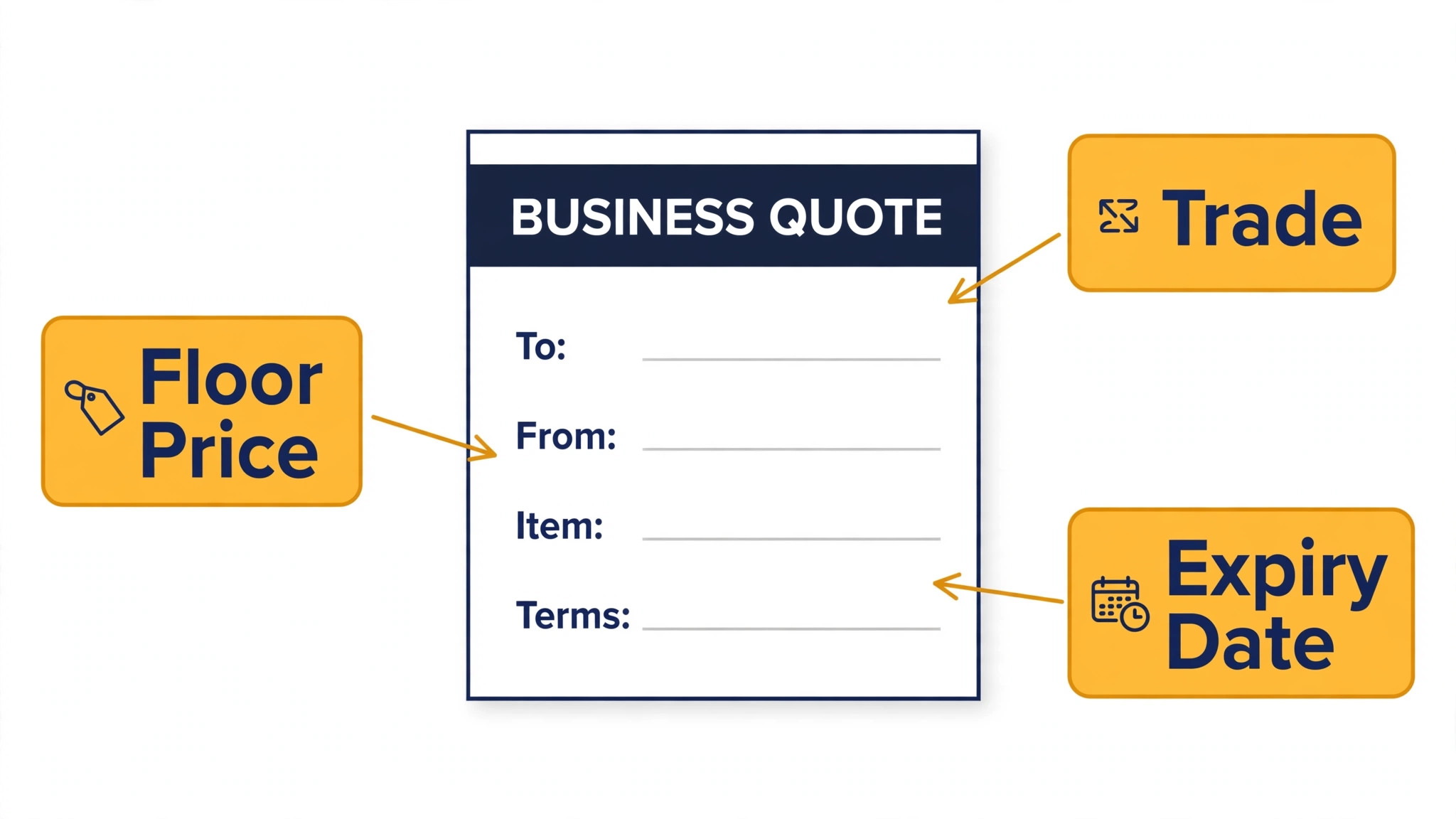
A useful starting point is a floor price for each service, below which you do not go without changing scope. That floor should cover direct costs, a fair share of overhead, and a margin that leaves room for rework, tax, and slow months. If you do not know your floor, you are not negotiating. You are guessing, and guessing under pressure almost always ends low. Work the floor out once, then let it do the hard part of the conversation for you.
Next, decide what a discount must buy in return. Common trades include a longer commitment, payment in advance, a smaller scope, a later start date that fits your schedule, a testimonial or case study permission, or a referral introduction. Each trade should be worth at least as much to you as the discount costs you. A ten percent discount in exchange for a twelve month commitment is a different decision from a ten percent discount for nothing, and the buyer can understand that difference when you explain it plainly.
Also set a limit on who can approve a discount and how large it can be without a second conversation. For a solo owner, that limit is simply a personal rule, such as no discount over a set percentage without sleeping on it. That rule sounds slow, but it prevents the most expensive kind of discount, which is the one given to end an awkward silence. A buyer who truly wants the work will wait a day for a considered answer. A buyer who only wanted the discount will move on, and that outcome saves you a low margin engagement that would have consumed weeks.
Watch for discount patterns that signal a deeper problem. If every buyer asks for a discount, your price may be presented too early, before value is established, or your proposal may read like a commodity quote rather than a scoped solution. If only one type of buyer asks, such as buyers from a particular channel, that channel may be attracting price shoppers rather than value buyers. If discounts cluster at month end, you may be signalling urgency that buyers can exploit. The log you keep after each call will reveal these patterns faster than any guess.
| Guardrail | How it works in practice | What it prevents |
|---|---|---|
| Floor price per service | No quote goes below the floor without a scope change | Work that loses money once costs are counted |
| One trade per discount | Every reduction buys term, prepayment, or narrower scope | Discounts given away for nothing in return |
| Approval pause | Discounts above your set limit wait until the next day | Panic discounts offered to end silence |
| Written scope with every price | The quote lists what is included and what is not | Scope creep that quietly erases the margin |
| Expiry date on quotes | A quote holds for a set period, then is requoted | Endless renegotiation months later |
A final guardrail concerns language. Avoid framing a discount as a favour or a special deal made just for this buyer, unless it genuinely is. Buyers talk to each other, and a special deal that becomes public undermines every future quote. Frame trades honestly instead. Say the price reflects a longer term, a narrower first phase, or payment in advance. That language is boring, and boring is trustworthy.
When to Walk Away, and How to Do It Well
Walking away is not failure, and knowing when to stop is part of how to handle a price objection small business owners face with discipline. It is the decision that keeps your business able to serve the clients who do fit. A small service business has limited hours, and every low margin or high friction engagement takes a slot that a better fit could have used. The skill is knowing the difference between a buyer who needs a better option and a buyer who will never be a good client at any price.
Walk away when the buyer wants the full scope at a price below your floor, and no trade closes the gap. Walk away when the buyer insists on terms that shift all risk to you, such as unlimited revisions, payment only on results you do not control, or a deadline you cannot meet without harming other clients. Walk away when the buyer is rude, dishonest about comparisons, or pressures you to misrepresent results. Those behaviours rarely improve after the contract is signed. They usually intensify, because the buyer has learned that pressure works on you.
Walk away well, because a clean no leaves the door open and protects your reputation. Thank the buyer for the conversation, name the specific gap plainly, and offer something useful. That something might be a smaller scope that does fit their budget, a referral to a provider whose model fits better, or a clear statement of when to return. A buyer who hears a respectful no today may return when their budget, timing, or needs change, and they will return to the provider who treated them well.
Use a short checklist before you walk away, so the decision is deliberate rather than emotional. Check the floor price, check the scope gap, check whether any honest trade closes it, check your current capacity, and check whether the buyer has shown the behaviours that predict a difficult engagement. If three or more of those checks point the same way, the decision is clear, even if it stings in the moment.
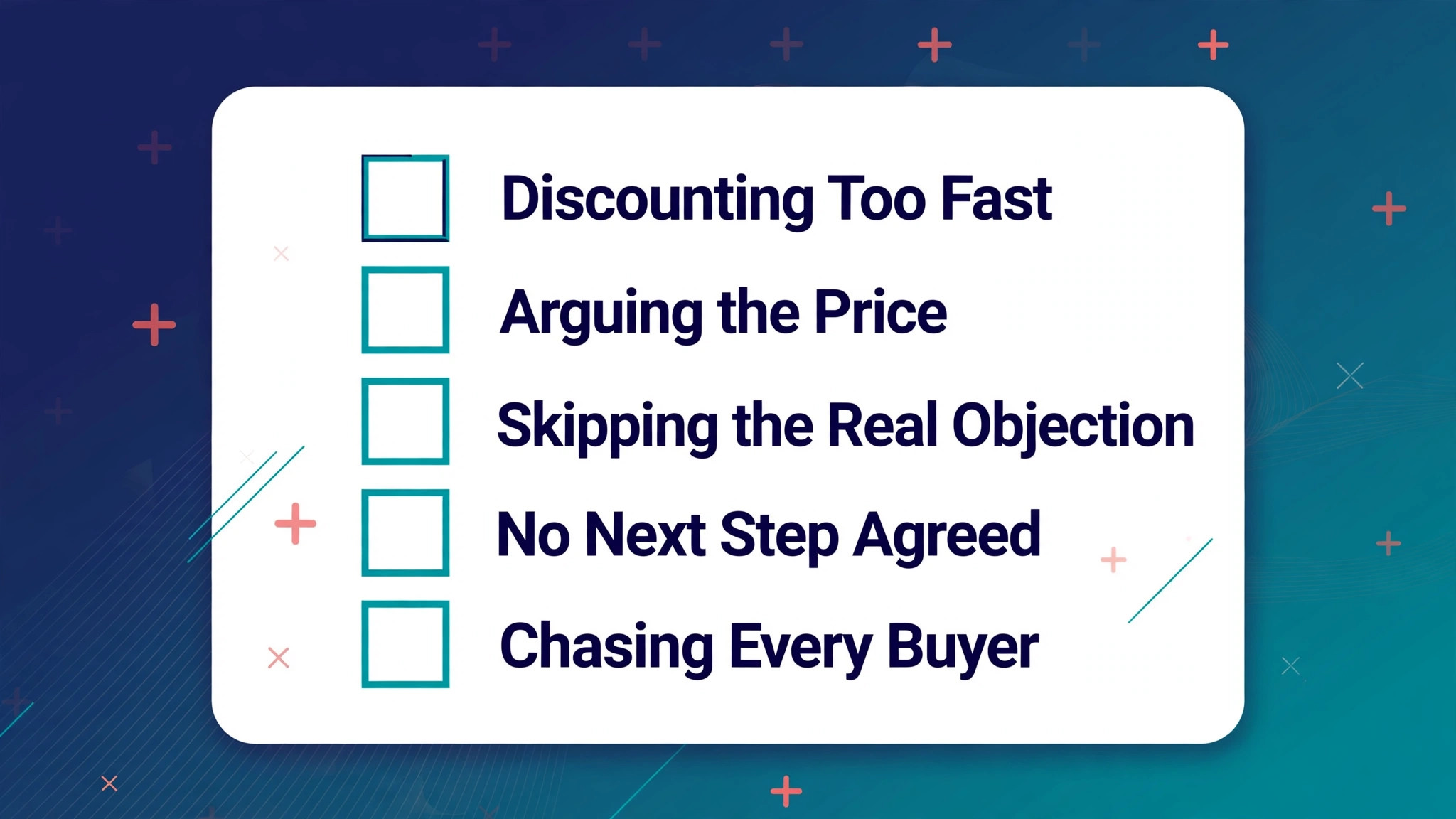
– [ ] The quoted price is at or above the floor for this scope – [ ] A smaller scope, phased start, or different terms was offered – [ ] No trade offered by the buyer closes the remaining gap – [ ] Capacity for this work exists without harming current clients – [ ] The buyer has been straightforward about budget and comparisons – [ ] The deadline and revision terms are workable in writing
If you decide to walk away, do it promptly with a brief note the same day, then log the outcome. Over time, that log shows which types of engagement to stop quoting for.
After the Call, Win or Lose
The work after a price conversation matters as much as the conversation itself, because most buyers do not decide on the call, and follow up is often overlooked in how to handle a price objection small business owners try to close. They decide after they have compared notes, checked with a partner, or simply slept on it. What you send next should make that decision easier, not harder.
For a fuller method on changing rates without losing good clients, see Raise Your Prices Without Losing the Clients Who Matter. Send a short written summary within a day. Restate the problem in the buyer’s words, the scope they chose or are considering, the price for that scope, and the next step with a date. Keep it to one page if you can. A long proposal sent after a price objection often reads like a defence, while a short summary reads like confidence. Include the trade clearly if a discount was agreed, so both sides remember what was exchanged.
If the buyer chose a smaller scope, confirm what is not included, kindly and in writing. Scope misunderstandings are the most common source of later friction, and they are almost always preventable at this stage.
If the buyer said no, send a brief closing note and add them to a light follow up list, not a hard sales sequence. A useful check in after a month or a quarter, with a relevant example or a short observation about their market, keeps the relationship warm without pressure. Some of the best clients a small business ever wins are buyers who said no the first time, because the second conversation starts with trust already established by a respectful first one.
For deals that close, deliver something visible in the first week and confirm the schedule. Early progress shows the buyer that the price bought a process, not just a promise.

Mistakes That Turn a Price Talk Into a Lost Deal
The most common mistake is answering too fast. A quick defence sounds like the price needs defending, and it denies you the information a pause would have revealed. The second mistake is discounting before diagnosing, which teaches the buyer that the first price was a starting bid. The third is arguing about features when the buyer is worried about risk. Features do not reduce risk. Proof, process, and a smaller first step do.
Another mistake is badmouthing a cheaper competitor. Compare scope neutrally, let the differences speak, and let the buyer draw the conclusion. Buyers trust conclusions they reach themselves far more than conclusions handed to them.
A subtler mistake is hiding the price until the end of a long pitch, which turns the reveal into a shock. Where possible, give a range early, once you understand the scope, so the buyer can tell you if the range is unworkable before both sides invest more time. Early ranges also filter out buyers who were never going to pay your rate, which saves everyone time. If a buyer reacts badly to a range, that is useful information, not a failure.
Finally, do not let a price conversation become a referendum on your worth. Every small business owner has felt that sting, especially when a buyer compares years of skill with a cheaper quote from someone just starting out. Separate the two questions. The buyer is deciding whether this scope, at this price, solves their problem now. You are deciding whether this engagement, at this price, is worth your limited hours. Both questions are legitimate, and both deserve a calm answer.
Frequently Asked Questions
How do I respond when a buyer says my price is too high?
Pause, acknowledge the concern, and ask what they are comparing it with. Diagnose whether the issue is value, timing, comparison, or budget, then respond to that specific concern with their own numbers and a scoped choice, rather than defending the total or offering a discount first.
Should I ever discount to win a new client?
Discount only when the discount buys something of equal value in return, such as a longer term, prepayment, a narrower scope, or permission to use the work as a case example. Set a floor price in advance, and never discount below it without changing scope. A discount with no trade trains buyers to expect one every time.
What if the buyer has a much cheaper quote?
Compare scope line by line before you compare totals. Check deliverables, revisions, turnaround, support, and what happens after delivery. Often the cheaper quote excludes work that matters, and the buyer can see the gap once it is laid out plainly. If the cheaper quote genuinely covers the same scope, say so honestly and let the buyer decide.
How do I handle a price objection over email?
Reply briefly, ask one clarifying question, and offer a short call or a one page summary. Email makes tone hard to read, so avoid long defences in writing. A short question plus a scoped option keeps the conversation moving, while a long justification often hardens the objection.
Is it rude to walk away from a buyer who cannot pay my price?
No, provided you walk away promptly and respectfully. Name the gap plainly, offer a smaller scope or a referral if one fits, and leave the door open for a later conversation. A clean no protects your capacity for clients who do fit, and it often earns more respect than a reluctant yes at a damaging price.
How can I stop price objections happening so often?
Surface the cost of the problem early, give a price range once scope is clear, and present scope in writing before the final quote. Most repeated objections point to a step earlier in the process that needs fixing, such as discovery that never quantified the problem, or a proposal that reads like a commodity quote.
What should I say when a buyer asks for a discount in the first meeting?
Say you can look at a different scope or different terms, and ask which they would prefer to change. That answer keeps the conversation honest without closing the door. It also reveals whether the buyer wants a better fit or simply a lower number for the same work.
How do I raise prices with existing clients without triggering objections?
Give notice, explain what has changed in scope or costs, and anchor the new price to results the client has already received. Offer a clear next step and, where appropriate, a term or prepayment option. Clients who understand the value they already get react very differently from clients who first hear about a rise in a surprise invoice.
More Reading on Stratilyze
– How to Price Retainers for a Small Agency – Raise Your Prices Without Losing the Clients Who Matter – How to Value a Small Service Business in Real Numbers – How to Fire a Client Professionally as a Small Business