
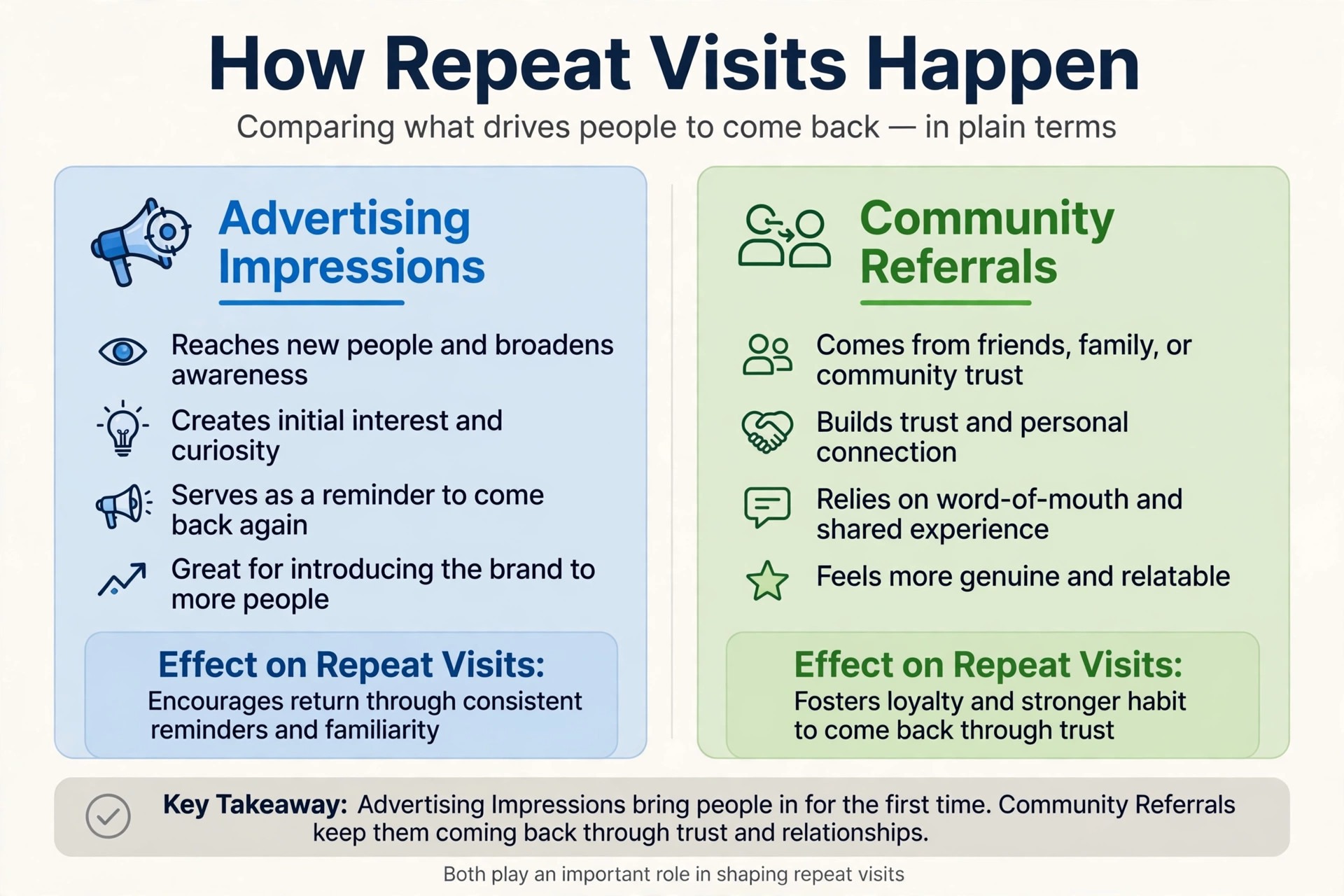
The problem with most local marketing is not that it is ignored, it is that it is forgettable. A business buys an ad, posts a promotion, sponsors a banner, and then wonders why nobody mentions it the following week. The reason is simple. Advertising asks strangers to trust a business they have never met, while community marketing earns trust by showing up where customers already gather, helping before selling, and staying present after the first transaction. A community marketing strategy small business owners run consistently will therefore do something advertising alone cannot, which is to make the business a familiar part of local life rather than a name on a screen.
That familiarity matters because local buying is social. People ask neighbours for recommendations, they notice which businesses support school events and local teams, and they return to places where staff recognise them. Guides on local engagement stress the same point from different angles, that hosting events, partnering with nearby businesses, sponsoring local teams, and participating in markets all build visibility through relationships rather than impressions. A business that is present in those places does not need to shout to be remembered, because customers have already met it in a context they trust.
This guide builds a practical community plan for a small team. You will learn how to map the groups and places that matter to your buyers, choose events and partnerships that fit your capacity, set a content cadence that keeps you visible without exhausting staff, and measure engagement in a way that connects to bookings and sales. It includes a community plan template and an engagement checklist you can copy. Figures quoted here are drawn from published guides and are presented as planning observations to test locally, not as guarantees for any single town or sector.
Community Marketing Strategy Small Business Owners Start By Mapping
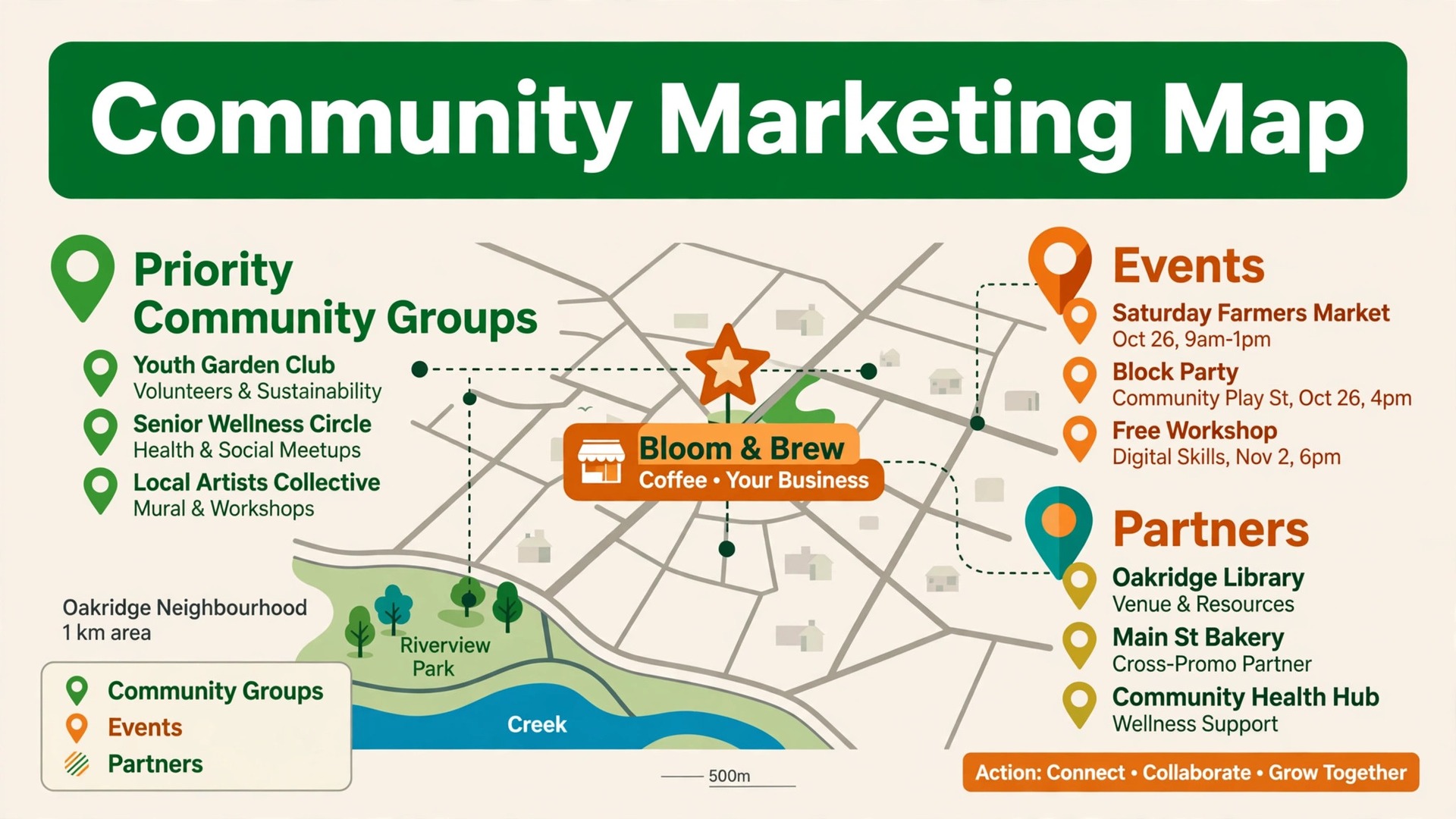
Start with a map of people, not a list of tactics. Write down the groups your buyers already belong to, such as parent groups, sports clubs, school communities, hobby groups, professional networks, faith groups, and neighbourhood associations, and note where each group gathers, online and in person. Next to each group, note whether your products or services genuinely fit that group, and what you could offer that group that is useful rather than promotional. A bakery fits a school fundraiser differently from how a repair shop fits a neighbourhood group, and that fit decides which groups deserve your time.
Prioritise ruthlessly, because a small team cannot serve every group well. Choose three to five priority groups for the next quarter, based on fit, reach, and the effort required to participate properly. A group that reaches many of your buyers but demands weekly attendance you cannot sustain is a worse choice than a smaller group you can serve consistently. Record one contact person, one regular gathering, and one useful contribution for each priority group, so participation has a name, a place, and a purpose rather than a vague intention to get involved locally.
Local search supports community work, and it should be correct before you invest in events. A business listing with wrong hours, a wrong address, or outdated photos will undo goodwill earned in person, because a new contact who searches for you after an event will judge what they find. Check your main listing details, your website contact page, and your social profiles for consistency, so a person who meets you at a market or workshop can find you again without confusion. Community marketing works when the offline introduction and the online follow up agree with each other.
Events That Build Relationships, Not Just Foot Traffic
Choose events your customers already attend, rather than events that merely attract a large crowd, and a community marketing strategy small business owners follow will always favour fit over size. A neighbourhood market, a school fundraiser, a chamber event, or a community festival may be more valuable than a large regional fair, when the audience matches your buyers and lives in the area you serve. Before booking any event, ask who attends, what they come for, and whether they live nearby, because relevant exposure matters more than raw foot traffic. An event that brings a thousand visitors from another town may produce fewer repeat customers than a small market that brings a hundred neighbours.
Promote your participation before the event, not only on the day. Announce attendance on social media, email, and your website ahead of time, share what you will bring, where people can find you, and one reason to stop by. A countdown, a behind the scenes photo, or an event only offer can build anticipation without a large budget. At the event itself, make your presence recognisable from a distance, with readable signage and one clear message, rather than a table crowded with text. Give people a reason to interact, such as a sample, a short demonstration, a mini consultation, or an activity connected to your product, because interaction creates a relationship while a display alone only creates awareness.
Hosting your own event is a stronger step, and it suits businesses that can teach, demonstrate, or gather people around a shared interest. A workshop, a tasting, an open evening, a repair clinic, or a seasonal gathering all give customers a reason to visit for something other than a purchase, which lowers the barrier to a first visit. Keep hosted events small at first, invite priority groups personally, and design one clear next step, such as a booking, a signup, or a follow up visit. A hosted event that ends without a next step wastes the goodwill it created, while a hosted event with a simple next step turns attendees into contacts you can serve again.

Partnerships With Neighbours, Schools, and Local Groups
Partnerships extend reach without doubling spend, when the partner audience overlaps with yours without directly competing. A bakery might partner with a coffee shop, a fitness studio with a health food store, or a bookshop with a school reading programme, each pair sharing an audience while offering different value. Look for partners whose customers would plausibly use your service, and whose values and quality you would be comfortable being associated with, because a partnership transfers trust in both directions. A poor partner choice costs more in reputation than it gains in reach.
Design partnerships around a specific shared activity, not a vague agreement to cross promote. A shared giveaway, a joint workshop, a combined offer, a pop up in each other premises, or a co hosted event all give both businesses something concrete to promote and customers something concrete to attend. Agree in writing, even briefly, who does what, who pays for what, and how each partner will be credited, because informal partnerships fail most often over unclear expectations rather than bad intentions. Start with one partner and one activity, learn how it works, and only then expand to more partners.
Schools, charities, and clubs deserve a distinct approach, because the relationship is about contribution before promotion. Sponsoring a team, donating a prize, hosting a fundraiser, or offering expertise for a community project builds credibility when the contribution is genuine and sustained, not a one off logo placement. Choose causes that fit your business and that you can support over time, and make sure the community knows why the cause matters to you, in plain words, rather than through corporate sounding claims. A community marketing strategy small business owners sustain will usually have one or two such relationships that deepen over years, rather than many shallow sponsorships that change each season.

Content Cadence That Keeps You Visible Between Events
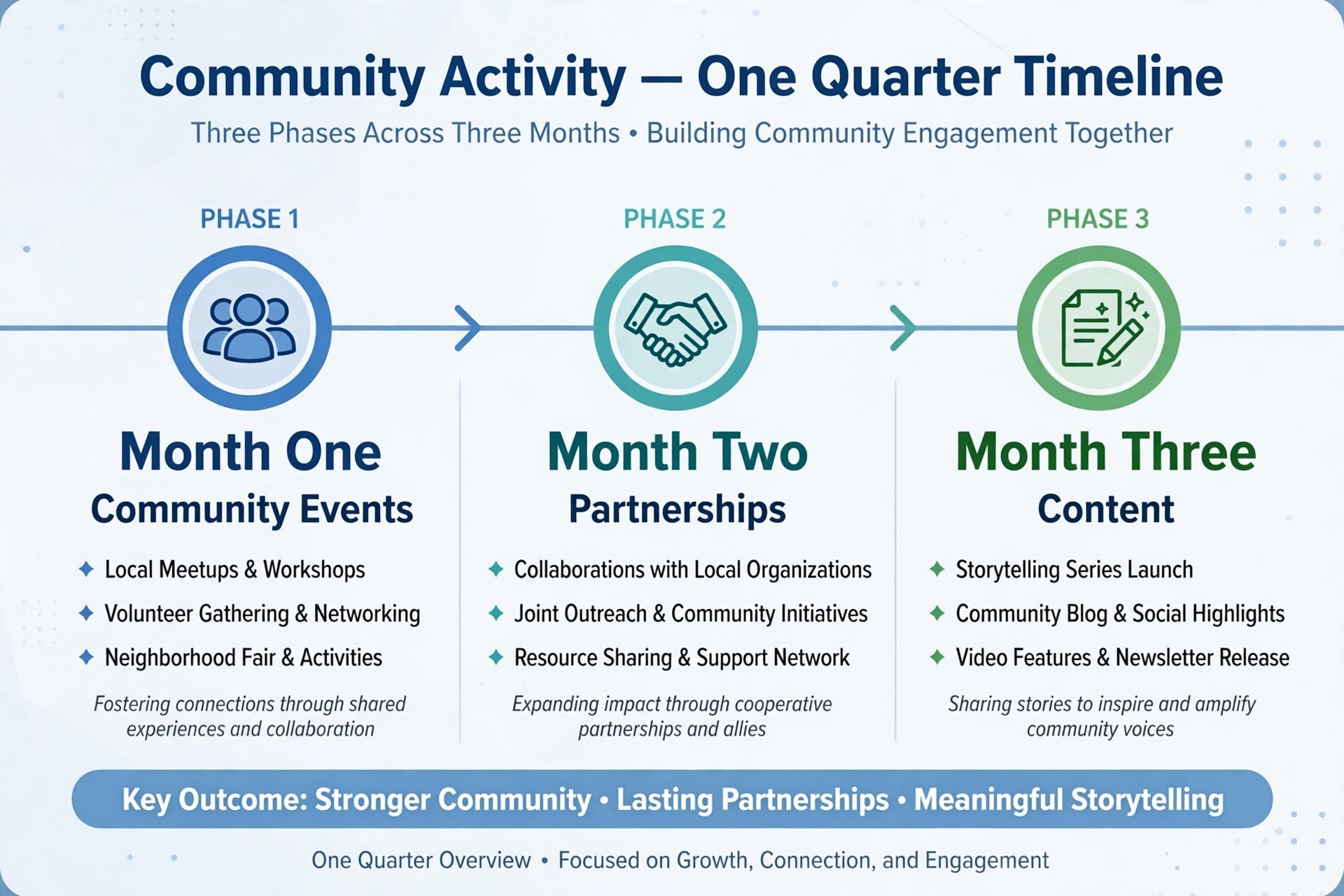
Community marketing fails between events when a business disappears online until the next market or fundraiser. A content cadence solves that gap by giving customers a steady reason to notice you, without requiring daily posting. A workable rhythm for a small team is two to three posts a week, plus one email or community update a month, each tied to a real local activity, customer story, partner mention, or useful tip. That rhythm keeps the business familiar, while leaving staff time for the events and partnerships that actually create the content.
Content should show community life, not just promotions. Photos from an event, a short video of a workshop, a thank you to a partner, a customer story with permission, and a behind the scenes look at preparation all perform a different job from a discount post, because they prove presence rather than claiming it. Encourage customers to tag the business or share a photo of their experience, which creates social proof that advertising cannot buy. Respond to comments and messages promptly and personally, because guides note that consumers feel more connected to businesses that respond online, and a reply is itself a community act.
Plan content around the community calendar, not around product launches alone.
A simple monthly content note, listing the events, partner mentions, and customer stories planned for the month, will prevent the familiar gap where a busy event week produces no posts at all because nobody was assigned to record it.
Assign one person to capture photos and quotes at each event, even if that person also has another role, so the story of the event is preserved while it is still fresh and can be shared the following day.
A post before an event builds attendance, a post during an event captures attention, and a post after an event thanks attendees and shares what happened, which together tell a complete story. Repurpose event content across channels, so one workshop produces a short video, three photos, a customer quote, and an email paragraph, rather than requiring four separate content ideas. That repurposing is what makes a small team cadence sustainable, because the event does the creative work and the content simply records it.
Turning Event Contacts Into Customers
An event contact who is never followed up becomes a missed opportunity, however friendly the conversation was. Capture contacts simply at every event, with a short signup for an email list, a booking, or a next event, using a name and email or phone only. Place the signup where people naturally pause, such as near a tasting, a demonstration, or the exit, and staff it with a person who can explain the benefit in one sentence. A long form at a busy stall loses most completions, while a short form with a clear benefit, such as workshop dates or a subscriber offer, converts the conversation into a contact you can serve again.
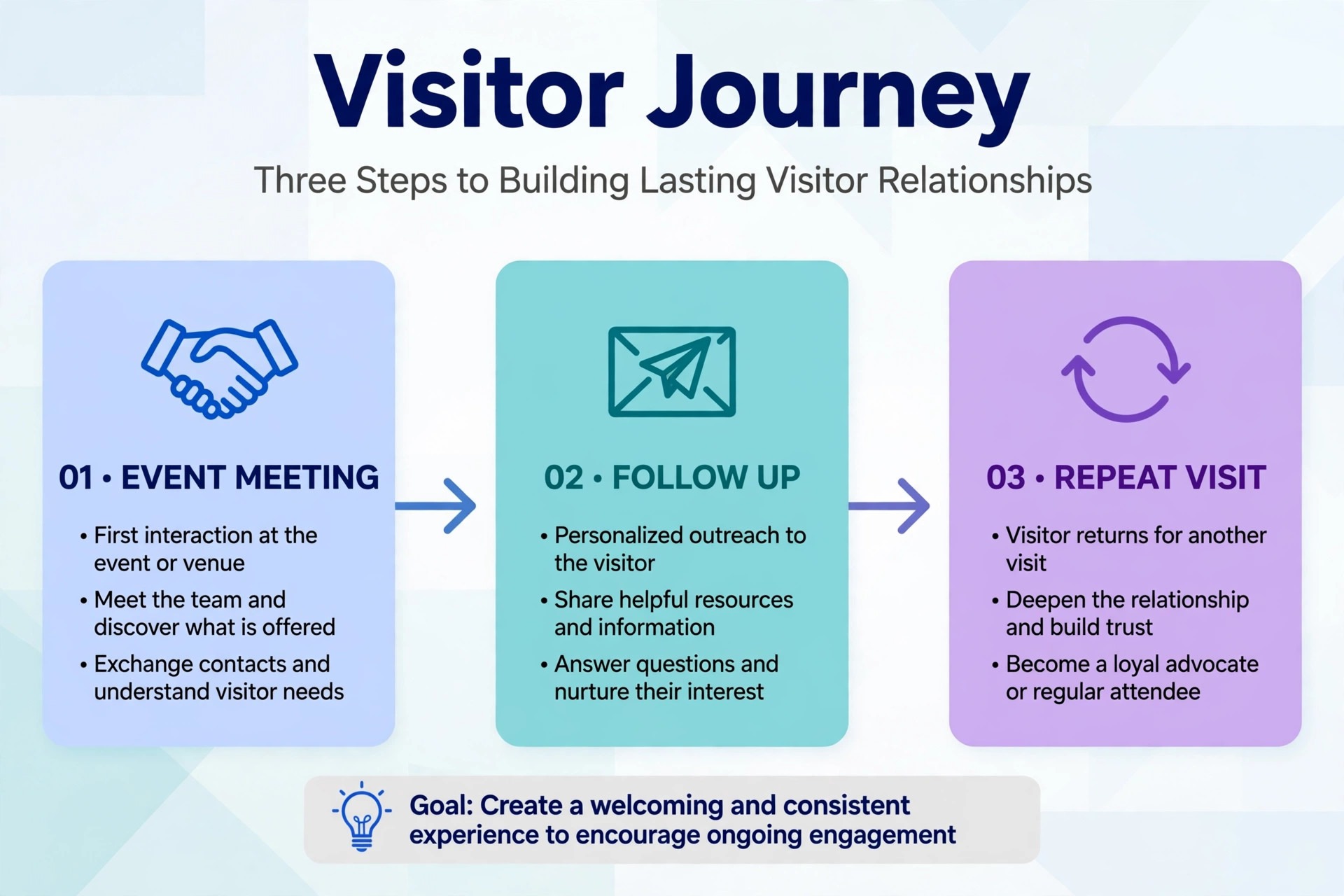
Follow up within two days, while the event is still fresh. Thank attendees, share one or two good photos, repeat the next step offered at the event, and invite a visit or booking without pressure. Follow up separately with partners and organisers, thanking them by name and sharing photos they can use, because a partner who feels thanked will invite you again. Track event contacts separately from other list sources, so you can see which events produce engaged subscribers and which produce names that never open an email. That tracking, over a few events, will tell you where to invest next quarter far more reliably than foot traffic counts alone.
Local groups can also amplify follow up when the relationship is genuine. A group that hosted you, a school that received a donation, or a partner business that co hosted an event may share your follow up with their members, if you provide a short thank you note and a useful offer rather than a generic advertisement. Ask permission before any group share, provide the exact wording and image, and make the offer relevant to that group, because a group leader who shares a relevant thank you protects their own credibility while helping you. That permission based amplification is the difference between community marketing and spam dressed as community work.
Online Groups and Local Search as Community Channels
Online community groups deserve the same respect as in person gatherings, because for many buyers they are where recommendations happen first. A neighbourhood group, a parent forum, a hobby community, or a local business network can produce more referrals than a paid post, provided the business participates as a neighbour rather than as an advertiser. A community marketing strategy small business owners run online should therefore start with listening, by reading group rules, noting what members ask for, and understanding which questions your expertise can answer helpfully, before posting anything about your own business.
Contribution online follows the same rule as contribution offline, usefulness before promotion. Answer a question with a genuinely helpful reply, share a tip that does not require a purchase, or point a member to a local resource even when it is not your business, and your reputation will grow faster than it would from repeated promotional posts. Most groups limit self promotion for good reason, and a business that respects those limits will be welcomed when it does share something relevant, such as a workshop, a community event, or a genuinely useful offer for group members. A business that ignores the limits will be removed, and removal from a trusted group costs more than any single post could gain.
Local search is the bridge between online groups and in person visits, and it should be treated as part of community work rather than as a separate technical task. When a group member recommends you, the next step for most people is a search, and what they find should confirm the recommendation. Keep business hours, address, phone, photos, and a short description accurate, and respond to reviews personally, thanking positive reviewers and addressing concerns calmly. Reviews are community conversations in public, and a thoughtful reply to a critical review often reassures future customers more than a perfect rating with no replies at all.
A practical rhythm for online community work is to choose two or three groups, visit them a few times a week, and contribute one helpful answer or post per visit, rather than joining twenty groups and posting the same promotion in each. Track which groups produce enquiries, bookings, or referrals, and which produce only likes, because the two are not the same. Over a quarter, that tracking will show whether online groups deserve more time, or whether in person events and partnerships produce stronger results for your buyers. Either answer is useful, because it lets you allocate a small team time to the community channels that actually bring customers through the door.
The Community Plan Template
Copy the template below into a document, assign one owner to each section, and review it quarterly. Blank lines between items keep the template readable when printed or shared with partners.
- Priority groups.
- Three to five groups for this quarter, with fit and reach noted.
- Contact person, regular gathering, and useful contribution for each group.
- Events for this quarter.
- Events to attend, events to host, and events to sponsor, with dates.
- Staff, signage, signup, and follow up owner for each event.
- Partnerships for this quarter.
- One or two partners, shared activity, and agreed responsibilities.
- Contribution to schools, charities, or clubs, with duration and reason.
- Content cadence.
- Two to three posts a week and one monthly community update.
- Event content plan, before, during, and after each event.
- Response owner for comments and messages.
- Measures for this quarter.
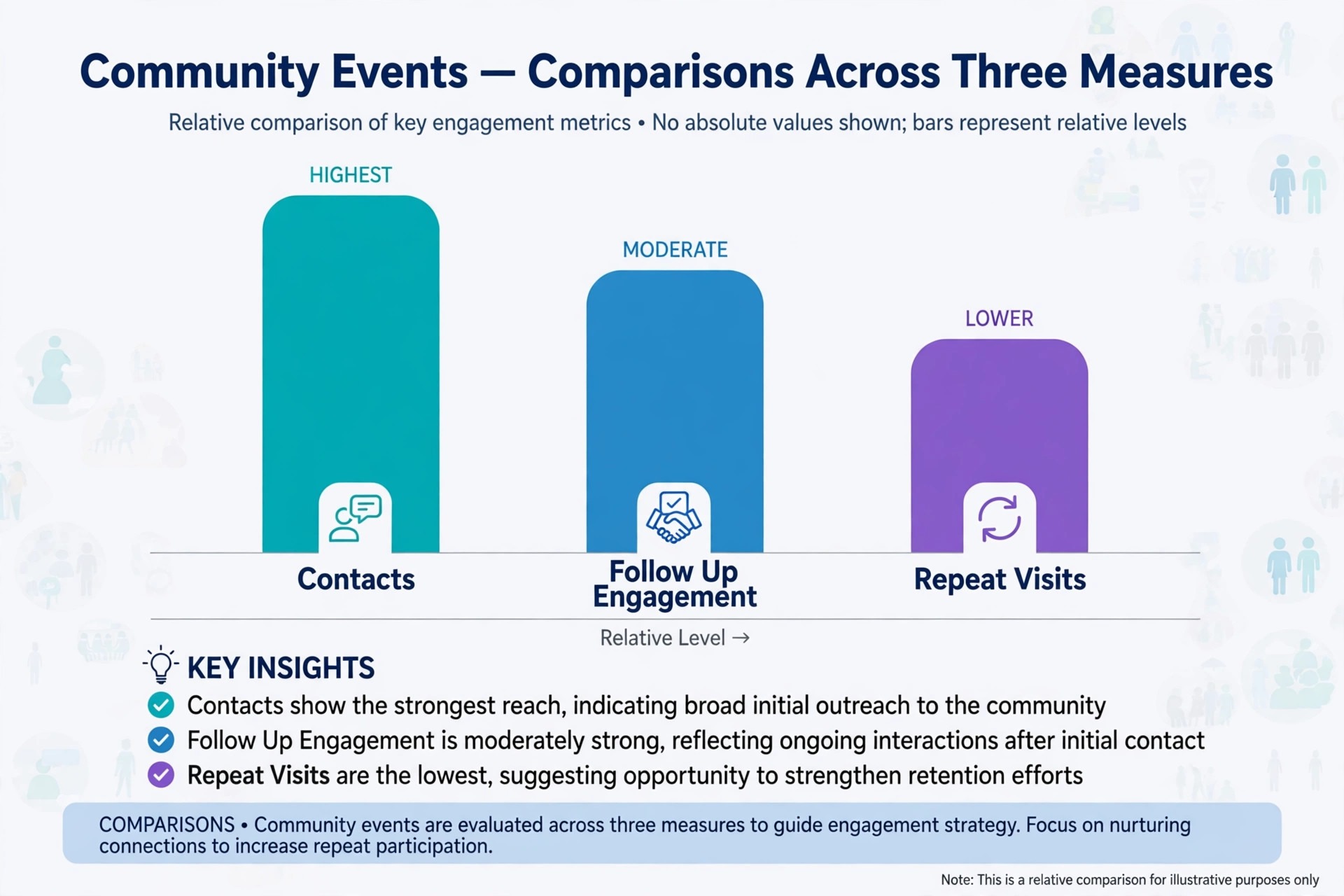
- Contacts captured, follow up sent, bookings from events, and repeat visits.
- Partner referrals and group shares, with permission recorded.
- Review date and decisions for next quarter.
A template only works if it is reviewed, so hold a short quarterly review with the staff who attend events and manage partnerships. Ask which groups produced engaged contacts, which events felt worth the effort, and which partnerships should deepen or end. That review prevents community marketing from becoming a habit of attending everything, and turns it into a strategy of attending the right things, with the right partners, for the right buyers.
The Engagement Checklist
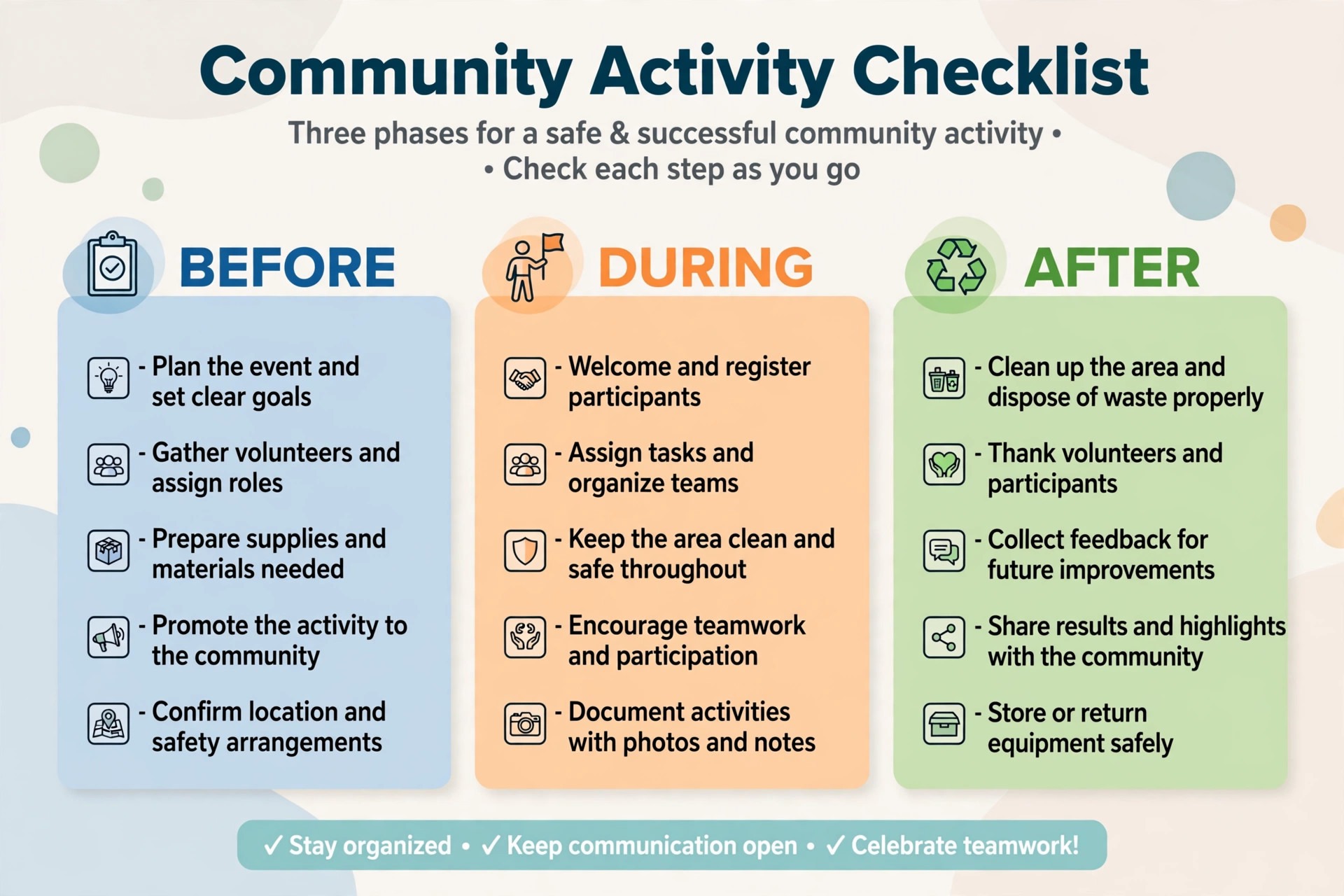
Use this checklist before, during, and after each community activity, so good intentions become consistent practice. Blank lines between items keep it usable on the day.
- Before the activity.
- Audience fit checked, who attends and whether they live in your area.
- Signup method ready, short form, QR code, or booking link tested.
- Signage readable from a distance with one clear message.
- Staff briefed on the benefit to mention and the next step to offer.
- During the activity.
- Interaction offered, sample, demonstration, consultation, or activity.
- Photos and short videos captured with permission.
- Contacts counted at midday or midway, not only at the end.
- Partners and organisers thanked in person.
- After the activity.
- Thank you and follow up sent within two days.
- Photos shared with partners and organisers.
- Contacts tagged by event source in the list or booking system.
- Repeat visits and bookings from the event tracked for thirty days.
- Review note written, what to repeat, change, or drop next time.
A checklist that is used every time will reveal patterns quickly, such as a signup method that always fails, a message that always confuses visitors, or an event type that always produces strong follow up. Act on one pattern per quarter, rather than rewriting the whole approach, because steady small fixes compound into a community presence that feels professional without feeling corporate. The goal is not to attend more events, it is to make each event count more.
Mistakes That Make Community Work Feel Transactional
The most damaging mistake is treating community activity as advertising with a nicer name. A business that sponsors a team only to plaster its logo everywhere, attends a market only to push discounts, or joins a group only to post promotions will be recognised quickly, and the recognition will damage trust rather than build it. Community marketing requires contribution before promotion, which means giving time, expertise, or resources that are useful even if no sale follows. A business that contributes genuinely will be given permission to promote, while a business that promotes first will rarely be given a second chance.
A second mistake is inconsistency, appearing at one event and then disappearing for months. Community trust builds through repeated presence, so a business that attends a group once and never returns looks opportunistic rather than committed. Choose fewer groups and events, and attend them reliably, rather than sampling many groups once each. If capacity changes, tell group contacts honestly and reduce commitments cleanly, rather than failing to appear. A smaller, reliable presence beats a larger, unreliable one every time.
A third mistake is measuring community work only by immediate sales, which undervalues its real return. Community activity often produces referrals, reviews, repeat visits, and partner introductions weeks later, none of which appear in same day sales. Track contacts, follow up engagement, referrals, and repeat visits over thirty to ninety days, alongside sales on the day, so the full return is visible. A community marketing strategy small business owners judge fairly will therefore use a longer window than a paid ad, because trust, unlike a click, compounds over time rather than expiring at midnight.
For related local work, see the guide on correcting listing details that visitors check after meeting you and ideas for weekly local marketing that turns a list into repeat orders. Event ideas can borrow from promotion for a local venue event, capacity planning from booking software for appointment businesses, and list hygiene from the guide on fixing an audience that will not sync.
Frequently Asked Questions
How much time should a small business spend on community marketing?
A few hours a week, plus event days, is enough for most small businesses if the effort is focused on three to five priority groups. Choose a steady rhythm, such as two to three posts a week, one event a month, and one partnership activity a quarter, rather than bursts of activity followed by silence. Consistency matters more than volume, because community trust builds through repeated presence rather than through a single large effort.
Should a small business sponsor a local team or event?
Sponsorship works when the audience fits your buyers, the contribution is genuine, and you can sustain it over time. Choose one or two sponsorships that fit your business, agree what each side provides, and participate beyond the logo, such as attending games or events and thanking organisers personally. A shallow sponsorship changed every season builds less trust than a deeper relationship sustained over years.
How do I measure community marketing if sales do not rise immediately?
Measure contacts captured, follow up engagement, referrals, reviews, and repeat visits over thirty to ninety days, alongside sales on the day. Community activity often produces results weeks later, through referrals and repeat visits, so a same day sales measure alone will undervalue it. Tag contacts by event source, so you can compare which events and partnerships produce engaged customers rather than just foot traffic.
What if my town has few formal community groups?
Look beyond formal groups to informal gatherings, such as markets, school events, sports fixtures, library programmes, and neighbourhood online groups, and to partners whose audiences overlap with yours. A community marketing strategy small business owners build in a small town will often rely more on a few deep relationships, such as one school, one club, and one partner business, than on a large number of groups. Depth matters more than count when the community is small.
How do I promote at a community event without seeming pushy?
Lead with interaction and usefulness, such as a sample, a demonstration, or a short consultation, and let promotion follow naturally. Mention one clear benefit and one next step, such as a booking or signup, rather than listing every product or offer. Accept that some visitors will only browse, thank them, and follow up later with useful content rather than a hard pitch. A visitor who enjoyed an interaction is far more likely to return than a visitor who felt cornered by a sales pitch.
Can community marketing work for a business that mainly sells online?
Yes, if community is defined by shared interest as well as by place. An online business can host virtual workshops, partner with interest groups, contribute expertise to forums or clubs, and attend a small number of in person events in its main market. The same principles apply, contribution before promotion, consistent presence, and a clear next step, whether the community gathers in a hall or in an online group.
A Closing Invitation, Not a Campaign
Community marketing ends where it began, with presence rather than promotion. A business that shows up reliably, contributes usefully, thanks people by name, and follows up promptly will be remembered when a neighbour asks for a recommendation, and that recommendation will carry more weight than any advertisement. The work is slower than paid promotion, and its results are harder to attribute in a single week, but its return compounds, because each event, partnership, and follow up adds to a reputation that the next event can build on.
Start this quarter with three choices only. Name three priority groups, choose one event to attend well, and agree one partnership activity with a neighbour business.
That modest start is deliberate, because a community marketing strategy small business owners can actually sustain must fit around serving customers, not compete with it for every spare hour.
A quarter of steady presence, followed by an honest review, will teach you which groups, events, and partners deserve more time next quarter, and which should quietly be dropped.
Run those three, follow up within two days, review them after thirty days, and let that review choose the next quarter. A community presence built that way, one group, one event, and one partnership at a time, will feel manageable to a small team and genuine to the community it serves, which is exactly the combination that turns neighbours into customers and customers into advocates.