
A reopening fails quietly long before the doors open. The owner renames the event a celebration, orders food, prints a banner, and hopes foot traffic does the rest. Then the day arrives, the regulars who would have come never heard about it, the staff are unsure who greets people at the door, and the one local reporter who might have covered it was contacted the day before. Learning how to plan a grand reopening small business customers actually attend means treating the event as a short campaign, not a single afternoon of decorations.
The problem is rarely effort. Most owners work hard in the final week and still miss the result, because the work happens in the wrong order. Invitations go out after the date is fixed but before the offer is decided. Social posts start when the room is already decorated. The press note arrives without a clear reason for a journalist to care. A reopening plan fixes the order first, then fills in the details, so each task has a reason and a deadline instead of competing for attention in the last forty eight hours.
This guide gives you that order. You will get an eight week timeline, a way to choose an offer that protects margin, invitation and press methods that suit a small team, staffing and day-of roles, and a follow up plan that turns one busy afternoon into repeat visits. It also includes a full reopening plan template and a day-of checklist you can copy into a document and hand to your team. Per guides from chambers of commerce and small business event checklists, most of this work belongs weeks before the event, not on the day itself.
How to Plan a Grand Reopening Small Business Owners Can Run on a Small Team
Start with a decision that shapes everything else. A reopening needs one clear reason to exist in the mind of a customer. A renovation, a new location, a change of ownership, a new menu or service line, or a return after a closure each gives visitors a different reason to come. Pick the reason that is true, state it in one sentence, and use that sentence everywhere, on the invitation, on the door sign, and in the press note. If the reason is vague, the event feels like a sale with balloons, and people treat it that way.
Next, decide what success looks like in numbers you can count. Foot traffic alone is a weak target, because a crowd that buys nothing and never returns costs money. Better targets include a number of new email signups, a number of bookings made on the day, a number of first time visitors who return within thirty days, and a total event cost ceiling. Write those targets down before you spend anything, because they decide whether a paid ad, a caterer, or a prize draw is worth it.
Budget comes third, and it should be set as a ceiling with named categories, not as a guess that grows. Common categories include signage, food and drink, printing, entertainment or activities, prizes, paid promotion, and staff hours. Put a cap on each category and one person in charge of it. Small events often overspend on food and decor, the two items guests notice least after the first hour, while underspending on invitations and follow up, the two items that actually bring people back.
Timing matters more than most owners expect. A Saturday late morning or early afternoon suits many retail and food businesses, because families are out and parking is easier to manage. A weekday evening suits service businesses whose clients visit after work. Check local calendars before you fix a date, and avoid clashing with a major community event, a school holiday weekend that empties your area, or a neighbouring business event that splits the same audience. If your town has a chamber ribbon cutting service, ask early, because those calendars fill up.
The Eight Week Timeline That Keeps the Event on Track
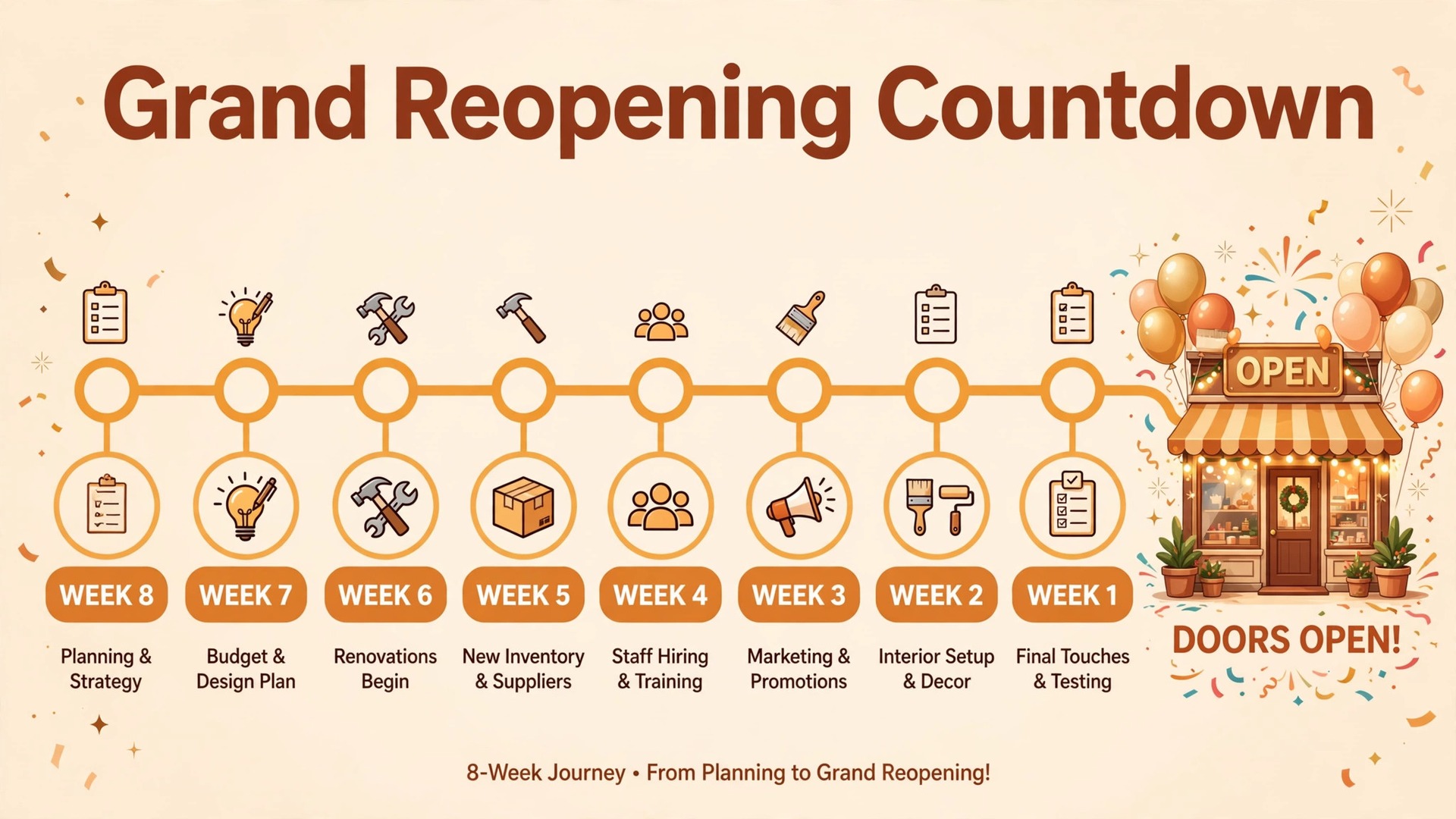
Eight weeks sounds generous until you list what depends on what. Signage takes time to print. A press note needs a lead time. Invitations need a reason to open them. For owners learning how to plan a grand reopening small business event, the timeline below, drawn from chamber checklists and event planning guides, gives a workable sequence for a small team. Shorten it only by cutting scope, not by skipping invitations or rehearsal.
At eight weeks out, fix the date, the reason, the budget ceiling, and the success targets. Book the venue elements you cannot improvise, such as a ribbon cutting, a performer, a photographer, or a food supplier. Start the guest list in three groups, loyal customers, neighbouring businesses and community contacts, and local media. A list built late is always thinner than a list built early, because you remember fewer names under pressure.
At six weeks out, send save the date messages to loyal customers and community contacts, and start the press conversation. A save the date does not need the full offer. It needs the date, the reason, and one line about what will be different. At the same time, order signage and printed material, and confirm any permits your landlord, town, or shopping centre requires for banners, outdoor seating, or amplified sound. Permit rules vary by place, so check the vendor or council page for your area rather than assuming a neighbouring town rule applies.
At four weeks out, confirm the offer, the programme for the day, and staff roles. Send formal invitations to the full list, and publish the event on your website, social profiles, and local listings. Begin a short series of behind the scenes posts showing preparation, not just finished rooms. People follow a story more readily than an announcement, and a renovation story gives them a reason to watch for the opening date.
At two weeks out, send a reminder to everyone invited, confirm every supplier in writing, and run a soft opening or staff walkthrough. A soft opening can be as simple as inviting a dozen regulars for a preview hour, which tests the till, the queue, the menu or service flow, and the signage in real conditions. Fix what breaks there, while fixes are still cheap. At one week out, confirm media attendance, brief staff, prepare a rain or crowd backup plan, and stock prizes, bags, and signup materials.
Choosing an Offer That Brings People Back
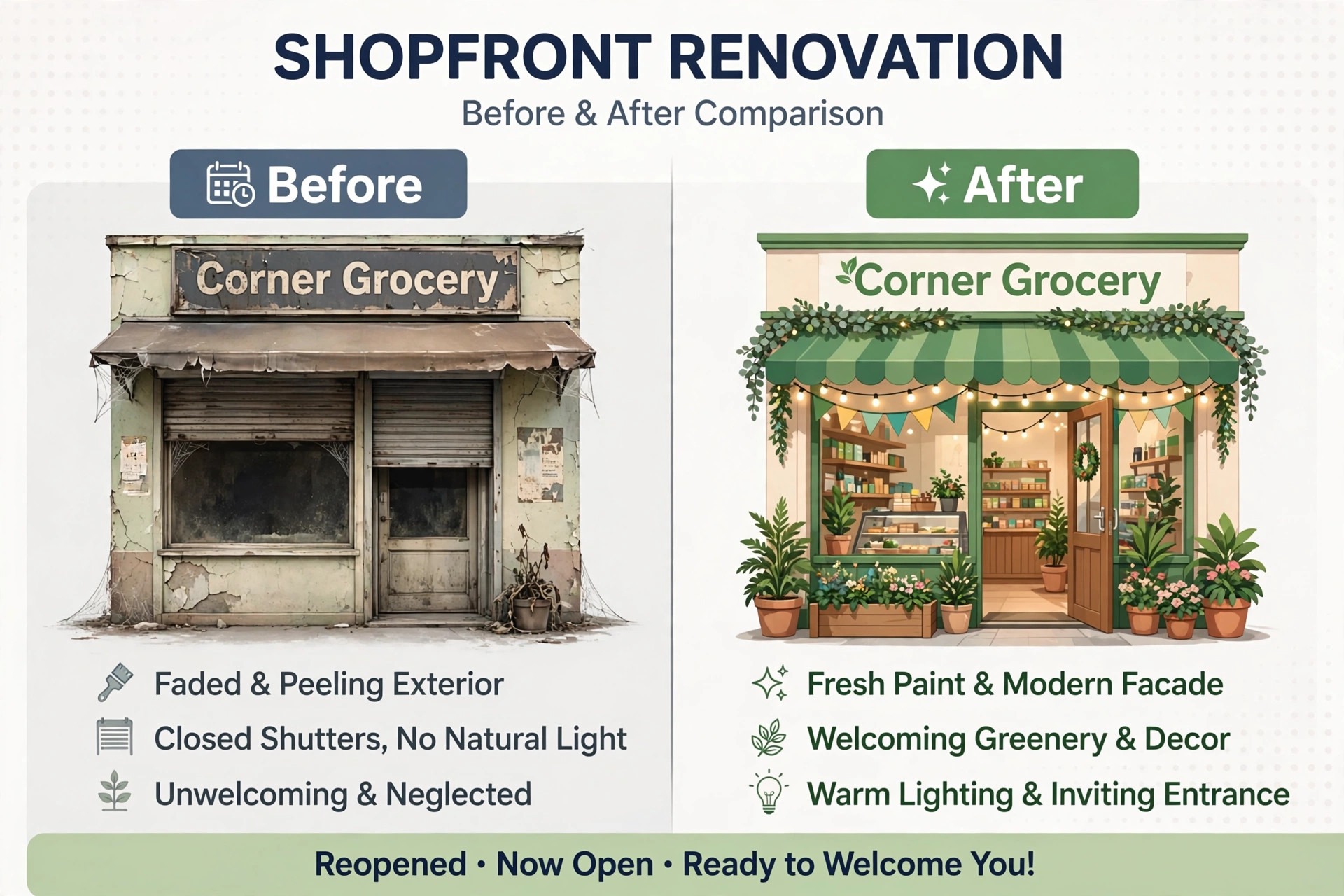
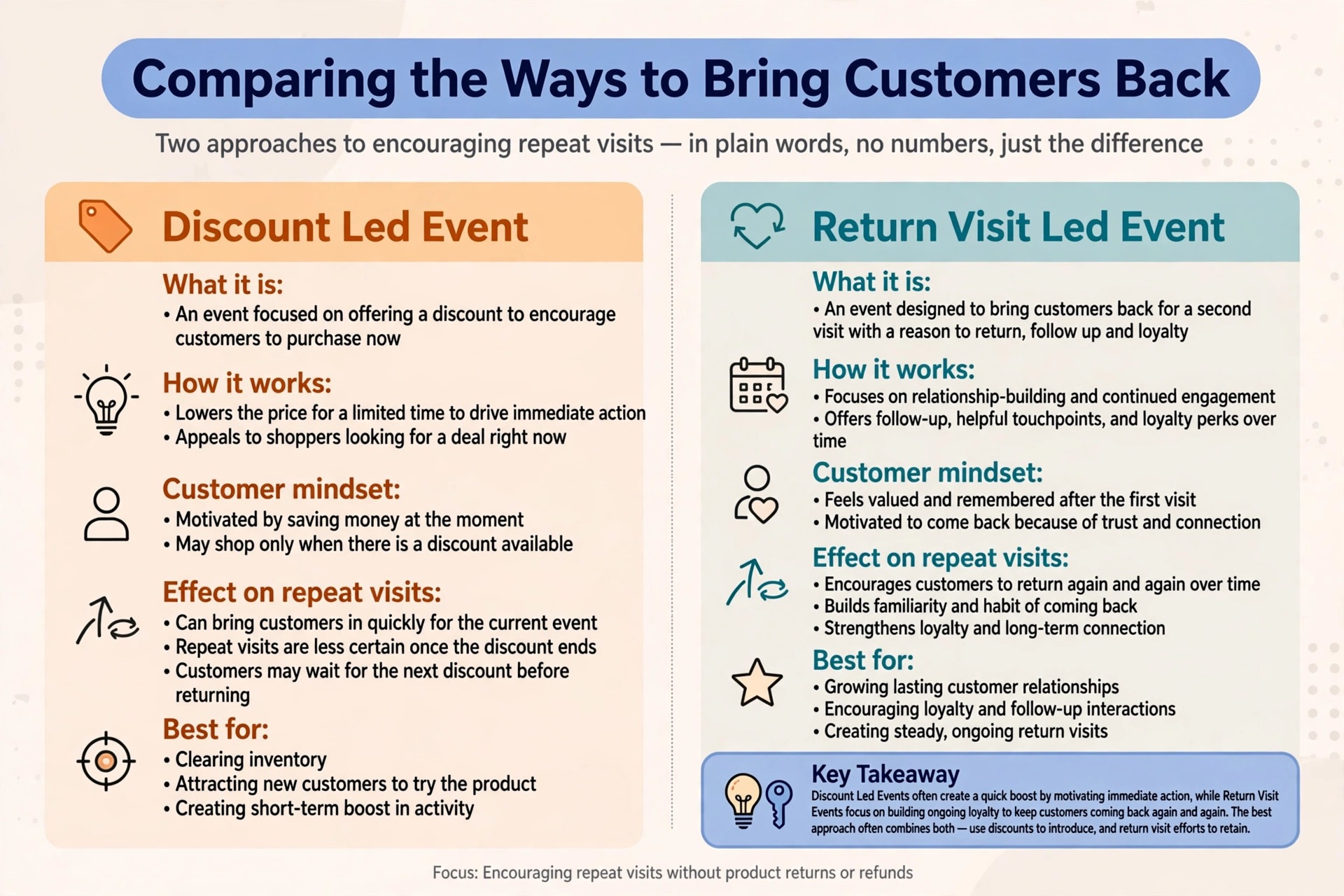
An offer is not the same as a discount, and a reopening that leads with a deep discount often buys the wrong crowd. A steep one day price cut attracts bargain hunters who may never return at full price, and it trains regulars to wait for the next cut. A better offer rewards the behaviour you want after the event, such as a return visit, a booking, a referral, or a first purchase of a new service.
When you learn how to plan a grand reopening small business offer, consider an offer ladder instead of a single deal. A welcome gift for everyone who attends costs little per person and creates a reason to walk in. A return offer, valid for a limited window after the event, gives first time visitors a reason to come back when the room is calm. A bundle or first booking incentive suits service businesses better than a percentage cut, because it frames value around the service rather than the price. Test each offer against margin before you announce it, by working out the cost if twice as many people redeem it as you expect.
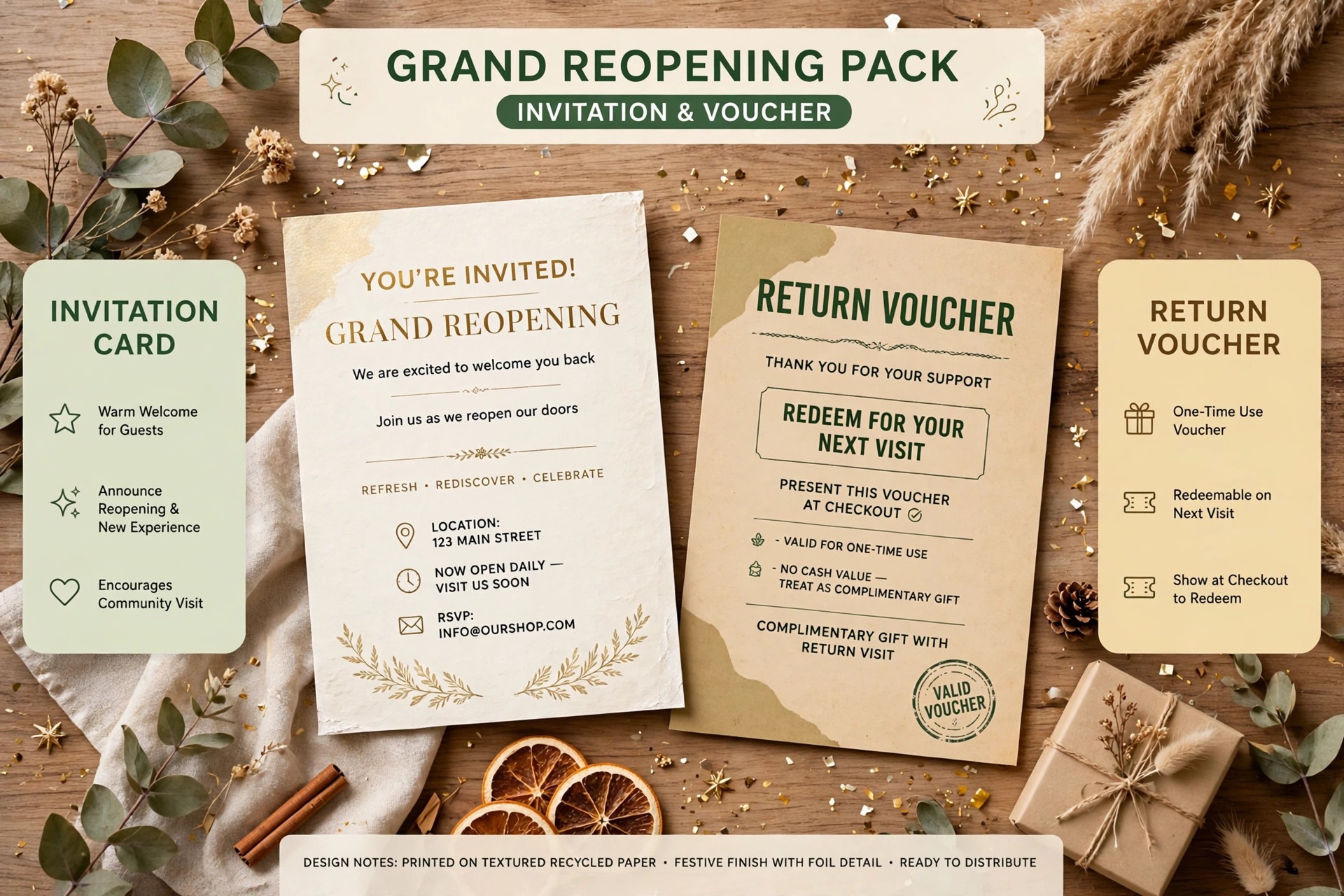
One offer per audience segment is enough. Loyal customers might receive early access or a preview hour, which honours their support without discounting the core product. New visitors might receive a return voucher, which measures whether the event converted them. Neighbouring businesses might receive a partner offer they can pass to their own customers, which extends reach without paid ads. Keep the terms short, printed clearly, and honoured without argument on the day, because a disputed offer undoes goodwill faster than no offer at all.
| Offer type | Best for | Watch out for |
|---|---|---|
| Welcome gift for attendees | Foot traffic and a friendly first impression | Cost per person if turnout beats the forecast |
| Return voucher after the event | Turning first visits into second visits | A window so long that urgency disappears |
| Bundle or first booking incentive | Service businesses and higher value sales | Terms that confuse staff at the till or desk |
| Partner offer for neighbours | Reach through other local audiences | A partner whose audience does not match yours |
| One day deep discount | Clearing old stock only | Training customers to wait for cuts |
Invitations That Reach the People Who Matter
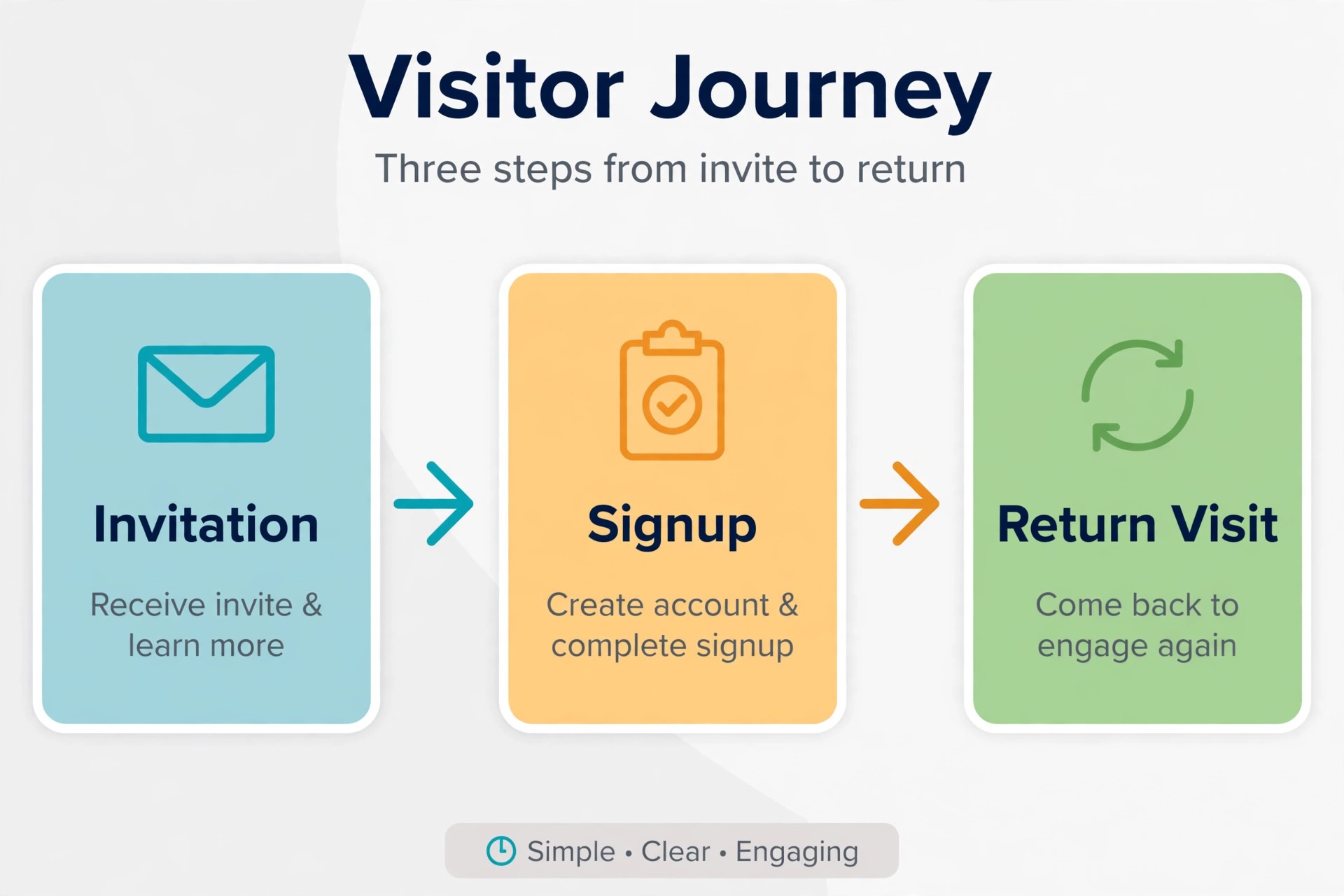
A guest list built from memory on the final week will miss the people who matter most, so build it in groups and keep it in one document. Loyal customers come first, because they are the most likely to attend and the most likely to bring a friend. Neighbouring businesses come second, because they send customers your way all year and a personal invitation strengthens that habit. Community contacts, such as school groups, clubs, charities, and local officials, come third, because they lend credibility and local reach that paid ads cannot buy.
Personal invitations beat mass messages for the top group. A short email or message that names the change, gives the date and time, and offers one clear reason to attend will outperform a generic flyer. For neighbours and community contacts, a short visit in person or a phone call carries more weight than an email alone, especially when you also offer something in return, such as a mention, a shared prize, or a stall at the event. Keep a simple record of who was invited, how, and whether they replied, so reminders go only to people who have not answered.
Social media supports invitations in how to plan a grand reopening small business campaign, but it does not replace them. Create one event listing with the correct date, time, address, and a single call to action, and keep it updated if anything changes.
Post preparation updates on a steady rhythm, roughly twice a week in the final month, rather than a burst on the final day. Each post should answer one question a visitor might have, such as where to park, what is new, what happens at a certain hour, or what to bring. A countdown post without new information adds noise, while a post that shows a finished room or a new product gives people a reason to share it.
Press and Local Coverage Without a Big Budget
Local coverage follows a story, not an advertisement, so how to plan a grand reopening small business press outreach needs a news angle. A renovation alone is rarely news, but a renovation that preserves a local landmark, adds jobs, introduces a service the area lacked, or partners with a charity gives a journalist a reason to write. Lead with that angle in the first two sentences, then give the facts, date, time, address, what is new, and who is available to speak. Attach one good photo of the work in progress or the finished space, because a note without a photo is easier to ignore.
Send the note three to four weeks before the event, then follow up once, briefly, about a week before. Journalists and community newsletter editors plan ahead, and a note sent the day before competes with everything else that day. Offer something specific, such as a short interview, a photo opportunity at a set time, or a ribbon cutting moment, rather than a general invitation to drop by. If a chamber of commerce offers a ribbon cutting, take it, because chambers often bring their own publicity, photos, and local contacts, per guides from chamber event checklists.
Community listings deserve the same care as press. Local event calendars, neighbourhood groups, school newsletters, and library boards reach people who live nearby, which is exactly the audience a small business reopening needs. Check each listing for the correct date and address after you submit it, because a wrong time on one popular calendar can send a group of visitors to a closed door. Keep the wording consistent across listings, so a person who sees the event twice recognises it as the same event.

Staffing, Roles, and the Flow of the Day
Knowing how to plan a grand reopening small business staffing sheet prevents the most common day-of failure, when everyone helps a little and nobody owns anything. Assign named roles before the day, and write them on one sheet that every staff member can see. Useful roles include a greeter at the door, a person managing the signup or booking table, a person handling the till or bookings so queues do not stall, a photographer or social poster, and a troubleshooter who handles problems away from the public floor. Small teams can combine roles, but each role still needs one named owner.
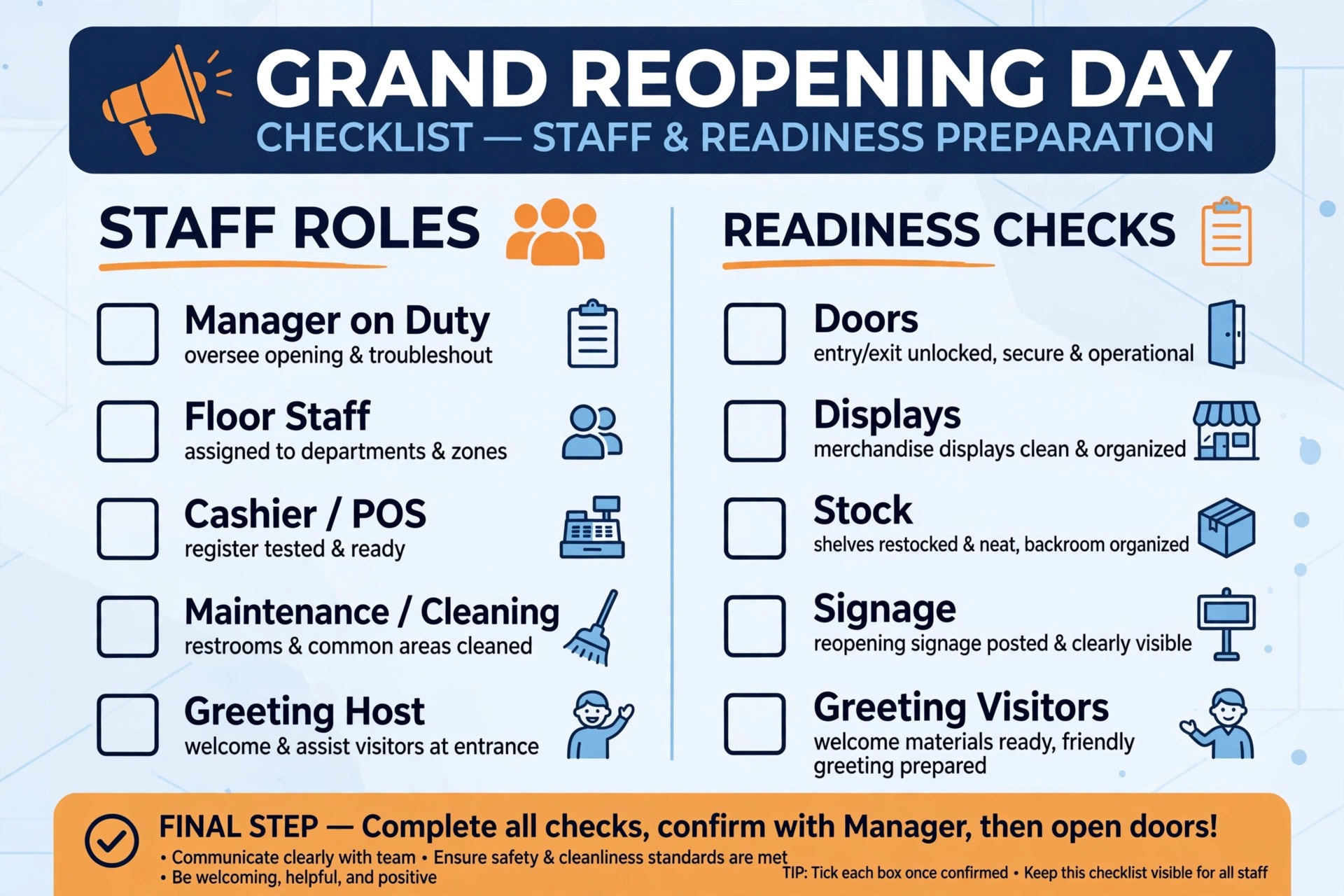
Walk the visitor route before the doors open, as a customer would. Enter from the street or car park, follow the signs, find the till or desk, and look for the signup table. Fix confusing signs, blocked paths, and dark corners during that walk, not after the first visitors arrive. Place the signup or booking offer where people naturally pause, such as near the till or exit, rather than in a corner they must seek out. Make the signup fast, with a name and email or phone only, because a long form at a busy event loses most of its completions.

Food, music, and activities should support the business, not replace it. A tasting, a short demonstration, a tour of what changed, or a kids activity that fits the business gives visitors a reason to stay and talk. Entertainment that pulls attention away from the product, or that needs constant staff attention, costs more than it returns. Schedule the formal moments, such as a welcome speech or ribbon cutting, early enough that early visitors see them, and keep speeches short. Guests came to see the business, not to hear a long programme.
The Reopening Plan Template
Copy the template below into a document, fill in each line, and share it with your team. It is designed so that one person can own each section, and so that nothing important stays in one person’s head. Blank lines between items keep each task readable when printed.
- Week 8 decisions.
- Date, reason in one sentence, budget ceiling, and success targets.
- Guest list groups, loyal customers, neighbours, community contacts, media.
- Suppliers to book, signage, food, photography, entertainment.
- Week 6 actions.
- Save the date messages sent and press note drafted.
- Permits and landlord permissions confirmed in writing.
- Signage and printed material ordered.
- Week 4 actions.
- Offer confirmed and margin checked at double expected redemption.
- Formal invitations sent and event listings published.
- Behind the scenes posts scheduled twice weekly.
- Week 2 actions.
- Reminders sent and suppliers confirmed in writing.
- Soft opening or staff walkthrough held and fixes made.
- Media attendance confirmed and backup plan written.
- Week 1 actions.
- Staff roles sheet printed and briefing held.
- Prizes, bags, signup materials, and till tests completed.
- Day-of programme timed, welcome, ribbon cutting, tours, closing.
- Follow up actions.
- Thank you messages sent within two days.
- Photos and reviews requested within three days.
- Return offers redeemed and repeat visits tracked for thirty days.
Use the template as a living document. When a task changes owner or date, update the document the same day, so the team never works from an old printout. At the end of each week in the final month, hold a short review of what is done, what is blocked, and what must move to the next week. A plan that is reviewed weekly survives surprises, while a plan written once and filed away does not.
Day-of Checklist
Print this checklist, assign each line to a named person, and tick items off in order. The goal is a calm floor, not a perfect performance, so the checklist favours readiness over decoration.
- Doors, signs, and parking.
- Exterior banner and door sign in place and readable from the street.
- Parking directions and accessible entry checked.
- Interior walkthrough done, paths clear, lights and displays working.
- Till, bookings, and signup.
- Till or booking system tested with a real transaction.
- Signup table placed near the till or exit with a short form.
- Return offers printed and staff briefed on terms.
- People and programme.
- Staff roles sheet posted and every role owner present.
- Welcome and ribbon cutting timed and photographer ready.
- Spare staff member assigned to queues and questions.
- Content and follow up capture.
- Photos and short videos captured through the day, with permission.
- Email and phone signups counted at midday and at close.
- Review request cards or QR code placed at the exit.
- Close and tidy.
- Thank you notes list started before staff leave.
- Lost property, borrowed items, and supplier pickups logged.
- Sales, signups, and bookings totals recorded the same evening.
A calm close matters as much as a strong opening. Record totals the same evening, while numbers are fresh, because next week estimates will be wrong. Photograph the room at close as well as at opening, so you can compare what worked and what needs a different layout next time. Thank staff by name before they leave, since a team that feels recognised will staff the next event willingly.
Mistakes That Quietly Undermine a Reopening
The most common mistake when owners learn how to plan a grand reopening small business event is announcing the date before the work is ready. A date announced early creates pressure to open an unfinished room, and visitors remember an unfinished room longer than they remember a delayed opening. If renovation or supply delays threaten readiness, move the celebration date rather than opening a half finished space, and tell invited guests promptly with a new date. Honesty about a delay costs less goodwill than a disappointing first impression.
A second mistake is spending the budget in the wrong order. Decorations and food are visible, so they feel urgent, while invitations and follow up are invisible until the day, when their absence is obvious. Ring fence the invitation and follow up budget first, then allocate the remainder to decor and food. If the total must shrink, cut decor before cutting invitations, because a plain room full of invited guests beats a decorated room that nobody visits.
A third mistake is measuring the wrong result. A busy afternoon can still be a failure if no one signs up, books, or returns. Measure signups, bookings, return voucher redemptions, and repeat visits over the following month, alongside sales on the day. If repeat visits are low, the problem is usually the offer or the follow up, not the event itself, and both can be fixed for the next promotion. Keep the data in one place so the next event starts from evidence, not from memory.
Follow Up That Turns One Day Into Repeat Business
Follow up, often the weakest part of how to plan a grand reopening small business campaign, starts before the event ends. Thank every attendee who left contact details within two days, with a short message that names what they saw and repeats the return offer with its end date. Thank neighbours, partners, and media separately, and share one or two good photos with them, because a partner who feels thanked will promote you again. Ask for a review at the same time, while the visit is fresh, and make the review link easy to find on a phone.
The following month is where a reopening earns its cost. Send a short series of useful messages, not a stream of promotions. A message about a new product, a seasonal service, or a helpful tip related to the visit gives people a reason to open the next email. Track which messages bring bookings or visits, and stop sending the ones that do not. After thirty days, review the targets you set at eight weeks out, and write down what to repeat and what to change. That short review is the difference between an event and a system, because the next reopening, seasonal promotion, or launch starts from a record rather than a guess.
For owners planning a wider local push, it helps to read related guides on getting local listing details right and on promoting a local event through practical channels. A correct listing supports every invitation you send, and event promotion ideas from another local sector often transfer well to a reopening. For the email side of follow up, see the guide on moving to a simpler email tool and the fix for audience sync problems. If the reopening includes a sale, the guide on fixing a discount code that fails at checkout is worth reading before the day, not after a customer reports the problem.
Frequently Asked Questions
How far ahead should a small business plan a reopening?
Eight weeks works well for most small businesses, because it leaves time for invitations, press lead time, signage printing, and a soft opening. A very small event, such as a short preview hour for regulars, can work in three to four weeks if the guest list is already warm and no permits or major suppliers are involved. Cut scope before you cut invitation time, because a short timeline hurts attendance more than it hurts decor.
What should a reopening offer be if discounting hurts margin?
Choose an offer that rewards a return visit or a booking rather than a one day price cut. A return voucher, a bundle, a first booking incentive, or a welcome gift all bring people in without training them to wait for discounts. Test the offer at double the expected redemption rate, so a successful day does not become a loss making week.
Do I need a press release for a small local reopening?
A full press release is optional, but a short press note with a clear local angle is worth sending. Lead with what is new for the area, give the date, time, and address, name a contact for interviews, and attach a photo. Send it three to four weeks ahead, follow up once, and also submit the event to local calendars and community newsletters, which often reach nearby residents more reliably than a newspaper alone.
How do I handle a reopening if renovation work runs late?
Move the celebration date rather than opening an unfinished space, and tell invited guests promptly with the new date and a brief reason. Visitors forgive a delay far more readily than a disappointing first visit. Use the extra time for a soft opening with regulars, so the public event benefits from fixes made in a low pressure preview.
Should I hire a caterer or keep food simple?
Keep food simple unless food is central to your business. Light refreshments that staff can manage without leaving the floor usually beat a full catering setup for a small event. If you do hire a caterer, confirm quantities, timing, dietary options, and cleanup in writing, and assign one staff member to manage the supplier so the owner stays free to greet visitors.
How do I measure whether the reopening worked?
Measure signups, bookings, return voucher redemptions, and repeat visits over thirty days, alongside sales on the day itself. A busy afternoon with no signups or return visits is a weak result, while a modest afternoon that produces steady repeat visits is a strong one. Record totals the same evening, review them after thirty days, and keep the review with the plan template for the next event.
A Calm Verdict for Owners Short on Time
If you remember one thing about how to plan a grand reopening small business event, remember the order. Reason first, then targets, then budget, then invitations, then the day itself, then follow up. A reopening built in that order can be modest and still succeed, because the right people hear about it, the offer gives them a reason to return, and the follow up keeps the conversation going after the balloons come down. A reopening built in reverse, decor first and invitations last, can look impressive for an afternoon and leave nothing behind.
Start this week by writing the one sentence reason, the three targets, and the budget ceiling on a single page. Everything else in this guide hangs from those three lines, and a team that can see them will make better decisions without waiting for the owner to approve every detail. The doors will open once. Plan so that the second visit, not just the first, is already in motion before the first visitor leaves.