
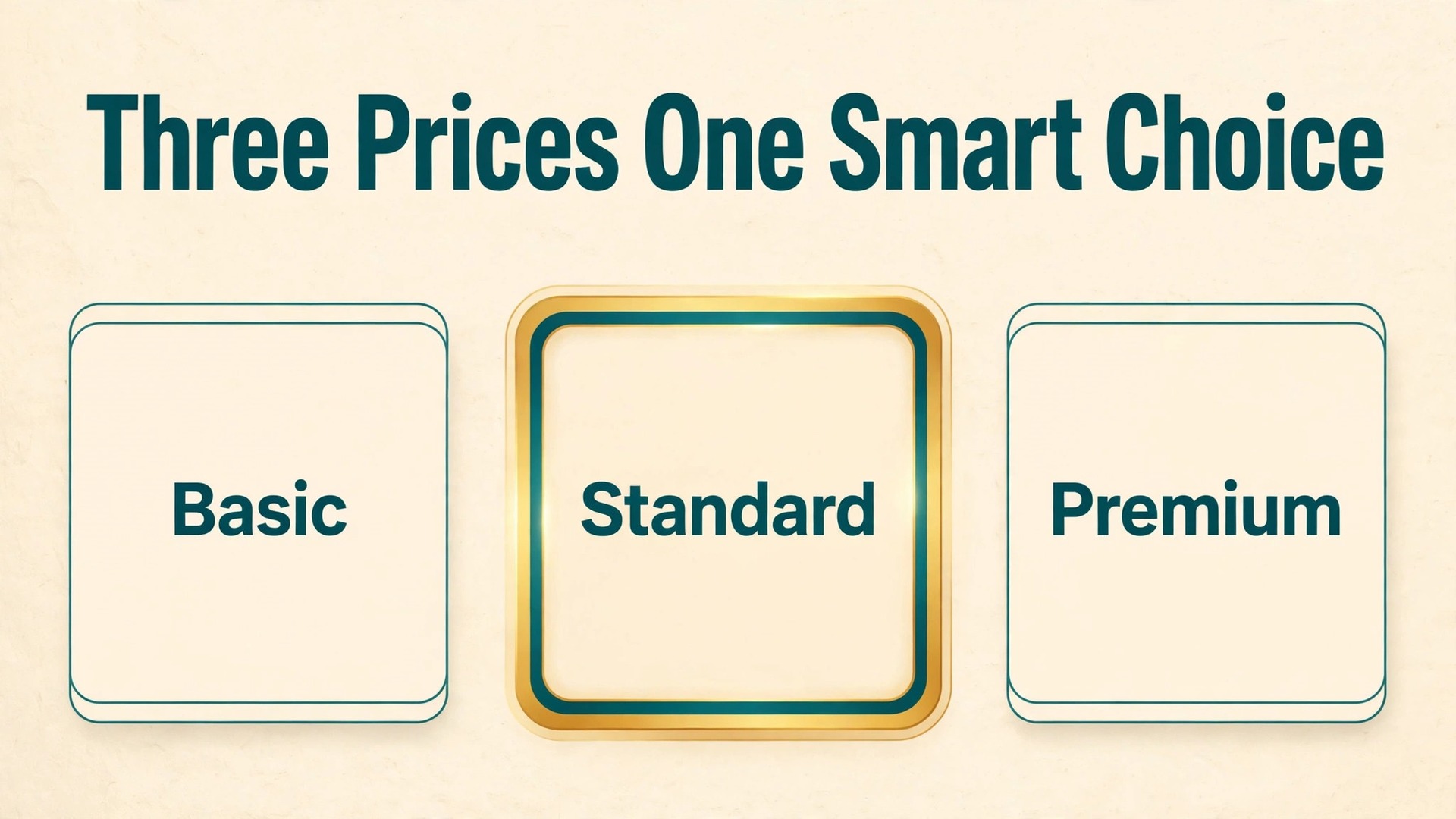
Two cleaning companies quote the same house. One sends a single number, 189 dollars for a deep clean. The other sends three packages. The premium package costs 329 dollars and covers everything including oven, fridge, and windows. The standard package costs 219 dollars and covers the rooms most families actually need. The basic package costs 149 dollars and covers floors, surfaces, and bathrooms only. Most callers pick the standard package, and they feel good about the choice, because 219 dollars sits next to a 329 dollar option that makes it look sensible. That contrast is the working idea behind a price anchoring strategy small service business owners can use without gimmicks.
That contrast is the whole point of a price anchoring strategy small service business owners can put to work this week, and this guide shows how to build one without tricks, fake discounts, or prices you cannot defend.
A price anchoring strategy small service business owners can build in a week
An anchor is simply the first price a customer sees, and every price after it gets judged against that number. When the first price is high, the next price feels moderate. When the first price is low, everything after it feels expensive. Service businesses usually anchor by accident. A plumber who opens with an hourly rate anchors the job to that rate. A designer who quotes a single logo price anchors the whole project to one number. A tutor who names one session fee anchors every later conversation to that fee. A deliberate ladder changes the frame. The customer compares packages with each other instead of comparing your price with a competitor they found in a thirty second search.
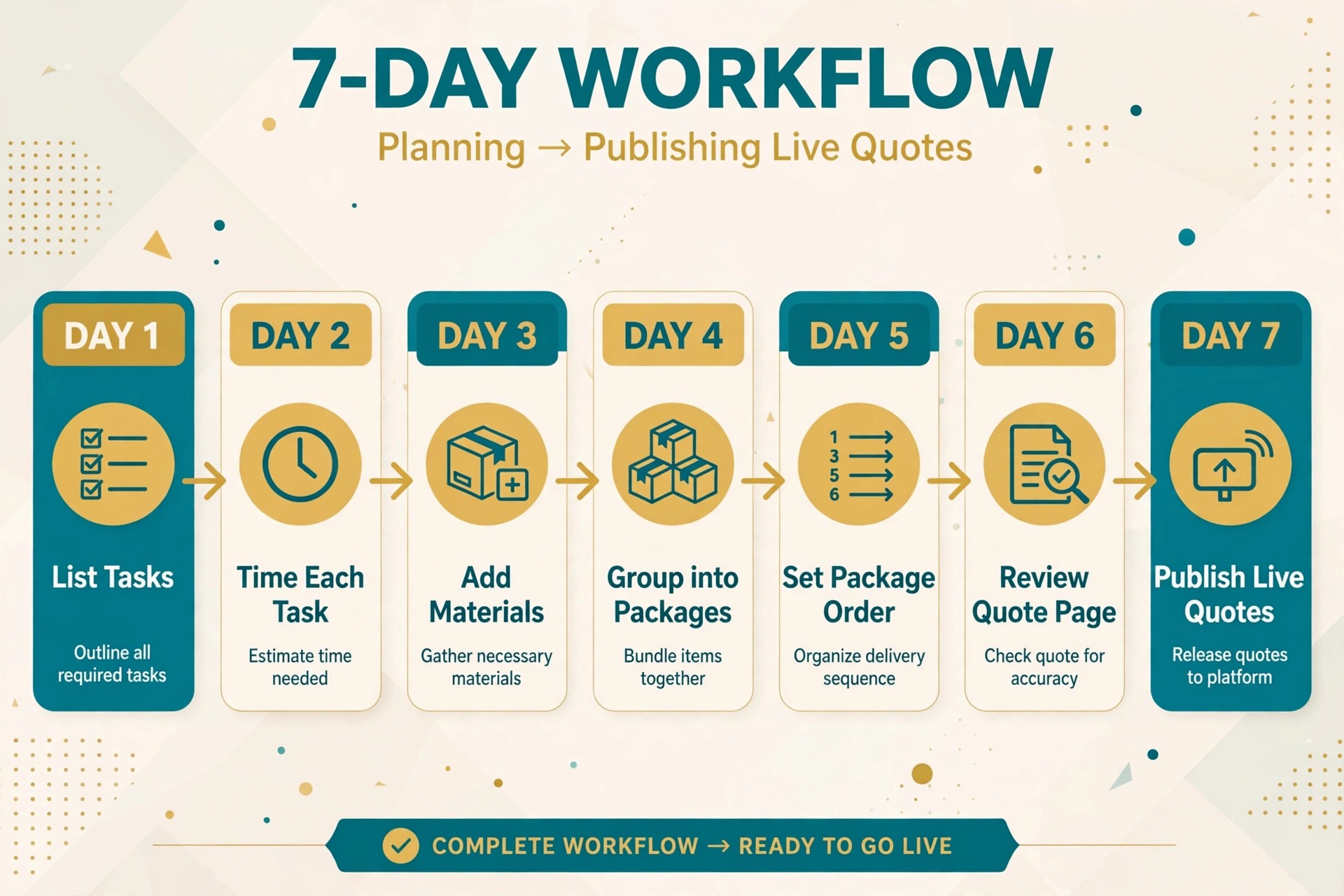
Building the ladder takes a week, not a rebrand. Day one, list every task you already do for a typical job and sort those tasks into must have, standard, and premium groups. Day two, price each group from your real costs and the time each task takes, not from a competitor price list. Day three, write the three packages in plain words a customer can read in under a minute.
Day four, put the ladder on your quote page, your proposal template, and your phone script in the same order. Day five, test it on five real quotes and record which package each customer picks. By day seven you will know whether your middle package is the one customers actually want, or whether your ladder needs its rungs moved.
What anchoring does to a buying decision
Customers rarely judge a service price in isolation, because a service has no shelf price to compare with. They judge it against the last number they saw, the first number you showed, and the other options in front of them. Behavioural researchers call the first effect anchoring, and the classic demonstration is the magazine subscription test. When readers saw two options, a digital only subscription and a print plus digital bundle at the same higher price, most picked the cheaper digital option.
When a third option appeared, print only at the same price as the bundle, most readers switched to the bundle, because the print only option made the bundle look like a bargain. The bundle had not changed. The frame around it had.
The same frame works on a quote, but only when every option is real. A decoy package that nobody would ever buy, priced to make the middle look good, reads as a trick the moment a customer reads it carefully. A premium package that you genuinely deliver, with real extra work inside it, reads as a choice. The difference matters for repeat business. A customer who feels steered into a package they did not want will not complain on the call.
They will quietly not book again, and they will tell a friend the price felt pushed. A customer who picked the middle package because it matched their needs will book again and will describe your pricing as clear. The ladder should therefore be built from real work, real time, and real costs, with the premium tier reserved for customers who genuinely want the fullest version of the job.
The three rungs of a service offer ladder
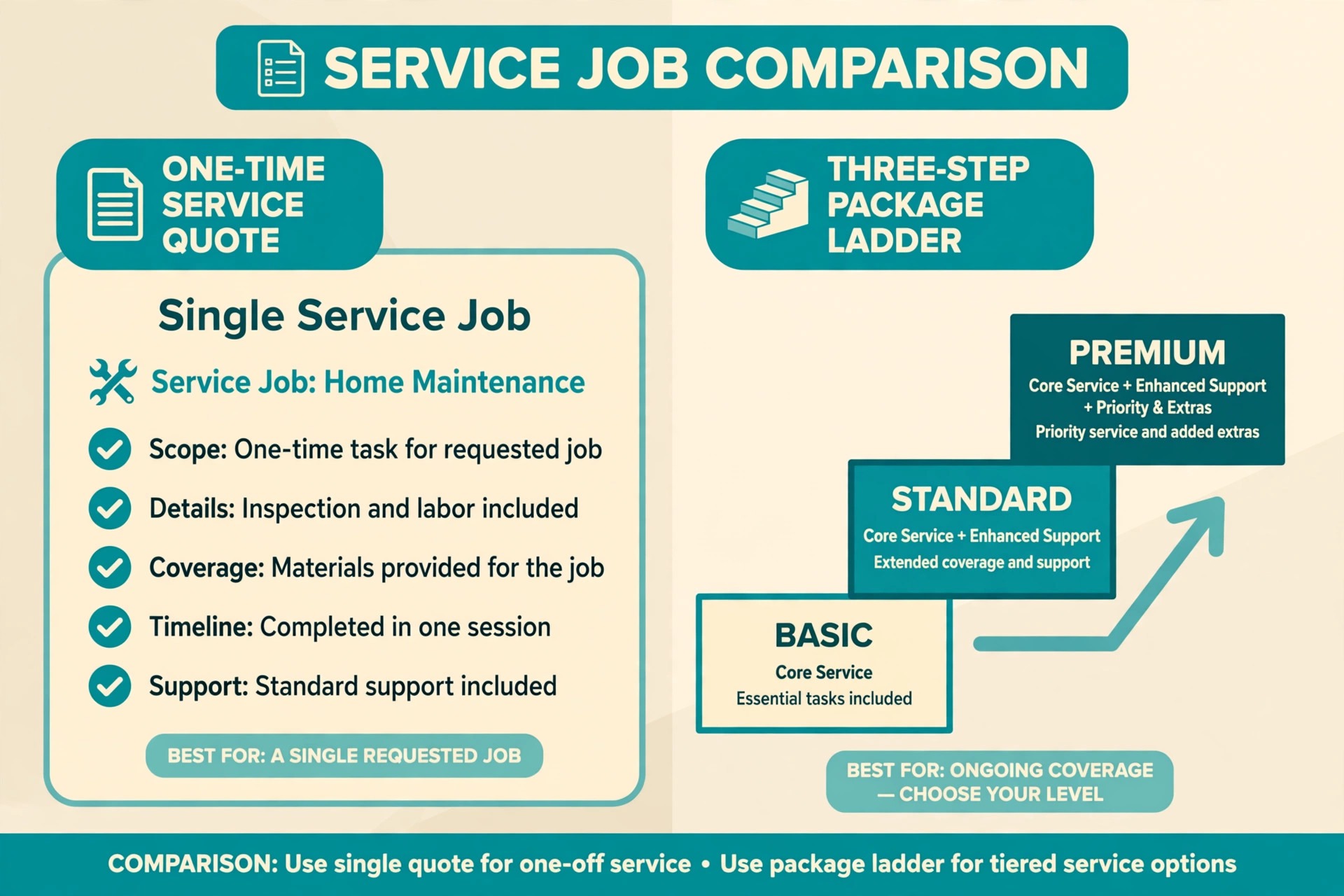
Most service businesses need three rungs, not five. Three rungs give a customer a clear low, middle, and high choice without a comparison table that takes ten minutes to read. Five rungs turn a quote into homework, and customers who face homework delay the decision or pick the cheapest option just to end the process. The basic rung should solve the core problem and nothing more, and it should be priced so the business still earns a proper margin on it. A basic rung sold at a loss trains customers to expect loss making prices and fills the diary with the least profitable work.
The standard rung is the package you most want to sell, and it should carry the features most customers ask for, the ones you already deliver on most jobs without thinking. Price it from your costs plus the margin you need, then check it against the premium rung. The gap between standard and premium should be large enough that the premium feels like a step up, and small enough that a customer who wants the extras does not feel punished for wanting them.
The premium rung should include the extras that take real time, such as deep detail work, priority scheduling, extended guarantees, or a second visit. It should also be the rung you show first on the page and name first on the phone, because the first price a customer hears becomes the anchor for everything that follows.
| Package rung | What it covers | Who it suits | Pricing job |
|---|---|---|---|
| Basic | Core problem solved, standard materials, normal scheduling | Budget focused buyers with a simple job | Must earn a proper margin |
| Standard | Core problem plus the extras most customers ask for | Most customers, and the rung to sell most | Priced from real costs and time |
| Premium | Everything in standard plus detail work and priority scheduling | Buyers who want the fullest result | Shown first, sets the anchor |
The anchoring worksheet you can copy today
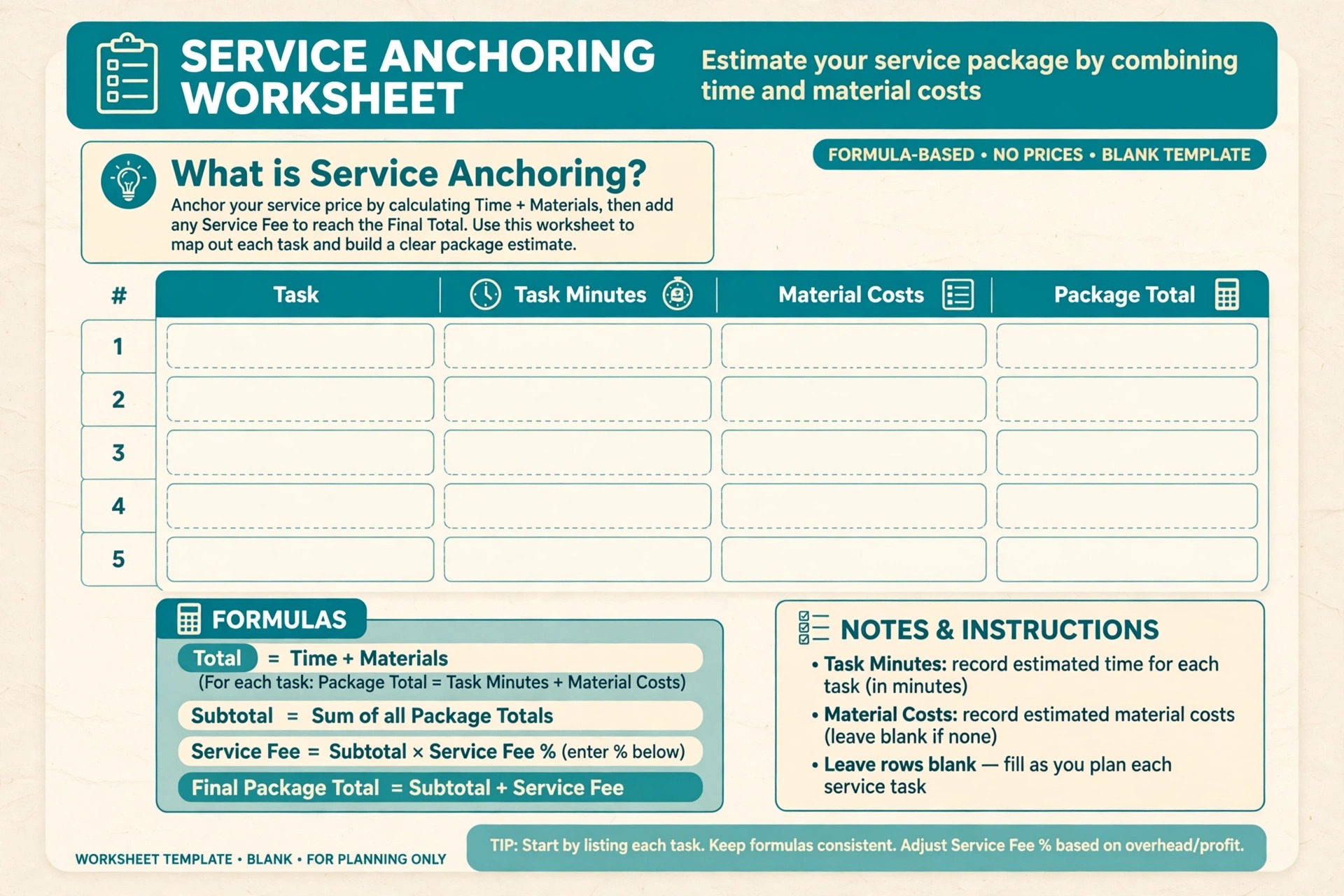
A worksheet turns a pricing idea into numbers you can defend in a sales conversation. Start by writing the job type at the top, because a ladder for a deep clean and a ladder for a weekly clean are different ladders, and mixing them confuses every quote. Then list every task in the job, the minutes each task takes, and the material cost of each task. Add your labour cost, your travel cost, and your overhead share for the job. The total is your floor. No rung should sit below it, including the basic rung, because a rung below the floor loses money on every sale and teaches the market that your work costs less than it does.
Next, group the tasks into the three rungs and price each rung from the grouped costs plus the margin you need for that rung. Many owners price the premium rung first, because the premium rung sets the anchor, and then work downward. That order helps, because it forces the premium rung to be genuinely fuller rather than a standard package with a higher number attached. Then write one plain sentence for each rung that says what the customer gets, one sentence that says what is not included, and one sentence that says what happens if the job turns out bigger than expected.
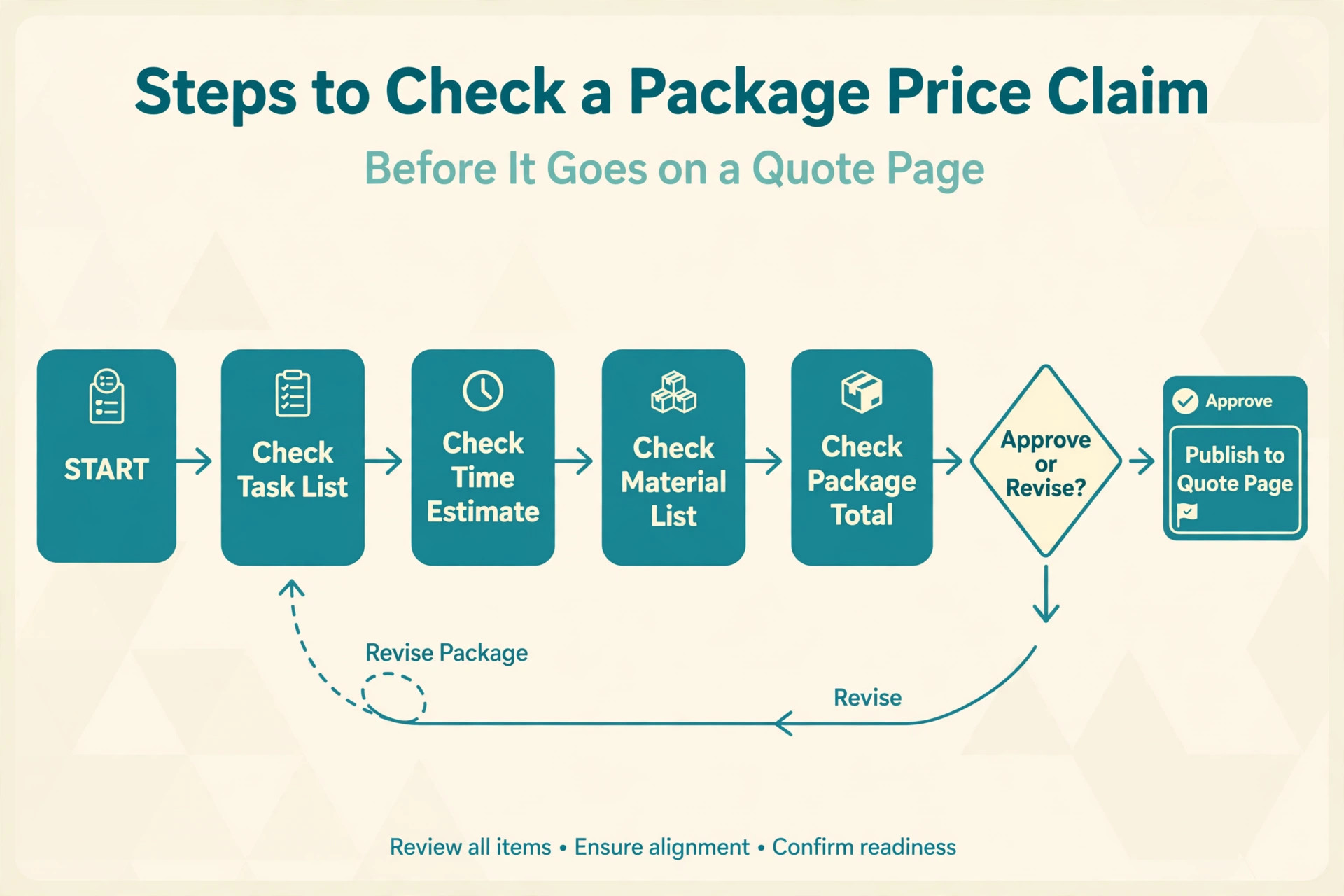
Customers trust ladders that state exclusions plainly, because exclusions are where surprise charges live, and surprise charges are what make customers feel tricked. Test the finished worksheet on three past jobs by repricing them through the ladder and checking whether the package each customer would have picked matches the work they actually received.
Where to place the anchor so customers actually see it
An anchor only works if the customer meets it before they meet your standard price. On a quote page, that means listing packages premium first, standard second, and basic third, reading left to right or top to bottom in that order. Most businesses list cheapest first out of politeness, and then wonder why every conversation becomes a negotiation downward from the cheapest price. Cheapest first anchors the conversation to the lowest number, and every later number sounds like an upsell. Premium first anchors the conversation to the fullest version of the job, and the standard package then reads as a sensible saving rather than an expensive upgrade.
On the phone, the same order applies. Name the premium package first, describe it in one sentence, name the standard package second, and name the basic package last. On a written proposal, put the three packages on one page, with the standard package marked as the most popular choice, and put the total price of each package in the same size type. A smaller type size for the premium price, or a missing total that forces the customer to add up line items, reads as hiding the number, and hidden numbers destroy the trust the ladder is meant to build.
The anchor should also appear before any discount language. A discount quoted before the ladder is shown anchors the customer to the discounted number, and the full ladder then looks like a price rise rather than a set of choices.

Anchors that backfire and how to avoid them
The fastest way to ruin a ladder is a fake original price. A package marked as reduced from a price it never sold at is not anchoring, it is a false claim, and customers who check will find it. Regulators in several markets treat invented reference prices as misleading advertising, and the reputational cost runs far beyond any single sale. If you offer a genuine seasonal discount, show the real previous price, the dates it applied, and the reason for the change, such as an off season rate. If you cannot show those facts, do not show a crossed out price at all. A clean ladder with no discount language outsells a ladder built on a discount nobody believes.
A second backfire is a premium rung that nobody can buy. A premium package priced at three times the standard package, with features no customer in your market has ever asked for, does not anchor the standard package. It makes the whole business look out of touch, and customers conclude the standard package is overpriced too, because the ladder itself looks invented. Keep the premium rung within reach of your best customers, roughly one and a half to two times the standard price for most services, and fill it with extras your best customers already request.
A third backfire is changing the ladder for every customer. Anchors need consistency to feel like real prices. If one customer sees a premium package at 329 dollars and another hears 279 dollars for the same work in the same week, the ladder is not a pricing strategy at all, it is a negotiation, and customers will negotiate every time.
Measuring whether the ladder actually works
A price anchoring strategy small service business owners run should be measured on package mix, not on gut feeling. Record every quote for four weeks, noting which package the customer picked, which package they asked about first, and whether they negotiated the price. A healthy ladder for most services sells the standard package to roughly half to two thirds of customers, the basic package to a smaller share, and the premium package to the rest.
If almost everyone picks basic, the standard package is either too expensive relative to basic or its extra features are not features customers value. If almost everyone picks premium, the premium package is probably underpriced, and the business is giving away detail work that should be paid for.
Also track average job value before and after the ladder, close rate on quotes, and repeat booking rate by package. Average job value should rise modestly, because customers who would have bought a single basic service now see a standard package that matches their real needs. Close rate should hold steady or improve, because a clear ladder answers the value question before the customer asks it.
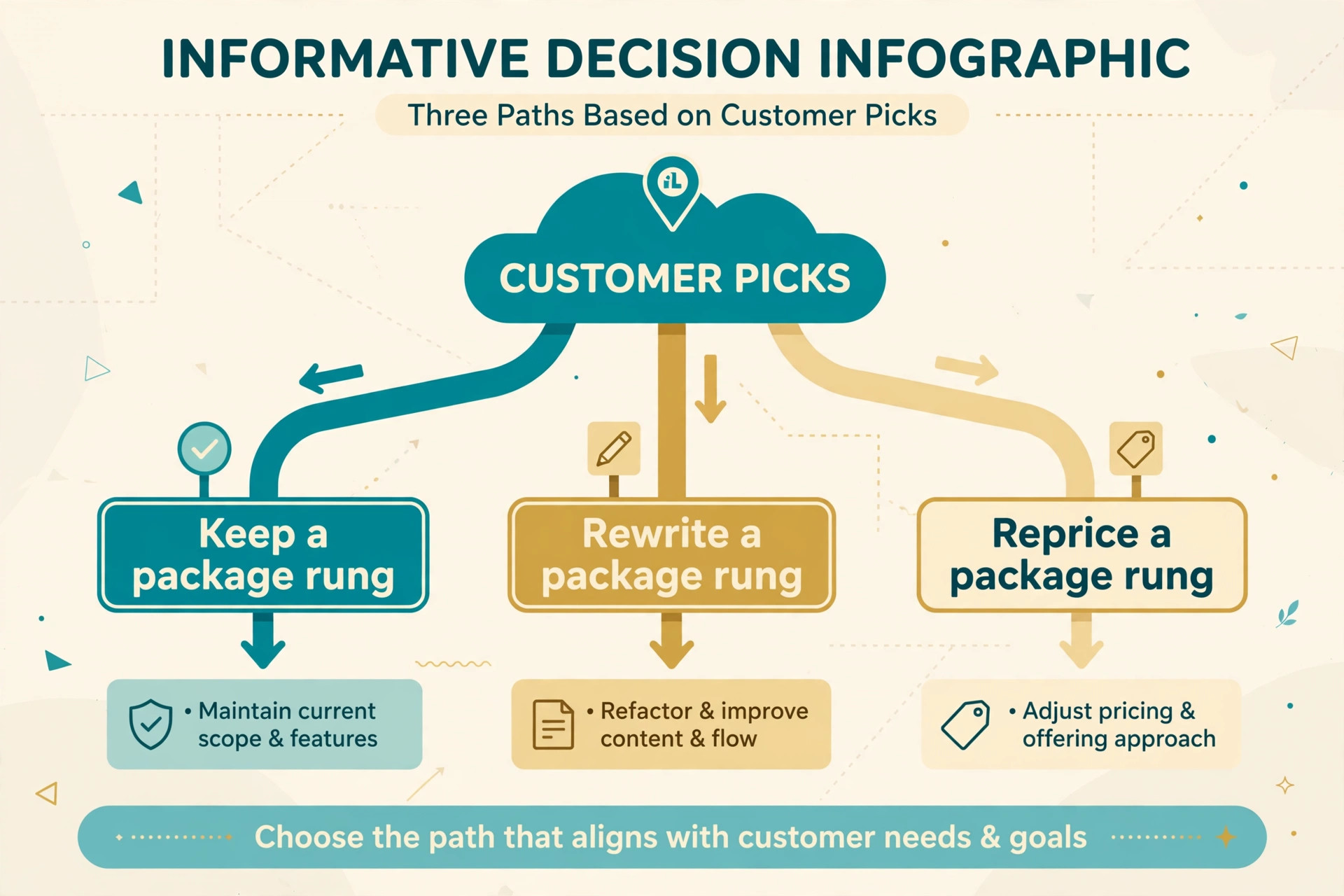
Repeat booking rate is the honesty check. If repeat bookings fall after the ladder launches, customers may feel pushed into packages they did not want, and the ladder needs its rungs rewritten, not its prices raised. Review the numbers monthly for the first quarter, then quarterly, and change only one rung at a time, so you know which change caused which result.

Mistakes that quietly break a good ladder
The most common mistake is writing package descriptions from the business point of view instead of the customer point of view. A description that lists internal process steps, such as a three stage filtration pass or a two coat application method, means nothing to a customer choosing between packages. A description that says what the customer will notice, such as floors that stay clean for two weeks longer or a finish that survives daily use, helps the customer choose. Rewrite every feature as a customer outcome before the ladder goes live, and cut any feature you cannot explain as an outcome in one sentence.
Another mistake is hiding the basic package. Some owners bury the cheapest option at the bottom of a page or leave it off the quote entirely, hoping customers will pick standard by default. Customers who want the basic option then feel trapped, and customers who cannot find a low price assume the business is expensive and leave. Show all three rungs with equal clarity, and let the standard package win on its merits. A third mistake is forgetting the follow up. A customer who picked basic for a small job may want standard next time, and a customer who picked premium once may expect premium treatment on every later contact.
Record the package each customer picked, and use it to shape the next quote, so the ladder becomes a relationship tool rather than a one off sales page. For a related pricing problem, read how to handle a price objection in How to Handle a Price Objection, and for the wider pricing picture see Premium Pricing Strategy and How to Raise Prices.
How to price each rung from real costs
Start with time, because time is the cost most service owners underestimate. Time every task in a typical job for two weeks, including setup, travel, cleanup, and the messages around the job, not just the work the customer sees. A job that looks like ninety minutes of work often takes two and a half hours once driving, loading, and invoicing are counted. Price the rung from the full time, not the visible time, or the ladder will look profitable on paper and lose money on every booking. A price anchoring strategy small service business owners can trust starts with this honest time log, because every later number in the ladder rests on it.
Next, add materials at their real replacement cost, not the bulk price you paid six months ago. Add vehicle costs per job, card fees on the payment method most customers use, and a share of fixed costs such as insurance, software, and phone bills. Many owners skip the fixed cost share because it feels abstract, but a business that prices without it slowly runs out of cash for exactly those bills. Divide monthly fixed costs by the number of jobs you complete in a month, and add that figure to every rung. The result is a floor price for each rung, and the selling price sits above the floor by the margin you need to stay in business and grow.
Margins should differ by rung, because the rungs carry different risks. The basic rung deserves a solid margin, since basic jobs are often the most price sensitive and the most likely to expand once you arrive. The standard rung can carry your normal target margin, because it is the volume seller and the rung your diary depends on. The premium rung can carry a higher margin, because it includes detail work, priority scheduling, or guarantees that cost you time and attention.
When a customer asks why premium costs more, the answer should point to specific extra work, not to a vague promise of better quality. A price anchoring strategy small service business owners defend easily is one where every price gap maps to extra work a customer can name.
Finally, test the ladder against three real past jobs before it goes live. Reprice each job through the three rungs, and check which rung the customer would have picked and whether that rung covers the work you actually did. If a past customer would have picked basic but received standard level work, the basic rung is missing features customers expect, or the standard rung is carrying work that belongs in basic.
Adjust the task groups, not just the numbers, because moving a task between rungs changes what each package means. Run this test every time you change suppliers, hire staff, or add a service, since costs drift quietly and a ladder priced a year ago may no longer match the work.
Presenting the ladder on the phone and in writing
On the phone, the ladder needs a short script, not improvisation. Open by confirming the job and the outcome the customer wants, then name the premium package in one sentence that states its total price and its headline benefit. Follow with the standard package, marked as the choice most customers pick, and close with the basic package for customers who want the core job only.
Then stop talking and let the customer respond. Owners who keep describing features after the three packages are named usually talk the customer down to basic, because each extra sentence gives the customer a new reason to hesitate. A price anchoring strategy small service business owners can run on the phone is short, ordered premium first, and quiet after the third price.
In writing, the ladder needs one page, not a long proposal document. Put the three packages side by side where the format allows, with the same information for each rung, such as what is included, what is not included, the total price, and the next step. Use the same number of lines for each rung where possible, because a rung described in ten lines looks padded next to a rung described in two lines, even when the work justifies the difference.
Include a single next step under the ladder, such as replying with a preferred package and two available dates, so the customer can say yes without writing a long message. A proposal that ends with an open question, such as asking the customer what they think, invites a negotiation. A proposal that ends with a choice invites a booking.
For returning customers, present the ladder differently. Remind them which package they picked last time, and name the package that fits the new job, whether that is the same rung or a different one. A customer who bought premium last time and hears a basic quote this time may feel downgraded, while a customer who bought basic and hears only premium options may feel pushed.
The ladder is a menu, not a script to repeat identically, and the best use of it is matching the rung to the job in front of you. A price anchoring strategy small service business owners keep for years is one that adapts to the customer while keeping its prices consistent, so every customer sees the same ladder and trusts that the prices are real.
Frequently Asked Questions
How many packages should a small service business offer?
Three packages work for most services, because three choices give a clear low, middle, and high without turning the quote into homework. Two packages force a yes or no decision on one price, and the customer has no middle option to land on. Five or more packages slow the decision down, and slow decisions often end in no decision at all. Start with three, measure the package mix for a month, and only add a fourth rung if a distinct group of customers keeps asking for a version of the job that none of the three rungs covers.
Should the premium package be shown first on the quote page?
Yes, show premium first, standard second, and basic third, because the first price a customer sees becomes the anchor for every price after it. Showing cheapest first anchors the conversation to the lowest number, and the standard package then sounds like an upsell rather than a sensible choice. Show all three packages with equal clarity and the same size price type, mark the standard package as the most popular choice, and let the customer compare real options instead of hunting for a hidden low price.
Is a decoy package ethical for a small business?
A package that exists only to make another package look good, with no real buyer in mind, is a poor idea for a business that depends on repeat customers and local reputation. Customers read packages carefully, and a rung that nobody would sensibly buy reads as a trick. Build every rung from real work that real customers want, price each rung from real costs, and let the premium rung earn its place by containing detail work, priority scheduling, or extras that genuinely take time.
How far apart should the three package prices sit?
For most services, the premium package sits roughly one and a half to two times the standard price, and the standard package sits clearly above basic without doubling it. The exact gaps depend on your costs, because the gaps must reflect real differences in work, not round numbers chosen for effect. If the gap between standard and premium is tiny, customers see no reason to pick standard when premium costs little more. If the gap is huge, customers assume the premium package is padded, and trust in the whole ladder falls.
What if every customer picks the cheapest package?
When almost everyone picks basic, the problem is usually the standard package, not the customer. Either the standard price is too high relative to the extra work it contains, or its extra features are features customers do not value. Ask the last ten basic buyers what would have made standard worth the difference, and rewrite the standard rung around their answers. Also check whether the basic rung is priced below its true cost, because a loss making basic rung will always win, and it will win the business into trouble.
Can a price anchoring strategy small service business owners use work for hourly services?
Yes, it works when hourly work is packaged into defined outcomes, because an hourly rate on its own anchors every conversation to the clock. Convert the most common jobs into three fixed packages, such as a standard visit, a detailed visit, and a full service visit, each with a clear scope and a fixed total. Keep hourly billing for genuinely open ended work, and state the hourly rate alongside the packages so customers can see both. Packaged prices give customers a choice, and choice is what anchoring needs in order to work at all.
The Anchoring Verdict for a Small Service Business
Start with one job type, not your whole price list. Build three real packages from real tasks and real costs, show premium first, mark standard as the most popular choice, and track the package mix for four weeks. If standard sells to about half your customers and repeat bookings hold steady, the ladder is working, and you can extend it to the next job type.
If basic takes nearly every sale, rewrite the standard rung around what customers actually value, and test again. Anchoring is not a trick for squeezing a higher price from one customer. It is a clearer way of showing what the job can be, so the customer picks the version that fits, and the business earns a fair price for the work it actually does.
The ladder also changes how you talk about price increases. When costs rise, you can adjust one rung, explain the extra work or higher material cost behind the change, and let customers see the full ladder rather than receiving a single higher number with no context. Customers accept an explained increase on a clear ladder far more readily than an unexplained increase on a single price, because the ladder shows them a choice still exists. That choice is what keeps a price rise from feeling like a take it or leave it demand.