
A podcaster who picks the wrong domain loses listeners at the exact moment they are most interested, and the best domain name generators for podcasters in this guide are judged on whether they prevent that loss. The show sounds great, the episode ends, the host reads out the address, and the listener types it wrong. What follows is the list of mistakes behind that moment, and the tools that stop them happening.
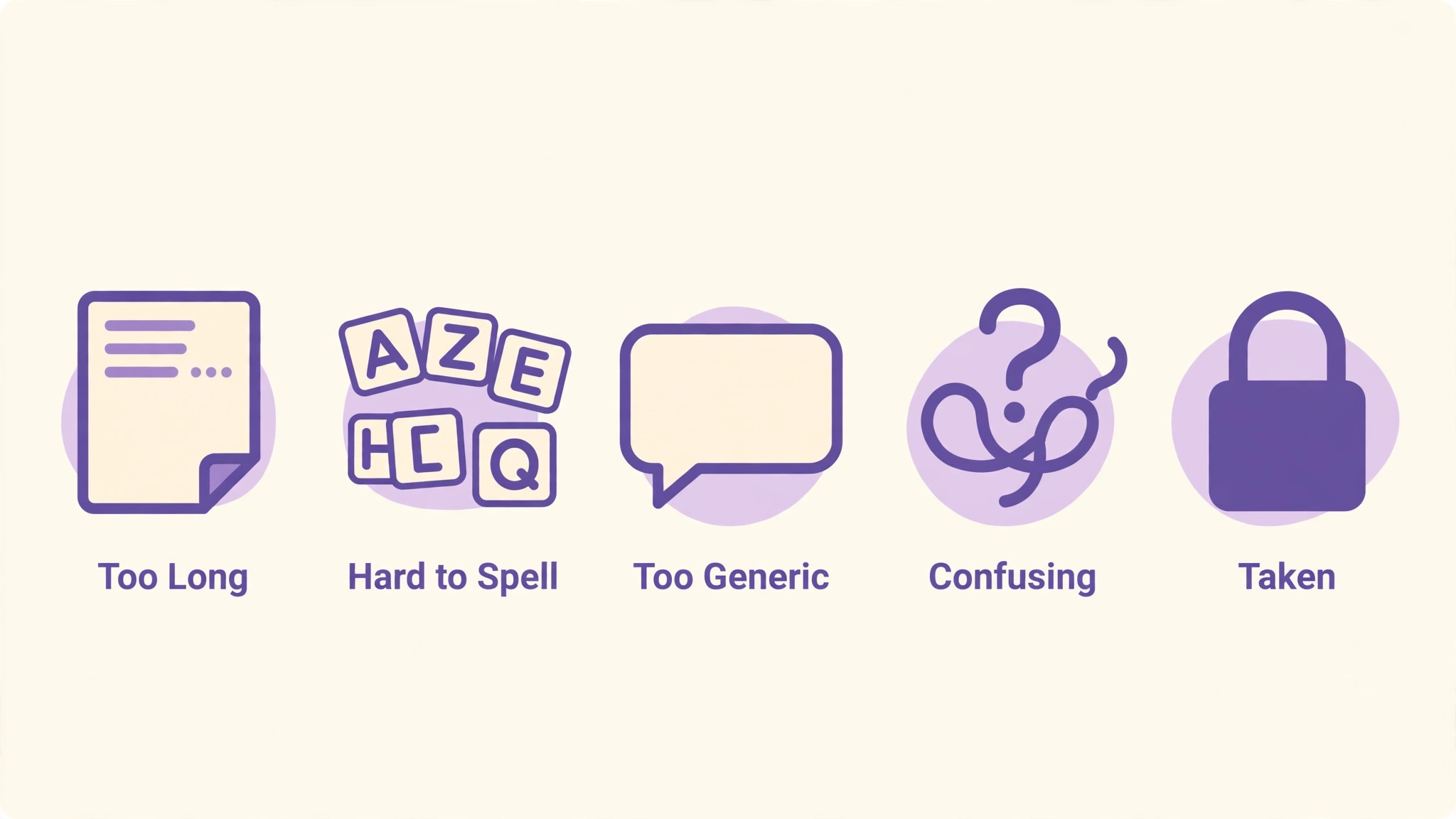
Five Naming Mistakes That Cost Podcasters Listeners
The first mistake is spelling. A show called “The Nightly Knead” sounds warm on air and reads as a puzzle in a search bar, because half the audience will type “Neid” or “Kneed” and land somewhere else. A name that needs spelling out loud is a name that leaks listeners, and the fix is to test every candidate by saying it once and asking a friend to type it.
The second mistake is length. A domain with four words and two hyphens is a domain nobody types from memory, and a listener driving home will not pull over to write it down. Short names win because they survive the car, the gym and the kitchen, which is where most podcasts are actually heard. Two words beat four, and one word beats two, when the word is still free.
The third mistake is the clever extension. A dot show, dot fm or dot podcast address looks neat on a cover, but a listener who hears the name will type dot com out of habit and land on someone else’s site. The new extensions have their place, and this guide covers them, yet the dot com remains the default that needs no explanation.
The fourth mistake is the name that only works in one language. A show with an international audience should avoid words that change meaning across borders, and it should avoid letters that do not exist on every keyboard. A quick check with two friends in different countries catches most of these before the domain is bought.
The fifth mistake is buying the domain before checking the show name itself. A podcaster who registers a domain, prints it on cover art and then finds a bigger show with the same name has bought a problem. The name check comes first, across podcast apps, social handles and the domain, and the generator should be doing that check in one pass.
The Naming Rules That Survive a Say-It-Aloud Test
Say the name once, exactly as it would be read at the end of an episode, and then ask someone to write it down. If the spelling matches, the name passes the first rule. If the listener asks how to spell it, the name fails, and no amount of clever branding will fix a name that needs a spelling lesson at the end of every episode.
Keep the name under fifteen characters when the choice exists, and drop filler words that add length without meaning. “The” at the start is the usual culprit, since it adds four characters and a word that nobody remembers to type. A name that fits on one line of cover art usually fits in a listener’s memory too.
Match the domain to the show name as closely as the market allows, and treat a mismatch as a cost rather than a detail. A domain that differs from the show name by one word forces the host to explain the difference in every episode, and that explanation is airtime spent on admin. The generator should be judged on how close it gets, not on how many ideas it produces.
Check the name in writing as well as in speech, because a name that sounds clear can look confusing on a screen. Double letters, silent letters and unusual spellings all survive the spoken test and fail the written one, since the listener must type what they heard. A name with one spelling and one sound is the goal, and a name with two spellings is a name that will lose a listener every week.
Namecheap vs Porkbun
Namecheap and Porkbun are the two registrars most podcasters end up choosing between, and the difference is the renewal price rather than the first year. Namecheap sells a dot com for about 10 dollars in the first year, with free privacy protection and a generator called Beast Mode that checks batches of names at once. The renewal climbs to about 18 to 20 dollars a year, which is where the bill grows.
Porkbun sells the same dot com for about 11 dollars a year, and the price stays flat, with free privacy protection, free SSL and free email forwarding included. There is no first-year discount and no renewal shock, which makes the five-year cost lower even though the first year looks similar. The generator is plain and fast, checking hundreds of extensions at once.
The deciding question is how long the show will run. A podcaster testing an idea for one season should take the cheaper first year at Namecheap and move on if the show folds. A podcaster building a show for five years should take Porkbun and pay the same price every year. Both generators are free to use, and both let a podcaster check ideas without creating an account.
How to Choose the Best Domain Name Generators for Podcasters
Start with the idea quality, because a generator that returns a hundred names nobody would say aloud is worse than useless. The best generators take a few seed words, mix in synonyms and check availability in the same step, so every idea on the screen can actually be bought. A list of taken names is a waste of an evening.
Then check the extension range, because a podcaster needs more than dot com. The show may live on dot fm, the community may live on dot show, and the main site still needs the dot com, so a generator that checks one extension at a time will slow the work to a crawl. The tools on this list check dozens of extensions in one search.
Finally, check the price of the name the generator suggests. A generator that pushes premium names at hundreds of dollars is selling inventory, not helping a podcaster, and the suggestions should be sortable by price. The registration itself usually costs 10 to 15 dollars a year for a standard dot com, and any suggestion far above that should be flagged as a premium listing rather than a normal registration.
The 8 Tools at a Glance
The eight tools below span every way a podcaster can find and buy a show domain, from a registrar with a built-in generator to an AI name inventor. The best domain name generators for podcasters were judged on idea quality, extension range, the real first-year cost and how well the name survives being said aloud.
| Tool | Best for | Starting price | Free plan | Watch out |
|---|---|---|---|---|
| Namecheap | Ideas plus cheap registration | About 10 dollars a year | Yes | Renewal climbs to about 18 dollars |
| Porkbun | Flat low renewal prices | About 11 dollars a year | Yes | Plainer generator |
| GoDaddy | Checking many extensions | About 12 dollars a year | Yes | Renewal near 23 dollars a year |
| Design.com | Domain inside a brand kit | Subscription | Yes | Less depth per tool |
| Nameboy | Keyword combinations | Free | Yes | Older interface |
| DomainWheel | Rhyme and sound ideas | Free | Yes | No registration built in |
| Namelix | Invented brand names | Free ideas | Yes | Premium names cost far more |
| Wordoid | Made-up words that sound real | Free | Yes | No registration built in |
Namecheap carries the glance grid on the combination of ideas and registration, and Porkbun holds it on the five-year cost, since its renewal never jumps. Namelix is the fit when the show needs an invented name, and GoDaddy is the route when the podcaster wants to check every extension in one place.
Best Pick by Job
The table below assigns a single pick from the best domain name generators for podcasters to each common naming job, so look for the row that describes your show.
| Job | Pick | Why it wins here |
|---|---|---|
| Ideas plus registration | Namecheap | Beast Mode generator, cheap first year |
| Lowest long-term cost | Porkbun | Flat 11 dollars a year, free privacy |
| Most extensions checked | GoDaddy | Huge extension range in one search |
| Domain inside a brand kit | Design.com | One account, shared brand kit |
| Keyword combinations | Nameboy | Fast blends from seed words |
| Sound and rhyme ideas | DomainWheel | Names that sound good spoken aloud |
| Invented brand name | Namelix | AI names with logo mockups |
| Made-up word | Wordoid | Short invented words, language checked |
Is a Dot Com Still Worth Chasing?
A dot com is still worth chasing, and the reason is habit rather than prestige. Listeners type dot com without thinking, and a show on any other extension has to teach its audience the difference in every episode. That teaching costs airtime, and airtime is the one thing a podcaster cannot buy back. A dot com removes the lesson entirely.
The case for another extension is real when the dot com is taken and the alternative is a long or mangled dot com. A short dot fm address beats a four-word dot com with hyphens, and a dot show address beats a dot com that adds the word podcast to the end. The test is the say-it-aloud rule from earlier in this guide. If the alternative passes the test and the dot com fails it, take the alternative.
The practical move is to buy both when the budget allows. The dot com carries the main site, and the dot fm or dot show redirects to it, so a listener who types either one arrives in the right place. The second domain costs about 10 dollars a year, which is cheap insurance against a lost listener, and the redirect takes five minutes to set up.
A new show should also check how the domain looks on cover art and in a podcast app listing, since that is where most listeners will see it written down. A short domain fits on one line under the show title, while a long one wraps or gets cut off, and the cut-off version is the one the listener remembers. The domain is a piece of the show identity, not just an address, and it should be judged with the same eye as the cover art.
The 8 Tools in Detail
The eight tools below are ordered by what a working podcaster actually demands. The best domain name generators for podcasters earn their spot here on idea quality, the say-it-aloud test and the real cost of the domain they suggest, and the order below follows the glance table exactly.
1. Namecheap
Namecheap is the right call for a podcaster who wants ideas and registration in one session, and the advantage lies in Beast Mode. The generator takes a keyword, produces hundreds of combinations across many extensions, and checks availability as it goes, so every name on the screen can be bought. A podcaster can search up to 50 names at once, which suits a brainstorming session with a co-host.
A standard dot com usually registers for about 10 dollars in the first year, with free privacy protection included, and the renewal climbs to about 18 to 20 dollars a year. The dashboard is clean, DNS management is straightforward, and the support chat runs around the clock. The rub is the renewal, which is the highest among the cheap registrars here, so a show that runs for years will pay more at Namecheap than at Porkbun.
2. Porkbun
Porkbun is the best fit for a podcaster who wants the lowest cost over five years, and it finishes second on flat pricing. A dot com costs about 11 dollars a year, and the price stays the same at renewal, with free privacy protection, free SSL and free email forwarding included. There is no first-year discount to expire and no renewal shock to budget for.
The generator is plain and fast, checking hundreds of extensions at once, and it suits a podcaster hunting for a short dot com or a neat dot fm address. The interface is simpler than Namecheap, with fewer upsells and a cleaner checkout, and the support is responsive. Its flaw is the smaller feature set around the domain, since Porkbun sells domains first and everything else second, so a podcaster who wants hosting and email in the same account will look elsewhere.
3. GoDaddy
GoDaddy is the standout choice for a podcaster who wants to check every extension in one place, and it sits third on range. The generator searches across hundreds of extensions, suggests alternatives when the first choice is taken, and shows premium names alongside standard registrations. A podcaster who wants a dot com, a dot fm and a dot show in one search will find them together.
The pricing is the part to read carefully. A dot com is advertised from about 1 dollar in the first year on a three-year term, with the remaining years billed at about 23 dollars each, and a one-year term costs about 5 dollars with a promotional code. The standard renewal is about 23 dollars a year, which is the highest here, and privacy protection is included free on most extensions. The upsells are aggressive, so a podcaster should buy the domain and decline the extras.
4. Design.com
Design.com holds fourth place, as a podcast domain is part of a brand, and the subscription builds the remaining identity from the same kit. A single payment covers one logo, one brand kit, one website, one business card and a domain search, the same colours and fonts running through the lot, so the show art, the site and the card agree from the start. A podcaster who is launching a show and building its identity in the same seven days gets more mileage from that one payment than from a domain-only tool for twice what it costs.
The domain generator itself is solid rather than striking. It builds name ideas from a few keywords, checks availability and offers the extensions a show needs. Namecheap generates better ideas and Porkbun registers cheaper, and buying Design.com for either would disappoint. Its value sits in the shared kit, and the domain is one more piece that matches.
5. Nameboy
Nameboy is the first choice for a podcaster who wants fast keyword combinations, and it comes in fifth on speed. Type one or two seed words, and the tool blends them with synonyms, prefixes and suffixes, returning dozens of available dot com ideas in seconds. The results are plain and practical, with no AI flourish, and a podcaster who knows the topic but not the name will find a workable idea quickly.
This tool is free and needs no account, and it checks availability as it generates, so the list is limited to names that can actually be bought. The interface is older than the rest of this list, with a dated layout and no logo mockups, and it does not register domains, so the podcaster buys the name at a registrar afterwards. The combination engine is what sells it, and everything around it is the drawback.
6. DomainWheel
DomainWheel is the natural choice for a podcaster who wants names that sound good spoken aloud, and it takes sixth place on sound. The tool takes a seed word and returns ideas built on rhymes, similar sounds and related words, which suits a show name that will be heard before it is read. A podcaster can hear the name in the results, since the suggestions are grouped by how they sound rather than how they look.
The tool costs nothing and checks availability across common extensions, with a clean layout that keeps the focus on the names. It does not register domains, so the podcaster takes the chosen name to a registrar, and it offers no logo mockups or brand tools. Its charm is the sound-first approach, which matches how podcast audiences actually meet a show name, and the snag is that the work after the idea still belongs to the podcaster.
7. Namelix
Namelix is the smartest choice for a podcaster who wants an invented brand name, and it claims seventh place on invention. The tool takes a few seed words and uses AI to invent short, brandable names, then shows each one with a simple logo mockup, which helps a podcaster judge how a name will look on cover art. The names sound like real brands rather than keyword combinations, which suits a show that wants to stand apart.
The ideas cost nothing and need no account, and the paid extras start around 65 dollars for a name paired with a logo package. Premium names listed on its marketplace can cost far more, and those listings should be read as a shop rather than a registration, since the price buys the name from its current owner. The catch is that invented names can feel empty without a story behind them, so a podcaster should test the favourite with the say-it-aloud rule before buying.
8. Wordoid
Wordoid is the clearest choice for a podcaster who wants a made-up word that sounds real, and it holds eighth place on invention. The tool invents short words from a seed, checks that they sound natural in English, and shows which domains are available, which suits a show that wants a name nobody else owns. The results are checked against language patterns, so the invented words avoid awkward letter combinations.
The tool is free of charge and needs no account, and it lets the podcaster set the language, the length and the pattern, so a five-letter invented word is as easy to find as a ten-letter one. It does not register domains and offers no logo or brand tools, so the podcaster buys the name at a registrar afterwards. The secret is the uniqueness of the result, and the limit is that a made-up word needs more marketing before anyone remembers it.
What If Your Show Name Is Already Taken?
A taken show name is a fork in the road, and the best domain name generators for podcasters earn their keep by showing the fork early. The first option is a small change, adding one word that sharpens the meaning, such as the city, the format or the audience, and checking whether the new version passes the say-it-aloud test. Meaning added by a change means a better name, and clutter added by a change means a worse one.
The second option is a different extension, and it works when the alternative is short and easy to say. A dot fm address suits a podcast naturally, and a listener will accept it when the host reads it clearly. The third option is a new name entirely, and it is the right choice when the taken name belongs to a bigger show in the same topic, since competing for the same name is a fight the smaller show will lose.
The check that matters most is the podcast apps. A domain can be free while the show name is taken in Apple Podcasts and Spotify, and the apps are where the audience actually finds the show. Search the name in both apps, check the social handles, and only then buy the domain, because the domain is the cheapest part of a rebrand and the cover art is the dearest.
Should You Buy Every Extension?
Buying every extension is a waste of money for most podcasters, and the budget is better spent on the two that matter. The dot com carries the main site, and one alternative that matches the show, usually dot fm or dot show, catches the listeners who type the wrong ending. Every extension beyond those two protects against a problem that rarely happens, since a listener who types dot net by mistake will usually search the show name and find it anyway.
The exception is a show with a name that is easy to misspell or easy to copy. A show with a growing audience should buy the common misspellings of its own name, since a copycat site on a misspelling can siphon listeners and damage trust. The cost is about 10 dollars per domain per year, so three protective domains cost about 30 dollars a year, which is a fair price for a show with real traction and a waste for a show with ten listeners.
Buy the dot com first, add one alternative when the show finds its audience, and add misspellings only when the audience is large enough to attract copycats. A new show with five domains and no listeners has spent money on the wrong problem, and the time is better spent recording the next episode.
Frequently Asked Questions
Should my domain match my show name exactly?
Ideally yes, and the best domain name generators for podcasters are judged on how close they get. An exact match means the host reads the address once and the listener types it once, with no explanation in between. When the exact match is taken, the closest version that passes the say-it-aloud test is the right choice, and a small change that adds meaning beats a long change that adds clutter.
Do I need a dot com for a podcast?
No, but it helps. A dot fm address suits a podcast and a dot show address is clear, and both work when the host reads them plainly. The dot com remains the default that listeners type without thinking, so a podcaster who can buy it should, and a podcaster who cannot should buy the alternative and redirect the dot com version if it ever becomes free.
How much does a podcast domain cost?
A standard dot com usually costs about 10 to 15 dollars for the first year, with renewals from about 11 dollars at Porkbun to about 23 dollars at GoDaddy. The generator itself is free on every tool in this guide, so the only cost is the registration, plus about 10 dollars a year for each extra extension the podcaster chooses to protect.
Can I change my domain after launching?
Yes, with a redirect from the old address to the new one, so listeners who type the old domain still arrive. The cover art, the show notes and the social profiles all need updating, and the old domain should be kept for at least a year while the audience moves over. A rebrand costs more in time than in money, so the name should be chosen carefully the first time.
Should the domain include the word podcast?
Only when it adds meaning. A show called “The Daily Brew” does not need the word podcast in its domain, since the audience already knows it is a podcast. A show with a generic name, such as “The Daily Show” in a crowded topic, may need the extra word to stand apart, but a longer domain that passes the say-it-aloud test beats a shorter one that nobody remembers.
What if someone else owns my show name as a domain?
Check whether the domain is in use or parked. A parked domain can sometimes be bought through the registrar’s brokerage service, though the price is usually far above a standard registration. A domain in active use by another show in the same topic means the name should change, since two shows with one name will confuse every listener who searches for either one.
The Do and Do Not Verdict
Do say the name aloud before buying it, do check the podcast apps and the social handles first, and do buy the dot com when it is free, because those three steps prevent almost every naming problem in this guide. Do keep the name short, do test it on a friend who has never heard the show, and do buy one alternative extension when the audience grows large enough to need it.
Do not buy a name that needs spelling out loud, do not buy five extensions for a show with ten listeners, and do not register the domain before checking the show name itself, because those three mistakes cost more to fix than the domain ever cost to buy. The best domain name generators for podcasters in this guide all find good names, so the verdict is about discipline rather than tools. Namecheap is the route for most shows, Porkbun is the selection for the long run, and the say-it-aloud test is the pick that matters most.