
A chain store wins on price and next day delivery. An independent bookstore wins on taste, trust and the moment a customer says, “I loved that book, what should I read next?” The best AI tools for bookstores should protect that second advantage, not replace it with generic recommendations. If the tool makes your store feel like every other online shop, it is hurting you, even if it saves an hour a week. If it helps staff find the right book faster, write better shelf talkers, keep popular titles in stock and sell online without losing the store voice, it is earning its place.
That comparison matters because bookstores face two pressures at once. Online giants set expectations for search, availability and delivery, while in store customers still want a human who knows the difference between a literary novel and a beach read that happens to be literary in the blurb. The tools below are grouped by the job they do: running the shop, selling online, helping customers discover books, and creating the words and events that bring people back.
AI in a bookstore is most useful when it works from your own data. Your sales history, your staff picks, your event attendance and your local community tell a better story than a global bestseller list. A tool that learns from your store will recommend books your customers actually buy. A tool that only repeats national trends will fill your shelves with books that sit. Keep that test in mind for every tool below: does it lrn from your store, or does it just repeat the market?

Why the best AI tools for bookstores matter in 2026
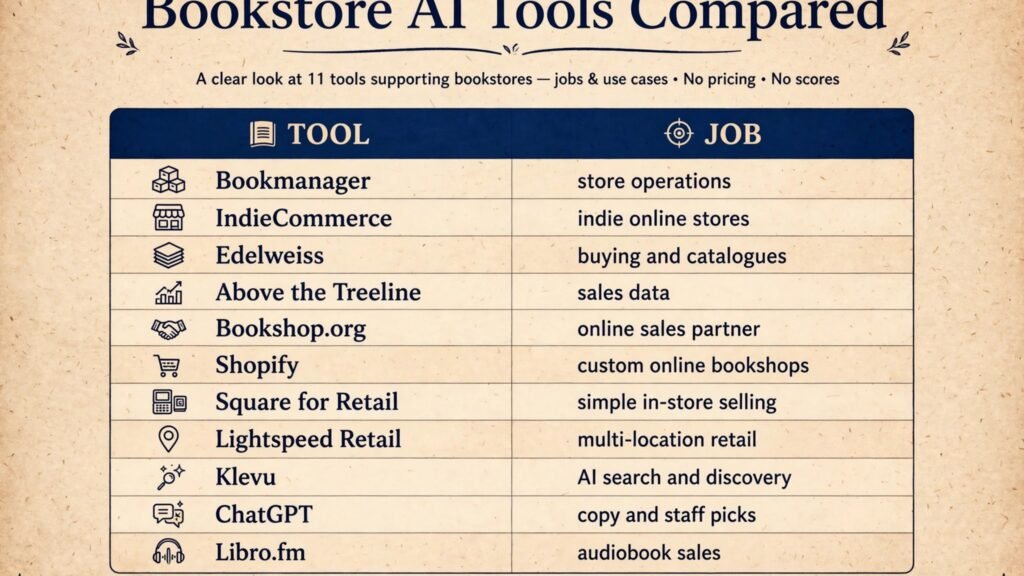
The shortlist at a glance
| Tool | Best for | Core strength | Pricing note |
|---|---|---|---|
| Bookmanager | Independent store operations | Inventory, ordering and point of sale for bookshops | Paid plans, check vendor checkout for current pricing |
| IndieCommerce | Indie online stores | Ecommerce built for ABA member stores | Paid plans, check vendor checkout for current pricing |
| Edelweiss | Buying and catalogues | Publisher catalogues, ordering and title research | Paid plans, check vendor checkout for current pricing |
| Above the Treeline | Sales data | Sales reporting and title analysis for indies | Paid plans, check vendor checkout for current pricing |
| Bookshop.org | Online sales without a full shop build | Sell online and support indie stores | Commission based, check vendor site for current terms |
| Shopify | Custom online bookshops | Flexible ecommerce and apps | Paid plans, check vendor checkout for current pricing |
| Square for Retail | Simple in store selling | Point of sale, payments and basic inventory | Paid plans, check vendor checkout for current pricing |
| Lightspeed Retail | Multi location retail | Inventory across stores and channels | Paid plans, check vendor checkout for current pricing |
| Klevu | AI search and discovery | Search that understands book queries and intent | Paid plans, check vendor checkout for current pricing |
| ChatGPT | Copy and staff picks | Drafting descriptions, newsletters and event copy | Free tier and paid plans, check vendor checkout for current pricing |
| Libro.fm | Audiobook sales | Audiobooks that support indie bookstores | Membership based, check vendor site for current terms |
Pick by store type
| Store type | Best pick | Why |
|---|---|---|
| Single independent shop | Bookmanager plus IndieCommerce | Operations and online selling built for indies |
| Shop with strong online sales | Shopify plus Klevu | Control over design, search and recommendations |
| Shop that needs simple till and stock | Square for Retail | Fast to learn, easy for part time staff |
| Multi store group | Lightspeed Retail | Stock visibility across locations |
| Shop that sells mainly through partners | Bookshop.org plus Libro.fm | Online and audio reach without building everything |
| Buying led shop | Edelweiss plus Above the Treeline | Catalogue research tied to real sales data |
Bookstores that also run courses or author workshops share tools with education sellers. See our guide to the best AI tools for course creators for platforms that handle enrolment and content alongside a shop.
Running the shop: inventory, ordering and till
1. Bookmanager
Bookmanager is built specifically for bookstores, and that focus shows in daily use. It handles inventory, special orders, point of sale, customer records and supplier ordering in a system that understands ISBNs, editions, formats and publisher terms, rather than treating a book like any other retail item. For a store that takes special orders every day, that detail matters. A customer who orders a signed edition, a large print version or a specific printing needs the exact item, not a close match.
AI and automation help by flagging reorder points, suggesting quantities from sales history and cleaning up duplicate records. The real benefit is time: staff spend less time checking stock by hand and more time talking to customers. Bookmanager also gives a clearer picture of what is actually selling in your store, which is the foundation for better buying.
Watch out for: Bookmanager rewards clean data. If staff create manual workarounds for special orders or fail to record returns consistently, reports will mislead buying decisions. Train every staff member on the same order workflow, including part time weekend staff.
Best for: independent bookstores that want a system designed for books, not adapted from general retail.

2. IndieCommerce
IndieCommerce is the American Booksellers Association ecommerce platform for member stores. It lets an indie store sell online with book specific features, such as preorders, staff picks, event listings and integration with store inventory systems. For a store that wants to sell online but does not want to build and maintain a custom ecommerce site, IndieCommerce removes a large amount of technical work.
AI value comes from search, recommendations and content help on the site, plus the ability to surface staff picks and local events in a way that feels like the store, not a generic shop. Customers can order for pickup or delivery, browse by category and find books that staff have championed, which keeps online sales connected to in store taste.
Watch out for: design flexibility is more limited than Shopify. If your store wants a highly custom site, unusual checkout flow or deep app integration, you may feel constrained. Weigh that against the time saved on book specific setup.
Best for: ABA member stores that want a credible online shop without hiring a developer.
3. Square for Retail
Square for Retail is the simplest till option in this list for a small bookstore. It handles payments, basic inventory, customer records and reporting, and staff can learn it quickly. For a shop with a small team, seasonal staff or a market stall alongside the main store, that speed of learning is a real advantage. A new hire should be able to serve, take a special order note and process a return without a week of training.
AI and automation features help with sales summaries, inventory alerts and customer follow up, but Square is not book specific. It will not understand publisher catalogues or edition details in the way Bookmanager does, so teams often use it for selling and keep buying research elsewhere.
Watch out for: check how special orders and preorders are handled before you commit. A general retail system can make it easy to sell what is on the shelf, and harder to track what a customer has ordered for next week.
Best for: small bookshops, pop up shops and stores that prioritise a simple till.
4. Lightspeed Retail
Lightspeed Retail suits bookstores with multiple locations, a warehouse, or a large online and in store mix. It tracks inventory across stores, handles purchasing, and gives managers a view of stock, sales and margins by location. For a group, that visibility prevents the common problem of one store being out of a title while another store has five copies sitting on a shelf.
AI driven reporting helps managers spot slow moving stock, bestselling categories and margin problems by location. That data supports transfers between stores, smarter reorders and clearer decisions about which categories deserve more shelf space.
Watch out for: Lightspeed is more complex and more expensive than Square, and it needs disciplined stock counts to stay accurate. If counts are skipped, the multi location view will look precise while being wrong.
Best for: bookstore groups and larger single stores with complex inventory.
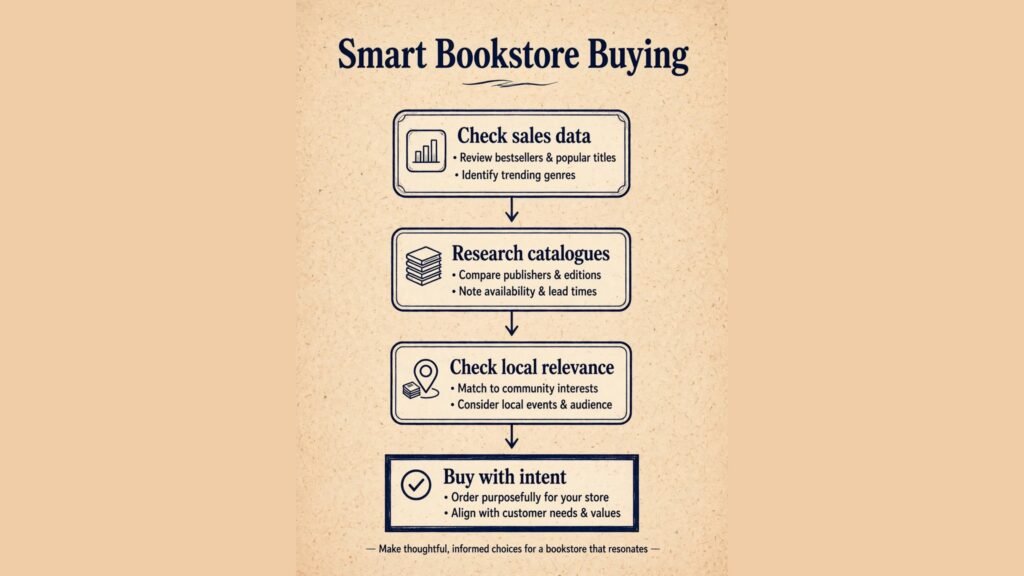
Buying smarter: catalogues and sales data
5. Edelweiss
Edelweiss is where many booksellers research titles before they buy. Publisher catalogues, advance reading copies, title details, comparisons and ordering tools sit in one place, so buyers can compare similar titles, check publication dates and plan seasonal buying. For a store that wants to buy with intent rather than reacting to publisher reps alone, Edelweiss is a working tool, not just a catalogue viewer.
AI helps by surfacing related titles, summarising catalogue information and helping buyers search by theme, audience or comparable author. A buyer planning a display for a local book club, a school reading list or a seasonal promotion can find relevant titles faster, and with better notes on why they fit.
Watch out for: Edelweiss is only as good as the buying time invested in it. A store that browses catalogues without a buying plan will still overbuy in popular categories and underbuy in niche areas where the store actually has an audience.
Best for: buyers and owners who plan displays, events and seasonal stock deliberately.
6. Above the Treeline
Above the Treeline turns indie sales data into usable reports. It shows what is selling across independent stores, how a title is performing over time, and how your store compares in relevant categories. That context helps a buyer decide whether a slow title is slow everywhere, or slow only in your store because it is shelved badly or never hand sold.
AI assisted analysis helps spot trends, such as a rising backlist title, a category gaining momentum, or a title that sells well after an author event. Those signals are more useful than a single bestseller list, because they reflect indie customers, not just mass market buyers.
Watch out for: national indie data is a guide, not a rule for your local store. A title that sells well in a university town may not sell in a coastal tourist shop, and vice versa. Combine Above the Treeline data with your own sales history before changing buying.
Best for: stores that want buying decisions based on evidence, not just instinct or rep recommendations.
For writers and publishers in your community, buying insight also helps event planning. Our guide to the best AI book writing software covers tools authors use, which can inform author event choices.
Selling online and helping customers discover books
7. Bookshop.org
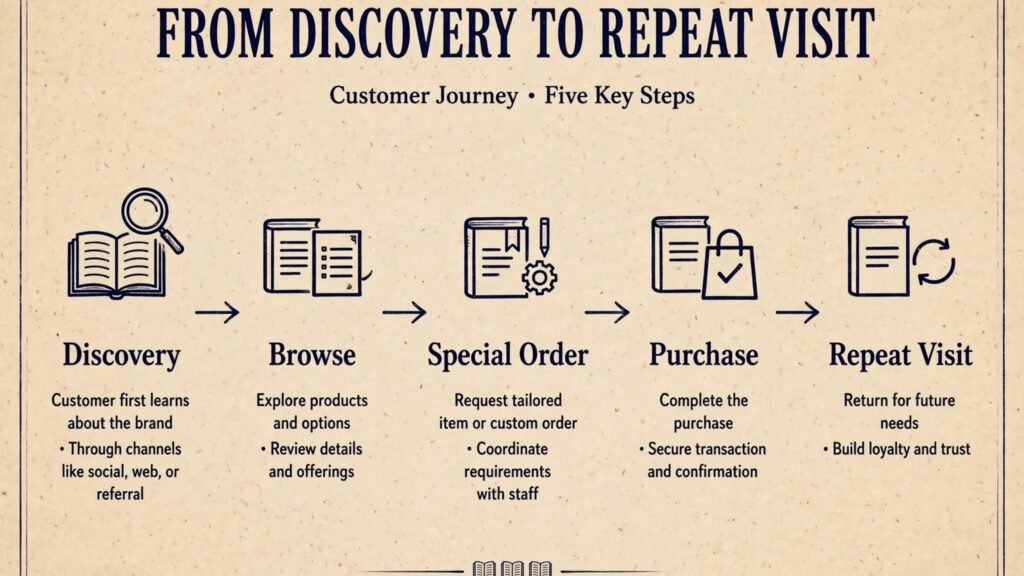
Bookshop.org lets customers buy books online while supporting independent bookstores. Stores can create an affiliate page, share links, and earn from online sales without building a full ecommerce operation. For a small store with limited staff time, that is a practical way to capture online sales that would otherwise go to a large retailer.
The platform includes recommendations, lists and author pages, and AI assisted search helps customers find titles by topic or author. A store can curate lists for book clubs, school reads, staff picks and seasonal themes, and share those lists on social media and in newsletters. That curation is the indie advantage, delivered online.
Watch out for: Bookshop.org is a partner channel, not a replacement for your own store database. You do not control the full customer experience or collect the same customer data as you would on your own site. Use it as an additional channel, and keep your own mailing list as the main asset.
Best for: small indies, author partners and stores that want online sales without a full site build.
8. Shopify
Shopify is the most flexible online option for a bookstore that wants full control. A store can design its site, sell books, gifts, tickets and subscriptions, run discounts, and add apps for search, recommendations, email and loyalty. For a shop with a strong brand, a gift range and an events programme, Shopify can bring all of that into one online home.
AI apps on Shopify help with search, product recommendations, description writing and customer segmentation. Klevu, covered below, is one example, but the wider app ecosystem lets a store add only what it needs, rather than paying for a large platform it will not use.
Watch out for: flexibility brings work. A Shopify store needs someone to maintain apps, check that book data is accurate, and keep the site updated. If nobody owns the site, it will drift, and customers will notice when stock information is wrong.
Best for: bookstores with a distinct brand, gift sales and an events programme that want a custom online shop.

If you sell through marketplaces as well as your own site, the operations overlap with general ecommerce sellers. See our guide to the best AI tools for Etsy sellers for marketplace listing and customer message workflows.
9. Klevu
Klevu adds AI search and product discovery to an ecommerce site. For a bookstore, search quality is critical, because customers rarely search by exact title alone. They search by author, topic, age range, mood, gift occasion or a half remembered phrase. A basic search that only matches exact titles will return nothing for those queries, and the customer leaves. Klevu understands intent, synonyms and natural language, so a search for books about grief for teenagers, or a funny novel for a flight, returns relevant results.
Klevu also powers recommendations: similar titles, staff pick style suggestions and category based discovery that can be tuned to your store. The key is tuning. A bookstore should train recommendations on its own catalogue and sales, and feature staff picks prominently, so discovery feels curated rather than algorithmic.
Watch out for: AI search needs clean product data. Titles with missing categories, poor descriptions or inconsistent age ranges will still surface badly, even with good search technology. Fix catalogue data before judging the search tool.
Best for: bookstores with an online shop that lose sales to poor search or generic recommendations.
Words, audio and community
10. ChatGPT
ChatGPT is the most flexible writing helper in this list, and bookstores use it for work that used to take hours. It can draft shelf talkers from a short staff note, turn a long book description into a short newsletter paragraph, write event copy for an author night, and suggest social media captions that actually mention the book, not just the event date. The value is speed, but the risk is generic copy, so staff must edit every draft with specific detail.
A strong workflow is to give ChatGPT the book title, author, a staff opinion in plain words, the audience and the length needed, then edit the result until it sounds like your store. For example, a staff note such as “quiet, funny, set in a small town, good for readers who liked a previous staff pick” becomes a shelf talker only after a human adds the comparison, the tone and the reason to pick it up now.
Watch out for: never publish AI copy that invents plot details, awards or author facts. ChatGPT can sound confident while being wrong about a book. Check every factual claim against the publisher description or the book itself, especially for nonfiction, prize claims and author biographies.
Best for: newsletters, shelf talkers, event copy and social media for stores that want to publish more often without losing their voice.
11. Libro.fm
Libro.fm sells audiobooks through independent bookstores, so a customer can buy audio while supporting a local shop. For a bookstore, audio is a growing part of reading, and without a partner, that revenue goes elsewhere. Libro.fm lets a store offer audiobooks, share recommendations and earn from memberships, while keeping the customer relationship tied to the indie store.
AI and recommendation features on audio platforms help listeners find the next listen by narrator, genre or listening history, which mirrors the discovery role bookshops already play in print. A store can recommend an audio version after an in store event, or suggest audio for commuters and parents who have less time to sit with a print book.
Watch out for: audio customers have different expectations around returns, device support and app experience. Make sure staff can answer basic audio questions, or customers will contact the platform directly and the store connection weakens.
Best for: indie stores that want to offer audiobooks without building an audio platform.
How to choose without losing the store voice
Start with the job that costs you the most time or money. If special orders are chaotic, fix operations first with Bookmanager. If online sales are leaking to large retailers, fix online selling first with IndieCommerce, Bookshop.org or Shopify. If customers cannot find books on your site, fix search first with Klevu and better catalogue data. If you publish rarely because writing takes too long, fix copy first with ChatGPT and a clear editing rule.
Then test with real store data. Import a month of real sales, a real catalogue sample and five real special orders, including one messy order with a wrong edition and a changed publication date. See whether the tool handles those cases cleanly. A demo with perfect data will always look good, and it will not tell you how the tool behaves when a customer changes their mind.
Check staff adoption honestly. A tool that only the owner uses will not change the store. Ask part time staff to complete a sale, a special order and a stock check during a trial. If they need constant help, the tool is too complex for your team, or training needs to be better before you buy.
Check data ownership and exit terms. Can you export customer lists, sales history and catalogue data in a usable format? For a bookstore, customer and sales history are long term assets. Do not build them inside a system you cannot leave, and do not let a platform own your mailing list by default.
Check pricing at vendor checkout, because many tools in this list price by location, user count, sales volume or add on modules. A price that looks affordable for one till can rise quickly for three tills and an online shop. Ask for a total price for your actual setup, not a starting price for a single user.
Mistakes bookstores make with AI tools
The first mistake is publishing generic AI recommendations as if they were staff picks. Customers trust a staff pick because a person read the book and can explain why it matters. An AI list with no human reading behind it breaks that trust quickly, especially when a recommendation is a poor fit. Label AI assisted lists honestly, and keep true staff picks written by staff who read the book.
The second mistake is letting AI write descriptions that invent facts. Plot details, awards, author background and publication dates must be checked. A single wrong fact in a newsletter undermines credibility with readers who know the book well, and they are exactly the customers a bookstore cannot afford to lose.
The third mistake is buying an online tool and neglecting in store stock data. Online customers who order a book shown as in stock, then learn it is not available, are unlikely to order again. Stock accuracy is a customer service issue, not just an inventory issue. Count regularly, record returns promptly, and fix data before adding more sales channels.
The fourth mistake is chasing every sales channel at once. A store that launches a new website, a marketplace shop, an audio partner and a subscription box in the same month will do all of them badly. Add one channel, learn how it works, assign an owner, then add the next. Bookstores win on consistency, not on the number of channels.
The fifth mistake is ignoring events as a sales tool. Author events, book clubs, children’s story times and staff recommendation nights bring people into the shop and create sales that online search cannot replace. AI can help write event copy and follow up, but it cannot replace the event itself. Use tools to support events, not to replace them.
The sixth mistake is copying a large retailer’s pricing and promotion strategy. Independent stores rarely win a price war, and deep discounting on frontlist titles destroys margin while training customers to wait for sales. Compete on curation, service, events and community, and use tools to make those strengths easier to deliver.
How AI can support events, clubs and community
Events are where a bookstore’s personality becomes visible, and AI can reduce the work around them without making them feel automated. A store can use AI to draft an event description from a short brief, write three social posts at different lengths, and create a follow up email that thanks attendees and recommends related titles. The human work remains: choosing the author, hosting well, and talking to customers after the event.
Book clubs benefit from similar help. AI can summarise discussion questions, suggest comparable titles for the next pick, and draft a club newsletter that includes member comments. The club leader still chooses the book and leads the discussion, but the admin burden falls. That matters because many clubs fail not from lack of interest, but from lack of someone willing to do the admin every month.
Children’s sections need extra care. AI recommendations for children must be checked for age suitability, reading level and content. A tool that recommends a teen novel to an eight year old because of a keyword match will damage parent trust. Always have staff review children’s recommendations, and use age and reading level data from publishers, not just AI guesses.
Local partnerships also help. Schools, libraries, cafes and community groups can become regular customers if a store makes ordering easy and follows up reliably. Tools such as Bookmanager and IndieCommerce help track those orders, while ChatGPT helps write clear, personal follow up messages. The partnership grows when the store is reliable, not when it sends more marketing.

Frequently asked questions
What are the best AI tools for bookstores for a single independent shop?
Bookmanager for operations plus IndieCommerce or Bookshop.org for online sales is a strong start for a single shop. Add Klevu if online search is weak, and ChatGPT for copy if writing takes too much staff time. Start with operations and online selling before adding specialist tools.
Can AI replace staff recommendations?
No. AI can surface titles and draft copy, but a staff recommendation works because a person read the book and can talk about it honestly. Use AI to find candidates and draft first versions, then let staff edit and sign the recommendation only if they genuinely support it.
How do bookstores compete online without losing margin?
Compete on curation, staff picks, events and service, not on deep discounts. Use a book specific online platform, keep stock data accurate, and build a mailing list you own. Online sales through Bookshop.org or your own site should support the store, not train customers to expect large retailer prices.
Is Shopify better than IndieCommerce for a bookstore?
Shopify offers more design control and app choice, while IndieCommerce offers book specific setup and less technical work for ABA members. Choose Shopify if you want a custom site and have someone to maintain it. Choose IndieCommerce if you want a credible bookshop site quickly with less maintenance.
How can AI help with buying?
Edelweiss helps research titles and catalogues, while Above the Treeline shows how titles perform across indie stores. Combined with your own sales history, that data helps buyers spot trends, avoid overbuying in weak categories, and plan displays with intent. Always check local relevance before acting on national data.
What should a bookstore check before buying a till system?
Test special orders, preorders, returns and stock counts with real examples, including messy ones. Check how easily part time staff learn the system, how stock data exports, and what the total price is for your actual till count and locations. A till that is hard to learn will be worked around, and workarounds destroy stock accuracy.
Can audiobooks help an independent bookstore?
Yes, through a partner such as Libro.fm, a store can offer audiobooks and earn from memberships without building an audio platform. Audio reaches customers who commute, exercise or prefer listening, and it keeps audio revenue connected to the indie store rather than losing it entirely to large platforms.
Conclusion: curation first, tools second
The best AI tools for bookstores do not make a store more generic, they make its taste easier to find, buy and remember. A strong store starts with good buying, accurate stock and staff who read and recommend honestly, then adds tools that support those strengths. Bookmanager or Square for operations, IndieCommerce or Shopify for online selling, Klevu for search, and ChatGPT for copy, used well, can help a small shop compete without losing what makes it different.
Choose one bottleneck, test with real store data, check total pricing at vendor checkout, and protect staff picks as human recommendations. A bookstore that is easy to buy from, easy to discover in, and trusted for its taste will keep customers coming back, online and in person, long after a single bestseller has faded.