
Most podcasts do not fail because the host has nothing interesting to say. They fail because the show has no clear listener, no repeatable format, and an editing workload that turns a fun idea into a chore by episode four. Recording is the easy part. Planning episodes, editing audio cleanly, writing titles and show notes that help new listeners find the show, and promoting each episode consistently is where most new podcasters stall.
If you are trying to learn how to start a podcast with AI, that workload problem is the place to start. AI can cut hours from editing, transcription, show notes, and promotion, but only if you build a simple format first and let AI support that format, rather than letting AI generate a show with no point of view.
This guide builds a podcast you can actually sustain. You will define a listener and a promise, choose a format that fits your time, set up recording that sounds professional without a studio, use AI for editing and distribution tasks while keeping your voice and opinions human, and create a promotion routine that grows an audience episode by episode. It covers solo shows, interview shows, and co hosted shows, and it explains the tools, costs, and mistakes that matter most in the first twenty episodes.
The problem at the heart of how to start a podcast with AI
Podcasting has two kinds of work: creative work and production work. Creative work includes choosing topics, asking good questions, telling stories well, and developing a point of view listeners return for. Production work includes removing filler words and long pauses, balancing levels, adding intro music, transcribing, writing descriptions, creating audiograms and social clips, and scheduling publication. Creative work is why listeners subscribe. Production work is why many hosts quit. AI is excellent at production work and at first drafts of production related writing. It is a poor replacement for creative work, because listeners can hear the difference between a host who has thought about a topic and a host reading generic questions.
That split should shape your whole setup. Spend your best energy on episode planning, guest research, and performance: how you open, how you ask follow ups, how you close with a clear takeaway. Let AI handle the repetitive parts: cleaning audio, generating a transcript, drafting show notes from that transcript, suggesting titles and chapters, and creating short clip transcripts for social posts. Always check AI output against the actual recording before you publish. Transcripts contain errors, especially with names, technical terms, and accents. Show notes drafted from a transcript can invent a quote or a claim you never made. Your final check is part of the job, and it protects your credibility with listeners and guests.
A sustainable podcast also needs a realistic publishing promise. Weekly episodes sound impressive, but a biweekly or monthly show published consistently beats a weekly show that disappears after six episodes. Choose a cadence you can maintain for twenty episodes, including research, recording, editing, and promotion time. If you have five hours per episode available, design a format that fits five hours, not a format that needs fifteen. AI can reduce that time, but it cannot create time you do not have. Build the show around your real calendar, and let consistency, not frequency, build trust.
Step one: Define your listener, promise, and format
Start with a listener description in one paragraph: who they are, what problem or interest brings them to a podcast, what they already listen to, and what they want after each episode. For example: “Busy small business owners who want practical marketing ideas they can test this week, without jargon or long theory.” That description guides topic choice, guest choice, episode length, and tone. A show for that listener might be 25 minutes, with one idea, one example, and one action step per episode. A show for deep hobbyists might be 60 minutes, with detailed discussion and community questions. Both can succeed, but they need different formats.
Your promise is the reason a listener returns. It might be: “Each episode gives you one tested idea for growing a small business, explained in plain language.” Or: “Each episode explores one book, film, or idea in depth, with a guest who disagrees with the host.” Write the promise on your show page and repeat a short version in your intro, so new listeners understand the value in thirty seconds. If you cannot state the promise clearly, listeners will not be able to either, and they will not subscribe.
Format choices follow from listener and promise. A solo show gives you full control and a faster schedule, but it requires strong preparation and performance to hold attention alone. An interview show brings new voices and audiences, but it requires guest outreach, scheduling, and stronger question skills. A co hosted show brings natural conversation and energy, but it requires coordination and a clear division of roles. A narrative or documentary style show can be powerful, but it needs far more editing time and should not be a first format unless you have production help. For most beginners, a solo show with occasional interviews, or a simple interview show with a fixed question structure, is the most sustainable starting point.
Episode length should match attention and topic, not a rule. Solo explainers often work well at 20 to 35 minutes. Interviews often work well at 35 to 50 minutes, with a clear structure that prevents rambling. Test length with real listeners: after five episodes, ask which episodes felt too long, too short, or just right, and adjust. AI chapter tools can help you see where episodes drag, by showing transcript sections and topic changes, but listener feedback is the final test. A tight 30 minute episode that respects time will grow faster than a loose 60 minute episode that repeats itself.
Step two: Plan episodes so recording feels easy
Good episodes are planned, not improvised from nothing. For each episode, write a one page plan: hook (the first 60 seconds), main points or questions in order, examples or stories, a listener takeaway, and a closing call to action. The hook matters most. Open with a specific problem, a surprising contrast, a question the episode will answer, or a short story that illustrates the topic. Avoid long introductions about yourself, your week, or the weather before you give the listener a reason to stay. You can introduce yourself after the hook, once attention is earned.
For interviews, research the guest properly. Read or listen to their recent work, note two specific points you want to explore, and prepare questions that cannot be answered with a yes or no. Good follow ups are often better than good opening questions: “Can you give an example of that?” “What did you try that did not work?” “What would you do differently now?” Send guests a short brief before recording: topic, audience, expected length, main questions, and technical setup. Guests perform better when they know what to expect, and they are more likely to share the episode afterward if the experience was professional.
For solo episodes, use a simple outline with time markers: hook (2 minutes), context (5 minutes), main idea with example (15 minutes), common mistake or counterpoint (5 minutes), takeaway and next step (3 minutes). That structure keeps you on track and makes editing easier, because sections are clear in the transcript. AI can help you turn research notes into that outline, suggest a stronger hook, and check whether your plan covers the promise you made to listeners. Use those suggestions as options, then choose and rewrite in your own voice. The plan should sound like you, not like a generic episode template.
Batch planning and recording when possible. Planning four episodes in one session, then recording two in one day, reduces setup time and keeps your show ahead of schedule. A buffer of two finished episodes protects you during busy weeks, travel, or illness, and prevents the panic recording that produces weak episodes. Aim to build that buffer in your first month, even if it means launching a week later than planned. A show with a buffer is a show that survives real life.
Step three: Recording setup that sounds professional
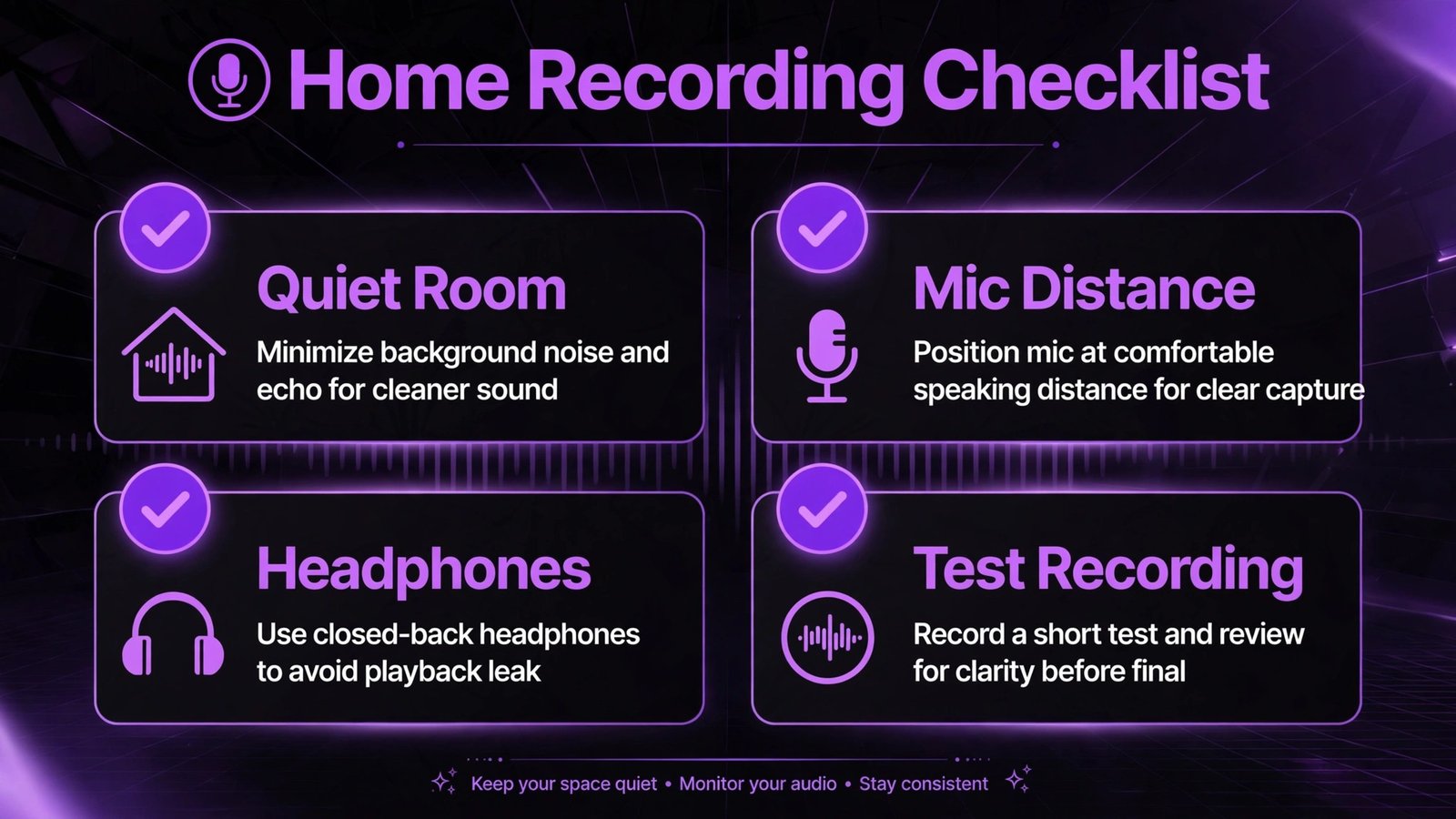
You do not need a studio to sound professional, but you do need to control the three things listeners notice most: room noise, distance from the microphone, and consistency. Record in the quietest room available, away from fans, traffic, and echoing hard surfaces. A small room with soft furnishings, curtains, and a rug often sounds better than a large empty room. Close windows, turn off notifications, and put your phone on silent. Test record for one minute and listen with headphones before a full session. That test catches buzz, echo, and level problems that are hard to fix later.
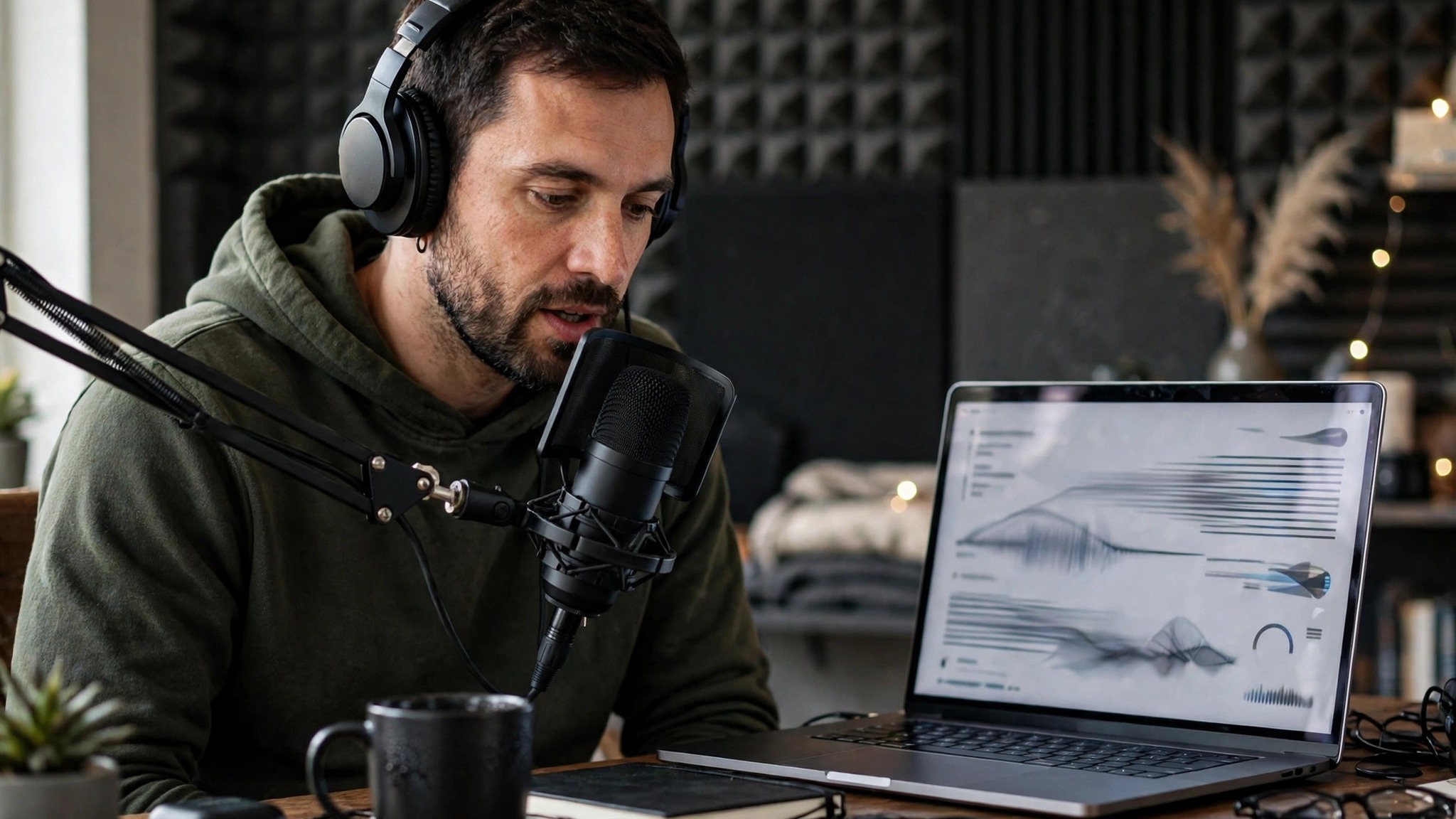
Microphone choice should match your budget and format. A good USB microphone is enough for most solo and remote interview shows at the start. An XLR microphone with an audio interface gives more control and upgrade options, but it adds complexity and cost. For remote guests, use a recording platform that records each speaker on a separate track, so you can edit one voice without affecting the other. Ask guests to use headphones, to record in a quiet room, and to stay close to their microphone. Send a one paragraph technical guide before the session, because guest audio quality often determines whether an episode is usable.
Recording technique matters as much as equipment. Speak at a consistent distance from the microphone, avoid tapping the desk, and pause briefly between sections so editing is easier. If you make a mistake, pause, then repeat the sentence cleanly, rather than stopping the whole recording. Editors, including AI editors, can remove the bad take easily if there is a clear pause. Drink water, keep notes in front of you, and record a short room tone (ten seconds of silence in the room) at the start, which helps editing tools remove background noise more accurately.
Check official pricing and features for recording platforms before you subscribe, because plans differ in recording quality, storage, and guest limits. Many platforms offer free tiers that are enough to test a format, and paid plans become worthwhile once you publish regularly and need separate tracks, video, or longer storage. Start simple, prove the format with five episodes, then upgrade only the part that limits you, whether that is guest recording, storage, or editing speed.
Step four: Edit with AI, then check like a human
AI editing tools have changed podcast production more than any other part of the workflow. Modern editors can transcribe audio, remove filler words and long pauses, balance levels, reduce background noise, and let you edit audio by editing text, which is far faster than editing waveforms alone. That speed is real, but it requires a human final listen. AI can remove a thoughtful pause that gave a point weight, cut a laugh that made a guest sound warm, or mishear a name and change a transcript in a way that looks correct on screen but is wrong in audio.
Edit with AI first, then listen to the full episode once, at normal speed, before publication. That listen is your quality control, and it should not be skipped.
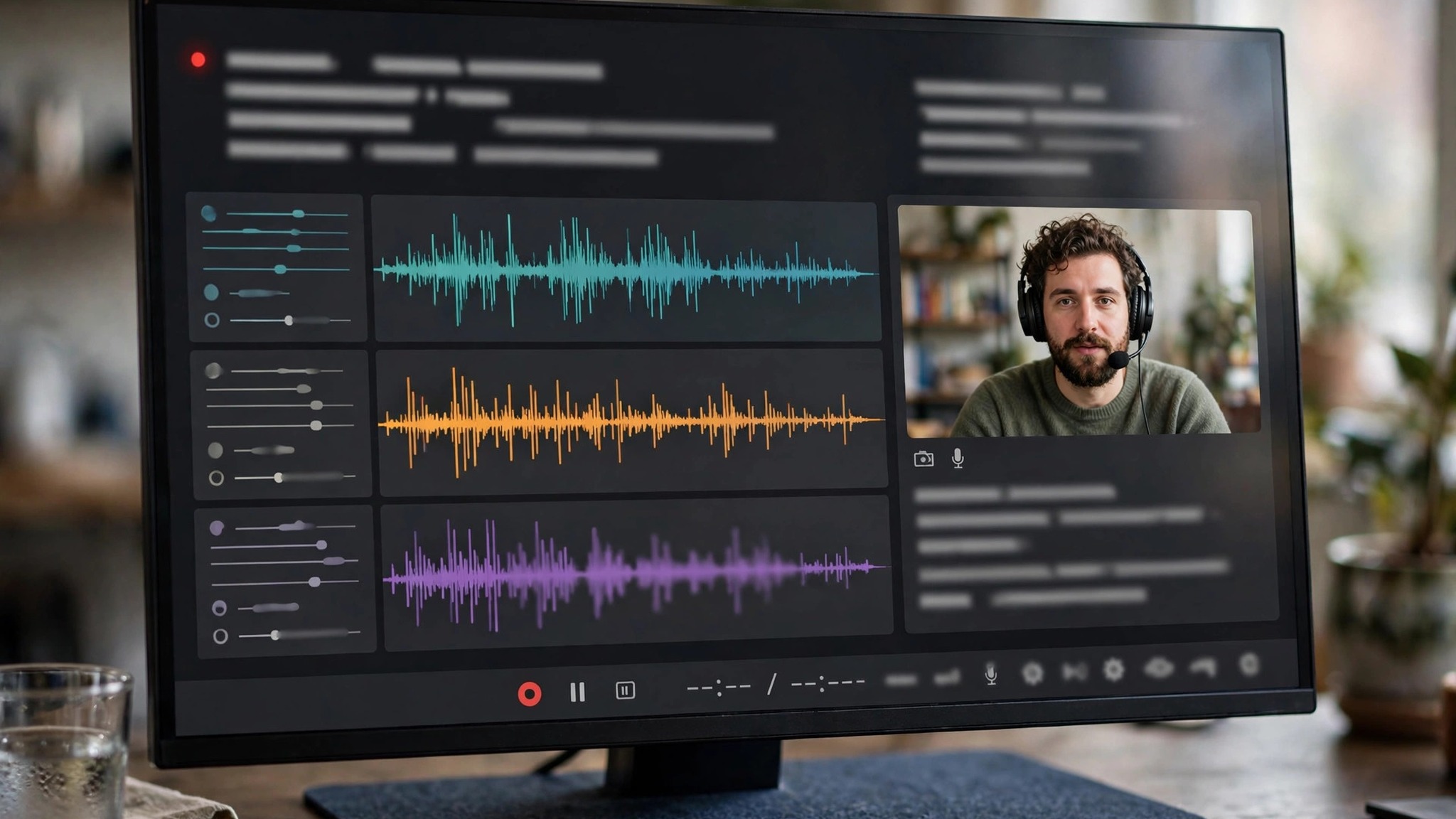
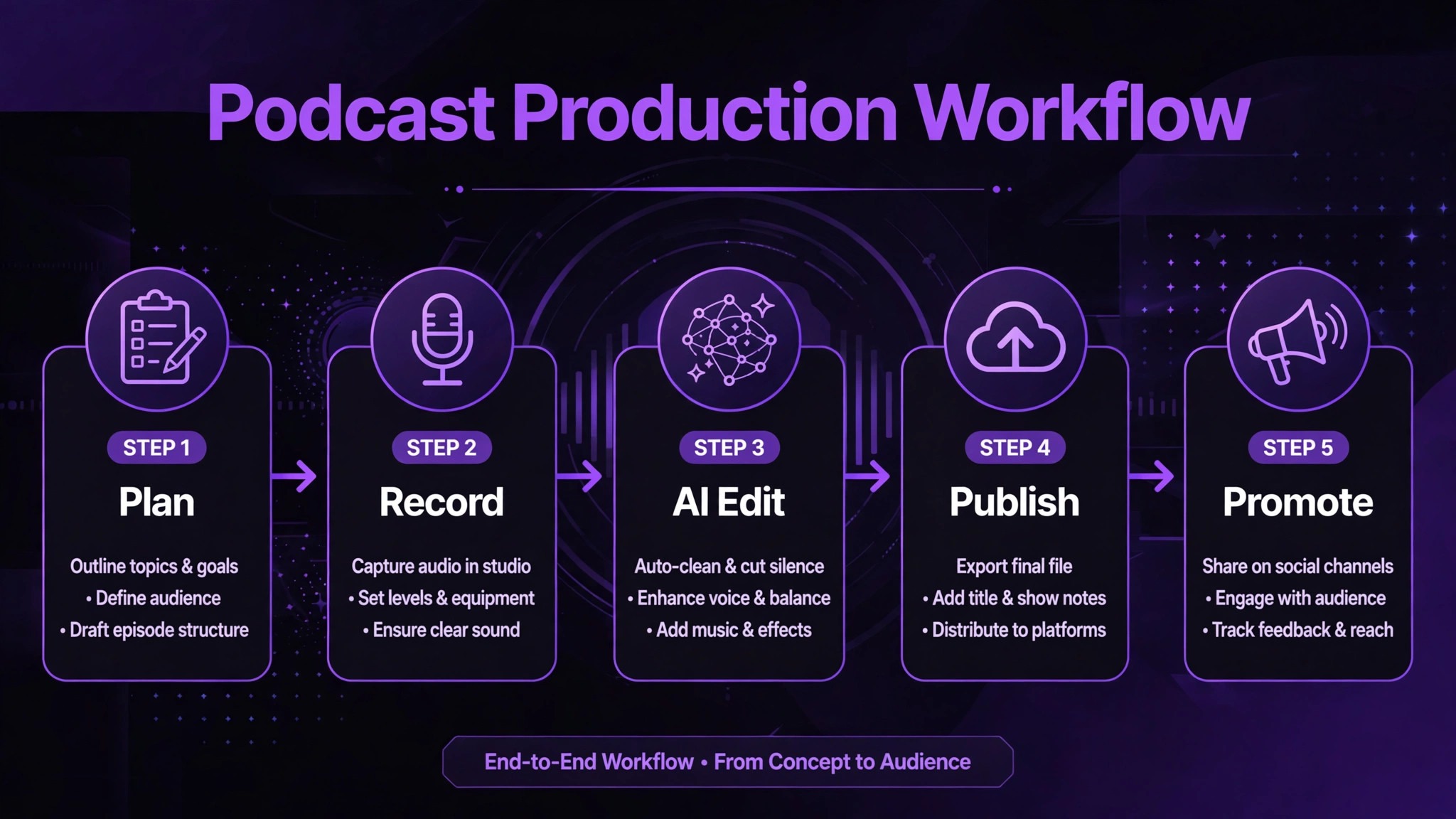
A practical editing workflow looks like this. First, import separate tracks and check levels and noise. Second, use AI transcription and text based editing to remove clear mistakes, long pauses, and repeated takes. Third, listen through and restore any pauses or reactions that carry meaning, tighten transitions between sections, and add intro, outro, and music at consistent levels. Fourth, check names, numbers, and claims against your notes, and correct the transcript and show notes accordingly. Fifth, export a final audio file, a transcript, and a set of show note materials from the corrected version, not from an early AI draft.
For editing tools, many podcasters start with text based editors because they make long episodes manageable without audio engineering skill. This overview of Descript alternatives compares text based editing options by transcription accuracy, filler removal, and export features, which helps you choose a tool that fits your format and budget. For transcription specifically, this guide to Otter alternatives can help you compare accuracy and speaker separation, which matter most for interview shows. Check official pricing for both, because transcription minutes and storage limits affect cost as your episode count grows.
Show notes, titles, and chapters should come from the final edited episode, not from a pre recording plan. Use AI to draft show notes from the corrected transcript, then edit for accuracy and usefulness: include the main takeaway, time stamped chapters, guest links, resources mentioned, and a clear next step for listeners. Titles should promise a specific benefit or question, not just a topic and episode number. “How a bakery doubled repeat orders with one email” is stronger than “Episode 12: Marketing chat.” Test titles by asking whether a new listener, seeing only the title, would understand why this episode is worth their time.
Step five: Publish, distribute, and promote every episode
Publishing is not just uploading audio. It is preparing the package that helps listeners find, understand, and share the show. Before launch, prepare your show identity: a clear show name, a cover image that reads well at small size, a one paragraph description with your promise and audience, and a trailer episode of two to three minutes that explains who the show is for and what listeners will get. Launch with three to five episodes, not one, so new listeners who enjoy the first episode have more to hear immediately. That launch set also helps you test your workflow before you commit to a public schedule.
Distribution happens through a podcast host, which creates an RSS feed that sends your show to Apple Podcasts, Spotify, YouTube Podcasts, and other platforms. Choose a host based on analytics, storage, distribution ease, and cost at your expected episode frequency, and check official pricing before you commit. Keep your show description, categories, and episode titles consistent across platforms, because listeners discover shows through search as well as through recommendations. Add your show website or landing page link in every description, so listeners who find you on one platform can find your full archive and contact details.
Promotion should be a routine, not a one time launch effort. For each episode, create three to five short assets: one audiogram or short video clip with captions, one social post with the main takeaway, one email or community post to your existing audience, and one message to the guest with a ready to share link and clip. AI can draft those posts from the transcript, but you should choose the clip and the takeaway yourself, because the most shareable moment is usually a specific story, a strong opinion, or a surprising example, not a generic summary.
Repurpose the episode into a short blog post or newsletter section as well, because search and email reach listeners who may not see social posts.
Building a personal brand around a podcast takes time, and consistency helps more than any single viral clip. This guide on how to build a personal brand with AI explains how to turn regular episodes into a recognisable presence, with consistent topics, a clear voice, and a simple content rhythm. For short form promotion, this overview of the best AI tools for TikTok and this guide to the best AI tools for Instagram can help you plan clips that work on those platforms without turning every episode into a full video production.
If you later work with a team or an agency on content, this guide to the best AI tools for content agencies shows how teams organise episode production, show notes, and promotion calendars at scale.
Tools compared: recording, editing, and growth
| Job | Good options | Best for | Watch out for |
|---|---|---|---|
| Remote recording | Riverside, Zencastr, SquadCast style platforms | Separate tracks, guest friendly | Check pricing for video, storage, and guest limits |
| Text based editing | Descript and similar editors | Fast edits, filler removal, transcript based work | Overediting natural pauses; always do a final listen |
| Transcription | Otter, Descript, Riverside transcripts | Accurate transcripts, chapters, show notes | Errors on names and terms; correct from the audio |
| Hosting and distribution | Buzzsprout, Spotify for Podcasters, Captivate | RSS feed, analytics, platform distribution | Storage and episode limits; check pricing at your cadence |
| Promotion clips | Opus Clip, CapCut, platform clip tools | Short captioned clips for social | Clip choice matters more than tool; choose a strong moment |
| Show notes and titles | ChatGPT, Claude, built in AI in editors | Drafts from transcripts, chapter ideas | Invented quotes; check against the final audio |
Start with one recording tool, one editing tool, and one host. Add a clip tool only when you publish regularly and promotion becomes the bottleneck. Many beginners buy too many tools before they have five episodes. Prove the format first, then invest in the tool that saves the most time per episode, measured over a real month of publishing.
How to choose your first twenty episodes
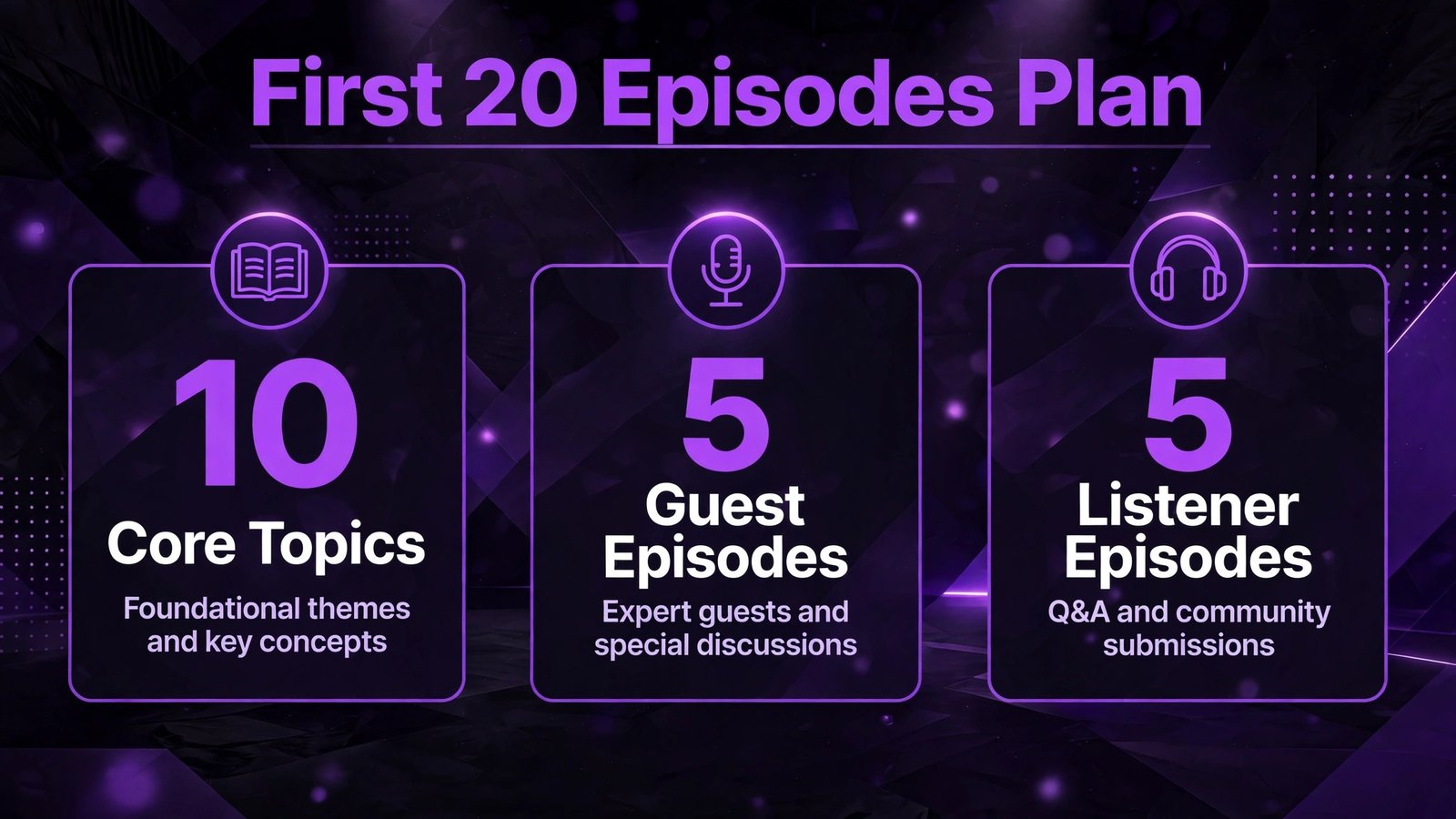
Your first twenty episodes are a test, not a final verdict on your show. Plan them as a set: ten core topics that cover your promise from different angles, five guest episodes that bring new audiences and perspectives, and five listener driven episodes that answer questions, react to feedback, or go deeper on popular topics. That mix gives you variety without losing focus, and it gives you data: which topics get more listens, completions, shares, and messages? After twenty episodes, review that data and double down on what works, while dropping formats or topics that consistently underperform.
Choose guests strategically in the early phase. A guest with a relevant audience, a clear story, and a willingness to share the episode is worth more than a famous guest who gives vague answers and never mentions the show. Prepare guests well, record clean audio, and make sharing easy with a clip, a link, and a short thank you message. Many early listeners come through guests, so guest experience is audience growth, not just courtesy.
Measure the right numbers. Downloads alone can mislead, because a download does not mean a listen. Track completion rate, average listen time, new versus returning listeners, and messages or reviews per episode. A small audience that finishes episodes and writes to you is more valuable than a large audience that drops off after two minutes. Ask listeners directly, in episodes and in show notes, what they want next. That feedback loop shapes episodes twenty one to fifty far better than guessing.
Mistakes that stall new podcasts
The first mistake is a vague show with no listener or promise. If you cannot explain in one sentence who the show is for and what they get, fix that before you record episode six. Vague shows attract no one in particular.
The second mistake is overlong, unstructured episodes. Without a plan and time markers, episodes drift, guests ramble, and listeners drop off. Use a one page plan for every episode, even when you feel confident. Structure is invisible when it works, and its absence is obvious when it does not.
The third mistake is skipping the final listen. Publishing an episode with a wrong name in the show notes, a loud music level, or a cut that removes context damages trust, especially with guests. One full listen, at normal speed, catches most of these problems. Treat it as part of editing, not as optional polish.
The fourth mistake is inconsistent publishing. A show that publishes three episodes in one week and then disappears for two months loses momentum and listener habit. Choose a cadence you can maintain, build a buffer, and communicate changes clearly if you need a break. A planned break with a return date is far better than silent disappearance.
The fifth mistake is promotion only on launch day. Most listeners discover shows through search, recommendations, and repeated exposure, not through a single post. Promote each episode for at least a week, repurpose it into clips and written posts, and keep your archive visible. Old episodes continue to bring new listeners if titles and descriptions are clear.
The sixth mistake is chasing equipment before content. A new microphone will not fix a weak format, vague questions, or inconsistent publishing. Improve planning, questions, and editing first. Upgrade equipment only when audio quality, not content, is the clear limit, and test upgrades with a real episode before you buy a full new setup.
Frequently asked questions
How much does it cost to start a podcast with AI?
Startup costs can be low: a decent USB microphone, headphones, a free or low cost recording tool, and a basic hosting plan. Costs grow with paid editing tools, transcription minutes, hosting storage, and cover design, but many of those costs are optional at the start. Prove the format with five to ten episodes on a simple setup, then add paid tools that save measurable time per episode. Check official pricing for each tool, because free tiers and limits change.
Do I need video for a podcast in 2026?
Video helps discovery on platforms that favour video clips, and many listeners find podcasts through short video clips, but audio remains the core product. Start with strong audio and short captioned clips from that audio. Add full video recording only if you enjoy it, your guests are comfortable on camera, and video clearly helps your growth. Do not let video complexity delay audio publishing.
How long should my first podcast episodes be?
Length should match your format and topic, not a fixed rule. Solo explainers often work well at 20 to 35 minutes, interviews at 35 to 50 minutes. Test with real listeners after five episodes and adjust based on completion rates and feedback. A tight episode that respects listener time usually outperforms a longer episode that repeats points.
Can AI edit my podcast completely on its own?
AI can handle much of the mechanical editing, such as filler removal, noise reduction, and transcript generation, but it should not be the only editor. A human final listen is needed to catch meaning, tone, and errors that automated tools miss, especially with names, technical terms, and emotional moments. Treat AI editing as a first pass, and human listening as the publication check.
How do I get my first listeners?
Start with people who already care about your topic: your existing audience, community groups, guest audiences, and search friendly titles and descriptions. Launch with several episodes, ask early listeners for honest reviews, share clips consistently, and invite guests who will share with their audiences. Growth is usually slow at first, then compounds as your archive and reputation grow. Consistency over twenty episodes matters more than any single launch tactic.
Should I script my podcast or speak freely?
Use an outline, not a full script, for most formats. A full script can sound stiff and slow, while no plan can sound rambling. A one page outline with a hook, main points, examples, and a closing takeaway gives you structure while keeping natural speech. For narrative or highly technical episodes, a fuller script may be appropriate, but read it in a conversational style and edit for spoken language, not written language.
Closing note: publish twenty, then decide
A podcast becomes real after twenty episodes, not after one good recording. Twenty episodes test your format, your workflow, your promotion routine, and your willingness to keep going when early numbers are small. Most shows that quit do so before that point, not because the idea was bad, but because the workload was unplanned and the audience had not yet had time to find the show.
Start with a clear listener and promise, a format you can sustain, a simple recording setup, and an AI assisted editing routine that ends with a human listen. Publish on a cadence you can keep, promote each episode for a week, and learn from completion rates and listener messages. After twenty episodes, you will know what to keep, what to change, and whether to grow the show, change its format, or focus on a narrower topic. That decision, based on real episodes and real listeners, is how a podcast grows from an idea into a show people return to.