
The best AI tools for dropshippers in 2026 are not the ones with the longest feature lists. They are the ones that protect the three numbers that decide whether a store survives: product margin after ads, fulfilment time, and refund rate. Dropshipping looks simple from the outside. Find a product, build a store, run an ad. In practice, most of the work sits in the gaps between those steps. A product that looks winning in an ad library may have a supplier who ships in three weeks. A store that looks clean may load slowly on a phone. An ad that gets clicks may send traffic to a page that does not answer the one question a buyer has before paying.
This guide is built around that reality. Every tool below is judged by the job it does in a real dropshipping workflow, not by how impressive its demo looks. You will find tools for finding products, building a store that converts, getting orders fulfilled without constant manual work, and making ads that are worth testing. You will also find the limits of each tool, because a limit you know about before you pay is far cheaper than one you discover after you have spent an ad budget.
Use this guide in order if you are starting from zero. Start with the glance table, pick one tool from each job group, and test with a small budget. If you already run a store, skip to the group where you lose the most time or money, and fix that bottleneck first.
The 12 best AI tools for dropshippers at a glance
| Tool | Best job | Free option | Paid model |
|---|---|---|---|
| Sell The Trend | Product research | Trial available | Monthly subscription, check checkout |
| Dropship.io | Product research | Trial available | Monthly subscription, check checkout |
| Minea | Ad and product research | Trial available | Monthly subscription, check checkout |
| Shopify | Store building | Trial available | Monthly subscription, check checkout |
| PageFly | Landing pages | Free plan available | Monthly subscription, check checkout |
| GemPages | Landing pages | Free plan available | Monthly subscription, check checkout |
| DSers | Supplier and fulfilment | Free plan available | Monthly subscription, check checkout |
| AutoDS | Supplier and fulfilment | Trial available | Monthly subscription, check checkout |
| Zendrop | Supplier and fulfilment | Trial available | Monthly subscription, check checkout |
| AdSpy | Ad research | No free plan published | Monthly subscription, check checkout |
| Foreplay | Ad creative research | Trial available | Monthly subscription, check checkout |
| Predis.ai | Ad creatives and captions | Free plan available | Monthly subscription, check checkout |

Start here: the right pick for each dropshipping job
| Your bottleneck | Start with | Why |
|---|---|---|
| You cannot find products worth testing | Sell The Trend | It combines product data, supplier links and ad examples in one place |
| You find products but ads do not convert | Foreplay | It shows what winning ads actually look like, not just what they sell |
| Your store looks generic | GemPages | It lets you build product pages around one offer instead of a theme default |
| Orders take too much manual work | DSers | It handles bulk ordering and tracking updates for AliExpress suppliers |
| Supplier quality is inconsistent | Zendrop | It focuses on vetted suppliers and custom branding options |
| You need ad ideas fast | Predis.ai | It turns a product link into usable captions and creative drafts |
Product research: find products before you spend on ads
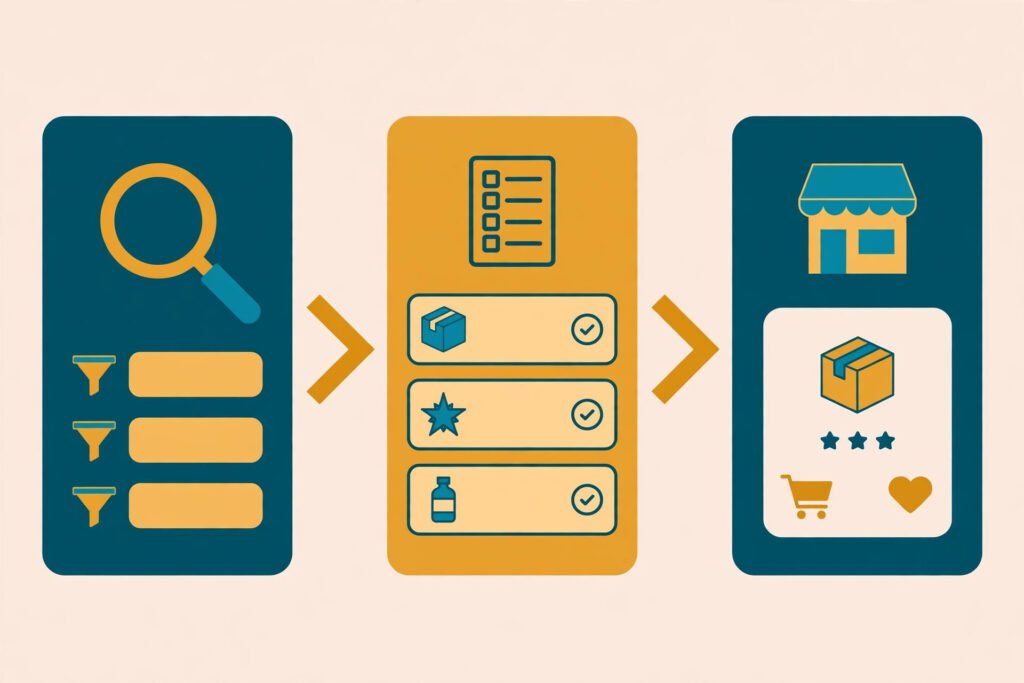
Product research is where most dropshippers waste money. The mistake is not picking a bad product. It is picking a product without checking margin, shipping time and competition in the same session. The three tools in this group help you check all three before you commit ad spend.
1. Sell The Trend
Sell The Trend is a product research platform that pulls together trending products, supplier information and ad examples. You can filter by niche, order volume and growth signals, then open a product to see related ads and supplier options. That combination matters because a product with strong demand and a weak supplier is not a good test. It is a refund problem waiting to happen.
Pricing: monthly subscription, check checkout for current plans and trial terms. Best for: new dropshippers who want one research dashboard instead of five browser tabs. Watch out for: trend data is a starting point, not proof. A product that trended last month may already be saturated, so check how many stores are running similar ads before you test. Try it at: https://sellthetrend.com
2. Dropship.io
Dropship.io focuses on sales and ad data for products sold through Shopify stores. You can search by keyword or niche, see estimated sales and revenue signals, and look at the stores behind a product. That store level view is useful. It shows you pricing, bundles and page structure, which are often more informative than a single product screenshot.
Pricing: monthly subscription, check checkout for current plans and trial terms. Best for: dropshippers who want to validate a product by looking at real stores, not just ad screenshots. Watch out for: sales estimates are estimates. Treat them as a ranking signal, not as a guaranteed result, and always check supplier cost before you judge margin. Try it at: https://dropship.io
3. Minea
Minea is an ad intelligence tool with a strong product research angle. You can search ads by keyword, niche or shop, filter by platform and engagement, and save ads that use a format you want to test. For dropshippers, the value is in the creative patterns. You learn which hooks, formats and offers appear again and again in a niche, which shortens the time between finding a product and launching a sensible first test.
Pricing: monthly subscription, check checkout for current plans and trial terms. Best for: dropshippers who already have a niche and want to study winning ads in that niche. Watch out for: copying an ad exactly rarely works. Use Minea to learn structure and angles, then write your own version for your product and audience. Try it at: https://minea.com
Store building: turn traffic into orders
A research tool can find a product. Only a store can sell it. The tools in this group cover the platform itself and the page builders that let you shape product pages around a single offer. A good product page answers three questions fast: what is this, why should I trust it, and what happens if it does not work for me.
4. Shopify
Shopify is the store platform most dropshipping tools are built for, and that compatibility is its main advantage. Apps for fulfilment, reviews, upsells and tracking connect directly, and most supplier tools assume a Shopify store. It also handles payments, discounts and basic analytics without extra setup, which matters when you are testing several products in a short period.
Pricing: monthly subscription, check checkout for current plans and trial terms. Best for: almost every dropshipper, especially anyone using DSers, AutoDS or Zendrop. Watch out for: Shopify itself does not find products or drive traffic. Budget separately for research tools and ads, and do not judge Shopify by a store that has no traffic yet. If you are comparing platforms before you commit, read our guide to Shopify alternatives. Try it at: https://www.shopify.com

5. PageFly
PageFly is a page builder for Shopify that lets you design landing pages and product pages with drag and drop sections. You can build a page around one product, add comparison sections, guarantees, reviews and frequently asked questions, and test different layouts without editing theme code. That control matters for paid traffic, where a generic product page often converts worse than a page built for one ad and one offer.
Pricing: free plan available, with paid plans by page views and features, check checkout for current limits. Best for: dropshippers sending paid traffic to a single product page. Watch out for: more sections do not always mean more sales. Keep the page focused on one offer, one price and one call to action, and remove anything that distracts from the buy button. Try it at: https://pagefly.io
6. GemPages
GemPages is another Shopify page builder, with templates for product pages, landing pages and sales pages. Its strength is speed. You can start from a template built for a specific goal, such as a product launch or a bundle offer, and adapt it to your product. That is useful when you test often, because rebuilding a page from scratch for every product eats the time you should spend on ads and fulfilment.
Pricing: free plan available, with paid plans by published pages and features, check checkout for current limits. Best for: dropshippers who test several products a month and need consistent, fast page builds. Watch out for: templates still need your own copy, images and proof. A template with placeholder style text will not convert, no matter how polished the layout looks. Try it at: https://gempages.net
Supplier and fulfilment: get orders delivered without daily firefighting
Fulfilment is the least exciting part of dropshipping and the part that causes the most refunds. Slow shipping, wrong variants and missing tracking updates all turn into support messages and chargebacks. The tools in this group reduce manual ordering work and make supplier problems visible earlier.
7. DSers
DSers is built for AliExpress fulfilment on Shopify. You can import products, map variants, place bulk orders and sync tracking numbers back to Shopify automatically. For a store with several suppliers, that bulk workflow saves hours a week compared with ordering one by one. It also lets you set pricing rules, so a supplier price change does not silently eat your margin.
Pricing: free plan available, with paid plans by order volume and features, check checkout for current limits. Best for: dropshippers sourcing mainly from AliExpress who want bulk ordering and automatic tracking. Watch out for: DSers does not fix a bad supplier. Check shipping times, ratings and communication before you scale a product, and keep a backup supplier for anything that starts selling well. Try it at: https://www.dsers.com
8. AutoDS
AutoDS combines product research, importing and automated fulfilment. You can find products, import them to your store, set price and stock monitoring, and automate order processing with supported suppliers. The monitoring feature is the part many dropshippers miss. If a supplier raises a price or runs out of stock, you want to know before a customer orders, not after.
Pricing: monthly subscription, check checkout for current plans and trial terms. Best for: dropshippers who want research and fulfilment in one system and sell across several suppliers. Watch out for: automation still needs review. Check orders, tracking and supplier messages regularly, especially in the first weeks with a new supplier. Try it at: https://www.autods.com
9. Zendrop
Zendrop focuses on vetted suppliers, faster shipping options and custom branding for dropshipping stores. You can source products, request custom packaging and use its fulfilment flow instead of ordering manually from a marketplace. For stores that want to look less generic, custom packaging and a more consistent unboxing experience can reduce the feeling that a product came from a random warehouse.
Pricing: monthly subscription, check checkout for current plans and trial terms. Best for: dropshippers who want more control over supplier quality and branding than a marketplace offers. Watch out for: vetted does not mean perfect for every product. Order samples for anything you plan to scale, and test shipping time to your main market before you increase ad spend. Try it at: https://www.zendrop.com

Ads and creatives: make tests that teach you something
Ads are where research meets reality. A good test does not just spend money. It tells you whether the problem is the product, the creative or the page. The tools in this group help you research what is working, save creative ideas, and produce usable drafts faster.
10. AdSpy
AdSpy is a large ad database for Facebook and Instagram ads. You can search by keyword, advertiser, landing page and engagement signals, and filter for ads that have run for a long time, which often indicates they are working. For dropshippers, long running ads in a niche are a useful research signal. They show which offers and angles survive beyond a first test.
Pricing: monthly subscription, check checkout for current plans. Best for: experienced dropshippers who want deep ad research across many advertisers. Watch out for: AdSpy shows ads, not profits. An ad that runs for months may still have thin margins, so always check product cost and shipping before you copy an angle. Try it at: https://adspy.com
11. Foreplay
Foreplay is a creative research and inspiration tool. You can save ads from your feed, organise them into boards by niche or format, and study the hooks and structures that appear most often. That organisation is the point. Most dropshippers scroll past good ads and forget them. Foreplay turns that scrolling into a library you can actually use when you brief a new creative.
Pricing: monthly subscription, check checkout for current plans and trial terms. Best for: dropshippers and media buyers who want a swipe file of ad ideas organised by product type. Watch out for: inspiration is not a strategy. Pick one angle per test, keep the product and page constant, and change only the creative, so you know what caused the result. Try it at: https://foreplay.co

12. Predis.ai
Predis.ai turns a product description or link into social media posts, captions, hashtags and short video drafts. It is useful when you need a steady stream of organic content or ad variations and do not have a designer on call. You can generate several versions of a caption or creative idea, pick the strongest, and edit it into your own voice before publishing.
Pricing: free plan available, with paid plans by credits and features, check checkout for current limits. Best for: solo dropshippers who need regular content for social channels and ad tests. Watch out for: generated copy still needs a human edit. Check claims, prices and shipping promises carefully, because an AI draft can sound confident about details you have not verified. For content planning beyond ads, our guide to best AI tools for Instagram covers scheduling and growth tools in more depth. Try it at: https://predis.ai
Pricing compared: what a dropshipper actually pays in 2026
| Tool | Free option | Paid model | Cost watchpoint |
|---|---|---|---|
| Sell The Trend | Trial | Monthly subscription | Research tools stack up fast, so cancel tools you do not open weekly |
| Dropship.io | Trial | Monthly subscription | Sales estimates are not sales, so do not pay for data you do not act on |
| Minea | Trial | Monthly subscription | Ad research only pays if you launch tests from what you find |
| Shopify | Trial | Monthly subscription | Apps and transaction costs sit on top of the platform fee |
| PageFly | Free plan | Monthly subscription | Page view limits can force an upgrade as traffic grows |
| GemPages | Free plan | Monthly subscription | Published page limits matter if you test many products |
| DSers | Free plan | Monthly subscription | Higher tiers unlock bulk features you may not need at first |
| AutoDS | Trial | Monthly subscription | Automation fees plus supplier costs both affect margin |
| Zendrop | Trial | Monthly subscription | Custom branding adds cost, so test the product first |
| AdSpy | None published | Monthly subscription | Best value for heavy researchers, not occasional browsers |
| Foreplay | Trial | Monthly subscription | Useful only if you review saved ads before each creative round |
| Predis.ai | Free plan | Monthly subscription | Credit limits can run out during a busy content week |
The honest total for a new dropshipper is usually a platform fee, one research tool, one fulfilment tool and an ad budget. Everything else should earn its place by saving time or improving a test. If a tool has not changed a decision in two weeks, pause it and see if you miss it.

How to Choose without buying every tool at once
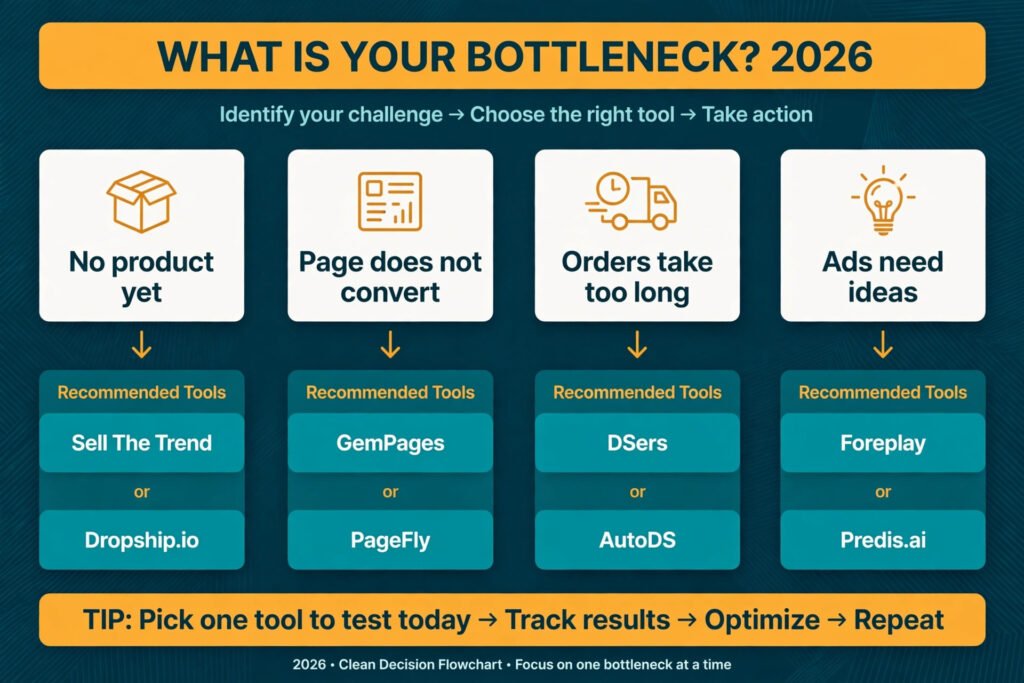
Start with your bottleneck, not with a bundle. If you have no product, start with Sell The Trend or Dropship.io and spend a week validating before you build anything. If you have a product but no sales, start with GemPages or PageFly and rebuild one product page around one offer. If orders already take too much time, start with DSers or AutoDS and automate ordering and tracking before you add more products.
Set a test budget before you pick tools. A research tool does not make a bad product profitable. It only helps you find and test products faster. Decide in advance how many products you will test, how much you will spend per test, and what result counts as a pass. Without those rules, it is easy to keep testing new products while never fixing the page or fulfilment problem that caused the last failure.
Check three numbers for every product before you scale. First, margin after product cost, shipping, transaction fees and ad cost. Second, delivery time to your main market, measured from a real sample order if possible. Third, refund and support risk, based on product quality, variant accuracy and supplier communication. A product that passes all three is worth scaling. A product that fails any one of them needs a fix or a replacement, not a bigger ad budget.
Finally, keep your stack small. One research tool, one page builder, one fulfilment tool and one ad research tool cover almost every job in this guide. Add a second tool in a group only when the first one has a clear gap you hit every week, not because a new tool looks interesting.
Mistakes to avoid when buying dropshipping tools
The first mistake is testing too many products at once. Five half tested products teach you less than one properly tested product, because you never learn whether the product, the ad or the page was the problem. Test one product, change one variable at a time, and record the result.
The second mistake is trusting trend data without checking margin. A product can trend for weeks and still lose money after ads, shipping and refunds. Always calculate margin with real supplier prices and realistic ad costs before you scale.
The third mistake is skipping sample orders. Photos and supplier descriptions hide quality problems, wrong sizes and slow packaging. Order a sample for any product you plan to scale, and check it the way a customer would.
The fourth mistake is building a store around a theme instead of an offer. A beautiful homepage does not sell a product. A clear product page with honest benefits, shipping information, a guarantee and real reviews does. Spend your page building time there first.
The fifth mistake is automating fulfilment before you understand it. Automation hides problems as well as work. Run orders manually for a short period, learn where errors happen, and only then automate the steps you understand. That way, when automation fails, you know what to check first.
Frequently asked questions
Do I need all 12 tools to start dropshipping?
No. Start with Shopify, one research tool and one fulfilment tool. Add a page builder when paid traffic starts, and add ad research tools when you test creatives regularly. A small stack you actually use beats a large stack you pay for and ignore.
Which tool should a beginner pick first?
Shopify first, because every other tool in this guide connects to it. Then pick one research tool, such as Sell The Trend, and validate a few products before you spend on ads. That order keeps costs low while you learn the workflow.
How much should I budget for tools before my first sale?
Keep tool costs as low as possible until you have a winning test. Use free plans and trials where they exist, and treat tool subscriptions as a monthly cost that must be covered by margin, not as a one time setup expense. Ad budget and product samples usually matter more than extra tools.
Is dropshipping still profitable in 2026?
It can be, but only for stores that treat margin, shipping time and customer service as seriously as ads. Stores that rely on a single viral product with slow shipping and no support tend to struggle with refunds and ad costs. Stores that test carefully, fix fulfilment early and build repeatable pages have a much better chance.
Should I use AliExpress suppliers or a platform like Zendrop?
AliExpress through DSers works well for testing, because costs are low and product choice is wide. Zendrop and similar platforms suit stores that want more consistent quality and branding after a product proves itself. Many dropshippers test on AliExpress and move proven products to a more controlled supplier.
Can AI tools write my ads and product pages for me?
They can draft them, but you still need to edit, verify claims and match the copy to your product. AI drafts are a starting point for captions, hooks and page sections. The final version should reflect your actual shipping times, guarantee and product details, because customers and ad platforms both penalise misleading claims.
Conclusion: buy the job, not the dashboard
The best AI tools for dropshippers in 2026 share one trait. They remove a specific bottleneck instead of adding another dashboard to check. Sell The Trend and Dropship.io help you choose better tests. Shopify, PageFly and GemPages help you turn traffic into orders. DSers, AutoDS and Zendrop help you fulfil orders without daily manual work. AdSpy, Foreplay and Predis.ai help you make ads worth testing.
Start small, test one product properly, and let each tool earn its place by saving time or improving a result. That discipline matters more than any single tool on this list, and it is what separates a store that keeps testing from a store that keeps paying for tools while nothing changes.