
Verdict first. If you run a self-serve store with card operated machines, start with a machine payment system like LaundryCard or FasCard and add a simple counter POS only when wash-and-fold demand justifies it. If wash-and-fold and pickup and delivery already drive your profit, start with Wash-Dry-Fold POS or Cents instead, because the order workflow matters more than the machine payment layer. That short answer is the core of this guide to the best pos software for laundromats, and the rest of the guide explains when to reverse it.
Laundromats run two businesses under one roof, and most buying mistakes come from confusing them. The self-serve business sells machine time to walk-in customers who pay at the machine and need no staff help. The wash-and-fold business sells labour, with drop-off, weighing, washing, drying, folding, and pickup, plus delivery routes for customers who never visit the store. A system built for one side will frustrate the other side if you force it to do both jobs.
This guide compares thirteen tools across both sides, from full wash-and-fold platforms to machine payment systems and general retail POS options. Prices change often and some vendors price by consultation, so check the vendor pricing page before budgeting, and treat third party figures as reported starting points rather than quotes. Test each finalist on your own busiest day, not on a quiet demo, because order mixups and payment failures show up at peak load.
Two Businesses, One Counter
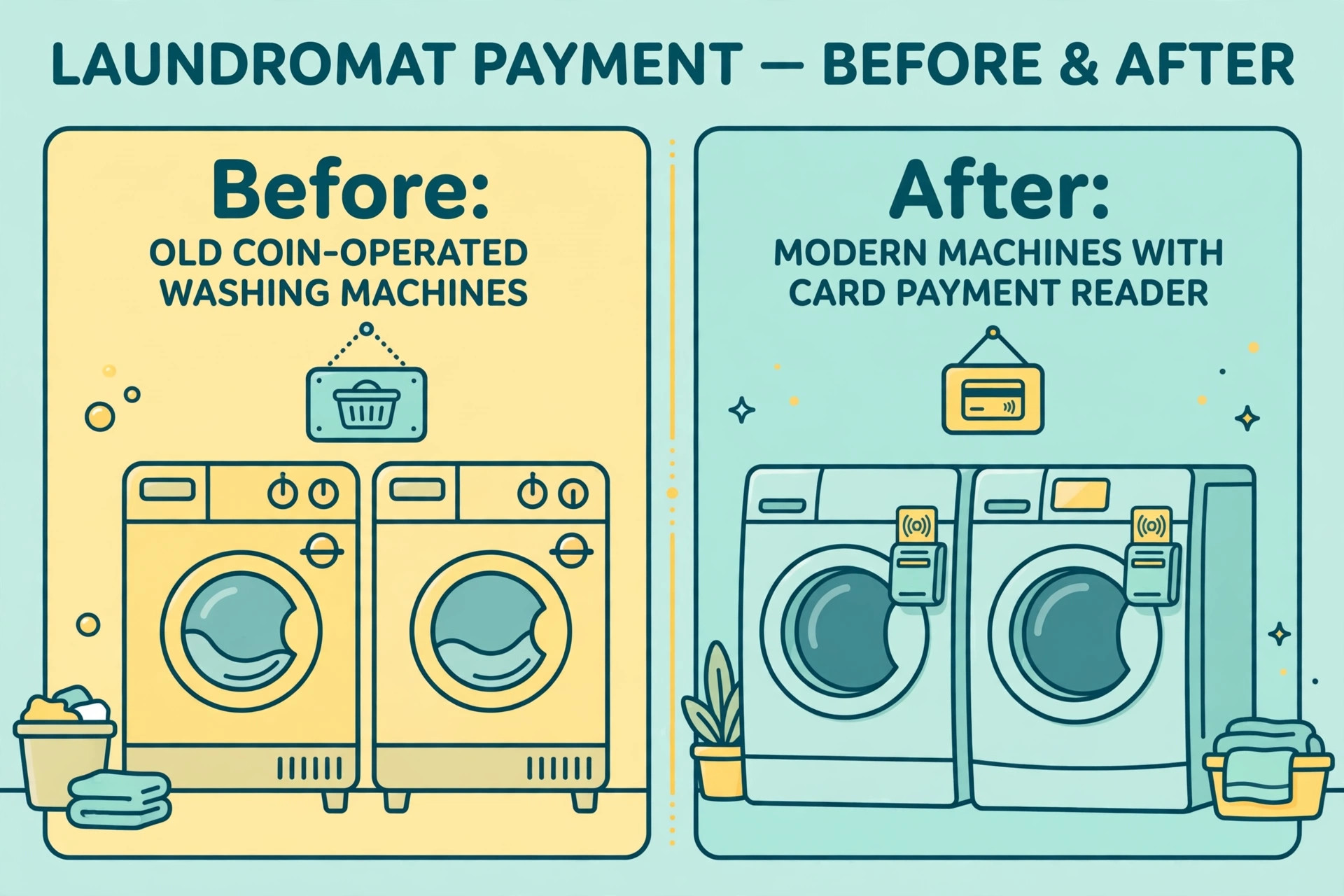
A self-serve laundromat owner cares about machine uptime, card acceptance at every machine, and a clear record of which machine earned what. Customers arrive with laundry, start a machine with a card or an app, and leave. Staff may only visit to clean and collect. In that model, the best pos software for laundromats is often a payment system plus a light reporting dashboard, not a full order platform with features nobody touches.
A wash-and-fold store cares about order accuracy above all else. A bag weighed wrong, a ticket lost, or a delivery route planned badly costs a customer, and laundry customers churn fast after one lost load. The system must weigh at intake, print a barcoded ticket, track the order through wash, dry, fold, and pickup stages, and send a ready message the customer trusts. That workflow is why owners built tools like Wash-Dry-Fold POS and Curbside Laundries from their own stores, rather than adapting retail software.

Multi-store owners face a third problem, which is comparison. One store may run older machines with one card system while a newer store runs another, and the owner needs one view of revenue, labour, and wash-and-fold volume. Cloud platforms like CleanCloud and Cents help here, because they centralise orders and reports even when machine hardware differs. Before buying, list which side of the business earns your profit today and which side you want to grow, and weight the choice toward that side.
The 13 Tools at a Glance
| Tool | Main job | Best for | Watch out for |
|---|---|---|---|
| Wash-Dry-Fold POS | Full laundromat POS | Attended wash-and-fold stores | Quote based, check the vendor pricing page |
| CleanCloud | Laundry POS and pickup and delivery | Growing multi-service stores | Order limits on lower plans |
| Cents | All in one laundry POS | Stores scaling pickup and delivery | Hardware bundles add upfront cost |
| Curbside Laundries | Wash-and-fold POS | Full-service laundromats | Higher flat monthly fee |
| Turns | Cloud laundry POS | Modern multi-service stores | Pricing varies by module |
| LaundryCard | Machine card payment | Self-serve card conversion | Payment system, not an order POS |
| FasCard | Machine card payment | Self-serve stores on ESD hardware | Hardware tied to the ESD family |
| SpyderWash | Machine payment and management | CCI equipped stores | Check machine compatibility first |
| ESD | Payment and machine management | Stores standardising on ESD | Narrower order features |
| Laundroworks | Machine card payment | Self-serve card payments | Payment layer, not a full POS |
| Square POS | General retail POS | Counter retail and simple wash-and-fold | No laundry specific workflow |
| Shopify POS | Retail and online POS | Stores selling retail and subscriptions online | Monthly plan cost on top of POS |
| Laundry Boss | Connected machine management | Data led self-serve stores | Per machine pricing adds up at scale |
The best pos software for laundromats is rarely the cheapest subscription on this table, because the cost that matters is lost loads, failed payments, and staff time at the counter. CleanCloud publishes tiered plans reported at 50 dollars per month for Lite with 500 orders, 75 dollars for Pro with 2,000 orders, and 110 dollars for Grow with 3,000 orders, so check the vendor pricing page for current limits. Cents reports a POS Essentials plan at 149 dollars per month in third party guides, while Curbside Laundries reports a flat starting figure of 260 dollars per month.
Best Pick by Job
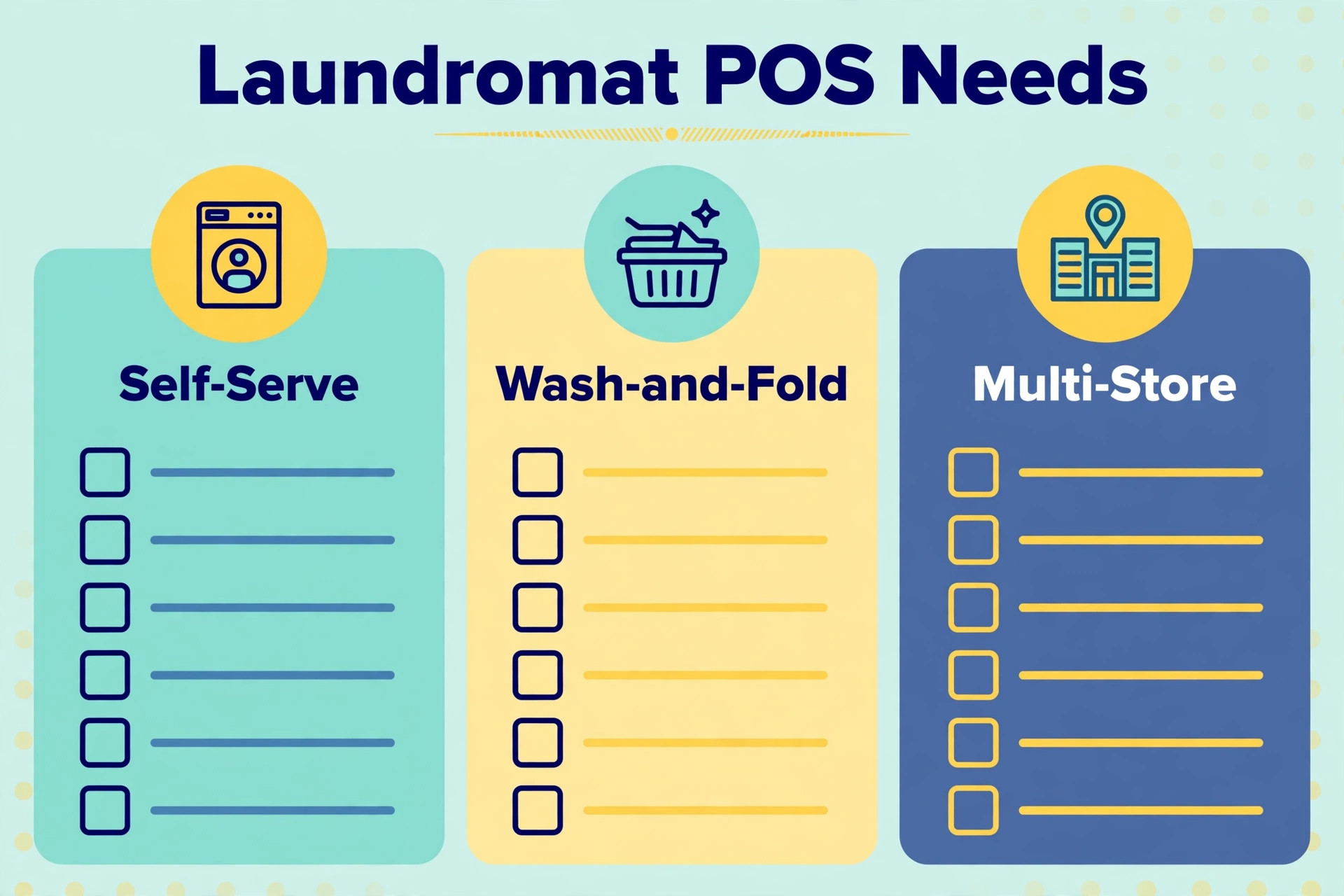
| Job type | First pick | Second tool | Why this pair works |
|---|---|---|---|
| Self-serve laundromats | LaundryCard | Square POS | Machine payments plus a simple counter register |
| Wash-and-fold services | Wash-Dry-Fold POS | Curbside Laundries | Order workflow plus delivery scheduling |
| Multi-store owners | Cents | CleanCloud | Central orders plus comparable store reports |
A self-serve store using the best pos software for laundromats should keep the customer journey short. A customer taps a card at the machine, the machine starts, and the owner sees revenue by machine without touching an order screen. LaundryCard covers that payment layer, and Square covers the counter for soap, snacks, and vending, so neither system is forced into a job it was not built for.
A wash-and-fold service needs the opposite emphasis, which is order control from drop-off to pickup. Wash-Dry-Fold POS covers weighing, tickets, stage tracking, and commercial invoicing in one system built by laundromat owners. Curbside Laundries adds strong pickup and delivery scheduling for stores where routes drive growth. A multi-store owner should instead prioritise central reporting, so Cents or CleanCloud gives one view of orders, revenue, and labour across stores even when machine hardware differs.
Picking the Best POS Software for Laundromats for Your Store
Start by counting your order mix for a normal week. How many loads are pure self-serve, how many are wash-and-fold drop-offs, and how many are pickup and delivery orders. If self-serve loads dominate, buy the payment layer first and keep the counter system simple. If wash-and-fold orders pass even a third of revenue, buy the order platform first, because one lost load damages trust more than a slightly higher subscription ever will.
Next, check machine compatibility before you fall in love with a dashboard. Wash-Dry-Fold POS, Cents, and CleanCloud each integrate with a different set of machine and card systems, including Speed Queen, Laundroworks, ESD, FasCard, LaundryCard, and SpyderWash. Bring your exact machine models and card hardware to the demo, and ask the vendor to show a sale flowing from machine to report, not just a screenshot of a report. A system that cannot read your machines will leave you reconciling two sets of books by hand.
Then run a live order test. Drop off a real bag, weigh it, ticket it, move it through every stage, and pick it up, while a second order goes out on a delivery route. Watch for the moments staff improvise, such as writing a weight on paper or texting a driver outside the system. Every improvisation is a feature gap that will reappear on your busiest day. Finally, confirm payment processing, SMS costs, and contract length in writing, since those lines often exceed the headline subscription over a year.
The 13 Tools in Detail
1. Wash-Dry-Fold POS
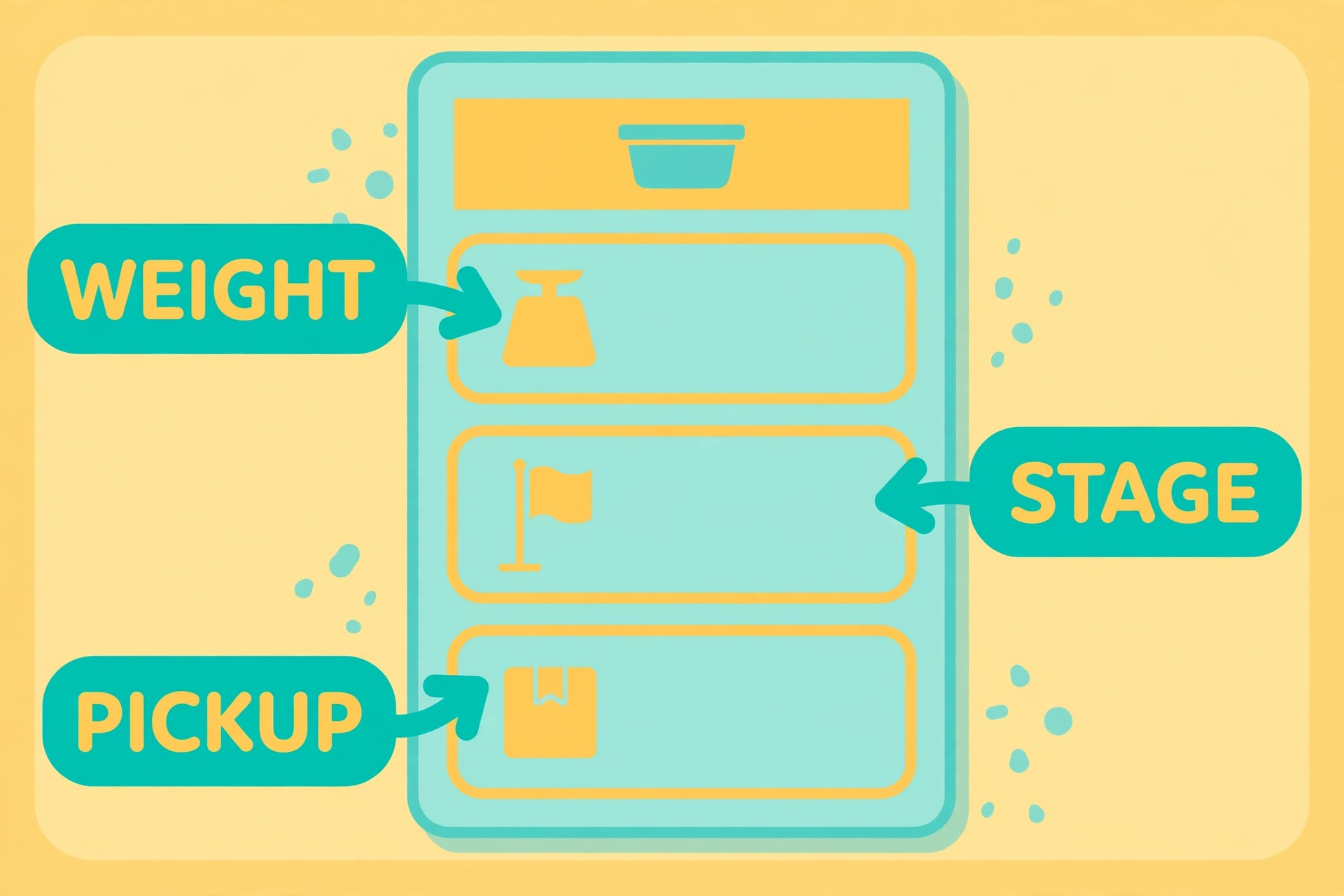
Wash-Dry-Fold POS was built by laundromat owners from running their own high volume stores, and it shows in the workflow. One system covers wash-and-fold orders priced by weight, pickup and delivery with routes and recurring orders, commercial accounts invoiced monthly, retail sales, and a Kanban board that moves orders from intake through wash, dry, fold, and pickup. That board is the daily control panel for an attended store.
The system integrates with the machine and card systems stores already run, including Speed Queen, Laundroworks, ESD, FasCard, LaundryCard, and SpyderWash, so the POS and the machines report together. Pricing is consultation based in third party listings, so check the vendor pricing page and ask what is included for onboarding and hardware. It fits attended stores best, and a pure self-serve store will pay for order features it rarely uses.

2. CleanCloud
CleanCloud is a widely used laundry POS and pickup and delivery platform, with more than 2,500 customers reported across many countries. It covers in-store POS, wash-and-fold orders, pickup and delivery with route optimisation and a driver app, subscriptions, customer marketing, and a hosted website. That breadth makes it a strong default for a store that wants one system for counter, delivery, and marketing.
Pricing is tiered by monthly order volume, reported at 50 dollars for Lite with 500 orders, 75 dollars for Pro with 2,000 orders, and 110 dollars for Grow with 3,000 orders, so check the vendor pricing page for current limits and overage terms. A store growing past a tier boundary should model the next tier before signing, since order growth is the goal and the price should not punish it unexpectedly. CleanCloud fits growing multi-service stores better than tiny self-serve sites.
3. Cents
Cents positions itself as the all in one POS and business management system for laundromats and dry cleaners, with business and employee management, pickup and delivery dispatch, and a driver app. Third party guides report a POS Essentials plan at 149 dollars per month, with wider published ranges up to 599 dollars per month for larger configurations, plus hardware bundles reported between 2,000 and 3,500 dollars. Check the vendor pricing page for the plan that matches your store count and order volume.
Cents fits owners planning to scale pickup and delivery or add stores, because its dispatch and management tools assume growth. The trade off is upfront cost and setup time, especially if you buy its hardware line. A single store with modest wash-and-fold volume may get equal value from a simpler platform, while a multi-store owner will use the central management features daily.
4. Curbside Laundries
Curbside Laundries is wash-and-fold POS software designed by laundry owners for laundromats, handling over the counter sales, wash-and-fold orders, and pickup and delivery orders in one system. Customers schedule pickups online through a web app, staff track every order from start to finish, and customers pay at drop-off or pickup. The vendor reports hundreds of laundromats using the system and millions of orders processed through it.
Pricing is reported at a flat starting figure of 260 dollars per month in third party listings, so check the vendor pricing page for what that plan includes. That flat fee is higher than entry tiers elsewhere, but it buys a laundry specific workflow rather than a general retail adaptation. Curbside fits full-service stores where order accuracy and delivery scheduling drive revenue, and it fits poorly for a pure self-serve site.
5. Turns
Turns is a cloud laundry POS provider used by hundreds of businesses across many countries, covering point of sale, customer apps, pickup and delivery, and fleet management as separate modules. Its pitch is modern cloud operation with real time tracking, analytics, and flexible payment options, plus DoorDash integration for pickup booking in some configurations. That modular shape lets a store buy the POS first and add customer apps later.
Third party listings report Turns POS at 100 dollars per month, customer apps at 100 dollars per month, and website building at 50 dollars per month, with a lower starting figure of 25 dollars per month in some listings, so check the vendor pricing page and price the full module set you need. Turns fits modern multi-service stores that want cloud tools and are comfortable assembling modules, while owners who want one all-in price should compare the module total against Cents or CleanCloud.
6. LaundryCard
LaundryCard is a machine card payment system, not a full order POS, and that distinction matters. It converts coin operated machines to card payment, so customers pay with a card or a stored value card at the machine and owners see machine level revenue without handling coins. For a self-serve store, that conversion alone can lift revenue, because customers without coins no longer walk away from an empty machine.
LaundryCard fits self-serve stores converting from coins, and it pairs with a counter POS for retail sales rather than replacing one. It will not track a wash-and-fold order through stages, invoice a hotel account, or plan a delivery route, so do not buy it expecting order management. Check the vendor pricing page for hardware, card, and processing terms, and confirm compatibility with your exact machine models before ordering readers.
7. FasCard
FasCard is the card payment system in the ESD family, built for self-serve stores that want card acceptance at washers and dryers with central reporting. Customers pay by card at the machine, owners monitor machine revenue and usage, and the store reduces coin handling and machine vandalism risk. Its strength is reliability in unattended operation, where a failed reader means a lost sale nobody notices until the end of the day.
FasCard fits stores already on ESD hardware or planning to standardise on it, since the payment system and machine controls come from the same family. The trade off is narrower order features compared with a full laundry POS, so wash-and-fold heavy stores should pair it with a platform like CleanCloud or Cents. Confirm reader compatibility, network needs, and service coverage for your area in the demo.
8. SpyderWash
SpyderWash, in the CCI family, is a machine payment and management system for stores that want card and mobile payment at the machine plus usage data. It lets owners see which machines earn, which sit idle, and where pricing changes might lift revenue, without adding a full order workflow. That machine level view is the main reason a self-serve owner chooses it over a generic card reader.
SpyderWash fits CCI equipped stores and self-serve owners who manage by machine data. Like other payment systems here, it is not a wash-and-fold order platform, so pair it with a counter POS if you add attended services later. Check the vendor pricing page for reader pricing and processing terms, and verify that your machine models and existing card infrastructure work with the system before committing.
9. ESD
ESD is a payment and machine management provider whose family includes FasCard, and it serves stores that want to standardise machines, payments, and reporting under one supplier. The appeal is a single service relationship for hardware and payment, with machine level reporting and card acceptance across the floor. For an owner opening a new self-serve store, that single supplier story removes several integration decisions at once.
ESD fits new builds and stores already committed to its hardware family. Its order features are narrower than a dedicated laundry POS, so wash-and-fold growth will eventually need a second system. Weigh the simplicity of one supplier against the flexibility of mixing best in class tools, and confirm service response times for your area, since unattended stores depend on fast reader and machine support.
10. Laundroworks
Laundroworks is a machine card payment system for self-serve stores, converting coin machines to card payment with central reporting. Customers pay at the machine, owners track revenue by machine, and the store cuts coin collection labour and the security risk of full coin boxes. That simple value proposition is why payment systems remain a separate category from order platforms in this guide.
Laundroworks fits self-serve stores that want card conversion without a full POS overhaul. It does not manage wash-and-fold orders, delivery routes, or commercial invoicing, so attended stores should treat it as one layer in a larger stack. Check the vendor pricing page for reader and processing terms, and confirm compatibility with your machines and any existing loyalty or app system before purchase.
11. Square POS
Square POS is a general retail point of sale system, and its strength in a laundromat is the counter, not the machines. It rings up soap, snacks, vending, and simple wash-and-fold charges, takes card payments with familiar hardware, and reports retail sales cleanly. A self-serve store that only needs a counter register and a machine payment system can run well on Square plus LaundryCard or FasCard.
Square fits stores with modest wash-and-fold volume and a real retail counter. It lacks laundry specific workflow such as weigh-in tickets, stage boards, delivery routes, and commercial invoicing, so a growing wash-and-fold business will outgrow it. Pricing starts with a free POS tier plus processing fees in third party guides, so check the vendor pricing page for hardware and processing terms before budgeting.
12. Shopify POS
Shopify POS fits laundromats that sell online as well as in store, such as retail products, gift cards, or subscription wash-and-fold packages through a website. It unifies online and in-store sales, customer records, and retail inventory, which matters when a store builds a brand beyond its neighbourhood. Third party guides report Shopify plans from 25 dollars per month for Basic, with POS Lite included, so check the vendor pricing page for current plan and POS Pro terms.
Shopify fits stores with a real online retail or subscription side, and it fits poorly as a pure laundry order system, since it lacks weigh-in, stage tracking, and route planning. Use it as the commerce layer alongside a laundry platform when online selling matters, not as a replacement for wash-and-fold workflow. Confirm processing fees and POS Pro costs, since those lines change the total quickly.
13. Laundry Boss
Laundry Boss turns existing washers and dryers into connected, data driven machines, with machine level tracking, revenue reporting, and management tools for self-serve owners. Third party listings report pricing at 4 dollars per month per machine, which makes the cost easy to model against your machine count. A 40 machine store can therefore estimate the monthly fee directly, while a larger store should compare the per machine total against a flat platform fee.
Laundry Boss fits data led self-serve owners who want to know exactly which machines earn and which need attention. It is not a wash-and-fold order system, so pair it with a counter POS or a laundry platform if attended services grow. Check the vendor pricing page for what the per machine fee includes, including app access, reporting, and support, before counting it as your only system.
Costs Beyond the Subscription
The subscription is rarely the largest line in year one. Hardware readers, counter tablets, printers, scales, and installation can exceed several months of software fees, especially when converting a coin store to card payment across many machines. When comparing the best pos software for laundromats, ask for a written hardware list with a price for every reader, tablet, and printer, and confirm who installs and services each item.
Processing fees are the second hidden line. Card fees apply to every machine payment, counter sale, and delivery order, and they scale with revenue rather than staying flat. A system with a slightly higher subscription but lower processing, or with processing included in a clear rate, can cost less overall than a cheap subscription with an opaque processing markup. Ask for the effective rate on your own average ticket, not the headline rate on a pricing page.
SMS and message costs form the third line, since ready messages, delivery updates, and marketing texts are charged per message on many plans. A busy wash-and-fold store can send thousands of messages a month, so confirm the included allowance and the overage rate before launch. Finally, confirm contract length and exit terms, including who owns customer records and order history if you leave, because switching laundry platforms midstream is far harder than switching a retail register.
Rollout Checklist
Use this checklist when you install or switch laundromat software, and keep a copy at the counter.
1. Count one week of self-serve, wash-and-fold, and delivery orders before choosing a system. 2. Confirm every machine model and card reader works with the chosen platform in a live demo. 3. Weigh, ticket, wash, dry, fold, and pick up a test order end to end with real staff. 4. Run a delivery route with a test order, including a failed delivery and a customer message.
5. Reconcile one full day of machine revenue, counter sales, and wash-and-fold orders against deposits. 6. Train every attendant on refunds, lost tickets, and card failures before opening day. 7. Set a weekly review of order accuracy, delivery on-time rate, and machine downtime. 8. Review plan tier and order volume monthly so growth does not trigger surprise overage fees.

Related Guides
Keep exploring with these guides on Stratilyze:
- Best POS System for Boutiques (15 Tools)
- Best POS System for Pet Stores (14 Tools)
- Best POS System for Bars and Pubs (5 Tools)
Frequently Asked Questions
Do I need a full POS if my store is only self-serve?
Usually not. A machine payment system like LaundryCard, FasCard, SpyderWash, or Laundroworks plus a simple counter register covers a pure self-serve store well. Buy a full order platform when wash-and-fold or delivery orders become a meaningful share of revenue, because that is when order tracking starts to protect profit rather than add overhead.
What does wash-and-fold software actually track?
It tracks the order from drop-off to pickup, including weight, price, customer details, stage, and payment status, plus delivery routing when applicable. The stage board is the key feature, since it shows at a glance which orders are waiting, washing, drying, folding, or ready. Without that board, staff rely on memory and paper, and lost or delayed loads follow.
How do CleanCloud order limits work?
CleanCloud tiers limit monthly orders, with Lite reported at 500 orders, Pro at 2,000, and Grow at 3,000 in third party guides. Exceeding a tier means moving to a higher plan, so check the vendor pricing page for current limits and overage terms. A store growing fast should model the next tier into the budget rather than treating the entry price as permanent.
Can one system handle machines from different makers?
Often yes, but never assume it. Wash-Dry-Fold POS, Cents, and CleanCloud each list integrations with major machine and card systems, yet exact models and firmware matter. Bring your machine list to the demo and ask for a live transaction from machine to report. If the vendor cannot show it, plan for manual reconciliation or a different system.
Should multi-store owners buy one platform for all stores?
Yes, when the stores share wash-and-fold or delivery work, because central orders and comparable reports save more management time than any per store saving. Cents and CleanCloud both centralise that view. If stores are pure self-serve with different machine hardware, a common payment reporting layer may matter more than a common order platform.
How do I stop losing wash-and-fold orders?
Use barcoded tickets, a stage board every attendant checks, and a ready message customers trust, and audit one day of orders weekly for tickets without a matching pickup. Most losses come from unticketed bags, unrecorded weights, or orders marked ready before folding finished. The best pos software for laundromats makes those errors visible on the board instead of hiding them in a drawer of paper tickets.
A Closing Word for Laundromat Owners
The right choice follows your order mix, not the longest feature list. Self-serve owners should buy machine payments first and keep the counter simple. Wash-and-fold owners should buy order accuracy first and treat machine payments as a second layer. Multi-store owners should buy central reporting first, because comparable numbers across stores drive every later decision about pricing, labour, and expansion.
Start with a live test on your own machines and your own bags, price the full stack including processing and SMS, and review order accuracy weekly after go live. A system that survives your busiest Saturday with no lost loads and a clean reconciliation is the right system, whatever its rank on a comparison table. Choose that one, and grow the services it tracks well before adding features you do not yet need.
Revisit the choice once a year against your order mix, not against a new feature announcement. A store that adds delivery routes, a second location, or hotel accounts may outgrow a system that was perfect at opening, and that is a sign of growth rather than a buying failure. Upgrade when the work changes, and keep the customer experience steady through the change.