
A pet store loses a sale every time a customer asks for a food their dog needs and the till cannot say whether it is in stock, which size is on the shelf, or when the next delivery arrives. It loses a grooming booking every time the diary and the till live in different systems. It loses a repeat customer every time the loyalty points from last month do not show up at the counter today. These are not software problems in the abstract. They are lost sales, and the best pos system for pet stores is the one that stops them happening.
Pet retail has needs a general till does not cover. Food comes in sizes, flavours, and life stages, and the same brand may have twenty variants on one shelf. Grooming sits beside retail, with appointments and service history. Loyalty is built on repeat food purchases, and a store that cannot track what a pet eats cannot recommend the next bag.
This guide compares 14 tools across pet inventory, grooming, loyalty, supplier catalogues, eCommerce, and total cost. Prices come from vendor pages and recent published comparisons, and they change often, so check the vendor pricing page before you sign. Test each shortlisted tool with your real week before you sign.
Why the best pos system for pet stores is different from general retail POS
A pet store register must answer questions a general till never faces. Which food, size, and life stage does this customer buy every month, and is it in stock today. Which grooming appointment is next for this dog, and what was done last time. Which supplier delivers this brand, and what is the case quantity.
Inventory depth is the deciding strength. Pet food, treats, toys, and supplies each need brand, size, flavour, and life stage tracking, and a store that cannot see true stock by variant will over order slow lines and run out of fast ones. A pre built pet catalogue matters just as much, because a store that can start from 120,000 ready products saves weeks over manual entry.
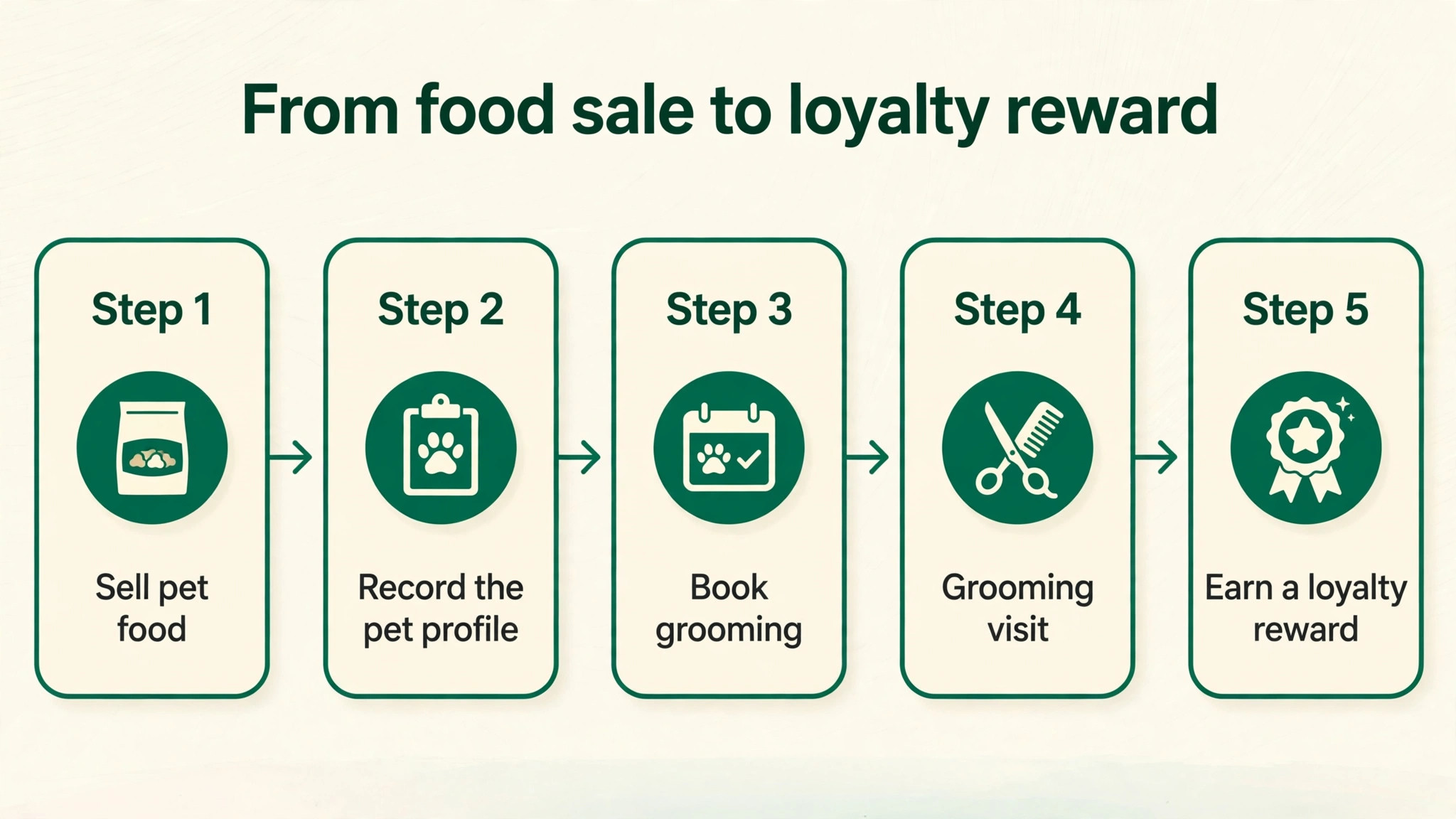
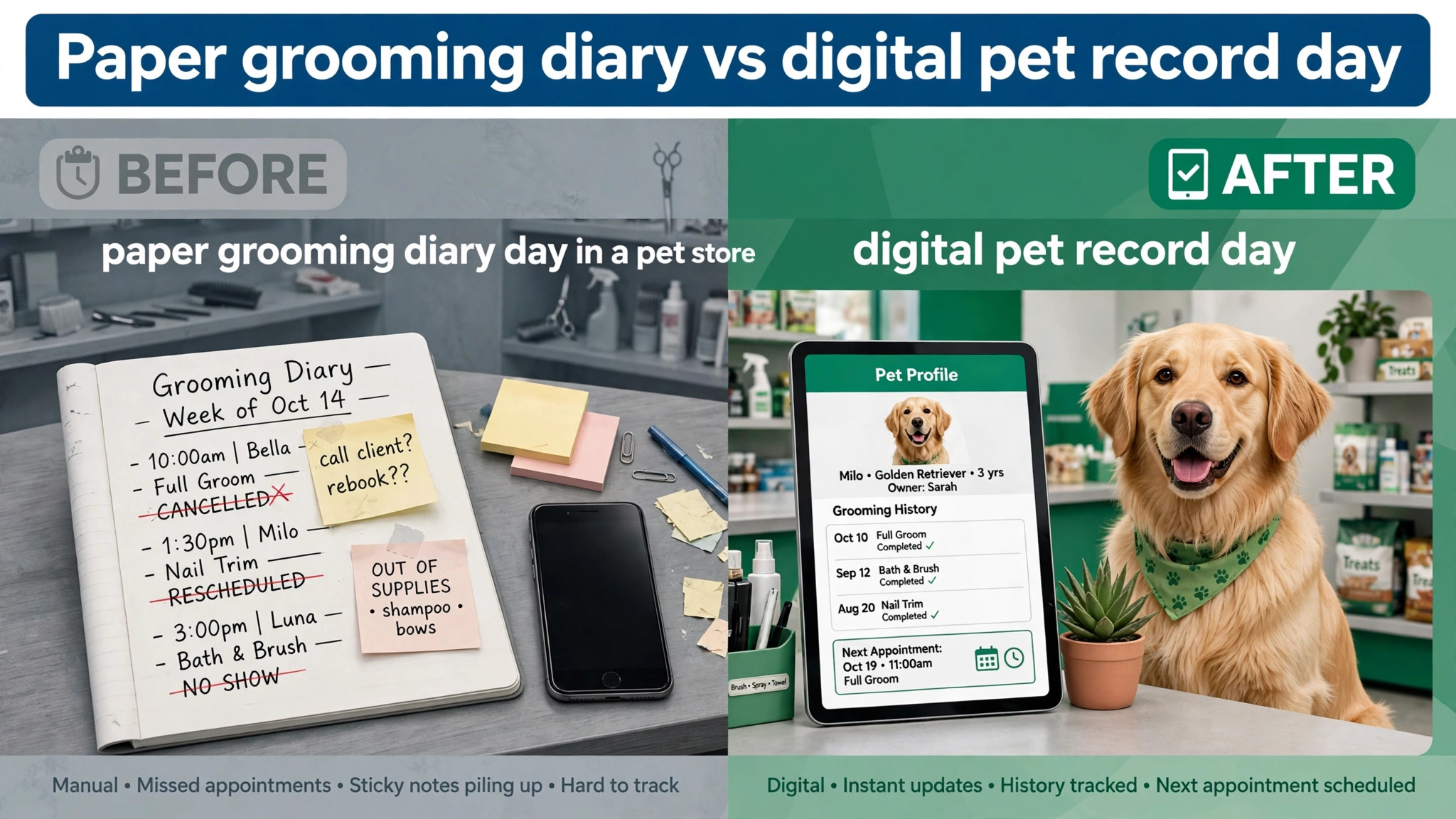
A grooming appointment is a job with a pet, an owner, a service, and a reminder, and the POS should carry it from booking to payment without a paper diary. Loyalty is built on repeat food purchases, so the till should know what the pet eats and reward the next bag automatically. Judge every tool on inventory, grooming, and loyalty first, and on till speed second.
The 14 tools at a glance
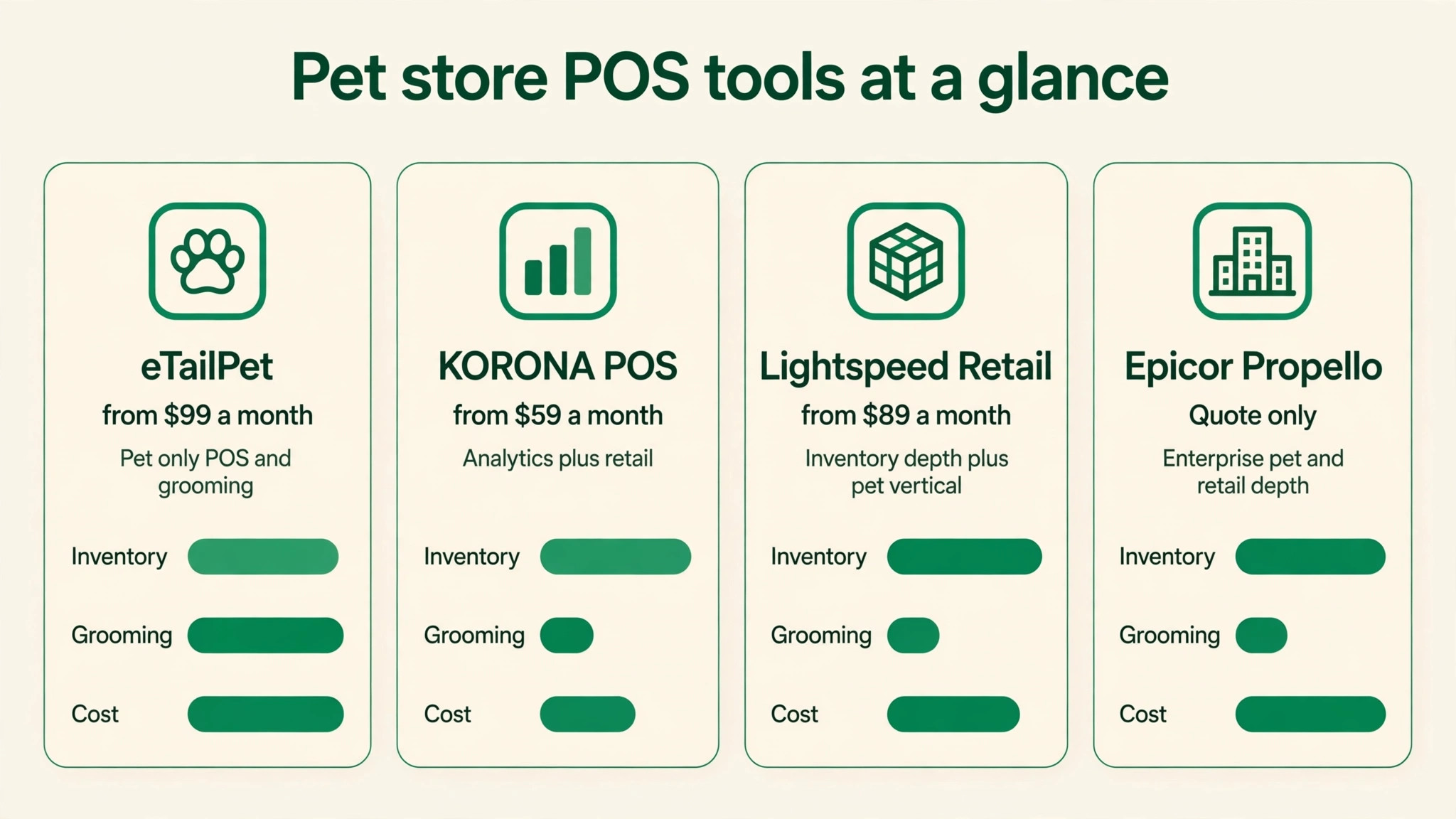
Use this table to shortlist three tools. Price notes are starting points from published sources, and the vendor pricing page is the final word.
| Tool | Main job | Starting point | Watch out for |
|---|---|---|---|
| eTailPet | Pet only POS and grooming | From 99 dollars a month | Pricing differs across sources |
| KORONA POS | Analytics plus retail | From 59 dollars a month | Retail tier price differs by source |
| Lightspeed Retail | Inventory depth plus pet vertical | From 89 dollars a month | Extra registers cost more |
| Epicor Propello | Enterprise pet and retail depth | Quote only | Reported near 399 dollars a month |
| Square for Retail | Free start with simple inventory | Free plan | Flat card rates get costly at volume |
| Shopify POS | Online plus in store selling | From 39 dollars a month | POS Pro adds 89 dollars per location |
| Clover | Hardware plus software bundle | From 16 dollars a month | 36 month hardware contracts |
| Rain POS | Specialty retail with pet focus | From 99 dollars a month | No free trial confirmed |
| Heartland Retail | Inventory heavy specialty retail | Quote only | No published price |
| Erply | Inventory and multi location | Check the vendor pricing page | Pricing varies by plan |
| Epos Now | Bundled POS with hardware | From 84 dollars a month | Hardware adds 399 dollars |
| Revel Systems | Enterprise retail and service | Quote only | Built for larger operations |
| SpotOn | Bundled hardware and processing | From 55 dollars per station | Compare contract terms |
| NCR Counterpoint | Enterprise specialty retail | Quote only | Implementation is a project |
A store comparing the best pos system for pet stores should price the whole year, not the first month. Add card processing, extra registers, hardware, grooming add ons, and any per location fee. A tool that looks cheap at entry level can become the most expensive option once your second register and your card volume are added.
Best pick by job
Shortlisting the best pos system for pet stores by store type keeps the choice practical, because a tool that fits an independent shop may frustrate a multi location chain.
| Segment | First pick | Second tool | Why this pair works |
|---|---|---|---|
| Independent pet stores | eTailPet | KORONA POS | Pet depth plus analytics depth |
| Grooming plus retail stores | eTailPet | Square for Retail | Grooming plus retail in one, or low cost till |
| Multi location stores | Lightspeed Retail | Epicor Propello | Inventory depth plus enterprise depth |
Independent pet stores need pet depth first. eTailPet is built only for pet retail, with a pre built product catalogue, Astro Loyalty, and grooming scheduling in one system, while KORONA POS adds analytics for a store that wants to understand every line it sells.
Grooming plus retail stores need a different strength. The diary and the till must share the same customer and pet records, so a grooming client can buy food in the same visit without retyping. eTailPet covers that best, and Square for Retail is the second pick for a small shop that grooms a few dogs a week.
Multi location stores need inventory depth and central control. Lightspeed Retail handles purchase orders and multi location stock, while Epicor Propello adds enterprise depth for a chain that needs rule based pricing.
The 14 tools in detail
Each section below judges the tool on pet specific jobs, so you can see where the best pos system for pet stores earns its price and where it does not.
1. eTailPet
eTailPet is the only pet only system in this list, and its depth shows in daily store work. It covers POS, inventory, a pre built catalogue of more than 120,000 pet products, a synced online store, grooming scheduling, Astro Loyalty, marketing, and a Smart Order System, all in one platform. A store can look up a pet and see what it eats and when it was last groomed.

Pricing is the complication. The vendor own blog lists Startup from 99 dollars a month billed annually, with Core and Plus on custom quotes, while directories list a starting price of 149 dollars a month. Treat the 99 dollar figure as the vendor stated entry point and confirm the current price on the vendor page before budgeting, because the two sources disagree. eTailPet also requires its own payment processing.
eTailPet suits an independent pet store that wants pet tools built in rather than added on. A store that only sells accessories online will find it heavy, and should compare Shopify POS first.
2. KORONA POS
KORONA POS is the analytics pick in this list, built for niche retailers including pet stores, liquor stores, and convenience stores. It covers POS, inventory management with automated ordering, detailed reporting with custom dashboards, customer records, loyalty, and add on modules for food, invoicing, ticketing, and franchises. The reporting depth helps a store see which lines earn money.
Pricing is published as Core from 59 dollars a month and Retail from 69 dollars a month in some listings, with other listings reporting Retail at 79 dollars a month. Add ons range from 10 dollars a month per terminal to 50 dollars a month per gate. Confirm the current Retail price on the vendor page, because the sources disagree by 10 dollars.
KORONA suits a pet store that wants detailed analytics at a low entry price. A store that needs a pre built pet catalogue or built in grooming should compare eTailPet first.
3. Lightspeed Retail
Lightspeed Retail is the inventory depth pick in this list, with pet listed as a named vertical alongside bike, apparel, and sporting goods. It covers inventory, purchase order automation, landed cost tracking, vendor catalogues, multi location stock, loyalty, and eCommerce, with serialized tracking for high value items. That depth suits a pet store carrying many brands across more than one location.
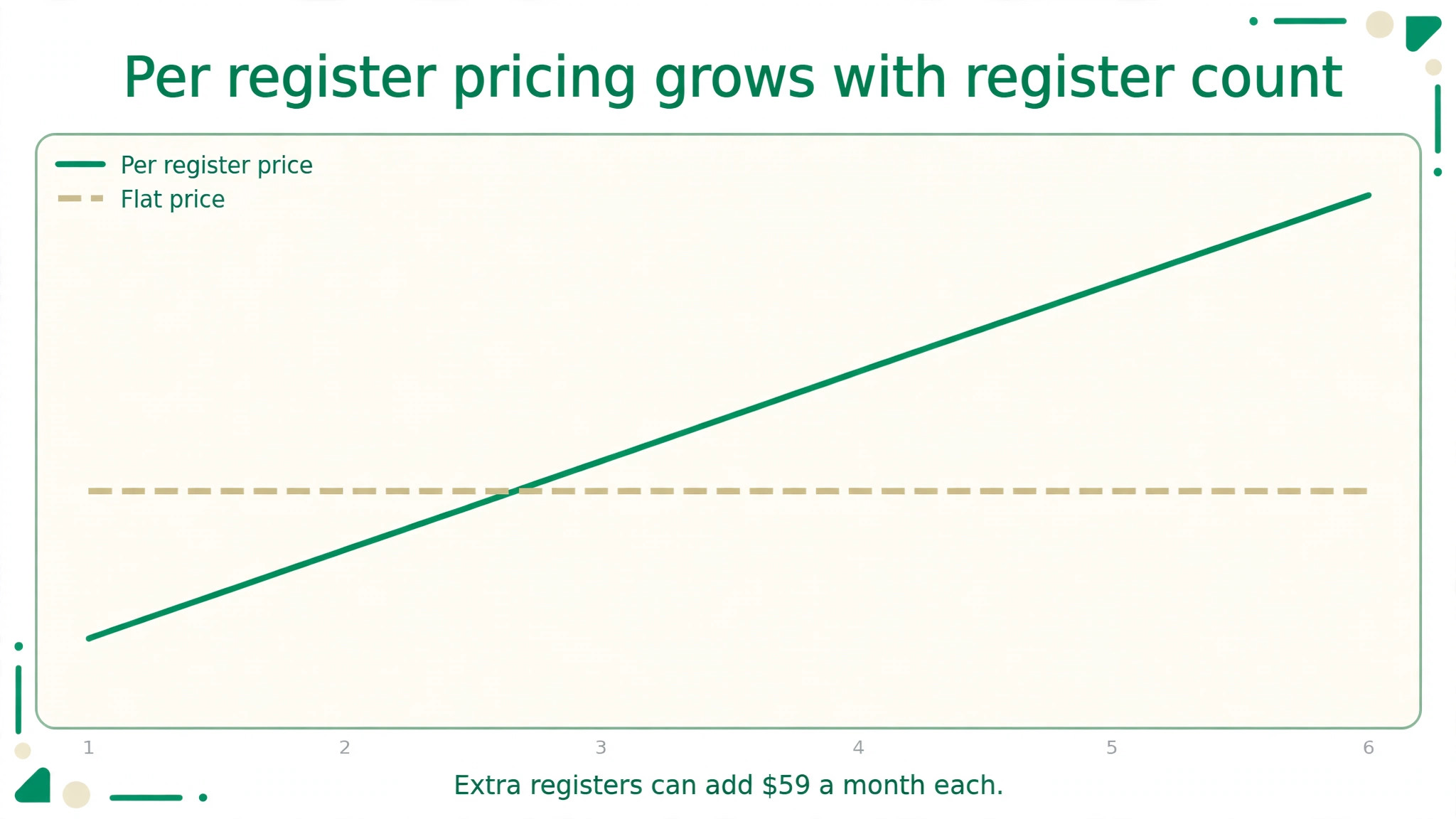
Pricing is published as Basic at 89 dollars a month on annual billing or 109 dollars month to month, Core at 149 dollars a month on annual billing, and Plus at 289 dollars a month on annual billing. Each plan includes one register, with extra registers at 59 dollars a month each in published comparisons. Card present processing through Lightspeed Payments is 2.6 percent plus 10 cents on every plan.
Lightspeed suits a multi location pet store with complex inventory that has outgrown a simple till. A small single shop may find Basic enough, but should model the Core price, because loyalty and advanced reporting sit there.
4. Epicor Propello
Epicor Propello is the enterprise depth pick in this list, built for established retailers that need rule based pricing and deep reporting. It covers POS, inventory, a flexible pricing engine, promotions, customer records, loyalty, and multi location control, with a depth that suits a pet chain with complex pricing rules across stores. That pricing engine sets it apart from simpler tills.
Pricing is by quote, with no price published on the vendor site in current listings. The eTailPet blog reports a starting point near 399 dollars a month, so treat that as a reported figure and get a written quote at your location count before comparing it against published price tools. Enterprise pricing usually means a sales conversation and an implementation plan, not a self serve signup.
Epicor Propello suits an established pet store chain that needs enterprise depth. A single independent shop should not shortlist it.
5. Square for Retail
Square for Retail is the zero cost start in this list, and it is the easiest system for a small shop to begin on. The free plan covers the POS app, item library, online site, invoicing, and basic inventory, with no monthly fee and no long term contract. Hardware starts at a 59 dollar reader, and the system works on a tablet or a phone, which suits a small shop or a market stall.
Pricing is Free at zero dollars, Plus at 49 dollars a month per location, and Premium at 149 dollars a month per location in US listings. In person card processing is 2.6 percent plus 15 cents on the free plan, falling to 2.5 percent on Plus and 2.4 percent on Premium. Plus adds multi location stock management and purchase orders.
Square suits a new or small pet store that wants to start at zero cost. The pet depth is thinner than eTailPet, so a store with grooming and a large food range should test eTailPet first.
6. Shopify POS
Shopify POS is the online first pick, and its whole argument is unified commerce. It covers in store selling, online inventory sync, buy online pickup in store, ship from store, cross location returns, customer profiles, and discounts that work across the store, the website, and social channels. A customer who orders food online sees the same stock count in store.
Pricing starts with a Shopify plan at 39 dollars a month billed monthly or 29 dollars billed yearly for Basic, with POS Lite included on every plan. POS Pro adds 89 dollars a month per location and brings staff roles, smart inventory management, low stock reports, and unlimited registers. Card rates through Shopify Payments are 2.6 percent plus 10 cents on Basic. Using a third party processor adds an extra transaction fee, so price that in before assuming the headline rate applies.
Shopify POS suits a pet store whose online sales carry real weight. A grooming heavy shop will find the grooming depth thinner than eTailPet.
7. Clover
Clover is the hardware plus software bundle in this list, sold through partners and resellers with the till, printer, and cash drawer in one package. It covers in store payments, inventory, customer loyalty, staff scheduling, online ordering, and an app market for extras like QuickBooks and Shopify. The hardware is sleek and the setup is guided, which suits a shop that wants one vendor for the whole counter.
Pricing varies by partner, which is the honest complication. Retail packages are reported from 16 dollars a month for 36 months for a compact terminal, with Standard at about 180 dollars a month for 36 months and Advanced at about 240 dollars a month for 36 months in published comparisons. Card processing runs from 2.3 percent plus 10 cents for in store sales to 3.5 percent plus 10 cents for keyed in sales. Get the full contract in writing before signing.
Clover suits a pet store that wants hardware and software from one vendor. A store that needs pet specific inventory and grooming should compare eTailPet first.
8. Rain POS
Rain POS is a specialty retail system built for craft, boutique, and outdoor shops, with pet stores among its named niches. It covers inventory by size and variant, supplier ordering, customer records, loyalty, and a built in website, with a focus on the kind of shop that sells specialist products rather than general goods.
Pricing is reported at 99 dollars a month for the Startup plan on annual billing, with higher Core and Plus plans unpublished in current listings. No free trial is confirmed, so a demo is the way to test it. The entry price sits above Square and Shopify Basic, and the value depends on how much the specialty inventory depth is worth to the shop.
Rain suits a small to mid pet store that wants specialty retail depth without an enterprise price. A shop that grooms daily should compare eTailPet before committing.
9. Heartland Retail
Heartland Retail is an inventory heavy specialty retail system, built for shops with stock complexity across locations. It covers advanced inventory, purchase orders, multi location stock, customer records, loyalty, and reporting, with a depth that suits a pet store carrying many brands, sizes, and life stages. It is the kind of system a growing chain buys when a simple till stops working.
Pricing is by quote, with no usable published price on the vendor site in current listings. That makes it hard to shortlist against published price tools, and a shop should get a written quote early rather than investing trial time first. Expect partner quotes and payment processing bundles, because Heartland sells through its payments business as well as its software.
Heartland suits a multi location pet store with complex inventory. A single shop should compare Lightspeed first.
10. Erply
Erply is an inventory and multi location platform with a long track record in specialty retail. It covers POS, inventory by variant, purchase orders, multi location stock, customer records, loyalty, and reporting, with an API for custom workflows.
Pricing is not published in one clear list in current sources, so check the vendor pricing page for a quote at your location count. Published comparisons describe it as a mid priced option, but the plan names and prices vary by region. Get the number in writing before comparing it against Lightspeed, because the two products overlap heavily on inventory depth.
Erply suits a pet store that needs multi location inventory and an API. A single shop should compare Lightspeed first.
11. Epos Now
Epos Now is a bundled POS with hardware in one purchase, aimed at small retailers who want a complete counter without separate vendors. It covers in store payments, inventory, customer records, reporting, and integrations with accounting and eCommerce tools, with a till that runs on a tablet or a dedicated terminal.
Pricing is reported at 84 dollars a month plus 399 dollars for hardware in published comparisons, so check the vendor page for current bundle terms. That total is higher than Square free and Shopify Basic, and the value depends on whether the hardware bundle saves the shop a separate purchase. Card processing is separate, so add it to the model before comparing.
Epos Now suits a small pet store that wants a complete counter in one box. A store that needs pet specific inventory or grooming should compare eTailPet first.
12. Revel Systems
Revel Systems is an enterprise retail and service platform, built for larger operations that need depth across the counter and the back office. It covers POS, inventory, customer management, service workflows, reporting, and integrations, with a focus on businesses that run several locations and need central control.
Pricing is by quote, with no published price in current listings. Enterprise pricing usually means a sales conversation, an implementation fee, and a contract, which is a poor fit for a single shop choosing its first POS. A shop should only shortlist Revel when it already runs several locations and needs enterprise controls.
Revel suits a pet retail chain that needs central control. A single pet store should not shortlist it.
13. SpotOn
SpotOn is a bundled hardware and processing platform that competes on the counter package rather than on software depth. It covers POS, payments, customer records, marketing, and reporting, with hardware and processing sold together so the shop deals with one vendor. That bundle suits a shop that wants a simple purchase and a single support number.
Pricing is reported at 55 dollars per station a month in published comparisons, so check the vendor page for current terms and contract length. Compare the contract terms, not only the headline price, because bundled processing deals can lock a shop into rates that look cheap in year one and cost more later. Ask for the processing rate in writing before signing.
SpotOn suits a small pet store that values a bundled counter. A store that needs pet specific inventory or grooming should compare eTailPet first.
14. NCR Counterpoint
NCR Counterpoint is an enterprise specialty retail system with a long history in shops that need deep inventory and pricing control. It covers POS, inventory, purchasing, customer records, loyalty, and reporting, with a depth that suits a pet chain carrying many brands and variants across locations.
Pricing is by quote, with no published price in current listings, and implementation is a project rather than a signup. A shop should expect a sales conversation, a scoping exercise, and a contract, which is a poor fit for a single store choosing its first POS. The total cost is usually higher than the cloud tools in this list.
NCR Counterpoint suits a pet retail chain that needs enterprise control. A single pet store should not shortlist it.
How to judge a pet POS before you pay
Start with your store model, because that choice filters the best pos system for pet stores faster than any feature table. An independent shop needs pet inventory and loyalty. A grooming plus retail shop needs a shared diary and till. Write that model down before any demo, and score each tool against it.
Next, run a realistic trial week. Sell food by pet profile, book a grooming appointment with a retail add on, and redeem loyalty points at the till. Then check that the sale, the grooming booking, and the stock count all agree.
Finally, price the second year, not the first month. Add processing fees, extra registers, hardware, grooming add ons, and any per location charge, and model the price at your expected register count. Ask about contract length, notice period, and data export, because switching POS later is far harder than choosing well now. A short contract with clean data export beats a small discount.
Setup checklist for a smooth switch
Use this sequence when you move to the best pos system for pet stores you chose, and do not skip the payment test.
1. Export your current product list, pet profiles, customer records, grooming bookings, and outstanding orders, and clean duplicate customer records before import. 2. Build your inventory first, including food by brand, size, flavour, and life stage, plus treats, toys, and supplies. 3. Set pricing rules next, including loyalty rewards, grooming prices, and discount rules for repeat food buyers. 4. Connect payments and run a test sale with a real card, then refund it, to confirm the full payment flow.
5. Set up grooming templates for common services, including intake notes, service steps, and reminder timing. 6. Invite a small group of regular customers to buy and book grooming in the new system before a full launch. 7. Train staff on pet profile lookup, grooming bookings, and loyalty redemption, because those three jobs cause most support questions. 8. Keep the old till read only for one full month, so no sale or grooming record is lost in the move.
Customers forgive a new till quickly if prices are correct and grooming is ready on time. They do not forgive a lost grooming booking or a double charge. Test sales and grooming twice before launch.

Mistakes that cost pet stores sales
The first mistake is choosing on subscription price alone. A tool at 39 dollars a month that charges extra per register, takes a higher card rate, and lacks a pet catalogue can cost more in a year than a tool at 99 dollars a month with those features built in. Model the full year at your real register count and card volume, including processing and hardware, before deciding.
The second mistake is skipping the pet profile test. Food recommendations, grooming history, and loyalty rewards all depend on the pet record. Test pet lookup, food history, and loyalty redemption during the trial.
The third mistake is ignoring grooming. A shop that buys a till and forgets the diary ends up running grooming on paper. Check that grooming, retail, and loyalty sit in the same system as the till before signing.
The fourth mistake is buying an enterprise platform for a single shop. A quote only tool built for a retail chain will charge a single counter for depth it never opens, and the implementation alone can exceed a month of revenue. Shortlist published price tools first, and only move to a quote only platform when location count or inventory depth forces the change.
What pet POS really costs
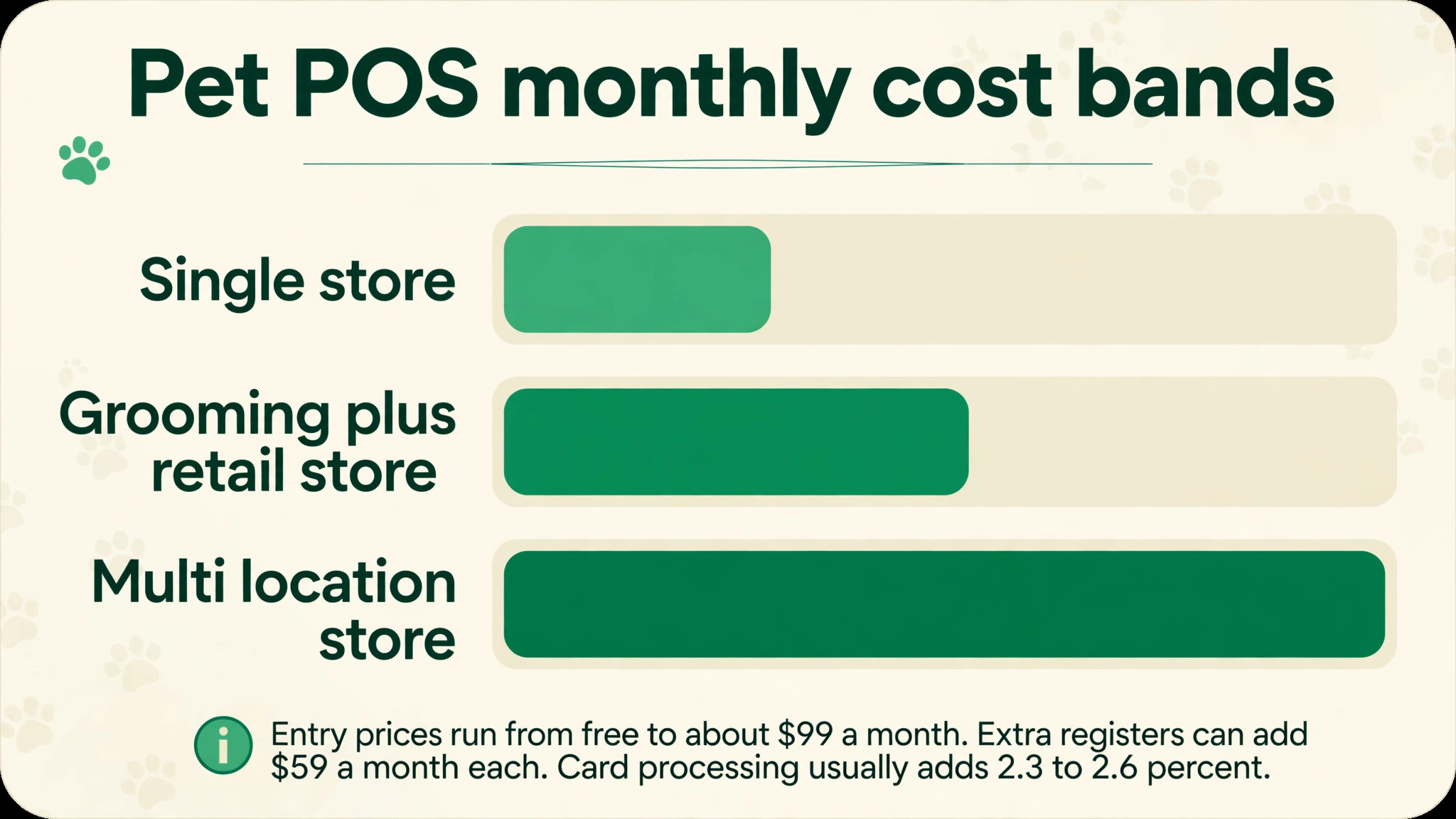
Entry prices in this guide run from free to about 99 dollars a month, but the subscription is only part of the bill. Card processing usually adds 2.3 to 2.6 percent plus a per transaction fee, and that percentage matters more than the subscription once monthly card sales pass a few thousand dollars. Extra registers can add 59 dollars a month each, hardware can add hundreds of dollars once, and a 36 month contract can lock a shop into a bundle it outgrows.
The honest way to compare the best pos system for pet stores is to build a one year model for your store. Take your monthly card volume, your register count, and your grooming volume, then run each shortlisted tool through those numbers. A small shop will usually find Square cheapest in year one. A shop with grooming and a large food range will usually find eTailPet cheapest once the catalogue and loyalty are priced in.
Before signing, ask for a written total that covers the subscription, processing rates, extra registers, hardware, grooming add ons, and any per location charge. Ask how the price changes when you add a register, open a second location, or move to a higher tier. A clear answer to those questions is a good sign. A vague answer is a warning that the first year bill will surprise you.
Related Guides
Keep exploring with these guides on Stratilyze:
- Best POS System for Jewelry Stores (7 Tools)
- Best POS System for Retail Stores
- Best POS System for Boutiques (15 Tools)
Frequently Asked Questions
These answers cover the questions pet store owners ask most when they compare the best pos system for pet stores.
How much should a small pet store pay for POS software?
Most small stores pay between zero and 99 dollars a month for a solid tool, with larger platforms from 149 dollars a month once multi location and advanced inventory are added. Price the tier you need at your real register and location counts. A tool at 39 dollars a month that fits your store beats a costlier tool whose extra features stay unused.
Does pet POS handle grooming bookings?
Pet built tools such as eTailPet handle grooming scheduling, reminders, and service history as core features. General retail tools may handle grooming through an add on or a separate booking app, which adds cost and extra work. If grooming is a major revenue line, put grooming on the shortlist criteria before price, because a split system doubles the admin.
Can POS track what each pet eats?
Yes, when pet profiles and purchase history are turned on. eTailPet tracks food by pet profile, which supports repeat ordering and loyalty rewards, while general tools track purchases by customer only. Test the lookup during a trial, including a repeat food order and a loyalty redemption.
What is the difference between POS Lite and POS Pro on Shopify?
POS Lite is included with every Shopify plan and covers basic in person selling. POS Pro adds 89 dollars a month per location and brings staff roles, smart inventory management, low stock reports, and unlimited registers. A pet store that needs low stock alerts and staff permissions should budget for Pro, not Lite.
Should a new pet store choose a free tool or a paid platform?
A new store should usually choose a tool that fits its current size and can grow for two years, rather than the largest platform on day one. Square, Shopify POS, and Rain POS give a new store structure at a low price. Move to a larger platform when location count, grooming volume, or inventory depth becomes a real need, not only a future hope.
How long does it take to switch POS software?
Most pet stores can switch in two to four weeks, including data import, inventory setup, and payment testing. A multi location store should allow four to eight weeks. Keep the old till read only until the first full week of sales is clean.
What pet stores should buy first
The strongest all round choice for an independent pet store is eTailPet, because a pet catalogue, grooming, loyalty, and a synced online store sit together in one system built for pet retail. KORONA POS is the better pick for a store that wants analytics depth at a low entry price, and Lightspeed Retail is the better pick for a multi location store with complex inventory. Square is the better pick for a new store that wants to start at zero cost while it builds a customer base.
Choose on the store model you run today and the location count you expect in two years. Shortlist three tools, run the trial week described above, and pick the tool your team can actually run on a busy Saturday. That practical test will tell you more than any sales page, and it will save your store from a costly switch later.