

The problem with Later pricing is not the headline price, which looks friendly, but the unit it charges for. Later organises accounts into social sets, and each set holds only one account per network, so a firm with two Instagram accounts, or three LinkedIn profiles, needs more sets than it expects. A buyer who counts brands instead of sets will underbudget from day one, and the extra sets, extra users, and post limits will quietly lift the bill. That counting problem sits at the centre of the cost of Later for small business monthly, and this guide works through it with real numbers before any feature discussion.
Later is a visual first scheduler, built for planning image and video content on a calendar and previewing an Instagram grid before publishing. It suits firms whose social presence lives on Instagram, TikTok, Pinterest, and YouTube, and it suits them well, with a media library, a link in bio page, and best time to post guidance. It does not suit a firm that needs X, because X scheduling and analytics were removed in 2025, and a firm that posts heavily to X will need a second tool. That single gap should be checked before price is even discussed, because no discount fixes a missing network.
Keep a list of the firm’s accounts beside this guide while reading, because the set maths in the next sections only makes sense against a real account list.
Prices in this guide come from vendor pricing pages and reputable comparison listings checked at writing time. Later changes prices and plan names from time to time, so treat every figure as a starting point and confirm the current price on the vendor page before buying. Annual billing figures are used as the main comparison, with monthly billing shown alongside, because monthly billing costs roughly a third more and changes the totals meaningfully.
What the Cost of Later for Small Business Monthly Looks Like on Each Tier
Later sells three main paid tiers, plus a limited free option for creators in some listings and custom agency plans above them. Starter costs $18.75 a month on annual billing or $25 a month billed monthly, and covers one social set, one user, and 30 posts per profile each month. Growth costs $37.50 a month on annual billing or $50 a month billed monthly, and covers two social sets, two users, and 180 posts per profile each month.
The top tier costs $82.50 a month on annual billing or $110 a month billed monthly, and covers six social sets, four users, and unlimited posts, with the tier appearing under the name Scale on the current pricing page and Advanced in some older listings. Buyers should therefore check the current tier name on the vendor page, since older guides use Advanced where the live page may say Scale, even though the price and allowance match.
| Plan | Annual billing | Monthly billing | Social sets and users |
|---|---|---|---|
| Starter | $18.75 a month | $25 a month | 1 set, 1 user, 30 posts per profile |
| Growth | $37.50 a month | $50 a month | 2 sets, 2 users, 180 posts per profile |
| Advanced | $82.50 a month | $110 a month | 6 sets, 4 users, unlimited posts |
Extra social sets on Growth and the top tier cost $11.25 a month each on annual billing, while extra users cost $3.75 a month each on annual billing. Monthly billing lifts those add ons to about $15 per set and $5 per user. AI credits can also be bought in blocks, though most small firms will stay inside the included allowance. The add on model is fair, because a firm only pays for the sets and users it actually needs, but it also means the headline tier price is rarely the final bill.
When owners ask what the cost of Later for small business monthly actually buys, the answer is visual planning plus a post allowance, not unlimited publishing at every tier. Starter’s limit of 30 posts per profile each month is one post a day, which fits a steady small presence but not a campaign burst. Growth lifts that to 180 posts per profile, which covers most small teams comfortably, while the top tier removes the cap entirely. A buyer who posts twice a day on three networks will hit Starter’s cap in two weeks, so post volume must be counted alongside sets and users.
A social set is a bundle of one account per network, covering Instagram, Facebook, LinkedIn, TikTok, YouTube, Pinterest, Threads, and Snapchat in current listings. One set can therefore hold a firm’s Instagram, Facebook, and TikTok accounts together, which is convenient for a single brand. The trap appears when the firm holds two accounts on the same network, such as a main Instagram account and a second one for a sub brand, a location, or a product line. Those two Instagram accounts cannot share one set, so the firm needs two sets, even though it still feels like one business.
Work through a concrete example to see how quickly sets multiply. A firm with one Instagram, one Facebook, and one TikTok account needs one set. Add a second Instagram account for a new location, and the firm needs two sets, because the second Instagram account needs its own set. Add three LinkedIn profiles for three directors who all post company content, and the firm needs three sets, because each LinkedIn profile occupies a set on its own. A firm that thought it needed one set can therefore need three, and the bill follows the set count, not the brand count.
That logic also explains why Later feels cheap to some firms and expensive to others. A single brand firm with one account per network pays the Starter price and feels it got a bargain. A multi location firm, a firm with several directors posting, or a firm with separate product accounts pays for several sets and feels the price climb. Neither firm is being overcharged, because both are paying for the same unit, but only the second firm discovers the unit after purchase. Count sets before buying, by listing every account per network and grouping them, and the bill will hold no surprises.
The set count is also the reason the cost of Later for small business monthly cannot be judged from the Starter price alone. Two firms can both call themselves small businesses, yet one pays $18.75 a month and the other pays $48.75 or more, purely because of how their accounts are spread across networks. A buyer who compares Later with a per seat scheduler must therefore convert both prices to the firm’s own set and seat count first, because headline prices from different pricing models never compare fairly without that conversion.
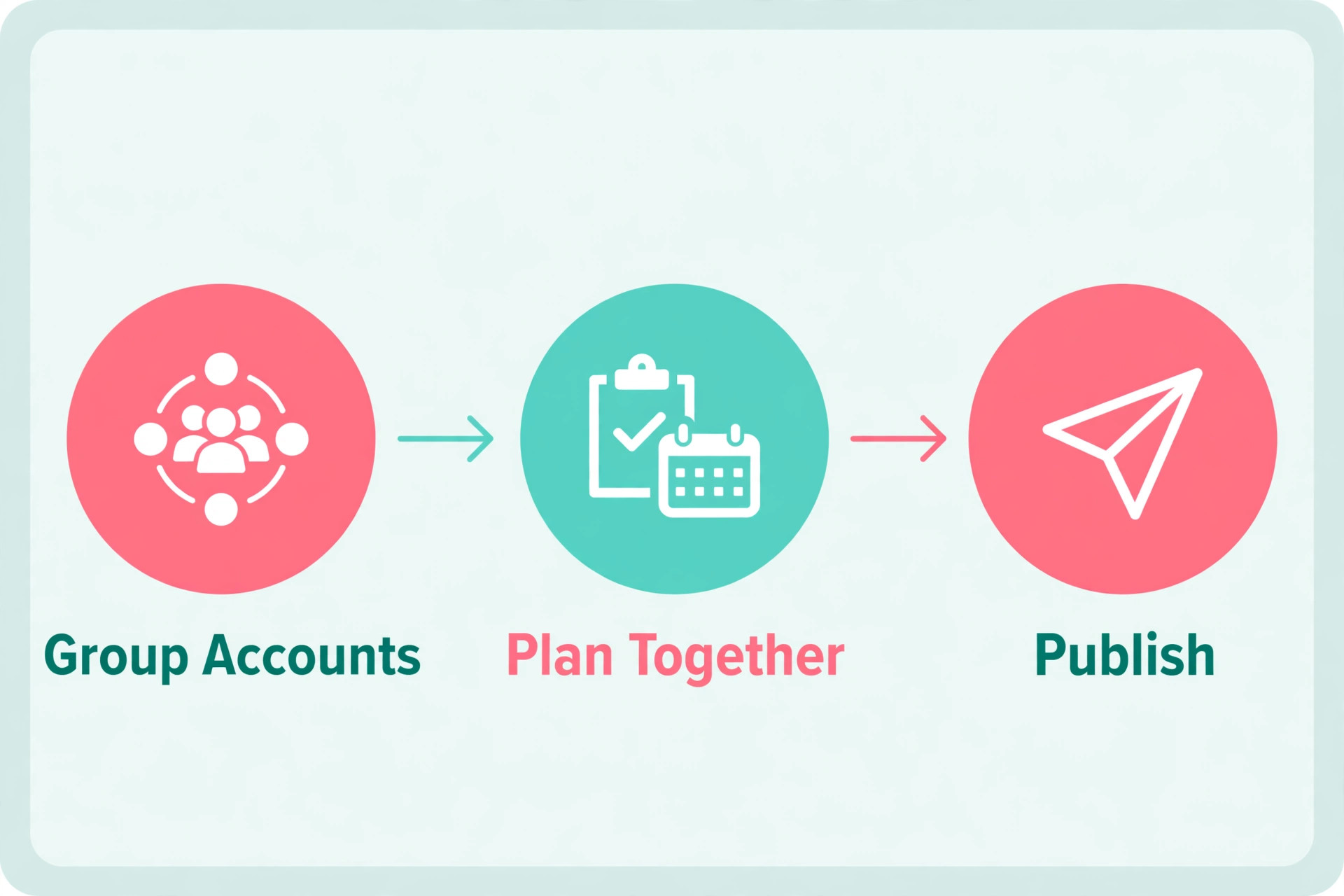
One social set on Starter billed annually costs $18.75 a month, or $225 over a year. The same set billed monthly costs $25 a month, or $300 over a year, which is $75 more for the same allowance. That Starter total is genuinely cheap for a single brand firm that posts once a day or less per profile, and it is the strongest value in the Later range. The risk is only that the firm outgrows one set or the 30 post cap, at which point the next tier is double the price rather than a small step up.
Three social sets need Growth plus one extra set, because Growth includes two sets. On annual billing, that combination costs $48.75 a month, made up of $37.50 for Growth plus $11.25 for the extra set, or $585 over a year. The same combination billed monthly costs $65 a month, made up of $50 for Growth plus about $15 for the extra set, or $780 over a year. That $195 annual gap is the price of flexibility, and a firm that is sure about its set count should take annual billing, while a firm still testing its account structure should pay monthly for a quarter first.
Three social sets on the top tier would cost $82.50 a month on annual billing, which is $33.75 a month more than Growth plus an extra set. That premium buys unlimited posts, four users instead of two, and a larger set allowance that leaves room to grow to six sets without further add ons. A firm that already uses three sets and expects to add more, or that posts at high volume, may find the top tier cheaper in the long run than stacking add ons onto Growth. A firm that is stable at three sets should stay on Growth, because the top tier premium buys headroom it does not need.
Add users carefully to the same calculation. Growth includes two users, so a three person team needs one extra user at $3.75 a month on annual billing, lifting the three set total to $52.50 a month, or $630 over a year. A four person team on the top tier needs no extra users, since four are included, which narrows the gap between Growth plus add ons and the top tier. Always calculate sets and users together, because a tier that looks dearer on sets alone can become cheaper once user add ons are counted.
A buyer who runs that combined calculation will see why the cost of Later for small business monthly rewards careful planning and punishes guesswork. Sets and users are both bought in small increments, so a firm that counts both accurately pays only for what it uses, while a firm that guesses will either run out of sets mid campaign or pay for users who never log in. Spend twenty minutes on the count before purchase, and the monthly bill will stay predictable for the whole year.

Who Each Later Tier Actually Fits
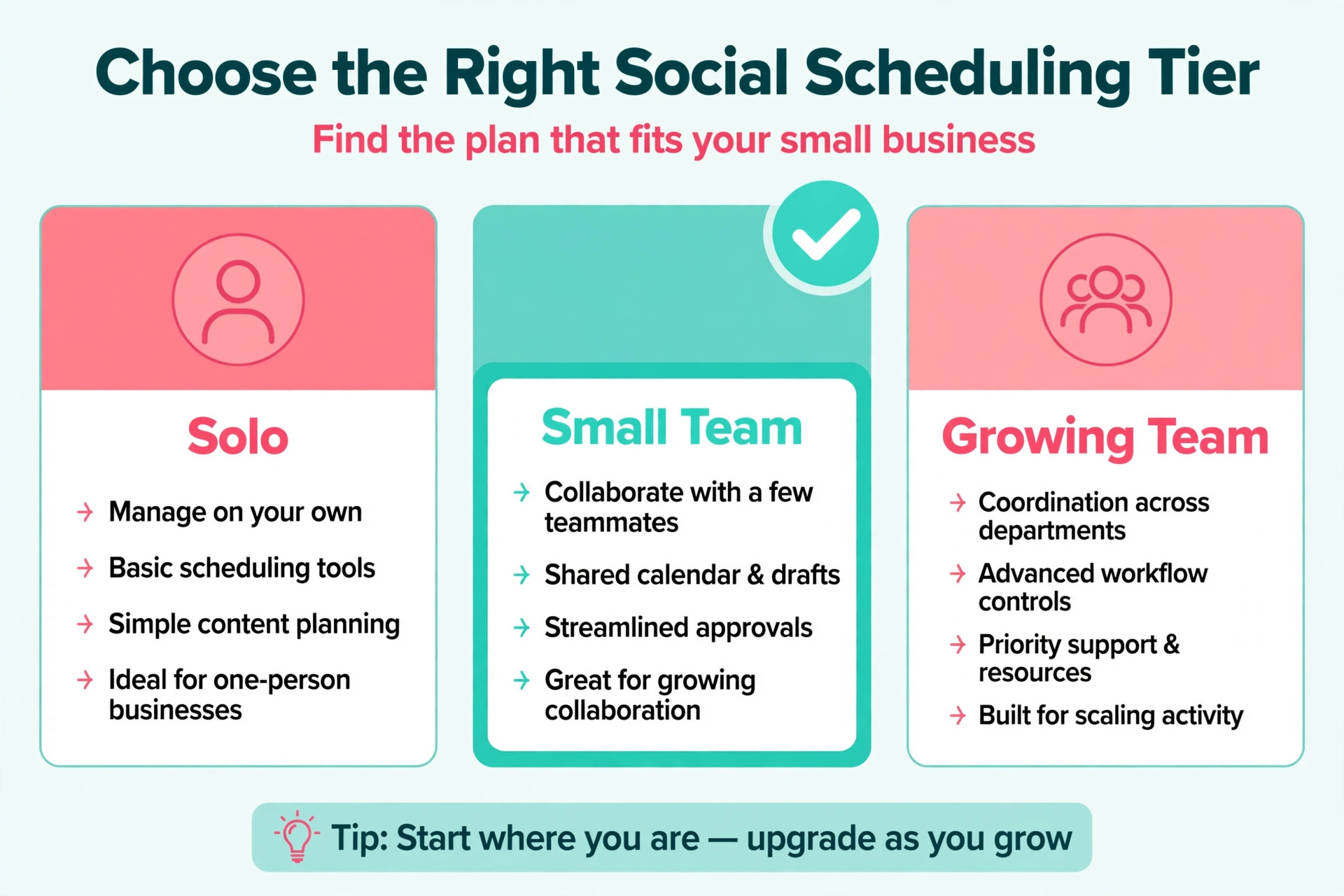
Starter fits a solo owner or a single brand firm that posts steadily to one account per network and stays under 30 posts per profile each month. It fits a visual brand, such as a cafe, a boutique, or a salon, that plans its Instagram grid carefully and values the preview more than bulk scheduling. Starter also fits a firm testing Later for a quarter, because the low entry price makes a trial cheap, provided the firm accepts the post cap. It does not fit a firm with two accounts on one network, because that firm needs two sets on day one and should start on Growth.
Growth fits a small team of two people managing two brands, two locations, or one brand with a second account on a key network. It fits firms that post more than once a day, run campaigns, or need approval workflows and a social inbox, since those tools arrive on Growth. Growth also fits a firm with three sets that is willing to buy one extra set, because $48.75 a month on annual billing remains affordable for a team that publishes daily. It does not fit a firm that needs X support, unlimited posts, or more than a handful of sets, and those firms should look elsewhere or accept the top tier.
The top tier fits a growing team of up to four people managing several brands or locations, with six sets and unlimited posts. It fits a small agency or a multi location business that has outgrown stacking add ons onto Growth, because the flat top tier price becomes simpler to budget than a growing list of extras. It also fits a high volume publisher, such as a media brand posting several times a day across many profiles, where post caps would otherwise force constant counting. It does not fit a stable small firm, because the $82.50 monthly price buys headroom that a stable firm will never use.
The fit test for any tier is the same simple question, and it is worth asking before every renewal. The cost of Later for small business monthly should match the number of sets the firm actually publishes to and the number of posts it actually sends, not the number it hopes to reach one day. A firm that answers that question with last month’s real numbers will choose correctly, while a firm that answers with next year’s ambitions will overbuy and then blame the tool for a budgeting mistake of its own making.

Later Costs Outside the Subscription
The subscription covers scheduling and planning, but the firm must still produce the content, and visual content is expensive to make well. Photography, short video, design, and copywriting all cost staff time or freelancer fees, and a beautiful Later calendar with weak content will not grow an audience. A firm should budget content production alongside the subscription, because Later makes good content easier to publish, but it cannot make weak content perform. That budget, not the subscription, is usually the largest line in a small firm’s social spending.
A second outside cost is the second tool problem created by the missing X support. A firm that posts to X needs another scheduler for that network alone, which adds a second subscription, a second calendar, and a second place to check analytics. That fragmentation costs staff time every week, and it can easily erase the saving that made Later attractive. Firms that rely on X should either accept the second tool cost honestly or choose a scheduler that covers X natively, because pretending the gap does not exist only moves the cost into wasted hours.
A third outside cost is the time spent planning visually. The Instagram grid preview is Later’s best feature, but it rewards firms that plan ahead and punishes firms that post reactively. A team that batch plans a week of content will love it, while a team that posts whatever is ready that morning will find the planning step slows them down. Budget an hour or two a week for planning, and assign it to a named person, because a visual tool without a planning habit becomes an ordinary scheduler with a prettier calendar.
That planning time is part of the true cost of Later for small business monthly, even though it never appears on an invoice. A firm that plans well gets a feed that looks intentional and grows steadily, while a firm that skips planning gets a prettier version of the same rushed posting it had before. The subscription is cheap, so the deciding investment is not money but the weekly habit, and buyers should be honest about whether their team will actually keep that habit before they commit.

When the Later Upgrade Pays and When It Does Not
Upgrade from Starter to Growth when the post cap or the set count forces it, not when a feature list tempts the buyer. The signs are concrete, such as hitting 30 posts on a profile mid month, needing a second set for a new account, or needing a second user for a team member who actually publishes. Each of those is a measurable trigger, and the jump from $18.75 to $37.50 a month on annual billing is justified when any one of them appears regularly. Upgrade on that evidence, and the dearer tier will feel like a relief rather than a burden.
Upgrade from Growth to the top tier when add ons stack up to near the top tier price, or when unlimited posts become a real need. A firm on Growth with four sets and three users pays $37.50 plus two extra sets at $11.25 each plus one extra user at $3.75, which totals $63.75 a month on annual billing, against $82.50 for the top tier. The gap is then only $18.75 a month for unlimited posts and room to grow, which is easy to justify. A firm on Growth with two sets and two users pays $37.50 and gains nothing from the top tier except headroom, so it should stay put.
Do not upgrade just because a campaign month was busy. A single burst of posts does not justify a permanent tier change, because Growth’s 180 post allowance already covers most bursts, and a one off overage on Starter can be handled by spacing posts rather than upgrading for a year. Upgrade when the higher volume lasts for two or three months in a row, because that pattern shows a real change in publishing habit rather than a seasonal spike. Annual billing rewards that patience, since it locks the buyer into the higher price for twelve months.
Patience also protects the cost of Later for small business monthly from the most common budgeting error in this purchase, which is upgrading on a forecast instead of a fact. Forecasts feel convincing in a planning meeting, yet they are often wrong about how many accounts, posts, and users a firm will really need. Wait for two months of real data, then upgrade on the numbers that actually appeared, and the tier will fit the firm instead of the forecast.

What Leaving Later Would Cost Later
Switching away from Later is lighter than switching a file drive, but the visual planning history does not transfer. Scheduled posts, drafts, media library organisation, and link in bio pages must be rebuilt in the new tool, and the Instagram grid preview history is lost entirely. A solo user can rebuild a month of content in a day, while a team with several sets and a large media library should budget several days, plus a period when both tools run together. That overlap means paying two subscriptions at once, which buyers forget when they compare headline prices.
The deeper switching cost is the loss of the planning habit itself. Teams that have learned to batch plan visually may find a simpler scheduler faster but less disciplined, and posting quality can slip when the grid preview disappears. Test the replacement on a real campaign week before cancelling Later, and compare not just scheduling speed but whether the planned feed still looks intentional. A tool that publishes faster but plans worse is a downgrade for a visual brand, even when its monthly price is lower.
There is also a link cost to check. Later’s link in bio page may sit in the firm’s Instagram bio and in printed material, and moving to a new tool means updating that link everywhere it appears. That update is small work, but it is easy to miss a printed menu, a business card, or an older post that points at the old page. List every place the link appears before switching, and update them in one pass, because a dead bio link loses visitors silently while the team celebrates a cheaper subscription.
A buyer who checks that link list will also avoid the quietest cost of switching, which is lost traffic that nobody notices. The cost of Later for small business monthly is small, so a switch motivated only by saving a few dollars a month rarely justifies breaking bio links, rebuilding a media library, and retraining a team. Switch when the new tool fits the firm’s networks and planning style better, not merely when its headline price looks lower, because the disruption cost usually exceeds the saving.
The Later Verdict for a Small Business
For a single brand firm with one social set, Starter on annual billing at $18.75 a month is excellent value, provided post volume stays under 30 per profile and X is not required. For a firm with three social sets, Growth plus one extra set at $48.75 a month on annual billing is the honest price, rising to $52.50 a month when a third user is added. For a growing multi brand team, the top tier at $82.50 a month buys unlimited posts and room for six sets, and it becomes good value once add ons on Growth approach that figure.
The cost of Later for small business monthly is therefore a set based price, and the buyer who counts sets correctly will never be surprised by it. Buy Later when visual planning matters, when the firm’s networks are covered, and when the set count has been counted honestly.
Buy Later when visual planning matters, when the firm’s networks are covered, and when the set count has been counted honestly. Skip it when X is central, when the firm needs unlimited posts on a tight budget, or when the set count keeps growing without a matching growth in revenue. Review sets and users at every renewal, because accounts accumulate quietly and each one can add $11.25 a month. When the planning habit is real and the set count is honest, Later earns its fee with a calmer, better looking feed. When those conditions fail, the firm is paying for a visual planner it does not use, and a simpler scheduler would serve it better.
More Reading on Stratilyze
For a switch comparison, read switch Hootsuite to Later for creators and switch Buffer to Later for a social team. For planning help, see how to plan a month of social media content with AI and best social media scheduling tool for small business.
Frequently Asked Questions
One social set on Starter billed annually costs $18.75 a month, or $225 over a year. The same set billed monthly costs $25 a month, or $300 over a year. Starter covers one user and 30 posts per profile each month, which suits a single brand firm posting once a day or less. A firm with two accounts on one network needs two sets, not one, so it should budget from Growth instead.
Three social sets on Growth plus one extra set cost $48.75 a month on annual billing, made up of $37.50 for Growth plus $11.25 for the extra set, or $585 over a year. Billed monthly, the same combination costs about $65 a month, or $780 over a year. Adding a third user lifts the annual billing total to $52.50 a month. Confirm current add on prices on the vendor page, since they change from time to time.
A social set is a bundle of one account per network, such as one Instagram, one Facebook, and one TikTok account grouped together. A firm with two Instagram accounts needs two sets, because each set holds only one account per network. Counting sets means listing every account per network and grouping them, rather than counting brands, and that count decides the tier and the add on bill.
Does Later support X scheduling
No, Later removed X scheduling and analytics in 2025, so firms that post to X need a second tool for that network. That gap matters more than any price difference for X heavy firms, because running two schedulers adds cost and fragments reporting. Firms whose audience lives on Instagram, TikTok, Pinterest, and YouTube are unaffected, and Later remains a strong choice for them.
When should a firm upgrade from Starter to Growth
Upgrade when the 30 post per profile cap is hit regularly, when a second social set is needed for a new account, or when a second team member needs access to publish. The jump from $18.75 to $37.50 a month on annual billing is justified when any of those triggers appears in real weeks, not just in plans. A single busy month does not justify a permanent upgrade, but two or three busy months in a row do.
Is Later cheaper than Hootsuite for a small team
Yes, for most small teams Later is far cheaper, because a three set Later setup costs $48.75 a month on annual billing, while a three person Hootsuite team on Standard costs $297 a month. The comparison is not like for like, however, since Hootsuite buys a full inbox, approvals, and reporting system, while Later buys visual scheduling. Choose Later when visual planning is the main job, and Hootsuite when inbox and reporting are daily operations.