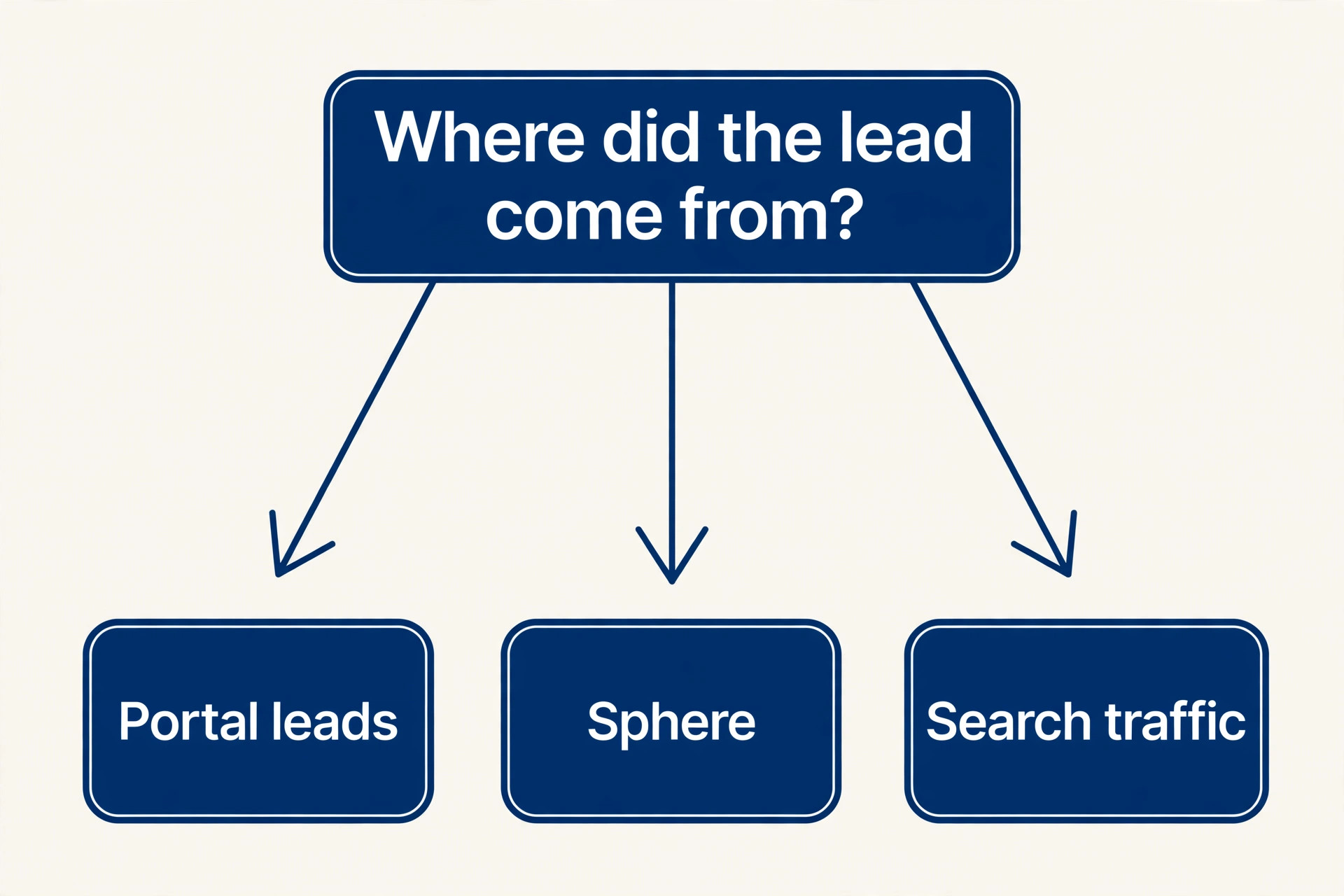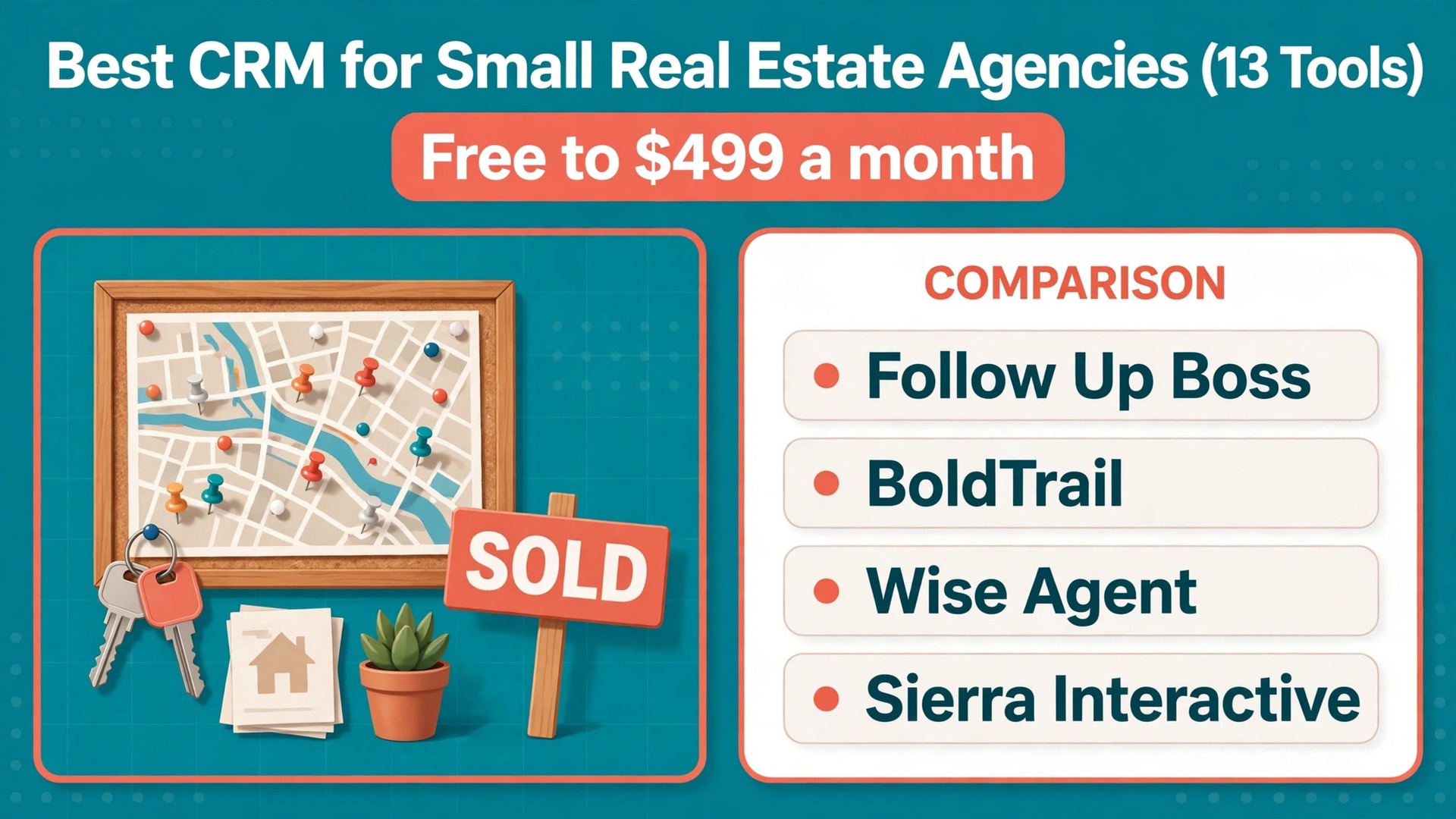
Start with Follow Up Boss if the agency buys portal leads, Wise Agent if the book comes from past clients, and Sierra Interactive if search traffic is the engine. That verdict is the short answer to this guide to best crm for small real estate agencies, and the rest of the guide explains why no single tool wins for every agency, because lead source decides the right system more than any feature list.
A small agency does not need the biggest CRM. It needs the CRM that turns its actual leads into conversations, then into closings, without staff spending their evenings fixing data. A portal lead left for an hour is a lost deal, a past client left for a year is a lost referral, and a CRM that fits neither problem is an expensive address book. The tools below were judged on lead speed, follow up quality, price at a real team size, and exit terms.
Thirteen CRMs at a Glance
| Tool | Starting price | Best for |
|---|---|---|
| Follow Up Boss | 69 dollars per user per month on monthly billing | teams that buy portal leads |
| BoldTrail | priced by quote, about 499 dollars per month reported for a small brokerage | brokerages building their own lead engine |
| Wise Agent | 49 dollars per month for up to five team members | solo agents and sphere based teams |
| Sierra Interactive | 299 dollars and 95 cents per month on annual billing | search driven agents |
| Real Geeks | 399 dollars per month | PPC driven agents |
| Lofty | priced by quote, about 449 dollars per month reported | brokerages wanting one broad platform |
| Top Producer | about 179 dollars per user per month reported | agents with a large long lived sphere |
| IXACT Contact | about 55 dollars per month reported | referral heavy agents |
| Cloze | about 19 dollars and 99 cents per user per month reported | inbox driven solo agents |
| HubSpot | free for up to two users, paid from 20 dollars per seat per month | solo agents on a zero budget |
| Zoho CRM | free for up to three users, paid from 20 dollars per user per month | budget teams that can set up their own pipelines |
| Lone Wolf Relationships | about 33 dollars and 25 cents per month | former LionDesk users migrating |
| CINC | priced by quote | high volume lead buying teams |
Read the table as a shortlist, not as a final ranking. The cheapest option may suit a small team perfectly, while the most expensive option may be the only one that handles a specific workflow. Pick three finalists from the table, then read their full sections before you decide.

How to Judge the Best CRM for Small Real Estate Agencies
Start with lead source, not with features. An agency that buys Zillow leads needs instant routing, speed to call, and action plans that fire without manual work. An agency that lives on referrals needs sphere nurture, birthday touches, and a database that stays clean over years. Buying the wrong type first, then forcing it to do the other job, is the most common CRM mistake in real estate.
Price must be modeled at the real team size, including calling, texting, extra users, and lead packages. A 69 dollar per user price becomes a large bill for ten agents, while a flat 49 dollar price stays flat as the team grows. Ask for the all in monthly cost for the agency size in year one and year two, not only the headline plan price.
Exit terms deserve the same attention as features. Some platforms keep the website and its search value on cancellation, some charge a buyout fee, and some limit lead exports to broker accounts. Read the exit clause before signing, because the cost of leaving a bad CRM can exceed the cost of the subscription itself.
Two tools from older guides are no longer options, and this guide excludes them deliberately. LionDesk was discontinued by Lone Wolf Technologies at the end of September 2025, and BoomTown is being folded into BoldTrail. Older roundups that still list them as buyable options are out of date, and an agency that plans around them will waste weeks.

Every Tool, Examined in Turn
1. Follow Up Boss
Follow Up Boss is the default for teams that buy portal leads and need speed. Grow costs 69 dollars per user per month on monthly billing, or 58 dollars on annual billing, and Pro costs 499 dollars per month flat for ten users, or 416 dollars on annual billing. The product routes leads from more than 250 sources into one inbox, then drives follow up through action plans that every agent can see.
The strength is lead handling under pressure. Speed to first call, clear ownership, and broker reporting matter more than a pretty contact view when leads arrive at midnight from several portals. Teams that live on Zillow and Realtor.com volume will feel the difference in the first week, because fewer leads sit untouched.
The limit is cost at scale and add on charges for calling and texting on lower plans. Solo agents on a tight budget will find cheaper options below. Choose Follow Up Boss if the agency buys leads and runs a team. Skip it if the book is mostly past clients and referrals.
2. BoldTrail
BoldTrail is the current name for the platform formerly sold as kvCORE, built by Inside Real Estate for brokerages that want a website, a CRM, and lead generation in one system. Pricing is by quote, and third party guides put a small brokerage tier at about 499 dollars per month, so get a written quote for the real agent count before budgeting.
The strength is ownership of the lead source. An IDX website, behavioral lead scoring, an AI text concierge, and the CRM sit together, so a brokerage can generate its own leads instead of renting them from portals forever. Brokerages that want one vendor for the whole funnel will like that consolidation.
The limit is fit for small teams. A solo agent pays brokerage scale pricing for tools built for dozens of agents, and the learning curve is steeper than a simple CRM. Choose BoldTrail if the agency is a brokerage building its own lead engine. Skip it if the team is under five agents.
3. Wise Agent
Wise Agent is the budget first choice for solo agents and small teams that live on past clients. It costs 49 dollars per month for up to five team members, or 499 dollars per year on annual billing. Transaction checklists, drip campaigns, and a simple contact view cover the daily work without per seat pricing punishing every new hire.
The strength is predictable cost. A five person team pays the same base price as a solo agent, which changes how a small agency budgets. Support is frequently praised, and the product is easy to learn, so a new agent can start following up properly in the first week rather than after a month of training.
The limit is lead generation depth. Wise Agent is not an IDX website platform and not a paid lead machine. Choose Wise Agent if the book comes from sphere and referrals. Skip it if the agency needs a website and paid lead engine in the same product.
4. Sierra Interactive
Sierra Interactive pairs a fast IDX website with a CRM, aimed at agents who win clients through search. Starter starts at 299 dollars and 95 cents per month on annual billing, or 359 dollars and 95 cents on monthly billing, and monthly billing carries a 500 dollar setup fee. Higher tiers add users and marketing depth.
The strength is search visibility. A fast IDX site, strong SEO tooling, and PPC support suit agents who invest in organic and paid search rather than portal leads. Agents who already run ads will appreciate a platform built around that traffic instead of bolting a CRM onto a generic website.
The limit is the contract. A twelve month agreement with no monthly option on annual billing means a wrong choice costs a full year. The website and its search equity also stay with the platform on exit. Choose Sierra Interactive if search is the main lead channel. Skip it if flexibility matters more than search power.
5. Real Geeks
Real Geeks bundles a website, a CRM, and optional lead packages for agents who run paid traffic. The base platform is widely listed at 399 dollars per month, and lead packages sit on top of that price. The product suits agents who treat the website as a landing page for ads and want lead capture and follow up in one place.
The strength is simplicity for PPC teams. One vendor handles the site, the CRM, and the lead flow, so an agent does not stitch three tools together. Agents spending a thousand dollars or more a month on ads will value that single funnel view, because every lead can be traced back to the campaign that produced it.
The limit is exit cost and website ownership. Leaving means losing the website, and a buyout fee applies in some contracts. Choose Real Geeks if paid traffic is the engine. Skip it if the agency wants to own its website outright.
6. Lofty
Lofty, formerly sold as Chime, is an all in one platform with an IDX website, a CRM, and AI tools for seller leads. Pricing is by quote, and third party guides report a starting point near 449 dollars per month plus 15 dollars per user and a 500 dollar setup fee, so confirm the current quote before comparing it with published prices.
The strength is the breadth of the funnel. Website, CRM, AI lead tools, and marketing automation sit together, and newer AI seller tools aim at homeowners rather than only buyers. Brokerages that want one platform for both sides of a deal will find that breadth attractive.
The limit is price transparency and total cost. Add ons, users, and setup push the real monthly bill well above the reported starting point. Choose Lofty if the agency wants one broad platform and can fund it. Skip it if a published price and a low entry cost matter most.
7. Top Producer
Top Producer is a long running CRM for agents who want a deep contact database and structured follow up. Third party pricing guides list Top Producer Pro at about 179 dollars per user per month, so check the vendor pricing page for the current plan, because older reviews also describe the interface as dated compared with newer rivals.
The strength is depth of contact history. Long running client records, detailed follow up plans, and market reports suit agents with a large sphere built over many years. Agents who value a database they can search deeply will find more here than in a light lead tool.
The limit is the interface and the price for what a small team gets. Newer tools feel faster, and the per user price adds up for a team. Choose Top Producer if a deep, long lived database is the priority. Skip it if a modern interface and low cost matter more.
8. IXACT Contact
IXACT Contact is a sphere first CRM built around keeping in touch with past clients and referrals. Pricing guides list it at about 55 dollars per month, with no long contract in most listings. The product focuses on monthly keep in touch plans, automated birthday and anniversary touches, and simple drip campaigns.
The strength is focus. Instead of chasing portal leads, IXACT Contact helps an agent stay visible to the people most likely to refer the next deal. That focus suits referral heavy agents who already have a sphere and need a system that keeps them in touch without a complex setup.
The limit is lead generation. Agents who need portal lead routing, IDX websites, or paid ad funnels will need another tool beside it. Choose IXACT Contact if referrals drive the business. Skip it if bought leads are the main channel.
9. Cloze
Cloze is a relationship CRM that builds timelines from email, calls, and meetings, then surfaces the next best action for each contact. Pricing guides list a starting point near 19 dollars and 99 cents per user per month, which makes it one of the cheapest ways to keep a sphere organized. The product suits agents who live in their inbox.
The strength is automatic context. Cloze pulls communication history into a contact timeline, so an agent can see the last conversation before calling, without digging through email. That context helps a busy agent sound prepared on every call, which matters when a past client is deciding whom to trust.
The limit is real estate depth. Cloze is a general relationship tool, not a real estate platform, so it lacks IDX, MLS handling, and transaction tools. Choose Cloze if inbox driven relationship tracking is enough. Skip it if the agency needs real estate specific workflows.
10. HubSpot
HubSpot offers a free CRM for up to two users and one thousand contacts, with Sales Hub Starter at 20 dollars per seat per month for paid features. The product is a general CRM, not a real estate platform, so it has no MLS or IDX handling and no native real estate texting, but it does offer calling, pipelines, and email tools.
The strength is the free start and the ecosystem. A solo agent can organize contacts, deals, and follow up tasks at no cost, then add paid sales tools as the business grows. Agents who already use HubSpot for marketing will find the CRM fits naturally beside it.
The limit is real estate fit. Portal lead routing, transaction checklists, and IDX websites need integrations or a second tool. Choose HubSpot if budget is zero and the agent can invest setup time. Skip it if the agency needs real estate workflows out of the box.
11. Zoho CRM
Zoho CRM offers a free plan for up to three users, then paid plans from 20 dollars per user per month, or 14 dollars on annual billing. The product is a general CRM with pipelines, automation, and email integration, and it suits agents who want a low cost system they can shape to their own deal stages.
The strength is value and flexibility. Custom pipelines, workflow rules, and a large integration library let a small agency build a deal process that matches how it actually sells. Agents comfortable with setup will get a capable system for far less than a real estate specialist.
The limit is the same as HubSpot. There is no native MLS or IDX handling, and real estate texting and transaction tools need add ons. Choose Zoho CRM if low cost and flexibility beat specialist features. Skip it if the agency wants real estate workflows ready on day one.
12. Lone Wolf Relationships
Lone Wolf Relationships is the official successor to LionDesk, which Lone Wolf Technologies discontinued at the end of September 2025 after announcing the shutdown in May 2025. Relationships is listed at about 33 dollars and 25 cents per month, or 399 dollars per year, and former LionDesk users were offered contact transfer and migration support.
The strength is the migration path. Agents coming from LionDesk get a vendor supported move rather than a manual rebuild, and pricing stays close to the old LionDesk level. Agents already using other Lone Wolf products will find the fit natural, because the vendor ecosystem stays in one place.
The limit is maturity. Relationships is a newer product, and early listings show few independent reviews, so its long term depth is less proven than rivals that have run for a decade. Choose Lone Wolf Relationships if the agency is migrating from LionDesk. Skip it if a proven, deeply reviewed platform matters more.
13. CINC
CINC is a lead generation and CRM platform for teams that spend heavily on online leads and want concierge style follow up. Pricing is by quote, with plan names and a demo form instead of a published rate card, so get a written quote that includes lead costs, user count, and any concierge fees before comparing it with other tools.
The strength is managed lead handling. CINC pairs its CRM with lead generation and follow up support, which suits teams that buy a high volume of leads and need help working them fast. Teams that struggle with speed to lead will value a system designed around that single problem.
The limit is transparency and cost at small scale. A quote only model with lead spend on top can push the total well above a simple CRM subscription. Choose CINC if the agency buys leads at volume and wants managed help. Skip it if the team is small and budget is tight.
The Best Pick by Job
This guide matches the best crm for small real estate agencies to the job, because a residential brokerage, a property management agency, and an investment focused agency chase different leads. Use the table to find the agency type, then read that tool section in full.
| Job | Best pick | Why it fits |
|---|---|---|
| Residential brokerages | Follow Up Boss | Fast portal lead routing and broker reporting for a sales team |
| Property management agencies | Wise Agent | Low flat cost and simple follow up for owners and tenants |
| Investment focused agencies | Sierra Interactive | Search driven IDX site for buyers hunting deals online |
For related decisions, the guide to CRM for real estate agents covers the wider agent market, the guide to AI tools for real estate agents covers automation beside the CRM, and the guide to real estate listing descriptions covers content that feeds the same pipeline.
A Setup Checklist for a Clean Handover
Move one lead source at a time. Start with the largest source, prove the routing works for two weeks, then move the next source.
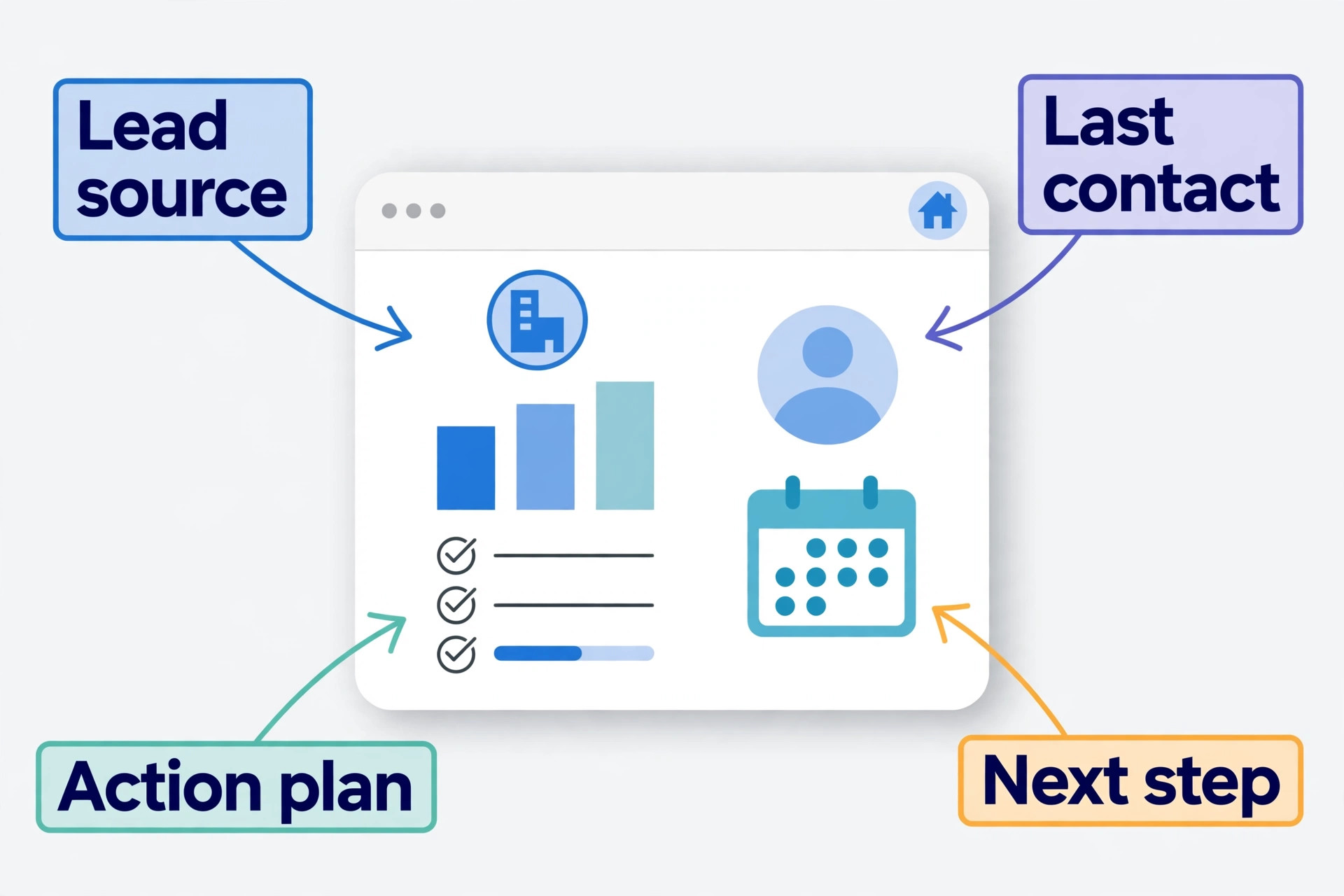
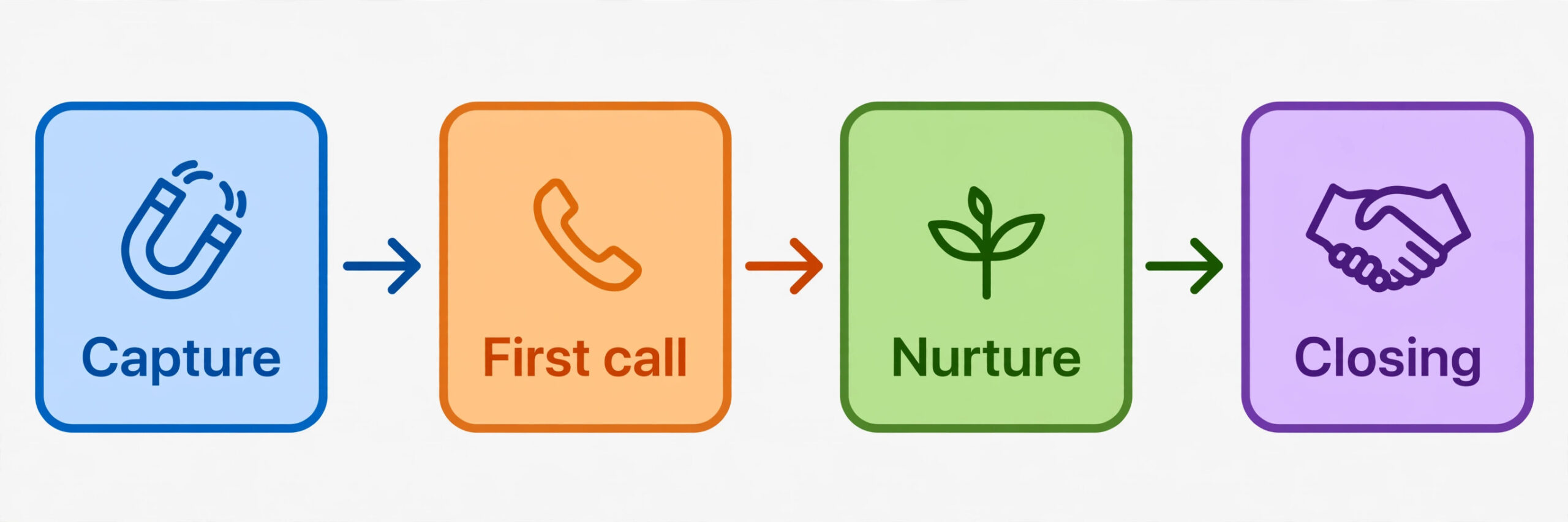
1. Import contacts with source tags intact, so every lead keeps its origin. 2. Build one action plan per lead source before importing the full database. 3. Assign every lead an owner on day one, with no unowned leads left. 4. Test a live lead end to end, from capture to first call to nurture. 5. Export a sample back out, to prove the agency can leave with its data.
Mistakes That Lose Leads After You Buy
The most expensive mistake is signing a twelve month website contract for a CRM decision. Sierra Interactive and Real Geeks both tie search value to the platform, so a rushed choice can cost a year of fees plus the search equity built on the site. Decide the CRM first, then decide whether the website should live inside it.
The second mistake is buying per seat pricing for a growing team without modeling it. A team that grows from three agents to ten will see a per user bill triple, while a flat priced tool stays steady. Put the ten agent cost on the same page as the three agent cost before signing.
The third mistake is ignoring texting and calling costs. Some plans include them, some charge per message or per minute, and a high volume team can add hundreds of dollars a month in usage. Ask for a usage estimate based on the real lead volume, not the vendor average.
What to Test Before the Next Listing Season
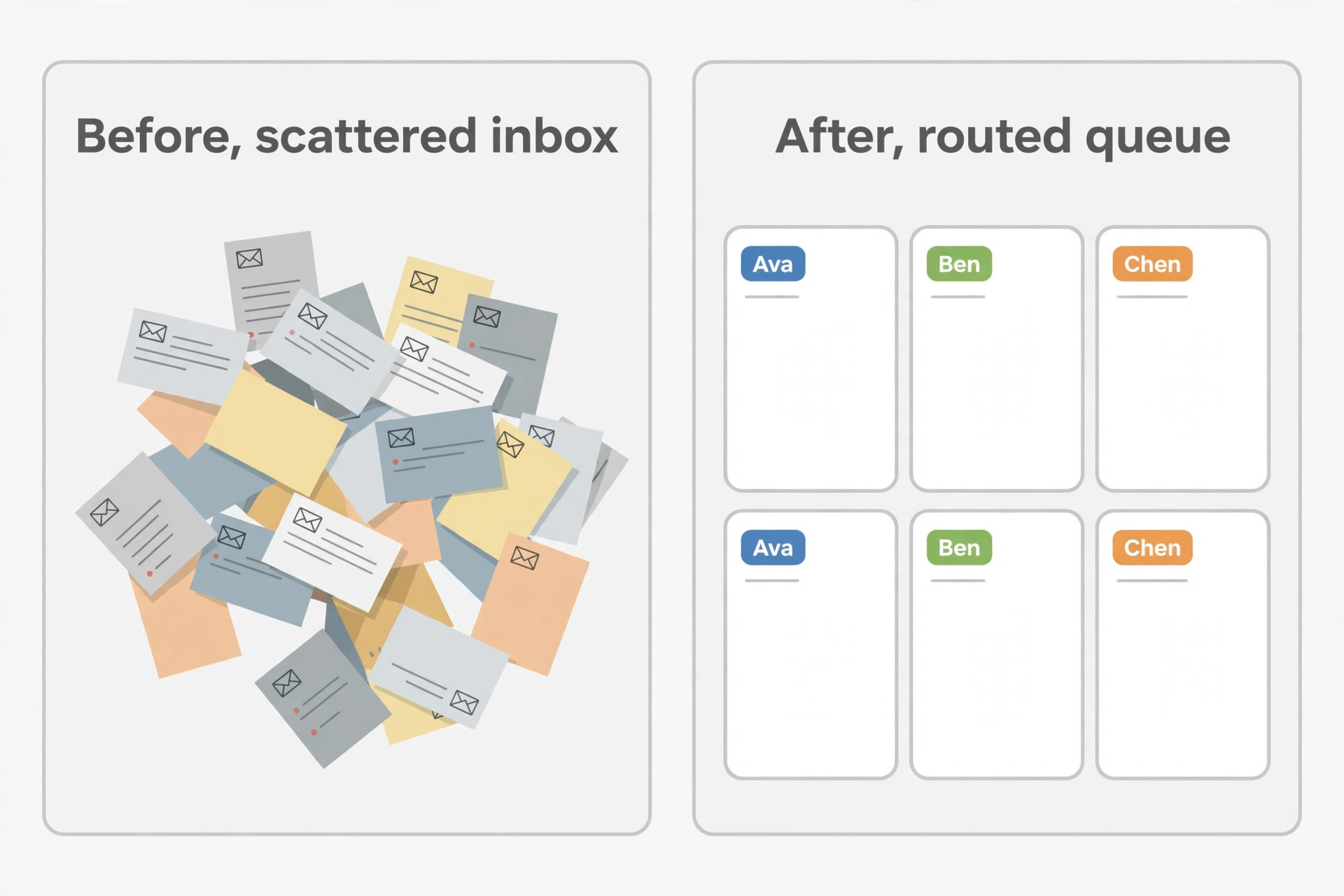
Test speed to lead with a real lead, not a demo lead. Submit a test inquiry through a portal or a website form, then time how long it takes to reach an agent phone. If the lead sits for more than five minutes, the routing is broken, and no feature list will fix that gap.
Test the mobile app on a real showing day. An agent should be able to see a new lead, call it, log the outcome, and set the next step from a phone in under a minute. If the app needs a desk to work properly, agents will stop logging activity, and the database will rot within a month.
Test reporting with a broker question. Ask the system to show leads by source, response time, and stage for the last thirty days. A CRM that cannot answer that question in one view will not help a broker coach a team, because the coaching conversation will always wait for a spreadsheet.
Lead Response, Data Quality, and the Second Year
Speed to first contact is the single most measurable advantage of the best crm for small real estate agencies for a lead buying team. A lead contacted within five minutes converts at a far higher rate than the same lead contacted an hour later, so routing rules, mobile alerts, and ownership must work without manual triage. Test that speed with a live lead, not a vendor demo.
Data quality decays faster than most agencies expect. Duplicate contacts, missing source tags, and stale phone numbers turn a CRM into a guessing game within months. Ask how duplicates are merged, whether source tags survive an import, and how often the system prompts agents to update contact details, because clean data is what makes follow up possible.
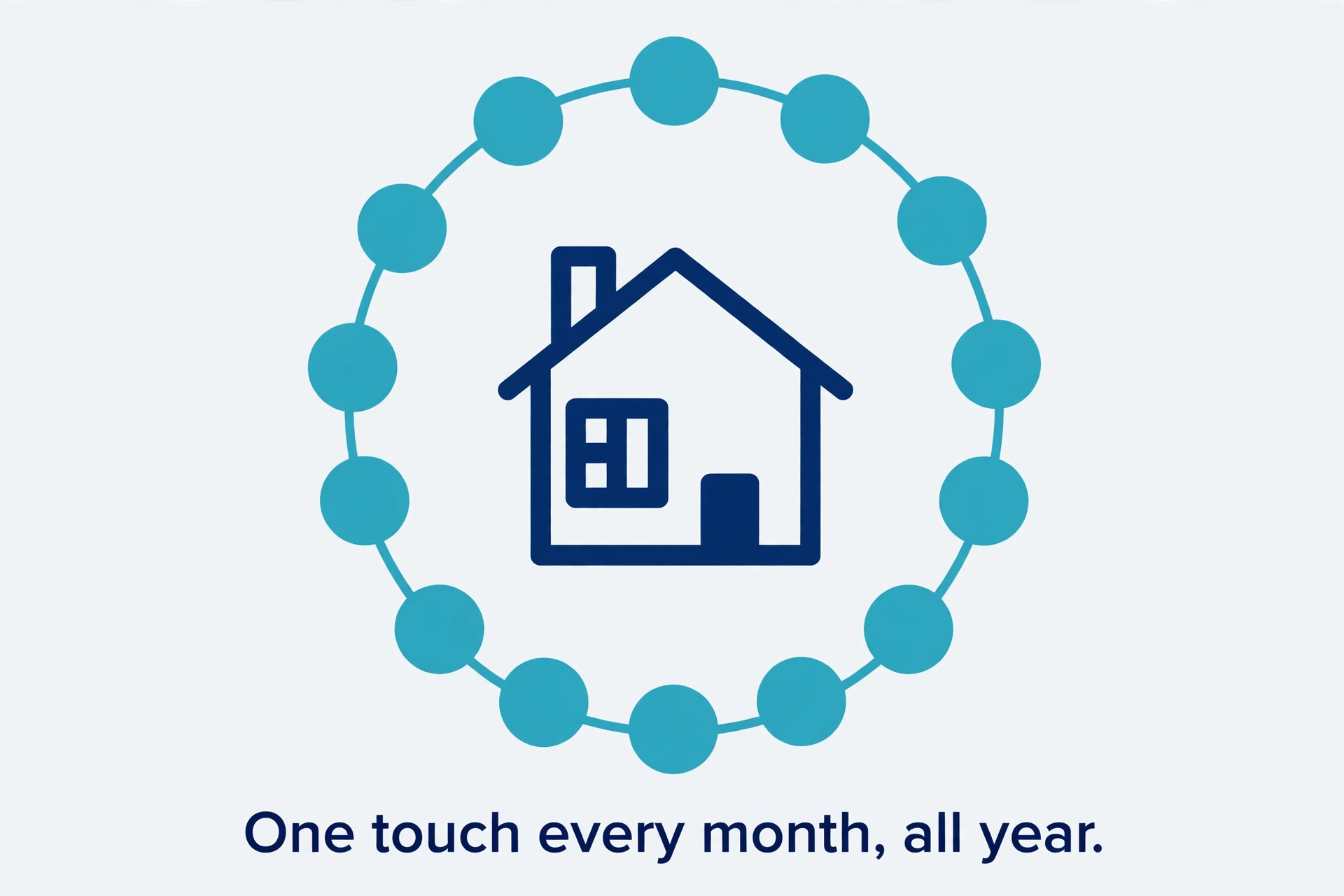
Sphere nurture is a long game that rewards consistency over intensity. A past client who hears from an agent four times a year with useful local information is far more likely to refer than a past client who hears nothing for two years and then gets a sales pitch. Build a twelve month touch plan before choosing a tool, then pick the tool that automates that plan.
Compliance for texting and email must be built into the CRM, not added as an afterthought. Consent records, opt out handling, and do not contact flags protect the agency from complaints and fines. Ask how consent is recorded per contact and how an opt out flows through every campaign, because a manual opt out process will fail under volume.
The best crm for small real estate agencies in the second year is often different from the best choice in the first month. A tool that was cheap for three agents may become expensive for ten, and a tool that was simple for a sphere may become limiting for portal leads. Choose a product with a clear upgrade path, and reprice the decision at the team size expected in eighteen months.
A Note on Choosing Before the Next Listing Season
Timing matters, because the best crm for small real estate agencies should be live before the next busy season, not during it. A switch made in a quiet month gives agents time to learn the system, clean the database, and test live leads without risking closings.
The best crm for small real estate agencies is also the one agents open on a showing day, not just on a desk day. Mobile speed, one tap calling, and instant lead alerts decide whether activity gets logged or forgotten, and forgotten activity is lost coaching data.
Finally, the best crm for small real estate agencies should be repriced every year at the real team size. A tool that was right for three agents may be wrong for ten, and a yearly review keeps the agency from paying a growing bill for a system that no longer fits the team.
Frequently Asked Questions
How much should a small agency budget for a CRM?
A solo agent can run well on 49 to 69 dollars a month, while a five agent team should budget 250 to 700 dollars a month all in, including calling and texting. Website platforms start near 300 dollars a month and rise with users and lead packages, so model the full bill before signing.
Is a free CRM good enough for a small agency?
A free CRM works for a solo agent organizing a sphere, but it lacks portal lead routing, IDX handling, and real estate transaction tools. Agencies that buy leads should pay for a specialist, because the cost of one lost deal exceeds a year of subscription fees.
What happened to LionDesk?
Lone Wolf Technologies announced in May 2025 that LionDesk would be discontinued, and the platform stopped operating at the end of September 2025. Former users were moved to Lone Wolf Relationships with contact transfer support, and new agents cannot buy LionDesk today.
Should a small agency buy a CRM with a website included?
Only if search or paid traffic is the main lead channel. A bundled website helps search driven and PPC driven agencies, but it ties search value to the vendor. Sphere based agencies should keep the website separate and choose a cheaper CRM.
How long does it take to switch a real estate CRM?
A clean switch takes two to four weeks for a small agency, including import, action plan setup, and a live lead test. Website platform moves take longer, because IDX setup, search migration, and ad tracking must move too. Never cancel the old system before the new one proves itself on live leads.
What is the biggest hidden cost in real estate CRMs?
The biggest hidden costs are calling and texting usage, extra users on per seat plans, lead packages on website platforms, and exit fees or lost website value. Ask for an all in quote at the real team size and read the exit clause before signing.
A Clear Choice, by Lead Source
There is no single winner for every small agency, and any guide that names one is selling a product, not giving advice. Portal lead teams should shortlist Follow Up Boss first, sphere teams should shortlist Wise Agent first, and search teams should shortlist Sierra Interactive first, with BoldTrail as the brokerage scale option. Test two finalists on live leads for two weeks, then decide on speed, follow up quality, and the all in cost.
The deciding test is simple. Send a live lead through each finalist, watch how fast it reaches an agent, and check whether the follow up happens without manual chasing. The tool that wins that test, at a price the agency can sustain for a year, is the right CRM. Everything else is a feature list.