

A listing with one dark photo and a three word title sits unsold for weeks, while a similar item with clear photos, a specific title, honest condition notes, and a fast reply sells in days. The item is often the same. The difference is presentation, pricing, and response speed, and that difference is exactly where AI helps sellers most. Learning how to sell on Facebook Marketplace with AI means using AI to write clearer listings, price more accurately, prepare better photos, answer messages faster, and spot problems before they cost you a sale, while keeping the trust work, honest condition, safe meeting, and fair dealing, firmly in your hands.
This guide covers the full selling workflow for Marketplace in 2026. You will learn how to choose what to sell, how to research prices, how to create listings that buyers trust, how to use AI for titles, descriptions, and messages without misleading buyers, how to handle offers, meetups, and shipping where available, and how to grow from occasional selling to a steady side income. It also covers the mistakes that lead to low offers, no shows, disputes, and account problems, and the safety habits that protect both sellers and buyers.
What Sells Well on Marketplace, and What Does Not
Marketplace works best for items buyers want locally, quickly, and at a clear saving compared with new. Furniture, home goods, electronics in good working order, baby gear with safety checks, sports equipment, tools, vehicles and parts where allowed, and branded clothing in good condition all move well when priced fairly and presented clearly. Items that struggle include highly personalized goods, items with missing parts, items with unclear condition, and items priced close to new retail with no added benefit, because buyers can simply buy new with warranty and returns.
Before you list anything, check the item honestly. Does it work fully? Are all parts present? What wear, scratches, stains, or repairs exist? What is included, and what is not? Photograph and describe the flaws as clearly as the strengths, because a buyer who discovers a flaw at pickup may walk away, and a buyer who discovers it after purchase may dispute the sale. AI can help you write a condition checklist for each category, such as electronics, furniture, and clothing, so you do not forget a check that matters for that item type.
Also check Marketplace rules and local laws for your item. Some items are restricted, some require age checks, and some, such as recalled baby gear or unsafe electronics, should not be sold at all. Use AI to list likely restrictions for a category, then confirm them in Marketplace help pages and official sources before you list. A listing removed for a rule violation wastes time and can affect your account standing, while a quick check before listing avoids that cost entirely.
Step 1. Research Prices Before You Set a Price
Pricing is the fastest lever on Marketplace, and AI research can help you set a price that sells without giving away value. Start by searching Marketplace and other resale sites for the same item, or a close equivalent, in similar condition, in your area. Record the asking prices, how long listings have been live where visible, and what condition, accessories, and delivery options they include. A price for a complete item in excellent condition should not be compared with a price for an incomplete item in fair condition, because buyers compare those details even when sellers do not.
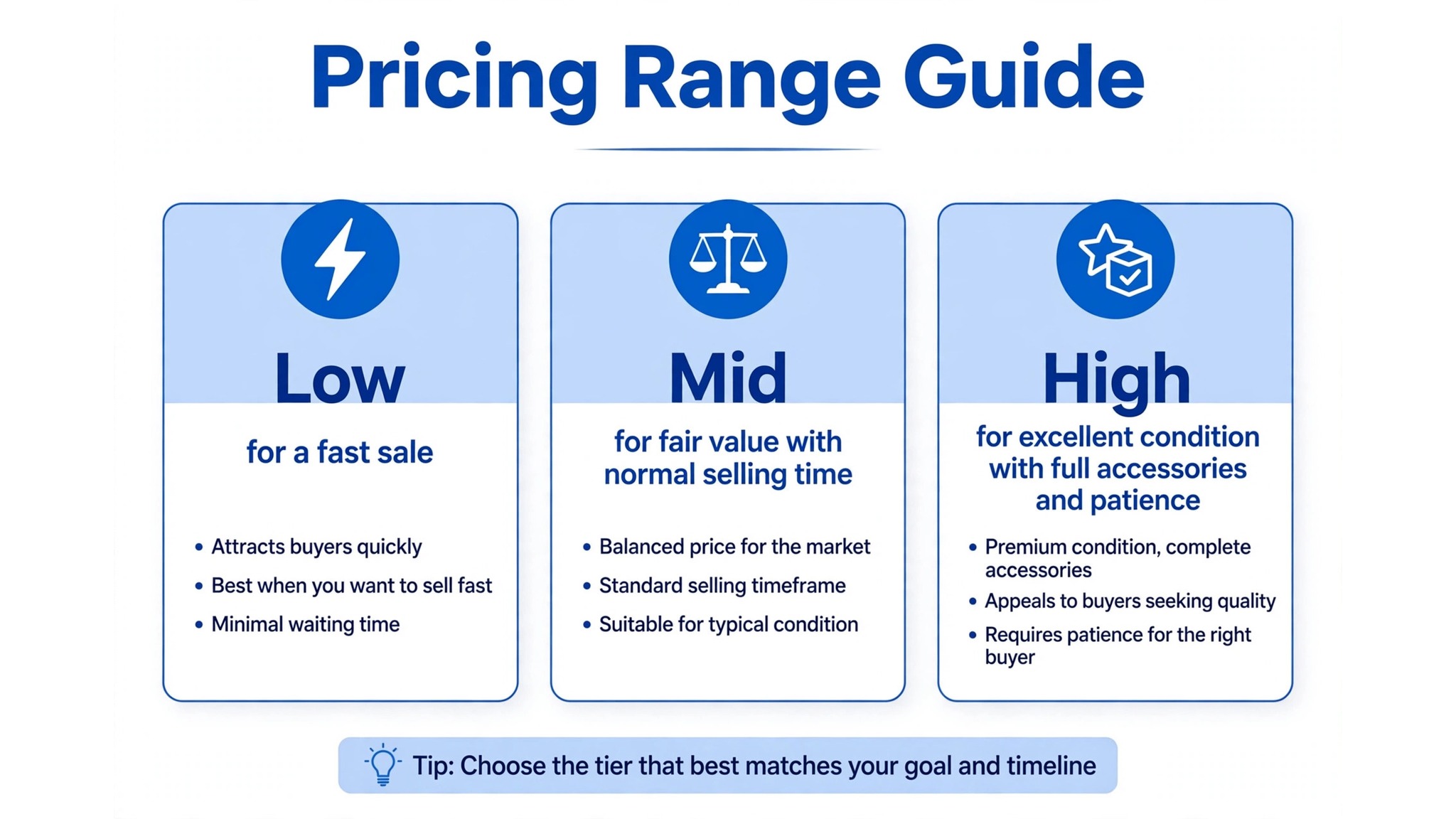
Ask AI to summarize that research into a price range with reasons. Low end suits a quick sale, mid range suits fair value with normal selling time, and high end suits excellent condition with full accessories and patience. Then choose your starting price based on your goal. If you need a fast sale, price near the low end and say so in the listing. If you can wait, price near the mid range and be ready to reduce after a set period if interest is low. If your item is rare, complete, or in exceptional condition, a higher price can work, but only with photos and details that prove the difference.
Avoid pricing traps. Pricing at new retail price for a used item, pricing without checking local listings, and pricing based on what you originally paid rather than current market value all slow sales. Buyers do not pay for your original cost, they pay for current value in current condition. AI can help you separate sentimental value from market value by comparing your item with current listings, but the final price decision should reflect market evidence, not attachment to the item.

Step 2 for how to sell on Facebook Marketplace with AI. Create Listings Buyers Trust
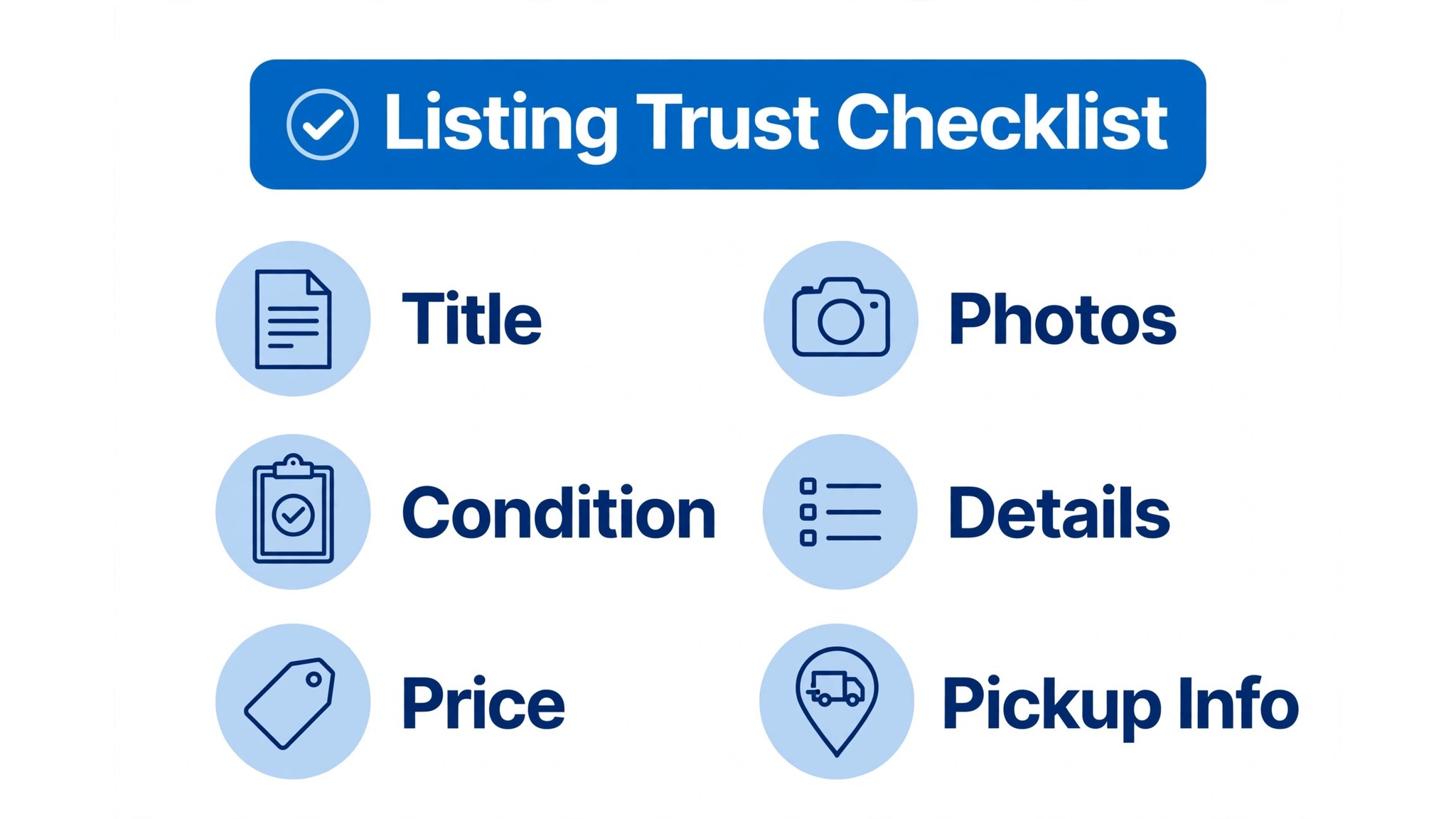
A trustworthy listing answers buyer questions before they are asked. Title, photos, condition, details, price, location area, and pickup or delivery options should all be clear in the first view. A good title names the item, brand where relevant, model or size, color, and condition in plain words, without hype or vague claims. A title like “solid wood dining table, seats six, good condition” tells a buyer far more than a title like “amazing table, must see”, and it also helps search match your listing to buyers looking for that item.
Photos do most of the selling work. Use natural light where possible, a clean background, and multiple angles, front, back, sides, close ups of details, labels or model numbers where helpful, and close ups of any flaws. For electronics, show the item powered on where relevant and include accessories in the photo. For furniture, show scale with a familiar reference and show the item in a clean room rather than a cluttered corner.
For clothing, show flat, on a hanger, and close ups of fabric, tags, and flaws. AI photo tools can help you clean backgrounds, improve brightness, and crop consistently, but they must not hide flaws, change colors, or add features the item does not have. A photo that misleads creates a failed pickup and a lost buyer.
Descriptions should follow a simple structure. Cover what it is, condition, what is included, measurements or specifications, reason for selling if relevant, and pickup or delivery details. AI can help you turn rough notes into a clear description in that structure, and it can help you write variations for different items without starting from a blank page each time. Keep claims checkable. If you say it works perfectly, test it first. If you say it is barely used, make sure wear matches that claim. If you do not know a specification, say so rather than guessing, because a wrong specification can end a sale at pickup.
For sellers who also use Facebook tools for business pages or ads, our guide to the best AI tools for Facebook can help you compare content and messaging tools, while Marketplace listings themselves should stay focused on the specific item, its condition, and its pickup details.

Step 3. Use AI for Messages, Offers, and Follow Up
Fast, clear messages sell items. Buyers often message several sellers at once, and the seller who replies promptly with a clear answer, a pickup time, and a fair stance on price usually wins the sale. AI can help you draft message templates for common situations, answering whether it is still available, confirming condition and pickup details, responding to a low offer politely, arranging a meeting time, and following up after a no show. Keep templates short, personalize the item name and the buyer question, and never send a template that promises something you have not checked, such as holding an item indefinitely or delivering to an area you do not serve.
Offer handling needs a clear policy before messages arrive. Decide your minimum acceptable price, whether you will negotiate, and how long you will hold an item for a buyer who asks. A simple policy, such as first person to confirm a pickup time gets the item, prevents holding items for buyers who never arrive while turning away ready buyers. AI can help you draft polite decline messages for low offers and clear hold messages that state a time limit, so you stay friendly while protecting your time.
Follow up matters after a sale too. A short thank you message, a note about care or setup where relevant, and a prompt response if a buyer reports a problem you did not disclose, all build a reputation that helps future listings. Marketplace buyers check seller ratings and history, and a pattern of clear listings, fast replies, and honest dealing brings more inquiries over time than any single listing trick.
Step 4. Meet Safely, Handle Payment, and Consider Shipping
Safety is not an optional extra on Marketplace, it is part of the sale. Meet in a public, well lit place during daytime where possible, bring someone with you for larger items, and use public meetup spots offered by police stations or busy retail areas where available in your area. For home pickup of large furniture, keep the meeting area clear, have help for loading, and avoid sharing unnecessary personal details. Trust your judgment. If a buyer pressures you to meet late, alone, in an unusual place, or to change payment terms at the last minute, pause and reschedule on your terms or decline the sale.
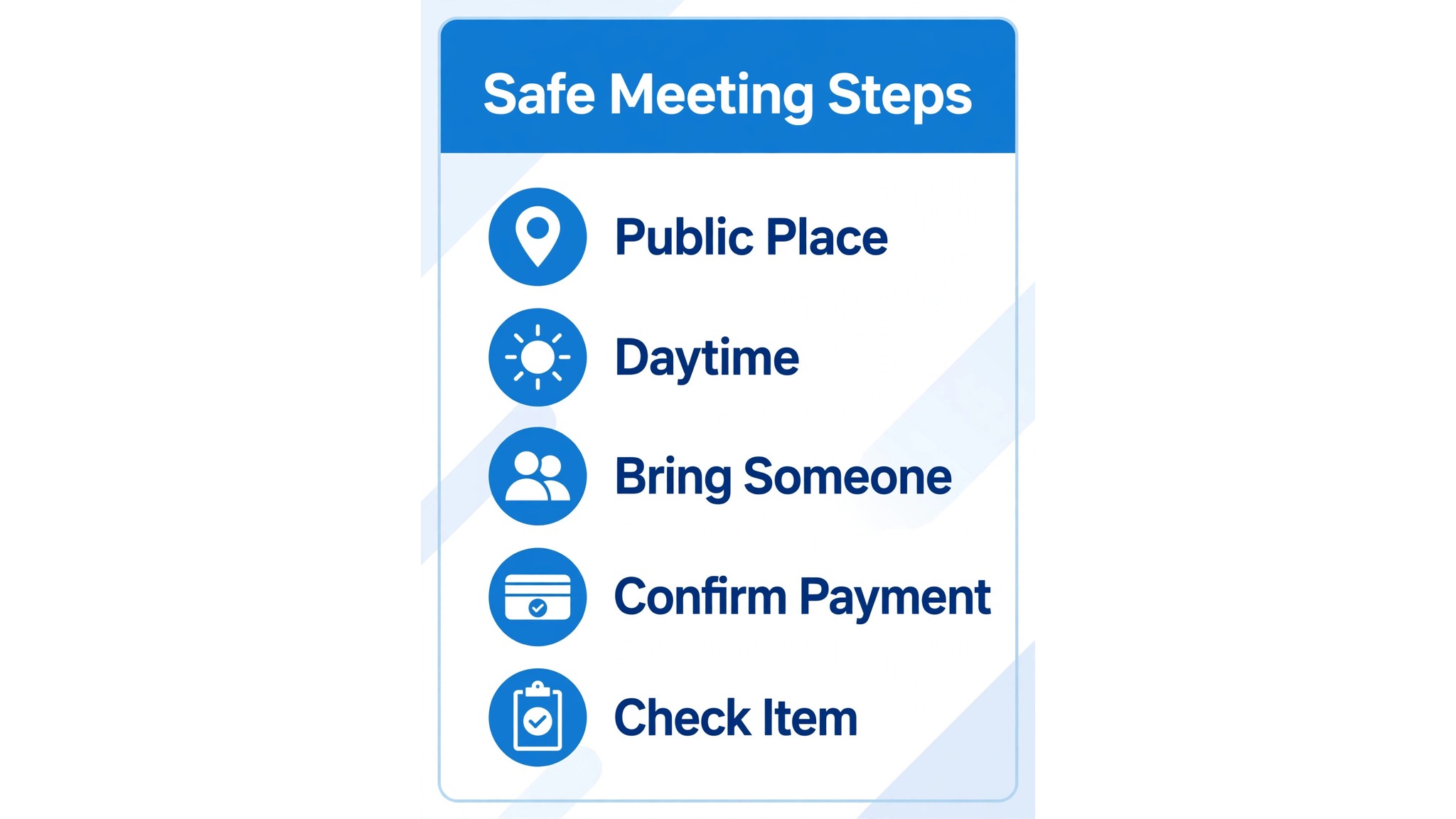
Payment should be clear before the meeting. Cash on pickup remains simple for local sales, but confirm the amount and any change needed in advance. Digital payments through a method you trust can work, but confirm the payment is received and final before the buyer leaves with the item, and be cautious of overpayment scams, fake payment screenshots, and requests to use unusual payment routes. Never accept a payment that exceeds the price with a request to refund the difference, and never ship an item before payment is confirmed through a method you understand. Check current Marketplace payment and shipping options in official help pages, because options vary by item type and location and change over time.
Shipping, where available for your item, adds packaging, tracking, and return considerations. Only offer shipping for items you can pack safely, weigh accurately, and describe fully, including condition flaws that photos may not show. Use AI to draft a packing checklist and a shipping message template, but pack the real item yourself, photograph the packed item where helpful, and keep tracking details until delivery is confirmed. A shipping sale that arrives damaged because of poor packing costs more in time and reputation than a local sale you declined.

Tools Compared for Marketplace Sellers
Marketplace sellers need tools for pricing research, listing writing, photo cleanup, and message drafting, and the best setup is usually simple and free at first. General chat tools handle listing drafts, price research summaries, and message templates. Photo editing tools handle brightness, background cleanup, and consistent crops. Spreadsheet or notes apps handle inventory, listing status, and follow up tracking. Marketplace itself remains the place where listings live, messages arrive, and sales happen, so any outside tool should support that workflow rather than replace it with automation that posts or messages without your review.
Test tools on a real item before you rely on them. Ask a chat tool to write a listing from your real photos and notes, then check whether it invented features, hid flaws, or used a price you did not approve. Ask a photo tool to clean a real photo, then check whether color, texture, and flaws remain truthful. The tool that needs the least correction on your real items is the tool that saves time. A tool that produces impressive listings for generic items but invents details for yours will cost you failed pickups and disputes.
Useful official starting points include ChatGPT for listing and message drafts, Claude for editing listings for clarity, Canva for simple listing graphics where helpful, and Facebook Marketplace Help for current rules, payment options, and safety guidance. Check current features on each official site, and confirm Marketplace rules in help pages before you list a restricted or unusual item.
| Tool type | Best for | Watch out for | Good starting test |
|---|---|---|---|
| General chat AI | Titles, descriptions, price summaries, message templates | Invented features, hidden flaws, wrong specs | Write a listing from your real notes |
| Photo editing AI | Brightness, background cleanup, consistent crops | Color changes, flaw removal, misleading edits | Compare edited photo with real item |
| Notes or spreadsheet app | Inventory, listing status, follow ups | Stale listings, missed messages | Track five listings for two weeks |
| Marketplace app itself | Listing, messages, ratings, safety tools | Rule changes, payment option limits | Read help pages for your item type |
| Price research sites | Current asking prices, sold trends where available | Asking price vs sold price confusion | Compare same condition items only |
How to Choose What to Sell and How Often
Choose selling focus based on what you can source reliably, describe honestly, and handle safely. Occasional sellers do best clearing their own home items with clear photos and fair prices, one category at a time, so each listing gets proper attention. Steady sellers do best focusing on one or two categories they understand well, such as furniture, electronics, or clothing, where they can judge condition, price accurately, and answer buyer questions confidently. A seller who lists many unrelated categories without expertise in any of them often creates more questions, returns, and failed pickups than a focused seller with fewer, better listings.
Set a listing rhythm you can maintain. A practical rhythm is to list a small batch, respond promptly, complete pickups, then list the next batch, rather than listing dozens of items at once and missing messages. Track each item from listing to sale or removal, note days to sale and final price, and use that record to learn which categories, price points, and photo styles work best for you. AI can help you summarize that record monthly, but the record itself comes from your real sales, and it becomes your pricing guide over time.
If you plan to sell regularly as a business, learn the extra responsibilities that come with it, such as tax reporting, business registration where required, and consumer protection rules in your area. Use AI to list questions to check with official sources, then confirm them before you scale. Occasional selling and regular business selling carry different obligations, and treating a business like a casual clear out can create problems later. Our guide to the best AI tools for Etsy sellers offers useful background on selling platforms generally, but Marketplace rules, fees, and buyer expectations differ, so always check Marketplace help for your specific case.

Handling No Shows, Returns, and Difficult Conversations
No shows happen even to careful sellers, so plan for them without letting them ruin your week. When a buyer asks to hold an item, give a clear time limit and a clear pickup window, and confirm the day before or the morning of the pickup with a short message. If a buyer does not arrive and does not reply, wait a reasonable interval, send one polite follow up, then relist or offer the item to the next interested buyer.
Keeping a short waitlist of interested buyers for popular items helps here, because you can move to the next buyer quickly instead of starting the listing process again. Record no shows in your tracking sheet, not to punish buyers, but to learn which pickup patterns work best. For example, same day pickups may complete more reliably than pickups scheduled a week ahead for lower priced items.
Returns and post sale problems need a calm, factual approach. First, check what your listing actually promised, condition, included items, and specifications. If you made an error, own it plainly and offer a fair remedy, such as a partial refund, a return, or a repair contribution where appropriate. If the buyer claim does not match the listing, reply with the listing details and photos politely, and keep the conversation in writing within the platform where possible. AI can help you draft calm responses that stick to facts and avoid defensive language, but do not let a template promise a refund or return you have not decided to offer. Decide the remedy first, then draft the message.
Difficult conversations also include price pressure at pickup, last minute requests to include extra items, and buyers who change the meeting place without notice. A clear pre meeting message that restates item, price, meeting place, and time prevents most of these issues, because both sides can point to the same plan. If a buyer tries to renegotiate at pickup, you can politely hold your price or decline the sale and relist, rather than accepting a price you regret. Walking away from one pressured sale protects your time and your pricing for future sales, and a buyer who respects a clear boundary is more likely to buy from you again.
Growing From Occasional Selling to Steady Income
Steady Marketplace income comes from repeatable sourcing, listing, and service habits, not from a single viral listing. Start by reviewing your tracking sheet after your first ten sales. Ask which categories sold fastest, which price points drew the most messages, which photo styles drew the fewest condition questions, and which pickup times completed most reliably. Use those patterns to choose your next sourcing focus. If furniture sells well for you because you can photograph it clearly and transport it safely, lean into furniture. If electronics sell well because you can test them thoroughly and describe specifications accurately, lean into electronics. A focused seller builds knowledge that a general seller cannot match in the same time.
Sourcing for steady selling needs the same honesty as selling your own items. Whether you source from clearance sales, estate clearances, wholesale lots, or items you refurbish, inspect every item before you list it, test it where relevant, clean it, and photograph its true condition. AI can help you research resale values for sourced lots and draft listing batches efficiently, but it cannot inspect an item for you, and a sourced item with an undisclosed fault damages your reputation faster than an item from your own home, because buyers expect a regular seller to know the product.
Keep sourcing costs, cleaning and repair costs, fees, and time in your profit sheet for each batch, so you learn which sourcing routes actually earn money after all costs.
Time management becomes the constraint as volume grows. Set listing days, message check times, and pickup windows that fit your schedule, and communicate those windows in listings and messages. A seller who replies within a few hours during stated hours and completes pickups on schedule builds a stronger reputation than a seller who replies instantly at random hours and misses pickups. Use AI to draft a weekly routine. Plan sourcing and photography on one day, listing on another, pickups grouped on set days, and record keeping at the end of the week. That routine keeps selling sustainable alongside work, study, or family commitments, and it prevents the burnout that comes from treating every message as urgent at all hours.
Finally, protect your account standing as you grow. Follow Marketplace rules for each category, keep messages polite and within the platform, avoid misleading titles or photos, and respond to buyer concerns promptly. A strong seller rating and a history of completed sales are assets that take months to build and can be damaged by a few careless listings. Treat every listing as a reputation record, not just a single sale, and your Marketplace presence will compound, with more inquiries, faster sales, and buyers who return because they trust what they will find.
Mistakes to Avoid on Marketplace
The first mistake is poor photos. Dark, blurry, cluttered, or single photos hide the item and invite low offers or no inquiries at all. Take time for clear, well lit, multiple angle photos, including flaws, because photos sell the item before any description is read.
The second mistake is vague titles and descriptions. Titles without brand, size, model, or condition, and descriptions without measurements, included items, or pickup details, force buyers to ask basic questions and often cause them to move to a clearer listing. Answer those questions in the listing itself.
The third mistake is pricing from original cost or hope. Market value comes from current listings for similar condition items in your area, not from what you paid or what you wish the item were worth. Price from evidence, then adjust after a set period if interest is low.
The fourth mistake is misleading condition claims. Saying an item works perfectly when it has a fault, or saying it is like new when it shows clear wear, creates failed pickups, disputes, and negative ratings. Describe flaws plainly and price accordingly. Honest listings sell to buyers who want that item in that condition.
The fifth mistake is slow or unclear messages. Delayed replies, vague pickup plans, and unclear payment terms lose sales to faster sellers. Reply promptly, confirm item, price, pickup time, and payment method in one clear message, and keep that plan unless both sides agree to change it.
The sixth mistake is unsafe meetings and risky payments. Meeting alone late at night, accepting overpayments, shipping before payment confirmation, or sharing personal details unnecessarily all create risk that a sale is not worth. Use public daytime meetings, confirm payment before handover, and follow Marketplace safety guidance.
Frequently Asked Questions
How do I price items on Facebook Marketplace
Research current listings for the same or close items in similar condition in your area, then choose a starting price based on your goal, low for a fast sale, mid range for fair value, or higher for rare or excellent condition items with proof in photos and details. Adjust after a set period if interest is low.
What photos should I include in a Marketplace listing
Include multiple clear, well lit angles, close ups of details and labels where helpful, and close ups of any flaws. For electronics, show the item working where relevant. For furniture, show scale and the item in a clean space. For clothing, show fabric, tags, and flaws clearly.
How do I handle low offers on Marketplace
Decide your minimum price before messages arrive, respond politely, and state your price clearly. A short reply that thanks the buyer, states your price, and invites a pickup confirmation keeps the conversation friendly while protecting your value.
Is it safe to meet buyers from Marketplace
Meet in public, well lit places during daytime where possible, bring someone with you for larger items, confirm price and payment method before meeting, and trust your judgment if a buyer pressures you to change plans. Follow current Marketplace safety guidance for your area.
Can AI write my Marketplace listings for me
AI can draft titles, descriptions, and message templates from your notes and photos, but you must check every claim, specification, and condition note for accuracy. A listing that invents features or hides flaws will fail at pickup and harm your seller reputation.
Should I offer shipping on Marketplace
Offer shipping only for items you can pack safely, describe fully, and track reliably, and only where Marketplace shipping is available for your item type and location. Check current shipping options and fees in official help pages before you offer it.
Clear Listings, Fair Prices, Fast Replies, Safe Sales
Selling on Marketplace rewards sellers who do the simple things well, consistently. Clear photos, specific titles, honest condition notes, fair prices based on current listings, fast and clear messages, and safe meetings turn ordinary items into quick sales and turn one time buyers into repeat inquiries. AI can make each of those steps faster. It can draft listings, summarize price research, clean photos, and prepare message templates, but it cannot replace the honesty, judgment, and care that make a buyer trust you enough to meet and pay.
Start with one item you know well. Photograph it properly, research its price, write a listing that answers buyer questions in advance, and reply promptly when messages arrive. Learn from that sale. Note what photos drew questions, what price drew offers, and what pickup plan worked smoothly. Then repeat that process, category by category, with a small tracking sheet that shows what sells, at what price, and in how many days. That evidence based rhythm, AI speed plus seller honesty, is what turns occasional Marketplace selling into a reliable side income, without shortcuts that cost you trust.