
The verdict is straightforward. A small optometry clinic should automate routine eye exam booking, insurance checks, and recall reminders, and should keep humans in charge of urgent eye problems, complex medical cases, and any booking where the right test type is unclear. That split is what makes automation safe in eye care, because a routine comprehensive exam and a sudden red eye are not the same appointment, even though both arrive through the same phone line. Clinics that decide to use AI for optometry clinic appointment scheduling on that basis get fuller lanes and calmer front desks, without putting triage decisions into software that cannot examine an eye.
Optometry scheduling is unusually varied, because one clinic runs comprehensive exams, contact lens fittings, medical eye visits, children’s exams, urgent problem visits, and optical dispensing, often in the same lanes with the same doctors. Each visit type needs a different length, different equipment, and different preparation, and a diary that treats them as identical will double book a lane, leave a retinal camera idle while a doctor waits, or book a contact lens fitting into a slot with no lens trial sets available. The schedule must understand visit types before it can fill them well.
This guide builds an eye exam workflow that books the right test type first time, checks insurance and prescription history before the visit, and runs recalls that bring patients back on time. It covers the eye exam intake checklist, the tools built for optometry, the triage rules that keep urgent cases safe, and the measures that show whether automation is helping or hurting. Prices quoted here come from vendor pricing pages and reputable comparison guides checked at writing time, so confirm the current price on the vendor page before buying.
Why Eye Exam Diaries Go Wrong
Eye exam diaries go wrong for reasons that look like bad luck but are really missing visit types. A comprehensive exam booked into a short slot runs over, and every later patient waits, because dilation, refraction, and retinal imaging cannot be rushed to fit a diary error. A contact lens fitting booked without a note about lens type becomes a wasted visit when the trial lenses are not in stock. A medical visit for flashes or a sudden vision change booked three weeks out, because the system offered the next routine slot, becomes a safety problem that no efficiency gain can excuse.
Insurance adds a second layer of failure. A patient who arrives expecting coverage, only to learn that the visit is classed as medical rather than routine vision, or that the plan requires a different copay, may cancel on the spot or leave angry. That failure usually starts at booking, when nobody checked the plan type, the last exam date, or whether the patient needed a medical referral. A booking system that asks about insurance early, and routes medical concerns to a person, prevents most of these confrontations before they reach the waiting room.
The third failure is recall drift. Patients are told to return in one year, or six months for a progressing condition, and then nobody contacts them until they notice a problem. The clinic loses a returning patient, the patient loses continuity of care, and the diary fills with new patients who need longer first visits instead of shorter returning ones. Recalls are not marketing. They are clinical follow up, and a system that runs them reliably is one of the most valuable tools an optometry clinic can own.
Visit Types First, Diary Second
Every optometry scheduling improvement starts with writing down the visit types and their honest lengths. A comprehensive adult exam, a children’s exam, a contact lens fitting, a contact lens follow up, a medical eye visit, an urgent problem visit, and a glasses only dispensing visit each need different times, rooms, and staff. A children’s exam, for example, often takes longer because the child needs time to settle and the doctor needs patience with responses, while a dispensing visit may need optical staff more than doctor time, and should not consume a full exam lane.
Equipment must be part of the visit type definition, not an afterthought. A visit needing retinal imaging, visual field testing, or optical coherence tomography needs the relevant room and device free, and a visit needing dilation needs a longer total stay even if doctor time is shorter, because the patient waits for drops to work. A scheduling system that only books doctor time, without considering room and device time, will create a diary that looks fine and a clinic floor that is jammed by mid morning. Map each visit type to its lane, room, and device needs before automating anything.
Triage is the safety gate that sits in front of all visit types. Any mention of sudden vision loss, flashes, new floaters with a shadow, eye pain, chemical exposure, or trauma must go to a person immediately, not to an automated booking flow, even if that person is only deciding whether the patient needs same day care or an emergency referral. Write the red flag list into the phone script, the booking form, and the answering system, and train every staff member on it. A clinic that gets triage right can automate everything else with confidence, because the dangerous cases never enter the automated flow.
The Eye Exam Workflow, Step by Step
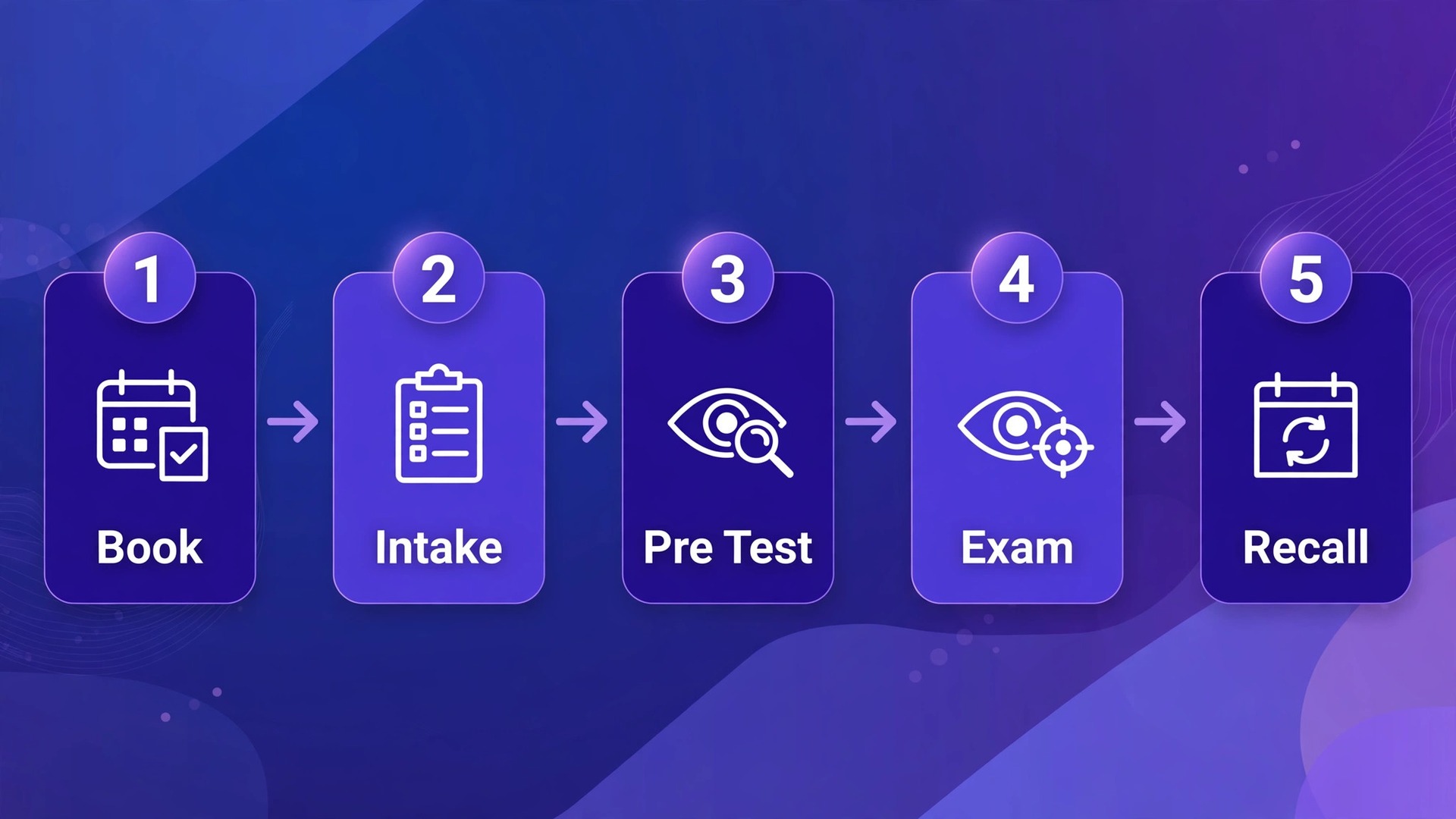
A strong eye exam workflow moves a patient from first contact to a completed visit with the right test, the right insurance check, and a recall set for next time. Each step below prevents a specific failure, and the triage step comes first for safety, before any routine booking is offered.
1. Triage before booking. Ask about sudden vision changes, pain, flashes, floaters, injury, or chemical exposure, and route any red flag to a person for same day advice, rather than offering a routine slot. 2. Identify the visit type. Ask whether the visit is a routine exam, a contact lens fitting or follow up, a medical concern, a children’s exam, or a glasses matter, and offer only slots that match that type. 3. Collect insurance and prescription history. Ask for the vision plan and medical plan where relevant, the last exam date, current glasses or contact lens details, and any eye conditions or medicines the patient can share safely at booking. 4. Check eligibility and benefits before confirming. Verify the plan type, the copay or allowance, and whether the visit is routine or medical, and tell the patient the expected cost before the visit, not after it. 5. Book the lane, room, and device, not just the doctor. Confirm that the exam lane, the needed testing room, and any trial lens sets are available for the booked visit type. 6. Send preparation instructions. Tell the patient whether dilation is likely, whether to bring glasses and contact lens boxes, whether to avoid wearing lenses before the visit where advised, and how long the visit will take in total. 7. Confirm and remind with the right content. Remind the patient of the time, the visit type, what to bring, and how to reschedule, without including sensitive clinical detail in a text that could be seen by others. 8. Set the recall before the patient leaves. Agree the recall interval with the doctor, record it in the system, and confirm that the patient will receive a recall message at the right time, so the next visit is planned rather than forgotten.
The Eye Exam Intake Checklist
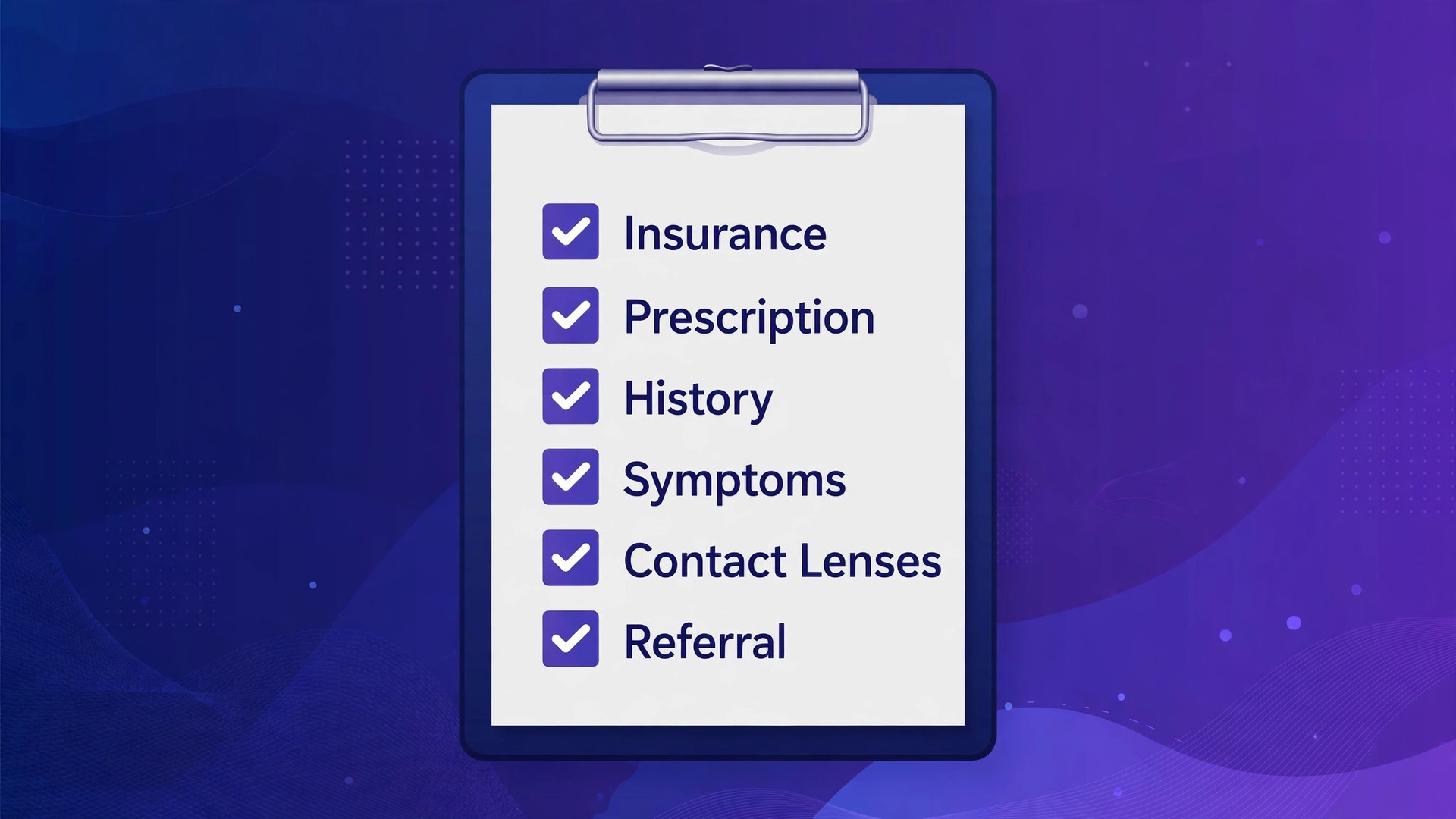
The checklist below is the booking record for every eye exam, and it should be completed before the visit is confirmed, except where triage requires immediate human handling first. If an item is missing, the booking should be held as provisional and the gap chased, rather than confirmed on hope. Use it as a booking form, a phone script, and a front desk audit tool.
| Checklist item | What to record | Why it matters |
|---|---|---|
| Triage screen | Red flags asked and result | Keeps urgent cases out of routine slots |
| Visit type | Routine, contact lens, medical, child, urgent, dispensing | Decides slot length, lane, and device |
| Insurance | Vision plan, medical plan, member details | Decides copay, allowance, and visit class |
| Last exam and recall | Last exam date, recommended interval | Prevents duplicate testing and missed follow up |
| Prescription history | Glasses prescription, contact lens brand and power where known | Speeds the exam and avoids refitting errors |
| Current eye conditions | Known conditions the patient reports | Helps the doctor prepare and prioritise tests |
| Medicines and allergies | Relevant medicines, known allergies | Affects drops, dilation, and lens choices |
| Contact lens details | Wearer or not, lens type, trial set need | Decides stock, time, and follow up need |
| Preparation needs | Dilation likely, lens wear advice, driver need | Prevents a visit that cannot be completed |
| What to bring | Glasses, lens boxes, insurance card, referral | Saves a wasted visit for a forgotten item |
| Recall set | Interval agreed, recall method, next due date | Brings the patient back on time |
| Consent and contact | Reminder method, contact preference, privacy note | Keeps reminders useful and safe |
Keep the booking form short by using tap choices for visit type and insurance plan where possible, and leaving only one open text box for anything unusual. A form that asks patients to type their full eye history on a phone will be abandoned, and the clinic will be back to phone booking for everyone. Ask the essentials at booking, confirm the rest at check in, and let the doctor complete the clinical history in the exam room, where it belongs.
Insurance, Prescription History and the Routine Versus Medical Split
The routine versus medical split causes more front desk arguments in optometry than any other single issue, because patients reasonably expect their vision plan to cover an eye visit, and do not expect a medical problem found during that visit to change the billing class. The booking system should ask early whether the visit is for glasses or contacts, or for a medical concern such as diabetes follow up, flashes, or eye disease monitoring, and should explain in plain words that the reason for the visit can affect which plan applies. That early conversation, handled kindly, prevents a billing shock at checkout.
Prescription history is equally important at booking, because it changes the visit itself. A patient with a stable glasses prescription needs a different exam flow from a patient whose prescription has changed sharply, a new contact lens wearer needs fitting time and teaching time, and a patient switching lens brands needs trial sets ordered in advance. The booking form should capture the current glasses or lens details the patient knows, and the front desk should check that trial sets are available before confirming a fitting, rather than discovering the gap when the patient is already in the chair.
When insurance cannot be verified before the visit, say so plainly and agree a fallback, such as a self pay estimate with a refund or adjustment if coverage is later confirmed. A patient who agrees to a clear fallback is far calmer than a patient who was promised coverage that never materialised. Document what was checked, what was not, and what the patient agreed, because that record is what resolves the dispute fairly if the claim later comes back differently from expected.

Tools Compared for Optometry Scheduling
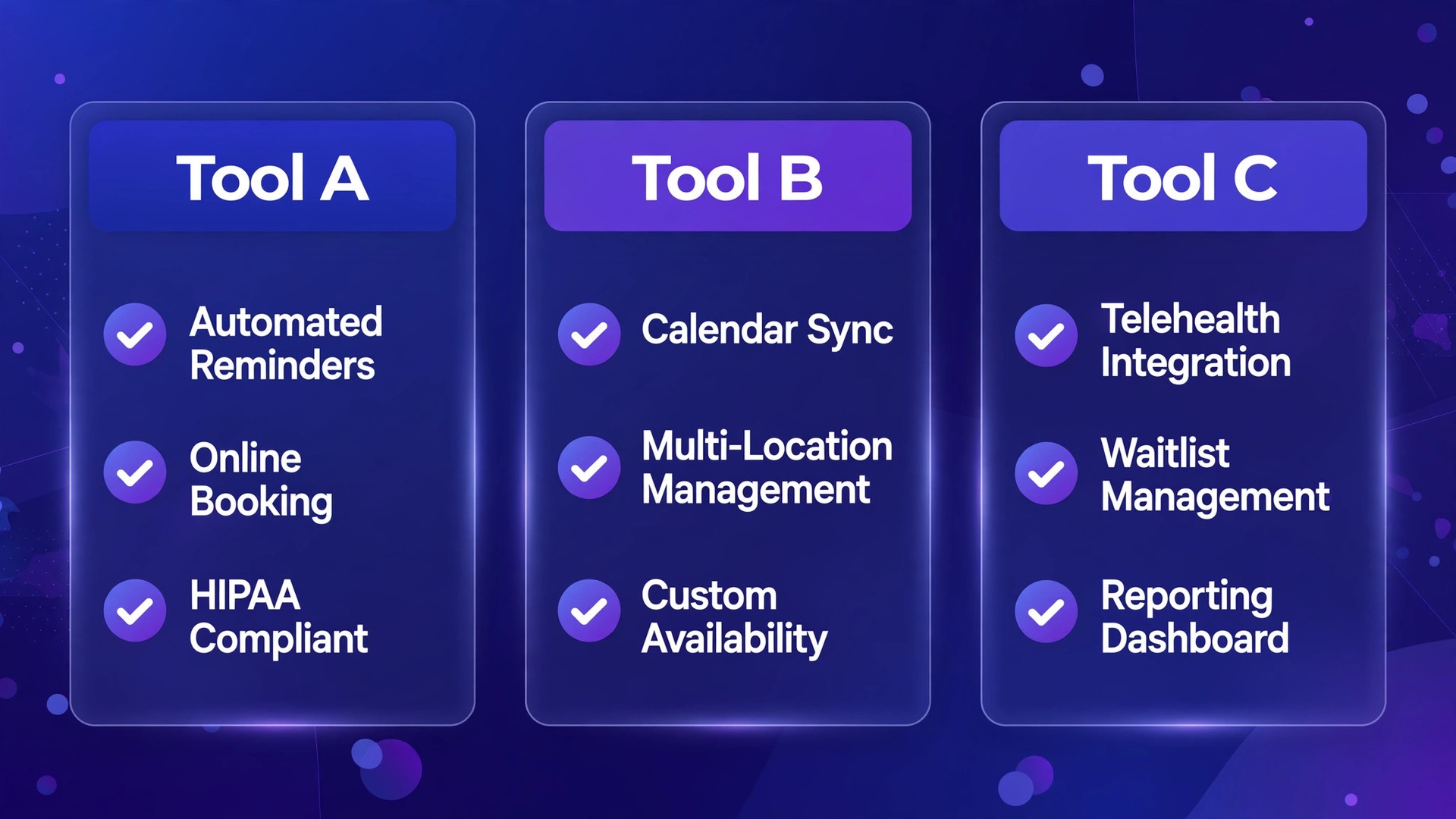
Optometry clinics need scheduling inside an eye care system, because exam records, imaging, orders, and insurance must stay connected to the appointment. Prices below are reported from vendor pricing pages and comparison guides, so confirm the current price on the vendor page before buying. A generic booking tool can take a time slot, but it cannot check a recall interval, hold a trial lens order, or distinguish a routine exam from a medical visit, and those are the functions that matter.
| Tool | Best for | Reported starting price | Trade off |
|---|---|---|---|
| RevolutionEHR | Small to mid sized optometry practices wanting EHR and scheduling together | Core reported at $455 a month, Advanced from $660, Premium from $830, with exam only or optical only locations from $319 in recent guides | Strong optometry fit, but higher monthly cost and training needed |
| Eyefinity Encompass | Practices with substantial vision plan volume wanting plan integration | Essential reported at $340 a month, Enhanced at $758, Enterprise quoted in recent guides | Deep plan integration, but advanced features sit on higher tiers |
| MaximEyes | Optometry practices wanting EHR, scheduling, and optical management | Quoted pricing in recent guides | Broad eye care coverage, but no transparent starting price |
| Crystal PM | Smaller practices wanting practice management with scheduling | Quoted pricing in recent guides | Focused on smaller practices, but less known for large clinic scale |
| Calendly | Solo practitioners booking consultations only | Free for one event type, paid from about $10 a seat a month on annual billing in recent guides | Simple booking, but no eye care records or recall logic |
| Setmore | Small clinics wanting a cheap public booking page | Free for up to four users, Pro about $5 a user a month on annual billing in recent guides | Cheap booking page, but no clinical or optical depth |
RevolutionEHR suits a practice that wants scheduling, exam records, claims, and optical orders in one optometry built system, and its monthly pricing means a single doctor practice should budget the full plan cost, not a per user headline from a generic tool. Eyefinity suits a practice where vision plan workflows dominate the day, because plan eligibility and authorisation sit close to scheduling, though the practice should check which features need the higher tier before committing. Whichever system is chosen, test automated booking with triage cases, medical versus routine cases, and contact lens stock cases before launch, because those three cases are where generic automation fails in eye care.
Recalls, Reminders and Keeping Patients Coming Back
Recalls are the quiet revenue engine of an optometry clinic, and they are also good clinical care, because eye conditions progress silently and regular exams catch change early. A recall system should be driven by the doctor’s recommended interval, not by a generic twelve month message for every patient. A patient with diabetes, glaucoma risk, or a rapidly changing prescription needs a shorter interval, and the system must respect that, even if it means more frequent messages. Record the interval at the visit, not later from memory, because later never happens reliably.
Reminders should be specific and safe. A good reminder names the day, time, and visit type, states what to bring, and notes whether dilation is likely and whether a driver may be needed, without including diagnosis details in a text. Send the reminder early enough for the patient to arrange transport or time off, and again closer to the visit, with a simple way to confirm or reschedule. A patient who can reschedule in one tap is a patient who reschedules, while a patient who must phone during work hours simply does not show up.
Measure recalls as a clinical system, not as a marketing campaign. Track the share of patients due for recall who actually book, the share who book within a month of their due date, and the share who return after a recall message, and review those numbers monthly. If recall bookings fall, check whether intervals are being recorded at the visit, whether messages are reaching patients, and whether the booking link works on a phone, before assuming patients have lost interest. Most recall failures are system failures, and system failures can be fixed.
Measuring Lanes, Waits and Recall Success
An optometry clinic should judge its schedule by lane use and patient waits, not just by the number of bookings. Start with lane utilisation, meaning the share of available exam lane time that is actually used for visits, and with average patient wait time from arrival to exam start, because a diary that looks full while patients wait forty minutes is not working. Then look at the no show rate by visit type, since contact lens fittings and children’s exams fail for different reasons and need different fixes.
Add recall completion and insurance verification rates to those measures. Recall completion shows whether patients return on time, and verification rate shows whether insurance was checked before the visit rather than discovered at checkout. If no shows fall but waits rise, the problem is slot lengths or room planning, not reminders. If recalls rise but lane use falls, the problem may be that returning visits are booked into the wrong lanes or with the wrong device availability. Numbers point to the failing part of the system, and the clinic should fix that part before buying more software.
Clinics that use AI for optometry clinic appointment scheduling for reminders and recalls still need a human monthly review, because automation can fill lanes while waits rise. When clinics use AI for optometry clinic appointment scheduling for waitlist filling as well, the review should compare wait times and recall bookings before and after each change, so the clinic keeps what helps patients and drops what only looks efficient.
Review these measures monthly with doctors, optical staff, and front desk together, because scheduling in optometry crosses all three groups. A change that helps the front desk but jams the lanes will be visible in wait times, and a change that helps doctors but confuses optical dispensing will be visible in collection delays. A short monthly review, with one change agreed and one measure watched, will improve the diary faster than a large system change every year.
Mistakes That Break an Eye Exam Diary
The first mistake is automating triage by accident. A booking form that offers a routine slot to every enquiry, without asking about sudden vision changes or pain, will eventually book an urgent case weeks out, and the clinic will only learn about it when the patient arrives in distress or does not arrive at all. Put the triage screen first, before any slot is shown, and make it impossible to skip. A form that asks one extra safety question is not friction. It is the reason the clinic can trust automation for everything else.
The second mistake is booking the doctor without booking the lane and the device. An exam that needs imaging cannot happen in a lane without imaging access, and a contact lens fitting cannot happen without trial sets, yet many diaries book only doctor time and leave the rest to chance. Clinics that decide to use AI for optometry clinic appointment scheduling well define each visit type with its lane, room, and device needs, so the system cannot confirm a visit the clinic floor cannot deliver. That definition work is dull, and it is the work that makes the diary honest.
The third mistake is recording recall intervals nowhere, or recording them only in a doctor’s head. When the doctor leaves, changes hours, or simply forgets, the recall dies with the memory, and patients who needed six month follow up drift for two years. Make the recall interval a required field at visit close, with a default that the doctor can change but cannot leave blank. A required field feels like extra work for a week, and then it becomes the habit that keeps the clinic’s returning patients returning.
Verdict, Should a Clinic Use AI for Optometry Clinic Appointment Scheduling
The verdict from the opening holds, with the evidence of this guide behind it. Automate routine booking, insurance checks, reminders, and recalls, and keep humans in charge of triage, medical complexity, and unclear test types. That split gives a small clinic fuller lanes, fewer no shows, and better recall completion, without asking software to make clinical judgments it cannot make. The monthly cost of an optometry system is significant, with RevolutionEHR Core reported at $455 a month in recent guides, so the clinic should expect automation to earn its keep in filled lanes and returning patients, not just in a tidier diary.
The case weakens for a clinic that has not yet defined its visit types, triage list, and recall intervals, because automation will then book the wrong visits faster and recall nobody reliably. In that situation, spend two weeks defining those three things before switching on automated booking, and test the system with urgent, medical, and contact lens cases before it goes live. Clinics that decide to use AI for optometry clinic appointment scheduling after that preparation will trust the system, because they have seen it handle the hard cases correctly.
Start with three moves in the first month. Write the visit types with lane and device needs, put triage first in every booking flow, and make recall intervals required at visit close. Run that setup for a month, measure waits, no shows, and recall bookings, and only then expand automation to answering and waitlist filling. A diary built in that order supports eye care instead of competing with it, and that is the standard a clinic should hold any system to.
More Reading on Stratilyze
For a related clinic scheduling system, read best practice management software for therapists and best scheduling software for home care agencies. For a different appointment comparison, see best CRM for cleaning companies.
Frequently Asked Questions
What eye problems should never be booked automatically
Sudden vision loss, sudden vision change, eye pain, flashes with new floaters or a shadow, eye injury, and chemical exposure should always go to a person for same day advice, not to an automated routine slot. Write this red flag list into the phone script, the booking form, and any answering system, and train every staff member on it. Automation is safe in eye care precisely because urgent cases are kept out of the automated flow.
How long does a comprehensive eye exam usually take
A comprehensive adult exam often takes thirty to sixty minutes in total, including refraction, health checks, and any imaging, with extra waiting time if dilation is needed. Children’s exams often take longer, while a glasses only dispensing visit is usually shorter and needs optical staff more than doctor time. Clinics that decide to use AI for optometry clinic appointment scheduling should set these lengths as separate visit types, rather than using one default slot for every eye visit.
Should patients bring anything to an eye exam
Patients should bring their current glasses, contact lens boxes with brand and power details, their insurance cards, and a list of relevant medicines and allergies. If dilation is likely, they should also arrange a driver or plan for blurred near vision afterwards. Reminders should list these items directly, because a reminder that only states the appointment time does not help a patient arrive prepared for the actual visit.
How do routine and medical eye visits differ for insurance
A routine visit is usually for glasses or contact lens care and is billed to a vision plan, while a medical visit addresses an eye condition or disease concern and may be billed to a medical plan with a different copay. The reason for the visit can therefore affect which plan applies and what the patient pays. Ask about the reason early at booking, explain the distinction in plain words, and check eligibility before the visit so the patient is not surprised at checkout.
How often should eye exam recalls be sent
Recalls should follow the doctor’s recommended interval for each patient, not a single generic interval for everyone. Many adults are recalled yearly, while patients with diabetes, glaucoma risk, or changing prescriptions may need shorter intervals. Clinics that decide to use AI for optometry clinic appointment scheduling for recalls should record the interval at visit close as a required field, so the recall fires at the right time for each patient.
Can a small optometry clinic afford a full eye care system
A small clinic should budget the full monthly plan cost, with RevolutionEHR Core reported at $455 a month and Eyefinity Essential reported at $340 a month in recent guides, before add ons and training time. That cost is justified when the system fills lanes, runs recalls, and keeps exam, imaging, and optical records together, but it should be compared with the clinic’s actual visit volume. Confirm the current price on the vendor page before choosing, because plan names and pricing change.