

A three clinician clinic running WebPT Core at a reported $241 per provider a month spends $723 a month on its core system before billing add ons, yet still loses visits to phone tag, expired authorisations, and patients who simply forget their next appointment. That contrast is the starting point for this guide. The clinic already pays for a capable system, but the schedule still depends on staff catching every detail by hand. Clinics that decide to use AI for physical therapy clinic scheduling usually do so not to replace that system, but to close the gaps around it, so evaluations lead to complete visit series instead of fading after two sessions.
Physical therapy scheduling differs from ordinary appointment booking in ways that matter clinically. A patient rarely needs one visit. They need an evaluation, then a series of visits at a set frequency, then a re-evaluation, and the whole series sits inside an authorisation window with a visit limit. If the first visit is booked but the rest are left for the patient to arrange later, adherence falls, outcomes suffer, and the clinic loses revenue it had already earned through the evaluation. Scheduling is therefore part of treatment, not just administration.
This guide builds a scheduling workflow that books the full series at the evaluation, checks authorisation before visits run out, and reminds patients in ways that respect privacy and clinical reality. It covers the plan of care scheduling checklist, the tools that suit PT clinics, the authorisation and cancellation rules that protect both patient and clinic, and the measures that show whether the system is improving completion rates. Prices quoted here come from vendor pricing pages and reputable pricing guides checked at writing time, so confirm the current price on the vendor page before buying.
Why a PT Schedule Fails Even With Good Software
A PT schedule usually fails in four places, and all four look like staff problems until the workflow is examined. The first is the single visit booking. A front desk team under pressure books the evaluation, tells the patient to call back for the rest, and the patient never does, because pain improves slightly, life gets busy, or the phone call feels like a chore. The series that the therapist planned as twice weekly for six weeks becomes two visits and a discharge that nobody intended.
The second failure is authorisation drift. An authorisation covers a number of visits or a date range, and the schedule keeps booking beyond it because nobody checked the remaining count that week. The clinic then discovers the problem at billing, when visits are denied, and the patient receives a bill for care they believed was covered. That surprise damages trust far more than a scheduling delay would have, and it is entirely preventable with a check built into the booking flow.
The third failure is the wrong visit length or clinician. An evaluation needs more time than a follow up, a complex neurological case needs a senior clinician, and a patient who needs hands on work cannot be booked into a slot meant for a quick check in. A diary that treats every visit as identical will produce days that look full on screen and feel chaotic in the gym, with clinicians running late and patients waiting beside equipment they cannot use yet.
The fourth failure is reminder failure. A generic reminder that says only that an appointment is tomorrow does not help a patient who needs to bring a brace, wear suitable clothing, or arrive early for paperwork. Worse, a reminder sent to the wrong number or with too much clinical detail in it creates a privacy risk. PT reminders must be specific enough to be useful and careful enough to be safe, and that balance needs to be designed, not improvised message by message.
Evaluation First, Series Second, Never the Reverse
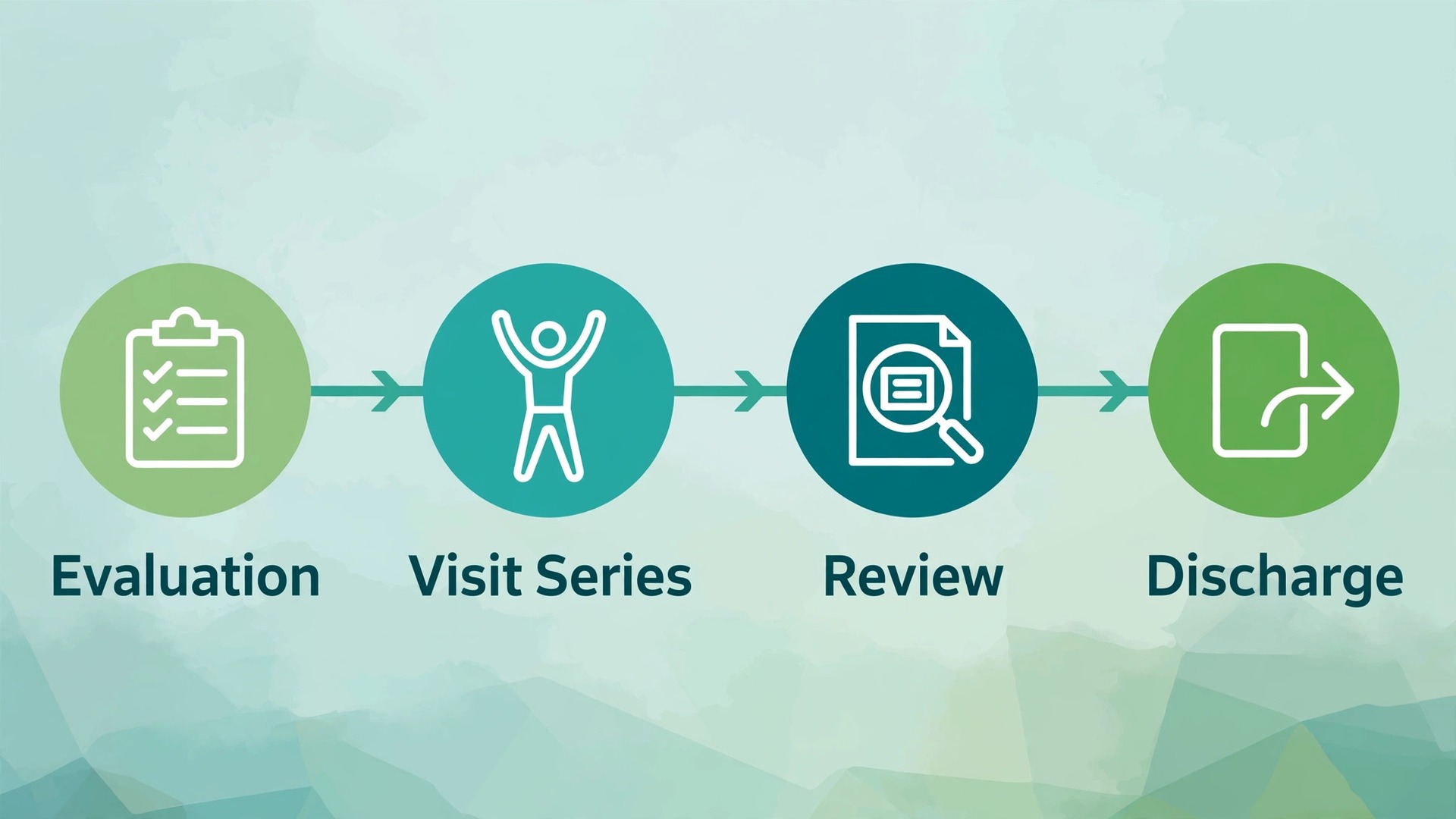
The most important scheduling rule in a PT clinic is to book the series at the evaluation, before the patient leaves the building. The therapist explains the plan of care, the front desk offers the series that matches the prescribed frequency, and the patient leaves with every visit on their calendar, not with a promise to call. Clinics that follow this rule see higher completion rates, because the patient has committed to concrete times rather than to a vague intention to continue.
Booking the series at the evaluation also surfaces problems while they can still be fixed. If the patient cannot attend twice weekly mornings, the schedule can be adjusted there and then, rather than discovered three weeks later when half the visits are missed. If the authorisation covers fewer visits than the plan requires, the clinic can start the authorisation extension or the self pay conversation early, while the patient is engaged and the therapist is present to explain why the full series matters.
There is a balance to strike, because booking too far ahead creates its own waste when patients cancel late in the series. Book the full authorised series, but build in a review point at the re-evaluation, where the therapist confirms whether the remaining visits are still needed or the plan should change. That review point protects the patient from unnecessary visits and protects the clinic from a diary full of visits that no longer match the clinical picture. A schedule that books the series and then reviews it is both committed and honest.
The Scheduling Workflow, Step by Step
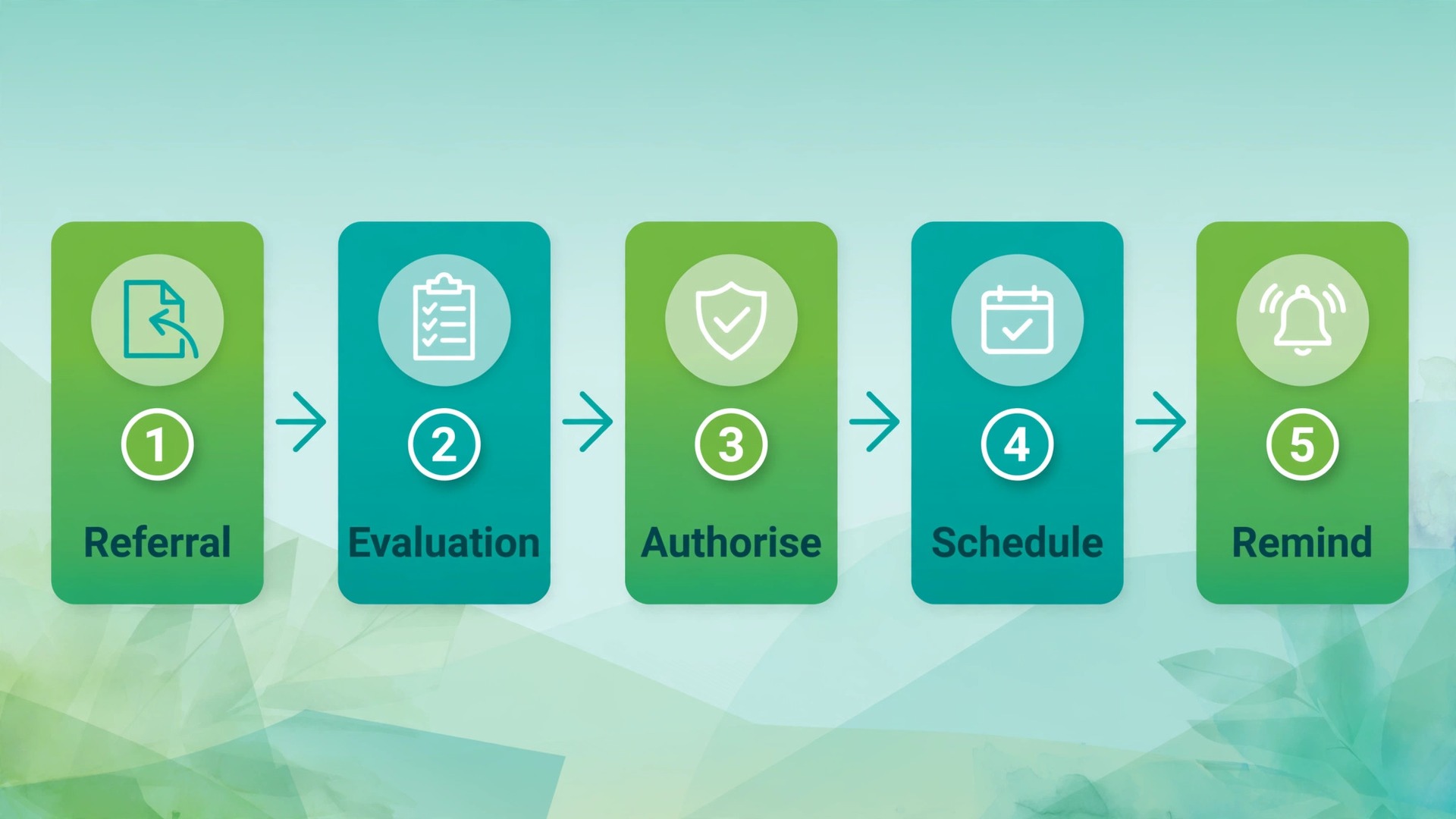
A PT scheduling workflow must carry a patient from referral to completed plan of care without losing the clinical thread. Each step below names the check that prevents the failure described earlier, and the order matters, because authorisation and visit length decisions made late are far harder to fix than the same decisions made at booking.
1. Capture the referral and the reason for visit. Record the referring source, the diagnosis area where known, the injured or treated body part, and any precautions, so the evaluation is booked with the right clinician and the right length. 2. Verify benefits and authorisation before the evaluation where possible. Check coverage, visit limits, and whether prior authorisation is required, and tell the patient what is covered before the first visit, not after it. 3. Book the evaluation with the right length and clinician. Give evaluations a longer slot than follow ups, match complex cases to experienced clinicians, and leave a buffer for documentation so the therapist is not writing notes during the next patient’s session. 4. Build the visit series at the evaluation. Offer the full series at the prescribed frequency, on days and times the patient can actually keep, and confirm the whole series in writing before the patient leaves. 5. Check the authorisation count at every booking change. Whenever a visit is added, moved, or cancelled, recheck the remaining authorised visits and the expiry date, so the schedule never runs past coverage silently. 6. Send useful, privacy safe reminders. Remind the patient of the time, the clinician, what to wear, and what to bring, without including diagnosis details in texts or emails that could be seen by others. 7. Handle cancellations with a same week refill rule. When a visit cancels, offer the slot to the waitlist the same day and rebook the cancelling patient within the same week where clinically appropriate, so the series does not drift. 8. Review and close the plan of care properly. At the re-evaluation, confirm remaining visits, update the plan, and either book the next phase or discharge with a home programme and a clear return route, so no patient simply fades away.
The Plan of Care Scheduling Checklist
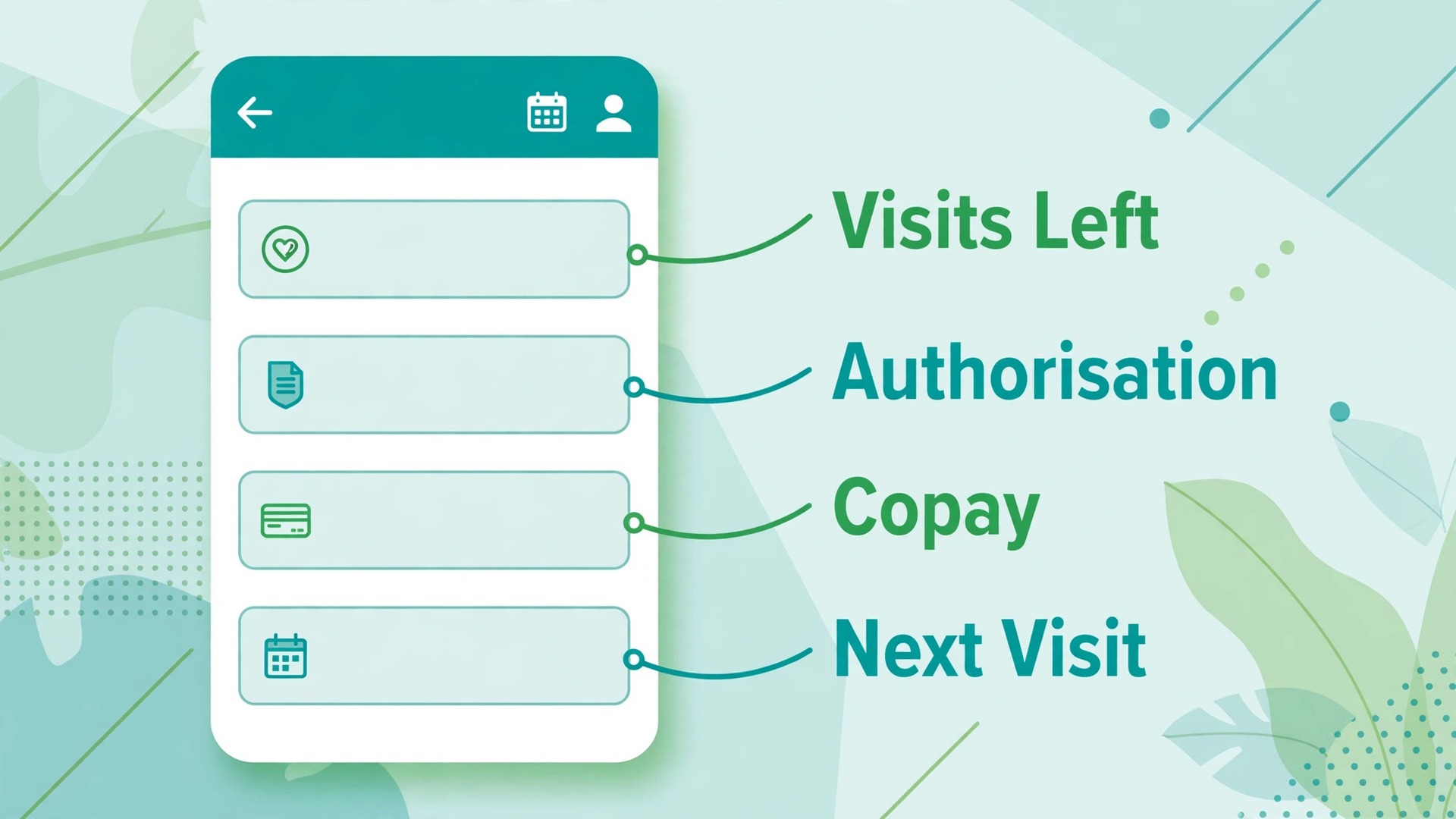
The checklist below is the scheduling record for every PT patient, and it should be checked at the evaluation, at every series change, and at the re-evaluation. If an item is blank, the schedule is not ready, and the gap should be closed before more visits are booked. Use it as a front desk form, as a system template, and as an audit tool for the clinic manager.
| Checklist item | What to record | Why it matters |
|---|---|---|
| Referral and diagnosis area | Source, body part, precautions | Decides clinician match and visit length |
| Evaluation booked | Date, clinician, slot length | Starts the plan with the right first step |
| Visit series | Frequency, total planned visits, days and times | Turns a plan into kept appointments |
| Authorisation | Visits approved, visits used, expiry date | Prevents denied visits and surprise bills |
| Benefits check | Copay, deductible status, patient share | Lets the patient plan cost honestly |
| Visit length by type | Evaluation, follow up, re-evaluation lengths | Keeps the diary realistic through the day |
| Clinician and room needs | Named clinician, gym space, equipment | Avoids double booking scarce resources |
| Reminders | Method, timing, content checked for privacy | Cuts no shows without creating risk |
| Cancellation and refill | Waitlist offer, same week rebooking | Keeps the series on track after a gap |
| Review point | Re-evaluation date, plan update decision | Stops the series drifting past its purpose |
| Discharge or next phase | Home programme given, return route explained | Closes care properly instead of fading out |
| Documentation time | Note time protected after visits | Keeps records current and billing clean |
Keep this checklist visible to both front desk and clinical staff, because scheduling failures usually happen in the gap between those two groups. The therapist knows the plan changed, but the front desk keeps booking the old series. The front desk knows the authorisation ran out, but the therapist keeps treating. A shared checklist, reviewed at a brief weekly huddle, closes that gap faster than any software feature on its own, and it costs nothing but ten minutes a week.

Authorisation is where PT scheduling becomes financial, and clinics that treat it as a billing afterthought pay for that mistake in denied claims. The schedule should never be the place where authorisation is discovered to have expired. Instead, the booking system or the front desk routine should show remaining authorised visits and the expiry date at the moment a visit is booked, moved, or added, so the person booking can see the limit before confirming the slot.
Benefits checks deserve the same timing. A patient who learns at the third visit that each visit carries a large copay may stop attending, and the clinic loses both the patient and the outcome. A patient who learns the copay before the evaluation can plan, ask about payment options, or discuss frequency with the therapist while the plan is still flexible. Honest cost information at booking is not bad for business. It is what lets patients commit to a series they can actually complete.
When an authorisation runs short, the clinic needs a clear process, not a panic. Start the extension request early, tell the patient what is happening and what it may mean for timing, and keep the patient on the schedule for visits that remain covered while the request is pending, where that is clinically and financially appropriate. Document every step, because an extension request without a record is a request that cannot be chased. The goal is a patient who never receives a surprise bill for a visit the clinic booked past coverage.
Tools Compared for PT Clinic Scheduling
PT clinics need scheduling inside a clinical system, not as a standalone calendar, because authorisation, documentation, and visit counts must stay connected. Prices below are reported from vendor pricing pages and comparison guides, so confirm the current price on the vendor page before buying. A standalone booking tool can take appointments, but it cannot warn that a visit exceeds authorisation, and that warning is the feature that saves the clinic money.
| Tool | Best for | Reported starting price | Trade off |
|---|---|---|---|
| WebPT | PT, occupational therapy, and speech clinics needing full documentation and scheduling | Starter reported at $164 per provider a month, Core at $241, Enhanced at $307, on 12 month terms in recent guides | Strong PT fit, but priced per provider and higher than generic tools |
| SimplePractice | Small therapy practices wanting scheduling, notes, and billing together | Solo plans reported at $49 to $99 a month, with group pricing per clinician in recent guides | Affordable and easy, but less PT specific than WebPT |
| Clinicient | Larger PT clinics wanting documentation, scheduling, and revenue tools | Quoted pricing, no published starting price in recent guides | Deep PT workflow, but requires a sales conversation to price |
| Prompt EMR | PT clinics wanting a modern system with automation | Quoted pricing in recent guides | Automation focused, but pricing is not transparent upfront |
| Calendly | Solo therapists booking consultations only | Free for one event type, paid from about $10 a seat a month on annual billing in recent guides | Simple booking, but no authorisation or plan of care tracking |
| Setmore | Small clinics wanting a cheap public booking page | Free for up to four users, Pro about $5 a user a month on annual billing in recent guides | Cheap booking page, but no clinical scheduling depth |
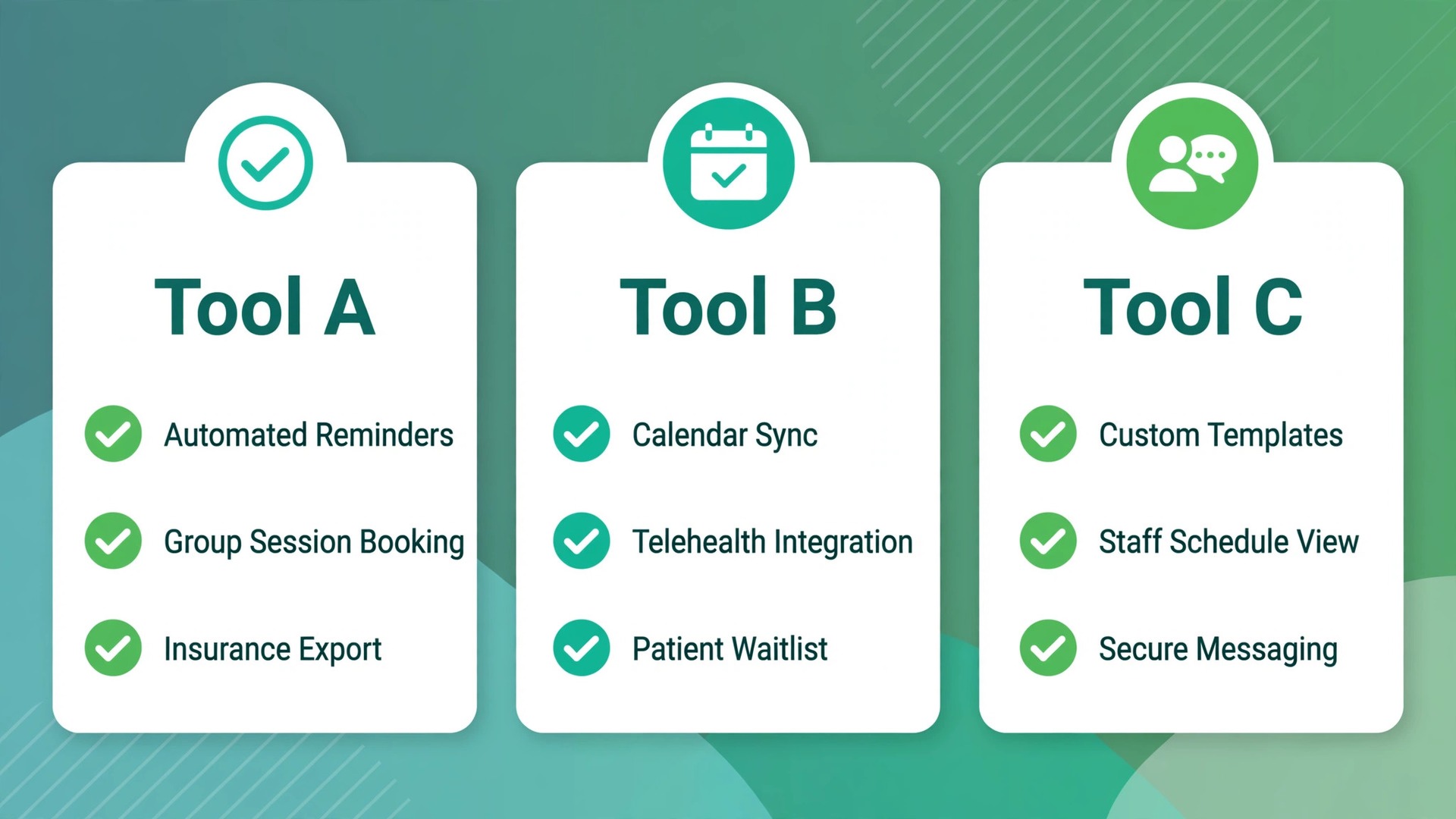
WebPT suits a clinic that wants scheduling, documentation, home exercise, and billing in one PT built system, and its per provider pricing means a three clinician clinic should budget the per provider total, not the single provider headline. SimplePractice suits a small or solo therapy practice that values simplicity and lower cost, and accepts that PT specific features are thinner. Clinics that add AI answering or reminder tools on top of either system should check that the tool writes back to the clinical schedule, rather than holding bookings in a separate list that staff must re-enter by hand.
AI features inside these systems, such as automated reminders, waitlist filling, and intake handling, help most when the plan of care rules are already defined. An automated reminder that fires for every visit is useful. An automated system that books a new patient into a follow up slot, or books past an authorisation limit, is harmful. Test any automation with authorisation edge cases before launch, including a patient with one visit left, a patient whose authorisation expired yesterday, and a patient who needs a longer evaluation slot, and confirm the system handles all three safely.
Reminders, Waitlists and Privacy in Practice
Reminders work best when they tell the patient something useful. A good PT reminder names the day, time, and clinician, states what to wear, and notes anything to bring, such as a brace or a list of current medicines where relevant. It also gives a simple way to confirm, cancel, or reschedule, because a patient who can reschedule easily is a patient who reschedules instead of simply not showing up. Keep the message short enough to read on a phone lock screen, and send it at a time the patient can act on it, not in the middle of the night.
Waitlists turn cancellations into filled visits, but only if the waitlist is worked fast. When a slot opens, contact waitlisted patients in order, give each a short window to accept, and move on promptly if there is no reply, because a slot offered to five people at once creates double booking risk. Record who was offered the slot and who accepted, so the clinic can show fairness and can learn which patients reliably take short notice slots. A waitlist that is never worked is just a list, and a list does not fill a diary.
Privacy must shape every automated message. Avoid diagnosis details, treatment specifics, and anything a family member glancing at a phone could misread, in texts and emails. Use the patient’s preferred contact method, confirm consent for text reminders at intake, and give patients a way to change that preference at any time. A clinic that treats reminder privacy as a design rule, rather than as an afterthought, protects patients and protects itself, and patients notice that care.
Measuring Completion, Not Just Bookings
A PT clinic should judge its schedule by completion, not by how full the diary looks. The key measure is plan completion rate, meaning the share of patients who complete the visits in their plan of care, or reach a documented clinical endpoint, rather than fading away. A diary that looks full because new evaluations keep replacing patients who dropped out is not a healthy schedule. It is a treadmill that burns staff time on intake while outcomes suffer.
Track four supporting numbers alongside completion. The first is no show rate by visit type, because evaluations and late series visits fail for different reasons. The second is same week refill rate, meaning the share of cancelled visits that are rebooked within the same week. The third is authorisation denial rate for visits, which should fall toward zero when booking checks work. The fourth is time from referral to evaluation, because a long wait loses patients before treatment even starts. Review these numbers monthly with clinical and front desk staff together, because each number has both a clinical and an administrative cause, and fixing only one side will not move it.
Clinics that use AI for physical therapy clinic scheduling to automate reminders still need a human review of completion each month, because automation can fill a diary while completion falls. When clinics use AI for physical therapy clinic scheduling for series booking as well as reminders, the monthly review should compare completion before and after each change, so the clinic keeps what raises completion and drops what only looks busy.
Change one scheduling rule at a time, and watch completion before judging success. A clinic that books series at evaluation, adds same week refill, and changes reminder timing in the same week cannot tell which change helped. A clinic that introduces series booking first, measures completion for a month, and then adds refill rules will know exactly what each change earned. That discipline is slower in the first month and far faster over a year, because the clinic stops reversing changes that were actually working.

Mistakes That Break a PT Schedule
The first mistake is booking evaluations without protecting documentation time. A therapist who finishes a patient and immediately starts the next one will write notes late, at lunch, or at home, and late notes mean late billing and forgotten details. Protect a short documentation buffer after evaluations in particular, and treat that buffer as clinical time, not as empty diary space to fill. A diary that looks slightly less full but produces same day notes is more profitable than a packed diary with a week of unfinished documentation.
The second mistake is letting the schedule drift away from the plan of care. A therapist changes frequency at a re-evaluation, but the front desk keeps booking the old pattern, so the patient attends visits the plan no longer requires, or misses visits the new plan added. Clinics that decide to use AI for physical therapy clinic scheduling well make the plan change a scheduling event, with the old series stopped and the new series booked in the same conversation, rather than leaving the change as a note for someone else to act on later. That single habit prevents more wasted visits than any reminder tool.
The third mistake is measuring bookings instead of completion. A front desk team praised for a full diary will fill slots with new evaluations, even while existing patients drop out mid series, because the metric rewards filling, not finishing. Change the praise to match the goal, and celebrate completed plans, same week refills, and authorisation clean bookings alongside a full diary. Staff respond to what is measured, so measure the outcome the clinic actually wants, which is patients finishing the care they need.

Verdict, Should a PT Clinic Use AI for Physical Therapy Clinic Scheduling
For most PT clinics, the answer is yes, provided automation is built around the plan of care and authorisation, not around generic appointment taking. The highest value uses are series booking at evaluation, authorisation checks at every booking change, same week refill from a waitlist, and reminders that tell patients what to wear and bring. Those four uses directly raise completion, cut denied visits, and fill cancelled slots, which is a return any clinic can measure within a quarter. Clinics that decide to use AI for physical therapy clinic scheduling for those four jobs first will see the benefit before they spend on broader automation.
The answer weakens when a clinic buys automation before defining its own rules. An answering tool that books any patient into any slot, without checking visit type, clinician match, or authorisation, will create more clinical and billing problems than it solves. In that case, the clinic should pause, write down its visit types, slot lengths, authorisation checks, and reminder rules, and only then switch automation on. Software amplifies the workflow it is given, so a clear workflow is the precondition, not an optional extra.
Start in this order over the first month. Book the full series at evaluation, add an authorisation check to every booking change, and turn on same week refill. Measure completion and denial rates for a month, then add reminder improvements and answering tools where the numbers show a gap. A clinic that follows that order will know exactly what each step earned, and will build a schedule that supports treatment instead of competing with it.
More Reading on Stratilyze
For a related therapy practice system, read best practice management software for therapists and best scheduling software for home care agencies. For a different appointment comparison, see best CRM for cleaning companies.
Frequently Asked Questions
How many visits should be booked at the evaluation
Book the full series that matches the prescribed frequency and the authorised visit count, on days and times the patient can keep, and confirm the whole series in writing before the patient leaves. Build in a review point at the re-evaluation, where the therapist confirms whether remaining visits are still needed. Booking the series early raises completion, while the review point prevents visits continuing past their clinical purpose.
The clinic should start an extension request early, tell the patient what is happening and what it may mean for timing, and keep the patient booked for visits that remain covered while the request is pending, where that is clinically and financially appropriate. Document every step so the request can be chased. Patients should never learn about an expired authorisation from a surprise bill for a visit the clinic booked past coverage.
Can automated reminders include diagnosis details
No, automated reminders should avoid diagnosis and treatment specifics in texts and emails, because those messages can be seen by others. A good reminder names the day, time, and clinician, states what to wear, and notes anything to bring, without clinical detail. Confirm the patient’s preferred contact method and consent for texts at intake, and let patients change that preference at any time.
How do clinics fill cancelled PT visits quickly
Work a waitlist fast and in order, offering each opened slot to one patient at a time with a short acceptance window, and rebook the cancelling patient within the same week where clinically appropriate. Clinics that decide to use AI for physical therapy clinic scheduling for waitlist refills should check that the refill respects visit type, clinician match, and authorisation, rather than filling any gap with any patient. A filled slot that breaks the plan of care is not a success.
Is WebPT or SimplePractice better for a small PT clinic
WebPT fits a clinic that wants PT specific documentation, scheduling, and billing in one system and can budget per provider pricing, with Starter reported at $164 per provider a month in recent guides. SimplePractice fits a smaller therapy practice that values lower cost and simplicity, with solo plans reported at $49 to $99 a month. Confirm the current price on the vendor page before choosing, because plan names and pricing change.
How long should a clinic wait between referral and evaluation
Keep the wait as short as the clinic can manage, because a long wait loses patients before treatment starts, and track referral to evaluation time monthly as a scheduling measure. Clinics that decide to use AI for physical therapy clinic scheduling often use automated intake and first available slot offers to shorten this wait, provided the evaluation is still booked with the right clinician and length. Speed helps only when the first visit is the right visit.