

Your chairs are full on Saturday and empty on Tuesday, clients book by text message at midnight, and your front desk spends Monday morning untangling double bookings, no-shows, and deposits that were never taken. That is not a staffing problem. It is a booking system problem, and it is why the best booking software for beauty salons matters more than any single marketing campaign. A salon that books cleanly fills quiet hours, protects deposits, and gives stylists a day that runs on time.
This guide compares five tools that dominate salon booking in 2026, judged on booking flow, deposits and no-show protection, payment processing, marketplace costs, and how the monthly bill grows as you add chairs. Prices here are taken from third party comparisons of vendor pricing pages in 2026, so check the vendor pricing page before committing, because promotions and marketplace terms change often. The cheapest headline subscription is rarely the cheapest system once processing and new client commissions are added.
The five tools differ in one decisive way. Fresha and Booksy sell discovery through a marketplace, which brings new clients at a commission cost. Vagaro and GlossGenius sell software breadth or pricing clarity with no marketplace commission. Square Appointments sells a free start for a salon already on Square hardware. Your choice should follow which of those models matches how you actually win clients today.
Why Salon Booking Breaks Without the Right System
Salon booking looks simple from the outside and breaks in predictable places. A hair colour appointment needs two hours, a processing gap, and a second chair, while a nail fill needs forty-five minutes and one station. A system that treats every service as a generic hour will double book the colourist, strand the nail tech, and leave a client waiting with foils in their hair. The best booking software for beauty salons handles service duration, buffers, staff skill, and room or station needs as part of the booking, not as notes staff must remember.
No-shows are the second break point. A salon loses the hour, the stylist loses the income, and the next client cannot take the slot because the cancellation arrived too late. Deposits, card on file, and automated reminders cut that loss, but only when they are built into booking rather than bolted on afterwards. Clients who pay a deposit show up more reliably, and staff who see card on file status on the calendar can enforce a cancellation policy without an awkward conversation at the desk.
The third break point is rebooking. A salon lives on clients who return every four to six weeks, and the moment to secure that return visit is at checkout, not three weeks later by text. A system that prompts rebooking before the client leaves, sends a timed reminder when the interval passes, and keeps service history and formulas on the client record turns one visit into a habit. Software that only takes bookings and never drives the next booking leaves the most valuable salon job undone.
The 5 Tools at a Glance
| Tool | Main job | Best for | Watch out for |
|---|---|---|---|
| Fresha | Booking plus marketplace discovery | Salons that need new clients | 20 percent commission on new marketplace clients |
| Vagaro | All in one salon platform | Multi-staff salons on a budget | Per calendar pricing as chairs grow |
| Booksy | Booking plus marketplace discovery | Stylists with an established book | Boost commission on new clients |
| GlossGenius | Polished booking and payments | Solo stylists and small teams | Higher tiers needed for advanced features |
| Square Appointments | Free booking for Square users | Solo operators starting at zero cost | Thinner salon specific features |
The best booking software for beauty salons cannot be picked from this table alone, because the real cost sits in processing and marketplace fees. Fresha charges 19 dollars and 95 cents per month for a solo location and 14 dollars and 95 cents per team member, with a one-time 20 percent commission and a 6 dollar minimum on new marketplace clients. Vagaro charges 30 dollars per month for one bookable calendar, with a promotional 23 dollars and 99 cents for the first six months, plus 10 dollars per extra calendar up to seven.
Booksy charges 29 dollars and 99 cents per month plus 20 dollars per extra team member, with an optional Boost program taking 30 percent of a new client’s first visit up to 100 dollars. GlossGenius charges 24 dollars per month billed annually, or 28 dollars monthly, for its Standard plan. Square Appointments offers a free tier, with paid tiers from 49 dollars per month reported in third party guides. Check the vendor pricing page for current terms on every figure here.
Best Pick by Job
| Job type | First pick | Second tool | Why this pair works |
|---|---|---|---|
| Hair salons | Vagaro | GlossGenius | Broad features plus a polished client page |
| Nail salons | Fresha | Booksy | Discovery plus a fast booking flow |
| Multi-service salons | Vagaro | Square Appointments | All in one control plus a low cost counter |
A hair salon using the best booking software for beauty salons needs colour timing, stylist levels, and rebooking discipline, and Vagaro covers that breadth at a predictable per calendar price. GlossGenius adds the polished booking page that makes a hair salon look premium online, which matters when a new client judges the salon from a phone screen before ever visiting. Together they cover operations and presentation without a marketplace commission eating the margin on every new colour client.
A nail salon has faster turnover, shorter services, and a higher share of walk-ins and marketplace discovery, so Fresha discovery plus Booksy booking speed fits the rhythm. A nail client often books the same day, and a system that shows real availability and takes a deposit in two taps will fill a cancelled slot faster than a phone call chain. Multi-service salons, with hair, nails, skin, and retail under one roof, need Vagaro breadth first, with Square at the counter for retail and simple services that do not need full salon workflow.
How to Judge the Best Booking Software for Beauty Salons
Start with your booking mix, not with a feature tour. Count how many bookings arrive online, by phone, by text, and by walk-in over two normal weeks, and how many new clients arrive through a marketplace versus referral and repeat visits. A salon that already fills chairs from referrals gains little from a marketplace commission, while a new salon in a busy area may gladly pay that commission for its first hundred clients. The right system matches your acquisition reality, not a generic best list.
Next, test the services that break generic calendars. Book a full colour with processing time, a back-to-back nail set and fill, and a multi-service visit where one client sees two providers in sequence. Watch whether the system blocks the right chairs, leaves a buffer, and prevents a second booking from landing on the same stylist. If staff must add notes to stop double booking, the system has failed the core job, and no marketing feature compensates for that daily friction.
Then model the total monthly cost at your real chair count and new client count. A four chair salon on Vagaro pays the base plus three extra calendars, while the same salon on Booksy pays the base plus three extra members, and on Fresha it pays per member plus commission on every new marketplace client. Work through a month with your actual numbers, including processing on your average ticket, before comparing headline subscriptions. A 20 dollar subscription difference disappears quickly against a single marketplace commission on a high value colour service.
Finally, test checkout and rebooking as a client. Book online from a phone, pay a deposit, reschedule once, and rebook at checkout, and note every step that feels slow or confusing. Clients judge a salon booking page the way they judge a salon interior, and a clumsy page loses bookings before staff ever speak to the client. The best booking software for beauty salons makes that whole path feel easy on a small screen at midnight.
What a Good Salon Booking Page Must Do
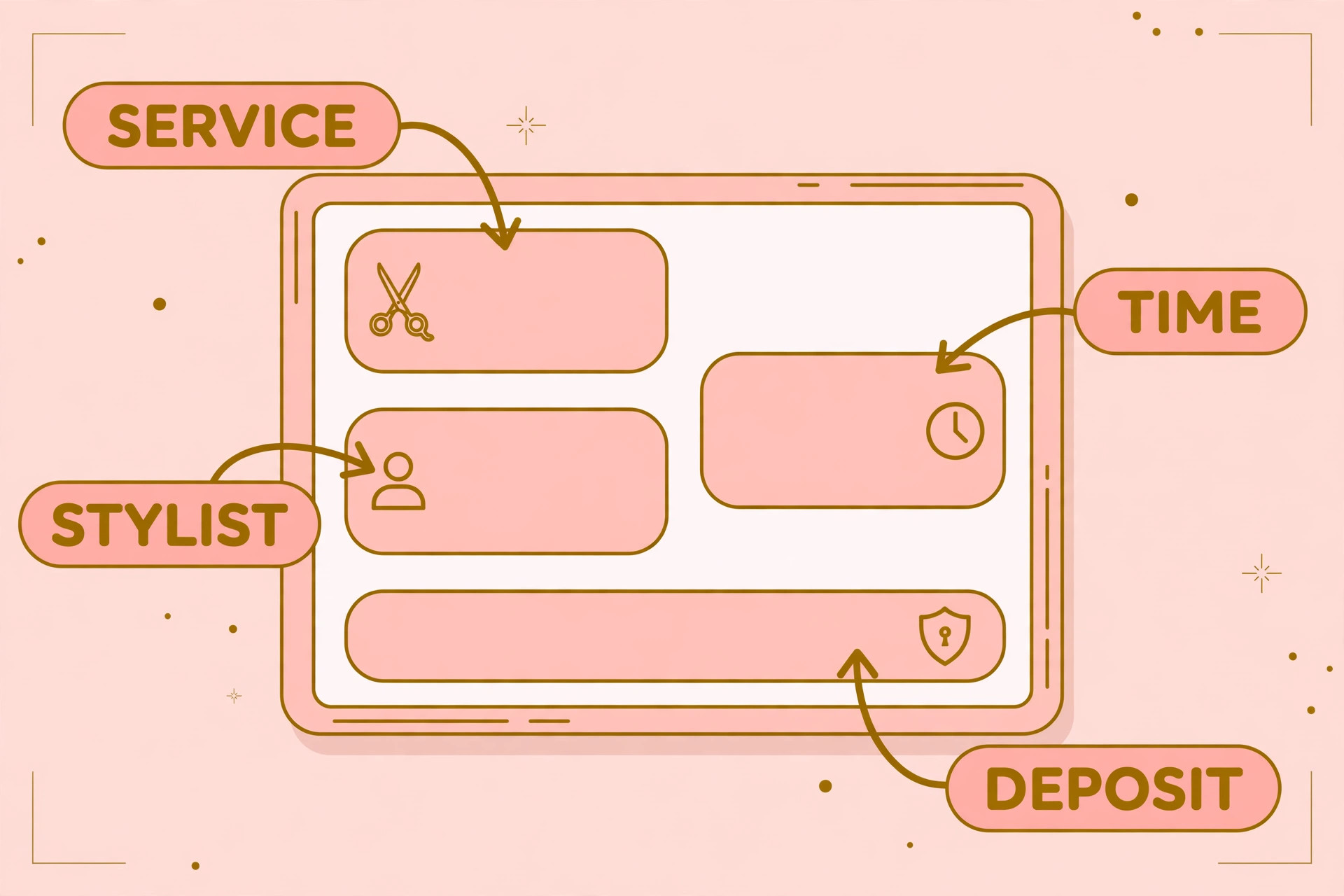
A good booking page answers four questions in under a minute. Which services do you offer and what do they cost. Which stylists are available and when. What deposit or cancellation policy applies. And how does a client pay and confirm. Pages that hide prices, force account creation before showing availability, or bury the deposit policy until checkout lose bookings to salons whose pages answer plainly. GlossGenius wins praise here precisely because its pages look clean and answer those questions fast.
The page must also work for the services salons actually sell, including packages, memberships, and gift cards. A client buying a package of facials or a gift card for a friend should complete that purchase on the same page without calling the salon. Vagaro and Booksy both handle packages and gift cards well, while Square covers gift cards through its broader commerce tools. Test package purchase and gift card redemption in the trial, since those transactions reveal whether the system treats the salon as a service business or as a generic appointment book.
Reminders and deposits deserve equal attention. Automated text reminders reduce no-shows, but reminder timing and wording matter as much as the feature existing. A reminder two days before plus a same day reminder works better than a single message a week ahead, and a deposit policy stated at booking works better than a policy explained after a no-show. Confirm how many texts are included in each plan, since extra message packs become a recurring cost for a busy salon.

The 5 Tools in Detail
1. Fresha
Fresha is a beauty and wellness booking platform with a large marketplace, and its appeal is discovery. Clients find salons through the Fresha marketplace, book online, and pay through the platform, while salons manage calendars, staff, payments, and marketing in one system. Third party comparisons report 35 million or more appointments booked monthly through the marketplace, which is a real acquisition channel for a new or growing salon.

Pricing is 19 dollars and 95 cents per month for an independent location and 14 dollars and 95 cents per team member per location on team plans, with in-person processing reported at 2 dollars and 29 cents per hundred plus 20 cents, so check the vendor pricing page for current rates. The cost that matters most is the one-time 20 percent commission, with a 6 dollar minimum, on new clients who arrive through the marketplace. A salon gaining many marketplace clients should model that commission monthly, since it can exceed the subscription several times over.
Fresha fits salons that need new clients more than they need cost predictability, especially nail salons and new hair salons in competitive areas. It fits poorly for a salon whose chairs already fill from referrals and repeats, since those owners pay the subscription and gain little from discovery. Fresha also ended its earlier subscription free model in 2025, so do not budget on old free plan articles. Confirm the current plan, processing, and commission terms in writing before launch.
2. Vagaro
Vagaro is the all in one salon, spa, and wellness platform in this guide, covering booking, point of sale, customer records, marketing, payroll reports, and a business app in one price. Its strength is breadth without a marketplace commission, which makes the monthly bill predictable as the salon grows. A multi-staff salon can run calendars, retail, packages, memberships, and marketing from one login instead of stitching three tools together.
Pricing is 30 dollars per month for one bookable calendar, with a promotional 23 dollars and 99 cents for the first six months reported in 2026 comparisons, plus 10 dollars per extra calendar up to seven, so check the vendor pricing page for the current promotion. Processing is reported at 2 dollars and 60 cents per hundred plus 10 cents for smaller merchants through Vagaro merchant services, with lower rates at higher volume. That per calendar shape caps costs around 84 dollars for seven or more calendars, which is why mid-size salons find Vagaro predictable.
Vagaro fits hair salons and multi-service salons with three to seven chairs that want one system for everything. The trade off is a busier interface than GlossGenius, since breadth brings menus and settings that take longer to learn. Give staff a full trial week on real bookings before judging it, and confirm which marketing and payroll features sit in the base plan versus add-ons. For a salon that values one predictable bill over a beautiful page alone, Vagaro is the strongest all-rounder here.
3. Booksy
Booksy pairs salon booking software with a consumer marketplace of tens of millions of users, and its pitch is new client discovery plus full business management. Salons get online booking, calendars, payments, marketing messages, reminders, gift cards, and memberships, with clients discovering the salon through the Booksy app. That combination appeals to independent stylists and small salons that want both software and a stream of new bookings.
Pricing is 29 dollars and 99 cents per month plus tax for a solo plan, plus 20 dollars per extra team member, with in-person processing reported at 2 dollars and 49 cents per hundred plus 10 cents on the Booksy card reader, so check the vendor pricing page for current rates. The optional Boost program charges a one-time 30 percent fee on a new client’s first visit, up to 100 dollars, which is the line to model carefully. A salon using Boost heavily can pay far more in commissions than in subscription, while a salon that keeps Boost off pays a straightforward per chair fee.
Booksy fits stylists and barbers with an established book who want marketplace reach on demand, and nail salons that thrive on same day discovery. It fits less well for a salon that wants a single flat bill with no commission logic to manage. Test the marketplace quality in your area during the trial, since discovery value depends entirely on local client volume, and a marketplace with few local users adds cost without bookings.
4. GlossGenius
GlossGenius, rebranded in part as Genius AI in 2026 comparisons, is the polished booking and payments platform for solo stylists and small teams. Its booking pages look premium, its checkout is fast, and its pricing is deliberately simple, with one subscription and a flat processing rate and no marketplace commission to calculate. That clarity is the product, and it shows in every part of the experience, from setup to client payment.
Pricing is 24 dollars per month billed annually, or 28 dollars monthly, for Standard plans covering up to two users, with team plans at 48 dollars billed annually for up to nine staff and 148 dollars for teams of ten or more reported in 2026 comparisons, so check the vendor pricing page for current tiers. Processing is reported at 2 dollars and 40 cents per hundred plus 15 cents in person, with online invoicing higher. That flat shape makes a small salon bill easy to forecast, which owners value when margins are tight.
GlossGenius fits solo stylists, booth renters, and small teams that want a beautiful page and a predictable bill above all else. The trade off is that advanced features sit on higher tiers, so a growing multi-service salon should confirm which reports, team tools, and marketing features its tier includes. For a two to nine person salon that judges software by client experience first, GlossGenius is the easiest recommendation in this guide.
5. Square Appointments
Square Appointments is the booking layer for salons already running Square hardware and payments, and its headline advantage is a free tier that a solo operator can genuinely use. Individual booking pages, calendar management, reminders, and card payments come from the same Square account that runs the counter, so a new salon avoids a second vendor, a second payout schedule, and a second support line. That simplicity is worth real money in the first year.
Pricing starts at zero for the free tier, with paid Plus tiers reported from 49 dollars per month in third party guides, so check the vendor pricing page for current plan limits and processing rates. Square has no marketplace, which means no discovery commission, but also no new client stream beyond your own marketing. A salon that fills chairs from Instagram, referrals, and walk-ins will not miss the marketplace, while a new salon in a crowded market may need paid discovery elsewhere.
Square fits solo operators, booth renters, and small salons already on Square who want booking without a new subscription. It fits poorly for a multi-service salon that needs deep salon workflow such as stylist levels, colour timing rules, package management, and advanced marketing in one place. Judge Square on the trial with your hardest services, not your simplest cuts, and confirm which features move behind the paid tier before you grow into them.
The Total Monthly Cost, Worked Honestly
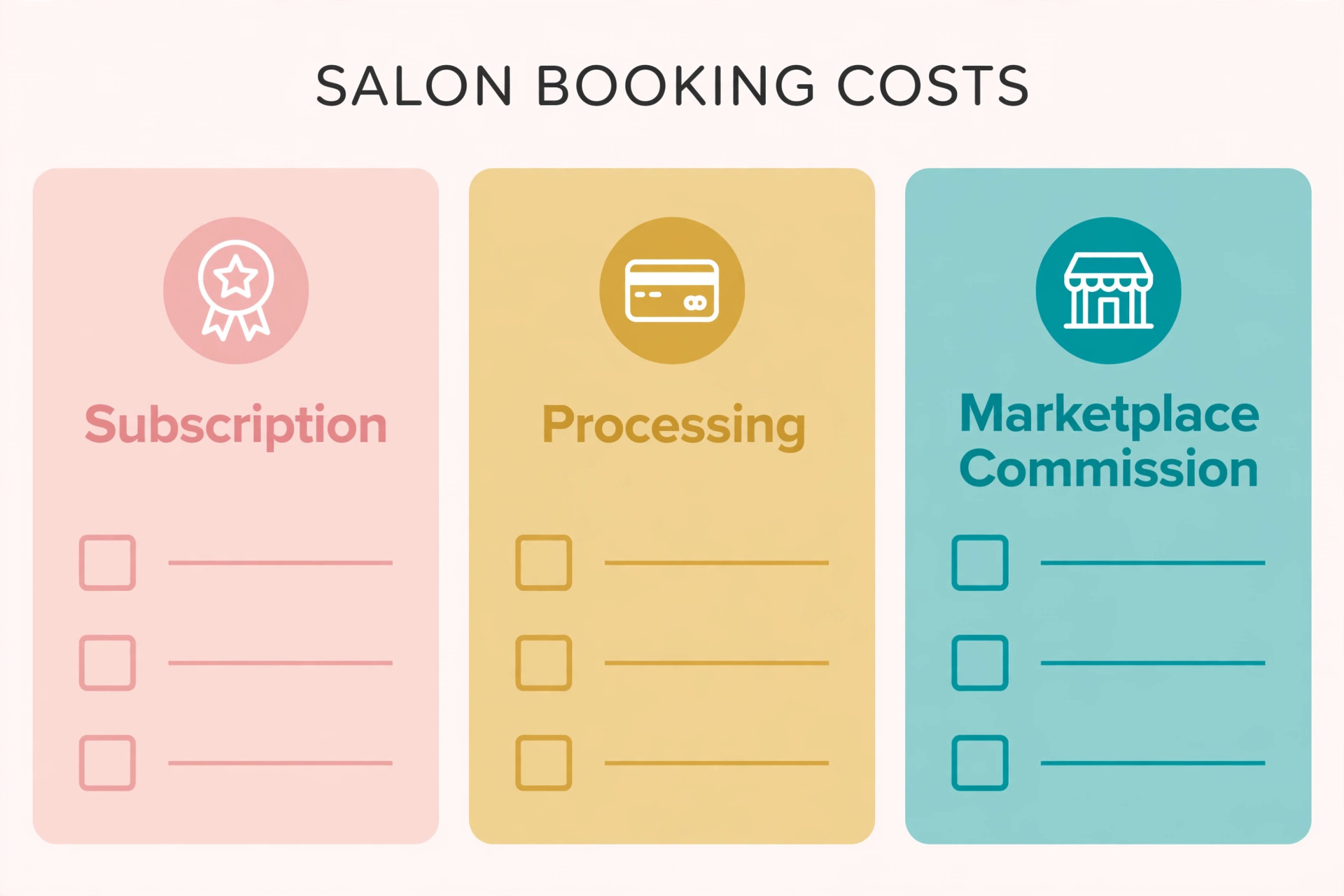
A salon bill has four parts, and comparing subscriptions alone hides three of them. The subscription is the smallest part for most salons. Processing fees apply to every card payment and scale with ticket size and volume. Marketplace commissions apply to new clients from Fresha and Booksy Boost, and they scale with acquisition. Add-ons for texts, forms, and marketing sit on top, at 10 to 55 dollars per month each in third party estimates.
Work an example with real numbers. A four chair salon with an 80 dollar average ticket, 400 appointments a month, and 30 new marketplace clients faces very different totals across these tools. On Fresha, commission alone on those new clients runs into hundreds of dollars before the subscription is counted. On Vagaro or GlossGenius, the same month costs a flat subscription plus processing, with no commission line at all. That is why third party comparisons rank these tools by total cost of ownership rather than sticker price, and why your own new client count is the most important input.
The practical rule is simple. If new clients come mainly from referrals, repeats, and your own social pages, choose a flat priced tool and keep the commission at zero. If new clients come mainly from a marketplace because you are new or in a saturated area, accept the commission as an acquisition cost and measure it against the lifetime value of a retained client. A marketplace client who returns six times a year is worth the first visit commission. A marketplace client who visits once and never returns is not, and that retention rate should decide whether you keep discovery on.

Mistakes Salons Make When Switching Systems
The first mistake is switching during a busy season without a parallel run. Staff learn the new calendar while serving a full book, old appointments sit in the old system, and clients receive reminders from both. Run both systems for two weeks, move new bookings only to the new system, and keep the old calendar visible until every old appointment has passed. A quiet switch week costs far less than a month of double bookings.
The second mistake is importing a messy client list without cleaning it. Duplicate records, missing phone numbers, and outdated service history make reminders fail and rebooking prompts miss. Clean the list before import, merge duplicates, and confirm mobile numbers for your top hundred clients personally. A system is only as good as the client data it reminds, and a clean import pays off every week after launch.
The third mistake is setting no deposit policy on day one and adding it later after a run of no-shows. Clients accept a deposit policy stated at booking far more readily than a policy introduced after they have booked freely for months. Set deposits and cancellation terms before the first new booking, state them on the booking page, and train staff to explain them once, kindly, at checkout. The policy protects stylist income, and stylists who trust the policy stay longer.

Setup Checklist
Use this checklist when you move a salon to new booking software, and keep a copy at the front desk.
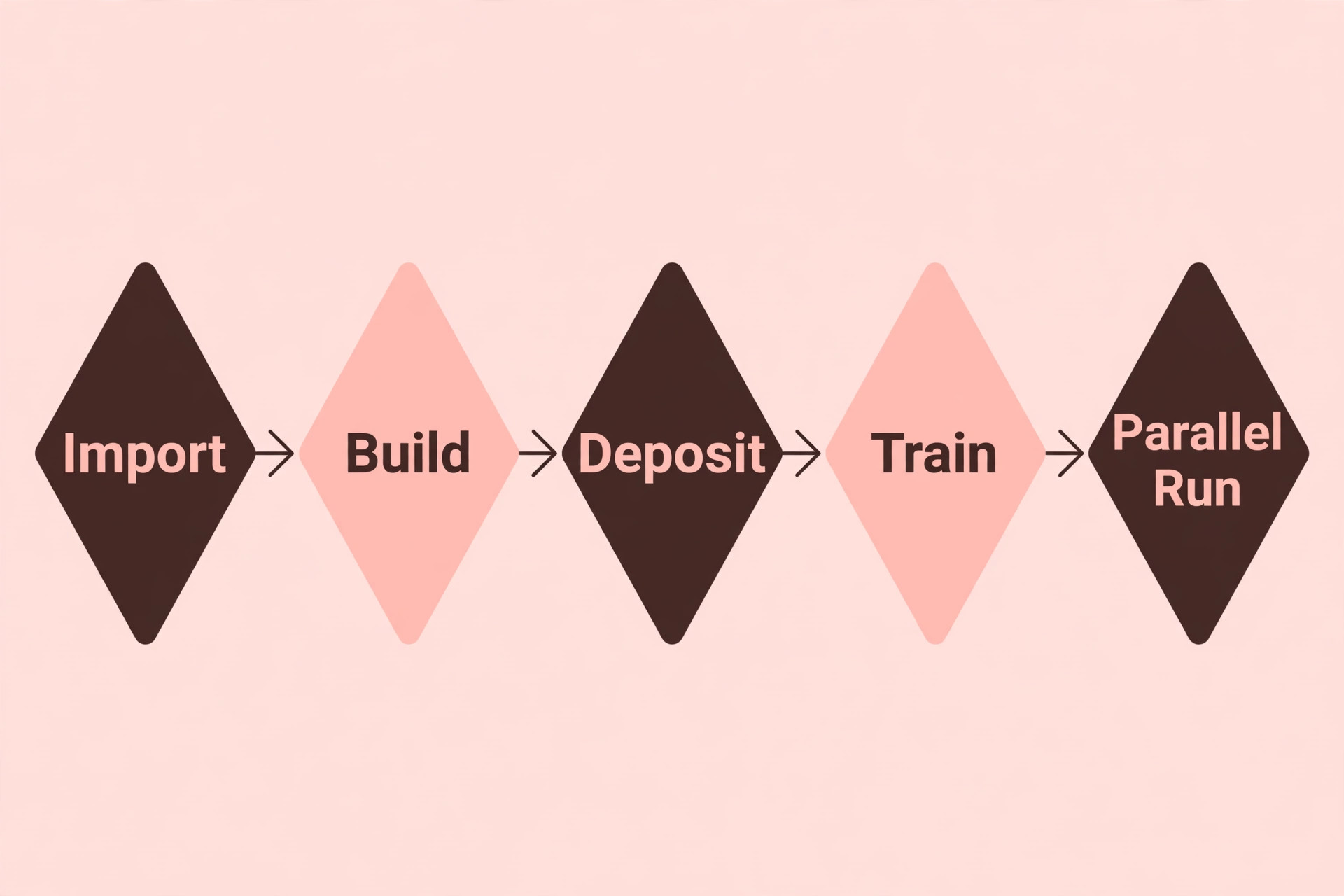
1. Import and clean the client list, merging duplicates and confirming mobile numbers for regulars. 2. Build every service with correct duration, buffer, price, and staff skill requirement. 3. Set deposits, card on file rules, and cancellation terms before taking the first new booking. 4. Connect payments, test a deposit, a refund, and a package purchase end to end. 5. Turn on reminders with a two day and same day schedule, and confirm text allowances. 6. Train every stylist on their own calendar, rebooking prompts, and client notes. 7. Run both old and new systems for two weeks until all old appointments have passed. 8. Review no-show rate, rebooking rate, and new client cost monthly for the first quarter.
Related Guides
Keep exploring with these guides on Stratilyze:
- Best Booking Software for Tanning Salons (8 Tools)
- Best Booking Software for Nail Salons (11 Tools)
- Best Booking Software for Business Coaches (14 Tools)
Frequently Asked Questions
What is the cheapest booking software for a solo stylist?
Square Appointments at zero cost is the cheapest credible start for a solo operator, especially one already on Square. GlossGenius at 24 dollars per month billed annually is the cheapest polished option with a flat processing rate and no commission. Fresha at 19 dollars and 95 cents looks cheaper until marketplace commission on new clients is added, so compare total cost at your real new client count rather than subscription alone.
Do Fresha and Booksy marketplace fees apply to all my clients?
No, and that distinction matters. Fresha commission applies to new clients who arrive through its marketplace, not to your existing clients or direct bookings. Booksy Boost commission applies only when you use Boost for new clients, not to standard plan bookings. A salon that fills chairs from repeats and referrals can therefore run either tool with little or no commission, while a salon leaning on discovery should budget the commission as an acquisition cost.
How do deposits reduce no-shows in a salon?
Deposits change the booking from a vague intention into a paid commitment, and clients who have paid show up far more reliably. Card on file has a similar effect, since the cancellation policy becomes enforceable without a confrontation. The key is stating the policy at booking, in plain language on the booking page, so clients agree before they book rather than learning about it after they cancel.
Can booking software handle hair colour timing and multi-provider visits?
The stronger tools can, but test your exact services rather than trusting a feature list. Vagaro and Booksy handle service duration, buffers, and staff assignment well in most salon setups, while GlossGenius covers standard multi-service booking cleanly. Book a colour with processing time and a two-provider visit in the trial, and watch whether chairs, buffers, and staff calendars all block correctly before you commit.
Should a multi-service salon use one system or one per service?
One system, in almost every case. Separate systems for hair, nails, and skin create separate client records, separate reminders, and a checkout that cannot sell a package across services. Vagaro breadth fits that single system job best in this guide. The exception is a salon with a genuinely separate business, such as a distinct med spa unit, which may need its own compliance and intake workflow.
How long does it take to switch salon booking software?
Plan two to four weeks from import to full cutover, including a two week parallel run. Data cleaning takes longer than software setup for most salons, and staff training on real bookings takes longer than a demo call suggests. The best booking software for beauty salons still fails when the client list is messy and staff have had one rushed training session, so budget time for both before launch day.
A Final Word Before You Choose
There is no universal winner among these five, because the right tool follows how your salon wins clients and fills chairs. A solo stylist who wants beauty and predictability should start with GlossGenius or Square. A multi-staff salon that wants breadth and a capped bill should start with Vagaro. A salon that needs new clients fast should start with Fresha or Booksy, with eyes open on commission, and measure retention on every marketplace client.
Whichever you choose, test your hardest services, model the total monthly cost at your real chair and client numbers, and set deposits before the first booking. A booking system earns its fee in quiet Tuesdays filled, no-shows reduced, and rebookings secured at checkout. Choose the system that does those three jobs on your busiest Saturday, and the rest of the feature list will take care of itself.