

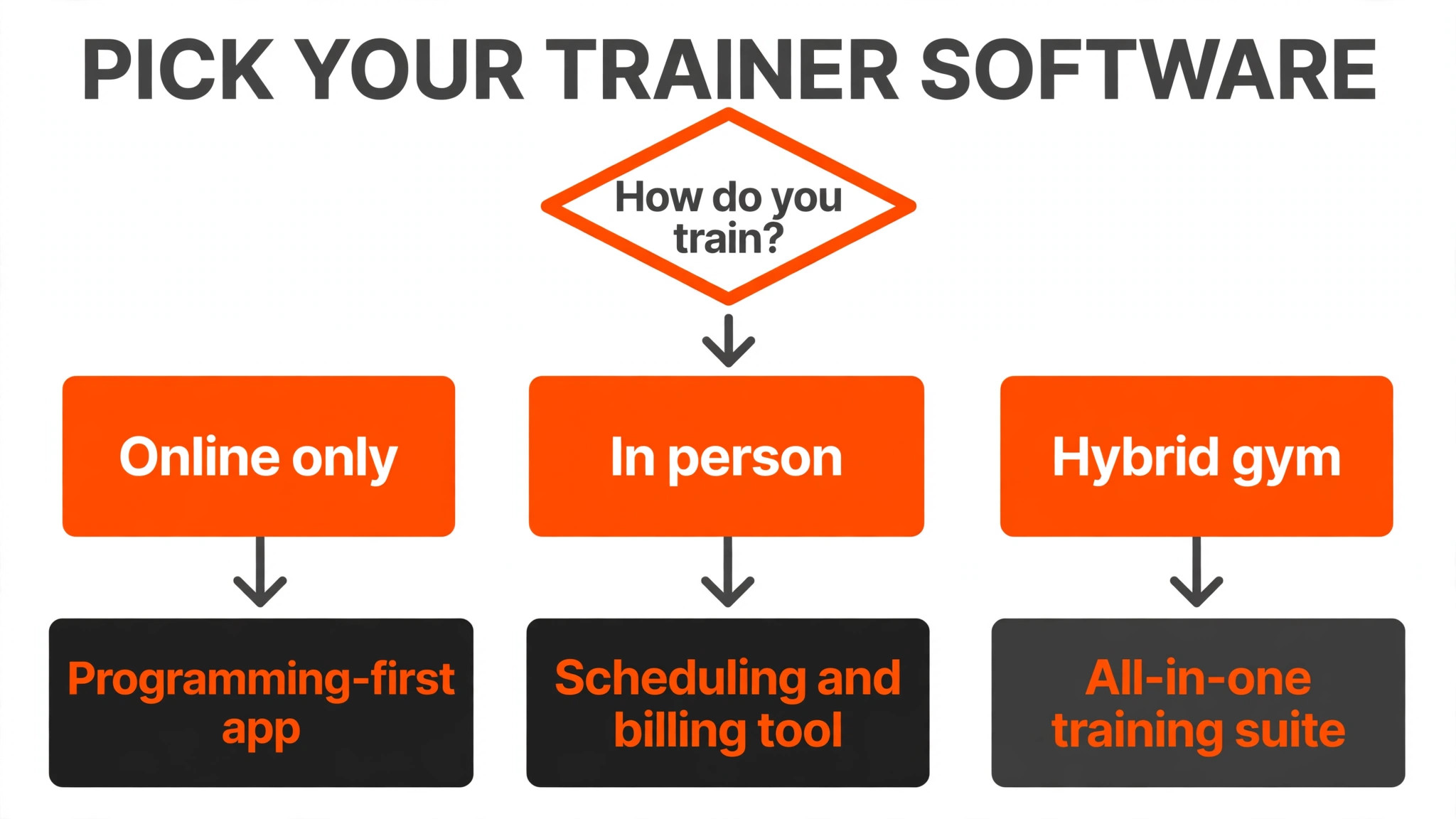
At 50 clients, the same coaching business pays anywhere from 39 dollars to 165 dollars a month depending on the platform it chose. That spread is the first thing to understand about the best software for personal trainers, because these tools do not charge by the same logic. Some charge by client count, some charge a flat monthly rate, and some charge almost nothing at five clients and steeply more at fifty. The tool that is cheapest on day one is rarely the cheapest at fifty clients, and the tool that looks expensive at five clients can be the cheapest at a hundred.
A personal trainer platform has to cover four jobs at once. The first is programming, with workout builders, exercise libraries, and progress tracking that clients can follow in an app. The second is communication, with messaging, check-ins, and habit tracking that keep clients engaged between sessions. The third is scheduling and payments, because sessions must be booked and paid without chasing. The fourth is the business layer, with client management, reporting, and a branded app that makes the coaching feel professional.
This guide compares 11 platforms across programming, communication, scheduling, payments, and total cost. Prices come from vendor pages and recent published comparisons, checked in October 2026, and they change often, so check the vendor pricing page before you sign. Test each shortlisted tool with a real client journey, including a program build, a check-in, and a payment, because those three cases reveal more than any demo.
Why the best software for personal trainers earns its fee
A trainer platform earns its fee in three places. First, it delivers programs clients actually follow, through a polished client app, clear workout videos, and progress tracking that shows results. Second, it keeps clients paying, through automated billing, package sales, and reminders that reduce missed payments and no-shows. Third, it saves hours every week, through program templates, automated check-ins, and messaging that replaces the spreadsheet and the group chat. Judge every platform on those three returns, not on its feature list alone.
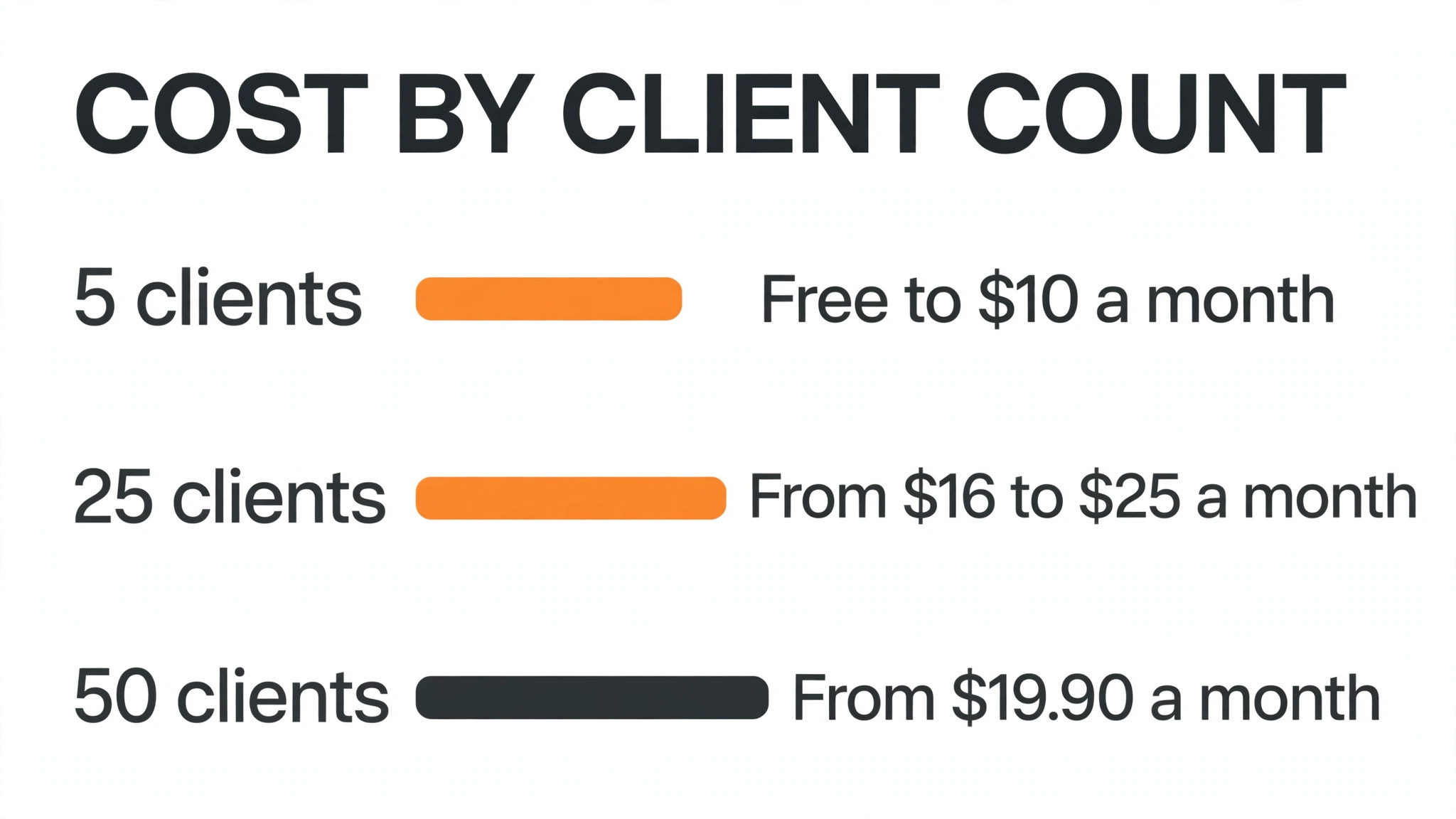
The second thing to judge is fit by training model. An in-person trainer needs scheduling, session packs, and payments above all else. An online coach needs programming depth, habit tracking, and a client app that carries the brand. A gym-employed trainer needs a tool that works inside the gym system, with class booking and member management alongside personal training. The best pick changes with that mix, and the tables below sort the 11 tools by those jobs before the detailed sections begin.
The 11 tools at a glance
Use this table to shortlist three tools, then read only those full sections in detail. Price notes are starting points from published sources, and the vendor pricing page is the final word.
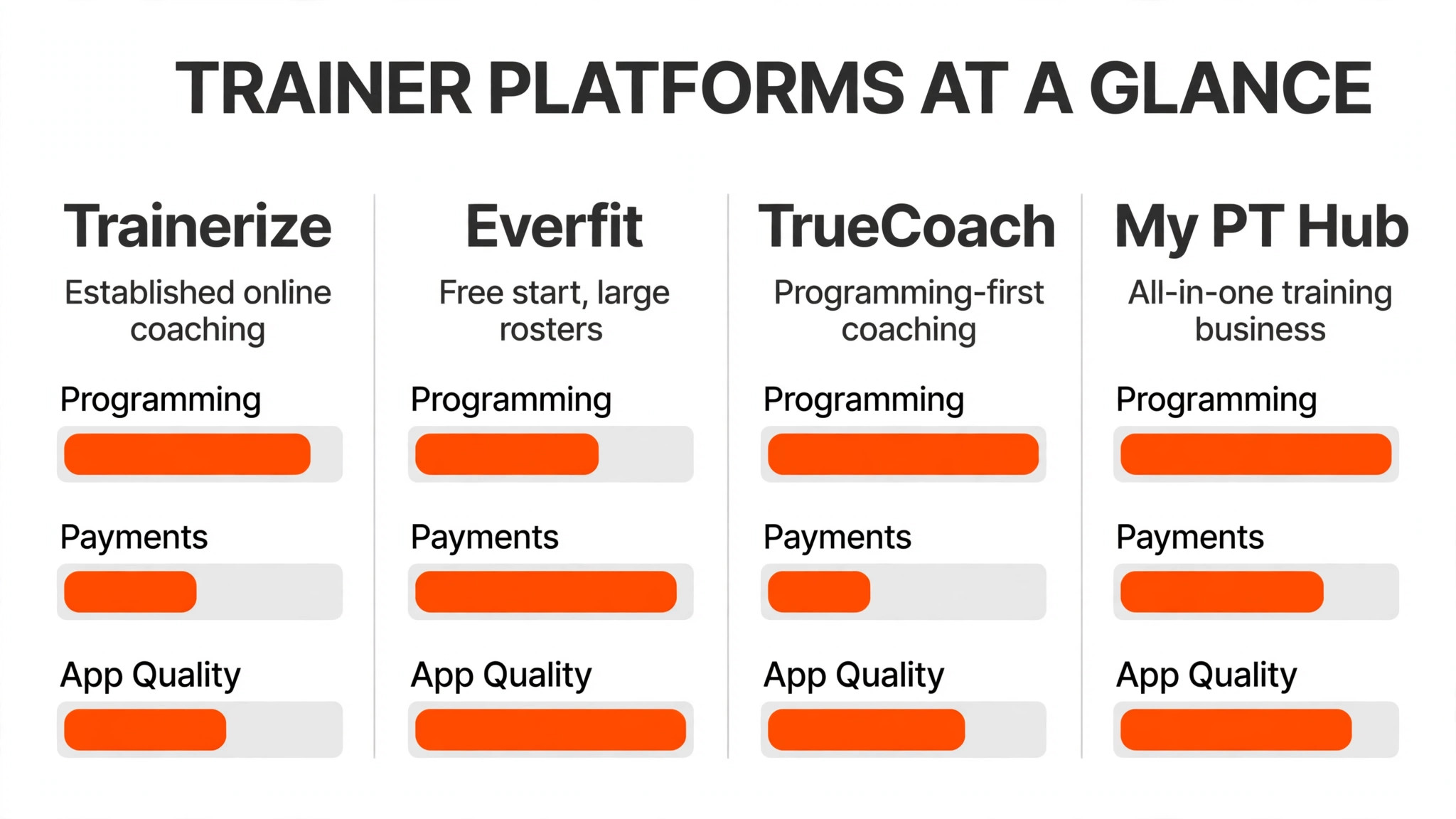
| Tool | Main job | Starting point | Watch out for |
|---|---|---|---|
| Trainerize | Established online coaching | From 10 dollars a month | Older listings report 19.99 dollars a month |
| Everfit | Free start, large rosters | Free 5 clients, Pro from 16 dollars a month | Some listings report 19 dollars a month |
| TrueCoach | Programming-first coaching | Starter from 19.99 dollars a month, billed yearly | 5 percent fee on card transactions |
| PTminder | In-person scheduling and billing | From 40 dollars a month in some guides | Other 2026 guides list 75 dollars a month |
| My PT Hub | All-in-one training business | From 25 dollars a month | Branded app costs extra |
| FitSW | Simple training management | Check the vendor pricing page | Pricing is not widely published |
| Virtuagym | Gym and club management | Quote based, check the vendor pricing page | Built for gyms, not solo trainers |
| Exercise.com | Custom branded fitness apps | Quote based, check the vendor pricing page | Enterprise pricing, demo first |
| PT Distinction | All features on every plan | From 19.90 dollars a month | Branded app starts on Pro |
| Hevy Coach | Strength coaching on Hevy | From 25 dollars a month | Strength focused, less for general fitness |
| TrainerFu | Online coaching and payments | From 29 dollars a month | Smaller vendor, fewer integrations |
Best pick by job
The table below names a lead pick for each segment in this guide, with a second option worth testing. Test the lead pick with a real client before signing.
| Segment | Lead pick | Also test | Why it fits |
|---|---|---|---|
| In-person trainers | PTminder | My PT Hub | Scheduling, session packs, and payments suit in-person work |
| Online coaches | TrueCoach | Trainerize | Programming depth and wearable data suit online coaching |
| Gym-employed trainers | Virtuagym | Everfit | Gym systems and class booking suit employed trainers |
In-person trainers need scheduling and payments above all else. PTminder bundles session booking, package sales, and payments in one login, while My PT Hub adds workout delivery and a branded app at a flat price. A trainer who coaches on the gym floor will feel the difference in the first week.
Online coaches need a different strength. Programming depth, habit tracking, and a client app that carries the brand matter more than a booking calendar. TrueCoach leads on programming and wearable integrations, while Trainerize adds habit and nutrition coaching with a polished client app. Neither tool forces a gym workflow onto a business built around remote clients.
Gym-employed trainers need a tool that works inside the gym system. Virtuagym covers member management, class booking, and personal training in one platform built for clubs, while Everfit gives a free start and a strong client app for a trainer who also coaches online. The right choice depends on whether the gym system or the personal coaching app matters more for your next client.
The 11 tools in detail
Each section below judges the tool on the jobs trainers actually run, not only on workout delivery, so you can see where the best software for personal trainers earns its price and where it does not.
1. Trainerize
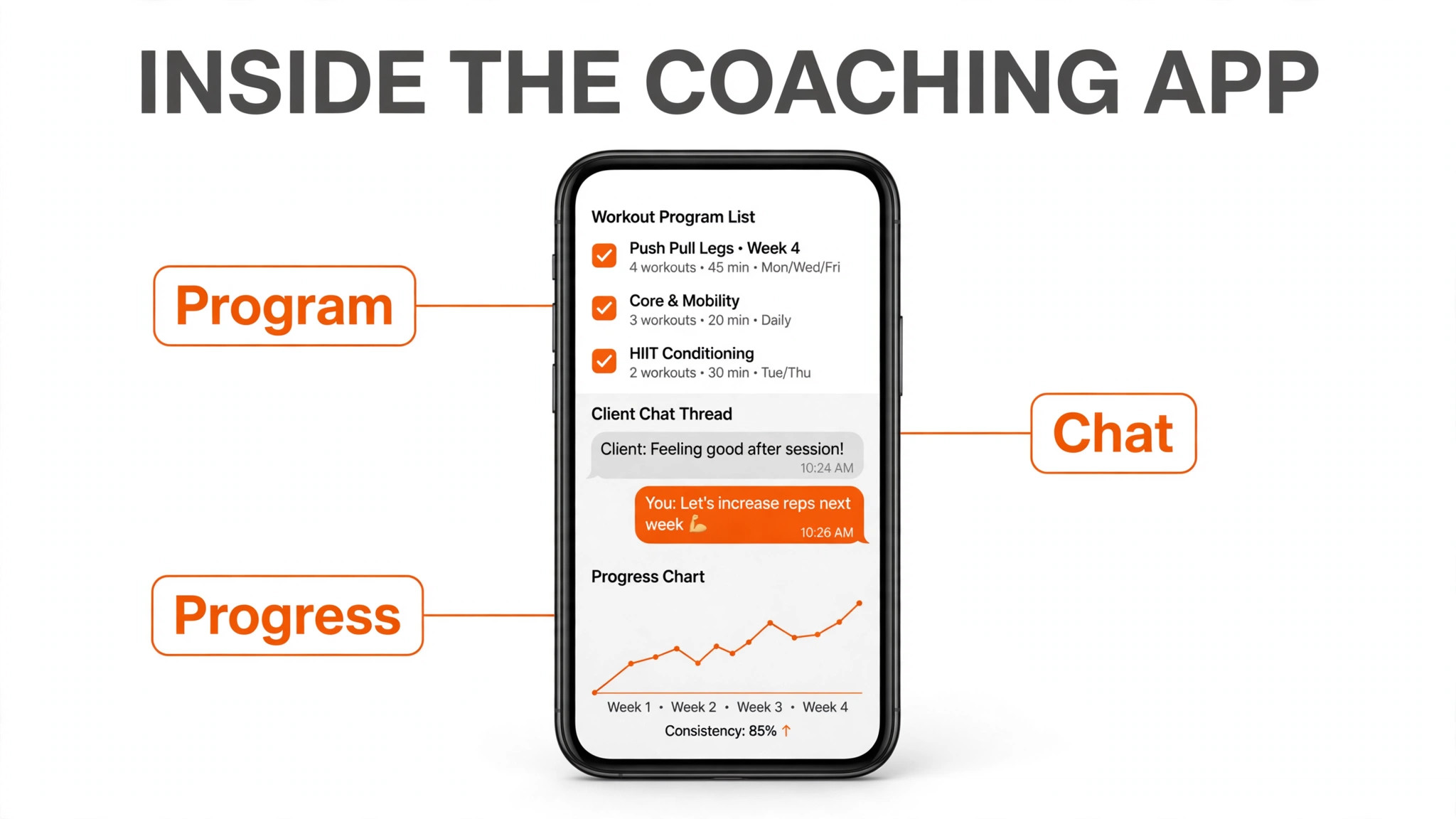
Trainerize, now ABC Trainerize after joining ABC Fitness, is the established name in online personal training software. It covers workout delivery, habit and nutrition coaching, in-app messaging, and client progress tracking, with a client app polished enough to carry your brand. The exercise library is deep, the programming tools are flexible, and the app experience is the reason so many online coaches chose it first and stayed.

Pricing is the flag to watch. Current published comparisons from October 2026 report Trainerize from 10 dollars a month for the Grow plan, covering 2 coaching clients, with a free plan for 1 client. Older listings report 19.99 dollars a month billed annually for a Starter plan covering 5 clients, which conflicts with the current figure, so use the 10 dollar figure and check the vendor pricing page.
Add-ons are the second cost to watch. Payments cost 10 dollars a month extra, advanced nutrition runs 20 to 45 dollars a month, and a logo-branded app costs a 169 dollar one-time fee. Trainerize suits hybrid coaches and studios who want an established platform. A new online coach should compare Everfit, which starts free for 5 clients.
2. Everfit
Everfit offers the most generous free entry in this list, which is why so many new online coaches start here. The free Starter plan covers 5 clients with workout plans, food logs, and messaging, and paid plans scale gradually as the roster grows. The program builder is strong, the food journal and macro tracking are built in, and the client app looks modern without any branding work from the coach.
Pricing starts free for 5 clients, with Pro from 16 dollars a month billed annually in some published comparisons and 19 dollars a month in others, so check the vendor pricing page for the current rate. At 10 clients Everfit costs about 29 dollars a month, at 25 about 75 dollars, and at 50 about 95 dollars, which keeps it among the cheapest options at every roster size. Add-ons cost extra, with payments from 9 dollars a month, meal plans from 39 dollars, and automation from 29 dollars. Everfit suits new online coaches who want to start free and upgrade gradually. A coach who needs deep wearable data should compare TrueCoach.
3. TrueCoach
TrueCoach fits 1 to 1 online coaches best, with deep wearable integrations and simple, strong programming. The workout builder is fast, the client chat and check-in flow is clean, and progress photos and metrics sit alongside the program so the coach can see what is working. It is a programming-first tool, and it shows in every screen, because the program is the product and everything else supports it.
Pricing starts at 19.99 dollars a month billed annually for Starter, covering 5 active clients, or 29.98 dollars a month on monthly billing. Standard costs about 69.98 dollars a month for 10 clients, and Pro costs about 164.98 dollars a month for 25 to 50 clients, which makes TrueCoach one of the most expensive options at scale. The second cost to watch is the 5 percent platform fee on every card transaction, which applies in the US, UK, Australia, and Canada and sits on top of Stripe fees. TrueCoach suits programming-focused online coaches with a small roster. A coach with fifty clients should price the total against Everfit or My PT Hub before committing.
4. PTminder
PTminder bundles scheduling, payments, and workout delivery in one place, which suits trainers who coach in person and online. It covers session booking, package sales, payment processing, workout programming, and client management, with support for up to 20 staff on its plans. For an in-person trainer or a small studio, that combination replaces a booking tool, a payment tool, and a programming tool with one login.
Pricing is the flag to watch, because published 2026 guides disagree. One comparison reports PTminder from 40 dollars a month with a 14-day free trial and no permanent free tier, while another guide refreshed in October 2026 lists 75 dollars a month for a plan covering 0 to 50 active and lead clients with 20 staff. The difference likely reflects different plans or a price change, so check the vendor pricing page for the current rate before budgeting. A branded app costs 40 dollars a month extra. PTminder suits in-person trainers and small studios. An online-only coach should compare TrueCoach or Everfit, which lead on programming depth.
5. My PT Hub
My PT Hub is the flat-price all-in-one in this list, covering scheduling, payments, workout delivery, nutrition, and client management in one subscription. The flat model is the selling point, because the price does not rise with every new client the way per-client tools do. At 10 clients it costs about 59 dollars a month on Premium, at 25 the same 59 dollars, and at 50 still 59 dollars, which makes it one of the cheapest options for a growing roster.
Pricing runs from 25 dollars a month to 215 dollars a month depending on the subscription level, with Premium at 59 dollars a month as the most commonly reported flat rate. A custom branded app costs a 95 dollar one-time fee, and a white-label app costs 145 dollars a month extra, so check the app pricing before budgeting. My PT Hub suits trainers who want one flat price and a full feature set. A coach who needs the deepest programming tools should compare TrueCoach, and a coach who wants the cheapest start should compare Everfit.
6. FitSW
FitSW is a simple training management platform covering workout programming, client tracking, scheduling, and payments in a straightforward package. It suits a trainer who wants the core jobs handled cleanly without the complexity of a large platform, and its interface is easy to learn, which matters when the coach is the only person running the system. The exercise library and program templates cover the daily programming work without extra layers.
Pricing is not widely published in 2026 comparisons, so check the vendor pricing page for the current rate before budgeting. That lack of published pricing is a real drawback against Trainerize, Everfit, and TrueCoach, all of which publish clear rates. FitSW suits a trainer who wants simple, functional software and is willing to ask for a quote. A trainer who wants to compare prices before a sales call should start with the published-price tools in this list, and a trainer who needs deep integrations should compare Trainerize first.
7. Virtuagym
Virtuagym is a gym and club management platform, and it earns its place here for gym-employed trainers who need to work inside the gym system. It covers member management, class booking, personal training, workout delivery, and nutrition coaching in one platform built for clubs and studios. A trainer employed by a gym can manage personal training clients, book classes, and track members without leaving the system the gym already runs.
Pricing is quote based, with no published price on the vendor site, so request a quote for your gym size and trainer count. That enterprise positioning fits clubs and multi-location gyms, but it makes Virtuagym a poor fit for a solo trainer, who will find the quote process slow and the price high for a single user. Virtuagym suits gym-employed trainers and club managers. A solo online coach should test Everfit or TrueCoach, which are built for individual coaches and publish clear prices.
8. Exercise.com
Exercise.com builds custom branded fitness apps for gyms, studios, and online coaches, with workout delivery, scheduling, payments, and client management under your own brand. The custom app is the draw, because the client opens an app with your logo and your colors, not a generic platform, which makes a coaching business feel larger and more professional than it is. It also covers e-commerce for programs and supplements, which suits a coach who sells digital products alongside training.
Pricing is quote based and enterprise-oriented, with a demo as the main path to a quote. Expect a sales conversation and a price shaped by client count, app requirements, and support needs. That positioning makes Exercise.com a strong fit for a growing studio or an online coach ready to invest in a custom brand, and a poor fit for a new trainer watching every dollar. A solo coach should test Everfit or Trainerize first, and move to Exercise.com when the brand and the budget justify a custom app.
9. PT Distinction
PT Distinction puts all features on every plan, which is a rare and valuable model in this market. Every tier includes programming, nutrition with an AI meal planner, assessments, progress photos, messaging, and client management, so a coach never hits a paywall for a feature that matters. The only differences between plans are client count and the branded app, which keeps the buying decision simple.
Pricing starts at 19.90 dollars a month for 3 clients, with a one-month trial. Pro costs 59.90 dollars a month and adds branded store apps, and higher tiers run to 89.90 dollars a month for larger rosters. At 10 clients PT Distinction costs about 59.90 dollars a month, at 25 the same, and at 50 about 89.90 dollars, which keeps it competitive with My PT Hub at scale. PT Distinction suits a coach who wants every feature from day one without upgrade anxiety. A coach who wants the cheapest start should compare Everfit, and a coach who needs the deepest wearable data should compare TrueCoach.
10. Hevy Coach
Hevy Coach is the coaching layer on top of Hevy, the popular strength training app, and it suits strength coaches whose clients already track workouts in Hevy. It covers program delivery, client tracking, messaging, and progress monitoring inside an app lifters know and like, which removes the learning curve that comes with a new platform. A strength coach whose clients live in Hevy will get faster adoption here than on any generalist tool.
Pricing runs from 25 dollars a month to 700 dollars a month based on client count in published comparisons, which is a wide range that reflects the per-client model. Check the vendor pricing page for the current tiers, because the rate at your client count is what matters. The strength focus is both the strength and the limit. Hevy Coach is excellent for barbell and strength work and thinner for general fitness, nutrition, and habit coaching. A general fitness coach should compare Trainerize or Everfit, which cover a wider range of training styles.
11. TrainerFu
TrainerFu is an online coaching platform covering workout delivery, client tracking, messaging, and payments in one subscription. It suits a coach who wants a straightforward online coaching tool without the add-on maze of the larger platforms, and its pricing is simple enough to budget without a spreadsheet. The client app is clean, the programming tools cover the daily work, and the payment integration keeps billing inside the same login.
Pricing runs from 29 dollars a month to 250 dollars a month based on client count in published comparisons, with a branded app add-on at 75 dollars a month. Check the vendor pricing page for the current tiers, because TrainerFu pricing is reported less often than the leaders. The smaller size is the trade-off, with fewer integrations and a smaller user community than Trainerize or Everfit. TrainerFu suits a coach who wants simple online coaching at a mid price. A coach who wants the largest community and the most integrations should test Trainerize first.
How to choose trainer software for your coaching model
Start with your client count today and your client count in a year, because that choice filters the best software for personal trainers faster than any feature table. A coach with five clients needs a different tool from a coach with fifty, and the per-client tools in this list punish growth while the flat tools reward it. Write both numbers down, then price each tool at both counts. The cheapest tool at five clients is rarely the cheapest at fifty, and the tool that looks expensive at five can be the cheapest at a hundred.
Next, separate programming from business and judge each on its own. Programming covers the workout builder, the exercise library, progress tracking, and the client app. Business covers scheduling, payments, packages, and reporting. A tool that excels at one and ignores the other is still useful, but only if you have a second tool for the gap and you have priced the pair. The most common mistake in this market is buying a beautiful programming app and discovering that it cannot take a payment.
Finally, test with a real client, not a demo client. Build a full program, send it to a friend, run a check-in, track a habit, and take a payment. That one exercise shows whether the app is easy for clients to follow, whether the check-in flow works, and whether the payment lands cleanly. Ask about contract length, data export, and the branded app cost before signing, because switching platforms later means moving every client program by hand.
What trainer software really costs
The best software for personal trainers costs roughly zero to 35 dollars a month for a handful of clients and 39 to 165 dollars a month at 50 clients, depending on the platform and the add-ons. That range is the whole story, because the pricing model matters more than the headline rate. Per-client tools such as Trainerize, TrueCoach, and Everfit are cheap at 5 clients and expensive at 50, while flat tools such as My PT Hub and PT Distinction stay steady as the roster grows.
Cost per client is the number to compare. At 10 clients, Trainerize costs about 5 dollars per client per month, Everfit about 2.90 dollars, TrueCoach about 7 dollars, and PTminder about 7.50 dollars. At 50 clients, Trainerize drops to about 2.70 dollars per client, Everfit to 1.90 dollars, TrueCoach stays near 3.30 dollars, and PTminder drops to 1.50 dollars. Those figures exclude add-ons, taxes, and processing fees, so use them to compare models, not to set your budget.
Add-ons are the hidden cost to watch. Trainerize charges extra for payments, advanced nutrition, and a branded app. TrueCoach adds a 5 percent platform fee on top of Stripe. Everfit charges extra for payments, meal plans, and automation. A branded app on your own store listing ranges from about 59.90 dollars a month on PT Distinction Pro to 275 dollars a month or more on Trainerize Studio. Price the add-ons you will actually use, not the base plan alone, and get the total in writing before you commit.
Setup checklist for a smooth switch
Use this sequence when you move to the platform you chose, and do not skip the payment test.
- Export your current client list, active programs, and outstanding balances, and clean duplicate client records before import.
- Build your program templates first, including your most-used workout structures, warm-ups, and progressions.
- Set up your package and payment rules next, including session packs, expiry dates, and late payment handling.
- Connect payments and run a test purchase with a real card, then refund it, to confirm the full payment flow.
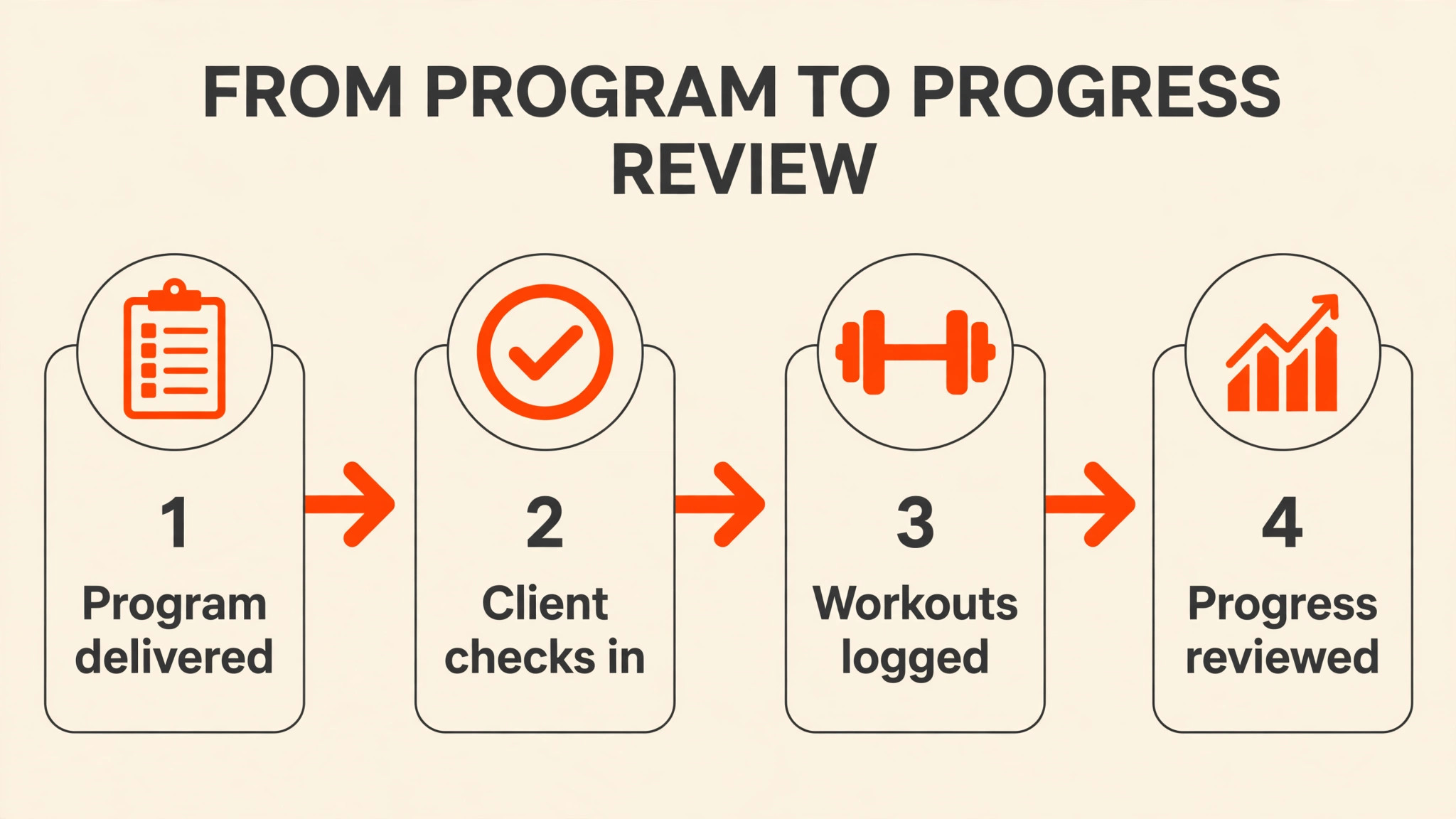
- Build one full client program end to end, including check-ins, habits, and progress photos.
- Invite a small group of current clients to follow a program, check in, and message you in the new app before a full launch.
- Keep the old system read only for one full month, so no program or payment record is lost in the move.
A careful switch protects trust. Clients forgive a new app quickly if programs load fast and payments are correct. They do not forgive a lost program, a double charge, or a check-in that disappears. Test the program and the payment twice, and launch only when both are clean.
Mistakes that cost trainers money
The first mistake when shopping for the best software for personal trainers is choosing by the entry price instead of by the price at fifty clients. A tool that costs 10 dollars a month for 2 clients can cost 135 dollars a month for 50, while a flat 59 dollar tool stays 59 dollars. Model the price at your expected roster in a year, not at your roster today, and check the tier boundaries before signing.
The second mistake is ignoring the add-on trap. Payment processing, nutrition services, personal branding, and in-app video coaching are all paid add-ons on several platforms, and the total can double the headline price. Trainerize is the most commonly cited example, with payments, nutrition, and branding all priced separately. List every add-on you need and price the total before you compare.
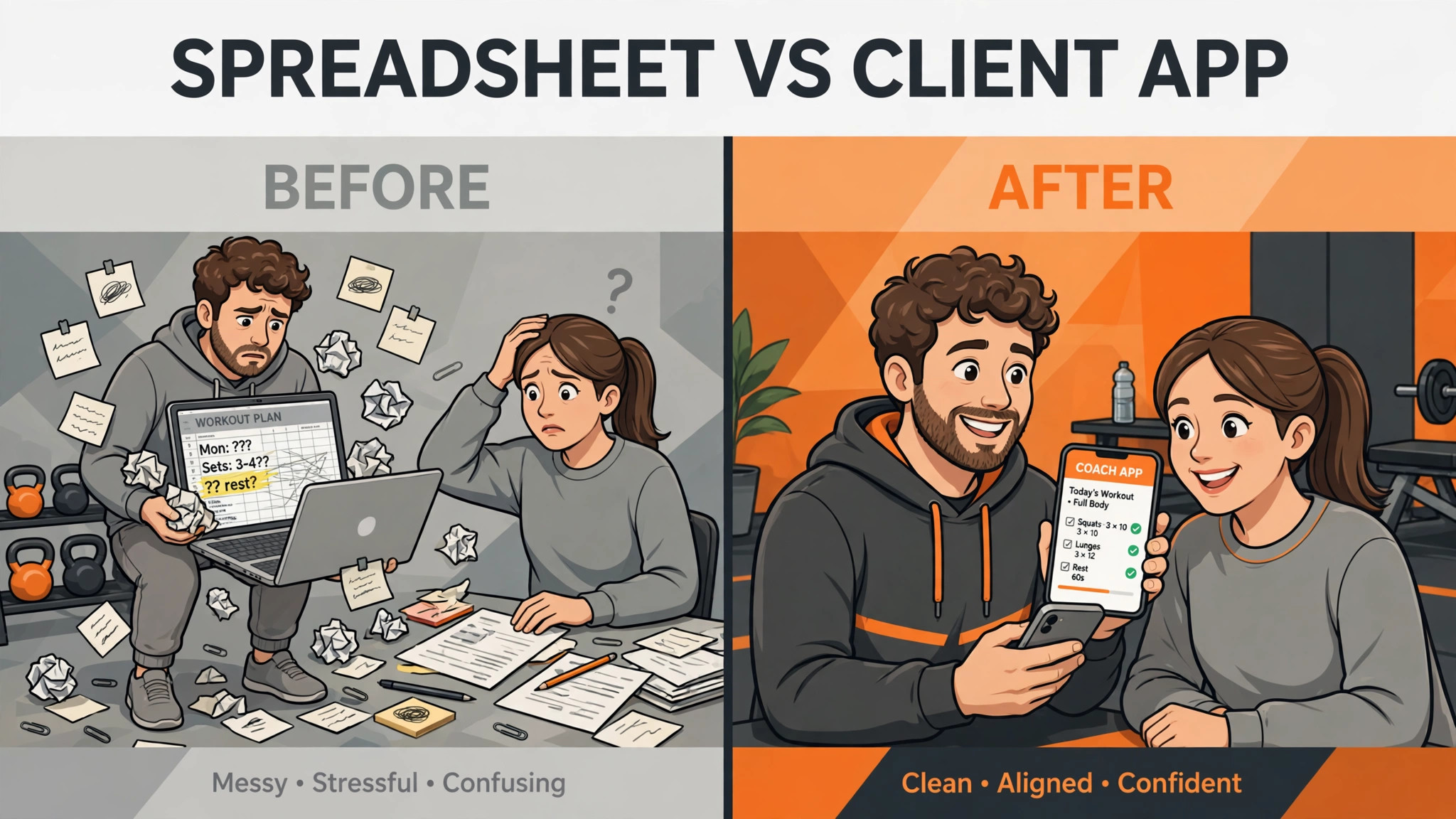
The third mistake is skipping the client app test. The coach sees the dashboard, but the client lives in the app, and an app that is hard to follow will lose clients faster than any pricing problem. Test the app as a client during the trial, including a workout, a check-in, and a message, and judge the platform by the client experience, not the coach dashboard.
The fourth mistake is forgetting the between-session work. Coaching value lives in the check-ins, the habits, the nutrition logs, and the messages, not only in the hour on the gym floor. A tool that handles programming beautifully and ignores habits and messaging will leave you running the real work in a group chat. Judge the platform on the full client journey, not only on the workout builder.
Related Guides
Keep exploring with these guides on Stratilyze:
- How to Separate Business and Personal Expenses as a Small Business
- Track Subscriptions in Google Sheets for Personal Finance
- Track a Personal Budget in Notion
Frequently Asked Questions
How much does the best software for personal trainers cost
For a handful of clients it costs roughly zero to 35 dollars a month, and at 50 clients it costs 39 to 165 dollars a month, depending on the platform and the add-ons. Per-client tools such as TrueCoach and Trainerize rise steeply with roster size, while flat tools such as My PT Hub stay near 59 dollars a month. Add payment processing of about 2.9 percent plus 30 cents per transaction, and any platform fee, before comparing prices.
Which trainer software is free to start
Everfit gives a free Starter plan for 5 clients with workout plans, food logs, and messaging, which is the most generous free plan in this list. Trainerize gives a free plan for 1 client. TrueCoach has no free plan, only a 14-day trial. Start free to test the model, then move to a paid plan when the roster grows past the free limit or when you need payments and branding.
What is the difference between Trainerize and TrueCoach
Trainerize is the established all-rounder, with workout delivery, habit and nutrition coaching, messaging, and a polished client app, starting from 10 dollars a month for 2 clients with add-ons for payments and branding. TrueCoach is the programming-first tool, with deep wearable integrations and simple, strong programming, starting at 19.99 dollars a month billed annually for 5 clients plus a 5 percent card fee. Choose Trainerize for breadth and TrueCoach for programming depth.
Do I need a branded app for my training business
Not at first. A branded app makes the business feel professional and keeps clients inside your brand, but it costs from about 59.90 dollars a month on PT Distinction Pro to 275 dollars a month or more on Trainerize Studio, plus setup fees. Start with the standard client app, and invest in a branded app when the roster and the revenue justify it, not before.
How long does it take to switch trainer software
Most trainers can switch in one to two weeks, including data import, program template setup, payment testing, and client onboarding. Avoid switching in the middle of a program launch, because live clients add pressure to an already busy period. Plan the switch for a quiet gap, and keep the old system read only until the first payment cycle on the new platform is clean.
Should a gym-employed trainer buy their own software
It depends on what the gym provides. If the gym runs Virtuagym or a similar system with class booking and member management, use it, because it already holds your clients. If the gym system is thin on personal training, a personal tool such as Everfit or PTminder can run alongside it for programming and payments. Check what the gym system already covers before paying for a second subscription.
The decision for personal trainers
In-person trainers looking for the best software for personal trainers should test PTminder first, with My PT Hub as the flat-price alternative. Online coaches should test TrueCoach first, with Trainerize as the established alternative. Gym-employed trainers should test Virtuagym first, with Everfit as the free-start alternative. In every case, the deciding test is a real program, a real check-in, and a real payment, plus a price modelled at fifty clients rather than five. The platform that handles that chain cleanly, at a written total cost you can defend, is the right buy for your training business.