
Therapists finish treating patients, then spend the evening finishing notes. That is the problem this guide starts from, and it is not a minor inefficiency. When documentation drags past clinic hours, therapists burn out, notes get thinner, and the clinic starts losing claims to errors that a better system would have caught during the visit. Add Medicare rules, visit caps, progress note deadlines and home exercise adherence, and the software choice becomes a clinical decision, not an administrative one. This guide to the best software for physical therapy clinics judges every tool on whether it shortens the note, protects the claim and keeps patients doing their exercises between visits.
Physical therapy software sits in a crowded middle ground. General medical records are too broad, scheduling tools are too thin, and billing tools do not understand therapy at all. A good PT system combines defensible documentation, scheduling, billing and a home exercise program in one record, so the therapist never retypes the plan of care in three places. The thirteen tools below were judged on those four jobs, plus the price at a realistic provider count, because a tool that does three jobs brilliantly and fumbles billing will still cost the clinic money every month.
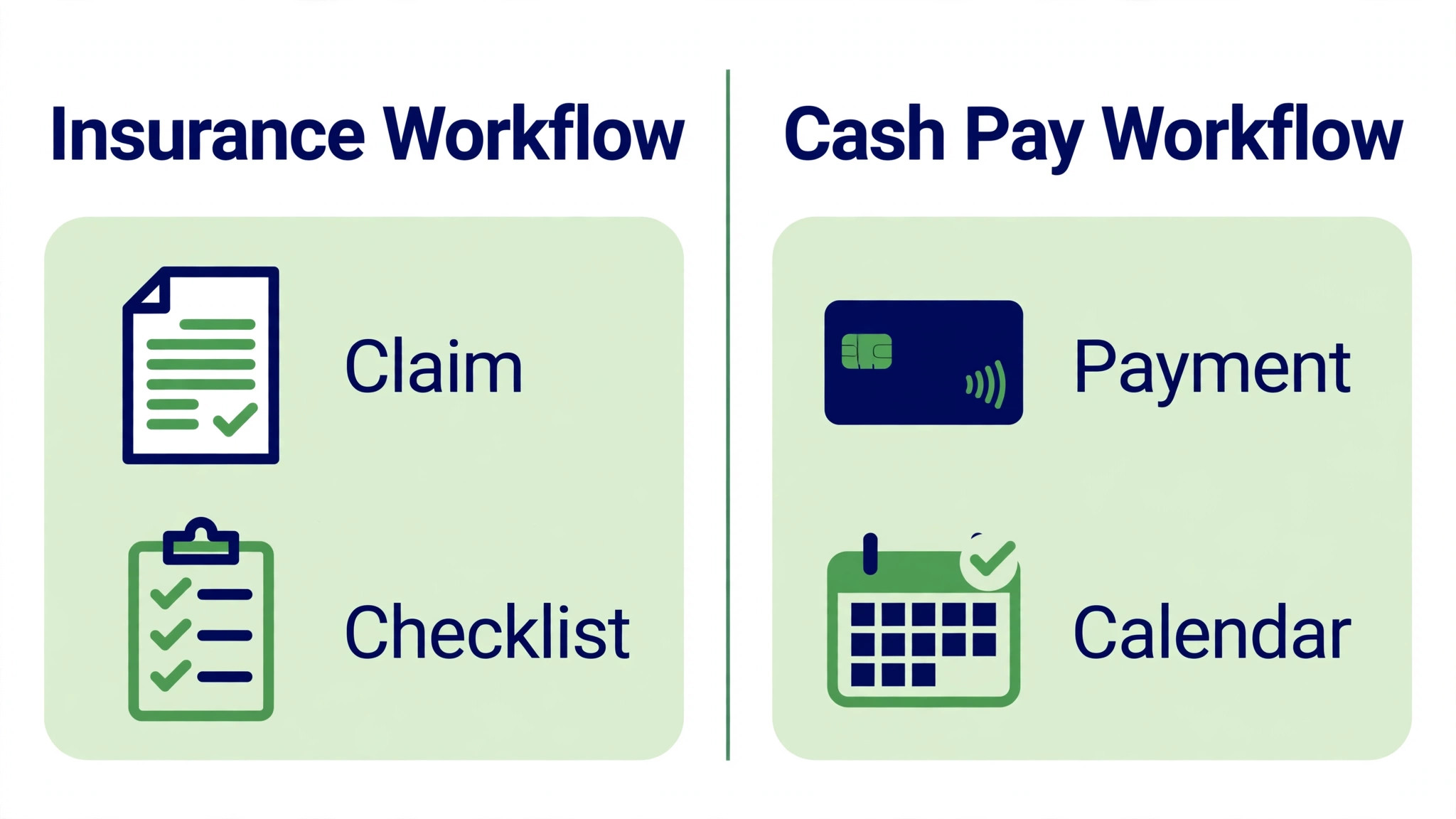
The first decision is payment model, and it should come before any demo. An insurance heavy outpatient clinic needs Medicare logic, claim scrubbing and denial analytics built into the note. A cash pay clinic needs packages, card payments and superbills, with no clearinghouse overhead. A home health practice needs mobile documentation and visit verification that works away from the clinic. Get that decision wrong and even the highest rated tool will feel like the wrong tool within a month.
Why the Best Software for Physical Therapy Clinics Is Decided by Payment
Payment model decides which features earn their keep. An insurance clinic lives under the 8 minute rule, therapy caps, KX modifier thresholds and functional limitation reporting, and a note that ignores those rules will produce denials that staff must chase for weeks. The strongest insurance tools check those rules while the therapist charts, flagging a timed code problem or a missing progress note before the claim is submitted. That live feedback is worth more than a long feature list, because it prevents revenue loss instead of reporting it after the fact.
A cash pay clinic has a different centre of gravity. Its software must sell and track packages, collect payment at booking or checkout, generate superbills for patients who claim reimbursement themselves, and keep the patient engaged between visits. Medicare logic is irrelevant here, and paying for it wastes money and clutters the screens therapists use all day. The right cash tool feels like a consumer product to the patient and a simple ledger to the clinic, with no payer workflow in the way.
Home health and sports rehab add their own demands. Home health therapists document on the move, often with weak connectivity, and they need visit verification, mileage awareness and a mobile record that does not lose work when the signal drops. Sports rehab clinics need outcome measures, return to sport testing and progress tracking that athletes and coaches can actually read. A tool that serves a general outpatient clinic well may serve neither of these niches, which is why the best pick table later in this guide separates them rather than naming one overall winner for every clinic.
Documentation Is the Real Product
Every PT system claims to save documentation time, and most of them measure it differently, so the trial must measure it directly. Time five real notes in the current system, then time the same five note types in the trial system, with the same therapist and the same complexity. AI scribes that draft notes from voice or session data can cut that time sharply, and several tools in this guide now include one, but the draft still needs therapist review, and a scribe that produces a long generic note can cost more review time than it saves in typing time. Judge the scribe on the reviewed note, not on the draft.
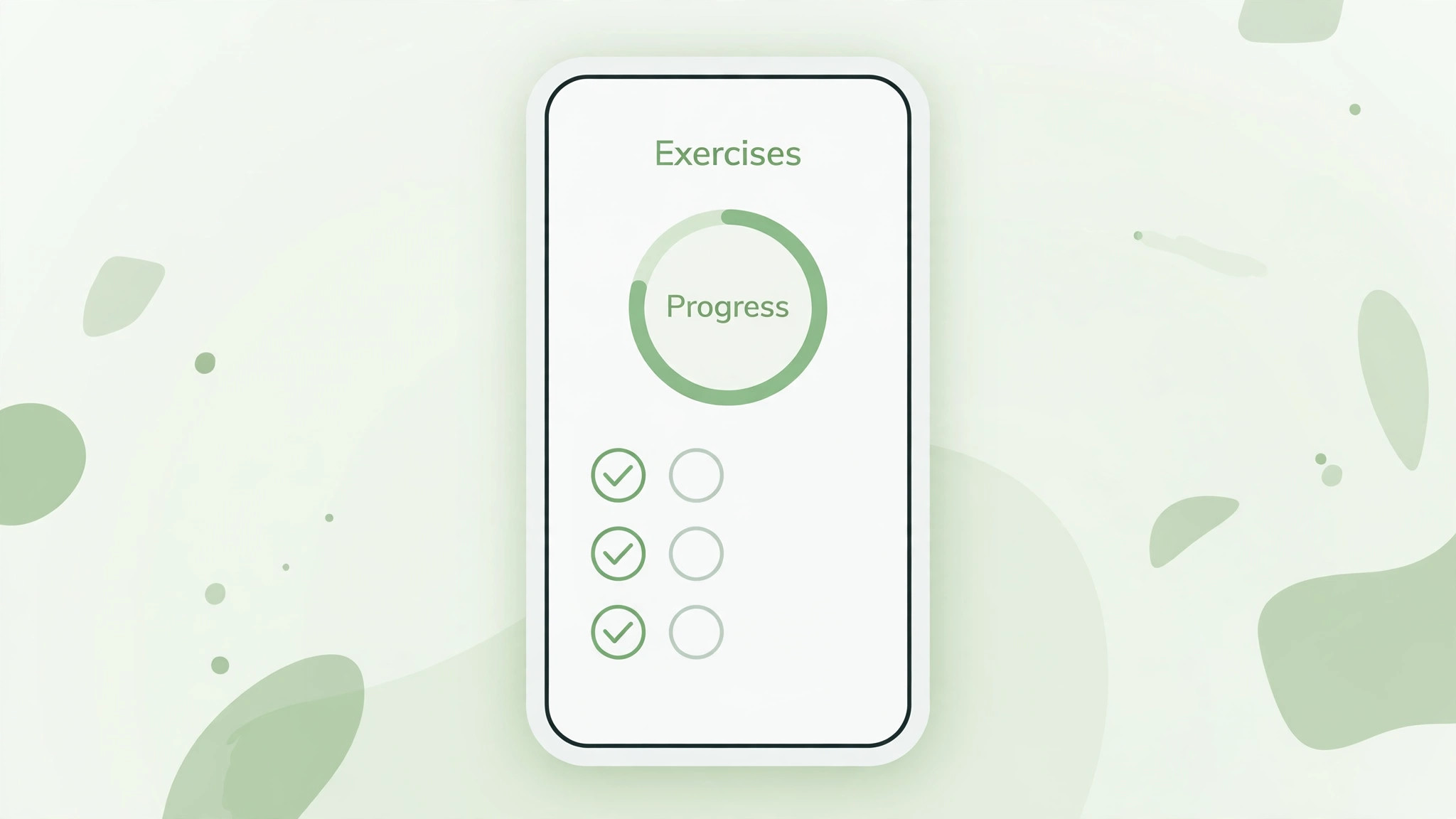
Outcome measures and home exercise programs deserve the same direct test. A system with a large exercise library is only useful if the therapist can find, prescribe and track the right exercises quickly, and if the patient actually opens them at home. Check whether the patient app shows videos, tracks completion and reports adherence back to the therapist, because an exercise program that nobody follows is a clinical gap, not a feature. Outcome surveys should flow into the plan of care and the progress note automatically, rather than sitting in a separate report that nobody opens.
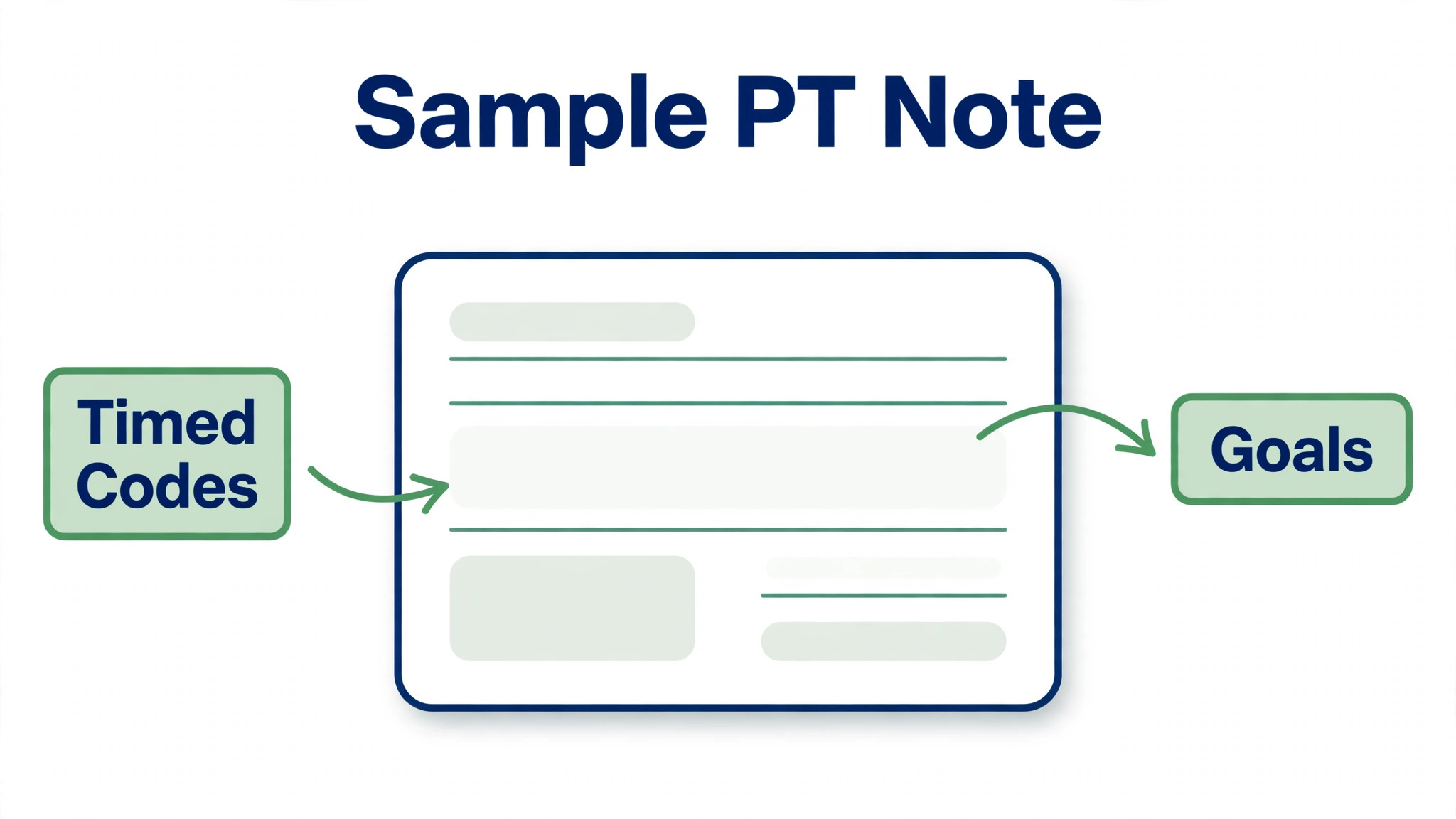
Finally, check the note under audit conditions. A defensible PT note shows medical necessity, skilled intervention, patient response and progress toward goals, with timed codes that match the minutes documented. Ask the vendor to show how a note proves each of those points, and ask what happens when a code, a modifier or a progress note deadline is missed. A system that answers with a workflow, rather than with a promise, is the system that will protect revenue when a payer asks hard questions.
Thirteen Systems Tested Against Clinic Work
The thirteen systems below cover the market from the established standard to AI first newcomers and budget tools. Each section states the clinic it fits, the price where one is published, and the reason to look elsewhere.
1. WebPT
WebPT is the market standard for outpatient physical therapy, and its installed base is its strongest argument. Hundreds of thousands of therapists use it, which means new hires often arrive already trained, third party tools tend to integrate with it first, and its documentation templates reflect years of outpatient practice. It covers scheduling, documentation with therapy specific templates, billing, outcomes and a home exercise program with a large exercise library, all built for rehab rather than adapted from general medicine.
WebPT publishes no prices, so expect a quote based on providers, locations and modules. Choose WebPT if the clinic wants the established standard, deep Medicare documentation support and the widest hiring familiarity. Skip it if the clinic needs published pricing to get budget approval quickly, or if it is a small cash practice that will not use the insurance depth it pays for.
2. Prompt EMR
Prompt EMR positions itself as the automation first system for outpatient rehab, and its pitch is that documentation, billing and patient engagement should run with fewer manual steps. It covers scheduling, documentation with live coding feedback, billing, outcomes and patient messaging, with Medicare logic such as visit caps and KX triggers built into the charting workflow. Clinics with high claim volume feel that automation most, because small per claim savings compound across hundreds of claims a month.
Prompt EMR publishes no prices, so a written quote is the only reliable number. Choose Prompt EMR if the clinic is a growing outpatient group that wants automation across documentation and billing. Skip it if the practice is a solo cash clinic, because the insurance automation that justifies the platform will sit largely unused.
3. StrataPT
StrataPT takes a different angle from the pure software vendors, because it pairs its EMR with billing services from the same company. The same organisation that built the documentation templates is responsible for getting claims paid, which removes the usual argument between a software vendor and a billing service when a claim fails. That accountability appeals to owners who want one throat to choke when revenue dips, and its recognition as a top EMR and billing system in its category for recent years reflects that combined strength.
StrataPT prices by quote, including any billing service component, so ask for the software fee and the service fee as separate lines. Choose StrataPT if the clinic wants EMR and billing accountability in one vendor. Skip it if the clinic already has a billing team it trusts, because the bundled service will duplicate that cost.
4. SPRY
SPRY is the AI native challenger, built for outpatient rehab with an AI scribe, scheduling, digital intake, eligibility, claims and denial follow up in one platform. Its documentation workflow includes Medicare logic for the 8 minute rule, KX threshold and progress notes, and its home exercise and outcome tools sit inside the same record. The AI first design shows in the note workflow, where the scribe drafts a structured note for the therapist to review rather than leaving the therapist with a blank template.
SPRY publishes pricing from $79 per provider a month, with an optional billing service at 4 to 6 percent of collections. Choose SPRY if the clinic wants published pricing, AI documentation and built in billing without a long sales process. Skip it if the clinic is a very small cash practice, because its insurance depth will exceed what that practice needs.
5. Raintree
Raintree is the enterprise option for large rehab groups and multi location practices that need deep configurability and consolidated reporting. It covers EMR, scheduling, billing, outcomes and analytics at a scale that smaller tools cannot match, and its workflow engine can be shaped around complex organisational rules. A group with many sites, many payers and centralised billing will use that configurability daily, while a single site clinic will find it heavy.
Raintree prices by quote, and implementation takes longer than on the self serve tools in this guide. Choose Raintree if the practice is a large group that needs enterprise control and reporting. Skip it if the clinic is small or needs to go live quickly, because the setup weight will delay the benefit.
6. TheraOffice
TheraOffice, from Netsmart, is the highly customisable option for clinics with unusual workflows or complex documentation needs. It covers scheduling, documentation, billing and reporting with deep configuration options, and it suits practices that have tried standard templates and found them too rigid. That flexibility comes with a learning curve, and the clinic should budget real training time rather than expecting therapists to discover the configuration on their own.
TheraOffice prices by quote. Choose TheraOffice if the clinic needs deep customisation and has the staff time to shape and maintain it. Skip it if the team wants a fast, opinionated setup that works well out of the box, because TheraOffice rewards configuration effort rather than removing it.
7. HelloNote
HelloNote is the budget friendly AI newcomer for solo practitioners and small clinics that want published pricing and AI notes without enterprise cost. It covers EMR, scheduling, documentation with an AI scribe, billing and patient engagement, and its free tier for up to 2 patients lets a solo therapist test the real system before paying. That transparency is rare in this market, and it makes HelloNote easy to evaluate honestly.
HelloNote lists a Lite plan at $49.99 a month for solo practitioners, with higher plans for larger teams. Choose HelloNote if the clinic is small, price sensitive and wants AI documentation at a published price. Skip it if the practice is a large insurance group, because its billing depth and enterprise reporting are thinner than the established platforms.
8. Jane
Jane is the simple, published price option for cash based and hybrid PT practices that value a clean workflow over insurance depth. It covers scheduling, charting, online booking, intake, payments and reminders, with outcome measure surveys built in and a home exercise program available through an integration. Staff learn it quickly, patients book easily, and the price is visible before any sales call, which removes the most annoying part of buying PT software.
Jane lists plans from $59 to $99 a month, with additional full time practitioners at $49 a month, while insurance billing and an AI scribe are add ons. Choose Jane if the clinic is cash leaning, hybrid or multidisciplinary and wants simplicity and transparent pricing. Skip it if the clinic is insurance heavy, because United States payer rules are not the centre of its design.
9. TheraPlatform
TheraPlatform is the telehealth friendly option for solo and small practices that run a large share of sessions remotely. It covers scheduling, documentation, billing and built in telehealth, so a therapist does not need a separate video tool or a second login for remote visits. That integration matters for a practice where half the week is virtual, because every extra tool is a place where a session link fails or a note goes missing.
TheraPlatform lists plans at $39, $69 and $79 per clinician a month, all with insurance billing and unlimited telehealth, plus a 30 day free trial. Choose TheraPlatform if telehealth is central to the practice and the team is small. Skip it if the clinic is a large outpatient group, because its scale and reporting are built for smaller teams.
10. SimplePractice
SimplePractice is the general practice tool that solo PTs sometimes choose when they mix physical therapy with mental health, occupational therapy or speech work. It covers scheduling, notes, billing, client portal and telehealth in a polished system that is easy to learn, and its price is published and low. For a mixed practice, that breadth is a real advantage, because one system can serve every discipline without separate logins.
SimplePractice is listed from $49 a month in published comparisons. Choose SimplePractice if the practice mixes disciplines and values simplicity and published pricing. Skip it if the clinic is a pure outpatient PT practice with heavy insurance billing, because its therapy specific depth, including home exercise support, is lighter than the PT specialists here.
11. Noterro
Noterro is the budget pick for cash pay solo and small allied health teams that want a capable system at the lowest price in this guide. It covers scheduling, charting, billing, invoicing and intake in a simple interface that a solo therapist can run without office staff. Its strength is that it does the daily jobs well without charging for insurance machinery the clinic will never use, which is exactly the right trade for a cash practice.
Noterro is listed from $33 a month. Choose Noterro if the clinic is small, cash leaning and budget constrained. Skip it if the clinic needs a built in home exercise library or deep Medicare documentation, because neither is published as a strength of this platform.
12. Pabau
Pabau is the multi service option for PT practices that sit inside a larger clinic offering several services. It covers scheduling, EMR, AI scribe, billing and patient engagement across disciplines, with outcome measure surveys on the plan of care and home exercises sent after each visit. A clinic that offers PT alongside other therapies benefits from one record and one calendar across services, rather than a PT system that cannot see the rest of the business.
Pabau is listed from $62 a month in published comparisons, with the total rising by practitioner and messaging volume. Choose Pabau if PT is one service line among several and the clinic wants one system for all of them. Skip it if the clinic is a pure insurance heavy PT practice, because WebPT and Prompt EMR go deeper on Medicare documentation.
13. PtEverywhere
PtEverywhere is the cash pay first, mobile friendly all in one for physical therapy clinics that want EMR, scheduling, billing, telehealth and a home exercise program without add on charges. Its AI scribe is included in every plan with no usage caps, admin and receptionist users are free, and therapist seats get cheaper as the team grows. That pricing honesty, combined with a patient app for exercises and payments, makes it a strong fit for hybrid and cash clinics that have felt nickel and dimed by other vendors.
PtEverywhere lists plans at $49, $149 and $199 a month, with additional therapist seats priced in brackets and an optional billing service at $39 a therapist a month. Choose PtEverywhere if the clinic is cash pay or hybrid and wants one subscription covering the scribe, the exercise program and telehealth. Skip it if the clinic is a large insurance group, because its billing depth is built for smaller, cash leaning teams.
What the Trial Should Prove
A trial that only clicks through menus proves nothing, so set three pass marks before it starts. First, the note pass mark, where five real notes are completed, reviewed and signed faster than in the current system, with timed codes and goals intact. Second, the claim pass mark, where one real claim for each major payer goes from note to submission without manual rework, and the remittance posts cleanly. Third, the patient pass mark, where a real patient books online, receives exercises and completes at least one home session through the patient app.
If a tool fails any pass mark, do not excuse it with a promised future feature, because the clinic pays for the present system, not the roadmap. Record the trial results for each finalist on the same score sheet, with the same note types and the same payers, so the comparison stays honest. That score sheet is the most useful document in any search for the best software for physical therapy clinics, because it replaces vendor claims with clinic evidence. A second reader should be able to repeat the trial from the score sheet alone and reach the same ranking, and if they cannot, the trial was not rigorous enough to trust.
Matching the Tool to the Clinic
| Clinic type | Best pick | Why it wins for that clinic |
|---|---|---|
| Outpatient clinics | WebPT | Deepest Medicare documentation and hiring familiarity |
| Sports rehab clinics | SPRY | AI notes plus outcome tracking in one record |
| Home-health PT | TheraPlatform | Built in telehealth and mobile friendly workflow |
Outpatient clinics should buy for claim protection first, because their revenue depends on clean claims at volume, and WebPT earns its pick for the deepest Medicare workflow and the widest pool of therapists who already know it.

That claim first reasoning also shapes the wider best software for physical therapy clinics ranking in this guide, where billing reliability outranks a pretty dashboard for insurance heavy teams. Sports rehab clinics should buy for outcomes and speed, because athletes, coaches and referrers judge the clinic on measured progress, and SPRY earns its pick for AI notes combined with outcome tracking in a single record. Home health PT should buy for mobility and remote care, because the therapist works away from the clinic and the visit must be documented and verified on the move, and TheraPlatform earns its pick for built in telehealth and a workflow built for small, mobile teams.

That separation matters because a single overall winner would mislead two of the three clinic types. An outpatient clinic that buys a telehealth first tool will struggle with claim volume, while a home health practice that buys an enterprise group system will pay for reporting it never opens. Readers comparing the scheduling side of the decision may also want the AI for physical therapy clinic scheduling guide, and clinics that mix PT with other therapies can check the practice management software for therapists roundup for the broader allied health view.
Switching Without Losing a Week of Notes
1. Export active plans of care, visit counts and home exercise programs, and verify them patient by patient. 2. Rebuild note templates and timed code rules before importing a single patient record. 3. Import patients in small batches, checking documentation history after each batch. 4. Connect eligibility, claims and card payments, then run one real claim through the full cycle. 5. Train therapists on the note and exercise workflows first, because those decide daily adoption. 6. Run both systems in parallel for two weeks, and reconcile billing before cancelling the old one.

Billing and Compliance Pitfalls
The first pitfall is the progress note deadline. Medicare and many commercial payers require progress notes at defined intervals, and a clinic that tracks those deadlines in a spreadsheet will miss them during busy weeks. The software should surface due progress notes automatically, ideally on the therapist schedule itself, so the deadline is visible before the visit rather than discovered after it. Ask for that view in the demo, with real dates, not with test data that hides the gap.
The second pitfall is the timed code maths. The 8 minute rule, untimed codes and modifier rules interact in ways that a tired therapist will get wrong at the end of a long day, and the cost of getting them wrong is a denied or downcoded claim. A system that calculates units live, while the therapist documents minutes, prevents most of those errors, while a system that only reports them afterwards leaves staff to fix claims one by one. That live calculation is a feature worth paying for in any insurance heavy clinic, and it is absent from several budget tools.
The third pitfall is home exercise adherence going unmeasured. A clinic that prescribes exercises but never sees completion data cannot prove progress, cannot adjust the plan early and cannot show referrers that its program works. Choose a system where adherence flows back into the patient record automatically, and review that data in team meetings as seriously as billing data. Any finalist for the best software for physical therapy clinics should pass this adherence test, because unmeasured exercises are a clinical gap, not a patient homework problem. The clinics that treat adherence as a clinical metric, rather than as a minor admin detail, get better outcomes and stronger referrals.

Frequently Asked Questions
How much does physical therapy software cost each month
Published prices in this guide run from $33 a month for Noterro and $39 a month for TheraPlatform up to $79 a month per provider for SPRY, while WebPT, Prompt EMR, Raintree and several others price by quote. A small clinic should budget the published plan that covers its real clinician count, plus any billing service fee, and a larger insurance clinic should budget from a written quote that lists providers, locations and modules separately. That written quote discipline belongs in every purchase of the best software for physical therapy clinics, because comparing headline prices without those lines is the fastest way to choose the wrong tool.
Do I need PT specific software, or will a general medical record work
A general medical record can store notes and schedule visits, but it does not understand therapy timed codes, Medicare progress note rules, outcome measures or home exercise programs as native workflows. A PT specific system builds those rules into the note, which protects claims and shortens documentation. A mixed discipline practice can sometimes accept a general tool, but a pure PT clinic will feel the gap every day, especially at billing time.
What is the best software for a small cash pay PT clinic
PtEverywhere and Jane are the strongest starting points, with Noterro as the lowest cost option. PtEverywhere earns attention for including its AI scribe, exercise program and telehealth in one subscription, while Jane earns attention for simplicity and transparent pricing. A small cash clinic should trial both with real package sales and real exercise prescriptions, because the daily workflow difference matters more than any feature list.
How important is an AI scribe for a PT clinic
An AI scribe matters most where documentation time is the bottleneck, which is most clinics. A good scribe drafts a structured note for review and can save meaningful time per visit, but a poor scribe produces generic text that takes longer to correct than to write. Trial the scribe with real sessions, time the reviewed note rather than the draft, and check whether the scribe handles therapy terminology and timed interventions accurately before paying extra for it.
Can PT software handle home health visits
Yes, but the tools differ sharply on mobile quality. TheraPlatform and PtEverywhere are built for mobile and remote work, while enterprise outpatient systems assume a clinic desk and a stable connection. A home health practice should trial documentation on a phone in the field, including offline behaviour and visit verification, before committing, because a system that works in the office can still fail on the road.
How long does it take to switch PT software
A solo clinic can switch in two to four weeks, while a multi location insurance clinic should allow six to eight weeks for templates, payer setup, migration checks and training. The slow steps are note template rebuilding and claims testing, not installation. Running both systems in parallel for two weeks catches plan of care errors and billing gaps before they affect patients or revenue, and that parallel period should be treated as mandatory, not optional.
Choosing With Confidence
Buy for the note first, the claim second and the price third, and the shortlist will mostly choose itself. An outpatient clinic that follows that order lands on WebPT or Prompt EMR. A sports rehab clinic lands on SPRY or WebPT. A home health practice lands on TheraPlatform or PtEverywhere. A cash clinic lands on PtEverywhere, Jane or Noterro. Each of those pairings reflects a real workflow difference, not a marketing difference, and each survives a trial with real patients.
The best software for physical therapy clinics is the one therapists finish notes in before they leave the building, billers trust without rework, and patients actually use between visits. Run the trial on those three tests, time the notes, submit real claims and check exercise adherence after two weeks. The tool that passes all three is the right purchase, even if it is not the cheapest on the list, because the hours it returns every week are worth more than any subscription saving.