
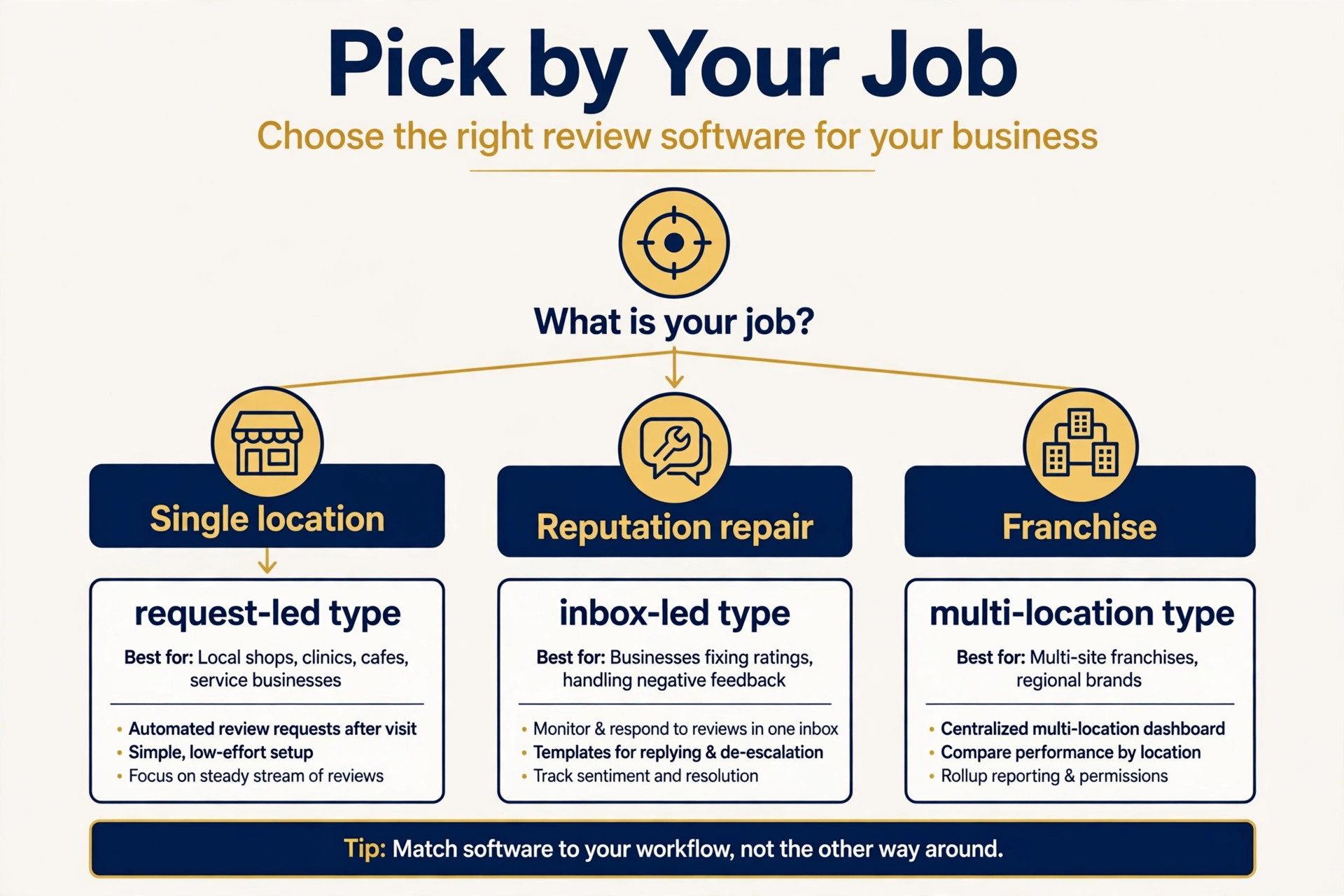
For most single location businesses, start with NiceJob or GatherUp and only pay for an enterprise suite once a second location opens. That verdict shapes this guide to the best review management software for local businesses, because the job is simple at one location and complex at ten. A single shop needs review requests that go out automatically and replies that take minutes, while a franchise needs listings, scores and permissions across every branch.
Reviews decide local business in a way that advertising cannot match. A customer searching for a plumber, a dentist or a restaurant reads recent reviews, checks the star rating and judges how the business answers complaints before ever calling. A business with twenty fresh reviews beats a business with two hundred old ones, because freshness signals that the business is active and trusted today. Review software earns its price when it turns happy but silent customers into public reviewers every week.
Prices in this guide come from vendor pages and reputable comparison listings checked at writing time. Birdeye and Podium publish no prices and sell by quote, so their figures are reported sales quote numbers rather than published rates, and the text says so plainly. Confirm every figure on a vendor quote before signing, especially for multi location pricing where per location fees multiply fast.
Twelve Tools on One Page
| Tool | Starting price | Best for |
|---|---|---|
| Birdeye | Reported about $299 per location a month | Multi location reputation suites |
| Podium | Reported about $399 a month | SMS first messaging plus reviews |
| Yext | $199 a year | Listings accuracy at scale |
| Reputation | $80 per location a month reported | Location scoring and surveys |
| GatherUp | Reported $99 a month | Simple review requests and monitoring |
| NiceJob | $75 a month | Simplest setup for local services |
| Grade.us | Reported from $99 a month | Review funnels without enterprise contracts |
| ReviewTrackers | $89 per location a month billed yearly reported | Review monitoring and benchmarking |
| Trustpilot | Reported $259 a month | Open public review profiles |
| Broadly | Reported from about $110 a month | Reviews plus webchat and payments |
| Thryv | Reported from about $228 a month | All in one CRM plus reviews |
| Signpost | Reported $199 a month | Automated review and marketing campaigns |
Read the table as a shortlist, not a ranking. A flat $75 a month tool can beat a $399 a month suite for a single shop, while the suite wins for a franchise that needs listings, AI replies and location scoring in one contract. This best review management software for local businesses comparison works through that trade off tool by tool, so the choice follows location count rather than feature count.
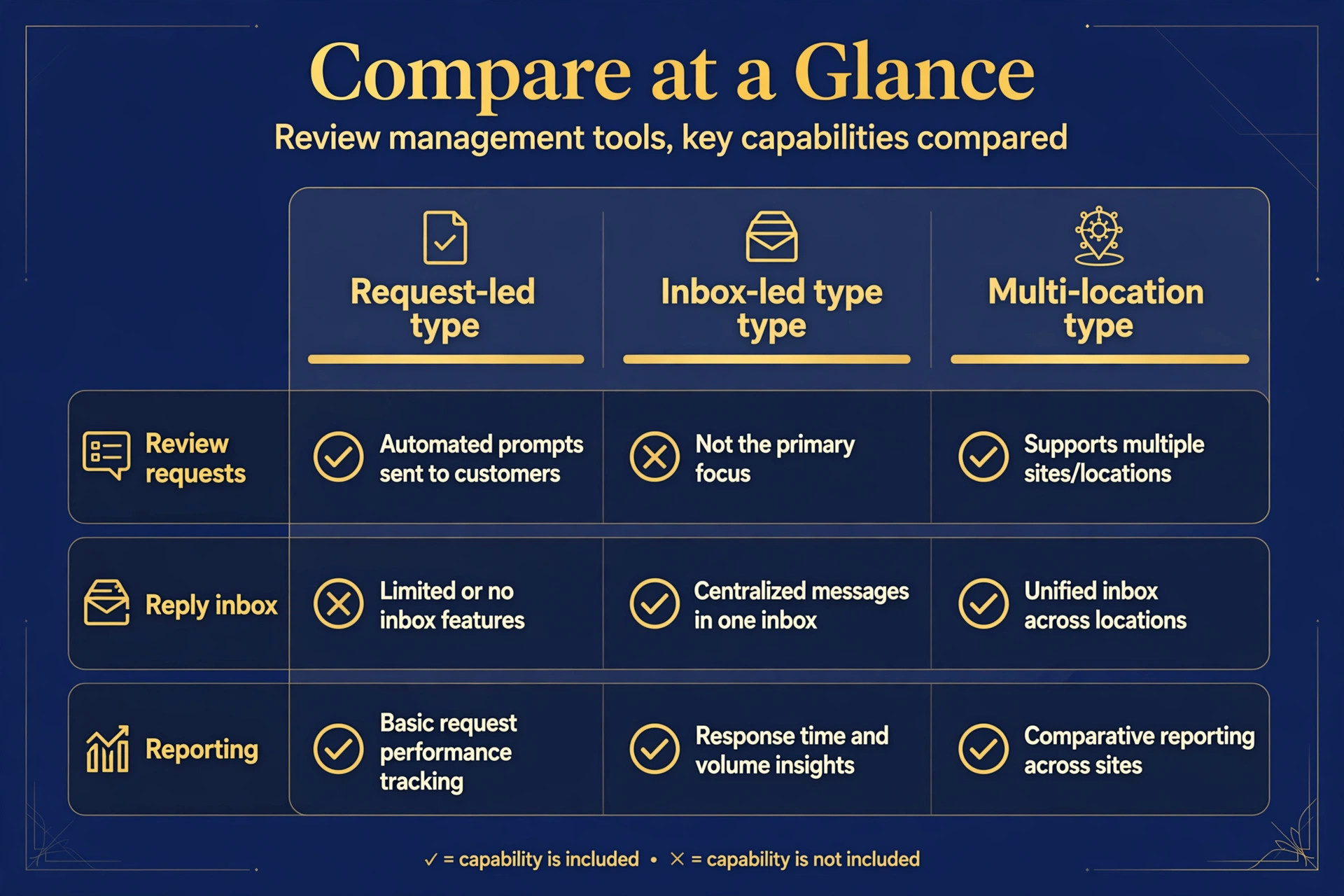
Why the Best Review Management Software for Local Businesses Starts With Requests, Not Replies
Most businesses buy review software to manage replies, but the real value sits in requests. A business that asks ten customers a week for reviews will collect more new reviews in two months than a business that replies beautifully to the three reviews it already receives. The request flow matters more than the reply editor, because requests create the reviews that future customers read. Check how requests go out, whether by SMS, email or both, and whether they trigger automatically after a job, a visit or a purchase.
Timing and friction decide whether a request converts. A request sent within hours of a completed job, with a single tap to the Google review form, converts far better than a request sent a week later with a login step. SMS requests usually outperform email for local services, since customers read texts faster, but email suits businesses whose customers expect a formal follow up. The best tools offer both and let the business test which channel its own customers prefer.
Negative feedback handling is the second half of the request job. A good tool asks the customer for a private rating first, routes unhappy customers to a private feedback form, and routes happy customers to a public review site. That filter protects the public rating while giving the business a chance to fix a problem before it becomes a one star review. A tool without that filter sends every customer, happy or not, to the same public form, which is a risk no local business should take.
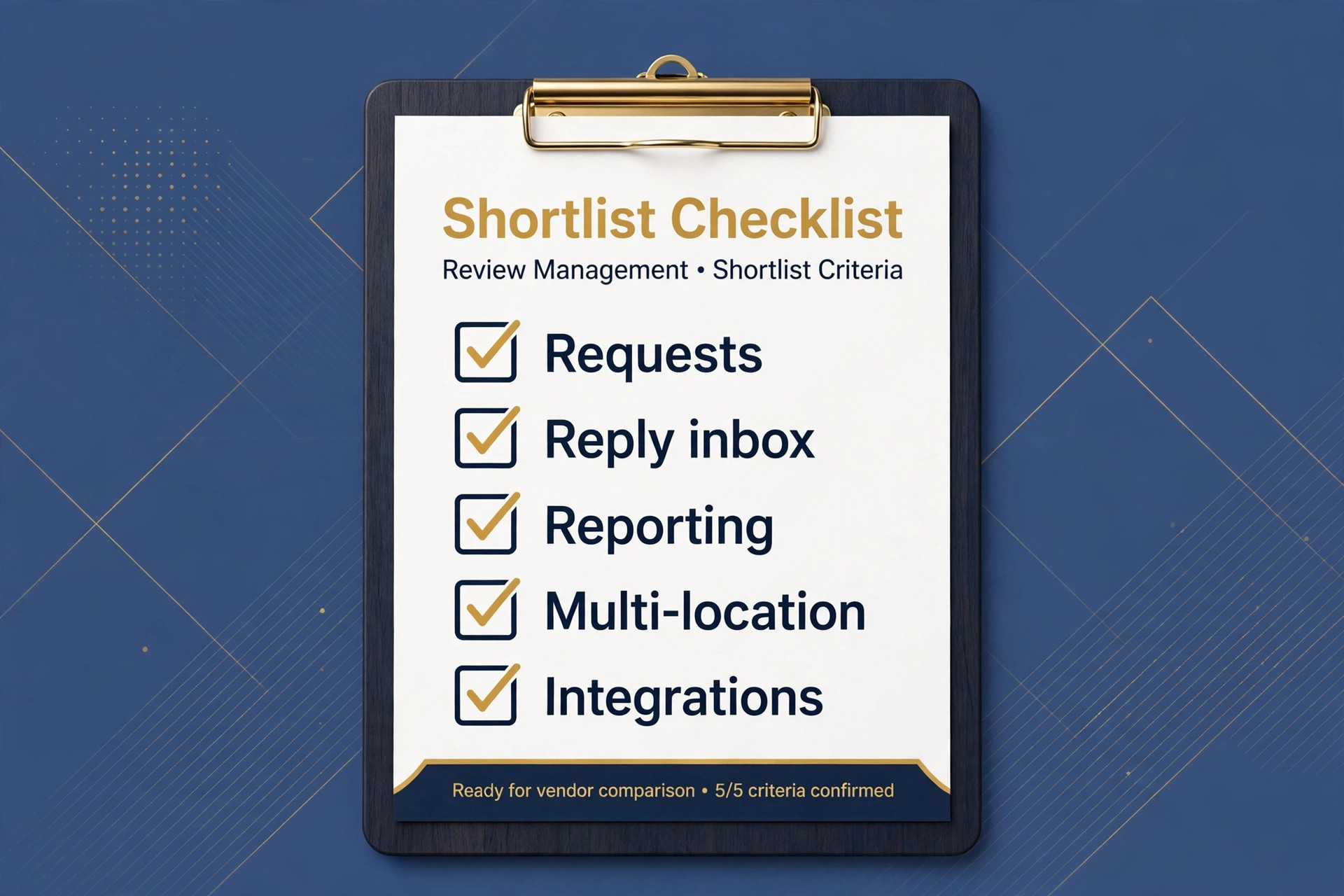
How to Choose Without Paying for Enterprise Features at One Location
Start with the two review sites that matter most for the trade. A plumber lives on Google and Facebook, a restaurant lives on Google and Yelp or TripAdvisor, and an online seller lives on Trustpilot and product pages. A tool that covers those two sites deeply beats a tool that monitors two hundred sites shallowly, because customers only read the sites they already trust. List the two busiest sites for the business and demand strong coverage there.
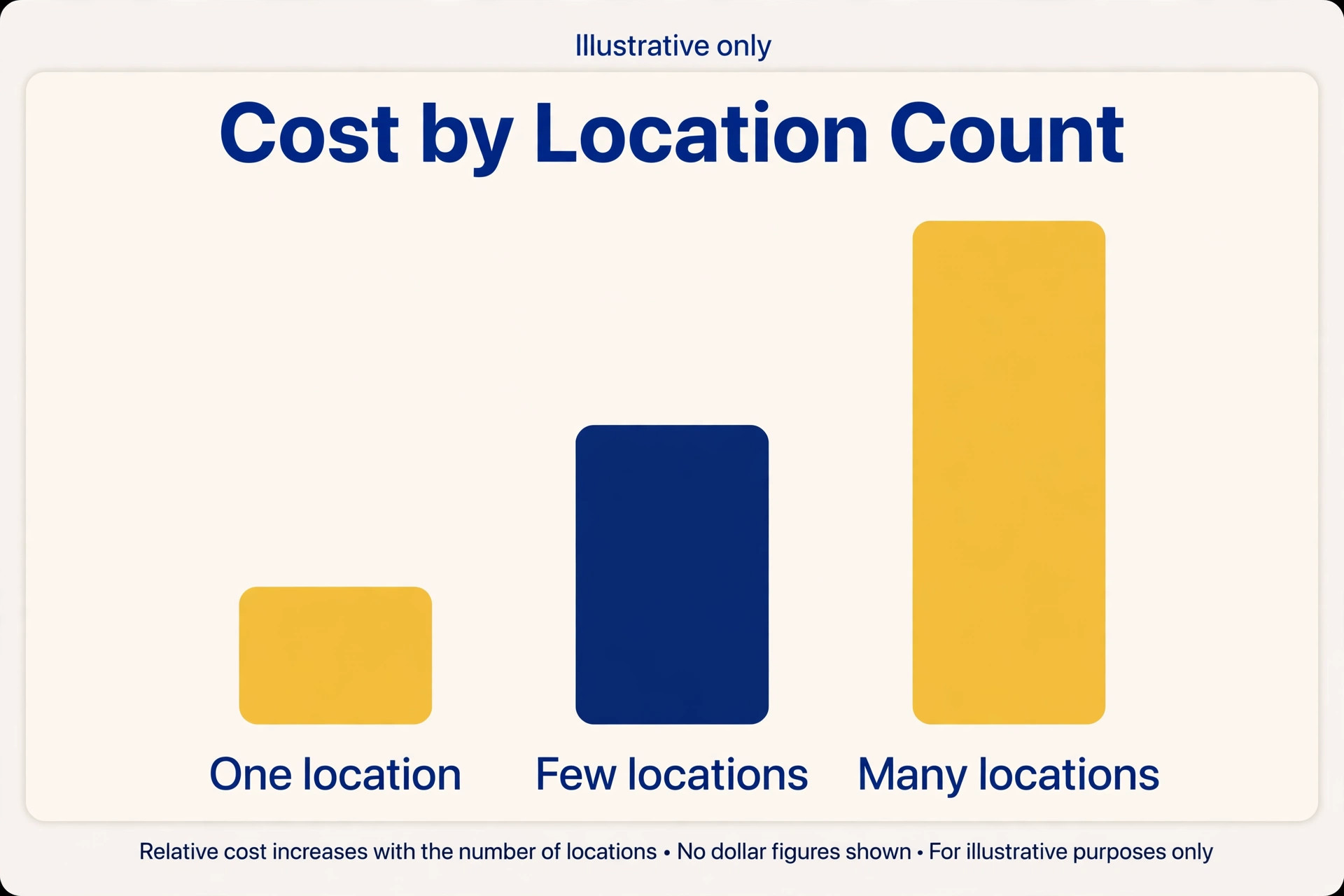
Then count locations honestly, including any site opening in the next year. Per location pricing turns a $299 tool into a $897 tool at three sites and a $2,990 tool at ten sites, while a flat rate tool stays flat. Birdeye and ReviewTrackers bill per location, while NiceJob and Grade.us suit single sites or small counts. A franchise should negotiate a location band price in writing, with the per location rate for sites four through ten agreed before signing.
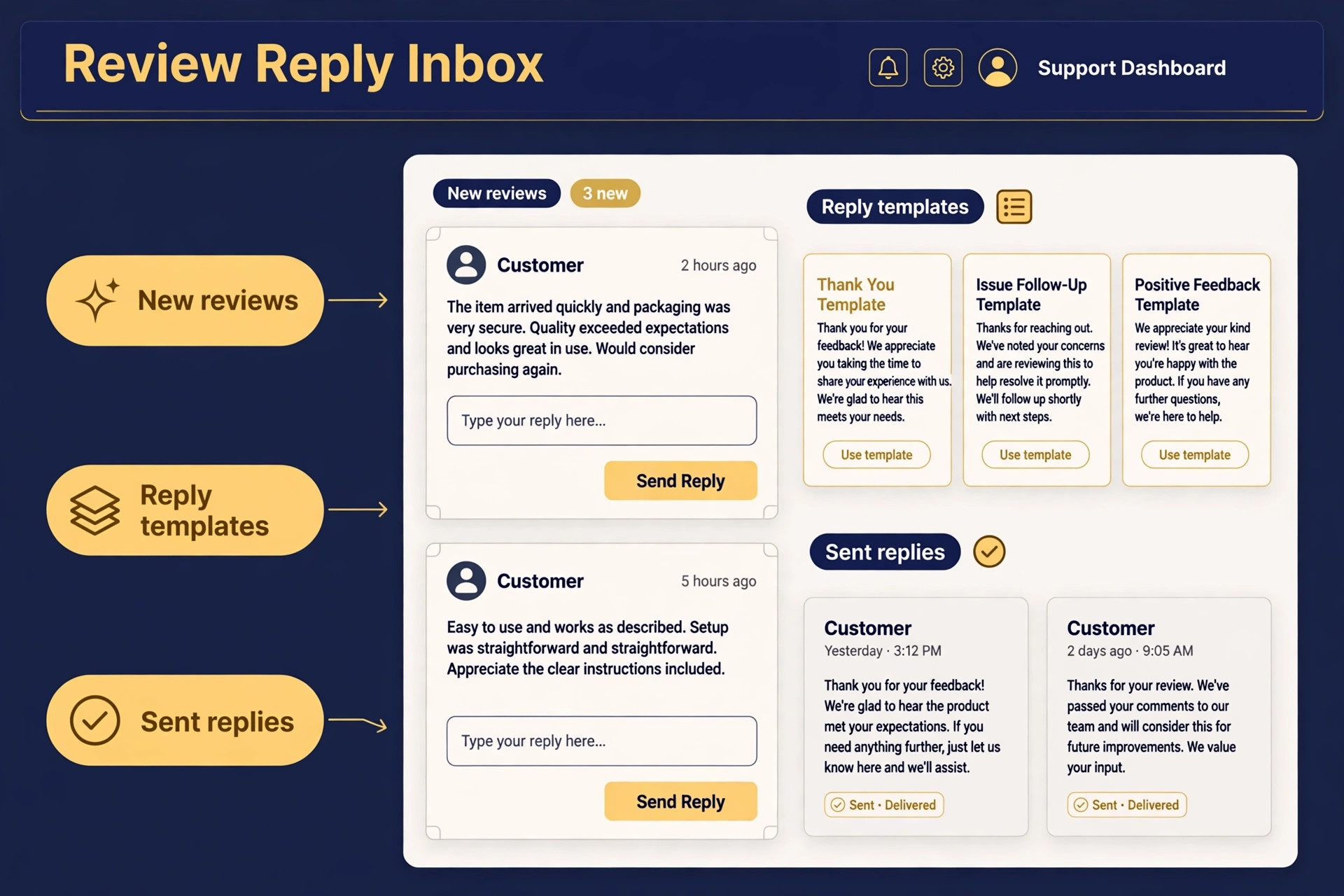
Finally, test the reply workflow with a real negative review. Draft a reply that apologises, states the fix and invites the customer back, and check how long the full loop takes from alert to published reply. A tool that alerts instantly but makes replying slow will still leave complaints unanswered for days. Speed of reply matters, because customers and future readers judge the business by how fast and how gracefully it answers criticism.
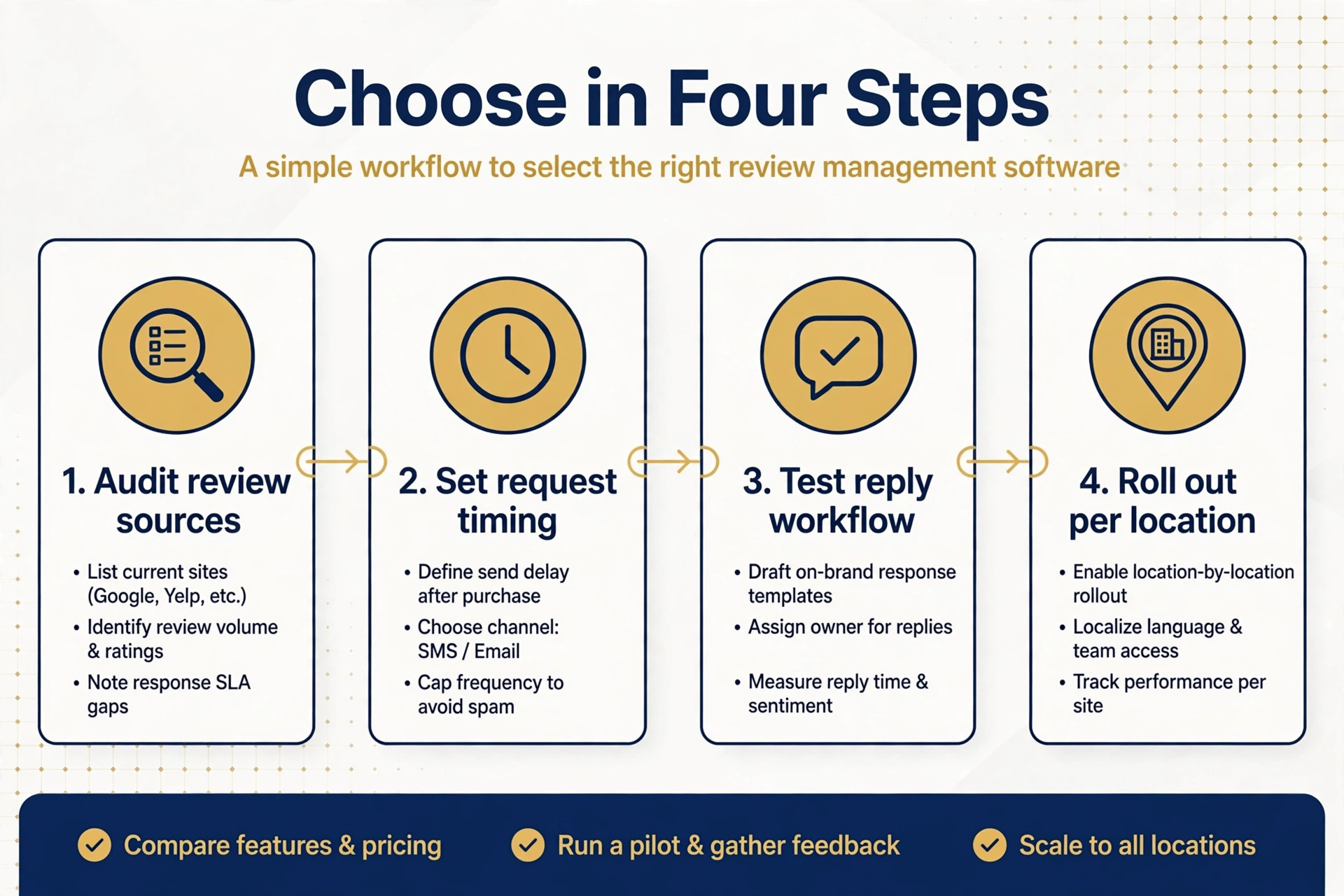
The Shortlist Checklist for Local Businesses
Use this checklist on every shortlisted tool before signing an annual contract.
– Confirm that review requests go out automatically by SMS and email after a job or visit – Confirm that unhappy customers are routed to private feedback before any public review prompt – Confirm coverage of the two review sites that matter most for the trade – Confirm that reply alerts arrive fast and replies can be published from one inbox – Confirm listings accuracy and duplicate listing handling if the business has more than one site – Confirm the per location price, the contract length and the cancellation terms in writing – Run a two week request test and measure review count, rating change and reply time
A tool that fails two or more checklist items will not move the rating, however polished its dashboard looks. Review software works only when requests go out every day, unhappy customers are caught privately, and replies go up quickly. Everything else is reporting.
The Best Pick by Job for Local Businesses
| Business job | Best pick | Why it fits |
|---|---|---|
| Single location business | NiceJob | Flat price and simplest request flow |
| Multi location business | Birdeye | Reputation, listings and AI replies across sites |
| Franchise network | Reputation | Location scoring and benchmarking at scale |
The table follows the job, not the brand. A single shop gains nothing from franchise benchmarking, while a franchise gains nothing from a single site tool that cannot roll up scores. This best review management software for local businesses guide returns to that job test in every tool section below, because the wrong shape wastes the budget on features one location never uses.
The Cost Maths at Real Location Counts
Take a single location business paying $75 a month for NiceJob. Over a year that costs $900, and if the tool produces even ten extra reviews a month, the cost per new review is $7.50. Compare that with a reported $399 a month Podium plan, which costs $4,788 a year for the same single site, or $39.90 per review at the same ten reviews a month. The dearer tool must therefore produce far more reviews, or far more messaging value, to justify its price at one location.
Now scale to five locations. Five sites on NiceJob style flat pricing need a quote, since flat plans often cover one site, while five sites on Birdeye at a reported $299 per location cost about $1,495 a month, or $17,940 a year. Five sites on ReviewTrackers at a reported $89 per location cost about $445 a month, which shows how wide the per location gap runs. A franchise must therefore compare total contract cost at its real site count, not the single site headline, and must ask what happens to the rate when sites six through ten are added.
Contract terms change the maths again. Annual contracts with auto renewal and long notice periods can keep billing after a business tries to cancel, a complaint that appears repeatedly in user reviews of the larger suites. Get the cancellation clause, the notice period and the data export terms in writing before signing, and prefer a monthly plan for the first three months even if the annual rate looks cheaper. A tool that proves itself in ninety days earns the annual commitment.
Twelve Tools in Detail
Birdeye
Birdeye is the pick for a multi location brand that wants reputation, listings, messaging and AI replies in one suite. Pricing is quote based, with independent listings reporting Starter at about $299 a month per location, Growth at about $349 and a higher tier at about $449, billed yearly. It monitors over two hundred review sites, syncs listings, runs surveys and drafts AI replies that staff approve before publishing.
The strength is breadth at scale, with cross site trends and location comparisons that a franchise manager can act on. The limit is price and transparency, since the per location model multiplies fast and the quote process hides the real rate. Choose Birdeye for a multi location brand with budget. Skip it for a single shop, where a flat rate tool does the core job for a fraction of the price.
Podium
Podium is the pick for a local business that wants reviews inside a messaging inbox. Pricing is quote based, with independent listings reporting Core at about $399 a month for up to two locations and Pro at about $599 a month for up to five, plus phone seats and setup fees. It centres on SMS and webchat, with reviews as one output of an ongoing customer conversation, plus payments and feedback tools.
The strength is conversation, since texting customers to close jobs and request reviews happens in one place. The limit is total cost, since seats, numbers and add ons stack on top of the base quote. Choose Podium for a service business that lives on texting. Skip it if reviews alone are the need, since a review focused tool costs far less.
Yext
Yext is the pick for a business whose listings are wrong across the web. Starter costs $199 a year on most listings, with higher tiers for larger location counts and review features. It pushes correct name, address, hours and services to a large publisher network, so a customer never finds an old phone number or a closed location in search results.
The strength is listings accuracy at scale, which protects local search visibility for every site. The limit is review depth, since review management is an add on rather than the core product. Choose Yext when wrong listings are the main problem. Skip it as the only review tool for a business that needs strong request automation.
Reputation
Reputation is the pick for a franchise or large group that wants to score every location against its peers. Pricing is reported at $80 per location a month for the core tier, with higher tiers for surveys, listings and social features. It combines review monitoring, surveys, listings and benchmarking, with scores that let head office spot weak sites before they damage the brand.
The strength is benchmarking, since a group can rank sites, compare against competitors and track improvement over time. The limit is fit for small businesses, since the platform is built for scale rather than simplicity. Choose Reputation for a franchise network. Skip it for a single shop that needs only requests and replies.
GatherUp
GatherUp is the pick for a business that wants review requests, monitoring and feedback without an enterprise contract. Pricing is reported from $99 a month for one location, with multi location plans at a lower per location rate and a 14 day free trial on most listings. It monitors many review sites, sends SMS and email requests, and routes unhappy customers to private feedback first.
The strength is focus, with the core request and monitoring job done well at a mid range price. The limit is breadth, since it lacks the full CRM and messaging suite of Podium or Birdeye. Choose GatherUp for a single site or small group that wants reviews done properly. Skip it for a business that also needs payments, scheduling and marketing in one login.
NiceJob
NiceJob is the pick for a local service business that wants the simplest possible review flow. Reviews costs $75 a month and Pro costs $125 a month, billed monthly with no contract on most listings, plus a free trial. It automates review requests after jobs, builds a review funnel, and Pro adds referral campaigns, repeat booking reminders, automated AI replies and competitor insights.
The strength is simplicity and honest pricing, with a flat monthly rate and no sales quote process. The limit is scale features, since multi location reporting and enterprise controls are thinner than on Birdeye. Choose NiceJob for a single location service business. Skip it for a franchise that needs location scoring across dozens of sites.
Grade.us
Grade.us is the pick for a business or agency that wants review funnels without enterprise contracts. Pricing is reported from $99 a month for a small business with one location, with a 14 day free trial on most listings. It builds review funnels that guide happy customers to public review sites, monitors reviews, and offers white label dashboards for agencies managing several clients.
The strength is funnel control and agency friendliness, with per client dashboards that suit marketers. The limit is email focus, since SMS features trail the SMS first tools. Choose Grade.us for a business that prefers email requests or an agency managing clients. Skip it for a trade where SMS requests are the main conversion channel.
ReviewTrackers
ReviewTrackers is the pick for a multi location business focused on monitoring and analysis rather than messaging. Pricing is reported at $89 per location a month billed yearly, with a free trial on most listings. It aggregates reviews across sites, analyses sentiment and trends, benchmarks against competitors, and routes reviews to the right team for response.
The strength is analysis depth, with reporting that shows which sites, products or services draw complaints. The limit is request automation breadth compared with Podium or NiceJob, since its centre of gravity is monitoring. Choose ReviewTrackers for a group that needs to understand reviews deeply. Skip it for a single shop that mainly needs more requests going out.
Trustpilot
Trustpilot is the pick for a business whose customers check an open public profile before buying. Pricing is reported from $259 a month on comparison listings, with higher tiers for advanced features, so check the vendor page for the current figure. It provides a public review profile, verified review invitations, review widgets for the website and analytics on rating trends.
The strength is public trust, since an open profile that anyone can read carries weight with new buyers. The limit is local fit, since it suits ecommerce and online services more than a neighbourhood trade. Choose Trustpilot for an online or national business. Skip it as the main tool for a local shop whose customers live on Google reviews.
Broadly
Broadly is the pick for a home service or local business that wants reviews plus webchat and payments together. Pricing is quote based, with comparison listings reporting about $110 a month for a single location package and higher figures for bundled webchat and payments, so check the vendor page for the current quote. It covers review requests, AI replies, webchat, payments and customer messaging in one login.
The strength is the bundle for a service business, since reviews, chat and payments share one customer record. The limit is price clarity, since the bundled quote varies and setup fees appear in some listings. Choose Broadly for a service business that wants several jobs in one tool. Skip it for a business that only needs review requests at the lowest price.
Thryv
Thryv is the pick for a small business that wants reviews inside a full CRM and marketing platform. Pricing is reported from about $228 a month for standalone plans on recent listings, with bundles rising well above that once marketing and CRM features combine, so check the vendor page for the current quote. It covers CRM, scheduling, estimates, invoices, payments, listings, social management and AI review responses.
The strength is consolidation, since one platform replaces several subscriptions for a service business. The limit is contract and bundle complexity, since most buyers end up on a bundle rather than the standalone price. Choose Thryv for a business ready to commit to one platform fully. Skip it for a business that wants month to month flexibility or reviews alone.
Signpost
Signpost is the pick for a local business that wants automated review and marketing campaigns running in the background. Pricing is reported from $199 a month for standard coverage on review listings, with higher tiers for wider campaign coverage. It automates review requests, follow up messages and marketing campaigns, and users praise the steady background effect on reputation.
The strength is automation, since campaigns run without daily staff effort. The limit is dashboard polish and customisation, which some users describe as clunky with limited messaging control. Choose Signpost for a business that wants campaigns handled automatically. Skip it for a business that needs deep control over every message and report.
Mistakes That Stall a Review Rating
The first mistake is asking for reviews rarely or in batches. A business that asks once a quarter will collect a burst of reviews and then go silent, which looks suspicious to future customers and to search engines. Ask every satisfied customer, every week, as part of the normal job close. Steady weekly requests build a rating that grows naturally and survives a single bad review.
The second mistake is replying only to praise and ignoring complaints. Future customers read negative reviews first, and they judge the business by its reply more than by the complaint itself. Reply to every negative review within a day, apologise without arguing, state the fix, and invite the customer back through a private channel. A graceful reply can win more future customers than the original complaint lost.
The third mistake is offering incentives for positive reviews. Paying or rewarding customers for five star reviews breaks platform rules and risks removal of the reviews or the listing itself. Ask every customer equally, accept honest ratings, and earn better reviews by fixing the problems that honest reviews reveal. A rating built on incentives collapses when the incentive stops.
The fourth mistake is copying the same reply to every review. A generic thank you on every five star review tells future readers that nobody actually reads feedback. Personalise each reply with one detail from the review, name the service or product, and thank the customer for that specific point. Personal replies take minutes longer and build far more trust than a template pasted fifty times.
A Sensible Rollout Plan for a Local Business
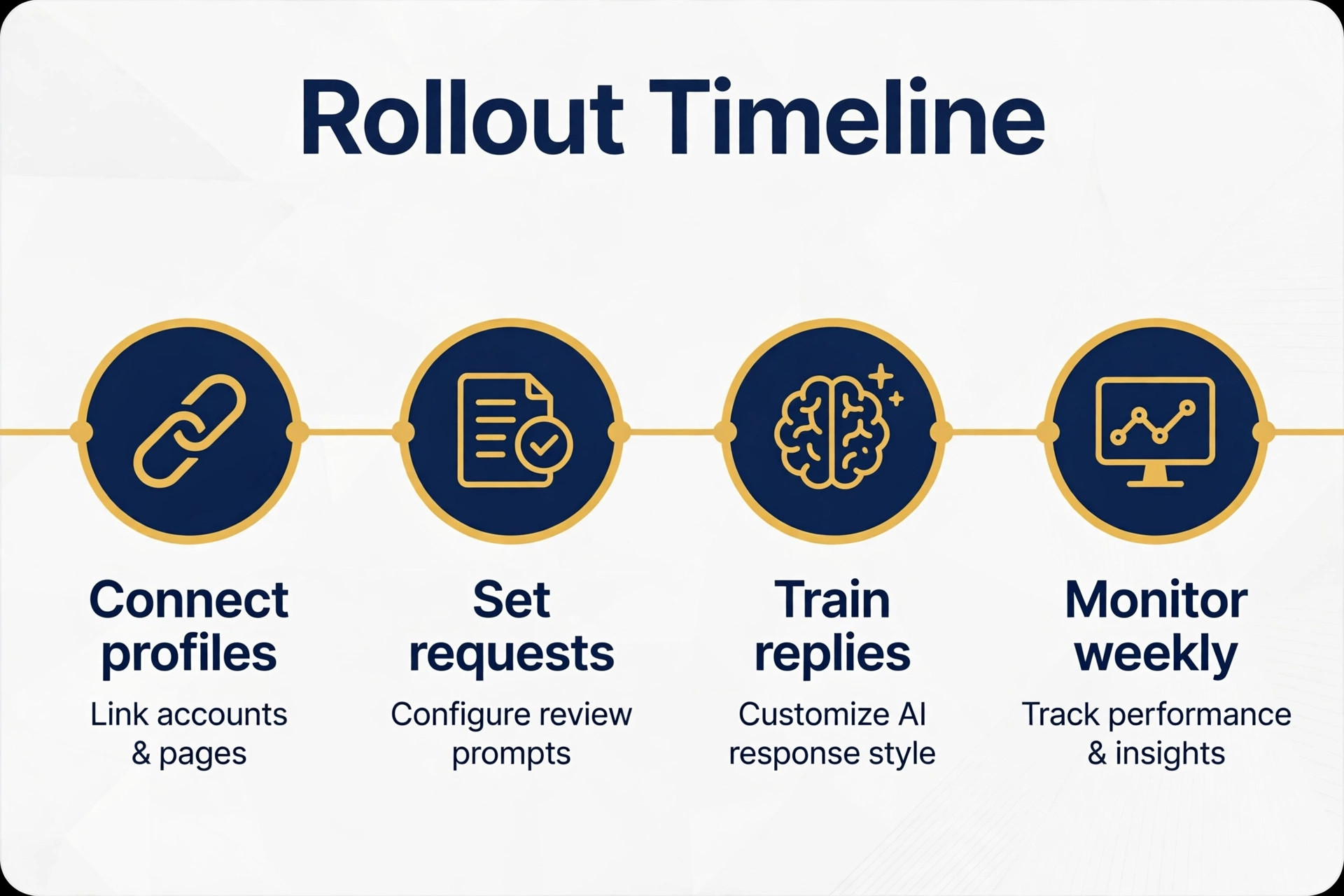
Start with one location and a two week request test. Turn on automatic requests after every job or visit, route unhappy customers to private feedback, and measure how many reviews arrive, how the rating moves and how fast replies go up. That two week test is the safest trial in a best review management software for local businesses rollout, because it proves the request flow before any annual contract is signed.
Next, build the reply habit across the team. Assign one person to own replies, set a same day target for negative reviews and a two day target for positive ones, and keep a small library of reply frameworks that staff personalise rather than paste. A tool without a reply owner will collect reviews that nobody answers, which wastes the request effort entirely.
Then expand to listings and multi location reporting only when the single site habit is solid. Fix duplicate listings, confirm hours and services on every directory, and set a weekly report that shows review count, average rating and reply time per site. A business that masters requests and replies at one site can scale the habit, while a business that scales first usually scales the gaps too.
Our Closing Take on the Review Shortlist
For most local businesses, the smart path is NiceJob for a single site, GatherUp for a small group that wants monitoring depth, and Birdeye or Reputation once location count justifies an enterprise suite. Podium suits a texting led service business, Yext suits a business with listings errors, and Thryv suits a business ready to consolidate CRM and marketing in one contract. That verdict is the centre of this best review management software for local businesses guide, and it follows the job test rather than the longest feature list.
Whatever the choice, judge it after ninety days on three numbers. The number of new reviews per month, the average star rating over the last ninety days, and the average time to reply to a negative review. Those numbers show whether the best review management software for local businesses you chose is actually working. If those three numbers improve, the tool is working. If they do not, the problem is the request habit or the reply ownership, and no new tool will fix reviews nobody asks for.
More Reading on Stratilyze
For a related local marketing guide, read ask customers for Google reviews as a small business and AI tools for small business. For a different local system, see CRM for cleaning companies.
Frequently Asked Questions
How many reviews does a local business need to rank well
There is no fixed number, because freshness, rating and reply quality matter as much as total count. A business with fifty recent reviews and a 4.8 rating usually outranks a business with three hundred old reviews and a 4.2 rating. Aim for steady new reviews every week rather than a one time burst, and keep the average rating high by fixing the problems that honest reviews reveal.
Should a business reply to every review
Yes, and negative reviews deserve the fastest replies. A reply to a positive review thanks the customer and reinforces the specific praise, while a reply to a negative review shows future readers that the business listens and fixes problems. Businesses that reply to everything look active and trustworthy, while businesses that reply only to praise look selective.
Is it against the rules to offer a discount for a good review
Yes, on most major platforms. Offering payment, discounts or gifts in exchange for a positive review breaks platform policies and can lead to review removal or listing penalties. Ask every customer equally, without tying any reward to the star rating, and let the service earn the rating honestly.
What is the cheapest review management software for one location
NiceJob at $75 a month is the cheapest clear starting point in this guide for a single location, with a flat monthly price and no contract on most listings. GatherUp at a reported $99 a month is the next step up for deeper monitoring. Both beat an enterprise suite at one location, where per location pricing buys features a single shop never uses.
Do review tools work for franchises
Yes, but the buying criteria change. A franchise needs location scoring, permission controls, listings management and rollup reporting, which Birdeye and Reputation provide. A single site tool that cannot compare sites or control who replies at each branch will create inconsistent replies across the network, so negotiate the per location rate for the full network before signing.
How fast should a business reply to a negative review
Within one business day is the right target, and faster is better. A same day reply shows future readers that complaints are handled promptly, while a reply after a week reads as an afterthought. Set an alert for new negative reviews, assign one reply owner, and keep the reply short, apologetic and focused on the fix rather than the argument.