
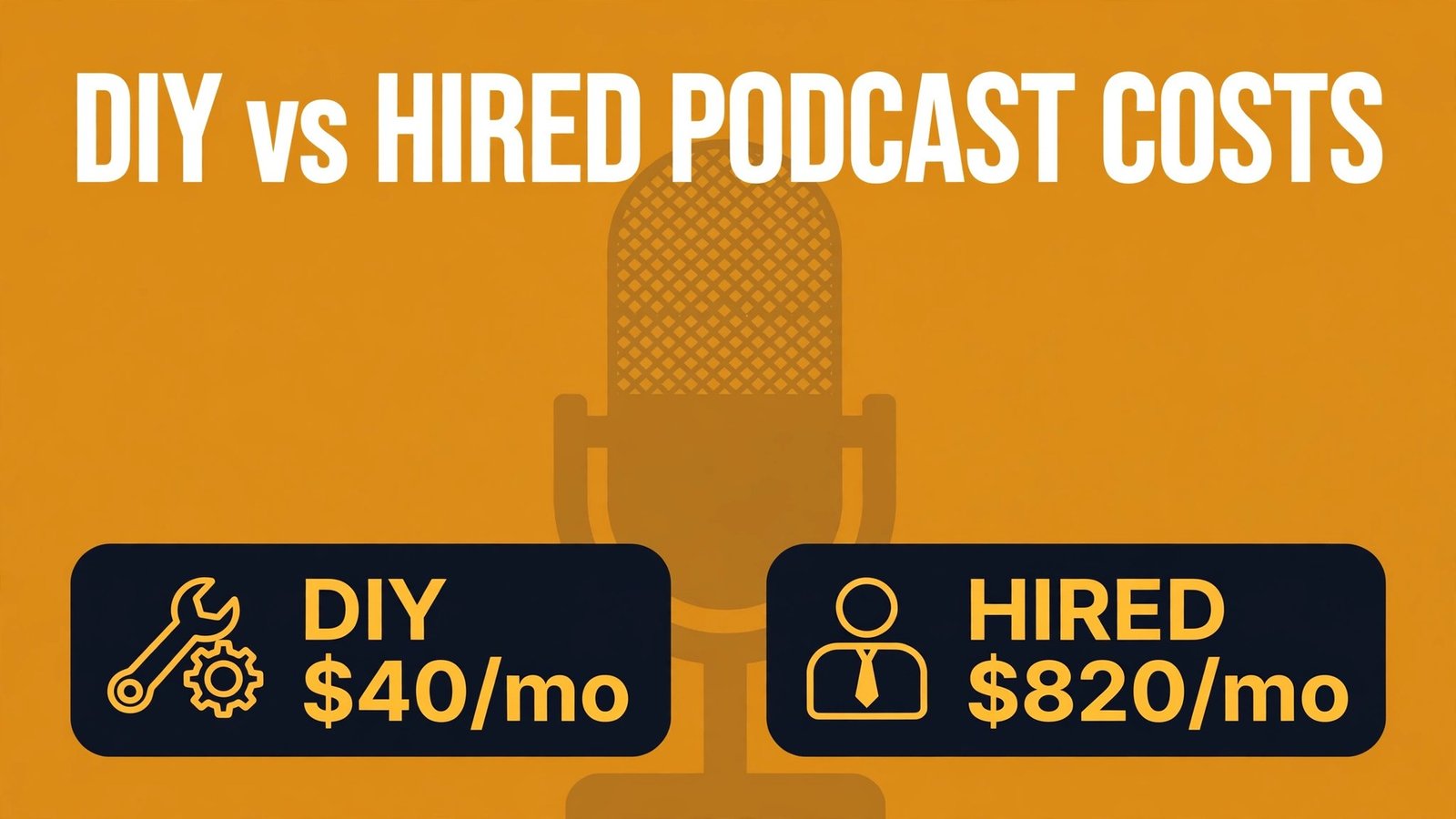
For a weekly 40 minute show, hire an editor and expect to pay roughly 200 to 400 dollars per episode for solid audio only work, or do it yourself and expect to pay roughly 30 to 60 dollars a month in software and hosting plus 3 to 5 hours of your time per episode. That gap is the decision. The podcast production cost question is not really about which microphone to buy. It is about whether your time is worth more than the editor fee, and whether you will still be publishing in six months if you keep every job yourself.
This guide prices both routes line by line for the same show, a weekly interview or solo episode of about 40 minutes, published as audio with simple show notes. It covers one time equipment, monthly software and hosting, freelance and agency editing rates, video extras, and hidden items most budgets miss. Prices were checked against vendor pricing pages and current 2026 marketplace guides in October 2026, and they are ranges, because rates vary by length, turnaround, and region. Check the vendor page and your written quote at checkout before you commit.
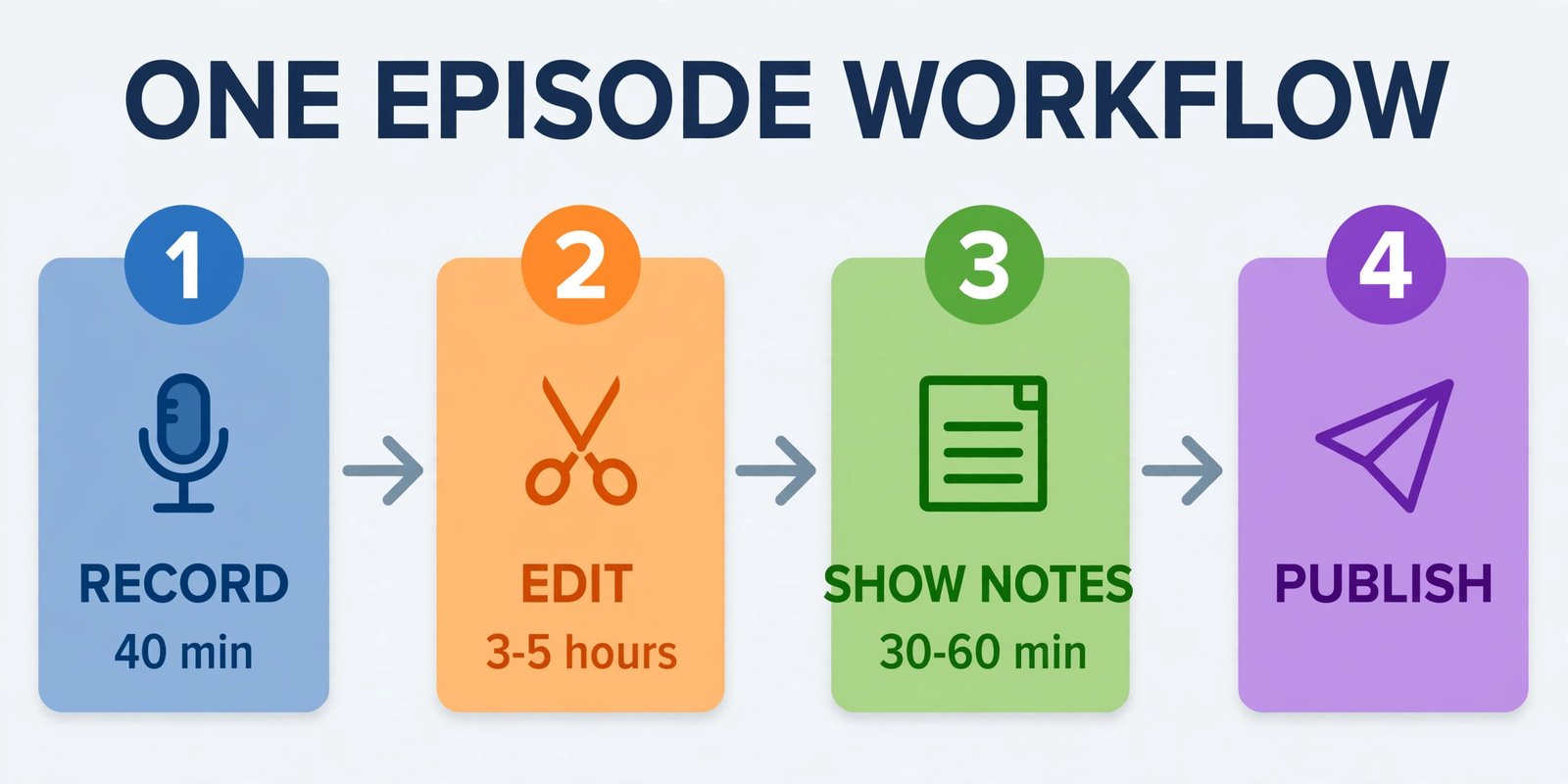
What a Podcast Production Cost Actually Includes
A complete show has more line items than most first budgets admit. Recording is only the first step. Editing and mixing means cutting mistakes and long pauses, balancing levels between voices, removing background noise, and setting loudness so the episode sounds even on phones, cars, and headphones. Finishing means adding an intro and outro, placing licensed music, writing show notes and chapter markers, creating a transcript, and uploading the finished file with artwork and a description.
Distribution and hosting sit underneath all of that. A host stores your audio, creates the RSS feed that Apple Podcasts and Spotify read, and reports downloads. Some hosts include transcripts and a simple show website. Others charge extra for video, extra shows, or higher upload hours. Marketing sits on top. Clips, audiograms, a newsletter mention, and a guest promotion kit all take time or money, and none are included in a basic editing quote unless the quote says so.
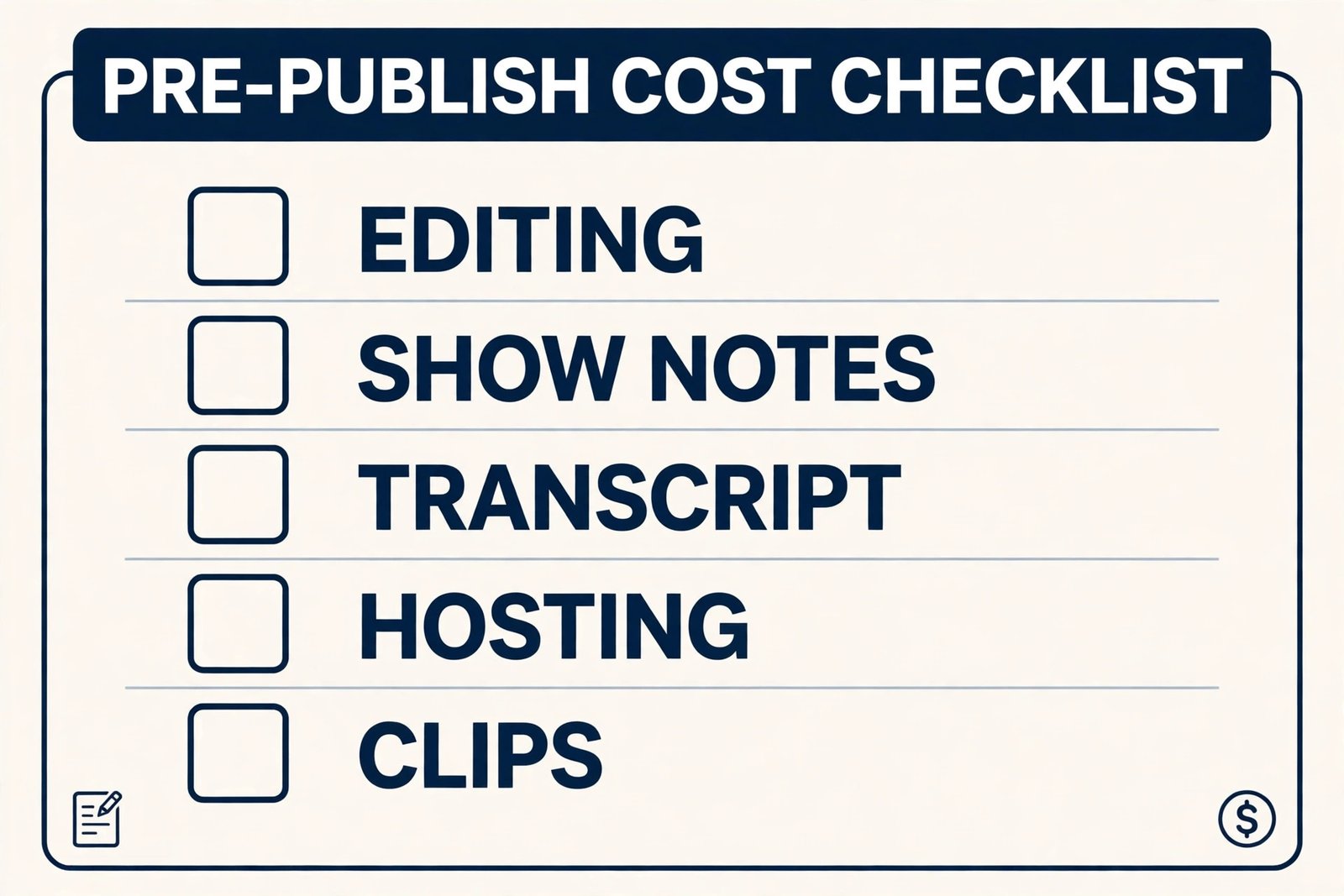
Read any quote by asking what is in and what is out. Does editing include show notes, one revision round, upload to your host, or video, or are those billed separately. Two quotes that look 100 dollars apart can be 300 dollars apart once show notes, video, and revisions are added to the cheaper one. Compare the same scope, not just the headline price.
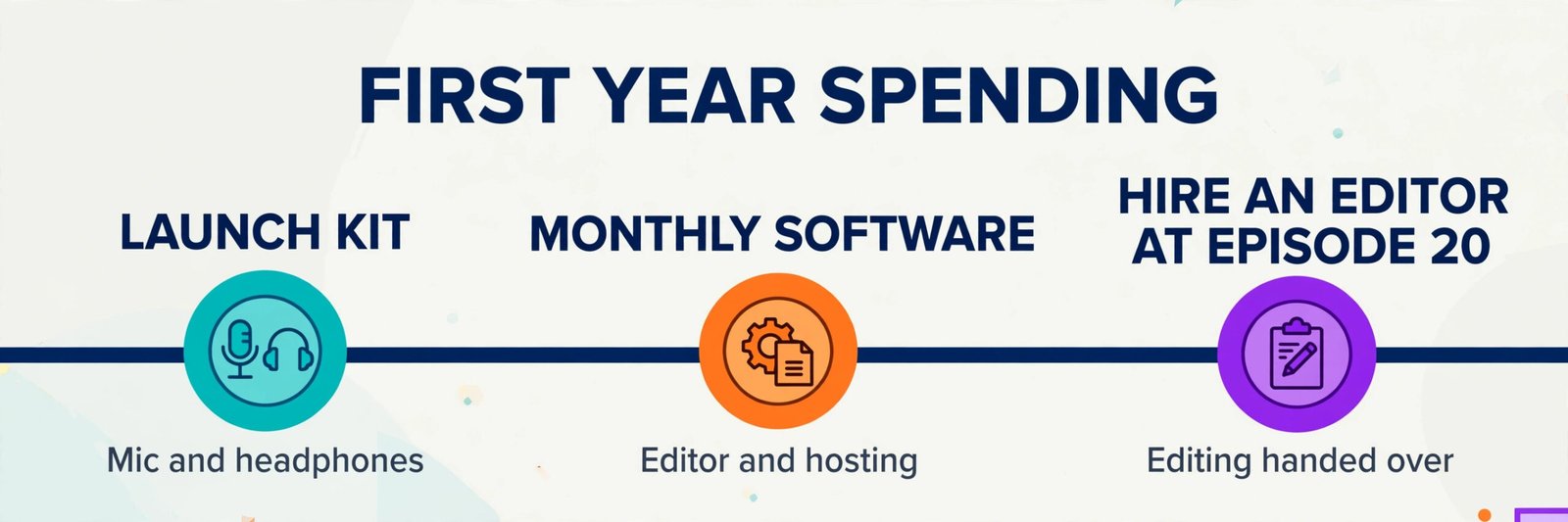
Time is the line item DIY budgets almost always understate. A beginner editing a 40 minute interview may need 3 hours at first. An experienced editor may need 90 minutes for the same episode. Add show notes, clips, and promotion, and DIY work can take 12 to 20 hours a month for a weekly show. That time has a value even if no invoice arrives for it, and it is why many shows start DIY and hire help around episode 20.
The DIY Route, Line by Line
A realistic podcast production cost for a solo DIY show starts low and grows in steps. The starter kit is a USB microphone, closed back headphones you may already own, free editing software, and a free or low cost host trial. The mid range kit adds an XLR microphone, an audio interface, a boom arm, and paid editing and hosting. The studio kit adds a broadcast microphone, a mixer or recorder, room treatment, and video gear. The first step buys the biggest improvement, which is simply getting episodes out on a regular schedule.
Microphones are where beginners overspend first. A Samson Q2U, a USB and XLR microphone, commonly sells for about 70 dollars. A Rode PodMic, an XLR broadcast style microphone, commonly sells for about 99 dollars. A Shure MV7 Plus, which offers both USB and XLR, commonly sells for about 279 dollars and suits a host who wants one microphone that can grow from a laptop setup to an interface setup. A Shure SM7B commonly sells for about 400 to 500 dollars, but it needs a strong interface and often a gain booster, pushing the full chain to roughly 650 to 750 dollars.
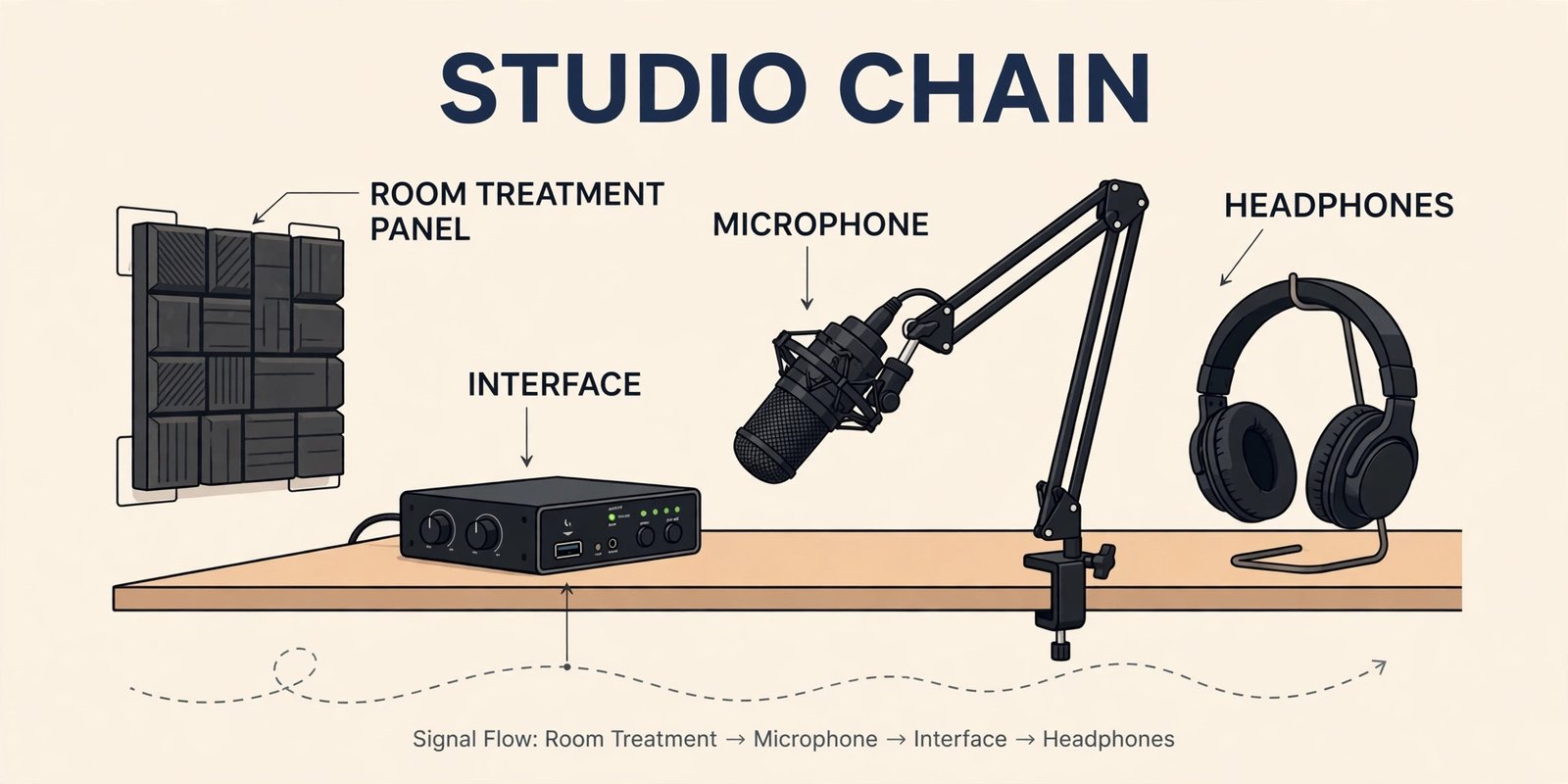
For most new shows, the PodMic or the MV7 Plus is the sensible ceiling, because a treated corner with a 99 dollar microphone will beat an untreated room with a 500 dollar microphone.
Interfaces, arms, and room treatment complete the chain. A basic two input interface such as a Focusrite Scarlett model commonly costs about 120 to 180 dollars. A boom arm costs about 30 to 100 dollars, a pop filter about 10 to 20 dollars, and closed back headphones about 50 to 150 dollars if you do not already own a pair. Room treatment does not need a studio build. Heavy curtains, a bookshelf, a rug, and a few acoustic panels often cost 50 to 150 dollars and matter more than a microphone upgrade. Record a test in your actual room first, and listen for echo, fridge hum, and street noise, which are cheaper to remove at recording than in editing.
Software is the second DIY line. Audacity is free and handles cutting, leveling, and export well for audio only shows. GarageBand is free on Apple devices and suits simple solo shows. Descript is the popular text based editor, and its paid plans run about 16 dollars a month for Hobbyist and 24 dollars a month for Creator on annual billing, with higher month to month rates. Riverside is the popular remote recording tool, at about 15 dollars a month for Standard and 24 dollars a month for Pro on annual billing. Auphonic offers automated leveling with a free tier for short monthly amounts.
Pick one editor and one recorder, learn them properly, and add a second tool only when you hit a limit you can name.
Hosting is the third monthly line. Buzzsprout lists its Audio plan at about 15 dollars a month on annual billing and its Audio plus Video plan at about 25 dollars a month on annual billing, with upload hours pooled across the year on annual plans. Spotify for Creators offers free hosting within its tools and limits. Transistor and similar hosts commonly start near 19 dollars a month and meter downloads rather than upload hours. Read the meter before you choose. An hour meter punishes long episodes, a download meter punishes a hit episode, and a free plan that removes episodes after 90 days is a trial, not a home for a lasting show.
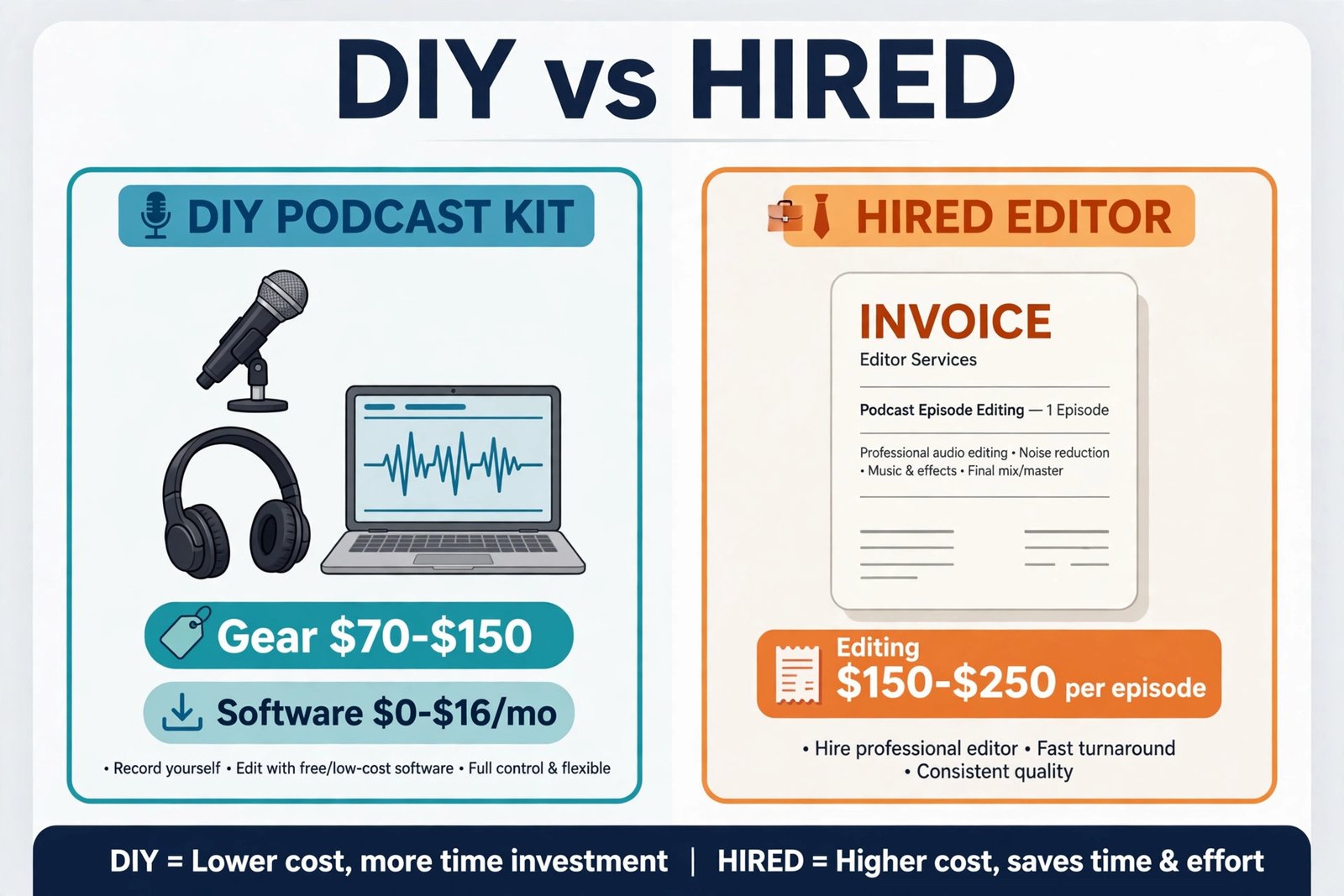
Put together, a starter DIY show can launch for about 70 to 150 dollars in gear if you already own headphones, plus 0 to 30 dollars a month in software and hosting. A solid mid range DIY setup runs about 300 to 550 dollars in gear, plus about 30 to 60 dollars a month. A video ready DIY setup commonly lands at 800 to 1,500 dollars in gear plus 60 to 110 dollars a month. Those totals exclude your time, which is the real DIY price, and music licensing, artwork, and a website if you pay for those separately.
The Hired Route, Line by Line
The podcast production cost for a hired show is easier to quote and harder to compare, because editors bundle different work under the same word, editing. A budget freelance edit on a marketplace commonly runs 30 to 75 dollars per episode for basic cleanup of a short episode, while established freelancers commonly charge 50 to 200 dollars per episode for cleanup, levels, cuts, and intro and outro placement on a standard interview episode. Dedicated audio engineers commonly charge 120 to 250 dollars per episode. Full service production, which adds show notes, transcripts, publishing, and clips, commonly runs 400 to 1,000 dollars or more per episode.
Premium narrative production with sound design, scoring, and heavy story editing can exceed 3,000 dollars per episode, but that is a different product from a weekly interview show and should not be used as a benchmark for one.
Hourly rates tell the same story from another angle. Freelance editors commonly charge 25 to 95 dollars an hour, and some experienced editors charge 40 to 120 dollars an hour. A 40 minute episode with clean audio may take an editor 1.5 to 2.5 hours, which is how a 150 dollar quote is built. A messy episode with crosstalk, echo, and poor guest connections can take 4 hours or more, which is how the same editor quotes 350 dollars for a different show.
Brief with a sample of your real raw audio, the finished length, the turnaround, and every deliverable, because a quote built on a clean sample will not hold for messy audio, and a 24 hour turnaround commonly costs more than a one week turnaround.
Retainers change the maths for weekly shows. Many editors offer four episode monthly bundles, commonly 600 to 1,500 dollars a month for four audio only episodes with show notes. Agencies commonly start near 500 dollars a month for a light retainer and run to 6,000 dollars a month or more for full service branded production. A retainer buys a locked delivery slot and a consistent sound, but it commits you to a monthly bill before you know whether the show will hold its schedule. For a new show, pay per episode for the first four episodes, then move to a retainer once you trust the editor and your rhythm is proven.
Video is the add on that most often shocks a hired budget. A simple single camera edit may add 50 to 150 dollars per episode. A multi camera edit with synced audio, colour work, captions, and clips may add 200 to 500 dollars or more. A bundle of three to five social clips commonly adds 75 to 250 dollars per episode. Price video as its own line from day one, not as a favour asked for after the audio edit is done. The same logic applies to show notes, transcripts, and audiograms. Small jobs stacked together are what turn a 150 dollar edit into a 400 dollar episode.
DIY vs Hired, Side by Side for the Same Weekly Show
This podcast production cost table prices the same show four ways, so the comparison is honest. The show is one 40 minute audio episode per week, four episodes a month, with show notes and a transcript. Gear is counted once in the first month, then spread across the year in the monthly view below. Software and hosting are monthly. Editing time is valued at 25 dollars an hour for the DIY column, which is a modest freelance rate and a fair way to see the real price of your evenings.
| Line item | DIY starter | DIY mid range | Hired freelance editor | Hired full service |
|---|---|---|---|---|
| Gear, one time | 70 to 150 dollars | 300 to 550 dollars | 0 dollars, you still need a mic | 0 dollars, you still need a mic |
| Editor and recorder, monthly | 0 to 16 dollars | 24 to 40 dollars | Included in edit fee | Included in fee |
| Hosting, monthly | 0 to 15 dollars | 15 to 25 dollars | 15 to 25 dollars | Often included |
| Editing fee, per episode | Your time, 3 to 5 hours | Your time, 2 to 3 hours | 150 to 250 dollars | 400 to 1,000 dollars |
| Show notes and transcript, per episode | Your time, 30 to 60 minutes | Your time, 30 minutes | Often included, check quote | Included |
| Clips, per episode | Your time or free tools | 0 to 50 dollars | 75 to 250 dollars extra | Often included |
| Cash cost, per episode | 4 to 8 dollars | 12 to 20 dollars | 165 to 275 dollars | 415 to 1,025 dollars |
| Time cost, per episode | 4 to 6 hours | 2.5 to 4 hours | 30 to 60 minutes review | 15 to 30 minutes review |
Read the table by row, not by headline. The DIY starter looks nearly free in cash, but it costs 16 to 24 hours a month in time. The hired freelance route looks expensive, but it returns most of that time and delivers a consistent finish from episode one. The full service route removes show notes, publishing, and clips from your week, which is the difference between a show that ships and a show that stalls at editing for three weeks.
The table also shows why gear is a poor place to save money twice. A noisy recording will cost you more in editing time, or in editor fees, than better gear would have cost. Ask an editor what recording setup they recommend before you buy. Most would rather you spend 100 dollars on room treatment and a solid USB microphone than 500 dollars on a broadcast microphone in an echoing room. Good source audio is the cheapest editing there is.
Monthly and Annual Totals You Can Budget Against
Your podcast production cost at four episodes a month is the number to put in a budget, not the per episode fee alone. A DIY mid range show at 40 dollars a month in software and hosting spends about 480 dollars a year in cash, plus about 120 to 160 hours of host time. A hired freelance show at 200 dollars per episode plus 20 dollars a month in hosting spends about 820 dollars a month and about 9,840 dollars a year in cash, plus about 2 to 4 hours a month in review time. A full service show at 600 dollars per episode plus hosting spends about 2,420 dollars a month and about 29,040 dollars a year.
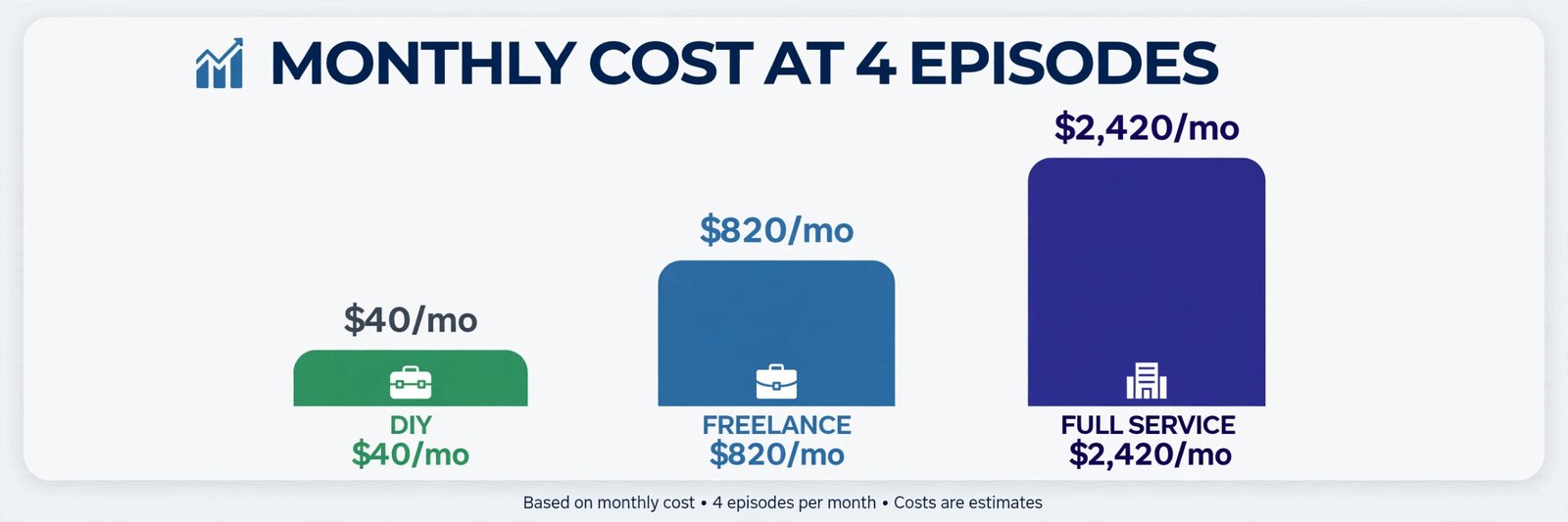
Those annual totals surprise people, and they should, because a weekly show is 52 episodes a year, not a one off project.
Frequency changes the answer more than gear does. A monthly show costs a hired editor about 200 dollars a month, which many businesses can carry easily. A twice weekly show costs about 1,600 dollars a month, which is a staffing decision, not a casual expense. If you are unsure, start monthly, prove the format and the audience, then move to weekly as revenue, leads, or enjoyment justify the spend. A show that publishes monthly for a year beats a show that publishes weekly for six weeks and then stops.
Annual billing is a real saving and a real trap. Descript Hobbyist at 16 dollars a month on annual billing costs 192 dollars taken at once, against 24 dollars month to month. Buzzsprout Audio pools 72 upload hours across the year on annual billing, which suits uneven episode lengths. Riverside Pro at 24 dollars a month on annual billing costs 288 dollars taken at once. Take those savings once you have published for two or three months and know your usage. Pay month to month until the show has survived its first month, then switch to annual billing for tools you actually use every week.
Spread gear across its useful life. A 400 dollar setup used for 100 episodes costs 4 dollars per episode. The same setup used for 4 episodes costs 100 dollars per episode. That is why a starter kit suits a test show and a studio kit suits a proven show. Buy in the order that improves sound most per dollar. Room treatment first, microphone second, interface third, and video gear last, unless video is the main way your audience will find you.
Hidden costs are why a show that looked cheap in month one feels expensive in month four. Music licensing is the first one. Royalty free libraries such as Epidemic Sound commonly charge about 15 dollars a month for a creator plan, while Artlist commonly charges about 200 dollars a year. Using a popular song without a licence is not a saving, it is a takedown and a legal risk, and one removed episode costs more in lost momentum than a year of licensed music.
Artwork, a website, and a domain are the second group. Cover art from a designer commonly costs 100 to 500 dollars for an original design, while a template based design may cost 50 to 150 dollars. A domain commonly costs 10 to 20 dollars a year, and a hosted site with a premium theme may cost 100 to 300 dollars a year. Together they add 200 to 800 dollars to a launch year, and they are often forgotten because they are paid once, not monthly.
Transcription and accessibility are the third group. Some hosts and full service editors include transcripts. Bought separately, human transcription commonly costs about 1 dollar or more per audio minute, which is 40 dollars or more for a 40 minute episode, while automated transcription is far cheaper but needs a human pass for names and terms. Budget transcription as a real line if readers use transcripts or search visibility matters to you.
Guest and remote recording costs are the fourth group. Scheduling, rescheduling, and no shows cost time, and a guest on a phone in a noisy kitchen will cost editing time or a re-record. Send every guest a one page recording guide before the call, asking for a quiet room, a wired headset or USB microphone, a closed door, and a phone on silent. That page can save an editor an hour per episode, which is 25 to 95 dollars at freelance hourly rates, and it costs nothing to send.
Tax, accounting, and payment fees are the fifth group, and they matter most for business shows. Freelance invoices may attract platform or processing fees, and software billed in a foreign currency may vary with exchange rates. Keep every invoice, track gear as a business asset where your tax rules allow, and set aside a reserve for renewals that land in the same month.
How to Choose Between DIY and Hiring
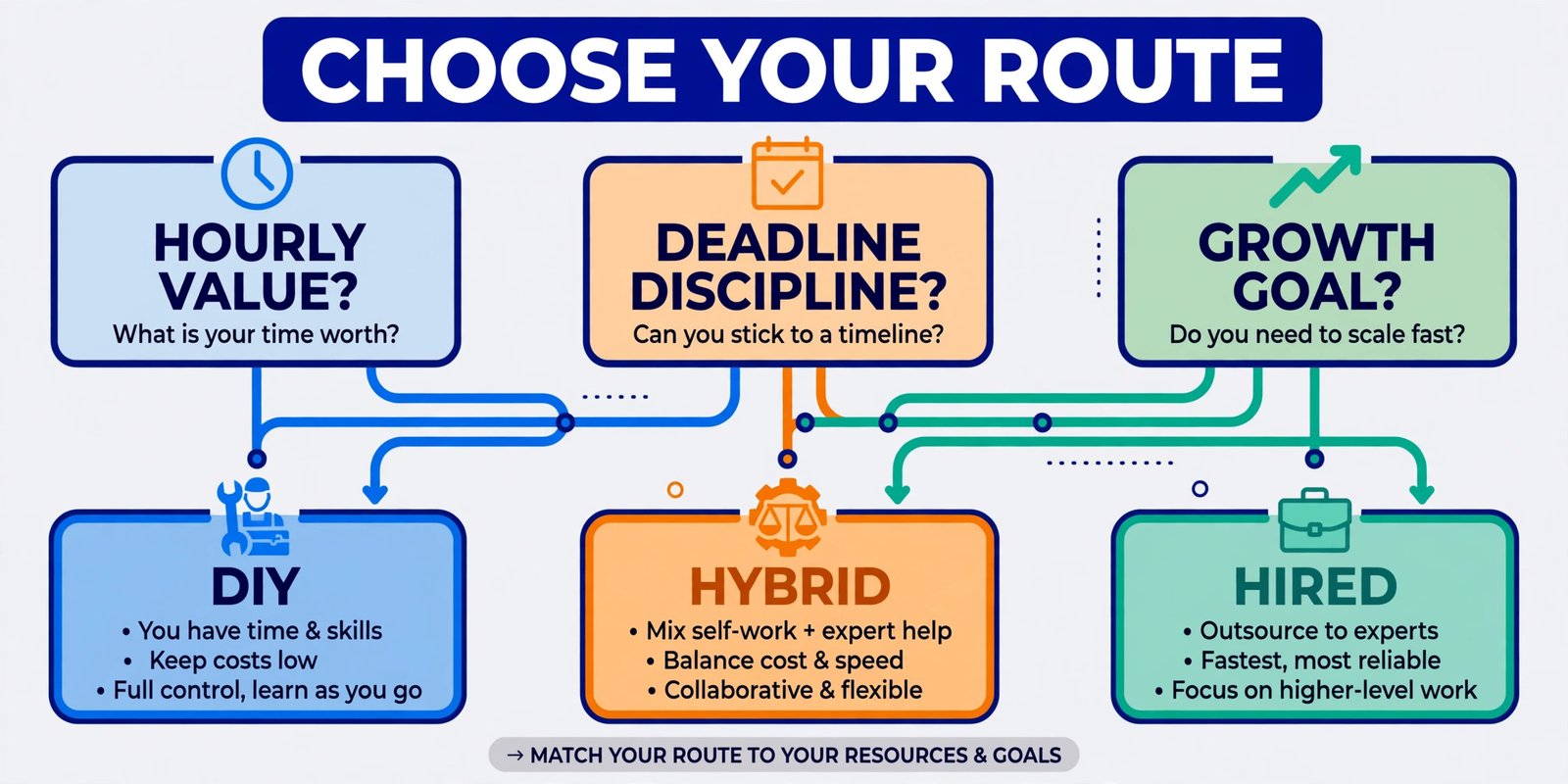
Choose by matching podcast production cost to three facts about your show, not to a general rule about saving money. The first fact is your hourly value. If your working hour is worth 50 dollars or more, and editing takes you 4 hours per episode, DIY editing costs you 200 dollars in time per episode, the same as hiring a solid freelance editor and getting those 4 hours back. If you are learning, building a portfolio, or enjoying the craft, DIY editing is cheap in the sense that matters, and the skill you build is part of the return.
The second fact is your deadline discipline. Some hosts edit happily for a year and never miss a week. Others edit happily for three weeks, then miss two, then quit. Be honest about which host you are. If you have missed self imposed deadlines before, hiring an editor is not a luxury, it is the system that keeps the show alive, because a fixed delivery day creates a deadline you cannot quietly move.
The third fact is your growth goal. A hobby show for friends can stay DIY forever, and the money saved is real. A business show that must generate leads, support a launch, or build authority needs consistent quality and publishing, and a missed or rough episode costs more than an editor fee. Price the editor against one lead, one sale, or one speaking invitation. If a single professional episode that ships on time can plausibly produce that return, the editor is cheap. If it cannot, the show may need a smaller scope, a monthly schedule, or a DIY phase until revenue justifies hiring.
A hybrid route suits many shows. Record and rough cut yourself, then pay an editor for finishing only, which means leveling, noise cleanup, loudness, and export. Or edit yourself and pay for show notes and clips. Or hire an editor for the first four episodes, learn from their finished files, then take editing back in house with a better template. Ask for hybrid pricing explicitly.
Test before you commit, in both directions. If you plan to hire, pay for a single test episode with your real raw audio, including a noisy guest segment if that is typical. Judge sound, show notes, turnaround, and revisions, not just price. If you plan to stay DIY, edit four full episodes before you announce a weekly schedule, and judge your real time per episode and your enjoyment at episode four. Four episodes of evidence beats a month of debating a spreadsheet.
Mistakes That Inflate a Podcast Budget
The most expensive podcast production cost mistake is buying studio gear before proving the show. A 1,500 dollar setup does not create an audience or a publishing habit. It creates a sunk cost that makes quitting feel worse. Start with a starter or mid range kit, publish ten episodes, and let listener feedback and your own enjoyment decide whether a studio upgrade is earned. Gear bought after ten episodes is an investment. Gear bought before episode one is a gamble.
The second mistake is paying for overlapping tools. Descript, Riverside, and several clip tools all offer transcription, and several offer show notes and clips. A stack with three tools that transcribe the same episode pays three times for one job. Audit your stack every quarter, and cancel any tool whose job is already covered by a tool you keep. A 30 dollar a month saving is 360 dollars a year, which is two freelance episode edits.
The third mistake is choosing a host on price alone without reading the meter. A host that looks cheap at 15 dollars a month can become expensive if long episodes drain the upload pool, or if a viral episode pushes you over a download cap. A host at 25 dollars a month can be cheap if it includes video, transcripts, and a website you would otherwise buy separately. Price the host against your real length, frequency, and extras, not the headline figure.
The fourth mistake is briefing an editor with a clean sample and then sending messy audio every week. Editors quote on the audio they hear, and messy audio takes longer, costs more, and sounds worse even after a good edit. Fix the recording first, send a typical sample, and agree a rate for messy episodes in advance, so there is no awkward price rise in week three.
The fifth mistake is forgetting revision and turnaround terms. A cheap edit with a two week turnaround and no revision round can miss a news peg, a guest promotion window, or a launch date. A slightly more expensive edit with a 48 hour turnaround and one revision round can be the cheaper choice for a timely show. Put turnaround, revision rounds, file formats, and ownership of project files in writing before the first paid episode.
The sixth mistake is scaling frequency before scaling systems. Moving from monthly to weekly quadruples editing, show notes, publishing, and promotion work. Before you increase frequency, build a show notes template, a publishing checklist, a folder structure, and a backup routine. Systems cost an afternoon to build and save hours every month.
For readers planning the wider launch, related reading on this site includes best AI podcast tools for the editing and recording stack, how to start a podcast with AI for the full launch sequence, best AI tools for content creators for repurposing episodes into clips and posts, Descript alternatives if text based editing is not your style, and Riverside alternatives if remote recording quality is your main bottleneck.
Frequently Asked Questions
How much does it cost to start a podcast in 2026?
A starter audio show can launch for about 70 to 150 dollars in gear plus 0 to 30 dollars a month in software and hosting, if you already own headphones. A solid mid range setup runs about 300 to 550 dollars in gear plus about 30 to 60 dollars a month. Those figures exclude your time, the largest DIY expense over a year.
How much does a podcast editor charge per episode?
Budget freelance edits commonly run 30 to 75 dollars per episode for basic cleanup of a short episode. Established freelancers commonly charge 50 to 200 dollars for a standard interview, dedicated engineers 120 to 250 dollars, and full service production 400 to 1,000 dollars or more. Length, messiness, video, show notes, and turnaround move a quote within and beyond those ranges.
Is it cheaper to edit a podcast yourself or hire an editor?
In cash, DIY is cheaper, often by 150 to 250 dollars per episode against a freelance editor. In time, DIY costs 2 to 5 hours per episode, while hiring costs 30 to 60 minutes of review. If your working hour is worth more than the editor fee divided by the hours saved, hiring is cheaper in real terms. If you are learning or enjoying the craft, DIY is cheaper in the sense that matters most.
What equipment do I actually need for a first podcast?
You need a decent microphone, closed back headphones, a quiet room, and a way to record. A USB microphone such as the Samson Q2U or a USB and XLR microphone such as the Shure MV7 Plus covers most first shows. Add a boom arm, a pop filter, and basic room treatment before you buy a broadcast microphone, because room sound matters more than microphone price.
How much does video add to podcast production?
A simple single camera video may add 50 to 150 dollars per episode when hired, while multi camera video with captions and clips may add 200 to 500 dollars or more. DIY video commonly adds 800 to 1,500 dollars in gear plus a higher editing plan. Price video as its own line before you promise it weekly.
When should a show move from DIY to hiring an editor?
Move when editing is the reason episodes ship late, when your time per episode stays above 3 hours after ten episodes, or when the show must sound consistent for business reasons such as leads or sponsorship. Start with a single test episode, then pay per episode for a month before moving to a retainer.
The Spending Plan I Would Sign Off
Start DIY, but start honestly. Buy a starter or mid range microphone, treat the room, learn one editor, and pay month to month for hosting until you have four episodes out. Price your time at every step, and when editing starts to delay publishing, hire a freelance editor for a test episode and judge sound and reliability, not price alone. Keep video, clips, and show notes as separate budget lines.
If the show is a hobby, stay DIY and enjoy the craft, because the cash saving is real. If the show supports a business, treat hiring as a system, not a luxury, because consistent publishing and sound turn listeners into enquiries. Either way, let the first ten episodes earn the next purchase. A show that ships every week on modest gear will beat a show with studio gear that ships when editing allows.